Challenge Taiwan Taitung Course Fully Analyzed: Three-Segment Guide to Living Water Lake, East Coast, and Forest Park, Plus Coping with Hot and Humid Weather
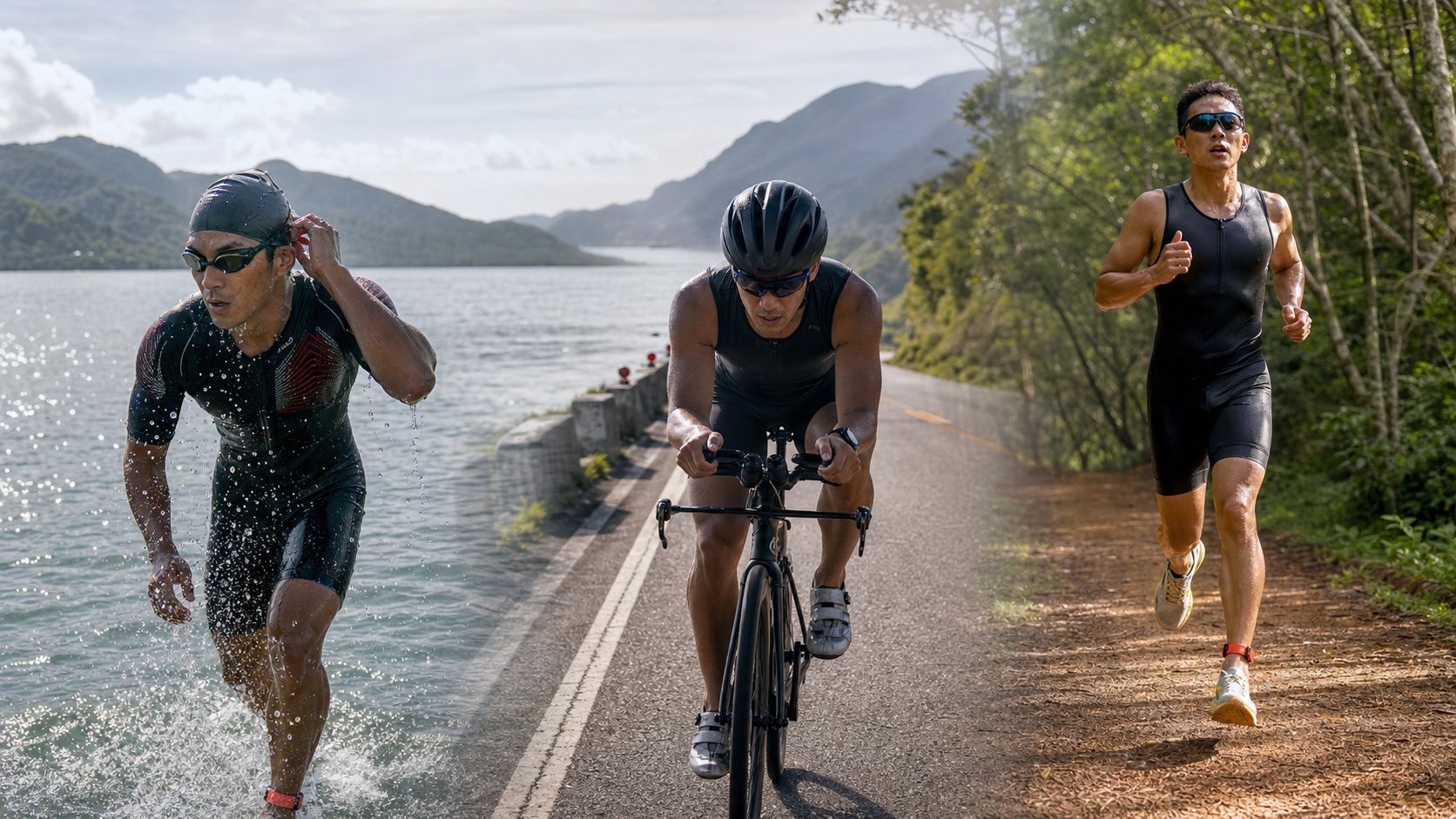
I’ve been taking athletes to race Challenge Taiwan for over a decade now. Every May, in that humid Taitung morning, standing by Living Water Lake watching the mist rise off the water and hearing the announcements echoing from Zhonghua Bridge in the distance, I always remind my athletes—whose palms are sweating from nerves—of one thing: “This course won’t punish you with steep climbs, but it will fool you by looking ‘easy’.”
Challenge Taiwan is Taiwan’s largest triathlon festival. The 226 full distance (3.8 km swim, 180 km bike, 42.195 km run) has a 17-hour cutoff. The course is centered around Living Water Lake, with the bike leg heading north along the majestic East Coast and the run leg looping through Taitung Forest Park. On paper, the terrain data looks “forgiving”—nothing like the brutal grind of Wuling—but it’s precisely this “fake flat” character that causes countless first-time long-distance athletes to fall apart in the second half.
In this article, I’ll break down the three segments—the Living Water Lake swim, the County Road 197 (East Coast) ride, and the Forest Park run—from the perspective of someone who’s coached athletes through it, paired with years of climate observations, to give you a segment-by-segment strategy that won’t let the course fool you.
Let me start with a case I’ll never forget. One year, I brought a mid-level athlete, Xiao Lai, who trained hard and fast on the flat roads of western Taiwan. His bike cruising power was strong, and he told me before the race, full of confidence, that he’d use the bike leg to open up a gap. That year, the morning had a tailwind—his average speed on the outbound leg before Dulan was nearly 2 km/h faster than planned. When I saw him at the aid station, my heart sank—sure enough, when the headwind hit on the return leg, his power dropped by a full 20%. He held on for the first 10 km of the run, but after the half-marathon mark, he was completely drained and ended up walking to the finish, nearly an hour slower than his target. After the race, he said only one thing: “Coach, I was fooled by the tailwind.” I’ve used that line every year since to remind new athletes.
This Taitung course deserves a full-length deep dive precisely because its difficulty isn’t in the “visible climbs” but in the “invisible discipline.” Let’s break it down segment by segment.
Setting the Right Mindset First: Three Traits of the Taitung Course
Before we get into the segments, let me cover three concepts I drill into my athletes every year. If you don’t get these three things, no amount of fitness will save you—it’ll just get diluted out on the course.
Trait One: Living Water Lake Is a “Gentle Illusion”
Living Water Lake is fed by underground springs from the Beinan River. It’s a closed body of water with no currents or swells, clear water, and good visibility—for newcomers afraid of open water, it’s one of the friendliest race venues in Taiwan. But precisely because it’s so safe, many people go out too hard on the swim—the most expensive cost in open water isn’t energy, it’s losing control of your heart rate. The lake being friendly doesn’t mean you can charge ahead. Blow up in the first 200 meters, and you’ll be paying off that debt for the next 180 km on the bike.
Trait Two: The East Coast’s “Fake Flat” and Crosswinds
The bike leg heads north along Provincial Highway 11 and County Road 197, passing Xiaoyeliu and Dulan—a continuous rolling route. Over 180 km, the total elevation gain lands around 1,500 meters—there’s no climb that will make you want to get off and walk, but it never lets you rest. More critically, there’s the land-sea breeze on the East Coast: in the morning, winds are commonly from the south or east, and the sensation of tailwind outbound and headwind inbound becomes especially obvious on the second lap. The most common mistake athletes make is getting carried away by the thrill of the tailwind on the outbound leg, hammering the big ring, and then having nothing left when the headwind hits on the way back.
Trait Three: Forest Park Is the “Most Honest Mirror”
The run leg takes place in Taitung Forest Park and surrounding roads—flat terrain with relatively good shade. But that also means—every ounce of energy you saved or squandered in the swim and bike will be laid bare honestly under the sun across those 42 km. Taitung’s May midday heat and humidity push the apparent temperature to near or above 30°C. Run-leg collapses are almost always caused by “poor nutrition planning + overly greedy early pacing.”
The Science: Why “Pacing” Matters More Than “Fitness” for Finishing
I’ve had athletes with clearly excellent fitness DNF in Taitung. Usually, it’s not insufficient training—it’s a lack of understanding of “long-distance energy management.” Let me explain with three practical physiological principles.
First, carbohydrates are a finite resource. The body’s glycogen stores are limited. During prolonged high-intensity exercise, if intake doesn’t keep up with expenditure, you hit the so-called “wall” of low blood sugar. For endurance racing, a commonly recommended carbohydrate intake range is 60 to 90 grams per hour (this needs to be trained to let your gut adapt—never try the upper limit for the first time on race day).
Second, heart rate is your fuel gauge. For a 226, the vast majority of the bike and run should stay in the aerobic zone (for most athletes, roughly 70% to 80% of max heart rate). If your heart rate drifts above threshold for extended periods, you’re burning tomorrow’s firewood. I always tell my athletes: “Taitung isn’t asking you to go fast—it’s asking you not to wreck your heart rate in the first half.”
Third, body temperature and dehydration are invisible killers. In hot, humid conditions, sweat evaporation becomes less efficient, and rising core temperature directly pushes your heart rate higher at the same pace (cardiovascular drift). That’s why on Taitung’s afternoon run leg, you’ll feel like “I slowed down, but my heart rate is still higher.” You haven’t gotten weaker—your cooling system is collecting its toll.
Lock Yourself Down with Objective Metrics, Not “Feelings”
My deepest lesson from these ten years: in long-distance racing, your “feelings” are the least reliable instrument you have. Especially in the adrenaline-fueled first half, everything feels easy at any pace—and that’s a dangerous illusion. So I always require my athletes on a course like Taitung to lock themselves down with at least one objective metric:
- Bike leg: Prioritize a power meter. Power doesn’t lie—with a tailwind, your speed goes up but your power doesn’t actually change. If you stare at speed, you’ll be tricked into pushing harder. If you don’t have a power meter, fall back to heart rate, and accept that heart rate lags and drifts.
- Run leg: Use heart rate plus the “talk test.” If you can’t hold a full conversation with someone next to you in the first half of the marathon, you’re going too fast—slow down immediately.
- Swim leg: Use breathing rhythm. If you’re already gasping with wide-open mouth in the early part, the intensity is too high—back off.
I often use this analogy: a power meter and heart rate strap are like your speedometer and fuel gauge. On a six-hour highway drive, you wouldn’t just press the gas pedal by feel the whole way, right?
These three principles are all interconnected: pacing too fast accelerates glycogen depletion, pushes heart rate up, raises body temperature, and creates a vicious cycle. Conversely, holding a steady pace delays carbohydrate depletion, controls heart rate drift, and lets your cooling system keep up. On a hot, humid long-distance course like Taitung, discipline itself is the strongest fitness. I’ve seen too many talented athletes who don’t understand pacing lose to disciplined ordinary people, and I’ve seen seemingly average athletes run personal bests through flawless energy management.
The table below is my “three-segment intensity positioning” reference for athletes—use it on the course to check whether you’re overspeeding:
| Segment | Target Intensity | Heart Rate Reference | Most Common Mistake |
|---|---|---|---|
| Swim 3.8K | Easy to moderate, able to breathe and talk | Below threshold | Heart rate spiking in the first 200m |
| Bike 180K | Steady aerobic, sustainable | 70–78% of max HR | Hammering the tailwind outbound |
| Run 42K, first half | Conservative, deliberately held back | 72–80% of max HR | Chasing time right out of T2 |
| Run 42K, second half | Hold on, rely on willpower and nutrition | Drift allowed | Only thinking about eating when nutrition is already missed |
Practical Guide (1): Swimming 3.8 km in Living Water Lake
Living Water Lake is a rectangular enclosed body of water, typically designed as multiple out-and-back loops. My swim strategy for athletes boils down to three sentences: Stay calm before entering the water, deliberately hold back in the early stages, and find your kicking rhythm.
- Before the gun goes off: If you’re not a strong front-pack swimmer, position yourself to the side or slightly further back at the start to avoid the chaotic “washing machine” zone. The energy you save is more than you think.
- First 400 meters: Deliberately swim at a pace slightly slower than your training pace to let your heart rate and breathing settle down first. The lake water is forgiving—you have plenty of room to ease into the swim.
- Mid-course navigation: The landmarks along Living Water Lake’s shore are clear. Sight every 6 to 8 strokes—no need to lift your head constantly. Over-sighting breaks your body line and slows you down.
- Before exiting the water: In the final 200 meters, slightly increase your kick to wake up blood flow in your legs, preparing for the T1 (swim-to-bike) transition so you don’t feel wobbly when you stand up.
Coach’s tip: Water temperature in Living Water Lake is usually on the warmer side in May, and most categories may not allow wetsuits (depending on the day’s water temperature and race regulations). Be sure to check in advance and get used to swimming without a wetsuit during training. Without the buoyancy assistance of a wetsuit, your torso and legs will sit slightly lower in the water, and your pace will naturally be a bit slower. You need to practice this before race day and know what to expect—don’t discover on race day that “I’m so much slower than in the pool” and panic into speeding up.
For athletes afraid of open water: Break the fear into small, trainable steps
I’ve coached many athletes who are “strong on land but terrified in the water.” The fear of open water almost always comes from “not being able to see the bottom” and “crowded conditions.” Living Water Lake is actually one of the best venues in Taiwan to build courage. Here’s the progression I typically use:
- Get used to no wall: In the pool, practice swimming continuously for 400+ meters without touching the wall, getting comfortable with the rhythm of “no wall to grab.”
- Practice sighting: In the pool, practice lifting your head to look forward every few strokes, turning sighting into muscle memory so your rhythm doesn’t fall apart in open water.
- Simulate crowded starts: Get a few teammates together to practice swimming shoulder-to-shoulder, staying calm with your breathing when bumped, so your body stops overreacting to contact.
- Pre-race practice swim: Challenge Taiwan typically opens Living Water Lake for practice before race day. Make sure you go swim in it—familiarize yourself with the water color, landmarks, and the entry/exit flow.
The fear won’t disappear, but it can be trained into something manageable. One athlete who was so afraid of water she couldn’t sleep before races went through this exact process and swam her first 3.8 km in Living Water Lake. She was crying when she got out and told me, “So I really can do it.”
Practical Guide (2): 180 km Ride Along the East Coast
This is the segment that can both “open the biggest gaps” and “blow up the easiest.” 180 km, roughly 1,500 meters of cumulative climbing, two out-and-back loops. After leaving downtown Taitung and crossing Zhonghua Bridge, you head north along the coast, passing Xiaoyeliu and Dulan, turning at the turnaround point, then returning to complete a second loop.
Pacing by segments: Breaking 180 km into three parts
I never let athletes treat the 180 km as one single block—that’s a recipe for losing control. I break it into three parts to give them mental anchors:
- 0–60 km (the restraint segment): The most important task here is “holding back the excitement.” The tailwind leaving town, the cool morning air, and other riders passing you are all temptations to push harder. Deliberately keep your power/heart rate at the lower end of your target zone. I often say: “The more boring you ride these 60 km, the more story you’ll have in the final 42 km.”
- 60–120 km (the rhythm segment): Settle into a steady cruise, focusing on your fueling rhythm and a consistent cadence. On rolling hills, allow your heart rate to rise slightly on the climbs, but as soon as you crest the hill, drop right back into the aerobic zone. Don’t keep hammering on the descents either.
- 120–180 km (the survival segment): This is where the headwind on the return leg hits hardest. Stop obsessing over the speed number and instead focus on “steady output” and “uninterrupted fueling.” Those who can hold their output steady here have already won half the battle for the run.
Fueling schedule table (reference example for the bike leg)
Below is a fueling example I designed for an intermediate athlete targeting around 6 hours for the bike leg (adjust the actual numbers based on your body weight, sweat rate, and gut tolerance, and practice it during long training rides):
| Time point | Carbohydrate intake | Fluids/Electrolytes | Notes |
|---|---|---|---|
| Every 20 minutes | One gel or sip of sports drink | Small sips of water | Small and frequent—don’t wait until you’re thirsty |
| Every 60 minutes | Accumulate ~60–80g carbs | Electrolyte tablet or sports drink | Sodium loss is high in hot, humid conditions |
| Turnaround aid station | Solid food (banana/energy bar) | Refill hydration pack/bottles | Change up the texture to avoid flavor fatigue |
| 15 minutes before T2 | Reduce solids, switch to liquid carbs | Normal hydration | Reduce gut burden in the early run |
East Coast-specific reminder: Crosswinds and gusts appear frequently along the exposed coastal sections. Pay attention to stability when riding on the drops or aero bars—especially on the wide scenic stretches with crosswinds. Don’t sacrifice handling safety for an aero position. I’ve seen riders stubbornly hold an aero position in crosswinds, and when a gust hit, their center of gravity wobbled dangerously. That kind of scare is completely not worth it. Finishing safely is a hundred times more important than saving a few seconds of aero drag.
Mental and output management in headwind sections
The headwind on the return leg is the dividing line of the Taitung bike course. Here’s the key mindset shift I teach athletes: When facing a headwind, stop looking at speed—look only at output. A headwind means the same power produces noticeably slower speed. If you stare at the speedometer, you’ll think “why am I so slow” and keep adding more effort, burning up all the energy you need for the run.
The right approach: Keep your power (or heart rate) in the established range and accept that slower speed is a physical reality, not a sign of weakness. Repeat to yourself, “Hold the output, protect the legs,” and treat the headwind as a section to “grind through steadily,” not an enemy to “conquer.” Those who can manage their emotions in the headwind are often the ones still smiling on the run.
Historical Weather Observations: How Brutal Is Taitung’s “Humid Heat” in May?
Challenge Taiwan’s main race typically falls in May in Taitung. Located on the east coast right next to the Pacific Ocean, Taitung is already entering early summer in May. Based on my years of leading teams there, here are the climate characteristics we encounter “almost every year.” (The following is a summary of years of on-site coaching experience and reminders; for actual weather, please refer to the Central Weather Administration and race announcements before race day.)
- Cool mornings, rapid heating after sunrise: The swim and early bike often have pleasant coolness, making it easy to underestimate the heat later on.
- Humid midday heat, feels like it approaches or exceeds 30°C: The east coast’s high humidity reduces sweat evaporation efficiency, making the run feel worse than the thermometer suggests.
- Occasional afternoon thunderstorms: Early summer afternoons in the east bring strong convection; the course may see brief heavy rain and reduced visibility. Watch your fueling and footing.
- Daily sea-breeze/land-breeze shifts: Wind direction along the coastal bike sections often changes through the day—this is why the outbound and return legs feel so different.
| Time period | Typical feel | What it means for athletes | Key response |
|---|---|---|---|
| Early morning (swim/early bike) | Cool, comfortable | Easy to pace too fast | Deliberately hold back; don’t be fooled by the coolness |
| Late morning (mid-bike) | Gradually warming | Time to actively hydrate | Establish your fueling rhythm |
| Noon (bike-to-run transition) | Humid heat, strong sun | High-risk window for blowing up | Actively cool down, ease the pace |
| Afternoon (late run) | Muggy heat or thunderstorms | Test of will and fueling | Replenish sodium, stay alert for heat illness |
Coach’s practical conclusion: Taitung’s heat isn’t a dry, crisp high temperature—it’s a sticky, humid heat that makes cooling especially difficult. This means your target pace in Taitung should naturally be more conservative than your training pace in cooler conditions. Build the “weather tax” into your plan in advance, so you don’t get slapped by reality out on the course.
Practical Guide (3): 42.195 km Run in Forest Park
The run takes place in and around Taitung Forest Park—flat terrain, multiple loops, and dense aid stations. It sounds easy to run, but I have to be honest: These 42 km are the most honest part of the entire race. Every bit of greed you showed earlier will be settled here.
The Golden First 5K Out of T2
Almost every running collapse traces back to the first 5 kilometers after getting off the bike. Fresh off the transition from cycling to running, your muscle memory is still in pedaling mode and your heart rate tends to run high. Many people charge out of T2 at a pace that “feels easy”—but that ease is deceptive; it’s the leftover excitement from the bike leg.
- Deliberately hold back: Start the first 5K 10 to 20 seconds slower than your target pace to let your body complete the bike-to-run transition.
- Check your cadence: Start with a slightly higher cadence and shorter stride to reduce impact per step and protect your legs for the later stages.
- Start fueling immediately: Don’t wait until you’re tired to eat. Leave T2 and get into the rhythm of “doing something at every aid station.”
The Mental Game of Multiple Loops in Forest Park
The running segment in Taitung Forest Park is mostly multiple loops, and this format has a psychological characteristic: you’ll pass the same aid stations, the same cheering crowds, and the same scenery over and over. It’s a serious test of mental toughness—the first lap’s scenery is beautiful; by the third lap, it may just feel endless.
I teach my athletes to break the loops into “one task per lap”: this lap’s task is to fuel properly, the next lap’s task is to cool down thoroughly, and the lap after that is to maintain cadence without dropping it. Break that intimidating number of 42 kilometers into several small tasks where “you just focus on doing this one thing well,” and your brain won’t be crushed by the remaining distance. The multi-loop format also has practical advantages: aid stations are frequent, family and friends can cheer easily, and the risk of getting lost is low. Use those strengths well, and the course becomes your ally.
Heat and Humidity Management: The Real Opponent of a Taitung Afternoon
At noon in May, Taitung is hot and humid, and the enemy on the run course is often not the hills but your core temperature. The cooling SOP I give my athletes is simple but effective:
- At every aid station, pour sponge water or cold water over your head, neck, and wrists (cooling the major blood vessels is most effective).
- Caps and ice sleeves reflect and dissipate heat—don’t underestimate the difference a few degrees of perceived temperature makes.
- If you feel your heart rate spiking abnormally, goosebumps on your skin, or dizziness—these are warning signs of heat illness. Walk immediately to cool down, increase water and sodium intake, and don’t push through.
Reference for Advanced Athletes: A One-Week Training Skeleton
Many athletes ask me, “What should my normal weekly training look like?” There are countless ways to prepare for a long-distance race. Here’s a sample one-week training skeleton for an intermediate athlete during the build phase (this is only a structural illustration; an actual plan must be customized by a professional coach based on individual fitness level, injury history, and lifestyle—do not copy it blindly):
| Day | Main Workout | Focus |
|---|---|---|
| Monday | Rest or easy swim technique | Recovery, technique refinement |
| Tuesday | Run intervals or tempo run | Improve running economy |
| Wednesday | Bike threshold intervals | Improve sustainable power output |
| Thursday | Main swim workout + easy run | Maintain aerobic base |
| Friday | Rest or mobility/strength | Injury prevention |
| Saturday | Long bike (followed by short run transition) | Simulate the bike-to-run feel |
| Sunday | Long slow distance run (LSD) | Build aerobic endurance base |
The two most critical days in this table are Saturday’s “brick” session (bike-to-run transition) and Sunday’s long slow distance run. Success on the Taitung course depends largely on your body’s adaptation to “running right after riding” and your aerobic endurance reserves in the later stages. Doing these two days properly is far more valuable than scattering a few extra interval sessions throughout the week.
Common Mistakes and Fixes (The Most Frequent SOS Calls Coaches Receive)
Over the years at Taitung, both on-site and in post-race reviews, these are the most common mistakes I’ve encountered. See how many you’ve made:
- Mistake 1: Spiking heart rate in the swim. → Fix: Treat the swim as a “warm-up” rather than a “race.” The first 400 meters should be the slowest part of your entire day.
- Mistake 2: Hammering the outbound bike leg. → Fix: Use power or heart rate as an objective governor. Be especially restrained with a tailwind, and save your strength for the headwind and the run.
- Mistake 3: Fueling only when hungry or thirsty. → Fix: Use a timer as a reminder. Eat small amounts frequently, and treat fueling as a task rather than a feeling.
- Mistake 4: Changing gear or nutrition on race day. → Fix: Nothing new on race day is an iron rule. All gear, nutrition, and anti-chafing measures must be validated in long training sessions.
- Mistake 5: Chasing time on the run out of T2. → Fix: Deliberately hold back for the first 5K, and the later stages will thank you.
- Mistake 6: Neglecting anti-chafing and foot care. → In prolonged heat and humidity, the groin, armpits, and toes are high-risk zones for blisters and chafing. Apply Vaseline/anti-chafe balm generously.
Actionable Advice for Athletes of Different Levels
The same course demands completely different mindsets and goals from athletes of different levels. Here are the segmented recommendations I often give based on my athletes’ situations.
First-Timers / Athletes Attempting Their First 226
Your only goal is to finish, not to place. Treat the 17-hour cutoff as a friend, not pressure. Core strategy: stay conservative throughout, fuel on a schedule, and keep the cutoff times in mind. Living Lake’s friendly water is the best possible starting point—enjoy that stretch. Make “today I’m going to learn how to eat well, drink well, and walk well in Taitung” your first lesson.
Intermediate Athletes (Chasing a PB / Improvement)
Your key lies in discipline on the bike leg and pace execution on the run leg. I recommend doing at least one long “simulated brick” session with a power meter and heart rate strap before race day, so your body remembers that strange feeling in your legs after T2. Your PB is usually not forged by riding faster on the bike leg—it’s defended by not collapsing on the run leg.
Advanced Athletes (Chasing an Age-Group Podium or Qualifying Spot)
What you need is precision: power allocation, output strategy for headwind sections, fueling measured to the gram, and cooling executed at every single aid station. At this level, the difference often lies in the details—when others start fading after the turnaround at Dulan, if you can maintain your output through early discipline, that’s how you pick off positions one by one.
A Three-Week Taper Framework You Can Apply
- 3 weeks out: Final long combined session (long ride followed by run), fully rehearsing fueling and gear.
- 2 weeks out: Begin tapering—total volume drops but keep a few high-quality stimuli to maintain feel.
- 1 week out: Cut volume drastically, sleep plenty, and run through your fueling plan and transition-area flow in your head three times. Don’t try anything new this week.
Local Taitung Fueling and Pre-Race Nutrition: Practical Advice for Athletes Eating Out
Many athletes from other cities arrive in Taitung a day or two early, which means pre-race meals rely on eating out. Here’s what I’ve learned from leading teams here over the years, to help you manage both “glycogen loading” and “gut safety.”
- The day before the race, stick to familiar, easily digestible carbs: Rice, noodles, and rice noodles (mitaimu) in downtown Taitung are excellent carb sources. The principle is choose foods your gut knows. Don’t indulge in heavy-flavored or high-fiber seafood you’ve never tried just because you’re in a tourist destination—a stomach issue before race day isn’t worth it.
- Limit fried and overly spicy foods: Taitung’s street food is tempting, but in the 24 hours before the race, hit pause on fried, spicy, and raw foods—these are gut landmines.
- Prepare hydration and electrolytes in advance: In hot, humid weather, pay attention to hydration and moderate sodium intake a day or two before the race. Don’t wait until race morning to start chugging water.
- Eat the same pre-race breakfast as in training: The content and timing of your race-day breakfast must be identical to what you rehearsed on your long training days. This breakfast isn’t for trying something new—it’s for execution.
A small local joy reminder: After you finish, Taitung’s sugar apples (釋迦), roselle, local snacks, and hot springs are the best rewards you can give yourself. But that’s for “after the race.” Before the race, hold back and keep your mouth in check.
How to Pace Your Finish Time? A Checkpoint Mindset Using the 17-Hour Cutoff as an Example
The 226 cutoff is 17 hours, which sounds generous, but each discipline and transition has its own split cutoffs. Fall too far behind and you’ll be pulled from the course. The mindset I give first-time iron-distance athletes isn’t “what time do I want to finish,” but rather “which checkpoints do I need to pass by.” In practice, always defer to the official split cutoff times announced by the race organizer for that year, and build in a buffer mentally—don’t cut it too close.
The core principle for finisher-focused athletes is simple: Don’t blow up on the swim, don’t get greedy on the bike, and don’t linger too long on the run. As long as you manage your time at each aid station well and don’t dawdle in transition, 17 hours is actually quite generous for someone who has prepared properly. The ones who actually get pulled aren’t usually too slow—they’re the ones who overextend early, end up walking the back half, and have their nutrition fall apart, causing their pace to collapse like an avalanche.
FAQ
Q: Do I need to be a fast swimmer to do the Living Lake (Huoshuihu)?
No. Living Lake is a closed, spring-fed water body and relatively friendly. The key is being able to swim the full distance steadily and relaxed while controlling your heart rate—not speed. Many finishers aren’t fast swimmers; the key is not burning through your energy in the water early.
Q: The bike course has no big climbs, so it must be easy, right?
This is the biggest misconception. No big climbs doesn’t mean easy. Constant rolling hills combined with coastal crosswinds will slowly eat away at your legs through “sustained attrition.” What truly determines success is pacing discipline, not climbing ability.
Q: Will it be very hot in Taitung in May? How much nutrition should I prepare?
It’s cooler in the early morning but humid and hot by midday, with the run leg often feeling close to or exceeding 30°C. It’s better to over-prepare nutrition, take it in regularly in small, frequent amounts, and rehearse your hourly carbohydrate and electrolyte intake during long training sessions before race day to avoid stomach issues on the day.
Q: Can I wear a brand-new pair of running shoes on race morning?
Please don’t. Nothing new on race day—new shoes, new nutrition, new clothing can all expose problems (blisters, stomach issues, chafing) over the course of 42 kilometers. Everything must be validated in training.
Q: The bike course has no big climbs, so do I really need to train hills?
I wouldn’t recommend skipping it entirely. Although Taitung isn’t a climbing course, the constant small rises on rolling terrain will repeatedly tax your legs. Moderate hill and strength training will improve your fatigue resistance and make you more comfortable on the undulating sections. The focus is on “muscular endurance,” not “big mountain climbing ability.”
Q: This is my first 226. Should I aim for a time or just for finishing?
Without a doubt, aim for finishing. The greatest value of your first 226 is learning long-distance energy management, nutrition pacing, and mental resilience. These experiences are what will let you actually race for a time in your second and third attempts. Treat your first one as “an expensive tuition fee and a priceless experience”—don’t rush to chase numbers.
Q: What should I pay attention to in transition (T1, T2)?
Transition is where many people lose time without realizing it. Think through your gear placement order in advance and walk the route beforehand—don’t scramble when you get there. But also don’t skip important steps (like sunscreen, refilling nutrition and water) just to save a few seconds. In ultra-distance racing, steadiness matters more than speed.
Seven-Day Pre-Race Checklist: Minimize Uncertainty
What long-distance triathletes fear most isn’t a lack of fitness—it’s the unexpected caused by “incomplete preparation.” This is the one-week pre-race checklist I give my athletes every year to help you control everything that’s controllable:
- Gear: Has your bike been serviced (brakes, shifting, tire pressure, repair kit)? Are your running shoes, cycling shoes, wetsuit, and goggles all broken-in and well-fitted? Did you bring spare goggles and spare inner tubes?
- Nutrition: Are your energy gels, salt tablets, and sports drink powder all brands and flavors you’ve validated in training? Do you have enough (better to over-pack)? Have you confirmed your pre-race breakfast?
- Protection: Do you have anti-chafe balm, sunscreen, a hat, and arm sleeves ready? Have you rehearsed your application routine for chafe-prone areas (groin, armpits, toes)?
- Logistics: Have you walked the transition route? Do you have the split cutoff times memorized? Is your sleep and routine for the night before the race arranged?
- Mental: Have you run through the entire race in your head, from entering the water to crossing the line? Have you scripted your response to a meltdown (cramps, nausea, wanting to quit)?
Those who are well-prepared feel excitement standing on the shores of Living Lake; those who aren’t feel anxiety. This checklist is how you turn anxiety into excitement.
Conclusion: Make the Course Your Teammate, Not Your Opponent
The beauty of the Challenge Taiwan Taitung course is that it doesn’t intimidate you with steep climbs—it tests your understanding of and discipline over your own body in a “seemingly gentle” way. Living Lake teaches you calm, the East Coast teaches you restraint, and the Forest Park teaches you honesty.
I’ve coached many athletes whose fitness wasn’t top-tier, yet they finished or even set PBs because they “knew how to pace, fueled regularly, and didn’t get greedy early.” I’ve also seen gifted runners pay the price after getting carried away on the tailwind section of the bike and hitting the wall on the return from Dulan. This course never betrays discipline, and it never forgives greed.
Whether you’re a first-timer standing on the shores of Living Lake or a veteran chasing an age-group qualifying slot, may you carry this segment-by-segment guide and turn Taitung’s humidity, crosswinds, and sunshine into the most memorable chapters of your finish story.
Remember this saying I’ve carried with me through a decade of coaching athletes: “In Taitung, you’re not there to defeat the course—you’re there to understand yourself.” Once you understand, the emotion at the finish line will be more precious than any ranking. See you in Taitung—we’ll be waiting for you at the finish line.
This article is for educational purposes and does not replace individual assessment by a physician, physical therapist, or nutritionist.
References
- Challenge Taiwan Official Event Introduction: https://www.challenge-taiwan.com/page/about/index.aspx?kind=53
- Challenge Taiwan Course Map: https://www.challenge-taiwan.com/page/about/index.aspx?kind=121
- Challenge Family — Challenge Taiwan Event Page: https://challengefamily.com/races/challenge-taiwan/
Related Reading
- IRONMAN Taiwan Complete Guide: Taitung Course Water Conditions, Temperatures, and Special Preparation Notes
- Taiwan Triathlon Courses Fully Analyzed: Taitung, Kenting, and Penghu Course Guides
- Puyuma Triathlon: The Legacy and Strategy of Taitung’s Classic Living Lake Race
- Taitung’s Beauty Triathlon Festival: Experience the Purest Triathlon Spirit in the Backcountry Paradise
2019 夏季KOM 5小 完賽心得 準備攻略 東進武嶺 夏季登山王之路 Taiwan KOM Challenge
7 年前
Live) 備戰2019彰化經典百K 賽前攻略 (已完賽請看新影片
7 年前
#東進武嶺 全程實況錄影 5小時半 #夏季KOM #太魯閣 Taiwan KOM Challenge Reality Video Taroko scenery
7 年前
半日 小台灣 極限單車路線挑戰實錄
7 年前
2023自行車展!與環台賽選手一同表演賽 / 全自動AI Fitting?/ TIME新車發表/神秘充電桌等 精華分享 VLOG | CT Yeh | 公路車
3 年前
嘉義大埔、阿婆灣挑戰賽,美到以為在日本!ft. 環騎5 Cool 西拉雅188 / 公路車 / CT Yeh
7 個月前
2023 夏季KOM 參賽實況 / 穿越空拍視角 / 整車都凸台 / 太魯閣峽谷x合歡山絕美大景 / 東進武嶺 / Taiwan KOM Challenge / 公路車 / CT Yeh
3 年前
小野田真的存在!日本赤城山爬坡公路賽 台灣首發團完全實錄 | 頭文字D真實賽道! | 看完東奧自行車賽後好想再去騎一次啊! | 公路車 | CT Yeh
4 年前