“Coach, I still had plenty of power on the bike, but the moment I started the run I fell apart—stomach churning, legs like lead.”
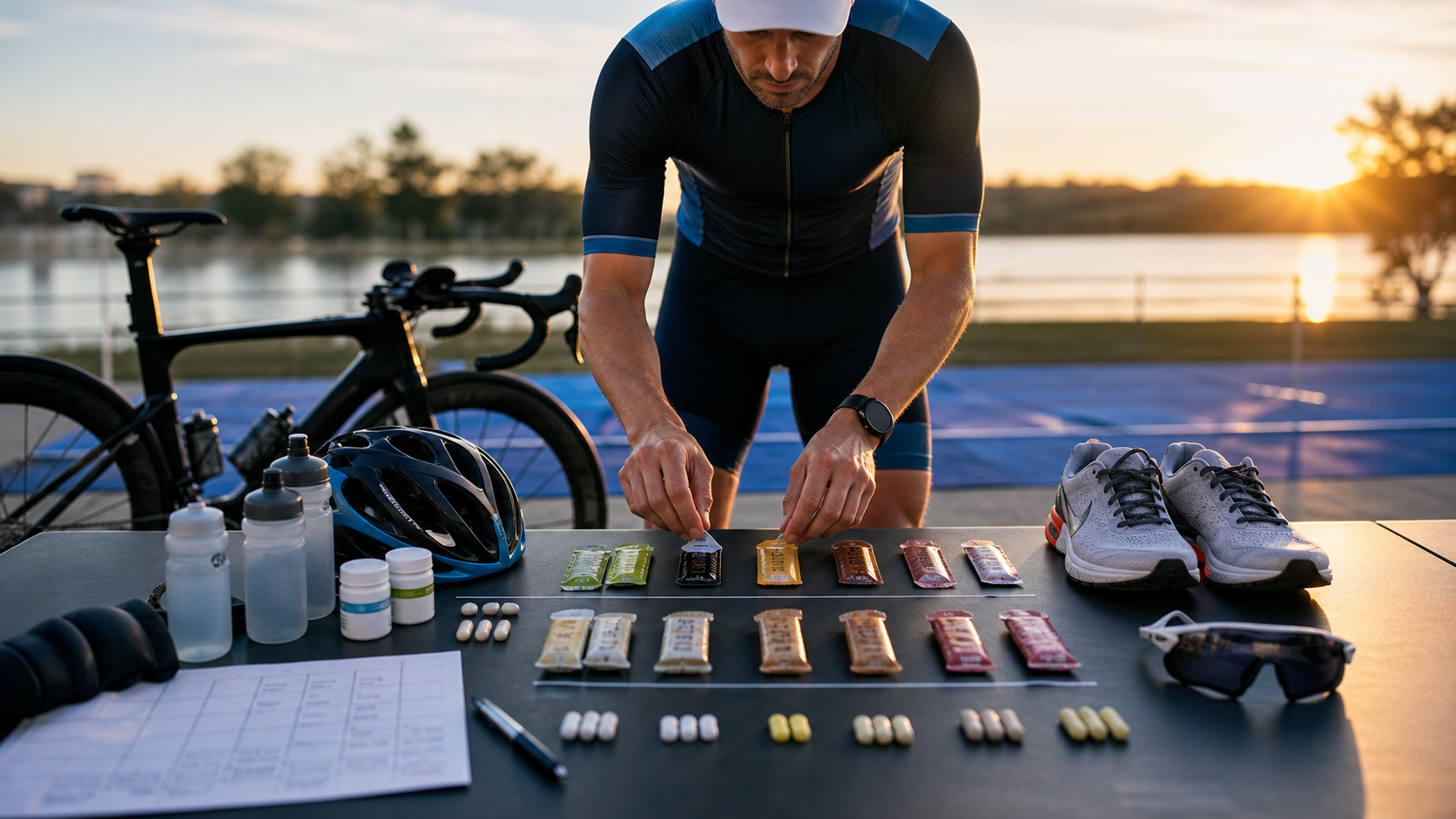
I’ve heard this sentence in the post-race tent for fifteen years. From athletes tackling their first Taitung Puyuma 51.5, to Challenge Taiwan 226, to flying out to race for a Kona slot, I can say with full responsibility: in races of half-distance and beyond, what breaks most people is usually not insufficient training, but a fueling plan that was never written—or written but never practiced. People pour hundreds of hours into swim-bike-run workouts, yet treat eating and drinking with a “just grab whatever at the race” attitude—it’s like having your bike fit perfectly dialed in, then trying your cycling shoes for the first time on race day.
In this article, I’ll break down fueling plans for three distances—51.5 (Olympic distance), 70.3 (half Ironman), and 226 (full Ironman)—segment by segment, the way I coach my athletes: how many carbs per hour, how to choose products, how to lay out the timeline segment by segment, and what your backup plan is when your gut acts up. By the end, you should be able to go home and draw up your own fueling chart.
1. Building the Foundation: Why “Carbs Per Hour” Is the Core Metric
Endurance fueling, put simply, is a race against your glycogen stores. The human body’s glycogen can only sustain roughly 90 to 120 minutes of high-intensity output. Once it bottoms out, your pace falls off a cliff—what runners call “hitting the wall.” The goal of race-day fueling isn’t to stuff you full; it’s to delay glycogen depletion as long as possible and keep a steady supply of blood sugar flowing to your working muscles and brain.
Here’s a critical physiological ceiling: with glucose alone, the human gut can only absorb about 60 grams per hour. Beyond that, excess carbs sit in the gut fermenting, causing bloating, and even diarrhea—which is why some people “eat a lot yet still have no energy, and feel like throwing up.”
The key to breaking through this wall is multiple transportable carbohydrates. Glucose uses the SGLT1 transport channel, while fructose uses a separate GLUT5 channel—they don’t compete for the same pathway. Research shows that mixing glucose and fructose at roughly a 2:1 ratio can significantly increase carbohydrate oxidation rates, pushing total intake up to about 90 grams per hour, without a higher rate of gastrointestinal distress than 60 grams per hour. This is why the sports nutrition world has been hammering on “fructose ratios” for the past decade.
So when you see “2:1” or “1:0.8” glucose-to-fructose ratios on fueling packaging, that’s not marketing hype—it’s a physiologically grounded design. The value of multiple transportable carbohydrates is that it accomplishes two things at once: it raises the amount of carbs that can actually be “burned” per unit of time, and it minimizes the unabsorbed residue left in the gut that tends to cause bloating. The longer your race, the more critical both of these become.
I often use this analogy with my athletes: your gut is like a toll booth—glucose takes the ETC express lane, fructose takes the manual lane. If you only open the ETC lane (pure glucose), traffic jams up the moment volume increases; open both lanes and throughput naturally doubles. That’s why “multiple carb sources” is far smarter than “chugging the same sugar like crazy.”
Carb Loading Three Days Out: Fill the Tank First
Race-day fueling actually begins three days before the starting gun. Carb loading aims to maximize muscle and liver glycogen stores before the race, giving you more onboard fuel to burn—essentially “buying time” for your external race-day fueling.
In practice, I have 70.3 and 226 athletes increase daily carb intake to roughly 8 to 12 grams per kilogram of body weight in the 2 to 3 days before the race, while reducing training volume (the taper week should already mean less training), so the body stores those carbs instead of burning them on the spot. Here are a few details Taiwanese athletes often trip over:
- It’s not a license to binge: Total calories don’t need to spike; instead, tilt the proportions on your plate toward carbs and reduce the space taken up by fats and excess protein. White rice, noodles, sweet potatoes, toast, and bananas are all good choices.
- The closer to race day, the less fiber: From the day before through race-morning breakfast, stick to “white, easily digestible” carbs and avoid large amounts of vegetables, whole grains, and legumes—otherwise your gut is likely to throw a tantrum on race day. This matters especially in Taiwan, where many people’s fiber intake from eating out is already inconsistent.
- Glycogen holds water: Each gram of glycogen stores about 3 grams of water along with it, so gaining 1 to 2 kg after carb loading is normal—don’t panic, that’s fuel and fluid, not fat.
- Don’t try a new restaurant the night before: This is a lesson learned through blood and tears. Taiwan races often involve overnight stays away from home; choose familiar, clean, non-spicy, non-greasy food to minimize the risk of “gut surprises.”
Hourly Carb Targets by Distance
The longer the distance and the longer the time, the more you need external carbs to carry you; but at the same time, the longer the race, the lower the relative intensity, and the more capacity your gut has to digest. Here are the practical starting ranges I use with my athletes (be sure to adjust based on your own gut tolerance):
| Distance | Estimated Finish Time | Hourly Carb Target | Key Fueling Strategy |
|---|---|---|---|
| 51.5 (Olympic) | 2.5–3.5 hours | 30–60 g | High intensity, short duration; focus on hydration and small amounts of fast sugar, avoid gut burden |
| 70.3 (Half Ironman) | 4.5–7 hours | 60–90 g | Bike leg is the golden eating window; run leg shifts to liquids and gels |
| 226 (Full Ironman) | 9–15 hours | 60–90 g (larger athletes can push higher) | Full rotation of solids + liquids + electrolytes throughout; no backup plan can be missing |
Note that these are ranges, not something to calculate to the decimal point. A 55 kg female athlete and an 82 kg male athlete simply have different stomach capacities and absorption limits. Larger athletes with well-trained guts may be able to push intake higher in a 226; but for someone doing their first 70.3, I’d rather start at 60 grams to establish a solid baseline, then gradually build up. Better to absorb just enough than to stuff yourself to the point of vomiting.
2. Product Selection: How to Combine Solids, Gels, Liquids, and Electrolytes
People often ask me “which brand is best,” but what I care about more is the ratio of types. On race day you’ll use four major categories of fueling, each with its own role:
- Energy gels: Fast absorption, small size, easy to carry—the mainstay of the run leg. Downside: cloyingly sweet, and eating one alone tends to make you thirsty; always chase with water.
- Sports drinks / carb drink mixes: Hydration, carbs, and electrolytes all at once—the efficiency king of the bike leg. Using detachable bottles to mix your own concentration gives the most flexibility.
- Solid foods (bars, rice balls, bananas): Require chewing, provide satiety, and can soothe a churning stomach—the psychological and physiological pillar of the long bike leg in a 226.
- Electrolyte tablets / salt pills: Taiwan’s summers are hot, humid, and muggy; if you don’t replace the sodium lost through sweat, you’re prone to cramping and nausea. In Taiwan races, this is practically a necessity, not an option.
Special Notes on Taiwan’s Climate
Taiwan’s triathlon events—whether Challenge Taiwan in Taitung, Penghu, or Kenting—mostly take place in hot, humid conditions. High heat and humidity cause your sweat rate to skyrocket and your core temperature to rise, while blood flow is diverted to the skin for cooling, reducing digestive capacity. This means two things:
- Electrolyte (especially sodium) needs should be pushed upward—roughly 500–1000 mg of sodium per hour is a common range, and those who sweat salty (with white salt stains on clothing) should aim higher.
- Solid food is harder to digest in heat and humidity—the further into the race and the hotter it gets, the more you should shift your fueling focus from solids to liquids and gels.
I often tell my athletes: “In Taiwan’s races, the priority of water and salt intake sometimes comes before carbs.” One athlete once stuffed himself with energy bars during the bike leg of Kenting 113, but as soon as the run leg started, that mass in his stomach wouldn’t budge, and he ended up walking to the finish. It wasn’t a lack of strength—it was a strategy that didn’t match the climate.
Caffeine: A Great Teammate When Used Wisely, a Bad One When Overdone
Caffeine is one of the few legal supplements with solid evidence supporting its ability to enhance endurance performance. It reduces perceived exertion during exercise and helps you maintain focus and pace in the later stages. In practice, here’s how I use it:
- Timing matters more than total amount: Save caffeine for the latter half (the run leg of a 70.3, or the late bike to run leg of a 226) for the most noticeable effect. Consuming it continuously throughout the race builds tolerance early, leaving you with no cards to play later.
- Stick to familiar sources: Caffeinated energy gels and flat cola are good options. Never try a high dose of caffeine for the first time on race day—some people experience heart palpitations and stomach upset.
- Pair it with hydration: Caffeine has a mild diuretic effect, so in hot, humid conditions, make sure your fluid intake doesn’t drop too much as a result.
A Quick Table: The Roles of Four Fuel Types
| Fuel Type | Absorption Speed | Primary Use Window | Advantages | Cautions |
|---|---|---|---|---|
| Energy Gels | Fast | Main fuel for run leg, supplement on bike leg | Compact, easy to carry, high carb concentration | Always take with water to avoid flavor fatigue |
| Sports Drinks / Carb Drinks | Fast | Throughout, most dominant on bike leg | Hydrates, fuels carbs, and replenishes electrolytes simultaneously | Adjust concentration yourself; too concentrated causes bloating |
| Solid Food | Slow | Bike leg (especially early-to-mid 226) | Provides satiety, soothes the stomach | Stop well before the run leg to avoid indigestion |
| Electrolyte Tablets / Salt Pills | — | Taken on schedule throughout | Prevents cramps and hyponatremia | Nearly essential in Taiwan’s hot, humid climate |
3. 51.5 Olympic Distance: Short and Fast, Less Is More
The Olympic distance’s fueling demands are actually the most “counterintuitive”—because the time is short (most finish within 2.5 to 3.5 hours) and intensity is high, your gut can only handle a limited amount under high effort. The core of this distance isn’t about eating a lot; it’s about not eating your way into trouble.
51.5 Segment-by-Segment Example
- 2–3 hours before the start: A normal breakfast focused on easily digestible carbs (white toast, white rice, banana, sweet potato), about 1–2 grams of carbs per kilogram of body weight. Avoid high-fiber, high-fat, and high-lactose foods.
- 1.5 km swim: No fueling. Know this before you get out of the water—transition is your first eating point.
- 40 km bike: This is the only segment where you can eat steadily. Focus on sports drinks, with 0.5–1 energy gel. Aim for 30–45 grams of carbs per hour, with the goal of building a solid blood sugar foundation for the run.
- 10 km run: Most people only need water or sports drinks at aid stations; if you’re pacing fast, you might not even manage a full gel. If you feel yourself fading, take half a gel with a big sip of water.
Coach’s Tip: The most common mistake at 51.5 is “fueling with a 226 mindset,” resulting in eating too much on the bike and a cranky stomach on the run. At this distance, nailing your pre-race meal plus steady hydration on the bike usually wins you half the battle.
51.5 Segment-by-Segment Fueling Schedule Example (Based on ~3 hours total, targeting 40g per hour)
| Stage | Time Point | Fueling Content | Notes |
|---|---|---|---|
| Pre-race | 2–3 hours before start | Easily digestible breakfast; 15 minutes before start, half a gel or a few sips of sports drink | Build up blood sugar baseline |
| Swim 1.5km | 0:00–0:30 | No fueling | Focus on swimming, don’t overexert |
| Bike 40km | 0:35–1:45 | Sports drinks as primary, one gel mid-way, one electrolyte hit | Only stable eating window |
| Run 10km | 1:45–3:00 | Water or sports drinks at aid stations; half a gel if struggling | Prioritize stability, no solids |
This distance’s fueling plan is deliberately simple—because simplicity itself is the strategy. You don’t need complex rotations; just build your blood sugar base on the bike and avoid dehydration on the run, and you’ll perform steadily.
4. 70.3 Half Ironman: The Bike Leg Is Your Golden Eating Window
A 70.3 (1.9 km swim, 90 km bike, 21.1 km run) typically takes 4.5 to 7 hours, and at that point, glycogen stores will definitely run dry—external carbs shift from a “bonus” to a “necessity.” The strategic core is one sentence: Eat what you need on the bike, because on the run you’ll almost only be able to handle liquids and gels.
Why? Because while cycling, your upper body is relatively stable and your breathing rhythm is steady, giving your gut room to digest solids. Once you dismount and start running, the up-and-down impact plus elevated heart rate slow gastric emptying—stuffing solids at that point is almost a guaranteed disaster.
70.3 Segment-by-Segment Fueling Schedule Example (Based on ~6 hours total, targeting 75g per hour)
| Stage | Time Point | Fueling Content | Cumulative Carbs |
|---|---|---|---|
| Pre-race | 2–3 hours before start | Easily digestible breakfast (rice ball + banana), 15 minutes before start half a gel | Baseline |
| Swim 1.9km | 0:00–0:35 | No fueling | — |
| Bike – Early | 0:40–1:40 | A sip of carb drink every 20 minutes, half an energy bar at 40 minutes | ~75g |
| Bike – Middle | 1:40–2:40 | Continue carb drink, one gel at 90 minutes, take electrolyte tablets | ~150g |
| Bike – Late | 2:40–3:20 | Stop solids 20 minutes before dismounting, switch to carb drink + one gel | ~200g |
| Run – Early | 3:20–4:40 | Sports drink at every aid station, one gel every 40 minutes | ~260g |
| Run – Late | 4:40–6:00 | Cola / sports drink, half a gel with water if struggling | ~310g |
Coach’s Tip: Notice the detail in the table—“stop solids 20 minutes before dismounting.” This is the tip I love to drill into my athletes. Giving your stomach a buffer to process the last batch of solids will make the start of your run feel dramatically better. Also, that cup of cola late in the run isn’t just a craving—flat cola is a combination of fast sugar and caffeine, and many people rely on it to get through the final 5 km.
5. 226 Full Ironman: An Endurance Race of Eating and Drinking
A 226 (3.8 km swim, 180 km bike, 42.2 km run) can take anywhere from 9 to 15 hours, and the complexity of the fueling plan is on another level entirely. Here, I’ll only cover the most critical principle: Fueling for a 226 is its own endurance event—you need to train it as thoroughly as you train your swim, bike, and run.
The Three Pillars of 226 Fueling
- Solid-Food-Focused Bike Leg (Early to Mid):With 180 km to cover over 5 to 7 hours, relying solely on gels will leave you sickeningly sweet and lacking satiety. Rice balls, energy bars, bananas, even savory small buns, are great partners for stabilizing blood sugar and soothing the stomach. Aim for 60–90 grams of carbs per hour; larger athletes with well-trained guts can push higher.
- Liquid-and-Gel-Focused Run Leg:Same as in 70.3, after dismounting, switch to easily absorbable liquids, gels, and cola. Over a 42 km marathon, your stomach has been working for a long time—the simpler, the better.
- Continuous Electrolyte Replenishment Throughout:This is the most overlooked yet most critical aspect of a 226. Sweating for over ten hours means sodium is constantly lost; failing to replace it leads to cramping, nausea, or even hyponatremia. In Taiwan’s hot, humid conditions, strict execution is non-negotiable.
Sample 226 Segment-by-Segment Fueling Schedule (Based on ~12 Hours Total, Targeting 75g Carbs/Hour)
Below is a fueling framework I set up for an age-group male athlete (approx. 70 kg) at Challenge Taiwan 226. The numbers are examples—adjust based on your own gut-training results:
| Segment | Approx. Time | Fueling Content | Key Strategy for This Segment |
|---|---|---|---|
| Pre-Race | 3 hours before start | Rice ball + banana + sports drink; half a gel 15 minutes before start | Top off glycogen; pre-race meal must be easy to digest |
| Swim 3.8km | 0:00–1:10 | No fueling | Maintain rhythm; don’t burn glycogen with excessive warm-up |
| Bike Early | 1:15–3:30 | Carb drink every 20 min, one solid (energy bar/savory rice ball) every 40–45 min, electrolyte tablet every hour | Golden window for solids—eat up while your gut is still cooperative |
| Bike Mid | 3:30–5:30 | Alternate solids and gels, rotate sweet and savory to beat taste fatigue, keep hydrating and taking sodium | High-risk “sick of eating” zone—savory options save the day |
| Bike Late | 5:30–6:45 | Stop solids 30 min before dismounting; switch to carb drink + gel | Give your stomach a buffer so T2 run start doesn’t blow up |
| Run Early | 6:45–9:30 | Sports drink at every aid station, one gel every 40 min, keep taking sodium | Slow down first to let the stomach wake up; use only liquids and gels |
| Run Late | 9:30–12:00 | Flat cola + sports drink; half a gel with water if struggling; walk if needed | Caffeine and fast carbs to finish; safety first |
Coach’s Note:The biggest fear with a 226 fueling plan is “too conservative early, can’t eat later.” The bike leg in the first 6 hours is your only window to consistently pack in solids. Eat enough during this time—don’t skip because you “still feel strong.” By the time you’re hungry on the run, your stomach usually won’t accept anything.
Common 226 Crash Points and How to Respond
- “Sick of Eating” Mid-Bike:Sweet-taste fatigue is real. Prepare savory options (savory rice balls, salty crackers) to alternate—this can significantly extend how long you’re willing to keep eating.
- Stomach “Shuts Down” After T2:Slow down early in the run, drink only liquids, and gradually reintroduce gels once your stomach reboots. Forcing food will only make things worse.
- Mental Fog and Chills in the Second Half:This could signal both low blood sugar and low electrolytes. Immediately take fast carbs + sodium; if necessary, stop and walk. Safety always trumps performance.
六、Hydration: The Underrated Other Half
When discussing fueling, many people only focus on carbs, forgetting that dehydration can hurt performance just as much as not eating enough sugar. When you lose more than 2% of your body weight (e.g., a 70 kg person losing over 1.4 kg of sweat), endurance performance, focus, and thermoregulation all start to decline—more so in hot, humid conditions. In Taiwan’s summer triathlons, dehydration is an enemy every athlete must face head-on.
Here’s how I typically guide hydration in practice:
- Drink proactively on a schedule, don’t wait for thirst:Thirst is a lagging indicator; by the time you feel it, you’re often already mildly dehydrated. Set reminders and take small sips every 15 to 20 minutes.
- Estimate your sweat rate:Do a long training session in similar hot, humid race conditions. Weigh yourself before and after, track how much you drank in between, and you can roughly estimate “how much you sweat per hour”—giving you a basis for race-day hydration.
- Don’t over-hydrate:Conversely, chugging plain water without sodium can cause hyponatremia, with symptoms like headache, nausea, and confusion—potentially fatal in severe cases. Hydration and sodium intake must go hand in hand; more water isn’t always better.
- Use detachable bottles and aid stations wisely:Control concentration with your own bottles on the bike, rely on aid stations for water on the run, and research aid station spacing beforehand so you know what to expect.
One sentence to sum up this section: Carbs determine whether you have fuel; water and electrolytes determine whether your engine overheats and stalls. Both must be managed together.
七、The Four Most Common Fueling Mistakes (And How to Fix Them)
In years of coaching, I’ve found athletes repeat the same pitfalls. Please check yourself against this list:
Mistake 1: Trying a new product for the first time on race day. This is the #1 cardinal sin. Gut tolerance to fueling products must be rehearsed repeatedly in training. Fix: Treat long training days as fueling dress rehearsals—use the same products, concentrations, and timing as race day.
Mistake 2: Fueling carbs only, without water or electrolytes. High-concentration carbs without enough water will pull fluid into the gut and cause diarrhea; skipping sodium leads to cramping in hot, humid conditions. Fix: Carbs, water, and electrolytes are a three-legged stool—none can be missing. Always take gels with water, and consistently take sodium in long races.
Mistake 3: Treating the run leg as the main eating window. The impact of running and high heart rate slow gastric emptying. Fix: Make the bike leg the primary fueling focus; sustain the run with liquids and gels.
Mistake 4: Drinking only when thirsty, eating only when hungry. By the time you feel it, you’re usually already behind. When dehydration reaches the point of thirst, performance has often already declined. Fix: Fuel proactively on a schedule—set watch reminders and take small sips and bites every 15–20 minutes, rather than waiting for your body’s alarm bells.
八、Actionable Advice for Athletes at Different Levels
First-Timer / First 51.5
Your primary goal is to finish and enjoy the process—fueling should be steady, not extreme. Master your pre-race meal and learn to hydrate consistently on the bike, and you’ll already beat half the first-timers. Don’t chase advanced numbers like 90 grams per hour; first, make friends with your gut.
Intermediate / Taking on 70.3
Start building a quantitative mindset with a “carb target per hour.” Use long training sessions to test your gut’s limit and find the amount you can steadily absorb on the bike. Focus on practicing the transition rhythm of “stopping solids before dismount, switching to liquids on the run.”
Advanced / Preparing for 226 or Age-Group Rankings
Your fueling plan needs to be calculated down to every hour and segment, with two to three backup plans:a primary plan (the one you’ve practiced most), a gut-distress plan (switch to light liquids, pause solids), and a race-supply plan (in case your own fuel is lost, you can bridge with what’s available at aid stations). Laminate your fueling chart and attach it to your bike frame, or write it on your arm—when nerves hit, you’ll thank your past self.
Pre-Race Week Fueling Checklist
Regardless of your level, I have all my athletes run through this checklist the week before a race to minimize “discovering you forgot something at the last minute”:
- Inventory and test your fuel:Confirm you have enough gels, carb drinks, and electrolyte tablets, and that every item is one you’ve tried in training and your gut recognizes.
- Write down your fueling plan:Don’t keep it only in your head. Laminate a small card and attach it to your bike frame, or write it on your arm with waterproof marker—following the plan under pressure is the most reliable approach.
- Start carb-loading 2–3 days before the race, cut fiber, drink plenty of water, and eat familiar, light carbs the night before.
- Check the race’s aid station offerings:Look up what this event provides (water, sports drink, bananas, cola) so you have a basis for your backup plans.
- The night before the race:Prepare and lay out tomorrow’s breakfast, the pre-start gel, and the fuel to pack on the bike—so race morning is calm and collected.
9. Backup Plans: When the Plan Starts to Fall Apart
No matter how perfect the plan, it can be disrupted by stomach issues, weather, or dropped nutrition. What truly sets experienced athletes apart is having a Plan B:
- Stomach churning, feeling nauseous: Immediately lower carbohydrate concentration, dilute your sports drink with water, stop all solid food, and use only plain water with a small amount of electrolytes. Gradually reintroduce food once symptoms subside.
- Dropped or finished your own nutrition: Memorize what’s available at aid stations (most Taiwanese races have water, sports drink, bananas, and sometimes cola). Test these “standard-issue supplies” during training so your stomach won’t rebel on race day.
- Completely unable to eat: This is where “liquid calories” become your lifeline. Even if you can’t swallow a single bite of solid food, sports drink and flat cola are usually still tolerable. First, keep your blood sugar from crashing, then work on gradual recovery.
- Warning signs of cramping: This is usually a combination of electrolyte depletion and fatigue. Immediately replenish sodium and slow your pace—pushing through often leads to more severe muscle spasms.
10. A Real-Life Scenario: Turning a “Crash” into a “PB”
I’d like to close this section with a story about one of my athletes. She was a 42-year-old working mom tackling her first 70.3. During the bike leg, she felt great and pushed hard the whole way, but her fueling strategy was “drink when thirsty, eat when you remember.” The result? Less than 3 kilometers into the run, she was nauseous and her legs felt like jelly. She shuffled and walked her way through more than two painful hours to the finish line, and afterward sat in the tent fighting back tears.
The next year, we didn’t double her training volume. Instead, we treated fueling as a standalone discipline to train. Throughout the entire build-up, we focused on these things:
- Every long session over 90 minutes included fueling practice at race concentration, logging which gels made her nauseous and which concentration felt just right.
- Set watch reminders: small sips of fluid every 15 minutes, carbohydrates every 40 minutes, turning “proactive fueling” into muscle memory.
- Targeted approximately 70 grams of carbohydrates per hour on the bike, with a strict rule to stop solid food 20 minutes before dismounting.
- Did a gentle carbohydrate load three days before the race, and ate the same light, familiar carb-heavy meal the night before that she had tested in training.
At the same 70.3 the following year, she didn’t walk a single step during the run and improved her overall time by over 20 minutes, crossing the line with a smile. I’ll always remember what she told me: “Turns out I wasn’t weak—I just never competed in fueling before.” Her training volume had barely increased; what changed her race was a fueling plan that was actually executed.
11. FAQ
Q1: I have a very sensitive stomach and get anxious just thinking about eating during a race. What should I do?
A: Don’t chase high numbers at first. Start with 40 to 50 grams per hour, primarily from liquids, and gradually increase during training to find your comfortable ceiling. The gut can be “trained”—repeated practice improves tolerance. If you’re truly sensitive, rely more on liquid carbohydrates like sports drinks and reduce the proportion of solids.
Q2: Can I just drink plain water?
A: It might barely work for short distances (51.5) at low intensity, but it’s absolutely not recommended for anything 70.3 and above. Drinking only plain water for extended periods means you’re deficient in both carbohydrates and electrolytes, which easily leads to bonking and cramping, and even carries a risk of hyponatremia. Water, carbohydrates, and electrolytes are the three legs of a stool—you can’t remove any one of them.
Q3: Do I really need to take energy gels with water?
A: Strongly recommended, yes. Gels have a very high carbohydrate concentration. Taking one without water pulls water into your intestines, which can actually make bloating, thirst, and diarrhea worse. The rule is: when you take a gel, follow it with a big sip of water.
Q4: How much sodium should I actually take during a summer race in Taiwan?
A: A common range is roughly 500 to 1000 mg of sodium per hour. If you sweat heavily and have white salt stains on your clothes, aim for the higher end. The most accurate approach is to observe your sweat rate and cramping tendency during training. After a few hot, humid long sessions in your build-up, you’ll have a good sense of your own needs.
Q5: What if I really can’t eat anything during the race?
A: First priority is “don’t let your blood sugar crash.” Even if you can’t swallow a single bite of solid food, liquid calories like flat cola and sports drink are usually still manageable. Use them to maintain blood sugar, slow your pace to give your stomach a breather, and gradually reintroduce food once symptoms ease. Safety always comes before performance.
Conclusion: Make Fueling Your Fourth Discipline
Triathlon is swim, bike, run—but every true veteran knows that fueling is the invisible fourth discipline. You can train swim, bike, and run to a very high level, but if your race-day eating and drinking are a mess, hundreds of hours of preparation will go down the drain in the final kilometers.
This article gives you a template and principles, not a bible. The fueling plan that truly belongs to you is one you calibrate bit by bit through repeated long-distance training sessions, using your own stomach, your own sweat, and your own pace. Starting with your next long ride or run, treat fueling as a discipline to be trained—write out a schedule, execute it, and review and adjust after each session.
By race day, you’ll find that while others are clutching their stomachs near the finish line, you’re still holding a steady rhythm, even crossing the line with a smile. That sense of control is the reward for making fueling your fourth discipline.
This article is for educational purposes and does not replace individual assessment by a physician, physical therapist, or nutritionist.
References
- Triathlete — How Should Triathletes Handle the “Era of Peak Carbs?”: https://www.triathlete.com/nutrition/carbs-per-hour-triathlon/
- Gatorade Sports Science Institute — Multiple Transportable Carbohydrates And Their Benefits: https://www.gssiweb.org/sports-science-exchange/article/sse-108-multiple-transportable-carbohydrates-and-their-benefits
- NEVERSECOND — What are Multiple Transportable Carbohydrates?: https://never2.com/blogs/guides/what-are-multiple-transportable-carbohydrates
Related Reading
西進武嶺 免費訓練分析服務 Intervals | 練不夠還是練過頭?你哪一種類型選手?AI模型告訴你! | 備戰神器 | 公路車 訓練 | CT Yeh
4 年前
Live) 備戰2019彰化經典百K 賽前攻略 (已完賽請看新影片
7 年前
#公路車 #西進武嶺 配速配瓦實驗 坡度分析 四小時內攻略 建大盃 NeverStop #西進武嶺攻略
6 年前
CT暗黑廚房) 車友必備 宇宙無敵鮮蚵湯 幫助訓練恢復 天然食補 好市多 超肥鮮蚵 破PR
7 年前
一日北高前的高裝檢 | 北高 360 | 挑戰11小時的裝備 | 一日雙塔 | 補給
6 年前
半日 小台灣 極限單車路線挑戰實錄
7 年前
2019 夏季KOM 5小 完賽心得 準備攻略 東進武嶺 夏季登山王之路 Taiwan KOM Challenge
7 年前
FTL 與 SYB 車隊專訪 西進武嶺 實用攻略分享! 2小時 如何練?!你不知道的眉角!新手準備武嶺必看 EP1 | 實力派女車友 | 精華版 | 公路車 | CTYeh
4 年前