The Complete Guide to Caffeine Supplementation: Dosage, Timing, and Genetic Differences—A Coach's Guide to Using Caffeine Right
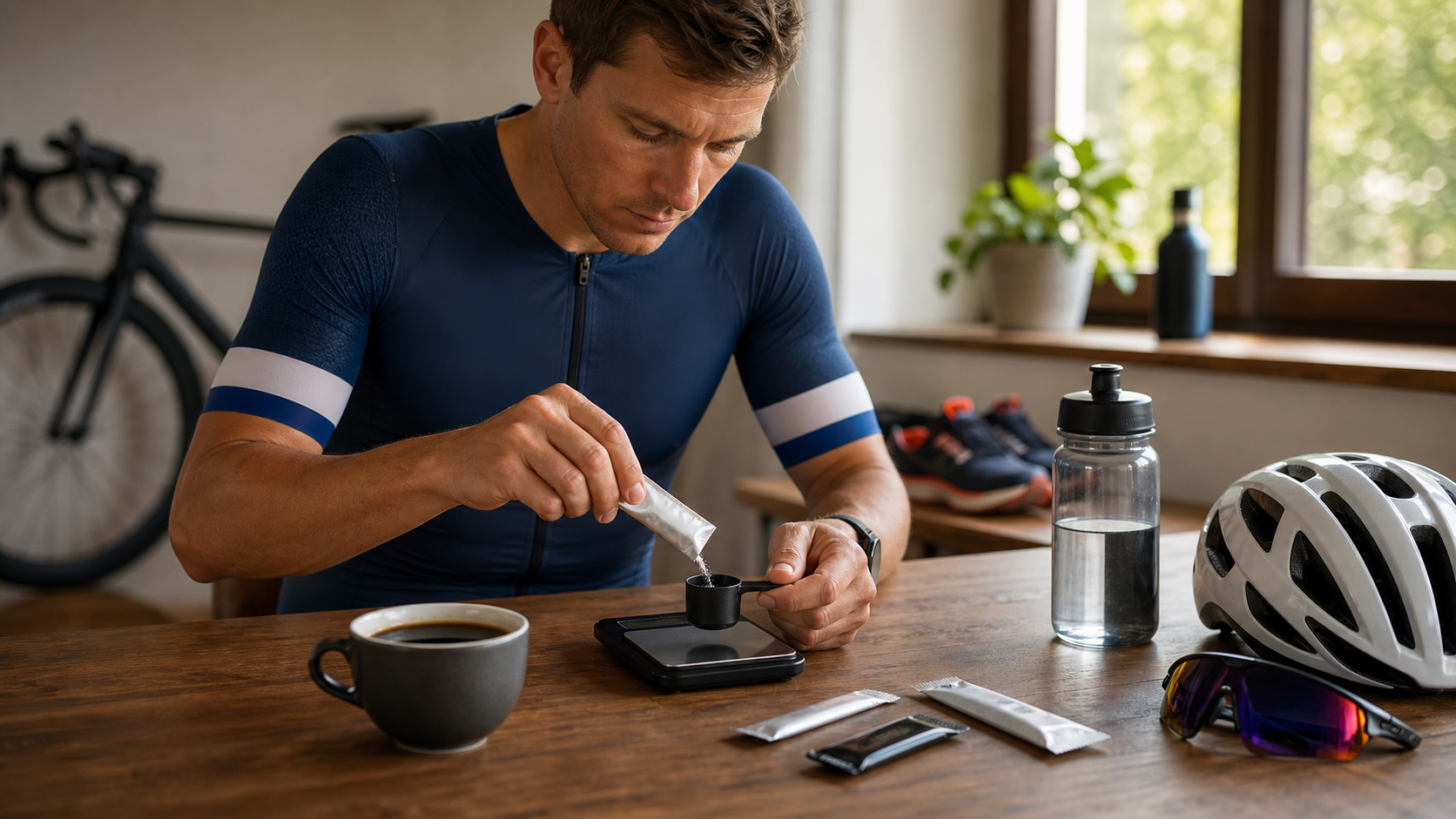
Coach’s Opening: Starting with a Convenience Store Americano
Having coached athletes for years, I’ve noticed something interesting: almost everyone drinks coffee before a race, but fewer than two out of ten athletes truly know how to “use” caffeine properly.
I remember one athlete vividly—let’s call him A-Kai—who had been training for triathlons for two years, aiming to complete a 113 half-distance ironman. He was used to having a medium Americano from the convenience store every morning, and he’d do the same on race day. Once, before a full 226 km race, he decided to “feel more energized” by scaling up his usual single cup to one before leaving home, another in transition, and then two caffeinated energy gels during the run leg. The result? The first 90 km of the bike leg felt like he had a cheat code, but the moment he hit T2 and started running, his heart rate spiked more than ten beats above what his pace should have dictated, his stomach was churning, his hands were shaking, and he eventually blew up, finishing nearly 40 minutes slower than expected.
After the race, he asked me: “Coach, isn’t caffeine supposed to make me stronger? Why did it backfire on me?”
That’s exactly what we’re going to talk about today. Caffeine is indeed one of the most evidence-backed, cheapest, and legal ergogenic aids in sports science—but it’s a double-edged sword. Used with the right dose, the right timing, and an understanding of your own genetics and sensitivity, it can reliably squeeze out 2% to 4% of endurance performance. Used wrong, it can cause heart palpitations, stomach issues, sleeplessness, and even leave you more depleted than before.
In this article, I’ll speak in the practical tone I use with my athletes and upgrade caffeine from “a habit” into “a strategic race weapon.”
Part 1: The Science—How Caffeine Actually Makes You Faster
It’s Not Just About “Waking Up”
Many people think caffeine is simply about “alertness,” but its mechanism for athletic performance runs deeper. The current consensus in sports science points to several key pathways:
- Blocking adenosine receptors: Adenosine is the signaling molecule that makes you “feel tired.” Caffeine’s structure closely resembles adenosine, so it locks onto the receptors, making your brain “think” you’re not as fatigued as you are—in other words, lowering your rating of perceived exertion (RPE). This is its most fundamental effect.
- Enhancing central nervous system excitability: It makes neuromuscular recruitment more efficient, giving you a “crisper” feeling of power output.
- Improving focus and reaction time: In the later stages of a long race, it helps maintain technical form and decision-making—useful for the triathlon run leg, trail descents, and pack tactics.
- Potentially influencing muscle calcium handling and pain perception: Making the same effort “feel less painful.”
Here’s a key point: caffeine doesn’t magically give you more energy—it makes you “more able to endure and push harder.” So it’s a performance amplifier, not a fuel source.
There’s an old popular claim: “Caffeine promotes fat burning and spares glycogen.” This mechanism was emphasized in early research, but later evidence shows its contribution in real race scenarios is actually limited. The real battleground is the central nervous system and perceived exertion. So don’t expect caffeine to “save fuel” for you; instead, treat it as a tool that makes “the same effort feel less painful and lets you push longer.” This conceptual correction matters because it determines how you use it—you won’t bring fewer supplies just because you had caffeine; you still need to fuel with carbs as planned.
How Strong Is the Evidence?—What 2% to 4% Actually Means
This is the number I most want my athletes to remember. According to the International Society of Sports Nutrition (ISSN) position stand on caffeine and exercise performance, caffeine at low to moderate doses (approximately 3-6 mg/kg body weight) effectively enhances performance in trained athletes, while higher doses (≥9 mg/kg) provide no additional benefit and dramatically increase side effects.
Multiple meta-analyses show that in the 3-6 mg/kg dose range, endurance performance improves by approximately 2% to 4%, with average power output increasing by about 2.9%.
Does 2% to 4% sound small? Let me convert that into race times, and you’ll feel the difference:
| Event | Original Time | After 3% Improvement | Time Saved |
|---|---|---|---|
| Half Marathon (21.1 km) | 1:50:00 | Approx. 1:46:42 | Approx. 3 min 18 sec |
| Full Marathon (42.195 km) | 4:00:00 | Approx. 3:52:48 | Approx. 7 min 12 sec |
| 113 Half Ironman | 6:00:00 | Approx. 5:49:12 | Approx. 10 min 48 sec |
| 226 Full Ironman | 12:00:00 | Approx. 11:38:24 | Approx. 21 min 36 sec |
(Note: This is an idealized linear conversion; reality won’t be this perfect, but it illustrates how impressive “small percentages” accumulate over long distances.)
For an athlete who trains like crazy and grinds for six months to break a PB, this 3% is almost free—and it comes from something you can buy at any convenience store. That’s why I say: not using caffeine strategically is like throwing away resources that are right on the table.
Part 2: Dosage—How to Calculate 3-6 mg/kg
First, Get “per kg” Right
This is where most athletes get confused. Caffeine dosage is calculated by body weight, not “one cup is enough.” The formula is simple:
Recommended dose (mg) = Body weight (kg) × 3 to 6
Let me give you a direct table so you can match your own weight:
| Body Weight | 3 mg/kg (Conservative) | 4 mg/kg (Common Starting Point) | 6 mg/kg (Upper Limit) |
|---|---|---|---|
| 50 kg | 150 mg | 200 mg | 300 mg |
| 60 kg | 180 mg | 240 mg | 360 mg |
| 70 kg | 210 mg | 280 mg | 420 mg |
| 80 kg | 240 mg | 320 mg | 480 mg |
| 90 kg | 270 mg | 360 mg | 540 mg |
My practical advice: If it’s your first time trying it, or you’re someone who doesn’t use much caffeine, start at 3 mg/kg. If you’re already accustomed to it, aim for 4 mg/kg as your race-day sweet spot. 6 mg/kg is the upper limit, reserved for major A-priority races and only if you’ve repeatedly tested it without issues in training. Going above 6 mg/kg offers almost no additional performance benefit—only more side effects—that’s how A-Kai unintentionally stacked his total to nearly 8-9 mg/kg and fell apart.
Caffeine Content Reference for Common Sources in Taiwan
Talking purely in mg is too abstract, so I’ve put together a reference table of caffeine content for the most accessible sources for Taiwanese athletes (actual amounts vary by brand and brewing method; these are common ranges):
| Source | Typical Caffeine Content (Reference Range) |
|---|---|
| Convenience store medium Americano (approx. 360 ml) | Approx. 150–200 mg |
| Convenience store large Americano (approx. 470 ml) | Approx. 200–280 mg |
| Espresso (single shot) | Approx. 60–80 mg |
| Standard Taiwanese bubble tea shop coffee (varies greatly by shop) | Approx. 100–200 mg |
| Commercial energy drink (one can) | Approx. 50–160 mg |
| Sports energy gel (caffeinated version, per packet) | Approx. 25–100 mg |
| Caffeine tablets / capsules (common commercial sizes) | Approx. 100 mg or 200 mg per pill |
| Green tea / black tea (one cup) | Approx. 30–70 mg |
Coach’s reminder: Caffeine content in beverages varies enormously, especially with bubble tea shop drinks and freshly brewed coffee. If you want “precise” control over your dose, on race day I usually recommend caffeine tablets or sports energy gels with clear labeling, because you can calculate them accurately. Save your everyday coffee for relaxed training days.
Why “Precision” Matters So Much in Racing
Because caffeine has a dose-response curve. Too little has no effect, the right amount is optimal, and too much starts causing heart palpitations, shaking hands, gastrointestinal discomfort, and anxiety. You don’t want to discover at hour 3 of the race that you’ve overdone it. That’s why I require all athletes who are seriously chasing results to do one thing: calculate your race dose in mg and write it into your fueling plan—don’t go by feel.
Part Three: Timing—When You Take It Matters More Than How Much
The Pharmacokinetic Basics of Caffeine
After oral ingestion, caffeine reaches peak blood concentration in approximately 30 to 60 minutes, while its half-life varies by individual, generally falling between 3 to 6 hours (slow metabolizers may take longer). Understand these two numbers, and you can design your timing.
Three Main Timing Strategies
Strategy 1: One full dose 60 minutes before the start (the classic approach)
Best suited for short to middle distances: 5K, 10K, half marathon, standard-distance triathlon (51.5), criteriums, and time trials. Take your entire daily dose about 45–60 minutes before the gun goes off, so the peak concentration lands exactly in the middle-to-late portion of the race when you need it most.
Strategy 2: Split dosing (best for long distances)
For races lasting several hours—full marathon, 113, 226—a single upfront dose won’t carry you to the finish. Here’s how I typically split it:
- 45–60 minutes before the start: approximately 2–3 mg/kg
- Mid-to-late race (e.g., 25–30K of a marathon, or the start of the run leg in a triathlon): another 1–2 mg/kg
- Keep the total within 6 mg/kg
Strategy 3: Delayed intake (beat the wall)
Some athletes don’t like starting with caffeine already on board. Instead, they deliberately save it for the moment they’re about to “hit the wall,” using it to suppress the pain in the latter stages. This works very well for experienced athletes with high psychological tolerance who can hold their pace steady in the early part of the race.
A Sample Caffeine Plan for a 226 Ultra-Distance Triathlon
Using a 70 kg athlete targeting a 12-hour finish with good caffeine tolerance as an example, with a total dose of about 5 mg/kg (350 mg), here’s how I’d schedule it:
| Time Point | Action | Dose | Cumulative |
|---|---|---|---|
| 45 min before start | Caffeine tablet or Americano | 100 mg | 100 mg |
| Bike leg, hour 3 | Caffeinated energy gel | 50 mg | 150 mg |
| Bike leg, hour 5 (before T2) | Caffeine tablet | 100 mg | 250 mg |
| Run leg, at 10 km | Caffeinated energy gel | 50 mg | 300 mg |
| Run leg, at 25 km (before final push) | Caffeinated energy gel | 50 mg | 350 mg |
Key reminder: Be careful with your stomach when taking caffeine late in the run. High-concentration products combined with the impact of running can easily upset your gut. That’s why I always pair it with adequate water and have the athlete “rehearse” the exact same protocol during long training sessions to confirm their stomach can handle it. Never use untested fueling on race day—this is an iron rule.
Special Considerations for Taiwan’s Climate
Taiwan’s races—especially long, sun-exposed courses like the Kenting 226 in spring/summer or the Eastbound Wuling climb—place a heavy burden on the body due to high heat and humidity. Caffeine has a mild diuretic effect (though its practical impact during exercise is often exaggerated), but in high heat I still recommend: when taking caffeine, be sure to top up fluids and electrolytes at the same time. Don’t let caffeine, dehydration, and an elevated heart rate stack up together. For summer races, I tend to have athletes aim for the lower end of the range (3–4 mg/kg) to leave a larger safety margin.
I once coached an athlete, Xiao-Mei, targeting the Eastbound Wuling climb. She handled 4 mg/kg smoothly in flat training, but on her first Wuling attempt, she started feeling heart palpitations and discomfort as altitude increased. We later figured out that at high altitude, heart rate is already elevated on its own; stacking caffeine’s cardiovascular stimulation on top pushed her past her comfort zone. After adjusting to 3 mg/kg and delaying the timing of intake to when she needed it most near the Cingjing section, she was much more stable for the rest of the ride. This again shows: the same person, the same dose, can react differently on different courses and in different climates—there is no one-size-fits-all number.
Taiwan’s Eating-Out Culture and Everyday Caffeine Environment
Taiwanese athletes also have a unique backdrop: we live surrounded by coffee and hand-shaken drinks. Convenience-store coffee is cheap, bubble tea shops are everywhere, and many people unknowingly consume 300–400 mg of caffeine a day without realizing it. This brings two practical reminders:
- Your daily baseline intake may be higher than you think. Tolerance builds up over time, and the race-day benefit may be diminished.
- Watch out for “hidden caffeine” the day before the race—milk tea, cola, chocolate, and even certain cold medications contain caffeine. If you plan to taper your intake before the race, all of these need to be counted, or you’ll think you’ve cut back when you actually haven’t.
I usually ask serious athletes to log every source of caffeine for three days. Many are shocked after they finish: “I had no idea I was drinking this much every day.”
Part Four: Genetic Differences—Why Some People Fly on Caffeine and Others Get Heart Palpitations
This is the most advanced section of the article, and the one that best explains “individual variation.”
The CYP1A2 Gene: Your Caffeine Metabolism Rate
Caffeine is primarily metabolized by an enzyme in the liver called CYP1A2. This enzyme’s gene has a common polymorphism (rs762551, also known as −163C>A) that roughly divides people into three types:
- AA type (fast metabolizer): Breaks down caffeine quickly and generally responds best to it.
- AC type (intermediate): Falls somewhere in between.
- CC type (slow metabolizer): Caffeine stays in the body longer, with a higher risk of side effects.
How Much Does This Affect Performance?
This is the key point backed by actual research. In cycling studies, caffeine (2 and 4 mg/kg) improved 10 km time-trial performance—but only in people with the AA genotype; CC genotype individuals saw no benefit at the lower dose, and their performance even worsened at the higher dose.
A systematic review and meta-analysis also found genotype-dependent effects: fast metabolizers (AA) experienced substantial performance improvements, AC types saw smaller gains, and CC carriers actually performed worse under caffeine.
In other words:
| Genotype | Caffeine Response Tendency | Practical Recommendation |
|---|---|---|
| AA (fast metabolizer) | Best response; can get the full benefit | Can use up to the 4–6 mg/kg sweet spot |
| AC (intermediate) | Modest improvement | Start at 3 mg/kg and observe the response |
| CC (slow metabolizer) | May be ineffective or even detrimental | Use a conservative low dose or consider not relying on caffeine |
What If I Don’t Know My Genotype?
Most people won’t get genetic testing, and that’s completely fine. Your body’s response is the best testing tool you have. I teach athletes a simple self-observation method:
If you tend to experience heart palpitations, shaking hands, agitation, gastrointestinal discomfort, or particularly severe insomnia after a moderate amount of caffeine, you’re likely a slow metabolizer and should lower your dose—or avoid relying on it during races. Conversely, if you clearly feel more focused, smoother power output, and few side effects, you’re probably one of the people who can benefit, and you can strategically use it as a weapon.
You can’t change your genes, but you can change your strategy. Knowing which type you are matters more than blindly forcing down “6 mg/kg.”
Part Five: Withdrawal, Tolerance, and Sensitivity—The Hidden Issues of Long-Term Use
If I Drink It Every Day, Will It Still Work on Race Day?
This is one of the questions athletes ask me most often. The answer is: the evidence is mixed, but long-term high-frequency use may indeed blunt the benefit for some people.
The body develops a degree of adaptation (tolerance) to caffeine. Habitual heavy users may find that the same dose on race day produces less of a “kick” and less alertness compared to someone who only drinks it occasionally. That doesn’t mean caffeine is completely useless for you, but the marginal benefit may decline.
Should You “Detox” from Caffeine Before a Race?
One school of thought is to gradually reduce or even cut out caffeine 7 to 10 days before a race, allowing your body to become more sensitive to it again, then fully replenish on race day. Theoretically, this can restore a stronger response.
My practical stance is to keep it but use it cautiously:
- Pros: For heavy daily users, this may bring back a more noticeable boost on race day.
- Risks: Caffeine withdrawal is not without cost. Stopping abruptly can cause headaches, fatigue, decreased focus, and low mood, typically starting 12–24 hours after cessation and lasting for several days. If the withdrawal period happens to coincide with your final key workouts before the race, you might suffer through training and see your form decline.
How I guide my athletes: If we decide to go through with desensitization, I use a “gradual taper” rather than “cold turkey”—for example, reducing the daily dose by 25% each day in the week before the race, rather than stopping outright, to minimize the risk of withdrawal headaches. And this must be rehearsed during a non-key season first—never try it for the first time before an A-priority race.
Self-Test for Sensitivity: A Simple Training-Day Test
I require every athlete who takes their results seriously to perform this test at least once during the training block before a race:
- Pick one moderate-intensity, long-enough key workout (e.g., a 90-minute tempo ride or a simulation race).
- Take 3 mg/kg of caffeine 45–60 minutes before the session (start with a low dose).
- Record: perceived effort, whether heart rate is unusually high, gastrointestinal status, focus, and post-session sleep quality.
- The following week, repeat the same workout with 4–5 mg/kg and record again.
- Find the dose where you “feel better, but side effects are acceptable”—that’s your race-day sweet spot.
I call this process a “dress rehearsal.” Every dose and every timing you plan to use on race day should be practiced at least once in training. I’ve said this to my athletes hundreds of times.
Sample One-Week Sensitivity Exploration Plan
I’ve designed a simple “one-week exploration” protocol for athletes to map out their individual responses before the competitive season. Using a 65 kg advanced rider as an example:
| Day | Workout | Caffeine Plan | Observation Focus |
|---|---|---|---|
| Monday | Easy aerobic 60 min | None (baseline day) | Record heart rate and perceived effort without caffeine |
| Wednesday | Tempo ride 75 min | 3 mg/kg (~195 mg) 45 min before | Perceived effort, heart rate drift, GI comfort |
| Friday | Intervals 5×5 min | 4 mg/kg (~260 mg) 60 min before | Tolerance at high intensity, hand tremors or not |
| Sunday | Long ride 2.5 hr | Split: 2 mg/kg before + 2 mg/kg at 90 min | GI tolerance of split dosing, perceived effort in the latter half |
After completing this week, most people will know clearly: roughly where their sweet spot is, where their side-effect threshold lies, and whether split dosing works for them. This is far more accurate than any “standard answer” you’ll find in online articles, because that answer comes from your own body.
Part 6: Comparing Caffeine Products—What to Use During a Race
The most practical question athletes ask is often: “Coach, what should I actually bring to the race?” There’s a wide variety of caffeinated sports products on the market. I’ve organized the common types into a comparison table so you can choose based on the situation.
| Product Type | Absorption Speed | Dosage Precision | GI Burden | Best Suited For |
|---|---|---|---|---|
| Caffeine tablets / capsules | Moderate | High (clearly labeled) | Needs water; can irritate on empty stomach | Pre-race precise dosing, fixed points on the bike leg |
| Caffeinated energy gels | Fast | Medium-high | Moderate (needs water) | Race-time carbs + caffeine together |
| Caffeine lozenges / orodispersible tablets | Fast (oral mucosa) | Medium | Low | Quick alertness boost late in a run |
| Caffeinated sports drinks | Moderate | Low (inconsistent concentration) | Low to moderate | Hydration with a small caffeine top-up |
| Freshly brewed coffee / Americano | Moderate | Low (large brewing variance) | Moderate (acidic irritation) | Pre-race precise dosing, training days |
| Energy drinks | Moderate | Low | Moderate (contains sugar and other ingredients) | Not recommended as a race-day staple |
My Selection Logic
- When precision matters (e.g., precise fueling for an A-priority race): choose caffeine tablets or energy gels with clear labeling, because you can calculate accurately.
- When you also need carbs (during long-distance races): choose caffeinated energy gels—two birds with one stone—but remember to count them toward your total carb intake.
- When you need a quick alertness boost late in a run but worry about GI issues: consider lozenges, which absorb through the oral mucosa and bypass some of the GI irritation.
- For training days or a relaxed pre-race boost: your daily coffee works perfectly fine—no need to spend extra money.
One detail that’s often overlooked: Caffeinated energy gels also provide carbohydrates. When calculating your fueling plan, you must include their carb content in your per-hour carb target (typically 60–90 g of carbs per hour for long-distance events)—don’t double-count or miss it. I’ve seen athletes overdo it with caffeinated gels, blow past their total carb limit, and have their GI system shut down completely.
Part 7: FAQ—The Questions Athletes Throw at Me Most
Q1: I feel like I need coffee before morning training to have any power. Does that mean I’m dependent?
To some extent, that reflects tolerance and habit. It’s not a bad thing, but if you want to restore a more noticeable boost on race day, consider a gradual (not abrupt) reduction beforehand. Drinking coffee for daily training is fine—the key is not letting it become a psychological crutch where you “can’t train without it.”
Q2: Is caffeine from tea as effective as caffeine from coffee?
The caffeine molecule is the same, and the performance mechanism is identical. The differences lie in the amount (tea is usually lower) and other accompanying compounds (like L-theanine). For precise dosing, a clearly labeled source is easier to calculate.
Q3: Caffeine makes me need the bathroom constantly. Will that be a problem during a race?
Caffeine does have a mild diuretic effect, but during exercise—especially when you’re sweating a lot—the actual impact is often overstated. What you should really worry about is GI stimulation leading to a bowel movement. The solution: rehearse in training, don’t use an overly aggressive dose before the race, pair it with food, and give your body enough time to empty out.
Q4: Caffeine dehydrates you. Should I avoid it for summer races?
Don’t throw the baby out with the bathwater. Moderate caffeine, with proper hydration, won’t cause significant dehydration issues. For summer races in Taiwan, my advice is to stay on the lower end of the dose range (3–4 mg/kg) plus consistent fluid and electrolyte intake—not to abandon caffeine entirely.
Q5: I’m a slow metabolizer (CC genotype). Should I avoid caffeine completely?
Not completely, but you need to be more conservative. Research shows that CC-type individuals may perform worse at higher doses, so you should: test with very low doses, monitor side effects, and if the response is poor, don’t rely on it during races. You have other strategies better suited to you (e.g., more solid carb fueling and pacing control).
Q6: Can I celebrate with alcohol the night before a race and then rely on caffeine to get through it?
Please don’t. Alcohol impairs sleep quality and next-day hydration status, and using caffeine to push through just masks the problem. In the one to two days before a race, prioritize sleep, hydration, and nutrition—these matter more than any supplement.
Q7: My energy gel says “contains caffeine” but doesn’t list the mg. How do I calculate it?
Choose products with clear mg labeling whenever possible. If it’s truly unlabeled, treat it as an “uncontrolled variable” and don’t use it as a staple for an A-priority race where precision matters. You can use it on training days to test your individual response.
Part 8: Common Mistakes and Fixes
After coaching athletes for so many years, I see the same mistakes over and over. Here are the most common ones—check whether any apply to you:
Mistake 1: Overdosing on Race Day
This is the example of A-Kai at the beginning of the article. Normally one cup, but on race day, nerves lead to three cups plus an energy gel—total intake blows past the limit. Fix: Calculate your total mg in advance, write it down, and stick to the plan. No last-minute additions.
Mistake 2: Chugging a Heavy Dose on an Empty Stomach
High-dose caffeine on an empty stomach dramatically increases the chance of GI distress, especially noticeable during the run leg. Fix: Pair it with a small amount of easily digestible carbs, and test your GI tolerance in training first.
Mistake 3: Trying New Products for the First Time on Race Day
Seeing someone else use a certain brand of caffeinated energy gel with great results, you use it for the first time on race day. This is the classic self-destructive move in sports nutrition. Fix: All race-day nutrition must be rehearsed during long training sessions.
Mistake 4: Ignoring the Sleep Cost
Loading up on caffeine for an afternoon or evening race can leave you unable to sleep that night, impacting next-day recovery and even subsequent training. Fix: Consider caffeine’s half-life (3–6 hours). Evaluate the impact of late supplementation on sleep, especially if you are a slow metabolizer.
Mistake 5: Treating Caffeine as Fuel, Ignoring Real Nutrition
Some athletes think caffeine alone can get them through long distances, but they end up under-fueling on carbohydrates, fluids, and electrolytes, and hit the wall anyway. Fix: Remember that caffeine is an “amplifier,” not “fuel.” Carbohydrates, fluids, and sodium are the foundation for long distances; caffeine is a bonus built on top of that foundation.
Part 9: Actionable Advice for Athletes of Different Levels
Beginners / Those Who Just Finished Their First Ironman 70.3 or Half Marathon
- Don’t rush to chase caffeine benefits. Focus on mastering the fundamentals—carbohydrate intake, pacing, and fluid/electrolyte management—for greater gains.
- If you want to try it, start with 3 mg/kg and only test your reaction on training days.
- Observe whether you are sensitive (e.g., heart palpitations, shaky hands) and build self-awareness first.
Intermediate / Those with Consistent Training, Chasing PBs
- Find your personal optimal dose (most people fall in the 3–5 mg/kg range).
- Choose between a “single dose” or “split dosing” strategy based on race duration.
- Write caffeine into your formal nutrition plan and rehearse it during every long training session.
- Start monitoring your daily caffeine intake to avoid long-term tolerance eroding race-day benefits.
Elite / Targeting Age-Group Podiums or Kona Qualification
- Calculate your dose down to the milligram, designing split dosing around race schedule and climate (reduce the dose for Taiwan’s hot summers).
- Consider pre-race gradual desensitization, but only practice it at non-target races first.
- If possible, learn your CYP1A2 tendency (via testing or long-term response observation) to personalize your strategy.
- Manage sleep and recovery meticulously, especially for back-to-back or multi-day races.
Coach’s Conclusion: Upgrade Caffeine from a Habit to a Strategy
Back to A-Kai’s story. I later helped him rebuild his caffeine strategy: first, we tested on training days to find that around 3.5 mg/kg felt best with the fewest side effects; for races, we switched to a split protocol—one dose before the start and one during the run segment—with total intake strictly capped at 5 mg/kg; and I reminded him to nail down his fluid and electrolyte intake before even thinking about caffeine. At his next 70.3, not only did he avoid the heart palpitations and collapse, but he smashed his personal record.
He told me, “It turns out it’s not about drinking more to be stronger—it’s about drinking just the right amount to be strong.”
I love that quote, and I want to share it with everyone who has read this far. Caffeine is one of the few performance-enhancing tools in sports science that is cheap, legal, and backed by solid evidence, but it rewards those who practice moderation and planning, and punishes those who are greedy and improvise on the spot.
Calculate it precisely (3–6 mg/kg based on body weight), time it correctly (45–60 minutes before the race; split doses for long distances), know your own physiology (genetics and sensitivity), and rehearse it repeatedly in training—only then will that 2% to 4% truly translate into those few minutes at the finish line.
Next time you walk into a convenience store and reach for that Americano, think first: is this cup a habit, or a strategy?
This article is for educational purposes and does not replace individual assessment by a physician, physical therapist, or nutritionist. Those with cardiovascular disease, anxiety disorders, pregnancy, high sensitivity to caffeine, or those taking related medications should consult a qualified medical professional before adjusting their caffeine intake.
References
- International Society of Sports Nutrition position stand: caffeine and exercise performance(ISSN 立場聲明): https://pmc.ncbi.nlm.nih.gov/articles/PMC7777221/
- Effects of Caffeine Intake on Endurance Running Performance and Time to Exhaustion: A Systematic Review and Meta-Analysis: https://pmc.ncbi.nlm.nih.gov/articles/PMC9824573/
- Influence of the CYP1A2 genotype on the exercise performance of physically active individuals under caffeine supplementation: a systematic review: https://www.sciencedirect.com/science/article/abs/pii/S0271531725001319
Related Reading
- Coffee and Athletes: More Than Just Caffeine—A Holistic Look at Ingredients, Timing, and Sleep
- Caffeine Supplementation Guide: How to Get Dose, Timing, and Sources Right? A Coach’s Guide to Drinking It Correctly
- The Benefits of Caffeine on Endurance Performance: Latest Meta-Analysis of 3-6 mg/kg Dosing and Individual Variability
- Caffeine Periodization Strategy: Maximizing Ergogenic Gains on Race Day
西進武嶺 免費訓練分析服務 Intervals | 練不夠還是練過頭?你哪一種類型選手?AI模型告訴你! | 備戰神器 | 公路車 訓練 | CT Yeh
4 年前
西進武嶺 自製新版AI配速表產生器 x 賽前攻略 抱佛腳! 沒有功率計也可以產生配速表嗎?有什麼其他眉角賽前要注意的呢? | 西進武嶺 / 東進武嶺 KOM 攻略 | 公路車 | CT Yeh
4 年前
#公路車 #西進武嶺 配速配瓦實驗 坡度分析 四小時內攻略 建大盃 NeverStop #西進武嶺攻略
6 年前
#公路車 #Fitting 靠人工智慧APP 幫你調整單車
6 年前
2021 96聯賽 桃園市長盃 4K多視角實況 當天選手瓦數/推力比/均速/時間 即時數據分析 | 公路車 | CT Yeh
5 年前
12/9 曜越Tomashinii 免費約騎,海倫咖啡 星巴克吃到飽😍 #公路車 #cycling
2 年前
靠單車減肥35公斤 心得分享與整理
7 年前
CT暗黑廚房) 車友必備 宇宙無敵鮮蚵湯 幫助訓練恢復 天然食補 好市多 超肥鮮蚵 破PR
7 年前