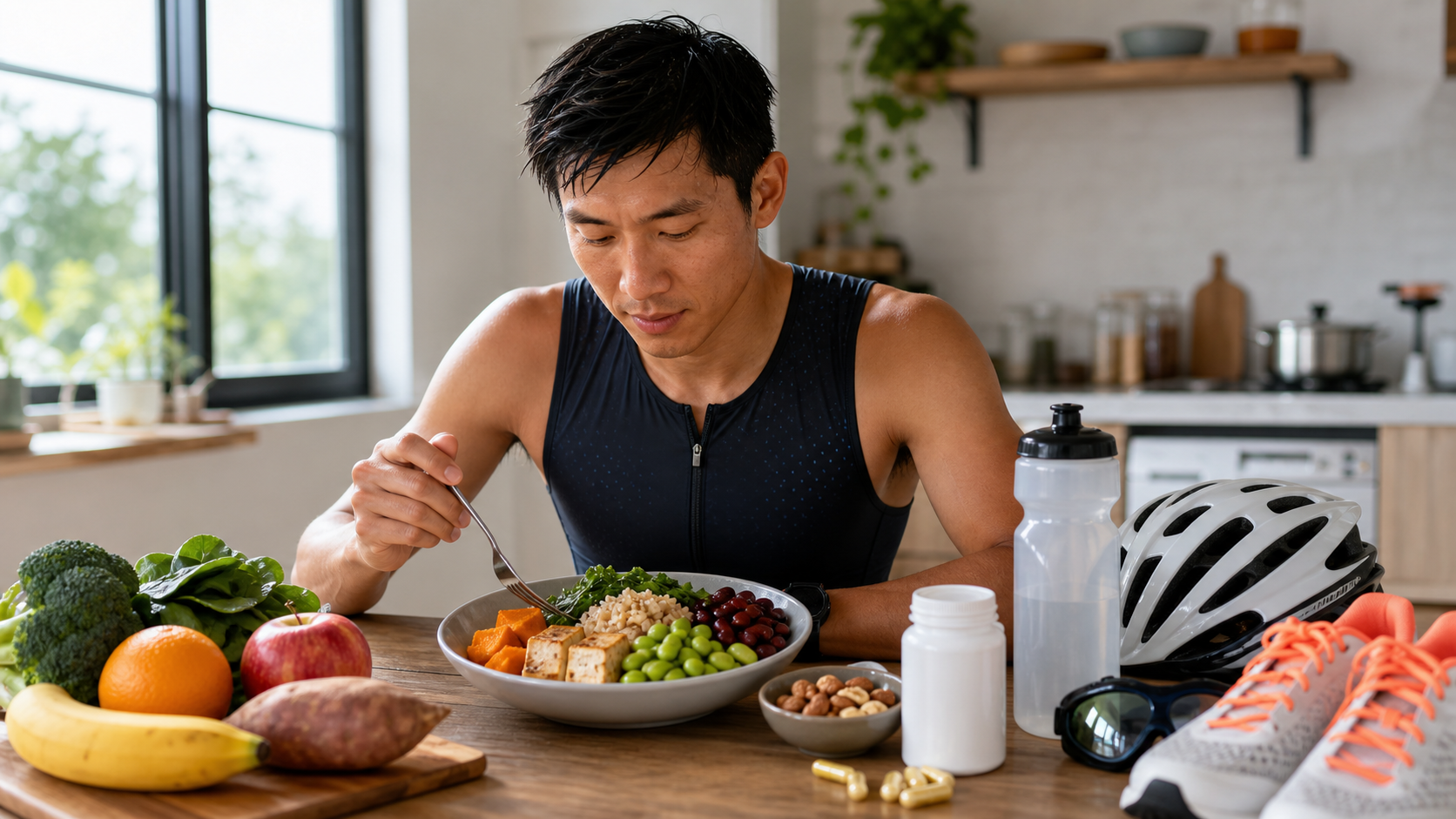
Coach’s Opening: The Vegan Athlete Who Wanted to Tackle a 113
A few years ago, an athlete came to me and her first words were: “Coach, I’ve been fully vegan for five years. Can I still train for triathlons?” Her biggest worry at the time wasn’t the training plan, but that everyone around her told her “you can’t have strength without eating meat.” After a few months of training, she not only completed her first 113 half-ironman, but her ferritin levels—the thing sports nutritionists worry about most—climbed from low back into the normal range.
I’ve coached triathletes for over fifteen years, from first-timers to those chasing Kona slots. Over the years, the proportion of athletes who are vegan, lacto-ovo vegetarian, or flexitarian has clearly increased. Let me say this upfront: a plant-based diet can absolutely support high-intensity endurance training, and it even has unique advantages—but the key is that you have to “plan” it, not just “remove the meat.” Swapping the chicken leg in your bento for a pile of white rice and vegetables isn’t a vegetarian athlete’s diet; it’s malnutrition.
In this article, I’ll break down, from a coach’s practical perspective, the key things vegan triathletes need to understand: how to get enough protein through complementary sources, how to manage the three micronutrients most likely to trip you up—B12, iron, and zinc—how to choose supplements, and how to actually make it work in Taiwan’s eating-out and race-day environment.
Concepts and Scientific Foundation: Three Key Battlegrounds for Vegan Athletes
Let’s establish a core concept first. For a vegan athlete, the hard part of nutrition planning is never “calories”—with all the rice, noodles, sweet potatoes, and beans available in Taiwan, hitting sufficient carbohydrate calories isn’t hard at all. The real battlegrounds are these three:
- Protein “quality” and total amount—It’s not that you can’t get enough protein; it’s that the amino acid profile and absorption rate of plant protein need to be addressed strategically.
- The micronutrient minefield—B12, iron, and zinc are the three most likely to be deficient in a plant-based diet, and deficiencies directly impact athletic performance.
- The “density” problem of meals—Plant foods are bulky, high in fiber, and filling. For an ironman who needs to consume 3000–4000 kcal a day, “being able to eat enough” is a skill in itself.
These three battlegrounds also interact with each other. For example, if you load up on beans and whole grains to hit your protein target, you’re also taking in a lot of fiber and phytate, which suppresses iron and zinc absorption. If you cut carbs to control weight, you end up with no energy for training, and your body burns protein as fuel instead. So nutrition planning for a vegan triathlete is never a single-point fix of “add this, add that”—it’s about balancing the whole structure. That’s why I keep emphasizing the word “planning”—without it, you can easily create another problem while solving one.
Protein Complementation: How to Piece Together the Amino Acid Puzzle
Many people have heard that “plant protein is incomplete.” That statement is half right and half wrong.
A “complete protein” is one that contains all nine essential amino acids in sufficient proportions. Animal foods (meat, eggs, dairy) are mostly complete proteins; most individual plant foods are low in one or two essential amino acids—for example, grains are generally low in lysine, while legumes are generally low in methionine.
But here’s the key: you don’t need to get them all in “the same meal, the same bite.” The consensus in modern sports nutrition is that as long as you consume a variety of plant protein sources throughout the day, your body can piece together the complete amino acid puzzle. That’s the core of “protein complementation”—grains + legumes is the classic golden combination.
Taiwanese people actually do this naturally:
- White rice + tofu/dried tofu = rice + soy
- Rice ball + soy milk = classic breakfast complementation
- Noodles + edamame/dried bean curd
- Sweet potato + chickpeas
For a serious training triathlete, I typically set a daily protein target of 1.4–2.0 g/kg body weight (for vegetarians, I recommend aiming for the higher end of this range, because plant protein has slightly lower digestibility and absorption than animal protein, and some plant proteins have lower leucine content—aiming higher is a safety measure). For a 65 kg athlete, that’s about 105–130 g of protein per day.
Here’s a reference list of plant proteins I often give to my vegan athletes:
| Food | Common Portion | Protein (approx.) | Availability in Taiwan |
|---|---|---|---|
| Firm tofu | Half block (150 g) | 12–15 g | Very easy |
| Unsweetened soy milk | 450 ml (large cup) | 12–16 g | Very easy |
| Edamame (in pods) | 100 g edible portion | 11–13 g | Easy |
| Chickpeas | 150 g cooked | 12–14 g | Moderate (supermarket/import store) |
| Tempeh | 100 g | 18–20 g | Moderate (organic stores) |
| Soy protein isolate powder | 1 scoop (approx. 30 g) | 22–25 g | Easy (online/bulk stores) |
| Oats | 80 g dry | 10–12 g | Very easy |
| Peanuts | 40 g | 10–11 g | Very easy |
See? Just “soy milk + firm tofu + edamame + one scoop of soy protein powder” gets a 65 kg athlete to about 60 g of protein easily. The other half comes naturally from the grains and nuts in your three main meals. It’s really not difficult.
B12: The First Supplement Every Vegan Athlete Must Take
If you ask me, “For a vegan triathlete who can only take one supplement, what should it be?” My answer without hesitation: Vitamin B12.
B12 is almost exclusively found naturally in animal foods. It’s involved in red blood cell production and neurological function. For endurance athletes, B12 deficiency is directly linked to anemia, unusual fatigue, tingling in the extremities, and cognitive decline—every single one of these is a disaster for triathlon training. Research also links B12 deficiency to lower bone density and increased fracture risk.
According to data, the recommended daily intake of B12 for adults is about 2.4 micrograms (µg), and actual intake among vegetarian and vegan populations tends to be on the low end. Vegans almost certainly need to supplement; lacto-ovo vegetarians can get some B12 from eggs and dairy, but it’s not easy to consistently get enough, so I recommend regular supplementation for them as well.
Common practical strategies are: vegans take about 250 µg daily, lacto-ovo vegetarians take 250 µg a few times a week; or use methylcobalamin sublingual tablets at 500–1000 µg, 2–3 times a week. Because B12 absorption rate decreases as the single dose increases, both “small doses, high frequency” and “large doses, low frequency” are viable designs. Please make sure to pair this with blood test data and let your doctor or nutritionist decide the dosage—don’t self-adjust arbitrarily.
Iron: The Oxygen Transporter for Endurance Performance
Iron is the second nutrient I worry about in vegan endurance athletes, especially female athletes and those with high training volume and repeated foot-strike impact (running) causing hemolysis.
Here’s a key scientific fact: iron in plant foods is non-heme iron, which has a significantly lower absorption rate than the heme iron in meat. According to data, non-heme iron absorption is about 5–12%, while animal heme iron is about 14–18%. Because of this lower absorption, it’s generally recommended that vegetarians/vegans consume about 1.8 times the general recommended iron intake to compensate for the absorption difference.
What’s more, phytate in plants is a major inhibitor of iron absorption, and whole grains, legumes, and nuts—the staples of a vegan diet—are all rich in phytate. So vegan athletes don’t just need to “eat enough iron”; they need to understand “how to make iron absorbable.”
Here’s the iron absorption “boost/deduct” chart I give my athletes:
| Practice | Effect on Iron Absorption | Practical Recommendations |
|---|---|---|
| Pair with Vitamin C | Significantly boosts non-heme iron absorption | Pair legume meals with guava, kiwi, lemon water, bell peppers |
| Separate tea/coffee from meals | Polyphenols in tea/coffee inhibit absorption | Avoid strong tea/coffee 1 hour before and after training meals |
| Soak, ferment, sprout grains/legumes | Reduces phytate, releases more iron | Choose tempeh, miso, sprouted beans; soak beans before cooking |
| Large amounts of calcium with iron in the same meal | High-dose calcium competes for absorption | Separate calcium and iron supplementation times |
| Cook with cast iron | Can increase iron content of food | Use cast iron pans to cook acidic foods (like tomatoes) |
A practical tip: Pair every legume or dark leafy green meal with a source of Vitamin C. This is the habit I emphasize most with my vegan athletes. It costs almost nothing, but over the long term, the improvement in ferritin levels is very noticeable.
Zinc: The Often-Overlooked Mineral for Immunity and Repair
Zinc is important for immune function, wound and muscle repair, and hormone metabolism including testosterone. Like iron, its absorption from plant foods is suppressed by phytate, and high-dose iron supplementation can compete with and interfere with zinc absorption—this is why I don’t like athletes self-supplementing single minerals without data. You think you’re supplementing iron, but you might be suppressing your zinc at the same time.
Good vegan zinc sources include: pumpkin seeds, cashews, chickpeas, lentils, whole grains, and tempeh. Similarly, soaking, fermenting, and sprouting can improve zinc bioavailability.
Practical Approach: A Sample Vegan Diet for a Training Day
Theory alone isn’t useful. I’ve put together a sample “high training volume day” diet for a typical athlete (65 kg, training about 10–12 hours per week, targeting a 113 half-ironman) in the table below. This isn’t scripture; it’s a concrete framework you can adapt.
| Time | Content | Key Points |
|---|---|---|
| Before morning training | 1 banana + 300 ml unsweetened soy milk | Easy-to-digest carbs + a little protein |
| During morning training (>75 min) | Sports drink/energy gel, 30–60 g carbs per hour | Most vegan energy gels are naturally plant-based |
| Within 30 min after training | Soy protein shake + oats + berries | Recovery window, protein + carbs |
| Lunch | Brown rice + firm tofu + dark leafy greens + guava | Grain-legume complementation + Vitamin C for iron absorption |
| Afternoon snack | Mixed nuts + sweet potato | Healthy fats + slow carbs |
| Dinner | Whole wheat noodles + tempeh/edamame + miso soup + bell peppers | Fermented soy, zinc, Vitamin C |
| Before bed | Unsweetened yogurt (lacto-ovo) or soy milk | Slow-release protein for overnight repair |
A few key points I always emphasize:
- Don’t waste the 30-minute recovery window after training: After high-volume sessions, I require athletes to get in about 20–30 g of protein plus carbs as soon as possible. Soy protein powder is the most convenient for vegans, as soy is one of the few plant proteins with a near-complete amino acid profile and decent leucine content.
- Never skimp on carbs: Vegan athletes often inadvertently eat too few carbs because of the “healthy image” of plant-based diets, which is a major mistake for endurance training. On long workout days, I typically target 6–10 g/kg body weight of carbs.
- Watch meal density: If you find yourself constantly full but losing weight and lacking energy in training, you’re likely getting too much fiber and too low a calorie density. In that case, use foods like soy milk, dried fruit, nut butters, and olive oil—“small volume, high calorie” options—to fill the gap.
Race Week and Race Day Vegan Nutrition
The good news is that race-day nutrition for triathlons is almost naturally vegan-friendly. Most energy gels, bars, electrolyte tablets, and sports drinks are primarily made of sugar, maltodextrin, and electrolytes, which don’t contain animal ingredients—but avoid products containing whey protein, honey, or gelatin—these are the three most common hidden animal ingredients vegans accidentally consume. Always check the label before buying.
Taiwanese races (like Puyuma, Challenge Taiwan, and the LAVA series) typically have aid stations with bananas, tomatoes, white toast, cola, and sports drinks—all completely fine for vegan athletes. During carb-loading days, Taiwan’s rice, noodle, and sweet potato environment is a huge advantage; getting high carbs as a vegan is no obstacle at all.
Common Mistakes and How to Fix Them
After coaching vegan athletes for so many years, here are the most common pitfalls I’ve seen. Check how many you’ve fallen into:
Mistake 1: Equating “vegan” with “healthy”
Potato chips, cola, white toast, and processed vegetarian mock meats are all vegan, but they won’t make you stronger. The focus of a vegan athlete’s diet is “nutritional density,” not “whether it has meat.” I’ve seen too many people eat vegan but consume refined carbs and fried mock meats daily, with protein and micronutrients in shambles.
Mistake 2: Either supplementing blindly without blood tests, or not supplementing at all
I oppose both extremes. One type of person doesn’t supplement anything and only discovers anemia after six months of training. Another type reads things online and buys a bunch of iron and zinc supplements to take aggressively, ending up with iron-zinc interference and digestive issues. The right approach is to get blood work done every six months to a year, checking ferritin, hemoglobin, B12 (and zinc if possible), and let professionals adjust based on the data.
Mistake 3: Total protein is sufficient, but sources are too monotonous
Relying solely on tofu and soy milk for all your protein leads to insufficient amino acid diversity over time. Diversity is the key to complementation—legumes, grains, nuts and seeds, and (for lacto-ovo vegetarians) eggs and dairy should all rotate.
Mistake 4: Supplementing iron but drinking strong tea/coffee with every training meal
Many Taiwanese athletes are used to having a hand-shaken drink or coffee with meals, which severely negates the non-heme iron you’ve worked hard to consume. Separate coffee and strong tea from meals by at least an hour—this small change is more effective than taking an extra iron pill.
Mistake 5: Ignoring the recovery window and pre-bed protein
Plant protein absorbs relatively slower, so it’s even more important to seize the post-training supplementation window and have a slow-release protein source (soy milk, lacto-ovo yogurt) before bed to support overnight repair.
Action Plans for Athletes at Different Levels
Beginners/New Vegans (Stability first, not perfection)
- Step one is getting blood work done to establish your baseline ferritin and B12 levels.
- Take B12 daily (per medical advice; vegans about 250 µg/day).
- Aim for at least one serving of legume protein plus one source of Vitamin C at every meal—make it a habit.
- Don’t rush into advanced supplements; get “three proper meals a day” right first.
Intermediate Athletes (113/226 race preparation)
- Set protein target at 1.6–2.0 g/kg, and use soy protein within 30 minutes post-training for recovery.
- Build a “vegan-approved ingredient whitelist” for race nutrition, eliminating products with whey, honey, or gelatin.
- Pay special attention to calorie density and total carbs during high-volume weeks—don’t let fiber make you “full but under-fueled.”
- Track blood work every six months, watching ferritin trends under high training load.
Elite/Performance Athletes (Chasing PBs or Age-Group Podiums)
- Work with a sports nutritionist to include B12, iron, zinc, Vitamin D, and Omega-3 (algae DHA/EPA) in individualized monitoring.
- For hot-weather races (Taiwan summer triathlons often exceed 30°C, with heart rates spiking to 160–170 bpm or higher), strengthen electrolyte and fluid loss management.
- Periodized nutrition: carbohydrate and protein ratios should follow the training plan through base, intensity, and taper phases.
Transitioning from Omnivore to Vegan: How to Avoid Performance Drops
Some athletes decide to go vegan mid-training. The most important thing I tell them is: don’t cut everything out overnight—give your body and gut an adaptation period. A plant-based diet dramatically increases fiber intake, and a sudden switch can easily cause bloating and digestive discomfort, which of course affects training.
I usually recommend a gradual 4–6 week transition:
- Weeks 1–2: First, replace red meat with soy products and eggs/dairy. Observe your gut reaction, and start taking B12 daily.
- Weeks 3–4: Further reduce poultry and seafood, increase the proportion of legumes and whole grains at each meal, and build the “grain-legume complementation” habit.
- Weeks 5–6: Complete the transition. Schedule a blood test to get your post-vegan baseline ferritin and B12 levels as a starting point for future tracking.
During the transition, there’s a very practical indicator to watch: how your legs feel after training and your morning resting heart rate. If your legs feel constantly heavy, your morning pulse is oddly elevated, and fatigue keeps accumulating, it usually means your calories or protein aren’t keeping up—go back and increase your intake. If performance drops in the early vegan phase, 90% of the time it’s not “the fault of being vegan,” but “not yet knowing how to eat vegan.”
Case Study: Pulling a Female Athlete Back from the Edge of Anemia
One female athlete stands out in my memory. She’d been lacto-ovo vegetarian for years. When she came to me, her main complaint was “abnormally high heart rate on climbs; I’m training but getting weaker.” The first thing I did was send her for blood work, and sure enough, her ferritin was low, bordering on anemia.
We didn’t start by aggressively supplementing iron. Instead, we started with dietary structure: pairing every dark leafy green and legume meal with Vitamin C fruit, moving her post-meal hand-shaken drinks to between meals, increasing tempeh and fermented soy products to reduce phytate’s impact, and cooking acidic foods like tomatoes in a cast iron pan. Combined with iron supplementation prescribed by her doctor (based on blood data), three months later her ferritin had clearly rebounded, her climbing heart rate returned to a reasonable range, and she described it as “like getting a new engine.”
The key message from this case: problems for vegan athletes are usually solvable—the key is getting data first, then treating the root cause, rather than aggressively supplementing based on feelings.
Practical Tips for Taiwan
Taiwan is actually a very vegan-friendly environment for athletes: buffet restaurants, vegetarian bento shops, soy milk shops, and convenience store soy products are everywhere. Putting together a high-protein, diverse meal isn’t hard. A few local tips:
- Buffet restaurants are a vegan athlete’s best friend: You can grab tofu, dried tofu, dark leafy greens, brown rice, and tomatoes in one go—complementation and Vitamin C in one shot.
- Convenience stores can save you in a pinch: Tea eggs (lacto-ovo), unsweetened soy milk, sweet potatoes, edamame, and nuts are all easy to find when traveling or staying near a race.
- Don’t ignore mineral loss in summer heat: Taiwan’s summer cycling and running causes heavy sweating. Take care of electrolytes like sodium and potassium, and don’t force iron or zinc supplements when your gut is already upset.
Deep Dive: A Week of Race Prep Training Paired with Nutrition Scheduling
Many athletes look at their training plan and diet as separate things, never connecting the two. But for vegan triathletes, nutrition must follow the training plan—different types of training days require different eating approaches. I’ve put together a typical training week for a 113 race-prep athlete (65 kg, 11 hours per week) along with nutrition highlights in the table below, so you can see how the two interlock.
| Day | Main Workout | Training Load | Daily Carb Target | Daily Protein Focus | Vegan Nutrition Notes |
|---|---|---|---|---|---|
| Mon | Rest/foam rolling | Low | 4–5 g/kg | Evenly distributed across 3–4 meals | Recovery day, replenish iron and zinc sources |
| Tue | Swim technique + run tempo | Moderate | 6–7 g/kg | 25 g soy protein post-training | Start with soy milk + oats at breakfast |
| Wed | Bike intervals (FTP zone) | High | 8–9 g/kg | 25–30 g at each of 3 meals | Load up on carbs the night before |
| Thu | Swim endurance + core | Moderate | 6 g/kg | Soy milk slow-release protein before bed | Dark leafy greens with Vitamin C |
| Fri | Long run (LSD) | High | 8 g/kg | Seize post-training recovery window | Watch for hemolysis on long runs; supplement iron |
| Sat | Long bike (3–4 hr) | Very high | 9–10 g/kg | 60 g carbs per hour on the bike | Bring vegan energy gels + bananas |
| Sun | Brick training (bike to run) | High | 8 g/kg | Small, frequent portions | Race nutrition rehearsal day |
The point of this table isn’t the numbers themselves, but the concept: the heavier the training day, the more you stack up carbs, while protein stays evenly distributed. I always tell athletes that protein isn’t about “stuffing it all in one meal.” Research and practice both support that spreading 20–40 g across 4–5 meals a day is more effective than concentrating it in one meal—this is especially important for plant protein, which absorbs more slowly.
A Detailed Breakdown of Saturday Long-Ride Nutrition
Using the toughest session—Saturday’s long ride (3–4 hours)—as an example, here’s the actual schedule I use with athletes:
- Night before the ride: Push carbs higher at dinner—brown rice or pasta, eaten to satiety, paired with soy products and vegetables.
- 1.5 hours before the ride: Oatmeal + banana + one scoop of soy protein—easy to digest and gives you a solid base.
- During the ride: 60 g of carbs per hour, alternating between vegan energy gels, bananas, and energy bars to avoid gut fatigue from a single source. In Taiwan’s summer, on long rides, also take small sips of water with electrolytes every 15–20 minutes.
- 30 minutes after the ride: 25 g soy protein shake + fast carbs (juice, white toast) to cover the recovery window first.
- Post-ride meal: A full meal within an hour—grain-legume complementation + dark leafy greens + Vitamin C fruit.
Once athletes get this routine down, their recovery across consecutive high-volume weeks improves noticeably, and their legs don’t feel like they’ve been run over by a truck the next day for brick training.
A Complete Guide to Buying Vegan Supplements
In the supplement world, vegan athletes most often stumble in two places: buying products with animal ingredients, and supplementing a bunch of things without knowing what they actually lack. I’ve organized common supplements by “priority order” in the table below—this is also the order I actually discuss with athletes.
| Priority | Supplement | Why Vegan Athletes Need It | Buying Tips |
|---|---|---|---|
| Essential | Vitamin B12 | Almost absent in plants; deficiency directly affects blood production and nerves | Methylcobalamin form; dosage per blood work and medical advice |
| High | Soy/pea protein powder | Convenient way to hit daily protein without getting too full | Check for no whey; pea protein covers amino acids soy is lower in |
| High | Iron (based on blood work) | Non-heme iron absorption is low; higher risk for women and runners | Only supplement with blood test data; don’t self-supplement long-term |
| Moderate | Algae Omega-3 (DHA/EPA) | Vegans lack fish sources; supports anti-inflammation and recovery | Choose algae-derived, not fish oil |
| Moderate | Vitamin D | Common deficiency for indoor trainers and those with limited sun exposure | Vegans choose D3 (lichen source) or D2 |
| Moderate | Zinc (based on blood work) | Phytate inhibits absorption; iron supplementation competes | Separate timing from iron; don’t supplement blindly |
| Situational | Electrolyte tablets | High loss in Taiwan’s hot, humid races | Confirm no gelatin or honey |
| Situational | Creatine | Vegans typically have lower muscle creatine stores; helps power and strength | Standard creatine is synthetic, mostly vegan |
I want to say a bit more about creatine: creatine naturally comes mainly from meat, so vegans typically have lower creatine stores than omnivores. For triathletes who need explosive power, sprinting, and weight training support, creatine is one of the few supplements where “vegans might actually feel more benefit.” Most commercial creatine is chemically synthesized and vegan, but as always, start gradually and watch your gut reaction.
Let me emphasize the ingredient whitelist one more time: for any sports supplement, vegans should first check for whey protein, casein, honey, and gelatin (common in capsule shells). These four are the most common “hidden animal ingredients,” and energy gels, gummies, and capsule supplements are the most likely culprits.
Four Advanced Details Vegan Athletes Often Overlook
When coaching athletes at the elite level, I dig into these often-overlooked points:
1. The Conversion Efficiency Problem with Omega-3 Sources
Plant-based Omega-3 is mainly ALA from flaxseed and chia seeds, but the human body’s conversion of ALA into the biologically active DHA/EPA is very inefficient. So for vegan athletes, I directly recommend algae oil, skipping the conversion step entirely—it’s more effective for anti-inflammation and training recovery.
2. The “Leucine Threshold” for Protein
Stimulating muscle protein synthesis requires reaching a certain leucine threshold at each meal, and plant proteins typically have lower leucine density. The practical solution is to aim higher per meal (toward 30–40 g) or choose soy, which is higher in leucine, and add a bit of protein powder to push past the threshold.
3. Iron in Female Athletes Needs Extra Caution
Women naturally lose iron through menstruation, and combined with the lower absorption of non-heme iron in a vegan diet and running-induced hemolysis, they’re the group I watch ferritin most closely for. I require almost all female vegan triathletes to get blood work at least every six months—don’t wait until “can’t run, abnormally high heart rate on climbs, or unrelenting fatigue” reveals anemia.
4. Don’t Forget Iodine and Calcium
Vegans who don’t eat seaweed or iodized salt are prone to iodine deficiency; those who don’t drink milk need to get calcium from dark leafy greens, calcium-fortified soy milk, and tofu (gypsum-coagulated type). These two aren’t mentioned as often as B12/iron/zinc, but long-term deficiency still affects health and bone integrity.
FAQ
Q: Will eating vegan prevent me from building muscle?
A: As long as total protein and diversity are sufficient and you do resistance training, a plant-based diet can absolutely build muscle. The key is adequate quantity, varied sources, and seizing the recovery window.
Q: Do I have to take protein powder?
A: Not necessarily, but it’s the most convenient tool for hitting protein targets without getting too full. For busy athletes or those with limited appetite, soy or pea protein powder is very useful.
Q: I’m lacto-ovo vegetarian. Do I still need B12?
A: Eggs and dairy can provide some B12, but it’s not easy to consistently get enough. I still recommend regular supplementation and confirming with blood work.
Q: Can I just buy iron supplements and take them myself?
A: I don’t recommend self-supplementing iron long-term. Excess iron has health risks and interferes with zinc absorption. Always base it on blood test data and professional advice.
Q: Do I need to buy special vegan energy gels for race day?
A: Most energy gels are primarily sugar and maltodextrin, so they’re naturally vegan. The key is avoiding the few products with honey, gelatin, or whey. Checking the ingredient list before buying is more practical than looking for “vegan-labeled” products.
Q: Will eating vegan slow my recovery or make me more injury-prone?
A: As long as protein, calories, and micronutrients (especially iron, zinc, and D) are all in place, recovery won’t be worse than an omnivore’s. In fact, a plant-based diet is rich in antioxidants and fiber, which helps with long-term inflammation control. Slow recovery is usually caused by “not eating enough,” not “eating vegan.”
Q: I have a small appetite. What if I struggle to eat that much protein?
A: This is exactly where high-density foods like protein powder, nut butters, and soy milk come in. Eating small, frequent meals and using liquid protein (soy milk, protein shakes) as a tool is far more efficient than forcing down a huge plate of food.
Conclusion
Let’s return to the fully vegan athlete from the beginning. She not only completed her 113, but also broke through the “no meat, no strength” prejudice one by one. What I want to say is: veganism has never been a stumbling block to triathlon performance—poor planning is. Get protein complementation right, manage the B12/iron/zinc minefield, check supplement ingredients carefully, and combine that with Taiwan’s abundant vegan environment—you can absolutely eat vegan and smash your PBs.
Training pushes your body to its limits; nutrition is what keeps your body able to withstand those limits. To win as a vegan athlete, it’s not about eating more—it’s about eating smarter.
Finally, for every triathlete who is vegan or considering going vegan, here’s a three-point summary: First, B12 is non-negotiable—take it. Second, protein needs both adequate quantity and diverse sources, and seize the two key windows: post-training and pre-bed. Third, don’t supplement minerals like iron and zinc based on feelings—get blood work first. Get these three things right, and leave the rest to your training plan and time. You’ll silence every doubter with your results. Wishing you a race performance you can be proud of on the next course.
This article is for educational purposes and does not replace individual assessment by a physician, physical therapist, or nutritionist.
References
- Näak — Vitamin B12 for Endurance Athletes: https://www.naak.com/blogs/articles/vitamin-b12-for-endurance-athletes
- Greenletes — Common Nutrient Deficiencies For Plant-Based Athletes: https://greenletes.com/plant-based-nutrient-deficiencies/
- MyMenu — Plant-Based Iron for Athletes: https://www.mymenuusa.com/post/plant-based-iron-for-athletes
- ISSA — Iron and Athletic Performance: https://www.issaonline.com/blogs/nutrition/iron-and-athletic-performance-do-you-need-a-supplement
- NCBI — Plant-Based Diet and Risk of Iron-deficiency Anemia: https://www.ncbi.nlm.nih.gov/pmc/articles/PMC12174276/
Related Reading
- The Complete Vegan Athlete’s Guide: Protein, Key Micronutrients, and Supplementation Strategies for a Plant-Based Diet
- Nutrition Strategies for Vegan Athletes: Practical Solutions for B12, Iron, Calcium, Omega-3, and Protein Quality
- Dietary Strategies for Vegan Runners: A Complete Plant-Based Protein Supplementation Plan
- Solutions for Vegan Triathletes: Complete Protein, B12, Iron, and Omega-3
CT暗黑廚房) 車友必備 宇宙無敵鮮蚵湯 幫助訓練恢復 天然食補 好市多 超肥鮮蚵 破PR
7 年前
JJSC南台灣單車走春三日行 DAY 1 / 強度 x 美食 x 節慶體驗 / 公路車 CT Yeh
5 個月前
FTL 與 SYB 車隊專訪 西進武嶺 實用攻略分享! 2小時 如何練?!你不知道的眉角!新手準備武嶺必看 EP1 | 實力派女車友 | 精華版 | 公路車 | CTYeh
4 年前
高雄綠園道鐵路自行車道 / 外地人能輕鬆駕馭 還是整路崩潰? / 2025 全線開通 春節實地探索一次!(附GPS連結)/ 公路車 / CT Yeh
1 年前
CT 喇低賽) 武嶺牽車 才是王道 西進牽車四小時內秘訣 攝手位置 如何判斷 防抽筋小秘訣
7 年前
靠單車減肥35公斤 心得分享與整理
7 年前
一個測試有沒有認真練車的方法😂 #公路車
10 個月前
太平山單車員工旅遊 | 這樣玩CP值最高!| 公路車
5 年前