Blood Sugar and Athletic Performance: The Science of Stable Glucose, and the Truth vs. Hype of CGM Continuous Glucose Monitoring
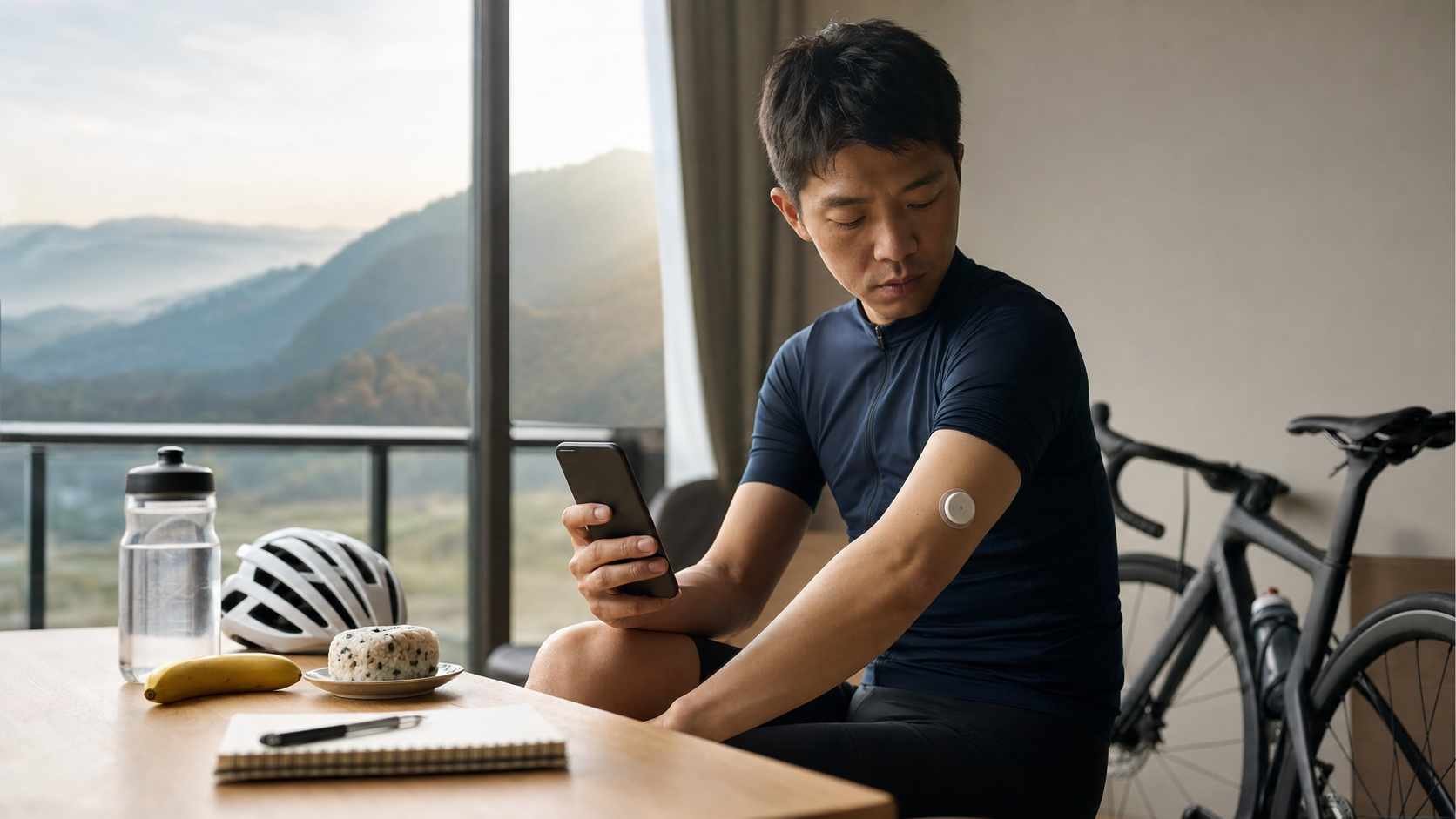
Opening: The Blood Glucose Curve That “Crashed” an Hour Before Wuling
I once coached a long-distance cycling student—let’s call him A-Kai. He was the type of rider who was serious and willing to spend money on gear. One year, before attempting the western ascent of Wuling, he came to me and asked: “Coach, I bought a continuous glucose monitor (CGM), and I found that my blood sugar spikes to a high point before I set off, then drops about an hour later. Is that why I run out of energy in the second half?”
He handed me his phone screen, which showed a fluctuating curve. Honestly, at that moment, two thoughts crossed my mind simultaneously. The first was reassuring—this student had started caring about what was happening inside his body, rather than just staring at the wattage on his power meter. The second thought, however, was a red flag—he had already begun using an “interstitial glucose curve” to explain something that actually involves muscle glycogen, fueling timing, and psychological stress, and he was jumping to causal conclusions far too quickly.
In recent years, CGM has gone from a medical tool for people with diabetes to a “new toy” worn by many elite and amateur athletes. Social media is full of claims like “stable blood sugar = stable performance,” which sounds scientific, but the truth is: the relationship between blood glucose and athletic performance is far more complex than “keeping one line steady.” In this article, I want to use my perspective from over a decade of coaching students to explain this clearly—how blood glucose actually changes during exercise, what a CGM can tell you, and what is being overhyped. Finally, I’ll give you a practical approach you can implement without even wearing a sensor.
Let me say the most important thing first: this article is about general athletic populations and amateur athletes who do not have diabetes and have roughly normal metabolism. If you have diabetes, prediabetes, a history of reactive hypoglycemia, or any metabolic disease, blood glucose is a medical issue for you. Please follow the individualized advice of your physician and dietitian, and do not use internet articles (including this one) as a prescription.
Foundational Concepts: What Is Blood Glucose Actually Doing During Exercise?
Blood Glucose Is Not a Fuel Tank; It’s More Like a “Power Distribution Panel”
Many people think that blood glucose levels equal energy levels—this is the most common misconception. In reality, the total amount of glucose in the blood is quite small—an adult only has about a few grams of glucose circulating in the bloodstream, far too little to sustain a long-duration effort. The real fuel reserves are muscle glycogen, liver glycogen, and fat.
Blood glucose is more like a “power distribution panel” or a “relay station”: the liver breaks down glycogen and performs gluconeogenesis to release glucose into the blood, and muscles then take glucose from the blood to use it. When you exercise, your muscles’ uptake rate increases dramatically, while hormones (insulin dropping, glucagon and adrenaline rising) work hard to keep blood glucose within a “usable” range. So blood glucose going up and down during exercise is a normal dynamic regulation, not a malfunction.
Three Truths Behind a CGM Curve
Regarding CGM, the current consensus in sports science is actually quite reserved. According to the Gatorade Sports Science Institute and recent reviews in sports medicine journals, there are several critical and often overlooked limitations when CGM is used in non-diabetic athletes:
-
It measures interstitial fluid, not blood, and it becomes even less accurate during exercise. CGM sensors are inserted under the skin and measure glucose in the interstitial fluid, which has a time lag compared to actual blood glucose. During exercise, changes in blood flow, body temperature, and dehydration are greater, amplifying this lag and error. The “drop” you see on your screen may lag behind actual blood glucose by several minutes, and the direction may not even be correct.
-
It cannot measure muscle glycogen at all. This is extremely important. What determines whether you “crash” in the latter half of a long ride is primarily your muscle glycogen stores, and CGM reflects glucose released into the blood from the gut and liver—it cannot see how much fuel remains in your muscles. So using a blood glucose curve to explain “running out of steam in the second half” is often a case of misattribution.
-
Individual differences are enormous. A large study observed over a thousand non-diabetic adults and looked at their blood glucose responses after eating the same foods. The results showed huge inter-individual variability—for the same bowl of rice, some people’s blood sugar spiked while others barely moved. This means you cannot apply someone else’s “ideal curve” to yourself, and it also means the significance of a “standard blood glucose range” for athletic performance is overestimated.
In other words, CGM is an interesting tool that can give you some personalized clues, but there is currently no solid scientific evidence proving that “keeping blood glucose within a certain range” will make you run faster or ride farther. Athletes often say “I feel better when my blood sugar is a bit higher,” but this is mostly subjective perception, lacking rigorous controlled research support.
What a CGM Can Tell You and What It Cannot
To keep you from being led astray by marketing hype, I’ve organized this into a comparison table for quick reference:
| Clues a CGM can relatively provide | What a CGM cannot do / What is often exaggerated |
|---|---|
| Observe your personalized response trends to “specific foods, specific fueling” | Cannot directly tell you how much muscle glycogen remains |
| Help identify “significant” post-meal fluctuation patterns for further medical consultation | Cannot serve as a diagnostic tool; you cannot self-diagnose diabetes or prediabetes |
| Remind you of fueling timing (e.g., noticing you tend to run low before departure) | During exercise, due to interstitial fluid lag and error, real-time numbers cannot be fully trusted |
| Observe rough correlations between sleep, stress, and next-day blood glucose | Cannot prove that “a stable curve = improved athletic performance” |
| Increase your self-awareness of “what to eat and when to eat” | Cannot replace a coach’s fueling strategy or a physician’s health assessment |
The key point of this table: the value of CGM leans toward “self-observation and awareness,” not “precise performance prescription” or “medical diagnosis.” Once you understand its role, you won’t be taken in by the “wear it and you’ll win” marketing.
Why Isn’t “Blood Glucose Level” Simply Proportional to “Performance Quality”?
This is where people get misled the most. Let me explain from two directions.
Direction One: Low blood glucose doesn’t necessarily mean no energy. In trained endurance athletes, the body has a strong ability to mobilize fat and glycogen. Even if blood glucose drops slightly during exercise, as long as it doesn’t reach clinical hypoglycemia and fueling keeps up, your muscles still have fuel to use. So panicking when you see a slight drop on the CGM is often scaring yourself for no reason.
Direction Two: High blood glucose doesn’t necessarily mean more energy. Conversely, a high blood glucose number doesn’t mean your muscle glycogen is sufficient. You might have just taken a big gulp of highly concentrated sugar water, causing blood glucose to spike instantly, but those sugars are still in your gut—they haven’t actually become usable energy for your muscles. In fact, if you fuel too concentrated or too quickly, it can cause gastrointestinal discomfort and slow gastric emptying. A blood glucose number is a “snapshot along the way,” not a “fuel gauge reading.” This concept must be established.
The Role of the Central Nervous System and “Feelings”
There’s another often-overlooked dimension: the impact of carbohydrate fueling on the central nervous system and subjective perception. Research has shown an interesting phenomenon—even just rinsing a sports drink in your mouth and spitting it out without swallowing can make you “feel” more powerful during short, high-intensity efforts. This suggests there are carbohydrate-sensing receptors in the mouth that directly influence the brain’s perception of fatigue.
This leads to a practical insight: part of that “I can’t hold on” feeling in the latter half of a long ride is central fatigue and subjective perception. Taking in carbohydrates not only provides energy but also “reassures the brain.” So instead of anxiously staring at a curve that has inherent error, focus on getting carbohydrates into your mouth and gut properly.
So What’s the Relationship Between “Fueling” and Blood Glucose?
What actually has solid evidence for improving performance is the rate of carbohydrate intake during exercise, not the blood glucose number itself. The logic here is: continuously taking in exogenous carbohydrates during prolonged exercise can maintain blood glucose supply, delay glycogen depletion, and support the central nervous system. The evidence for this is far stronger than “watching your blood glucose curve.” In the next section, we’ll get into this most practical part.
Practical Method One: Get Fueling Right, and Blood Sugar Naturally Stabilizes
The Science of Carbohydrate Fueling: From 60g to 90g, and Even Higher
Sports nutrition has fairly clear empirical evidence on “how much carbohydrate to consume per hour.” The traditional 2016 sports nutrition guidelines are roughly as follows:
- Exercise 1–2.5 hours: approximately 30–60 grams of carbohydrate per hour
- Exercise exceeding 2.5–3 hours: can be increased to approximately 90 grams per hour
More recent research has further found that well-trained endurance athletes can actually oxidize more carbohydrate than previously thought, especially when using a glucose + fructose blend (or maltodextrin + fructose) formula, with 90–120 grams per hour becoming a newer upper reference range.
The key lies in the “glucose-fructose blend.” The old 60-gram-per-hour ceiling existed because the SGLT1 transporter responsible for absorbing glucose in the gut would become saturated, reaching its absorption limit. But fructose uses a different transport pathway, so consuming both glucose and fructose simultaneously can break through the ceiling of glucose alone. Research shows that supplying up to 90 grams per hour at a glucose-to-fructose ratio of about 2:1 can increase carbohydrate oxidation rates by about 50% compared to glucose alone. This is currently considered a relatively safe and effective strategy.
| Exercise Duration | Recommended Carbohydrate Intake (per hour) | Recommended Formula | Target Population |
|---|---|---|---|
| < 45 minutes | Usually no additional fueling needed | Plain water is sufficient | General population |
| 45–75 minutes | Small amounts or mouth rinse only (optional) | Sports drink mouth rinse | Short, high-intensity efforts |
| 1–2.5 hours | 30–60 grams | Glucose or glucose + fructose | Amateur to advanced |
| > 2.5–3 hours | 60–90 grams | Glucose:fructose approximately 2:1 | Advanced endurance |
| Ultra-long distance / trained athletes | 90–120 grams | High-ratio blend, can approach 1:1 | Elite; requires prior gut training |
Key reminder: 120 grams/hour is not a target for everyone. The gut is an organ that needs training. The most common outcome of abruptly jumping to high intake is bloating, diarrhea, and nausea. This table provides ranges, not precise prescriptions. Start at the lower end and work your way up gradually.
Taiwan Context: How to Pair Eating Out and Local Fueling
The most common question Taiwanese cyclists ask is: “I don’t want to keep eating gels—can I use regular food?” Of course you can. Here are some local examples:
- 2–3 hours before departure: A main meal of easily digestible carbohydrates, such as white rice with low-oil side dishes, steamed buns, toast, or sweet potatoes. Avoid high-fat, high-fiber foods (too many vegetables, fried items) that slow gastric emptying and cause stomach issues on the road.
- During the ride (convenience store fueling): Taiwan has one of the highest convenience store densities in the world—use it. Bananas, onigiri rice balls, sports drinks, energy jellies, and even small packs of candy are all great on-the-road carbohydrates. For long rides, you can treat “one banana + half a bottle of sports drink” as one fueling unit.
- Weather considerations: Taiwan’s summers are humid and hot, with heavy sweating. Electrolytes (especially sodium) and water are just as important as carbohydrates during fueling. When it’s hot, I usually remind my students not to make their drinks too concentrated—better to dilute them slightly and drink more frequently, to avoid high-concentration sugar solutions sitting in the gut without emptying.
Practical Method Two: Blood Glucose and Eating Rhythm During Training
Blood glucose stability isn’t just about race day. Your everyday dietary structure determines whether your “baseline” is stable. Here’s the daily framework I often give my students. Note that these are general principles, not gram-level prescriptions:
| Time Period | Goal | Practical Approach |
|---|---|---|
| 3 hours before training | Replenish glycogen, avoid bloating | Main meal with low-to-moderate GI carbohydrates, moderate protein, low fat, avoid excess fiber |
| 30–60 minutes before training | Top up with easily absorbed carbs (depending on intensity) | Banana, a small serving of sports drink; avoid large meals |
| During training | Fuel carbohydrates based on duration (see table above) | Small amounts, frequent intake, paired with water and electrolytes |
| 30–60 minutes after training | Replenish glycogen, support recovery | Carbohydrates + protein (e.g., rice + chicken, dairy + fruit) |
| Regular daily meals | Stabilize baseline, avoid spikes | Whole grains, protein, vegetables, healthy fats; avoid binge eating after prolonged fasting |
Several daily habits that can actually help blood glucose “not spike and crash”:
- Don’t go long periods of fasting followed by binge eating: This is the most common scenario for large blood glucose swings, especially for people who skip breakfast and then eat a huge lunch.
- Pair carbohydrates with protein and fiber: This slows the entry of glucose into the bloodstream, smoothing the curve.
- Pay attention to eating order: Eating vegetables and protein first, then the main carbohydrate, generally helps reduce post-meal blood glucose spikes. This is a low-cost, easy trick for people who eat out frequently.
- Move a little after meals: A post-meal walk or light activity helps shuttle glucose into muscles for use, which is better than sitting still.
- Sleep and stress count too: When you’re sleep-deprived or stressed, stress hormones rise, and both fasting blood glucose and insulin sensitivity worsen. This is why I often say, “Training, nutrition, and sleep are the three legs of the stool.”
Practical Adjustments for Taiwan’s Eating-Out Population
Taiwan has a high rate of eating out, and many students worry that “eating all meals out means my blood sugar can’t be managed.” There’s no need to be pessimistic. Here are a few locally feasible adjustments:
- Buffet-style restaurants (自助餐): Add an extra serving of dark leafy vegetables and a serving of protein (beans, fish, eggs, meat), with a moderate amount of white rice. Eat vegetables and protein first, then rice.
- Convenience stores: Tea eggs, unsweetened soy milk, sweet potatoes, salad, and onigiri are all readily available combinations. Avoid buying a bunch of refined sweet breads as a meal.
- Bubble tea: This is the invisible killer of blood glucose spikes in Taiwan. If you really want to drink it, reduce the sugar or go sugar-free, or treat it as “fuel during exercise” rather than a daily drink while sitting at a desk.
- Night markets and big meals: An occasional indulgence doesn’t require guilt, but try to pair it with protein and vegetables, don’t binge on an extremely empty stomach, and take a walk afterward.
These are all practices for stabilizing your daily baseline, which is a different logic from “whether to fuel carbohydrates during a long-distance effort.” Don’t confuse the two.
In-Depth Case Studies: Three Students, Three Blood Glucose Stories
Principles alone can feel abstract, so let me use three real scenarios (data are observed ranges from individual cases, not precise numbers) to give you a clearer picture.
Case A: “False Fatigue” from Fasting Too Long Before a Morning Ride
A working professional cyclist liked to head out at 5 a.m. to ride Fengguizui. He’d finish dinner at 10 p.m. the night before, eat nothing before bed, and head out without breakfast. He often complained that halfway up the climb, his “legs felt like lead.” He suspected hypoglycemia and even bought a CGM to catch the culprit.
But after reviewing the data together, we found that his real problem wasn’t the “blood glucose number”—it was that after a full night plus morning fasting, his glycogen was low, and he had zero exogenous carbohydrate coming in. The fix was simple: eat a banana before heading out, sip some sports drink, and take small sips every 30–40 minutes on the road. His “lead legs” feeling improved significantly—and none of this had anything to do with staring at a curve on a screen. It was purely about getting fueling back on track.
Case B: The Backfire of “Not Eating” for Fear of High Blood Sugar
Another student had read too much online content about “blood glucose spikes are harmful” and started restricting carbohydrates even during rides, terrified of seeing her curve spike. As a result, in a long event exceeding three hours, she experienced severe slowdown in the latter half, low mood, and scattered attention—a classic case of glycogen depletion combined with central fatigue.
I told her: Avoiding large blood glucose spikes in daily life and whether to fuel carbohydrates during prolonged exercise are two completely different things. In daily life, you can be particular about low GI and eating slowly; but during a long-distance effort, your body is burning sugar at a high rate, and “fearing high blood sugar” at that moment is hurting you. After she brought her in-ride fueling back up to around 60 grams per hour, her long-distance performance and mood stabilized considerably.
Case C: The Population That Really Needs Attention
The third case was a middle-aged cyclist with a family history of diabetes whose fasting blood glucose was slightly elevated at his health checkup. After wearing a CGM, he saw that his post-meal blood glucose did indeed spike more easily than most people’s. In this situation, I don’t make my own judgment—I directly recommended that he take his records to a doctor and get blood tests, including HbA1c. The doctor later assessed that he belonged to a group needing lifestyle intervention, and the medical side managed his care individually.
The key message from Case C is: when blood glucose shifts from a “performance issue” to a “health/disease issue,” control should be handed back to medical professionals, not to a coach or a wearable device. This line must be clearly drawn.
Recognizing Hypoglycemia Warning Signs: When Should You Stop?
Occasional blood glucose fluctuations during exercise are normal, but if you experience the following symptoms (note: physical symptoms, not screen numbers), you should be alert, stop and address the situation, and seek medical attention if necessary. Here’s a comparison table for easy reference:
| Severity | Common Physical Signals | Recommended Immediate Action |
|---|---|---|
| Mild | Slightly hungry, difficulty concentrating, mild hand tremor | Slow down, take a small serving of fast-acting carbs (e.g., candy, sports drink), observe |
| Moderate | Cold sweats, heart palpitations, dizziness, noticeable weakness, irritability | Stop, sit down, take fast-acting carbs, rest until symptoms resolve before deciding whether to continue |
| Severe | Confusion, blurred vision, slurred speech, barely able to stand | Stop immediately, seek help, take sugar; if symptoms don’t resolve or worsen, seek medical attention immediately |
Important: This table is a general safety reminder, not a diagnostic guideline. Everyone’s symptoms differ. Especially if you have diabetes or have experienced severe hypoglycemia before, be sure to discuss your individualized treatment plan and carry-sugar plan with your physician in advance. Medical care is easily accessible in Taiwan—any experience of “almost passing out” deserves to be taken seriously, not brushed off.
Advanced Topic: Fasted Training and “Train Low, Compete High”
When discussing blood glucose, someone will inevitably ask about “fasted riding” or “low-carb training.” Here’s my balanced perspective.
“Train low, compete high” (deliberately training with low glycogen and competing well-fueled) does have a physiological logic: training in a low-carbohydrate state may promote certain metabolic adaptations (such as improving fat utilization capacity). But this is an advanced training tool that requires careful planning—it’s not a panacea, and it’s not suitable for every session or every person.
A few principles I often remind my students of:
- Fasting is only suitable for low-intensity, short-duration sessions. Trying to do intervals or long distances in a fasted state usually backfires and increases the risk of hypoglycemia and excessive fatigue.
- Don’t fast on race day. Race day is about performing at your best. You should eat well and fuel properly. Playing “train low” on race day will only hurt you.
- People with metabolic diseases, a history of eating disorders, or those prone to dizziness should not attempt this on their own—consult a professional first.
In other words, fasted training is a useful but sharp-edged tool. It only makes sense when used at the right time and by the right person. It shouldn’t be elevated into a “universal key to stable blood sugar.”
FAQ
Q1: What blood glucose level should I maintain during exercise to be “normal”?
A: Rather than memorizing a precise number, remember this: blood glucose fluctuates dynamically during exercise. As long as you don’t have symptoms of hypoglycemia and your fueling keeps up, you’re generally fine. Moreover, CGM measures interstitial fluid and has error, so chasing a precise number isn’t very meaningful. If you truly want to assess your health, use medical blood tests.
Q2: I don’t have diabetes. Do I need to buy a CGM?
A: For the vast majority of general athletic populations, the answer is “no.” Taking care of your fueling, daily diet, and sleep will yield far greater benefits than a curve that just makes you anxious. If you’re an advanced/elite athlete and curious, you can use it as a tool to “observe yourself,” but don’t let it replace the fundamentals, and don’t use it for self-diagnosis.
Q3: If my blood sugar spikes after eating, is that really bad?
A: Occasional post-meal blood glucose rises in daily life are a normal physiological response. What truly matters is “long-term, repeated, large-amplitude” fluctuations, and that falls under medical assessment (blood tests, HbA1c, interpreted by a physician)—not self-diagnosing based on a single CGM spike.
Q4: Will sports drinks make my blood sugar too high and be bad for me?
A: It depends on the context. During a long-distance effort, a moderate amount of sports drink is a great aid for maintaining glucose supply and supporting performance. But if you’re drinking it like water while sitting still, that’s a different story. Use the tool in the right scenario.
Q5: Taiwan’s weather is hot. Should I adjust my fueling?
A: Yes. When it’s hot and you’re sweating heavily, electrolytes like sodium and water become just as important as carbohydrates. Don’t make your drinks too concentrated—better to dilute them slightly and drink more frequently, to avoid high-concentration sugar solutions sitting in the gut and causing discomfort.
Q6: For fat loss on a fasted morning ride, is lower blood sugar better?
A: No. Fasted low-intensity exercise might train fat utilization, but “lower blood sugar is better” is a dangerous myth—if it drops low enough to cause symptoms, there’s real risk. Fasted training should only be used for low-intensity, short-duration sessions when your body is in good condition. On race day, always eat well. If you have a history of dizziness or metabolic disease, consult a professional first.
Q7: I wear a CGM and noticed my blood sugar rises after exercise. Is that normal?
A: It’s common. During high-intensity exercise, the body secretes hormones like adrenaline that prompt the liver to release glucose, so blood sugar may rise rather than fall during or immediately after exercise. There’s no need to panic. This also illustrates again how easy it is to misjudge the body by interpreting a single number.
Common Mistakes and Corrections
Because of CGM’s surge in popularity in recent years, I’ve seen countless examples of people scaring themselves or going down the wrong path. Here are the most common ones:
Mistake One: Treating a “Slight Drop” in Blood Glucose During Exercise as a Disaster
Many people panic the moment they see the CGM trending downward during exercise. But as mentioned earlier, dynamic fluctuations in blood glucose during exercise are normal, and CGM itself has lag and error. Unless you experience actual hypoglycemia symptoms (trembling, cold sweats, dizziness, confusion, sudden extreme weakness), there’s no need to lose your composure over a number.
Correction: Learning to read “body signals” is more important than reading screen numbers. If you truly suspect hypoglycemia, stop, take fast-acting carbs, observe your symptoms, and seek medical attention if necessary.
Mistake Two: Overly Restricting Carbohydrates in Pursuit of a “Flat Blood Glucose Line”
Some people, wanting their CGM curve to look good, start drastically cutting carbs, even under-fueling during races. The result is glycogen depletion and a major crash in the latter half. A flat blood glucose line does not equal good athletic performance. For endurance athletes, what you need on race day is sufficient exogenous carbohydrates, not a pretty curve.
Correction: Shift your focus back to “how many grams of carbohydrate per hour”—the variable with real evidence—rather than the aesthetics of the curve.
Mistake Three: Applying Someone Else’s Curve or “Normal Range” to Yourself
As mentioned earlier, individual differences are enormous. Just because your friend’s blood sugar doesn’t move after eating sweet potato doesn’t mean yours won’t either.
Correction: If you do use a CGM, treat it as a tool to “observe yourself” —find out how you respond to specific foods and specific fueling—rather than comparing yourself to others or to textbook “normal values.”
Mistake Four: Using CGM as a Diagnostic Tool and Scaring Yourself
I’ve had students who, after seeing a high post-meal blood glucose reading on their CGM, started going online to match symptoms and wondering if they had prediabetes, becoming so anxious they couldn’t sleep. A CGM is a consumer-grade wearable—it is not a diagnostic instrument.
Correction: If you’re genuinely concerned about metabolic health, the right approach is to go to a hospital for blood tests (fasting glucose, HbA1c) and have a physician interpret the results. In Taiwan, adult health checkups and medical visits under the National Health Insurance are relatively accessible. Don’t self-diagnose based on a consumer-grade curve.
Mistake Five: Ignoring Interference from Caffeine, Stress, and Weather
A strong cup of coffee before departure, race-day adrenaline, and dehydration in hot weather all affect blood glucose and CGM readings. The “pre-departure high point” A-Kai initially saw was very likely pre-race nervousness plus caffeine, not some metabolic problem.
Correction: When interpreting any blood glucose change, first consider whether these interfering factors are present before jumping to conclusions.
Actionable Advice for Readers at Different Levels
If You’re a Beginner in the General Athletic Population
You don’t need a CGM at all. Getting the fundamentals right will give you the greatest benefit:
- Don’t fast for too long before exercise; eat some easily digestible carbohydrates.
- For exercise under an hour, plain water is enough; consider carbohydrates and electrolytes only if it exceeds an hour.
- Keep regular daily meals, pair carbohydrates with protein and fiber, and get enough sleep.
- If you have a family history of metabolic disease or experience discomfort symptoms, get proper checkups at a hospital—don’t rely on a wearable device to self-assess.
If You’re an Advanced Amateur Endurance Athlete
Focus on training and personalizing your fueling strategy:
- Learn to estimate your hourly carbohydrate intake, starting at 30–60 grams and working up to 60–90 grams for longer efforts.
- Use training days to “train your gut,” gradually increasing tolerance. Don’t try high intake for the first time on race day.
- Build your own “fueling schedule” (e.g., take a sip every 20 minutes)—this is far more useful than staring at a blood glucose monitor.
- If you’re curious about wearing a CGM, that’s fine, but treat it as an observation tool. Don’t let it drive your decisions.
If You’re an Elite or Semi-Elite Athlete
- High intake strategies of 90–120 grams/hour can be attempted, but be sure to systematically train your gut and choose the right glucose-to-fructose ratio.
- A CGM might provide some personalized clues about fueling timing, sleep, and energy balance, but be clear about its limitations (interstitial fluid, can’t measure muscle glycogen, has error).
- It’s best to interpret the data together with a sports dietitian and coach, rather than staring at the curve alone.
A Practical Self-Checklist
Next time before a long ride, instead of worrying about your blood glucose curve, run through this checklist first:
- [ ] Did I eat an easily digestible carbohydrate meal 2–3 hours before departure?
- [ ] Did I prepare enough on-road carbohydrates (estimated by hourly needs)?
- [ ] In hot weather, did I prepare electrolytes and enough water?
- [ ] Is my fueling plan “small amounts, frequent intake” rather than “eat only when hungry”?
- [ ] Have I already tested this fueling plan in training, with no gut issues?
- [ ] Do I know the warning symptoms of hypoglycemia and how to handle them if they occur?
If you can check all six boxes, you’re already ahead of most people who just stare at their screens in anxiety.
Conclusion: Tools Are Good Servants, Not Good Masters
Back to A-Kai’s story. In the end, I didn’t tell him to throw away his CGM. Instead, I helped him reposition the tool: no longer using it to “diagnose” what was wrong with him, but using it to observe “which fueling, which breakfast, makes me feel more stable on the road.” At the same time, we redirected the training focus back to what actually has evidence—mastering hourly carbohydrate fueling, training the gut, and stabilizing sleep and daily nutrition. That year, he successfully completed the western ascent of Wuling. Not only did he not crash in the latter half, he even passed a few riders.
He later told me: “So the point was never that line.” Right. The point was never that line.
The science of blood glucose and athletic performance is actually quite simple at its core: your fuel reserves are muscle glycogen and fat; blood glucose is a dynamic relay station; and what you can genuinely improve with evidence is your fueling strategy and daily eating rhythm. A CGM is an interesting tool that can give you some personalized clues, but it has clear limitations, and there’s no evidence yet to support “stabilizing one line will improve performance.” Don’t let a wearable device become a source of anxiety, and don’t let it replace the fundamentals you should actually be doing.
Tools are good servants, not good masters. Put your body’s signals and evidence-based methods back at the center, and you’ll ride smarter—and happier.
This article is educational content and cannot replace individualized diagnosis and treatment advice from a physician, physical therapist, or dietitian. If you have diabetes, prediabetes, a history of hypoglycemia, or other metabolic or cardiovascular diseases, blood glucose is a medical issue for you. Please follow the individualized assessment of your physician and dietitian, and do not use this article or any consumer-grade wearable device data to self-diagnose or adjust your medication.
References
- Gatorade Sports Science Institute — Continuous Glucose Monitoring Use In Athletes Without Diabetes: https://www.gssiweb.org/sports-science-exchange/article/continuous-glucose-monitoring-use-in-athletes-without-diabetes
- Continuous Glucose Monitoring in Endurance Athletes: Interpretation and Relevance of Measurements for Improving Performance and Health (Sports Medicine, Springer): https://link.springer.com/article/10.1007/s40279-023-01910-4
- Application potential of continuous glucose monitoring (CGM) in elite endurance athletes without diabetes (Performance Nutrition): https://performancenutrition.biomedcentral.com/articles/10.1186/s44410-025-00013-7
- Gatorade Sports Science Institute — Dietary Carbohydrate And The Endurance Athlete: Contemporary Perspectives: https://www.gssiweb.org/sports-science-exchange/article/dietary-carbohydrate-and-the-endurance-athlete-contemporary-perspectives
Related Reading
- Applications of Continuous Glucose Monitoring (CGM) in Cycling Training: After Supersapiens
- Blood Sugar-Stabilizing Diet for Athletes: A Complete Guide to GI/GL, Meal Timing, and Practical Fueling
- Exercise and Blood Sugar Control: Exercise as Medicine for Diabetes—A Coach’s Guide to Treating “Movement” as a Prescription
- Cycling and Diabetes Management: The Science of How Riding Affects Blood Sugar Control and Insulin Sensitivity
西進武嶺 免費訓練分析服務 Intervals | 練不夠還是練過頭?你哪一種類型選手?AI模型告訴你! | 備戰神器 | 公路車 訓練 | CT Yeh
4 年前
單車胎壓觀察到的有趣現象,SRAM Quarq TyreWiz 2.0 無內胎胎壓計 / 裝了有哪些幫助? / Tubeless / 公路車 / CT Yeh
1 年前
單車AI教練!全新 ChatGPT4o 幫你分析訓練成果!排武嶺課表,分析騎車姿勢! 太神了! / 公路車 / CT Yeh / feat. 緯緯
2 年前
大家都在開箱的...單車用藍芽對講耳機真的有幫助嗎? SENA BiKom 20 長距離旅遊 & 海鷗繞圈賽 實際體驗心得 / 公路車 / CT Yeh
9 個月前
下次拍照前要查清楚啦🤣 #cycling
7 個月前
2026 車錶排行榜!誰是最多車友正在使用?練家子最愛哪款?🏆 (2萬名車友數據) / 公路車 / CT Yeh
5 個月前
西進武嶺 自製新版AI配速表產生器 x 賽前攻略 抱佛腳! 沒有功率計也可以產生配速表嗎?有什麼其他眉角賽前要注意的呢? | 西進武嶺 / 東進武嶺 KOM 攻略 | 公路車 | CT Yeh
4 年前
CT Talk) 數據面窺看 武嶺大神們 平時的備戰 共通點 (娛樂性質XD)
7 年前