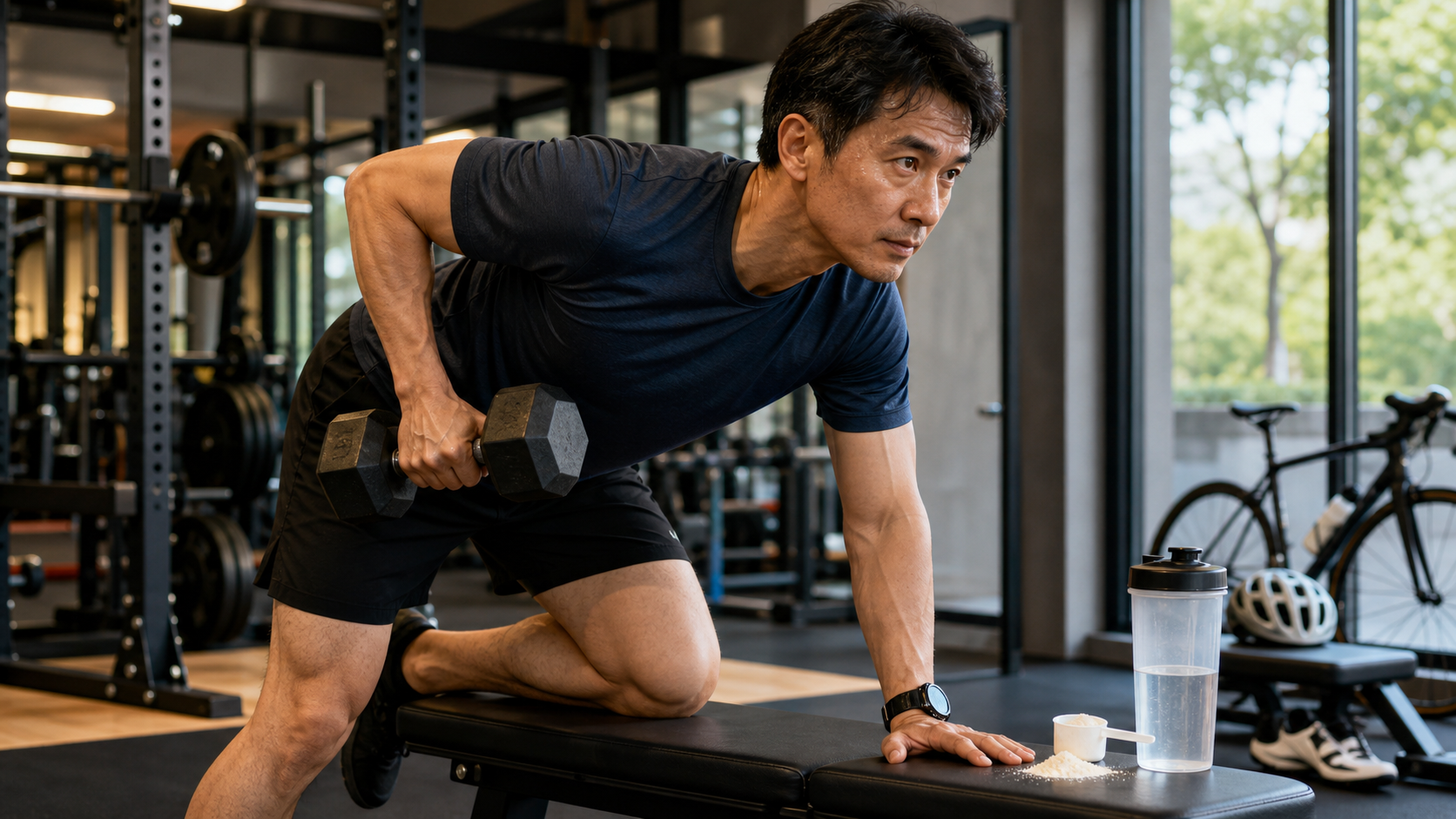
Starting with a Student Who Couldn’t Break His Personal Record
I remember it vividly—a student in his early forties, an office worker—let’s call him A-Xian—came to me a few years ago, stuck in a plateau for nearly six months. He trained diligently enough, three sessions a week, and his diet was fairly disciplined, but his squat weight just wouldn’t budge. On weekend rides up Yangmingshan’s climbs, he always felt like he had “no strength left to pedal” in the final few hundred meters. He asked me: “Coach, is it because I’m getting old?”
I didn’t rush to change his training plan. Instead, I asked him a question first: “Are you taking creatine?” He paused, then said: “Isn’t that something bodybuilders in the gym take? I’m not trying to turn into a muscle-bound beast.”
I’ve heard this misconception far too many times over the past fifteen years. Creatine is probably the supplement most misunderstood by marketing hype and locker-room folklore. It’s been packaged as “muscle-gain powder” or “macho-man supplement,” so endurance athletes avoid it for fear of gaining weight, women avoid it for fear of bloating, and older people figure it’s a young person’s thing.
But if you look at the research accumulated over the past two to three decades, you’ll find that creatine is actually one of the few supplements in sports nutrition with “very solid evidence, a high safety profile, and a low price.” Its benefits extend beyond strength and muscle—recent years have seen growing discussion around cognitive function, sleep, and even health in older populations. In this article, I want to explain the science of creatine from start to finish, in the same way I’d talk to my students—how it works, who it helps, how to take it, what the myths are, and how Taiwan’s eat-out crowd, endurance athletes, and seniors should each view it.
Let me give you the bottom line first: creatine isn’t a miracle cure, but it’s one of the few supplements I’d confidently give a positive recommendation to “the vast majority of healthy adults.” By the end of this, you’ll understand why.
I also want to state my stance in writing this. In sports science, there are two extremes to avoid: one is hyping supplements as if swallowing them will completely transform you; the other is demonizing anything labeled a “supplement,” dismissing even things with solid evidence. Neither approach is honest. My goal here is to put creatine back in its proper place—a tool with a clear mechanism, solid evidence, and clear boundaries for use. Where the evidence is strong, where it’s still developing, and who needs to be especially careful, I’ll flag all of it honestly, without exaggeration or scaremongering. That way, you can make your own judgment instead of being pushed around by marketing or rumors.
Foundational Concepts: What Creatine Actually Does in Your Body
It’s a Buffer for “Quick Energy”
To understand creatine, you first need to understand how muscles use energy. Every contraction your body performs—lifting a barbell, hammering the pedals, sprinting—is ultimately paid for by one molecule called ATP (adenosine triphosphate). ATP is like cash for your muscles; when they contract, it gets split into ADP and releases energy.
The problem is that the ATP “cash” stored in your muscles is very limited—usually enough for only a few seconds of all-out output. That’s when the “phosphocreatine system” steps in. Most of the creatine in your body is stored in muscle as “phosphocreatine,” and its job is to immediately “donate” its phosphate group the moment ATP is rapidly depleted, quickly regenerating ADP back into ATP.
Here’s an analogy: ATP is the cash in your wallet, and phosphocreatine is a stack of loose change sitting right next to it, ready to make up the difference the instant you pay. The fuller your phosphocreatine stores, the longer you can sustain high-intensity output in those few seconds to a dozen or so seconds, and the faster you recover.
That’s why creatine is especially effective for “short-duration, high-intensity, repeated explosive” efforts—every set of weight training, interval sprints, out-of-the-saddle surges on climbs, and sudden stops and starts on the court. It won’t magically raise your VO₂ max, but it lets you recover better between sets, allowing you to “get in that one or two extra reps.” Over time, training volume goes up, and results naturally follow.
Your Body Already Makes It—It’s Just Often Undersupplied
Many people assume creatine is a “foreign chemical,” but it isn’t. Your liver, kidneys, and pancreas naturally synthesize about 1 gram of creatine daily, with the rest coming from diet—mainly red meat and fish. A typical omnivore gets another 1 to 2 grams from food.
The key point: most people’s muscle creatine stores are actually below “saturation,” sitting at roughly 60 to 80 percent of maximum capacity. And for vegans or lacto-ovo vegetarians, who get almost no creatine from food, muscle stores tend to be even lower. That’s why studies repeatedly find that vegetarians see more pronounced improvements in both strength performance and certain cognitive tests after supplementing with creatine—because their “fuel tank” starts out emptier, so filling it up has a stronger effect.
This is very practical for people in Taiwan: many health-conscious individuals with a high proportion of plant-based foods, or middle-aged and older adults limiting red meat intake, actually get relatively little creatine from their diets. These are often the groups with the highest “return on investment” from creatine supplementation.
Not Just Muscle: The Brain Is a Creatine User Too
The most interesting expansion of creatine research in recent years is in the brain. The brain is a highly energy-demanding organ that also needs rapid ATP turnover, so creatine and phosphocreatine systems exist in brain tissue as well.
In recent years, more and more studies have explored the effects of creatine supplementation on cognitive function, covering areas like cognitive performance during sleep deprivation, memory tests, and potential neuroprotective effects. According to the International Society of Sports Nutrition (ISSN) position stand, creatine has some neuroprotective potential, and in a randomized double-blind crossover trial in physically active men, seven days of creatine supplementation improved subjective sleep quality and enhanced cognitive performance during the supplementation period (see references at the end).
I want to pump the brakes here: research on the brain is still developing, and the magnitude of the effects and which populations benefit most still need more validation. I wouldn’t exaggerate to my students and say “creatine will make you smarter,” but I can honestly say—it has a plausible physiological basis for brain function, and early evidence leans positive, especially in contexts of sleep deprivation or low dietary creatine intake.
This actually resonates with a lot of office workers in Taiwan who are chronically sleep-deprived. Many of my students work during the day and squeeze in training at night, with sleep often getting compressed. I never sell creatine as a “late-night lifesaver,” because adequate sleep itself is irreplaceable; but if sleep is already taken care of and the diet is balanced, creatine might just be a mild bonus on this front. Think of it as icing on the cake, not a lifeline—if the fundamentals aren’t in place, relying on supplements to save the day is putting the cart before the horse.
Strength and Athletic Performance: Creatine’s Core Business
Creatine’s most solid and least controversial benefits are still in athletic performance. The ISSN position statement directly calls creatine “the most effective legal sports nutrition supplement currently available” for enhancing high-intensity exercise capacity and lean body mass during training (see references at the end). That statement carries considerable weight—in a supplement market full of exaggerated claims, very few products are positioned this way by a scientific society.
Its benefits can be roughly divided into several aspects. I’ve organized them in a table, also noting the “perceived effectiveness” I’ve observed in practice:
| Benefit Aspect | Physiological Mechanism | Practical Perceived Effectiveness | Who Should Pay Special Attention |
|---|---|---|---|
| High-intensity repeated output | Phosphocreatine accelerates ATP regeneration | High, most direct | Weight training, intervals, ball sports |
| Inter-set recovery | Faster energy replenishment in a short time | Medium-high | Heavy lifting, high-volume trainees |
| Lean body mass increase | Partly from cellular water retention, partly from increased training volume | Medium, takes time to accumulate | Muscle building, combating sarcopenia |
| Total training volume increase | One or two extra reps per set, accumulating long-term | Medium, subtle but crucial | All resistance trainees |
| Pure endurance performance | Limited help for prolonged aerobic exercise | Low | Pure marathoners, long-distance athletes shouldn’t expect much |
Here I want to make one thing clear to my endurance athletes. Many cyclists and marathon runners shy away at the mention of “weight gain,” afraid of carrying an extra few hundred grams of water on climbs. This concern isn’t entirely unfounded—creatine can indeed cause an initial weight increase of about 0.5 to 1.5 kg due to increased water content in muscle cells (the range varies by individual). For competitive athletes who meticulously track power-to-weight ratio, this requires individual assessment.
But for the vast majority of cyclists and runners “aiming for health and overall fitness”—especially those who also do strength training and want to maintain muscle mass—the improvement in training quality from creatine is often far more valuable than that bit of weight. For someone like A-Xian, a weekend Yangmingshan rider and weekday office worker who wants to build strength, I clearly recommended he take it. After regular supplementation plus training adjustments, his squat broke through a long-standing plateau after three months, and his complaints about “running out of gas” on the final sections of climbs also decreased significantly. Of course, this was the combined result of creatine, training, and recovery—creatine never works magic on its own.
Practical Approach: How to Actually Take It
This is what clients ask about most. The good news: taking creatine is very simple, and the parts that marketing has made complicated can all be ignored.
Which One to Choose? The Answer Is Boring: Creatine Monohydrate
There are all kinds of fancy versions on the market—creatine hydrochloride, buffered creatine, esterified creatine—often more expensive, claiming better absorption and no bloating. But when you lay out the evidence, the most thoroughly researched, most clearly effective, and cheapest option has always been “creatine monohydrate.”
My advice to clients has always been: Unless you have a special reason, just buy creatine monohydrate. Don’t waste money on those “upgraded” versions. If you’re concerned about purity, choose products with third-party testing certification.
Two Approaches: To Load or Not to Load
There are two main approaches to taking it. I’ve organized them into a dosage table:
| Protocol | Loading Phase (First 5–7 Days) | Maintenance Phase | Time to Reach Muscle Saturation | Suitable For |
|---|---|---|---|---|
| Rapid Loading | ~20 g daily, divided into 4 doses (~5 g each) | 3–5 g daily | ~5–7 days | Those who want quick results, have upcoming competitions or tests |
| Slow Accumulation | No loading | 3–5 g daily | ~3–4 weeks | Those who want to avoid GI discomfort, not in a hurry |
The only difference between these two methods is “how fast you reach the destination”—the final level of muscle saturation is the same. According to data compiled from the ISSN position statement, the loading protocol (~0.3 g per kg body weight for 5–7 days) saturates muscle creatine faster, while 3–5 g daily without loading reaches the same saturation after about four weeks (see references at the end).
When I work with clients, unless there’s clear time pressure, I actually more often recommend the “slow accumulation” method. The reason is simple: swallowing 20 g a day causes GI discomfort and diarrhea in some people; and taking it slowly makes it easier to build the habit of daily consistent use. Those rushing to load are mostly athletes with a competition next month who want to top up their stores quickly.
When to Take It? What to Take It With?
There’s endless debate online about “when is the best time to take creatine,” but honestly—timing matters far less than “whether you take it every day.” Creatine’s effect comes from keeping muscle stores saturated long-term. This is a “stock” concept, not an “instant” concept. Whether you take today’s dose in the morning or before bed has negligible impact on total stores.
If you really want to optimize, here’s my priority order:
- Most important: take it every day, don’t miss doses. Consistency far outweighs timing.
- Second: take it with a meal after training. Consuming it with carbohydrates and protein theoretically helps a bit with muscle uptake, and taking it with food makes it hardest to forget.
- Drink enough water. Creatine pulls water into muscle cells, so you need adequate hydration during supplementation.
In Taiwan, I especially need to remind people about hydration. Our summers are hot and humid, and outdoor cycling and running cause heavy sweating—many people already don’t drink enough water. During creatine supplementation, pay even more attention to total daily fluid intake. This isn’t because creatine is “dangerous,” but to let it work properly and to take care of your daily hydration status.
Practical Program Pairings for Different Populations
Supplementation only makes sense when viewed together with training. Here are the general directions I often give different groups:
- Weight trainers aiming to build muscle: 5 g daily maintenance, paired with progressive resistance training, focusing on gradually increasing total training volume. Those extra reps creatine lets you do are muscle in the long run.
- Endurance athletes who primarily cycle/run but also do strength work: 3–5 g daily. Don’t be scared off by that 1 kg of weight—treat it as a tool for “maintaining muscle and supporting strength training,” especially well-suited during winter base phase when doing weights.
- Middle-aged and older adults wanting to combat sarcopenia: This is a group I’ve increasingly focused on in recent years, discussed separately below.
Common Mistakes and Corrections
Having coached so many clients, I’ve found that people tend to fall into highly repetitive pitfalls. Let me lay out the six most common ones clearly.
Mistake One: Treating Creatine Like an “Instant Stimulant”—Taking a Scoop Before Training and Expecting Immediate Strength
This is the most common misunderstanding. Creatine is not caffeine; it won’t make you instantly powerful after taking it. It works by filling muscle stores long-term—a slow-and-steady stock strategy. Correction: Take it regularly like a daily vitamin. Effects gradually emerge from the second or third week onward. Don’t expect results on day one.
Mistake Two: Giving Up at the First Sign of Bloating or Diarrhea, Concluding “My Body Isn’t Suited for It”
Swallowing 20 g at once during a loading phase can indeed cause discomfort for those with sensitive stomachs. But this is usually a “single dose too large” problem, not that you can’t take creatine. Correction: Switch to the slow accumulation method—3–5 g daily, divided and taken with meals, with adequate water. Most people’s GI issues disappear.
Mistake Three: Panicking at Weight Gain, Assuming You’ve Gotten Fat
The initial weight increase of about 0.5 to 1.5 kg is mostly water content in muscle cells, not fat. Correction: Don’t just look at the scale—look in the mirror, measure circumference, track training performance. This water is a good thing for the vast majority (fuller muscles, increased strength). Only competitive athletes extremely concerned about power-to-weight ratio need to weigh the trade-off individually.
Mistake Four: Paying Several Times More for “Upgraded” Creatine
The evidence for additional benefits from fancy versions is nowhere near as impressive as their price tags. Correction: Buy creatine monohydrate and spend the money you save on better food or a coaching session—the return on investment is much higher.
Mistake Five: Avoiding It Out of Fear of “Kidney Damage,” or Taking It with Anxiety
This is the most widespread and off-putting myth in Chinese-speaking communities, and it deserves a dedicated section (see next). Correction: For healthy adults at recommended doses, current evidence does not support the claim that creatine harms the kidneys. However, those with kidney disease or other chronic conditions must consult a physician first.
Mistake Six: Inconsistent Supplementation, Only Taking It When You Remember
Because creatine works by building up stores in the body, taking it sporadically means those stores never get fully saturated, so you naturally won’t feel any effect—and then you conclude, “Creatine doesn’t work.” Fix: Pair it with something you do every single day—like placing it next to your breakfast, or making it as routine as brushing your teeth. Build the habit.
Safety: Clarifying the “Kidney Damage” Concern
I want to write this section very carefully, because it’s the biggest worry for most of my clients (especially the older family members).
Let’s get to the point first: For healthy adults at recommended dosages, current research evidence does not support the claim that “creatine damages the kidneys.” This isn’t just my personal opinion; it’s the consensus conclusion drawn from numerous well-controlled studies and expert reviews.
Here are a few key research directions worth noting:
- One study on resistance trainers who also consumed a high-protein diet found no observed kidney function impairment after approximately twelve weeks of creatine supplementation (see references at the end). This is important because “does combining high protein with creatine cause double kidney damage?” is exactly what many people worry about.
- A narrative review on creatine safety even used the title “Is it time to write the obituary for the claim that creatine causes kidney failure?” summarizing the long-standing lack of evidence linking creatine to kidney disease (see references at the end).
- The ISSN position stand also summarizes that at recommended dosages, no adverse effects on kidney function have been observed in healthy adults (see references at the end).
So why is the “kidney damage” myth so hard to dispel? There’s a highly technical but crucial detail here that I often spend time explaining to my clients:
When assessing kidney function, medical tests commonly use blood “creatinine” levels to estimate the glomerular filtration rate. And creatinine happens to be a metabolic byproduct of creatine. When you supplement with creatine, or consume large amounts of creatine-containing meat, your blood creatinine may naturally rise slightly—this is a normal change in a metabolic byproduct, not an indication of actual kidney damage. In other words, much of the impression that “creatine worsens kidney function markers” is actually a case of the lab value being confounded by creatine intake itself, rather than the kidneys having a problem. This is also why researchers caution that using serum creatinine to assess kidney function in creatine users carries an inherent methodological bias.
Let me organize the safety information into a table so you can see at a glance which groups need to pay attention:
| Population | General Recommendation | Medical Consultation Principle |
|---|---|---|
| Healthy adults | Evidence shows safety at recommended dosages | Generally no special monitoring needed |
| Those with kidney disease or abnormal kidney function | Be conservative; do not self-supplement | Must consult a physician before supplementing |
| Those with chronic conditions like diabetes, hypertension, heart disease | Individualized assessment | Physician should judge based on overall condition; do not decide on your own |
| Older adults, those with naturally declining kidney function | Can consider, but should be cautious | May discuss with physician whether monitoring is needed during supplementation |
| Pregnant or breastfeeding women | Insufficient evidence | Lacks adequate research; consult a professional first |
| Adolescents | Individual assessment | Recommended to prioritize diet and training under professional guidance |
I’ll honestly add one more point: when research says “safe for healthy adults,” the key word is “healthy.” If you have chronic kidney disease, diabetic nephropathy, or are taking medications that affect kidney function, then you fall outside this “general conclusion” and must see a doctor first. In Taiwan, seeing a doctor is convenient and NHI coverage is highly accessible—getting blood drawn to check kidney function isn’t difficult. If you’re truly concerned, getting baseline bloodwork done and discussing it with your physician before supplementing is the safest approach. This isn’t because creatine is especially dangerous, but because any supplement should be individualized when an existing medical condition is present.
Taiwan Context: Eating Out, Humid Climate, and Older Adults
Translating the science into the reality of life in Taiwan is what actually makes it useful.
Creatine Intake Is Often Low for Those Who Eat Out Frequently
Taiwan has a high rate of eating out. Many office workers have all three meals outside, and their intake of red meat and fish is actually inconsistent—one day a chicken leg bento, the next day a bowl of braised pork rice, and the day after that a vegetarian buffet. With this kind of eating pattern, creatine intake from food fluctuates widely and averages on the low side. Add to that the fact that many health-conscious people deliberately reduce red meat, and dietary creatine drops even further. For this group, creatine supplementation often offers relatively high returns on investment.
Hydration Reminder for the Humid, Hot Climate
Taiwan’s summers are humid and hot, and outdoor exercise produces staggering amounts of sweat. Supplementing with creatine pulls water into muscle cells, so during the supplementation period you need to pay even more attention to your “total daily fluid intake.” This isn’t about creatine dehydrating you—it’s about using this opportunity to build better daily hydration habits. Cyclists and runners training outdoors especially need to take note.
Seniors and Sarcopenia: What I Most Want to Promote in Recent Years
Taiwan is aging rapidly, and sarcopenia (the age-related loss of muscle and strength) is a very real health issue. Muscle isn’t just about appearance—it’s about fall risk, metabolism, and the ability to live independently.
For the elderly population, creatine’s role is receiving increasing attention—combined with resistance training, it may help maintain muscle and strength. I often encourage my clients to talk to their parents about this: rather than worrying about the “kidney damage” myth, it’s better to seriously confront the more pressing problem of “muscle loss.” Of course, if an older family member has chronic disease, is on medication, or already needs to watch their kidney function, they must discuss it with a physician first before deciding—this step cannot be skipped. Seeing a doctor in Taiwan is easy, so incorporating this into routine health checkups isn’t a hassle.
Actionable Advice for Readers at Different Levels
After all this science, I want to end with a practical action guide you can follow directly, based on where you are right now.
If You’re a Complete Beginner
- Buy a tub of “creatine monohydrate”—skip the upgraded versions.
- Use the gradual loading method: 3–5 grams daily, taken with a meal, with adequate water.
- Tie it to a fixed daily routine to build the habit and avoid missing doses.
- Don’t rush to judge results in the first two to three weeks—creatine is a saturation strategy; take it slow.
- Also take care of your training and sleep—creatine is an amplifier, not a substitute.
If You’re Already Training Regularly
- Check whether you’re being “inconsistent”—regularity is the most common point of failure.
- If you have an upcoming test or competition, consider a short-term loading phase to quickly saturate your stores.
- Focus on using the recovery creatine provides to gradually build up your total training volume.
- Endurance athletes: don’t be scared off by 1 kg of body weight; weigh the overall strength and health benefits.
If You’re an Endurance-Oriented Cyclist or Runner
- During the winter base phase, creatine pairs well with strength training.
- If you’re extremely concerned about power-to-weight ratio and have specific competition goals, individually assess the initial water-retention-related weight gain.
- For the majority who prioritize “health and long-term fitness,” creatine’s value in preserving muscle outweighs that slight weight gain.
If You’re Considering It for an Older Family Member
- First, focus on the real enemy: muscle loss—don’t be intimidated by myths.
- Those with chronic disease, on medication, or needing to watch kidney function should consult a physician before supplementing.
- It must be paired with resistance training; supplements don’t build muscle on their own.
- Take advantage of Taiwan’s convenient healthcare system and include kidney function tests in routine health checkups.
In-Depth Case Studies: Three Trainees, Three Considerations
Talking about principles alone can feel a bit dry, so let me share three real situations I’ve coached (the character details and scenarios have been slightly adjusted, but the logic and principles are genuine), to show you how I weigh the same tub of creatine differently for different people.
Case One: Xiao-Jie, the mountain biker afraid of gaining weight. Xiao-Jie loves mountain biking and trail running. She’s light, climbs fast, and completely rejected creatine the moment she heard it could add 0.5 to 1.5 kg. I didn’t push it. Instead, I first asked about her goals—she actually had easily fatigued knees and occasional leg weakness when controlling the bike on descents. This is a sign of insufficient “muscle strength and muscular endurance,” not purely an aerobic issue. So I shifted her focus to lower-body strength training, with creatine as a supplement only. I explained that the water retention is mostly inside the muscles, not fat, and that for her body type, the actual impact usually falls at the lower end of the spectrum. She agreed to try it for three months. The result: her bike handling stabilized, no more leg weakness on descents, and she said herself she “didn’t even notice” any weight change. Key point: Clarify the real problem first; supplements are always the supporting cast.
Case Two: The caring daughter worried about her dad’s “kidneys.” A trainee wanted to give creatine to her sixty-something father, who has mild hypertension and is on medication, to combat sarcopenia. But the whole family was most afraid of kidney damage. My approach: stop the urge to self-supplement first. Because her father has a chronic condition and is on medication, he falls outside the “healthy adults” category in the research. I advised her to bring this up proactively with the doctor at his next check-up, laying out his blood pressure, kidney function, and medications for the physician to evaluate. Meanwhile, start with the uncontroversial fundamentals: “resistance training plus adequate protein.” Key point: With chronic illness and medication, defer the individualized judgment to the physician—this step cannot be skipped.
Case Three: A-Zhe, the vegan lifting beginner. A-Zhe has been fully vegan for two years and just started strength training. Progress was slow, and he often felt fatigued. Vegans naturally have low dietary creatine intake, so their muscle stores are often depleted—exactly the group with the highest “perceived effectiveness” from creatine supplementation. I had him use the slow-loading method at 5 grams daily, skipping a loading phase to avoid gastrointestinal discomfort. After about three to four weeks, he reported that the same workout felt “more powerful, with slightly faster recovery between sets.” This aligns with research showing vegans often see more pronounced improvements from supplementation. Key point: Your dietary pattern determines your “starting line”—the emptier the tank, the more noticeable the refill.
Frequently Asked Questions (FAQ)
Having coached trainees for so long, some questions come up almost every month. I’ve compiled them all here.
Q: Does creatine need to be “cycled”? Do I need to stop after a while?
A: For the vast majority of healthy adults, there’s no need to deliberately cycle “four weeks on, four weeks off.” Creatine works by maintaining saturated muscle stores. Once you stop, the stores gradually decline, effectively letting the benefits fade for nothing. Unless there’s a specific reason, regular, continuous supplementation is the simplest and most effective approach.
Q: Will creatine make women bulky, like a female bodybuilder?
A: No. The female hormonal environment doesn’t easily build extreme muscle mass, and creatine is certainly not a steroid. It simply helps you train better. Women can enjoy the strength and muscle-preservation benefits of creatine too—don’t be scared off by the “macho supplement” marketing image.
Q: Does caffeine cancel out creatine’s effects? What if I drink coffee and take creatine?
A: This is an old question. Early studies sparked some debate, but overall, typical daily coffee consumption won’t make creatine “ineffective.” Drink your coffee as usual and take your creatine regularly—there’s really no need to agonize over this.
Q: Can creatine powder be added to hot drinks or soup?
A: Brief contact with warm liquid, consumed promptly, isn’t a practical problem. What you really want to avoid is “leaving it soaking in acidic or high-temperature liquid for a long time.” The simplest approach is to mix it with water or a beverage and drink it right away—don’t let it sit until the next meal.
Q: If I miss a day or two, will my stores drop to zero and all my progress be lost?
A: No. Muscle store depletion is gradual. Missing a day or two has minimal impact—just continue the next day. Don’t fret over a missed dose or try to “double up” to compensate. Consistency is about the long term, not perfection.
Q: Can I get the same effect by eating more beef or fish instead of creatine?
A: In theory, meat does contain creatine. But to reach a supplemental dose (e.g., 5 grams daily) through diet alone, you’d need to consume a very large amount of red meat or fish. The calories, saturated fat, and cost wouldn’t be worth it, and cooking also degrades some creatine. Supplementing with creatine monohydrate is both cheaper and more precise.
Positioning Comparison: Creatine vs. Other Common Supplements
Finally, here’s a table to help you place creatine on the supplement map and understand its role:
| Supplement | Primary Timing of Effect | Evidence Strength (General Consensus) | My Practical Positioning |
|---|---|---|---|
| Creatine Monohydrate | Long-term stores, gradual results | High | A foundational option almost any healthy adult can consider |
| Whey Protein | Fills daily protein gaps | High | Very useful when you’re not eating enough protein |
| Caffeine | Immediate pre-workout boost | High | Noticeable energy boost, but watch individual tolerance and sleep |
| Various “Fancy Creatine” | Same as creatine but pricier | Weak evidence for added benefits | Usually not worth the extra money |
The core message of this table: supplements aren’t about “more is better.” It’s about “nailing the fundamentals first (training, sleep, diet), then reinforcing with a few evidence-backed tools.” Creatine happens to be one of those few well-supported tools.
Conclusion: A Cheap, Solid, Misunderstood Tool
Back to A-Xian’s story. He not only broke through his plateau weight, but more importantly, he stopped seeing creatine as a “macho man’s thing” and understood the reasoning behind it—a tool that helps muscles rapidly replenish energy, supporting him through workout after workout.
I often say the world of sports nutrition is full of noise—too many expensive, exaggerated products with weak evidence. Creatine is the opposite: it’s cheap, well-researched, with solid evidence supporting its safety in healthy adults. Its benefits aren’t limited to muscle either; they extend to brain health and healthy aging. Its only real problem is how deeply it’s been misunderstood by marketing and rumor.
If you’re a healthy adult looking to squeeze out a bit more from your training, or to preserve muscle as you move past middle age, creatine deserves your serious consideration and practical use. But remember: it’s an amplifier, not magic. Get the fundamentals—training, sleep, diet—right, and creatine has something to amplify. And if you have any chronic condition, are on medication, or have special health circumstances, defer the individualized judgment to the professionals.
Finally, here are the sources cited in this article, so you can verify further on your own rather than taking my word for it.
References
- International Society of Sports Nutrition position stand: safety and efficacy of creatine supplementation in exercise, sport, and medicine (PMC): https://pmc.ncbi.nlm.nih.gov/articles/PMC5469049/
- Effects of Creatine Monohydrate Loading on Sleep Metrics, Physical Performance, Cognitive Function, and Recovery in Physically Active Men (PMC): https://www.ncbi.nlm.nih.gov/pmc/articles/PMC12736258/
- Does long-term creatine supplementation impair kidney function in resistance-trained individuals consuming a high-protein diet? (PMC): https://www.ncbi.nlm.nih.gov/pmc/articles/PMC3661339/
- Is It Time for a Requiem for Creatine Supplementation-Induced Kidney Failure? A Narrative Review (PMC): https://pmc.ncbi.nlm.nih.gov/articles/PMC10054094/
This article is for educational purposes only and does not replace individual diagnosis and treatment advice from a physician, physical therapist, or nutritionist.
Related Reading
- The Complete Athlete’s Guide to Creatine Use: Loading, Maintenance, Timing, and Debunking Myths
- The Benefits and Limitations of Creatine in Endurance Sports: Reassessing the Strength of Scientific Evidence
- Latest Research on Creatine for Endurance Athletes: Breaking the “Only for Bodybuilding” Myth
- Muscle-Building Nutrition: A Complete Practical Guide to Muscle-Building Strategies—Energy, Protein, and Weight Gain Rates
CT暗黑廚房) 車友必備 宇宙無敵鮮蚵湯 幫助訓練恢復 天然食補 好市多 超肥鮮蚵 破PR
7 年前
靠單車減肥35公斤 心得分享與整理
7 年前
#公路車 #Fitting 靠人工智慧APP 幫你調整單車
6 年前
4K 東眼山 x 水蜜桃冰沙 百人單車約騎! 操完再吃冰 多爽快
7 年前
一日北高/長距離團騎 常見問題補充篇 / 組團或跟團的眉角 / 壯車友容易被瘦車友慢性拉爆 / 原來屁股痛可能是這個原因...? / 風場配速法 / 公路車 / CT Yeh
2 年前
再一組! 全碳幅條 碟煞/無內胎輪組 開箱! 到底好騎嗎? UNAAS X40 | 公路車 | CT Yeh
4 年前
元宇宙運動 ! RouvyAR 虛擬實境約騎! 台灣路段開箱 帶你日月潭環潭一圈 | 團騎競賽參加教學 | 常見小問題整理 三人共享一年不用一千 | 公路車 | 訓練台 | CTYeh
5 年前
鎮西堡 公路車首航 你排乳酸 我排卵... | 宇老又爆胎 要直接棄坑了嗎?
4 年前