The Complete Guide to Fat: The Misunderstood Essential Nutrient—Functions, Saturated vs Unsaturated, and the Real Needs of Athletes
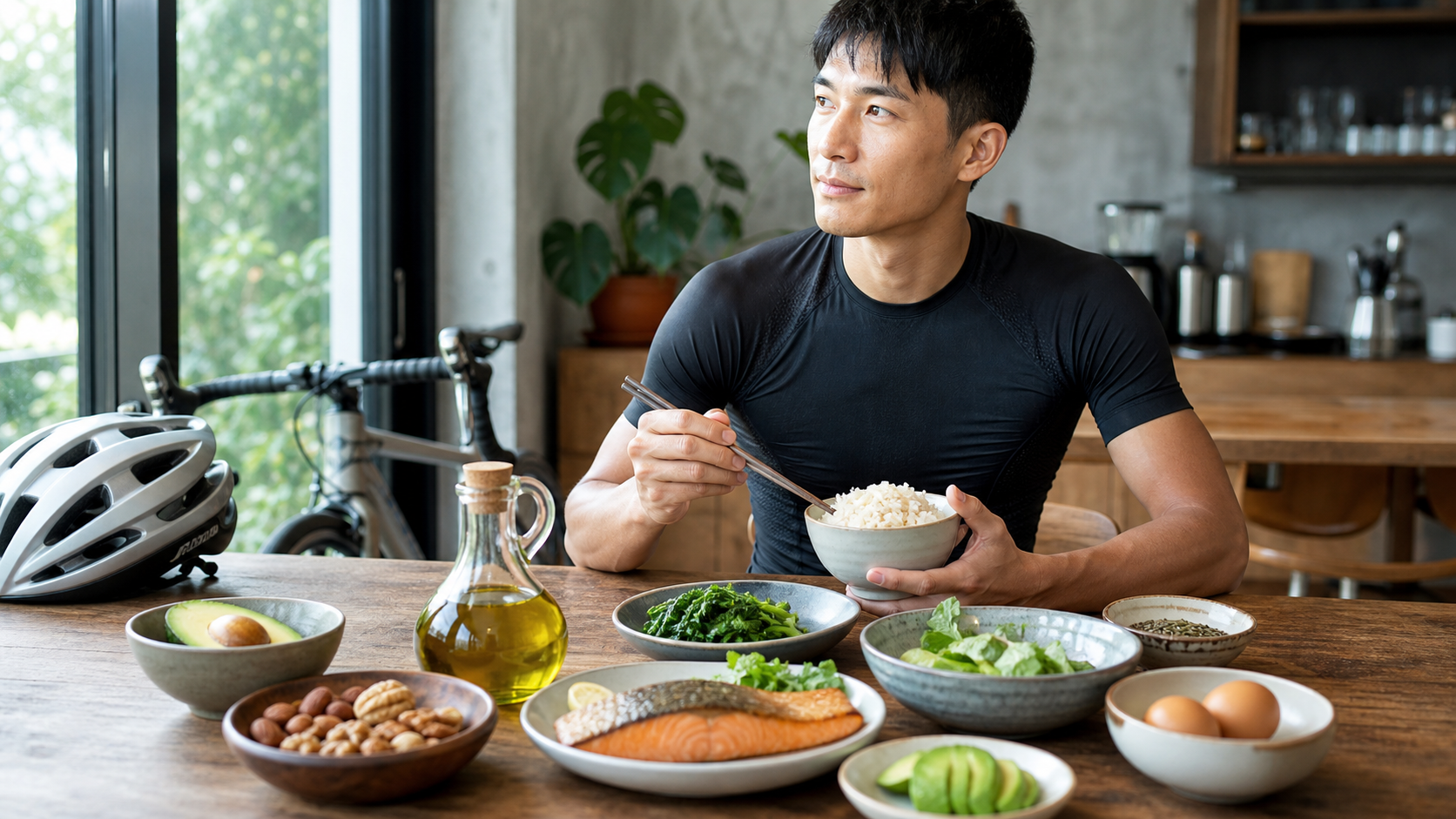
Opening: The Student Who Wouldn’t Touch a Drop of Oil
I’ve been coaching athletes and recreational exercisers for fifteen years now. Over that time I’ve encountered all kinds of dietary philosophies, but there’s one case I still remember to this day.
She was a female student in her early forties—let’s call her Sister A. She’d been cycling for two years and maintained her weight well, riding Yangmingshan and the riverside paths every week, occasionally tackling Fengguizui on weekends. But over the past year or so, she started complaining: no power on climbs, irregular periods, constantly feeling cold, skin so dry it was flaking, and even her sleep had deteriorated. I asked her to send me photos of her three-day food diary, and the moment I opened them, it was clear—her fat intake was nearly zero. Breakfast was unsweetened oatmeal with water, lunch was boiled chicken breast with blanched vegetables “without oil,” and dinner was the same. She told me: “Coach, I’m afraid of getting fat. Fat is nine calories per gram, so I keep it as low as I can.”
All I said to her was this: “You’re not losing fat—you’re cutting off the essential raw materials your body needs to function.”
This article is what I later wrote for Sister A, and for every athlete who treats fat as their number one enemy. Fat has been misunderstood for far too long. It isn’t just “calories”—it’s the raw material for hormones, the framework of cell membranes, the carrier for fat-soluble vitamins, and the largest fuel reservoir for endurance sports. Today, we’re going to cover it from start to finish.
1. What Does Fat Actually Do in the Body?
Most people’s understanding of fat stops at “high in calories, makes you gain weight,” which really does it a disservice. I usually ask students to remember a few core roles of fat first.
1. It’s the Raw Material for Hormones
Cholesterol (yes, that demonized cholesterol) is the precursor for synthesizing steroid hormones, including testosterone, estrogen, and cortisol. When someone chronically suppresses fat to extremely low levels, the raw materials for hormone synthesis run short, and the endocrine system is often the first to show problems. Sister A’s irregular periods were no coincidence. In sports science, there’s a concept called “Relative Energy Deficiency in Sport (RED-S)”—when long-term energy intake is insufficient, especially with fat too low, it can affect menstrual cycles, bone density, and immunity.
2. It’s the Building Material for Every Cell Membrane
The human body has roughly tens of trillions of cells, and every cell’s outer membrane is a bilayer structure made of phospholipids. The fluidity of cell membranes, signal transduction, and ion channel function all depend on the fatty acid composition of the membrane. The types of fat you eat are, to some extent, reflected in the quality of your cell membranes.
3. It’s the Carrier for Fat-Soluble Vitamins
Vitamins A, D, E, and K are all fat-soluble, meaning they need fat to be absorbed. With Sister A’s approach of “blanched vegetables without oil,” even if the vegetables contained β-carotene, the absorption rate would be severely compromised. I often tell my students: drizzling a small spoonful of olive oil over a plate of dark leafy greens isn’t just for flavor (though it does taste good)—it’s to ensure those vitamins actually make it into your body.
4. It’s the Primary Fuel for Endurance Sports
This point is especially important for cyclists and runners. The body’s carbohydrate (glycogen) stores are quite limited—enough to support only about one to two hours of high-intensity exercise. But fat stores are nearly “inexhaustible”—even a lean athlete with very low body fat carries tens of thousands of calories of energy in fat. When you ride at moderate to low intensity for extended periods (such as cruising on long climbs or long LSD rides), a significant proportion of your energy comes from fat oxidation. Well-trained endurance athletes show markedly improved fat utilization efficiency—this is precisely one of the goals of “fat adaptation” training.
Coach’s Note: If you push fat to extremely low levels, you might lose weight quickly in the short term, but you’re sacrificing hormones, immunity, absorption, and even long-distance endurance. When it comes to weight loss versus health, fat shouldn’t be the first thing you cut.
2. Saturated vs Unsaturated: Understanding Fat Classification Once and For All
This is the part students get most confused about. Let me break it down in the plainest terms possible. Based on the number of “double bonds” in their molecular structure, fatty acids fall into three main categories.
Saturated Fat
The molecular structure has no double bonds—the carbon chain is “filled” with hydrogen, hence “saturated.” At room temperature, these are mostly solid, such as lard, beef tallow, butter, coconut oil, palm oil, as well as fat in fatty meats and full-fat dairy. Saturated fat isn’t poison in itself—the body does need it—but when consumed in excess, especially when it displaces unsaturated fats, it’s associated with increased cardiovascular risk.
Monounsaturated Fat (MUFA)
The molecule has one double bond. The representatives are olive oil, camellia oil, avocado, and nuts (such as macadamia nuts, cashews, almonds). This type of fat makes up a large proportion of the Mediterranean diet and is widely considered cardiovascular-friendly. It’s also the category I most encourage athletes to use as their primary daily fat source.
Polyunsaturated Fat (PUFA)
The molecule has two or more double bonds. Within this category are two major families, and this is where the “essential fatty acids” live:
- Omega-3 (n-3): Includes ALA from plants (such as flaxseed, walnuts, chia seeds), as well as EPA and DHA from marine sources (such as mackerel, Pacific saury, salmon, sardines). EPA and DHA are closely linked to anti-inflammation, cardiovascular health, and post-exercise recovery.
- Omega-6 (n-6): Such as soybean oil, sunflower oil, and corn oil. Omega-6 is also essential, but the problem is that modern diets contain far too much refined vegetable oil and processed food, causing a severe imbalance of Omega-6 relative to Omega-3.
The One to Single Out as the Villain: Trans Fat
Industrially hydrogenated trans fat is one of the few fats where the scientific community has a strong consensus that intake “should be as close to zero as possible.” Its association with cardiovascular disease risk is well established. Taiwan has banned partially hydrogenated oils (the main source of artificial trans fat) since 2018, but you should still watch out for certain baked goods, fried foods, coffee creamers, and puff pastry products.
The table below organizes the four types of fat clearly—it’s the cheat sheet I hand out to my students.
| Type | Molecular Characteristics | State at Room Temperature | Common Food Sources | Role for Athletes |
|---|---|---|---|---|
| Saturated Fat | No double bonds | Mostly solid | Lard, butter, coconut oil, fatty meat, full-fat dairy | Fine in moderation—no need to demonize, but don’t make it the main source |
| Monounsaturated | One double bond | Liquid | Olive oil, camellia oil, avocado, nuts | Primary daily fat source, cardiovascular-friendly |
| Polyunsaturated | Multiple double bonds | Liquid | Deep-sea fish, flaxseed, walnuts, vegetable oils | Contains essential fatty acids, especially prioritize Omega-3 |
| Trans Fat | Industrially hydrogenated | Solid | Some puff pastry, fried foods, low-quality creamer | Keep as close to zero as possible |
How Much of Each Fat Should You Eat? Reference to International Guidelines
According to the World Health Organization (WHO) guidelines updated in July 2023, total fat intake for adults is recommended to be below 30% of total calories, with saturated fat not exceeding 10% of total calories, and trans fat from industrial and ruminant sources not exceeding 1%. The guidelines also emphasize that fat intake should be dominated by unsaturated fatty acids. This is an easy framework to remember: Don’t fear fat, but choose your types wisely, and let unsaturated fats make up the majority.
Here’s a practical conversion: If you eat 2,000 kcal per day, 10% saturated fat equals 200 kcal, which translates to roughly 22 grams. A palm-sized piece of pork belly plus a few slices of full-fat cheese would already add up to about that amount. So this isn’t about avoiding oil entirely—it’s about spending your “quota” where it counts.
3. Fat Needs for Athletes and Active Individuals: How Much Should You Actually Eat?
This is the part I most want to discuss with my cycling and running friends. The fat strategy for athletes is different from that of someone purely trying to lose weight.
Total Fat: Don’t Go Below 20% of Total Calories
In practice, I usually aim for athletes to consume between 20%–35% of total calories from fat. Going below 20% (especially long-term) raises concerns about hormones, absorption of fat-soluble vitamins, and immune function. This is also what worried me most when reviewing A’s dietary records—she was consistently below 10%.
I often use a “per kilogram of body weight” approach to help clients set a baseline: generally, I recommend fat intake stay at least at 0.8–1.0 grams per kilogram of body weight to avoid over-restriction. For a 60 kg cyclist, this means at least roughly 48–60 grams of fat per day.
Omega-3: Worth Extra Attention for Athletes
This is the area I believe athletes should prioritize most. The recommended intake of EPA + DHA for the general adult population isn’t particularly high—the Academy of Nutrition and Dietetics and the Dietitians of Canada recommend 0.5 grams of EPA + DHA per day, while the European Food Safety Authority (EFSA) recommends 0.25 grams per day. However, athletes generally need more due to the higher inflammatory and recovery demands from training.
According to summaries in the sports nutrition field, the daily recommended EPA + DHA intake for athletes falls between 1–3 grams. When the goal is improving performance and recovery, common recommendations land around 1.5–2 grams. The International Olympic Committee (IOC) expert consensus also recommends elite athletes consume approximately 2 grams of n-3 fatty acids daily (from food or supplements).
I want to emphasize: prioritize getting it from food. Eating Omega-3-rich fish (mackerel, Pacific saury, salmon, sardines) 2–3 times per week is sufficient for most athletes. Supplements are meant to “fill the gaps,” not to “replace eating fish.”
Below is a reference table I provide for different groups regarding Omega-3. Please note these are ranges, not prescriptions for you to calculate down to the decimal point—actual needs depend on training volume, dietary baseline, and individual circumstances.
| Group | EPA+DHA Reference Range (Daily) | How to Achieve Through Food | Notes |
|---|---|---|---|
| General adult (not very active) | ~0.25–0.5 g | Eat fish 1–2 times per week | Maintains basic health |
| Recreational athlete (regular exercise) | ~0.5–1 g | Eat fish 2–3 times per week | Supports recovery and anti-inflammation |
| High-volume endurance athlete | ~1–2 g | Eat fish + supplement as needed | High inflammatory load during training |
| Competition prep / intensive training block | ~2 g or so | Food first, supplements secondary | Individualized per coach/nutritionist |
The Omega-6 Overconsumption Issue Taiwanese People Should Especially Watch
Eating out is common in Taiwan, and restaurants, street vendors, and bento shops often use soybean oil, sunflower oil, and other oils high in Omega-6 for high-temperature cooking. This isn’t to say Omega-6 is bad—it’s just that it’s too easy to overconsume, which makes Omega-3 appear relatively insufficient. Rather than continuously increasing Omega-3, I more often advise clients to first “reduce excess Omega-6”—eat less fried food, drink fewer beverages containing non-dairy creamer, and switch to olive oil or camellia oil for home cooking. The benefit of this step is often greater than buying fish oil.
4. Practical Approach: Concrete Steps to Get Fat Intake Right
Now that the concepts are covered, here’s what you can implement immediately. This is the operational framework I actually use with my clients.
The “Three-Thirds Rule” for Daily Fat Intake
I like using a simple mnemonic to help clients remember fat distribution:
- One-third Monounsaturated: Olive oil, camellia oil, avocado, nuts—use these as daily staples.
- One-third Polyunsaturated (including Omega-3): Deep-sea fish, flaxseed, walnuts.
- One-third Saturated Fat: Natural fats from meat, eggs, and dairy—moderate amounts are fine.
This isn’t about weighing every meal; it’s a general direction: make unsaturated fats the majority, keep saturated fats in check, and keep trans fats near zero.
What a Day Looks Like: A Sample for Cyclists
Here’s a sample daily fat configuration I often give clients (using a recreational cyclist training about one hour per day as an example).
| Meal Time | Sample Meal | Fat Source & Strategy |
|---|---|---|
| Breakfast | Whole wheat toast + avocado + one egg | Monounsaturated (avocado) + natural saturated fat (egg) |
| Lunch (eating out, bento) | Choose grilled/braised main over fried; add your own nuts to sides | Avoid excess Omega-6 from frying, add some good fats |
| Pre-training | Banana + small handful of nuts | Primarily carbs, minimal fat to avoid GI discomfort |
| Post-training | Protein + carbs primarily | Let fat take a back seat post-training; prioritize carbs and protein first |
| Dinner | Grilled mackerel + blanched vegetables with olive oil | Omega-3 (mackerel) + good fats that aid absorption |
Fat Timing Around Training
This is a detail many people overlook. Fat digests slowly, so it’s best not to eat high-fat foods right before training, as it can easily cause gastrointestinal discomfort—especially on a bike, where vibration and a bent-forward position make it more noticeable. During the golden window after training, you should prioritize carbs (to replenish glycogen) and protein (to repair muscle); fat can take a back seat here and be made up for at the next regular meal. For your daily meals, feel free to get enough good fats.
Quick Reference: Fat Content and Quality of Common Foods
Many clients ask me, “How do I estimate how much fat I’m eating?” Rather than obsessing over precise numbers, I’d rather you develop an intuition for “roughly how much fat common foods carry, and what kind of fat it is.” The table below is a reference I often use for teaching (values are approximate ranges; actual amounts vary by specific item and portion size).
| Food (Common Portion) | Approximate Fat Content | Main Fat Type | Coach’s Take |
|---|---|---|---|
| Olive oil, 1 tablespoon (~15 ml) | ~13–14 g | Primarily monounsaturated | Daily staple; works for cold dishes and stir-frying |
| Avocado, half | ~15 g | Primarily monounsaturated | Good fat with fiber; top breakfast choice |
| Unsalted mixed nuts, one small handful | ~14–18 g | Mono + polyunsaturated | One handful a day; don’t binge on them as a snack |
| Mackerel, one fillet (~100 g) | ~10–15 g | Rich in Omega-3 | Your Omega-3 staple, eaten a few times per week |
| Whole egg, one | ~5 g | Mixed (includes beneficial cholesterol) | Don’t discard the yolk; all the nutrients are in there |
| Pork belly, one serving (~80 g) | ~25–30 g | High in saturated fat | Tasty, but don’t have large portions daily |
| Taiwanese fried chicken (yansu ji), one serving | ~25–40 g | High-temperature oxidized + high Omega-6 | An occasional treat, not a daily habit |
| Hand-shaken drink with non-dairy creamer, one cup | Quite a bit of hidden fat | Poor quality, potential trans fat risk | The hidden fat you should cut first |
| Canned sardines, one can (in oil) | ~10–15 g | Rich in Omega-3 | Cheap, shelf-stable, a lifesaver for getting fish in when busy |
| Camellia oil, 1 tablespoon | ~13–14 g | Primarily monounsaturated | A great local Taiwanese oil, suitable for Chinese cooking |
I often say: your fat “budget” is limited, so spend it on avocados, nuts, deep-sea fish, and quality oils—not on a serving of fried chicken plus a creamy hand-shaken drink. The same grams of fat can have vastly different health impacts. That’s why I never tell clients to “count fat to the gram,” but instead first teach them to recognize which fats are good and which are hidden fats to cut back on—once the direction is right, portions will naturally fall into place.
5. Fat and Endurance: On “Fat Adaptation” and Fuel Switching
This section is for cyclists and runners who want a deeper understanding of how the body uses fat as fuel.
The Body Burns Both Sugar and Fat Simultaneously
During exercise, the body doesn’t operate on an “either sugar or fat” basis—it uses both fuels at the same time, with the ratio shifting according to intensity. The lower the intensity, the higher the proportion of fat used for energy; the higher the intensity, the more reliant the body becomes on carbohydrates. This is why you primarily burn fat during an easy cruise or a conversational ride (a pace where you can still talk), but once you push into a sprint or an explosive climb, the body quickly switches to carbohydrate dominance.
For endurance sports, this carries significant meaning. In a long-distance event (such as the Tour of East Taiwan or a long LSD ride), if you can improve your fat utilization efficiency at low-to-moderate intensities, you can “conserve” precious and limited glycogen, saving it for the latter half when you truly need to push. This is precisely one of the adaptations brought about by regular endurance training—well-trained individuals tend to burn a higher percentage of fat at the same pace.
“Fat Adaptation” Doesn’t Mean Cutting Out Carbs Entirely
In recent years, concepts like “fat adaptation” and “Train Low” have become popular, but they are also often misunderstood. The core idea is to enhance the body’s ability to use fat for fuel through specific training and dietary arrangements—not to go long-term very-low-carb or abandon carbohydrates altogether. In practice, high-intensity performance still relies heavily on carbohydrates, and going full ketogenic may actually hinder intervals and sprints.
My advice to general athletes is very practical: first, nail the basics—“get enough good fats daily, and fuel adequately with carbs during training periods.” Leave advanced manipulations like fat adaptation for those with clear goals and professional guidance. Rather than chasing trendy diets, it’s better to get the fundamental nutritional structure right first—this yields greater benefits for 95% of people.
Coach’s Note: Don’t deliberately skip carbs to train high-intensity workouts just to “burn more fat.” That usually results in slower paces, reduced focus, and poorer recovery—not worth the trade-off. Your fueling strategy should follow the purpose of that day’s training.
Second Case Study: A Long-Distance Runner Losing Pace
Let me share another case. I’ll call him Brother B, a 50-year-old preparing for his first full marathon. When he came to me, his problem was “completely falling apart at the 30-kilometer mark”—what’s commonly called “hitting the wall.” I reviewed his fueling and diet and found two issues: first, he barely took any fuel during his long runs, trying to “train his body to burn fat”; second, his daily fat intake was also too low, leaving him chronically fatigued and sleep-deprived.
The adjustments I made weren’t complicated: restore good fats and Omega-3s in his daily diet to improve his recovery and sleep; and during long runs, fuel with carbohydrates as needed, letting him practice the “rhythm of fueling” rather than running on an empty stomach. Three months later, he completed his marathon without collapsing after 30 kilometers. He thought his problem was “not burning enough fat,” but the real issue was “insufficient carbohydrates and overall nutrition.” This again illustrates: fat is important, but it’s one part of the overall nutritional structure—not a magic bullet to replace carbohydrates.
Sister A and Brother B’s stories seem opposite—one ate too little fat, the other tried to burn fat by running hungry—but the essence of their problems is the same: they both applied oversimplified beliefs (“fat is bad,” “carbs are bad”) to something very complex. Nutrition is never a moral battle between single nutrients; it’s about the balance of the overall structure. When you put fat, carbohydrates, and protein back in their proper places, the body usually rewards you with better performance, faster recovery, and more stable hormones.
6. Common Mistakes and Corrections
These are misconceptions I’ve seen repeatedly over the years and have repeatedly corrected.
Mistake 1: Cutting Fat Extremely Low to Lose Weight
Just like Sister A. It’s true that fat has 9 calories per gram, but cutting it extremely low leads to hormonal imbalance, poor absorption, and reduced endurance. Correction: Keep fat at 20%–35% of total calories. For weight loss, prioritize reducing refined sugar, fried foods, and overall caloric deficit—don’t cut out good fats along with them.
Mistake 2: Assuming “Vegetable Oils Are Always Good, Animal Fats Are Always Bad”
This is oversimplified. Highly refined vegetable oils used for deep frying, or oxidized low-quality oils, aren’t necessarily better than moderate amounts of natural animal fats. Correction: The key is “type + cooking method + total quantity,” not a plant-versus-animal dichotomy. Good oils like olive oil and camellia oil should be used at appropriate temperatures—don’t repeatedly deep-fry with them.
Mistake 3: Stocking Up on Fish Oil While Continuing to Eat Lots of Fried Food
Many people think that supplementing fish oil makes everything okay, while ignoring that their daily Omega-6 intake is already excessive. Correction: First reduce excess Omega-6 (fried foods, creamers, processed foods), then consider Omega-3 supplementation. Reversing the order yields far less benefit.
Mistake 4: Coconut Oil Treated as a Panacea
Coconut oil contains a large amount of saturated fat and was marketed as a “miracle health oil” a few years back. It can be used, but it shouldn’t be the primary fat source consumed without limits. Correction: Treat it as just one of many fats. For daily staples, monounsaturated fats are still recommended as the primary source.
Mistake 5: Avoiding Egg Yolks Entirely Out of Fear of Cholesterol
Egg yolks contain quality fats, fat-soluble vitamins, and choline. For most healthy people, eating whole eggs in moderation is perfectly fine. Correction: Unless your physician advises otherwise based on your blood lipids and individual condition, there’s no need to discard egg yolks. Those with cardiovascular disease, familial hypercholesterolemia, or similar conditions must follow individualized medical advice.
7. Actionable Advice for Readers at Different Levels
Everyone starts from a different point, so I’ve divided the advice into three tiers.
For Beginners / General Exercisers
- Don’t be afraid of fat. Change “blanched vegetables without oil” to “drizzle a teaspoon of olive oil,” and swap deep-frying for roasting or braising.
- Eat fish 2–3 times per week, prioritizing mackerel, Pacific saury, salmon, and sardines.
- Cut back on creamer-based drinks and fried foods—this single step greatly reduces excess Omega-6 and delivers high benefits.
- Have a small handful of unsalted nuts (about one tablespoon) daily as a source of good fats.
- Make good use of Taiwan’s buffet and bento shops: when choosing dishes, actively pick one with good fats (such as steamed fish or braised egg), ask vendors for “less oil” on vegetables but not zero oil, and reserve your allowance for quality fats.
For Advanced Athletes / Those on a Structured Training Plan
- Keep fat at 20%–35% of total calories, and don’t cut it out during weight-loss phases.
- Avoid high-fat meals before training; prioritize carbs and protein after training, and make up fat intake in regular daily meals.
- Prioritize food sources for Omega-3. During high-volume training periods, discuss with a nutritionist whether supplementation is needed, typically around 1–2 grams of EPA+DHA per day.
- Get regular blood tests for lipids (total cholesterol, LDL, HDL, triglycerides), and adjust based on data rather than feelings.
For Coaches / Those Seeking Greater Precision
- Use dietary records to assess athletes’ fat ratios and Omega-6/Omega-3 balance, not just total calories.
- Watch for early signs of RED-S: fatigue, menstrual irregularities, frequent colds, worsening mood and sleep, and weakness on climbs. Intervene early if chronically low fat intake is detected.
- Individualize: for those with chronic conditions (diabetes, hypertension, heart disease, familial hyperlipidemia), fat strategies must be coordinated with physicians and nutritionists—don’t apply general rules.
Local Reminder: In Taiwan, medical access is convenient and National Health Insurance is highly accessible, so a basic lipid panel and health check-up are not costly. Rather than arguing endlessly online about whether “fat is good or bad,” bring your own blood test results and have a chat with a family medicine or nutrition clinic to get advice tailored to you.
8. Frequently Asked Questions (FAQ)
Q1: Will eating more fat make me gain weight?
A: What makes you gain weight is “long-term total calorie surplus,” not a single nutrient. It’s true that fat is calorie-dense, but when total calorie intake is controlled, moderate amounts of good fats actually help with satiety and hormonal health. The key is total amount and quality.
Q2: Is a ketogenic diet suitable for cyclists and runners?
A: Ketogenic (very low-carb, high-fat) diets have their applications in certain weight-loss and metabolic contexts, but they are generally unfavorable for sports performance that requires high-intensity sprinting, intervals, and explosive power, because high-intensity efforts rely on carbohydrate for fuel. The impact may be smaller for low-intensity endurance, but individual differences are large, and it must be done under professional guidance—self-experimentation is not recommended.
Q3: Can olive oil be used for stir-frying?
A: For typical home cooking over low to medium heat, stir-frying is fine. What you really want to avoid is “repeated high-temperature deep-frying,” which degrades the oil. Olive oil and camellia oil are excellent choices for everyday cooking.
Q4: How should I choose and take fish oil supplements?
A: Check the actual EPA+DHA content on the label (not the total fish oil weight). Taking it with meals improves absorption, and the key is “taking it consistently every day.” If you are on anticoagulant medication or about to undergo surgery, be sure to consult your doctor before supplementing.
Q5: My cholesterol is high—do I need to avoid all fats?
A: No. Blood lipid management focuses on reducing saturated fat and trans fat while increasing unsaturated fat and fiber, not eliminating all fats together. Moreover, blood lipids are influenced by multiple factors including genetics, overall diet, exercise, and body weight, so be sure to follow individualized advice from your physician and dietitian based on your specific numbers.
Q6: Taiwan’s summers are hot and humid. What should I watch out for with fat intake during long rides?
A: In Taiwan’s summer heat and humidity, gastrointestinal blood flow naturally decreases during long rides, and loading up on high-fat foods (such as heavy sandwiches or fried items) at that time is very likely to cause stomach upset. During exercise, fueling should focus on easily digestible carbohydrates and electrolytes, leaving fat for pre-ride meals and post-ride recovery meals. In summer, pay extra attention to hydration and sodium intake—don’t put “fat intake” in the middle of a ride.
Q7: How can vegetarians get Omega-3?
A: Vegans cannot get EPA and DHA from deep-sea fish, but they can get plant-based ALA from flaxseed, chia seeds, and walnuts. However, the human body’s conversion of ALA to EPA and DHA is not very efficient. If vegetarian athletes need it, they can consider algae oil, a plant-based EPA/DHA supplement, and are advised to discuss dosage with a dietitian.
Q8: I eat out for almost every meal. What’s the most practical first step?
A: If you can only do one thing, I’d ask you to “deal with your drinks and fried foods first.” Swap your daily creamer-laden bubble tea for unsweetened tea or black coffee, and swap fried main dishes for grilled or braised ones. These two steps alone will dramatically improve your fat quality and Omega-6 overload—more noticeable than buying any supplement.
Conclusion: Turning Fat from Enemy Back to Ally
Back to Sister A. Over about two months, we gradually brought her fat intake back to around a quarter of her total calories. We scheduled fish twice a week, added avocado to breakfast, and started drizzling olive oil over her blanched vegetables. Her weight didn’t skyrocket as she had feared. Instead, she climbed hills with more power, her menstrual cycle stabilized, her skin stopped flaking, and even her sleep improved. She told me: “So I had the wrong enemy all along.”
Fat is not that number on the calorie chart you’re supposed to avoid at all costs. It’s the raw material for hormones, the building block of cell membranes, the carrier of vitamins, and the fuel depot for endurance. The real question has never been “should I eat fat or not,” but “which kind, how much, and how to combine it.” Let unsaturated fats take the majority, keep saturated fats moderate, push trans fats toward zero, get enough Omega-3, and rein in excess Omega-6—these few principles are enough to turn fat from a misunderstood enemy back into an ally on your training journey.
Next time someone tells you “fat is bad,” you can smile and reply: good fat is one of the most cost-effective investments your body can make.
Finally, if you want to take away just one sentence, here it is: Stop fearing fat indiscriminately—learn to tell good fats apart and spend your allowance where it counts. It’s not hard, and it doesn’t cost much, but it might be the most worthwhile dietary change you make this year. Starting with your next meal, add a dish cooked with good oil and swap out that creamer-laden bubble tea. Your hormones, your recovery, and your staying power on long climbs will all repay you in time.
This article is educational content and cannot replace individual diagnosis and treatment advice from a physician, physical therapist, or dietitian. If you have cardiovascular disease, diabetes, hypertension, familial hyperlipidemia, or are taking medication, please consult your healthcare team before making any dietary changes, and follow individualized recommendations.
References
- World Health Organization — WHO updates guidelines on fats and carbohydrates (2023): https://www.who.int/news/item/17-07-2023-who-updates-guidelines-on-fats-and-carbohydrates
- Saturated Fatty Acid and Trans-Fatty Acid Intake for Adults and Children: WHO Guideline (NCBI Bookshelf): https://www.ncbi.nlm.nih.gov/books/NBK594769/
- Total Fat Intake for the Prevention of Unhealthy Weight Gain in Adults and Children: WHO Guideline (NCBI Bookshelf): https://www.ncbi.nlm.nih.gov/books/NBK594749/
- Promoting Optimal Omega-3 Fatty Acid Status In Athletes — Gatorade Sports Science Institute: https://www.gssiweb.org/sports-science-exchange/article/promoting-optimal-omega-3-fatty-acid-status-in-athletes
- Omega-3 Fatty Acids for Sport Performance—Are They Equally Beneficial for Athletes and Amateurs? A Narrative Review (PMC): https://pmc.ncbi.nlm.nih.gov/articles/PMC7760705/
Related Reading
- The Training Science of Fat as Fuel: How to Train Fat Adaptation and What Low-Carb Training Costs You
- The Science of Satiety for Athletes: Feeling Full Without Overeating
- Fat Adaptation Training: Teaching Your Body to Burn Fat More Efficiently
- Why Are You Sometimes Hungry and Sometimes Not After Exercise? Appetite Hormones, Exercise Intensity, and Weight Management
CT暗黑廚房) 車友必備 宇宙無敵鮮蚵湯 幫助訓練恢復 天然食補 好市多 超肥鮮蚵 破PR
7 年前
#公路車 #Vo2Max #最大攝氧量 測驗 體驗 | 心肺測試
6 年前
靠單車減肥35公斤 心得分享與整理
7 年前
FTL 與 SYB 車隊專訪 西進武嶺 實用攻略分享! 2小時 如何練?!你不知道的眉角!新手準備武嶺必看 EP1 | 實力派女車友 | 精華版 | 公路車 | CTYeh
4 年前
西進武嶺 免費訓練分析服務 Intervals | 練不夠還是練過頭?你哪一種類型選手?AI模型告訴你! | 備戰神器 | 公路車 訓練 | CT Yeh
4 年前
一日北高/長距離團騎 常見問題補充篇 / 組團或跟團的眉角 / 壯車友容易被瘦車友慢性拉爆 / 原來屁股痛可能是這個原因...? / 風場配速法 / 公路車 / CT Yeh
2 年前
16/02/16 - 夜訪中社路 緩慢進步中
10 年前
單車AI教練!全新 ChatGPT4o 幫你分析訓練成果!排武嶺課表,分析騎車姿勢! 太神了! / 公路車 / CT Yeh / feat. 緯緯
2 年前