What to Eat Before Exercise: Timing and Content — A Coach's Guide to Pre-Race Carbs, Protein, and Gut Considerations
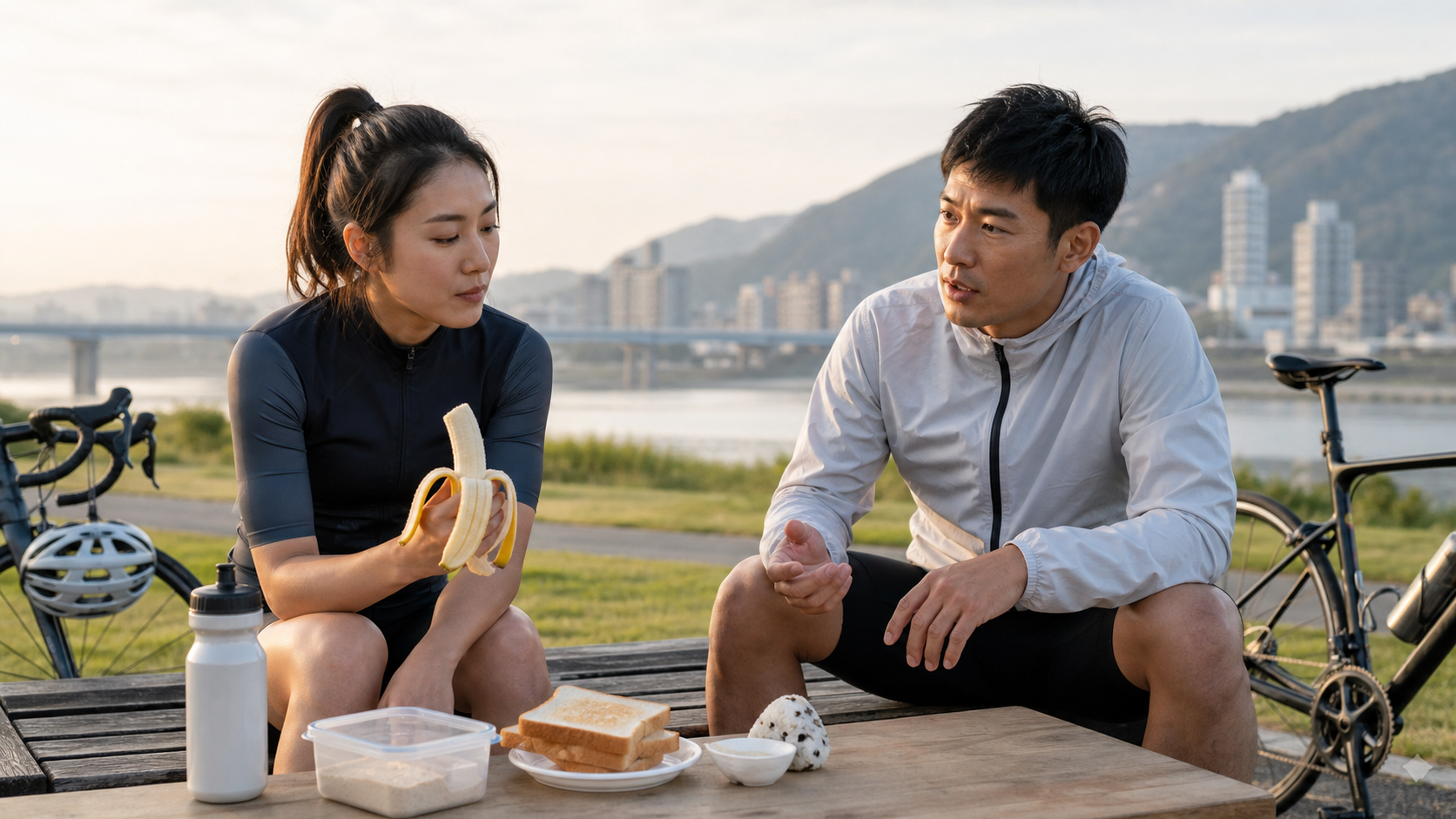
It Starts with a Student’s Failure
I’ve been coaching athletes and general fitness enthusiasts for about fifteen years. If I had to pick the most over-asked question, “what should I eat before exercise” would easily rank in the top three. And interestingly, this question cuts across all levels: office workers just starting to ride along the riverside ask it, seasoned riders preparing to conquer the Wuling climb ask it, and even my marathon-running and triathlon students will still text me a week before race day: “Coach, what exactly should I eat before I head out in the morning? How much? At what time?”
The one that stands out most is a male student in his early forties—let’s call him A-Hong. A-Hong weighed about 72 kg, trained seriously on the bike, and routinely racked up over 100 km on weekends. One time, he signed up for a long-distance event starting at 6:30 AM. He was so nervous the night before that he barely slept. He got up at 5 AM, grabbed a fried chicken burger and an iced milk tea from the convenience store, and headed out. Less than 40 km in, he started feeling bloated, nauseous, and his legs went dead. He ended up squatting at a rest stop for nearly twenty minutes, and his mood tanked for the rest of the event. The first thing he said when he came back to me was: “I did eat, so why did this happen?”
That’s the key point—eating before exercise is completely different from “eating the right things at the right time.” A-Hong’s problem wasn’t that he didn’t eat; it was the content (a greasy fried chicken burger), the timing (too close to the start), and the fact that he ignored how sensitive his gut already was from nerves. In this article, I want to lay out clearly what I’ve learned from fifteen years of coaching students and from continuously reading sports physiology and nutrition literature: what to eat before exercise, how much, when, and the gut-related pitfalls that Taiwanese people are especially prone to.
Foundational Concepts: What the Body Needs Before Exercise
Carbohydrates Are the Star, Not a Supporting Actor
Let’s start with a concept many people get backwards. For the pre-exercise meal, carbohydrates are the star, not protein. I’ve met plenty of people influenced by the fitness culture who think they need to “load up on protein” before exercise. They end up chugging protein powder or eating a pile of eggs and chicken breast first thing in the morning, only to feel heavy and sluggish—unable to run or ride properly.
The reason is simple: during exercise, especially moderate-to-high-intensity endurance sports (cycling, running, swimming), the body primarily burns glycogen—the carbohydrates stored in muscles and the liver. Eating carbs before exercise serves two purposes: first, it tops up liver glycogen (especially after a night’s sleep, when glycogen gets depleted), and second, it stabilizes blood sugar, preventing the mid-workout crash that brings sudden weakness, dizziness, and shaky hands.
Protein in the pre-exercise meal plays a supporting role: it slows gastric emptying, smooths out the blood sugar rise, and provides a bit of satiety. But it’s not the primary energy source, and eating too much of it just adds digestive burden. As for fat, it digests the slowest and should be kept in check before exercise—A-Hong’s fried chicken burger is the classic counterexample.
Why “Timing” Matters as Much as “Content”
The pre-exercise meal involves two variables that must be considered together: what you eat and how long until you exercise. These two are linked.
The logic comes down to digestion. Your stomach needs time to grind up and empty food; food must be digested and absorbed in the intestines before it becomes blood sugar and usable energy. If you stuff down a big bowl of braised pork rice 15 minutes before exercise, the moment you start moving, blood flow rushes to the working muscles, reducing blood flow to the gut. That undigested bowl of rice sits in your stomach, causing bloating, nausea, and even side stitches.
So the principle is clear: the closer you are to exercise, the less you should eat, and the easier it should be to digest, with lower fat and fiber; the farther you are from exercise, the more substantial and complex a meal you can handle.
Practical Approach: Specific Recommendations for Carbs, Protein, and Timing
How Many Carbohydrates Should You Eat? Convert by Time
This is the most practical section, so please read carefully. Mainstream international sports nutrition recommendations (including position stands from the American College of Sports Medicine, ACSM, and related sports science organizations) generally go like this: for endurance exercise lasting longer than 60 to 90 minutes, consume approximately 1 to 4 grams of carbohydrate per kilogram of body weight in the 1 to 4 hours before exercise.
That range looks huge—how do you pin it down? There’s an easy principle to remember: the farther from exercise, the more you can eat; the closer, the less. Here’s a rough conversion (these are general guidelines; adjust based on your own gut and exercise intensity):
| Time Before Exercise | Carbs per kg Body Weight | Conversion for a 72 kg Athlete | Food Types |
|---|---|---|---|
| 3–4 hours before | ~3–4 g/kg | ~216–288 g | Full meal: rice, noodles, sweet potato + moderate protein |
| 2 hours before | ~2 g/kg | ~144 g | Lighter: toast, rice ball, banana + small amount of protein |
| 1 hour before | ~1 g/kg | ~72 g | Easy to digest: banana, white toast, energy bar |
| 15–30 minutes before | Small amount, easily absorbed | ~20–40 g | Banana, sports drink, small pack of dried fruit |
Note that these numbers are ranges and directions, not something to calculate to the decimal point. I often tell my students: “You’re not a lab rat; you don’t need to weigh your banana on a digital scale.” Just get the big picture right—eat a full meal when you have time, eat easily digestible foods when you’re short on time, and reduce the portion as exercise approaches.
How Should Protein Be Paired?
Protein follows the same timing logic, but the portions are much more conservative than carbs:
| Time Before Exercise | Protein Recommendation | Examples |
|---|---|---|
| 3–4 hours before | Moderate (about one palm-sized portion) | One chicken breast, two eggs, a piece of fish |
| 1–2 hours before | Small amount | Half a portion, or unsweetened soy milk |
| Less than 1 hour | Very little or none | Focus on carbs; skip protein as much as possible |
Why reduce protein as exercise approaches? Because protein digests slowly, and eating too much before exercise can weigh on the stomach. It’s not a bad thing—but in the pre-race meal, it’s a supporting player. When you have plenty of time, a bit is fine; when time is tight, stick to easily absorbed carbs.
Practical Examples Local to Taiwan
Theory aside, here’s what actually works. These are pre-race meal combinations I’ve designed for my students, adjusted for Taiwan’s eating-out environment. Feel free to copy them directly:
Early morning starts (e.g., holiday riverside rides, mountain climbs, early morning races)
- Wake up 2–3 hours early for a full meal: a bowl of plain congee with a little pork floss and an egg, or an onigiri (rice ball) plus a banana, or two slices of white toast with jam and unsweetened soy milk. Light, easy to digest, with carbs and a bit of protein.
- 30 minutes before departure: top up with a banana or half an energy bar, with warm water or a sports drink.
Afternoon or evening exercise (post-work gym sessions, night rides, night runs)
- In this case, you’ve usually already had lunch, so the key is don’t let yourself go too long without food. 1.5–2 hours before exercise, have an easily digestible snack: a sweet potato, a rice ball, or a banana with a few nuts.
- If lunch was heavy and exercise is soon after, don’t force down another full meal—just add a small carb snack.
Key reminder: Taiwanese favorites like braised pork rice, fried chicken, crispy fried chicken, milk tea, and greasy breakfast shop items (bacon egg rolls, griddle noodles with heavy sauce) are not suitable as pre-race meals—they’re high in fat and slow to digest, a recipe for repeating A-Hong’s mistake. Want them? Save them as a reward for after exercise.
Gut Considerations: The Most Overlooked Factor in Taiwan
I want to spend extra time on this section because, in all my years coaching in Taiwan, gut issues are the most common cause of pre-race meal failure—far more common than “not eating enough and running out of energy.”
Why the Gut Gets So Cranky During Exercise
When exercise begins, blood is preferentially shunted to the working muscles, reducing blood flow to the gastrointestinal tract. If there’s still a large amount of undigested food in your stomach—or food that’s high in fat, high in fiber, or overly sweet and concentrated—you’re prone to bloating, nausea, acid reflux, and that annoying “side stitch” or diarrhea during running.
The endurance community even has a half-joking term called “runner’s trots”—long-distance runners often find themselves desperately searching for a bathroom in the latter half of a race. This isn’t a sign that something’s wrong with your body; it’s a normal physiological response to exercise, but you can dramatically reduce the odds of it happening through smart pre-race meal choices.
High Fiber, Dairy, and Spicy: The Three Big Pre-Race Landmines
| Landmine Type | Common Foods | Why to Avoid Before Exercise |
|---|---|---|
| High fiber | Large amounts of vegetables, whole grains, legumes, raw salads | Digests slowly, produces gas easily, leading to bloating and diarrhea during exercise |
| Dairy | Milk, cheese, ice cream, milk tea | Some Asians have lactose intolerance, causing abdominal pain and diarrhea during exercise |
| High fat and spicy | Fried foods, crispy fried chicken, spicy hot pot, greasy breakfasts | Digests extremely slowly, irritates the gut, a major culprit for side stitches and nausea |
I want to specifically call out lactose intolerance. Compared to some populations, many Taiwanese people experience bloating or diarrhea after drinking milk or eating dairy products. If you’re one of them, that pre-race latte, milk tea, or bowl of oatmeal made with milk is digging a hole for yourself. Switching to black coffee, unsweetened soy milk, or skipping the drink entirely is much safer.
Caffeine and the Morning Coffee
Many cyclists and runners are in the habit of having a cup of coffee before exercise to wake up. Moderate caffeine can indeed help athletic performance and can also help some people “clear out” their bowels before heading out. But note: coffee itself stimulates gut motility, and for sensitive individuals, it can make you need the bathroom even more during exercise. My advice: if you’re going to drink it, test it during regular training first, confirm your body handles it fine, and only then use it on race day. The golden rule of pre-race meals: never try anything new on race day that you haven’t tested before.
Common Mistakes and Fixes
After all these years of coaching, I’ve compiled the most common mistakes. Check whether any of these apply to you:
Mistake 1: Eating Too Late or Too Much
A-Hong was exactly this type. Eating right before departure, and eating a large, hard-to-digest meal, his gut simply went on strike.
Fix: Get the timing right. If you’re having a full meal, eat 2–3 hours ahead; if time is short, switch to a small, easily digestible carb snack.
Mistake 2: Exercising Completely Fasted
The other extreme. Some people are so afraid of gut discomfort that they eat nothing at all before heading out—especially early morning exercisers. After a night’s sleep, liver glycogen is already low. Fasted exercise often leads to a mid-workout blood sugar crash: dizziness, cold sweats, and weak legs—which is dangerous on a bike descending or on the road.
Fix: At minimum, eat a small, easily absorbed carb snack 30 minutes before departure—a banana or a small energy bar works. Never head out completely fasted for morning exercise.
Mistake 3: Trying New Foods on Race Day
This is the most heartbreaking mistake I’ve seen. People train for months, then on race day, someone tells them about a miracle supplement, they try it on the spot, their gut explodes, and the whole event is ruined.
Fix: All pre-race meals, supplements, and drinks must be rehearsed during regular training. Treat training as a dress rehearsal, find the combination that works best for your gut, and stick to it on race day.
Mistake 4: Making Protein and Fat the Stars
Influenced by fitness culture, people load up on protein or eat heavy, greasy meals before exercise.
Fix: Remember that carbs are the star of the pre-race meal. Protein in moderation, fat kept in check.
Mistake 5: Neglecting Hydration
People focus so much on “what to eat” that they forget “what to drink.” Taiwan’s summers are hot and humid, and even early mornings are muggy. If you don’t hydrate adequately before exercise, you start out mildly dehydrated, and performance will suffer.
Fix: In the 1–2 hours before exercise, drink about 300–500 ml of water in divided amounts—don’t chug it all at once, or you’ll feel bloated and need to pee constantly. In hot weather or for longer sessions, a sports drink with electrolytes can help.
Actionable Advice for Readers at Different Levels
Sports nutrition has no one-size-fits-all formula. Different levels and different goals call for different priorities. Here are concrete directions for three types of readers.
Beginners (Commuters, Weekend Exercisers, Sessions Under 60 Minutes)
If your exercise is under an hour and not high intensity, honestly, you don’t need to overthink the pre-exercise meal. Your normal balanced diet, plus not exercising fasted and not eating too much or too greasy beforehand, is sufficient.
- 1–2 hours before departure, have an easily digestible carb snack (banana, toast, rice ball).
- For short, easy sessions, your body’s stored glycogen is usually enough. The key is to avoid exercising when starving or right after a heavy meal.
- Stay hydrated, and pay extra attention in hot weather.
Intermediate (Weekend Long Rides, High Monthly Mileage, 100K Mountain Rides)
As your exercise duration and intensity increase, the pre-exercise meal starts to noticeably affect performance.
- Seriously follow the carb timing conversion table above and top up your glycogen before heading out.
- Start practicing “in-race fueling”: for exercise lasting over 60–90 minutes, a pre-race meal alone isn’t enough. You need to keep taking in carbs along the way (sports drinks, energy gels, bananas). Look into dedicated fueling strategy articles for more depth.
- Spend several training sessions figuring out which food combinations your gut tolerates best, then stick with them.
Competitive Athletes (Formal Races, Chasing Results)
- The pre-race meal is already part of your overall race preparation strategy. The dinner the night before, the breakfast on race day, and pre-race fueling should all follow the process you’ve rehearsed.
- For particularly long or important events (e.g., a full marathon, ultra-distance cycling), planning your overall carbohydrate intake for the 1–2 days before (commonly called carbohydrate loading) is also worth considering. But this requires more complete, individualized design, so I recommend consulting a sports nutritionist.
- The zero-surprise principle: on race day, try nothing new—not even a different breakfast shop than the one you always go to.
Special Populations: If You Have a Chronic Condition, Read This
I must seriously remind you: if you have diabetes, high blood pressure, heart disease, or any other chronic condition, your pre-exercise nutrition absolutely cannot be based solely on internet articles or this blog post. You must discuss it individually with your physician and nutritionist.
For example, for diabetic patients, pre-exercise carbohydrate intake, medication timing, and blood glucose monitoring involve the risks of both hypoglycemia and hyperglycemia. This is highly individualized and requires assessment by a professional medical team. No one should be giving you a “how many carbs to eat” prescription from afar. Taiwan’s National Health Insurance makes it easy to see a doctor; endocrinology and cardiology outpatient clinics are readily accessible. If you have a chronic condition and want to exercise seriously, make an appointment, get professional advice, and then hit the road—that’s the most responsible thing you can do for yourself.
Similarly, if you repeatedly experience abnormal chest tightness, palpitations, dizziness, cold sweats, or even fainting during exercise, that’s no longer a “what to eat” problem. Seek medical attention promptly—don’t try to tough it out by searching for answers online.
Don’t Forget the Night Before: The Pre-Race Meal Isn’t Just the Last Bite Before You Go
Many people focus all their attention on “what to eat before departure” and overlook the fact that dinner the night before is equally important—especially for long rides or races that start early in the morning.
The logic is simple: if you need to depart at 6 AM the next day, it’s impractical to get up at 3 or 4 AM to eat a substantial meal. That means your real opportunity to fully replenish glycogen stores falls on the night before. Eat well the night before, and all you need in the morning is a little easily digestible carbs to stabilize blood sugar. Eat poorly the night before, and no amount of morning eating can make up for it.
So what should the night before look like? The principle is: a balanced meal centered on carbs, eaten to a comfortable 80% full, avoiding overly greasy, spicy, or raw foods. Taiwan has plenty of options—a bowl of white rice with light dishes, pasta, udon, or chicken rice (skin removed, light on sauce) are all good choices. What to avoid: spicy hot pot, crispy fried chicken, sashimi, large raw salads, and alcohol. Alcohol disrupts sleep and fluid balance, so it’s strictly off-limits the night before a race.
| Night Before the Race | Recommended | Avoid |
|---|---|---|
| Staples | White rice, noodles, udon—easily digestible carbs | Too many whole grains, high fiber, large amounts of legumes |
| Protein | Moderate lean meat, fish, eggs, tofu | Large amounts of fried food, fatty meat, processed meat |
| Vegetables | Moderate cooked vegetables | Large raw salads, excessive gas-producing vegetables |
| Drinks | Warm water, unsweetened beverages | Alcohol, large amounts of sugary drinks |
| Portion | 80% full, comfortable | Stuffed to the brim, late-night snacks on top |
One more often-overlooked point: don’t binge eat or try a new restaurant the night before because you’re nervous. I’ve seen students hit an all-you-can-eat buffet the night before a race to “load up on energy,” only to spend the whole night bloated and sleepless, ruining their performance the next day. Eat familiar, easily digestible food the night before, get good sleep—that matters more than anything.
In-Depth Case Studies: Three Students, Three Pre-Race Meal Adjustments
Principles alone can feel abstract, so let me share three real-life scenarios (adapted) that you can probably see yourself in.
Case A: The Early-Morning Commuter—“I’m Afraid of a Stomach Ache, So I Just Don’t Eat”
Xiao-Mei, female, about 55 kg. On weekdays, she gets up at 5:30 AM to ride along the riverside for an hour before work. Her initial strategy was to “eat nothing,” reasoning that “I can’t eat that early, and I’m afraid of getting a stomach ache mid-ride.” The result? She often felt dizzy, weak-legged, and had a death grip on the handlebars in the latter part of her ride. She’d come home ravenous and binge-eat, which messed up her whole day.
This is the classic early-morning fasted trap. After a night’s sleep, liver glycogen is significantly depleted. Doing an hour of exercise completely fasted makes it very easy for blood sugar to crash in the middle or latter portion. The adjustment I gave her was simple: drink a glass of warm water upon waking, and eat half to a whole banana or a few bites of white toast before heading out. Small portions, easy to digest, no gut burden, but enough to stabilize blood sugar. After two weeks, she reported that the latter half of her morning rides felt noticeably stronger, and she no longer came home starving and out of control.
The takeaway from this case: skipping food entirely out of fear of gut discomfort is overcorrecting. The answer isn’t “don’t eat”—it’s “eat a little, eat something easy to digest.”
Case B: The Weekend Warrior—“I Ate a Big Breakfast but Couldn’t Ride”
A-Kai, male, about 80 kg. On weekends, he loves group long rides, often 4–5 hour affairs. His problem was the opposite of Xiao-Mei’s: he figured “for a long ride, I need to eat a lot to have fuel,” so an hour before departure, he’d hit the breakfast shop for a bacon egg roll, griddle noodles, and a large iced milk tea. Every time, about 30 minutes into the ride, he’d start burping, feeling bloated, like there was a rock in his stomach. The first part of the ride was a total write-off; he’d only start feeling good after an hour of “digesting.”
A-Kai had two problems: eating a hard-to-digest, greasy meal too close to exercise, plus dairy (the large iced milk tea). I changed his plan to: a full meal 2.5 hours before departure—a bowl of sweet potato congee with an egg and a little pork floss, light and easy to digest; a banana 30 minutes before departure; and swapping the iced milk tea for unsweetened soy milk or black coffee. After following this a few times, that “rock in the stomach” feeling completely disappeared, and he could ride smoothly from the very start.
The takeaway from this case: “eating a lot” doesn’t equal “eating right.” A generous but greasy meal, eaten too close to exercise, actually drags down performance.
Case C: The Serious Racer—“Pre-Race Meal Was Perfect, but I Crashed on Fueling Rehearsal”
A-Lun, a triathlon enthusiast, actually had solid knowledge of pre-race meals—carbs, timing, avoiding landmines—all done well. But one race, he still blew up in the latter half with severe abdominal cramps and repeated bathroom runs. When I dug deeper, I found out: his pre-race meal was fine. The problem was that on race day, he tried a new energy gel he’d never used before, switching to it on a teammate’s recommendation.
This reminds us: getting the pre-race meal right is only the first step. Your entire fueling protocol needs to be rehearsed in advance. Anything that goes into your mouth and affects your gut—pre-race meal, mid-race fuel, drinks, electrolytes—must all be validated during regular training. A-Lun later standardized his fueling products and never made last-minute switches again, and his gut issues never returned.
The takeaway from this case: the pre-race meal and mid-race fueling are one integrated system. Introducing any unrehearsed variable into any link can ruin the whole event.
Pre-Race Food Showdown: Which Is Better?
Students love asking me “which is better, A or B?” Here’s a comparison of the food pairs Taiwanese athletes agonize over most, to help you decide quickly at the convenience store or breakfast shop.
| Matchup | Recommended | Reason |
|---|---|---|
| Banana vs. Apple | Banana before exercise | Banana digests easily, has higher carb density, lower fiber, less gut burden |
| White Toast vs. Whole Wheat Toast | White toast before exercise | Whole wheat is high in fiber—great normally, but prone to causing gas before exercise |
| Onigiri vs. Sandwich | Depends on the filling | Rice balls are usually easier to digest; sandwiches lose points if they contain fried fillings or mayo |
| Sports Drink vs. Plain Water | Depends on duration | Under 60 minutes, water is enough; for long sessions in heat, choose an electrolyte sports drink |
| Sweet Potato vs. Corn | Both fine; sweet potato slightly ahead | Sweet potato digests more easily; corn is higher in fiber, so sensitive individuals should eat less |
| Black Coffee vs. Latte | Black coffee before exercise | Lattes contain milk; those with lactose intolerance are prone to diarrhea |
See the pattern? The logic for choosing pre-race foods is: enough carb density, not too much fiber, low fat, avoid dairy, and pick things you know digest well. The whole grains, high-fiber foods, and dairy you’d normally choose for everyday health should take a back seat to easily digestible options at the specific time point of “before exercise.” This isn’t to say whole grains are bad—it’s that the timing isn’t right.
A Note on “Fasted Training”
Fasted cardio and fasted training have become trendy topics in recent years, and students often ask me whether they can ride or run on an empty stomach. My stance is: this is an advanced training tool, not for everyone or every situation.
If you’re doing low-intensity, short-duration exercise, your body adapts well, and occasionally training fasted to encourage the body to use more fat for fuel may serve certain training goals. But please note the prerequisites: first, intensity must be low; second, duration must be short; third, you need to be able to tolerate potential hypoglycemic discomfort; and fourth, never go into a formal race or a performance-focused session fasted.
For the vast majority of general exercisers, my recommendation leans toward: don’t chase some kind of “efficiency” that leaves you dizzy, weak, or at safety risk during exercise. On the road or in the mountains on a bike, a blood sugar crash can cause real accidents. If you genuinely want to try fasted training, first understand the principles thoroughly, start with low intensity and short duration, carry fuel with you just in case, and ideally consult a professional coach or nutritionist. Safety always trumps efficiency.
The Deeper Physiology of Blood Sugar and the Gut: For Those Who Want to Understand
If you’re the type who wants to know not just “how” but “why,” this section is for you.
Why Does Eating Something Sweet Before Exercise Make Some People Suddenly Feel Weak?
Occasionally, students ask me: “Coach, I heard you shouldn’t eat anything too sweet before exercise because it backfires. Is that true?” This involves a physiological phenomenon. Some people who consume a large amount of rapidly absorbed sugar in the period before exercise (roughly 30 to 60 minutes before starting) experience a rapid rise in blood sugar, prompting the body to secrete insulin to handle it. When exercise begins, that further promotes glucose uptake into muscles. With those two forces combined, a minority of people may experience a temporary dip in blood sugar early in the workout, feeling weak or dizzy.
But let me be clear: this doesn’t happen to everyone, and the degree varies from person to person. The body usually self-regulates, and for most people, the impact on overall performance is limited. Rather than obsessing over this, grasp two more practical principles: first, watch your portion size—don’t down a huge amount of pure sugar within the hour before exercise; second, you’ll know by testing—some people are particularly sensitive to this, so they should take their sugar closer to the start (e.g., 15 minutes before) or choose carbs that digest more steadily. Testing your own response during training matters far more than memorizing theory.
How Exercise Intensity Affects Gut Tolerance
There’s another key variable that’s often overlooked: the higher the exercise intensity, the more likely the gut is to act up. On an easy riverside ride or a slow jog, the gut can still digest somewhat. But if you’re doing high-intensity intervals, steep climbs, or race sprints, the body shunts more blood to the muscles, gut blood flow drops dramatically, and digestion nearly shuts down. That’s why the same pre-race meal can be fine on a leisurely ride but blows up when you take it to a race sprint.
So when planning your pre-race meal, don’t just look at time—also consider the intensity of the upcoming exercise: the higher the intensity, the earlier, lighter, and more conservative the pre-race meal should be.
| Exercise Intensity | Gut Tolerance | Pre-Race Meal Strategy |
|---|---|---|
| Low (easy ride / slow jog) | Higher | More flexible; eating 1–2 hours before is fine |
| Moderate (steady long distance) | Medium | Focus on easily digestible foods; eat 2 hours ahead |
| High (intervals / climbs / racing) | Lower | Lighter, earlier (2.5–3 hours), conservative portions |
FAQ
These are the questions I’ve been asked to death over the years. Here they are, all in one place.
Q1: I really can’t eat in the morning. What should I do?
Many morning exercisers have this problem. A few solutions: first, choose liquid or semi-liquid carbs—congee, a smoothie of unsweetened soy milk and banana, or a sports drink—which are easier to get down than solid food; second, get up a bit earlier to give your body time to wake up and develop an appetite; third, at least eat “a little”—even half a banana is better than nothing. With gradual practice, your body will adapt.
Q2: Can I drink coffee before exercise?
Yes, moderate caffeine usually helps athletic performance. But two conditions: first, test it during training to confirm your gut isn’t stimulated into constant bathroom runs; second, don’t add a lot of milk (especially if you’re lactose intolerant)—black coffee or just a splash of milk is fine.
Q3: For people on low-carb/keto diets, do they also need carbs before exercise?
This involves your overall dietary strategy and is more complex. As a general principle: if you’ve been on a low-carb diet long-term and your body has adapted, your immediate carb needs may be lower for low-intensity, long-duration exercise. But for anything involving moderate-to-high intensity, carbs still matter. I recommend discussing this individually with a professional familiar with sports nutrition, rather than deciding based on internet information alone.
Q4: How long before exercise should I stop eating?
There’s no absolute number that works for everyone. The principle is: large meals 2–4 hours ahead; easily digestible snacks can be as close as 30 minutes to 1 hour before. The actual buffer time varies by person—those with sensitive guts should allow more time. Use training to find your own “safe time window.”
Q5: Taiwan’s summers are too hot. Should I adjust my pre-race meal?
Yes. In hot, humid weather, appetite tends to be lower and dehydration risk higher. Strategically: make the pre-race meal lighter and more liquid; be more aggressive with hydration and electrolytes; avoid overly greasy, heavy foods that, combined with the heat, make the gut even more uncomfortable. For morning events, try to start during the cooler hours.
Q6: Do I still need a pre-race meal if I’m trying to lose weight?
If you’re managing your weight, I still recommend taking in a moderate amount of easily digestible carbs before exercise, especially for moderate-to-high intensity or longer sessions. Toughing it out completely fasted can hurt your performance and make you more likely to binge afterward, which works against your long-term goals. You can keep portions lean, but don’t go to extremes. For overall calorie and weight management, I recommend discussing an individualized plan with a nutritionist.
One Table to Summarize: A Quick Pre-Race Meal Guide
Finally, here’s the whole article condensed into a table you can save on your phone and glance at before heading out:
| Scenario | Timing | Recommended | Avoid |
|---|---|---|---|
| Early morning long ride | 2–3 hours before departure | Congee / rice ball / toast + small amount of egg | Fried foods, milk tea, large greasy meals |
| Early morning long ride top-up | 30 minutes before departure | Banana, energy bar, sports drink | High-fiber vegetables, dairy |
| Post-work exercise | 1.5–2 hours before | Sweet potato, rice ball, banana + nuts | Spicy hot pot, large raw salads |
| Short, light exercise | 1 hour before | Normal balanced diet is fine | Fasted or exercising right after a heavy meal |
| Any race day | Throughout | Foods rehearsed in training | Anything new you’ve never tried |
Conclusion: Turn the Pre-Race Meal into Your Advantage
Let’s return to A-Hong’s story. Afterward, I helped him redesign his pre-race meal: for morning events, he’d get up two and a half hours early to eat congee with an egg, top up with a banana 30 minutes before departure, swapped milk tea for warm water, and completely avoided fried foods. At the next event of the same distance, he rode smoothly from start to finish. He messaged me afterward: “Coach, what a difference. I used to be fighting my own gut the whole time.”
That’s what I most want to convey: what you eat before exercise isn’t mysticism, and it doesn’t require expensive supplements. It’s about understanding your body, getting the timing right, choosing the right foods, and respecting your gut. When you upgrade the pre-race meal from “grab whatever before heading out” to “planned preparation,” you’ll find yourself performing more consistently—on the riverside, on Wuling, in the gym, and on the race course.
Treat training as a dress rehearsal, treat every pre-exercise meal as practice, and over time, you’ll find the system that works best for you. That combination can’t be copied by anyone else—it’s the answer your own body gives you.
Here’s to every ride ahead: eating right, riding smooth, and running strong. See you out there.
This article is educational content and does not replace individual diagnosis or treatment advice from a physician, physical therapist, or nutritionist.
References
- Gatorade Sports Science Institute — Dietary Carbohydrate And The Endurance Athlete: Contemporary Perspectives: https://www.gssiweb.org/sports-science-exchange/article/dietary-carbohydrate-and-the-endurance-athlete-contemporary-perspectives
- NASM Blog — Nutrient Timing: What to Eat Before and After a Workout: https://blog.nasm.org/workout-and-nutrition-timing
- Precision — What should you eat before training and races?: https://www.precisionhydration.com/performance-advice/nutrition/final-pre-exercise-meal-carb-intake/
Related Reading
- Dietary Fiber and Athletes: Too Much or Too Little? A Complete Guide from Daily Health to Pre-Race Management
- How to Eat Before Training: A Complete Guide to Timing, Portions, and Food Choices
- Pre-Race Nutrition Strategies: The Complete Guide to Glycogen Loading and Gut Management from One Week Out to the Starting Line
- The Complete Protein Guide: How Much, When, and Which—Practical Notes from a Sports Science Consultant
FTL 與 SYB 車隊專訪 西進武嶺 實用攻略分享! 2小時 如何練?!你不知道的眉角!新手準備武嶺必看 EP1 | 實力派女車友 | 精華版 | 公路車 | CTYeh
4 年前
4K 東眼山 x 水蜜桃冰沙 百人單車約騎! 操完再吃冰 多爽快
7 年前
一日北高/長距離團騎 常見問題補充篇 / 組團或跟團的眉角 / 壯車友容易被瘦車友慢性拉爆 / 原來屁股痛可能是這個原因...? / 風場配速法 / 公路車 / CT Yeh
2 年前
CT暗黑廚房) 車友必備 宇宙無敵鮮蚵湯 幫助訓練恢復 天然食補 好市多 超肥鮮蚵 破PR
7 年前
西進武嶺 免費訓練分析服務 Intervals | 練不夠還是練過頭?你哪一種類型選手?AI模型告訴你! | 備戰神器 | 公路車 訓練 | CT Yeh
4 年前
#KOM 夏季登山王之路 比賽實況 #東進武嶺
7 年前
靠單車減肥35公斤 心得分享與整理
7 年前
西進武嶺 自製新版AI配速表產生器 x 賽前攻略 抱佛腳! 沒有功率計也可以產生配速表嗎?有什麼其他眉角賽前要注意的呢? | 西進武嶺 / 東進武嶺 KOM 攻略 | 公路車 | CT Yeh
4 年前