The Athlete's Breakfast Science: The Energy Starting Point of the Day, How to Eat Right Before Training
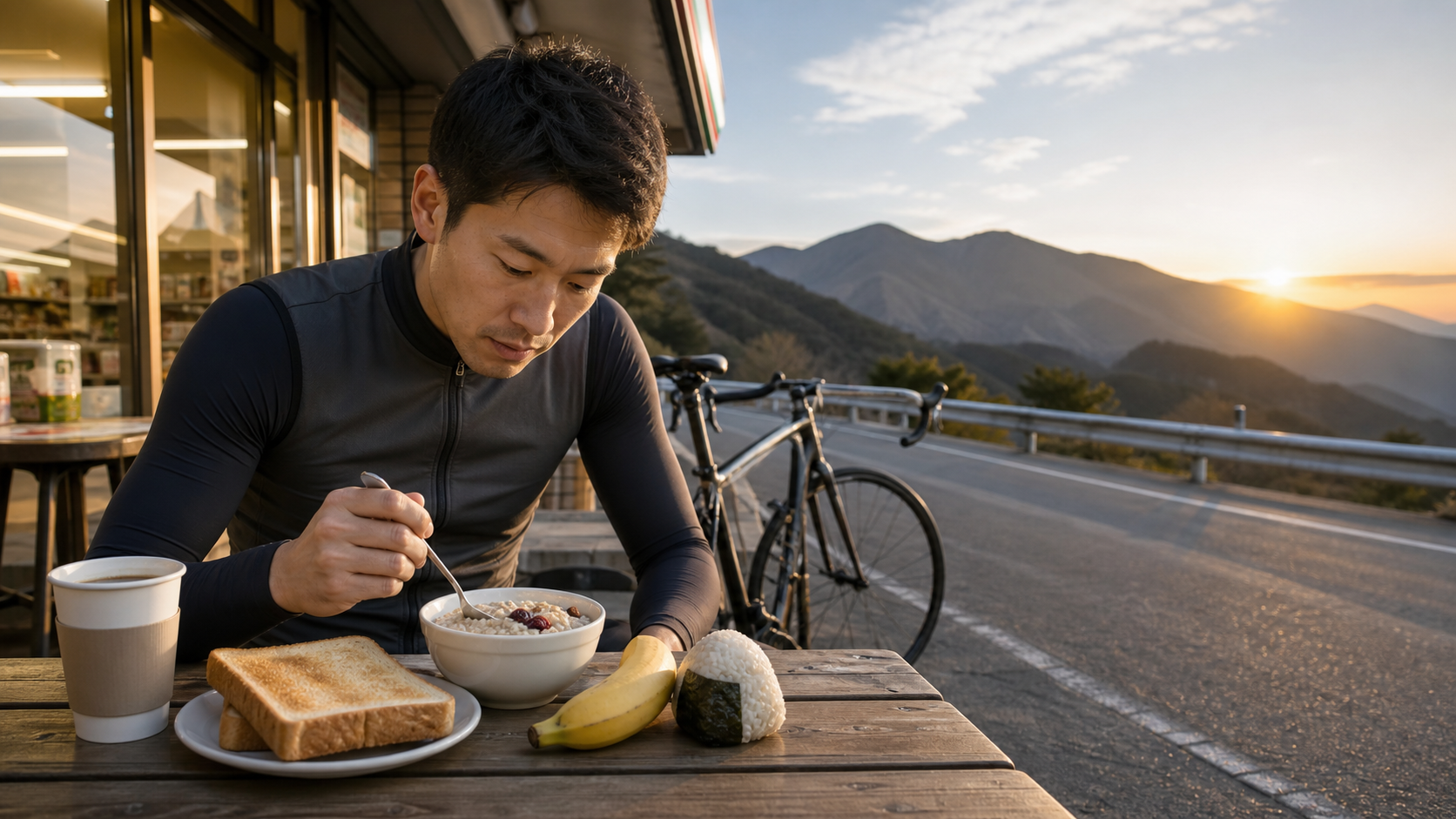
Starting with a Black Coffee Ride to Fengguizui
It was an early Saturday morning. At a convenience store at the foot of Yangmingshan, I ran into A-Kai, a trainee who had been training with me for three months. He was holding only a cup of black coffee, his face a bit pale. He said he hadn’t slept well the night before and had no appetite in the morning. “Coach, I’ll just ride straight up and eat when I get back.” I put his plan on hold. That day’s workout was Fengguizui intervals, scheduled for over 90 minutes, with intensity in the threshold power zone. At his weight of 68 kg, having fasted for over ten hours, I could almost predict he’d lose speed on the second repeat, his heart rate would spike to 175 bpm without producing watts, and then he’d start feeling dizzy and shaky halfway through.
This isn’t a matter of willpower; it’s a matter of fuel.
In my fifteen years of coaching athletes, I’ve found that “breakfast” is the most underestimated and most easily botched part of the routine. Some treat it as a sacrifice for fat loss, heading out for morning rides on an empty stomach; others stuff themselves with a greasy egg crepe and milk tea, only to feel nauseous halfway through training; and some know they should eat but can never figure out “exactly how much, what, and when.” In this article, I want to lay out clearly the concepts I repeat to my trainees—why breakfast matters so much for athletes, how to structure a pre-training breakfast, and what foolproof quick options exist when you’re truly pressed for time.
This will be a bit long, but if you train seriously and want every session to run on the right fuel, it’s worth ten minutes of your time to read through.
Why an Athlete’s Breakfast Is Different
Let’s start with a key physiological fact: After a night of sleep, your liver glycogen (the sugar stored in the liver) drops significantly, but muscle glycogen remains largely unchanged.
This matters because the two types of glycogen play completely different roles. Muscle glycogen is “local fuel,” supplying the muscles that are contracting; liver glycogen is the “central bank,” responsible for maintaining blood sugar stability, powering the brain, and sending extra sugar to working muscles during exercise. According to sports physiology literature, since you don’t eat during sleep while the brain and organs keep consuming blood sugar, the liver must continuously break down stored glycogen into glucose and release it into the bloodstream. By the time you wake up, a considerable portion of liver glycogen may have been depleted (the Gatorade Sports Science Institute notes that after an overnight fast, liver glycogen drops while muscle glycogen remains stable; source at the end of the article).
So the first job of breakfast for an athlete isn’t to “refill muscle sugar,” but to replenish the central bank’s deposits—restoring liver glycogen to ensure blood sugar stays stable during exercise. Once blood sugar can’t hold, you experience that “legs still have strength, but your mind goes blank, heart rate is high yet you can’t produce power” bonking sensation.
But Here’s an Honest Caveat: One Breakfast Can’t Fill the Tank
I want to be honest about a recent research finding, because it will change your expectations of breakfast.
A 2025 study on trained cyclists found that eating a high-carb breakfast after an overnight fast cannot “quickly refill” liver or muscle glycogen within just three hours. Some research observed glycogen rising only about 10% (source at the end of the article). In other words, if you trained hard yesterday and your glycogen was already depleted, expecting a big breakfast this morning to bring you back to full strength is unrealistic.
This leads to two practical implications I always emphasize with my trainees:
- True glycogen storage relies on “the whole of yesterday” and “the past few days,” not “this morning.” Glycogen replenishment is a day-scale project; breakfast is just one piece of it.
- Breakfast’s role is more like “the final touch” and “maintaining blood sugar”—letting you head out with stable blood sugar, not hoping it fills the tank in one go.
Understanding this, you’ll avoid two extreme mistakes: one is “since it can’t fill up anyway, I might as well skip it,” and the other is “stuff myself as much as possible, thinking more is always better.” Both are wrong. What we want is enough, easily digestible, and properly timed.
Why Your Mind Goes Blank When Blood Sugar Crashes
Let me add another detail many people have felt but can’t quite articulate: the brain almost exclusively runs on glucose. Unlike muscles, which can burn fat when sugar runs low, the brain is highly dependent on blood sugar. So when you exercise fasted, liver glycogen gets depleted, and blood sugar starts to drop, the first thing to go wrong often isn’t your legs—it’s your brain. You’ll feel scattered attention, slower reactions, irritability, and impaired judgment. That “soul sucked out” blank feeling is largely your brain protesting the lack of sugar.
I emphasize this especially when coaching trainees on long climbs: Bonking isn’t just weak legs; it’s a brain crash. On mountain roads, declining judgment and focus are real safety risks—you might react half a beat too slow on a corner where you should brake, or forget to refuel when you should. That’s why “maintaining stable blood sugar” isn’t a minor detail for going faster; it’s about whether you can complete the entire session safely and lucidly. Breakfast stabilizes your blood sugar foundation, effectively preserving your brain’s processing power.
The Science of the Pre-Training Breakfast: How Much, What, and When
This section is the core of the article. I’ll break it down into three questions.
One: How Much? Use Body Weight to Gauge the Dose
In sports nutrition, there’s a relatively consistent consensus on carbohydrate dosing for the “pre-exercise meal”: 1 to 4 grams of carbohydrate per kilogram of body weight, consumed 1 to 4 hours before exercise, applicable to sessions expected to last over 60 minutes (source at the end of the article). The further from exercise, the more you can eat, closer to the upper limit; the closer, the less and the more digestible.
More specifically, multiple guidelines place the recommendation for “3 to 4 hours before exercise” at 1 to 2 grams per kilogram—a more conservative but practical range. Let me convert this range into portions familiar to Taiwanese readers, in a table:
| Time before exercise | Carb dose (per kg body weight) | For a 60 kg person | For a 75 kg person | Characteristics |
|---|---|---|---|---|
| 3–4 hours before | 1–2 g/kg | 60–120 g | 75–150 g | Can be a full meal, with some protein/fat, ample digestion time |
| 2 hours before | About 1 g/kg | About 60 g | About 75 g | Moderate portion, low fat and low fiber |
| Within 1 hour | 0.5–1 g/kg (easy to digest) | 30–60 g | 40–75 g | Liquid or simple sugars, avoid high fiber and high fat |
How do you turn “grams” into foods you recognize? This is where trainees get stuck most often, so here’s another conversion reference:
| Common food | Portion | Approx. carbs |
|---|---|---|
| White toast | 1 slice | About 15 g |
| White rice | 1 bowl (about 150 g) | About 55 g |
| Medium banana | 1 | About 25–30 g |
| Sweet potato (medium) | 1 | About 25–30 g |
| Oatmeal (dry) | 40 g | About 25 g |
| Sports drink | 500 ml | About 30 g |
| Honey/jam | 1 tablespoon | About 15 g |
Here’s a practical example: a 60 kg trainee planning a morning ride 3 hours later, targeting 1.5 g/kg = 90 g of carbs. That could be “two slices of toast with jam (about 45 g) + one banana (about 28 g) + a 300 ml glass of juice (about 30 g),” totaling around 100 g, right in the range. Isn’t that more intuitive than memorizing numbers?
2. What to Eat? Carbs First, Moderate Protein, Low Fat and Fiber
The golden rule for this pre-workout meal is: make easily digestible carbohydrates the main focus, add a little protein, and keep fat and dietary fiber low.
The reason is simple—fat and fiber slow down gastric emptying, leaving undigested food in your stomach when you start, which can cause bloating, nausea, or even stomach cramps. This is especially important in Taiwan’s summer, where early mornings are often already above 28°C and humid, making your gut more sensitive in the heat.
One nutritional detail worth mentioning from recent years: research has found that adding some fructose to a glucose-based carbohydrate breakfast can improve endurance performance (source at the end). The mechanism relates to glucose and fructose using different intestinal absorption pathways—mixing them allows for smoother total sugar absorption. This is also why combinations like “banana + jam toast” or “white rice with some fruit” actually make sense—natural foods already contain both glucose and fructose. You don’t need to buy complicated supplements; mixing natural starches and fruit achieves a similar effect.
When I design pre-workout breakfasts for my athletes, I usually give different menus based on “how long until exercise”:
| Scenario | Time Before Exercise | Recommended Combination (Easy to Find in Taiwan) | What to Avoid |
|---|---|---|---|
| Relaxed | 3–4 hours | White rice or congee + low-oil egg + some fruit; or cereal with milk + banana | Fried foods, fatty meat, large amounts of nuts |
| Standard | 2 hours | Toast with jam + banana + a small cup of unsweetened soy milk | Excessive high-fiber whole wheat bread, raw salad |
| Rushed | Within 1 hour | Banana + sports drink; or honey water + white toast | Bacon egg wrap, milk tea, fried dough sticks |
3. When to Eat? Timing Is the Most Overlooked Variable
Many people only think about “what to eat” and ignore “when to eat.” The same meal, eaten 3 hours beforehand versus crammed in 20 minutes before exercise, produces wildly different bodily responses.
The principle I give my athletes: the closer to exercise, the smaller the portion, the more liquid the texture, and the lower the fiber. At 3 hours out, you can have a proper meal; within 1 hour, avoid solid meals and switch to “quickly available” sugars like bananas, sports drinks, or honey water.
There’s a very realistic scenario in Taiwan: weekend long-distance events or races often require gathering at 5 or 6 in the morning. You can’t get up at 2 a.m. to eat breakfast. In this case, my advice is “eat well the night before, eat light in the morning”—load up on carbs at dinner the previous day (remember, glycogen is replenished on a daily basis), and after waking up, just have a small, easily digestible carb portion to line your stomach and stabilize blood sugar. The rest is handled by fueling during exercise.
Don’t Forget Caffeine and Hydration: The Two Supporting Roles of Breakfast
When talking about breakfast, most people only focus on “eating” and overlook “drinking.” Pre-exercise hydration and caffeine are actually part of the same system.
Hydration: After sleeping all night, your body is in a state of mild dehydration—you’ve been breathing, sweating, and metabolizing all night without taking in any water. Taiwan’s summer mornings are muggy and humid; if you head out without rehydrating first, you’re starting with a double deficit of “dehydration + low blood sugar.” I usually advise my athletes to drink 300 to 500 ml of water or diluted sports drink upon waking, to “rehydrate and boot up” the body. There’s a crude but effective way to check if you’ve had enough: look at the color of your morning urine—pale yellow like diluted lemonade is roughly OK; dark yellow or even tea-colored means you’re under-hydrated and should drink more.
Caffeine: As mentioned earlier, caffeine is a “signal,” not “fuel,” but it is indeed one of the few well-evidenced legal aids in endurance sports. It lowers your subjective perception of fatigue, making the same intensity feel less hard. In practice, I remind people of two things: first, caffeine should always be paired with carbs—don’t let it replace breakfast; second, never try it for the first time on race day—some people experience heart palpitations, shaky hands, or frequent bathroom trips, and you want to discover that during regular training, not standing at the starting line. Those sensitive to caffeine, or with cardiovascular issues, or on medication, should be even more conservative and check with their doctor first.
Adding hydration and caffeine into the picture, a complete “pre-workout breakfast” actually looks like this: adequate carbs + adequate fluids + (optional) caffeine. When all three are in place, you’re truly leaving the door with a full tank and a warmed-up engine.
A Ready-to-Copy Morning Training Fueling Timeline
Athletes often say, “I get the logic, but can you give me a version I can just follow?” Sure. Using a morning ride scheduled for a 07:00 departure, training for 90 minutes or more, as an example, here’s the timeline I’d set for a 70 kg athlete:
| Time | Action | Content and Purpose |
|---|---|---|
| Previous night | Eat plenty of carbs at dinner | Increase portions of white rice/noodles/sweet potato; glycogen is replenished on a daily basis |
| 05:30 wake up | Rehydrate first | 300–500 ml of water or diluted sports drink to resolve overnight dehydration |
| 05:45 | Main breakfast | About 70–100 g of carbs: toast with jam + banana + a small cup of soy milk; coffee optional |
| 06:45 | Final touch before departure | If still feeling empty, add half a banana or a few sips of sports drink |
| 07:00–08:30 during exercise | Fuel as you go | For longer sessions, take in 30–60 g of carbs per hour; don’t put all your hopes on breakfast alone |
This is just a template, not a decree. Your wake-up time, gut tolerance, and session length will change the details. The key is to grasp the framework: eat enough the night before → rehydrate upon waking → have your main breakfast 1–1.5 hours before departure → keep fueling during exercise. Getting this rhythm down is more useful than memorizing any numbers.
Another Case Study: Xiao Min from the Running Club
Let me introduce another athlete, a completely different type from A-Kai. Xiao Min is a 52 kg office worker who joins a running club near her workplace on weekday mornings and heads straight to the office afterward. Her problem isn’t lack of appetite—it’s that “eating in the morning gives her stomach cramps.” She used to eat a whole wheat bun stuffed with lettuce and cheese before running, and every time, around the three-kilometer mark, her stomach would cramp up and she’d need to find a bathroom.
Her first instinct was “then I just won’t eat,” but running on an empty stomach left her weak in the later stages and increasingly dizzy. This is actually a classic case of “wrong food choices, not a matter of whether to eat.” Whole wheat high fiber, lettuce high fiber, and cheese high fat—put those three together within an hour before exercise, and it’s a triple assault on the gut.
I switched her pre-run meal to white mantou (dropping the high-fiber whole wheat) + a little honey, or even simpler, a single banana, drastically cutting fiber and fat. Two weeks later, she reported: no more stomach pain, and no more dizziness in the later stages. Her problem was never “whether to eat” but “what she ate”—and that’s what I want to convey through her story: there are many ways to get breakfast wrong, so don’t rush to use “not eating” as a one-size-fits-all solution.
A Real Challenge You’ll Face: What If You Simply Can’t Eat
Back to A-Kai from the beginning. His problem isn’t a lack of understanding—it’s that “he really has no appetite in the morning.” This is extremely common among early-morning exercisers, especially on race day when nerves kick in; once the sympathetic nervous system is activated, appetite shuts down.
I won’t force him to stuff down solid food—that would only make him more nauseous. My approach is to switch to the liquid route: a sports drink, a small box of juice, or honey in warm water, sipped slowly. Liquids are far more forgiving on a nervous stomach, and they still deliver sugar to stabilize blood glucose. Once the body gets moving and circulation picks up, appetite often returns after about 20 minutes of riding—at that point, adding a banana or a small energy bar goes down smoothly.
This also brings up a key concept, also supported by research: even with breakfast, fueling during exercise still helps; and fueling during exercise can, to a large extent, compensate for skipping breakfast (source at the end). So if you truly miss breakfast, don’t panic, don’t blame yourself—focus on “fueling consistently from the start of exercise,” and you’ll get through it. Breakfast matters, but it’s not the only lifeline.
Common Mistakes and Fixes: The Pitfalls I’ve Seen in My Athletes
Having coached so many people, there are a few mistakes that recur so often I could recite them from memory. Let me break them down for you one by one.
Mistake 1: Fasted Morning Training to “Burn Fat” — Resulting in Lost Pace and Compromised Training Quality
Many people hear “fasted exercise burns fat” and do high-intensity workouts on an empty stomach long-term. The problem is: fasted, low-intensity, easy-paced aerobic riding might be manageable; but if you’re doing intervals, threshold work, or sprints, your glycogen is already low in a fasted state, and your blood sugar can’t hold up. You simply can’t produce the required intensity, training quality drops significantly, and you’re prone to hitting the wall in the later stages.
Fix: Limit “fasted training” to low-intensity, short-duration aerobic sessions, and only with experience and monitoring. For any high-intensity or long-duration (over 60–90 minutes) workout, make sure you eat beforehand. Fat loss is determined by your total calorie balance over the day and week, not by that one hour of riding hungry.
Mistake 2: Eating Too Much Fat and Too Many Heavy Foods — Digestive System Shuts Down
The classic Taiwanese breakfast shop order — bacon egg crepe with iced milk tea, or youtiao with salty soy milk — is fine as a regular breakfast, but as “fuel one hour before exercise” it’s a disaster. High fat and high protein slow gastric emptying, and you’ll head out with a stomach full of undigested food.
Fix: For your pre-exercise meal, push fat and fiber down and carbohydrates up. Want an egg crepe? Fine, but move it to 3+ hours before exercise to give your gut enough time to digest.
Mistake 3: Heading Out With Only a Black Coffee
Caffeine does help endurance performance — that’s true. But caffeine is not fuel; it’s a “signal” — it makes you feel more alert and less tired, but it provides zero carbohydrates to your glycogen or blood sugar. Heading out on black coffee alone is like “borrowing a feeling of energy without actually funding it” — you’ll run out of gas in the later stages anyway.
Fix: Coffee is fine, but pair it with carbohydrates. Coffee + a banana, or coffee + a slice of toast with jam, is the complete combination.
Mistake 4: Can’t Get the Portions Right — Either Too Much or Too Little
Some people fear hunger, stuff themselves with three bowls of rice, and feel bloated and uncomfortable on the bike. Others fear weight gain, eat only half a banana, and run out of energy after an hour.
Fix: Go back to the dosage chart earlier and use “body weight × grams per kilogram” to get a rough estimate. No need to calculate to the decimal point — getting it in the right ballpark is enough. Exercise physiology values naturally vary between individuals; the key is landing in a reasonable range, then fine-tuning over a few sessions to find your sweet spot.
Should Breakfast Be the Same for Different Workouts?
This is a common question from advanced athletes: “My workouts differ every day — should my breakfast change too?” The answer is — yes, but don’t overcomplicate it. Your breakfast setup should match “how much fuel today’s session demands.” The principle is simple: the longer and harder the workout, the more important and substantial the carbohydrates in your breakfast; the shorter and easier the session, the simpler you can eat — even fasted low-intensity short aerobic work is acceptable.
I’ve mapped common workout types to breakfast strategies in a table you can use for quick reference:
| Today’s Workout | Intensity/Duration | Breakfast Strategy | Example |
|---|---|---|---|
| Easy aerobic | Low intensity, under 60 min | Small amount or based on feel, even fasted (requires experience) | A banana or a slice of toast is enough |
| General endurance | Moderate, 60–120 min | Standard carbohydrate breakfast, 1.5–2 hours before | Toast with jam + banana + soy milk |
| Intervals/Threshold | High intensity | Must eat enough carbs, don’t go fasted | Larger carbohydrate meal 2–3 hours before |
| Long distance/Big session | Long duration (including climbing) | Carbs the night before + full breakfast + fueling during the ride | Carb-load the night before, substantial morning meal + mid-ride nutrition |
Key reminder: The higher the intensity, the less you should skip breakfast. Because at high intensity, your body relies more on sugar as fuel — once blood sugar crashes, you won’t just train poorly; you may feel dizzy and have impaired judgment. On the road, that’s a safety issue, not just a performance one. Taiwan’s climbing routes (like Wuling, Fengguizui, Beiyi) often involve long-duration, high-intensity efforts, so pre-ride fuel absolutely cannot be taken lightly.
Should Breakfast Change When It’s Hot?
Taiwan’s summers are humid and hot, and that changes two things. First, you sweat more, losing fluids and electrolytes faster, so your breakfast should include more fluids — diluted sports drink can help add some sodium. Second, in high heat, blood flow is diverted to the skin for cooling, reducing digestive capacity, so you need to keep fat and fiber in your pre-ride meal even lower and portions smaller, or you risk nausea. In short: on hot days, your pre-ride breakfast should be lighter, easier to digest, and more hydrating. This is the hidden reason many people feel nauseous on summer morning rides — it’s not the wrong food; it’s that the heat slows digestion.
Actionable Advice for Readers at Different Levels
Now that the concepts are covered, I know different people need different depths of practical guidance. Here are three tiers.
If You’re a Beginner Just Starting Out
Don’t overthink it yet. You only need to remember three things:
- Eating before exercise matters more than eating perfectly. A banana, a slice of toast, or a cup of unsweetened soy milk is all better than going fasted.
- Eat something simple close to exercise; eat a full meal further out. Within an hour, have a banana with sports drink; three hours out, you can have a proper breakfast.
- Never try new foods before a workout. Training is not the time for experiments — stick with what your gut already knows.
If You’re an Advanced Athlete Training Consistently
You can start “quantifying” your breakfast:
- Calculate your carbohydrate dose by body weight (1–4 g/kg, depending on timing) and configure it deliberately.
- Log a few sessions of “what you ate, when you ate, and how the workout felt” to find your optimal combination. Some people feel best eating 2 hours before; others need 3.
- Practice the rhythm of “fueling during exercise” — don’t put all your hopes on breakfast. Long sessions are meant to be fueled on the bike.
- Remember that glycogen is replenished on a daily basis — the day before a big session, load up on carbohydrates at dinner.
If You’re Preparing for a Long-Distance Challenge or Race
- Rehearse your “race-day breakfast” during training several weeks in advance — lock in the timing, portions, and foods so there are no new variables on race day.
- For events with early morning starts, use the “eat up the night before, eat light in the morning” strategy.
- Prepare a “liquid backup plan for when you can’t eat” (sports drink, juice, honey water), because race-day nerves killing your appetite is the norm.
- Plan your mid-ride fueling together with your breakfast — breakfast and on-bike nutrition are one integrated system, not separate pieces.
Frequently Asked Questions from Students (FAQ)
Q: I’m cutting fat. Can I skip breakfast and exercise directly?
A: Fat loss depends on your calorie balance over the whole day and week, not on that one hour of fasting. If you’re doing low-intensity, short-duration cardio, fasted training might be feasible. But for high-intensity or long-duration sessions, training fasted will seriously compromise workout quality, and the trade-off isn’t worth it. Instead of agonizing over whether to eat breakfast, focus on managing your total daily calorie and carbohydrate intake.
Q: Is it good to drink bulletproof coffee (coffee with added fat) as a pre-workout breakfast?
A: Bulletproof coffee is primarily fat-based with almost no carbohydrates, but what you need most before exercise is carbohydrates to stabilize blood sugar and replenish liver glycogen. High fat content also slows gastric emptying. For the purpose of “pre-workout fuel,” it’s not a good choice.
Q: I’m taking blood sugar medication or have diabetes. Is this breakfast approach okay for me?
A: This article discusses general principles for the healthy, exercising population. If you have chronic conditions such as diabetes, heart disease, or hypertension, or if you’re taking medication, your blood sugar and dietary arrangements around exercise must be individualized. Be sure to discuss this with your physician and dietitian first, and adjust according to your condition and medications—don’t directly apply general guidelines.
Q: Will eating something very sweet for breakfast cause blood sugar spikes and crashes, making things worse?
A: Some people experience discomfort from “reactive hypoglycemia” after a high-glycemic breakfast—it varies from person to person. If you’re sensitive, you can swap pure sugar for a combination of “carbohydrates plus a little protein” (for example, banana with soy milk) to smooth out the blood sugar curve, and observe your response over several training sessions.
Q: Among things available at convenience stores, what’s suitable as a pre-workout breakfast?
A: This is super practical for people in Taiwan, since our convenience store density is among the highest in the world. Good options include: bananas, onigiri rice balls (tuna or salmon—low-fat options are better than fried ones), sweet potatoes, unsweetened or lightly sweetened soy milk, sports drinks, and honey water. Things to avoid: fried chicken, hot dogs, iced milk tea, and breads with high fat content (pineapple buns, croissants). Aim for a “carbohydrate-first, low-fat, low-fiber” combination, and a convenience store can absolutely provide a proper pre-workout breakfast.
Q: After morning exercise, do I need to eat breakfast again?
A: Yes, you can, and it helps with recovery. Consuming carbohydrates and some protein after exercise helps replenish depleted glycogen and begin repair. If you’re heading straight to work after training, bringing a “carbohydrate + protein” meal (such as a rice ball with soy milk, or a toast with egg) to eat on the way or at the office is a good recovery strategy. The pre-workout meal is about “refueling,” and the post-workout meal is about “recovering”—they serve different purposes, and both matter.
Q: Does this breakfast approach apply to children or adolescent athletes?
A: The general principles (carbohydrate-first, proper timing, don’t do high-intensity training fasted) apply universally, but growing children have different calorie and nutritional needs than adults, and individual variation is significant. For adolescent athletes in systematic training, I’d recommend consulting a sports dietitian for individualized planning based on growth needs, rather than directly copying adult gram amounts.
Q: I have a weak stomach and always feel uncomfortable eating solid food. Can I rely entirely on liquids?
A: Yes. Going fully liquid before exercise (sports drinks, diluted juice, honey water, commercial liquid carbohydrate supplements) is a reasonable option, especially for those with sensitive stomachs or no morning appetite. The advantages of liquids are faster gastric emptying, less digestive burden, and easily absorbed sugars. The downside is that if you don’t consume enough volume, the low satiety can lead to under-eating without realizing it. So be sure to check the dosage guidelines to confirm you’re actually getting enough carbohydrates—don’t assume you’ve eaten enough just because “you can’t feel it going down.”
Conclusion: Treat the First Meal of the Day as the First Session of the Day
Back to A-Kai. That day, I didn’t let him head up the mountain fasted. I gave him a banana and a small box of juice, and told him to sip it slowly. As a result, not only did he complete the interval session, but his power output was also more stable than the previous week. He told me afterward: “So it wasn’t that I got weaker—I just never refueled.”
I love that statement, because it captures the essence of breakfast—your body is an engine that needs fuel, and breakfast is the most important refueling of your day. It’s not about eating perfectly or elaborately; it’s about giving it enough energy that’s digestible and well-timed, so that every subsequent pedal stroke and every step of running happens with fuel in the tank.
Treat the first meal of the day as the first training session of the day. You’ll find that how training feels, when you slow down, and how often you hit the wall will all subtly change. And all of this might just start with one small thing: “Don’t head out the door fasted anymore.”
I often tell my students that people are willing to invest great effort in studying training plans, equipment, and pacing—but “breakfast,” that small thing we do every day, is the easiest to gloss over. Yet it’s precisely these small, repeated daily actions that, accumulated over time, determine the ceiling of your training quality. Eat wrong once, and at worst you have one bad session. Eat wrong long-term, and you may never know how strong you could be when you’re “fully fueled.”
So don’t underestimate this breakfast. It doesn’t need to be complicated, expensive, or involve imported supplements. A banana, a slice of toast, a glass of water—with the right timing and the right portion—is the most solid energy foundation of your day.
Next time before a morning session, ask yourself: Have I refueled?
This article is educational content and does not replace individual diagnosis and treatment advice from physicians, physical therapists, or dietitians. All portion sizes and physiological values mentioned are general ranges; individual variation is significant, so adjust according to your own condition. If you have chronic conditions such as diabetes, hypertension, or cardiovascular disease, or if you’re taking medication, be sure to consult professional medical personnel for individualized assessment regarding exercise and dietary arrangements. Taiwan’s healthcare system is convenient—making good use of National Health Insurance resources for health checkups and professional consultation is the most prudent approach.
References
- Gatorade Sports Science Institute — Dietary Carbohydrate And The Endurance Athlete: Contemporary Perspectives: https://www.gssiweb.org/sports-science-exchange/article/dietary-carbohydrate-and-the-endurance-athlete-contemporary-perspectives
- International Society of Sports Nutrition position stand: nutrient timing (PMC): https://pmc.ncbi.nlm.nih.gov/articles/PMC5596471/
- Breakfast consumption does not rapidly increase liver or muscle glycogen content in well-trained cyclists (Am J Physiol Endocrinol Metab, 2025): https://journals.physiology.org/doi/full/10.1152/ajpendo.00400.2025
- Addition of Fructose to a Carbohydrate-Rich Breakfast Improves Cycling Endurance Capacity in Trained Cyclists (IJSNEM, 2022): https://journals.humankinetics.com/view/journals/ijsnem/32/6/article-p439.xml
- Cycling time trial performance is improved by carbohydrate ingestion during exercise regardless of a fed or fasted state (PubMed): https://pubmed.ncbi.nlm.nih.gov/30672619/
Related Reading
- Breakfast vs. Fasted Training: How to Time Your Meals for Different Workouts
- Pre-Ride Breakfast Design: Optimal Timing and Food Choices for Race-Day Breakfast
- Pre-Race Nutrition Strategy: A Complete Guide to Glycogen Loading and Gut Management from One Week Out to the Starting Line
- Athlete Sleep Nutrition: What to Eat for Better Sleep, a Coach’s Practical Guide from the Dining Table to the Bedside
CT暗黑廚房) 車友必備 宇宙無敵鮮蚵湯 幫助訓練恢復 天然食補 好市多 超肥鮮蚵 破PR
7 年前
西進武嶺 免費訓練分析服務 Intervals | 練不夠還是練過頭?你哪一種類型選手?AI模型告訴你! | 備戰神器 | 公路車 訓練 | CT Yeh
4 年前
2016/4/20 - 中社路 夜騎 半年甩肉14KG 後測
10 年前
一日北高/長距離團騎 常見問題補充篇 / 組團或跟團的眉角 / 壯車友容易被瘦車友慢性拉爆 / 原來屁股痛可能是這個原因...? / 風場配速法 / 公路車 / CT Yeh
2 年前
單車 一日北高 ( 雙城 ) 肥宅雙人瘋狂行 紀錄片 REACTO
10 年前
FTL 與 SYB 車隊專訪 西進武嶺 實用攻略分享! 2小時 如何練?!你不知道的眉角!新手準備武嶺必看 EP1 | 實力派女車友 | 精華版 | 公路車 | CTYeh
4 年前
戰略) Zwift Race 如何咬在第一集團 如何評估自己要開多少推力 (請開1.5倍速看)
7 年前
一日北高常見問題大集合 | 攻略 | 路線 | 訓練 | 補給 | 自行車 單車 | 一日雙城 | 雙塔 | TWB北高360 | 屁股痛
6 年前