Athlete's Guide to Eating Out: How to Build Meals at Convenience Stores and Buffets Without Compromising Training Recovery
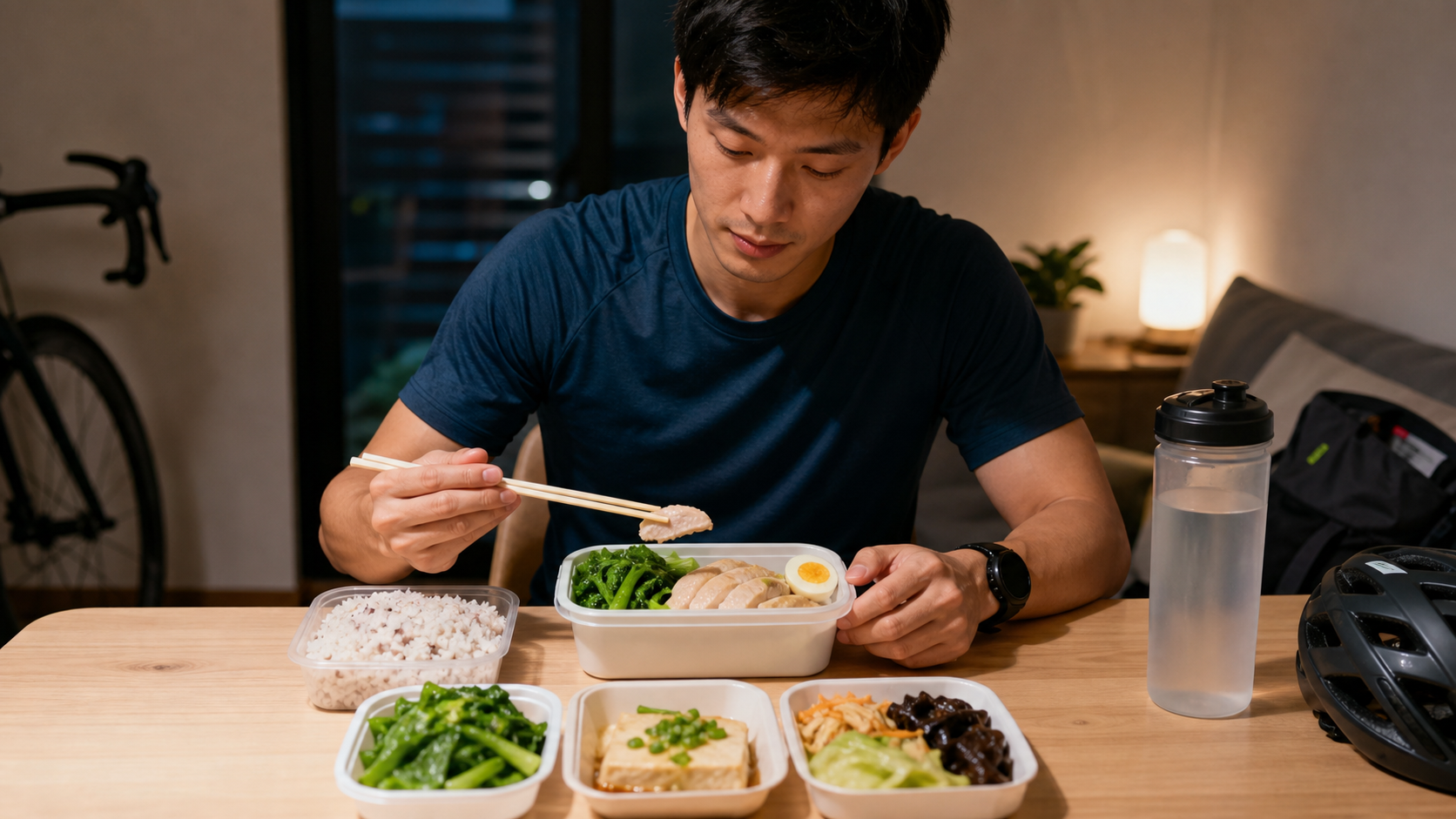
Let’s Start with a Very Real Scenario
After coaching athletes for years, I’ve noticed one thing: what truly derails training results often isn’t an insufficient training plan, but rather the “eating” part getting steamrolled by the realities of daily life.
I remember one case vividly: an amateur cyclist in his early forties, let’s call him A-Kai. On weekends he could ride over the Beiyi Highway and back, sustaining over 200 watts on climbs for extended periods. His fitness was clearly decent. But every Wednesday and Thursday, his interval sessions fell apart. His heart rate was 8 to 10 bpm higher than usual at the same intensity, and his perceived exertion was through the roof. At first, I thought it was overtraining, so we cut the volume—but nothing improved. Then I asked him to photograph his “weekday meals” for me, and the answer was right there: during the week he was incredibly busy. Breakfast was a cup of unsweetened black coffee and one tea egg. Lunch was a heaping plate of fried foods over white rice from the buffet place downstairs from his office. Before his afternoon ride, his stomach was empty, and after training, because he was “afraid of getting fat,” he’d just eat one banana and go to sleep.
He wasn’t lacking effort; he treated eating out as something to “just get through.” The result was training every day with half-empty glycogen stores and insufficient protein. This is incredibly common in Taiwan—over 90% of our training population consists of office workers. Time is fragmented by work, cooking is a luxury, and what people rely on is the neighborhood buffet, the bento shop downstairs from the office, and that 24-hour convenience store with its lights always on.
So this article isn’t about “how you should eat in an ideal world.” It’s about how, within Taiwan’s real-world eating-out environment, you can assemble a meal from convenience stores and buffet restaurants that can support your training. This is the most practical method I’ve developed over years of coaching, and the one with the most positive feedback.
Disclaimer: This article is for educational purposes and cannot replace individual diagnosis and treatment advice from a physician, physical therapist, or nutritionist. If you have a chronic condition (such as diabetes, hypertension, or kidney disease), please discuss personalized dietary arrangements with your healthcare team.
Foundational Concepts: When Training Athletes Eat Out, What Are We Actually “Replenishing”?
To know how to build a meal, you first need to know what we’re aiming for in each meal. For someone training regularly, the three main goals of eating out are simple: replenish glycogen, supply enough protein for repair, and take care of overall calories and micronutrients.
1. Carbohydrates: The Fuel Tank for Training
This is where most people get it wrong. Many athletes hear “fat loss” and start fearing starches, only daring to take two or three bites of rice at lunch, then feeling weak during their afternoon ride as if they hadn’t eaten. Carbohydrates are the primary fuel for moderate-to-high-intensity exercise. Your muscle glycogen is replenished by the carbohydrates you eat on a daily basis.
For someone training regularly, about 1 to 1.5 hours a day, daily carbohydrate intake should be roughly 4 to 7 grams per kilogram of body weight. Those with higher training volume or longer single-day efforts can go higher. For a 65 kg cyclist, that alone could mean 260 to 450 grams of carbohydrates per day. There’s absolutely no way to hit that number by eating “just two bites of rice” because you’re afraid of getting fat.
2. Protein: The Raw Material for Repair and Adaptation
According to the position stands of the International Society of Sports Nutrition (ISSN) and the American College of Sports Medicine (ACSM), which are aligned on this point, daily protein recommendations for regularly training individuals are approximately 1.2 to 2.0 grams per kilogram of body weight. During high-intensity training periods, heavy pre-competition loads, or deliberate calorie restriction for fat loss, you’ll want to be at the higher end of this range.
Translated, a 65 kg person needs about 78 to 130 grams of protein per day. The key is distributing it across every meal, not chugging it all at night. Research supports spreading protein evenly across three to four meals a day, with roughly 20 to 40 grams per meal, for better muscle repair utilization. This is actually good news for people who eat out—you don’t need to gorge at one meal; you just need to “scrape together enough” at each meal.
3. Carbohydrate-to-Protein Ratio for Recovery Meals
The post-training meal is a major source of anxiety for many. In practice, post-exercise recovery replenishment should target roughly 1.0 to 1.2 grams of carbohydrate per kilogram of body weight per hour, and about 0.3 to 0.4 grams of protein per kilogram, with a carbohydrate-to-protein ratio around 3:1 to 4:1 (for low-intensity, short-duration sessions) up to near 1:1 (for long, high-intensity sessions where you need to replenish glycogen and repair muscle simultaneously).
These numbers sound intimidating, but you don’t actually need to pull out a calculator. The way I teach athletes is to translate this into “convenience store language” and “buffet restaurant language.” Let’s get into the practical stuff.
4. Severely Underestimated by People Who Eat Out: Fiber and Micronutrients
The carbohydrates and protein we’ve discussed are “macronutrients”—pretty intuitive. But in all my years coaching, I’ve found that what people who eat out truly neglect long-term, and what causes the most problems, is actually fiber, vitamins, and minerals—the micronutrients.
The reason is simple: eating out often prioritizes taste, shelf life, and cost, which tends to compress the proportion of vegetables and fruit, replacing them with refined starches and oils. Over time, insufficient fiber intake affects gut health and satiety, while vitamin and mineral deficiencies can quietly undermine your recovery and immunity. A common phenomenon among Taiwan’s training population: as soon as training volume ramps up, they get colds easily or develop scratchy throats. Besides training stress, a monotonous diet with too few fruits and vegetables is often a contributing factor.
So when I review an athlete’s eating-out habits, besides checking if protein is sufficient, the second question I always ask is: “How many colors of vegetables have you eaten today, and have you had any fruit?” Taking care of micronutrients while eating out isn’t hard: convenience stores have salad, oden with radish and seaweed, and various fruits; buffet restaurants usually have cheap and diverse vegetables. The principle is simple—at least one serving of vegetables per meal, try to get two or more colors daily, and don’t forget fruit. Nail this, and your recovery capacity will quietly improve.
5. The Recovery Window Isn’t as Narrow as You Think, But Don’t Delay Too Long Either
Regarding the “golden 30-minute window after exercise,” I want to correct everyone’s understanding. Early claims made it sound urgent, as if missing the 30-minute mark meant your effort was wasted—that’s a bit exaggerated.
A more realistic understanding is that glycogen replenishment is indeed faster in the first hour or two after exercise, so “don’t wait three or four hours to eat” is correct. But if you get a meal with carbohydrates and protein within an hour of finishing, your recovery is essentially covered. You don’t need a stopwatch forcing you to choke something down within 30 minutes. What truly matters is the “total daily amount”—whether you’ve consumed enough carbohydrates and protein throughout the day is more critical than the timing of any single meal. This concept is liberating for people who eat out: you don’t need to sprint into the convenience store after training; you just need to make sure you’ve eaten something within that first hour and that your daily totals balance out.
Building Meals at Convenience Stores: Treat the Shelves as Your Nutrition Warehouse
Taiwan’s convenience store density is among the highest in the world, which is a huge advantage for people who eat out. The problem is—most people walk in, grab an oden and a sports drink, and think they’ve “replenished.”
The principle I teach athletes is simple: a meal needs to fill four roles: “one carbohydrate base + one protein base + one vegetable or fiber source + one hydration element.” If those four boxes are checked, the meal passes.
Role Assignment for Common Convenience Store Items
| Role | Recommended Items | Approximate Provides | Coach’s Notes |
|---|---|---|---|
| Carbohydrate Base | Onigiri, sweet potato, oat drink, whole wheat bread, banana | About 30–50 g carbs per serving | Pre/post-training first choices: easily digestible sweet potato, onigiri, banana |
| Protein Base | Tea egg, chicken breast salad, unsweetened soy milk, yogurt, tuna onigiri | About 6–20 g protein per serving | One tea egg has about 6–7 g; often need to stack 2–3 items to get enough |
| Vegetable/Fiber | Salad, oden radish and seaweed, cold dishes | Provides fiber, potassium, satiety | Add dressing separately, don’t drench—sodium spikes easily |
| Hydration/Electrolytes | Unsweetened tea, water, diluted sports drink | Replenishes fluids and electrolytes | Taiwan summers cause heavy sweating; this slot can’t be skipped |
Three Practical Meal-Building Examples
I’ve written out the three most common scenarios as menus that athletes can just copy:
Scenario A: Pre-ride fuel 60 to 90 minutes before (easily digestible, no bloating)
- 1 sweet potato (medium) + 1 banana + 1 bottle unsweetened soy milk
- Provides roughly 60–75 g carbs, around 10 g protein
- The key is “carbohydrate-focused, not too much fat or fiber,” to avoid GI issues mid-ride
Scenario B: Recovery meal 30 to 60 minutes post-training
- 2 tuna or salmon onigiri + 2 tea eggs + 1 cup unsweetened yogurt + diluted sports drink
- Roughly 60–80 g carbs, 25–30 g protein, ratio close to ideal for recovery
- This is my most recommended combo for after-work riders like A-Kai; everything is available at the convenience store
Scenario C: Regular weekday meal (non-training or easy day)
- Whole wheat chicken sandwich + salad (vinaigrette) + unsweetened soy milk + one piece of fruit
- Calories and carbs are more restrained; protein and fiber are covered without going overboard
Building Meals at Buffet Restaurants: The Order You Pick Your Food Is Your Nutrition Strategy
Buffet restaurants (what we in Taiwan call “自助餐”—the kind where you pick dishes one by one, priced by weight or by dish) are the main battleground for people who eat out, and also the easiest place to make mistakes, because there are too many choices, the fried food smells too good, and the white rice is too cheap.
I teach athletes a sequencing principle: think about protein first, then vegetables, and only decide on the amount of starch last. Most people do it backwards—they pile up a big bowl of rice first, then grab two side dishes, and protein is never enough.
The Golden Ratio for Choosing Dishes at a Buffet
Imagine your plate divided into three sections:
- Protein about 1/4 of the plate: Prioritize “non-fried” proteins—skinless braised chicken leg, steamed fish, braised tofu, steamed egg, lean meat stir-fry, white cut chicken. Avoid the sweet-and-sour, crispy-fried, and batter-coated, sauce-thickened rows.
- Vegetables about 1/2 of the plate: Pick at least two different colored vegetables. Dark leafy greens (sweet potato leaves, bok choy, spinach), gourds, and mushrooms are all great. Vegetables at Taiwanese buffets are usually cheap, so don’t be shy with this section.
- Starch about 1/4 of the plate: Choose white rice, brown rice, or sweet potato. On training days, you can add an extra half bowl; on rest days, be more restrained. If possible, ask for brown rice or multigrain rice.
Traffic Light Classification for Buffet Items
| Green Light (safe to choose) | Yellow Light (moderate, watch the cooking method) | Red Light (minimize during training periods) |
|---|---|---|
| White cut chicken, skinless braised chicken leg | Three-cup dishes, stir-fried shredded pork (high oil and sauce) | Fried chicken cutlet, Taiwanese popcorn chicken, tempura |
| Steamed fish, grilled fish | Pan-fried fish (absorbs more oil) | Sweet-and-sour fish, battered fried items |
| Braised tofu, steamed egg, edamame | Mapo tofu (thickened, oily) | Fried tofu puffs soaked in oily soup |
| Blanched vegetables, lightly stir-fried seasonal greens | Fried rice, fried noodles (high oil and sodium) | Thickened soups, chowder-type dishes |
| Brown rice, multigrain rice, sweet potato | White rice (fine, just watch portions) | Rice drenched in heavy sauce |
This traffic light system isn’t about completely banning fried food—I eat Taiwanese popcorn chicken myself. The point is during training and recovery periods, lean toward the green lights as much as possible, and save the red lights for mood and social occasions. A diet you can sustain long-term matters more than short-term perfection.
A Very Taiwanese Detail: Sodium and Soup
The free soup that comes with buffet meals, along with the heavy sauces on many dishes, often contain high sodium. In Taiwan’s summers, training causes heavy sweating, so getting some sodium is fine. But if you have hypertension, or your doctor has told you to watch your sodium, be especially careful—don’t treat the free soup like water, and ask for less sauce on your dishes. Please defer to your primary care physician’s advice on this; I can only provide general principles here.
Layering on “Training Timing”: The Same Food, Different Timing, Different Meaning
Now that you know how to build meals, here’s the next level—extremely practical: the same convenience store or buffet meal has completely different strategies depending on whether it’s pre-training, post-training, or a regular meal.
Pre-Training (1 to 3 hours before)
- Goal: Fill the tank, but keep the GI tract comfortable
- Choices: Focus on easily digestible carbohydrates, moderate protein, and reduce fat and high-fiber foods (to avoid bloating or needing the bathroom mid-session)
- Eating-out examples: Onigiri + banana, sweet potato + soy milk, buffet white rice with blanched vegetables and a non-oily protein
- The closer to training, the smaller and simpler the meal; 2–3 hours out, you can have a more complete meal
Post-Training (0 to 2 hours after)
- Goal: Replenish glycogen + supply protein for repair, making use of the recovery window
- Choices: Both carbohydrates and protein need to be on point, with a ratio roughly 3:1 to 1:1
- Eating-out examples: The “Scenario B” combo from the convenience store, or a buffet plate of protein + vegetables + extra rice
- Reminder: Glycogen replenishes fastest in the first hour or two after exercise; don’t wait three or four hours to eat
Regular Meals (non-training)
- Goal: Maintain daily protein and micronutrients, control overall calories
- Choices: Take care of protein, load up on vegetables, adjust carbohydrates based on that day’s activity level
- These meals can bring back fiber and healthy fats (nuts, avocado, mackerel)—things that aren’t ideal right before training
Reference Table for Pre/Post-Training Eating-Out Portions (based on 65 kg)
| Timing | Carbohydrate Target | Protein Target | Eating-Out Combo Example |
|---|---|---|---|
| 1–3 hours pre-training | 40–70 g | 10–20 g | Sweet potato + banana + unsweetened soy milk |
| 0–2 hours post-training | 60–90 g | 20–35 g | Onigiri ×2 + tea eggs ×2 + yogurt |
| Regular meal | 40–80 g depending on activity | 25–40 g | Buffet: protein 1/4 + vegetables 1/2 + rice 1/4 |
Note that these are “ranges” and “examples,” not precise prescriptions. Body weight, training volume, goals, and gender will all shift the numbers. Treat this as a starting point and fine-tune based on your body’s feedback.
Common Mistakes and On-the-Spot Fixes
Over the years coaching athletes, I’ve seen the same mistakes too many times. Here are the most common ones, along with how to fix them.
Mistake 1: Skipping Starches for Fear of Fat, Resulting in Training Collapse
This is the classic. Like A-Kai at the beginning of this article: only two bites of rice at lunch, power drops and heart rate spikes in the afternoon ride, thinking it’s overtraining. Fix: On training days, eat a full bowl of white rice at lunch and in your post-training meal; you can even add half a bowl after training. The time to cut back on starches is on “completely restful rest days,” not training days. Carbohydrates aren’t the enemy; they’re the reason you can push the pedals.
Mistake 2: Protein Always Coming Up Short
Many people have just “one tea egg” or “that small piece of chicken in the bento” per meal. Long-term protein deficiency undermines muscle repair and adaptation. Fix: Develop the habit of “20–40 g of protein per meal.” At the convenience store, stack an extra egg, a cup of unsweetened soy milk, or yogurt. At the buffet, grab protein first, then everything else. If you’re short, add one more serving.
Mistake 3: Chugging Sports Drinks Like Water
Thirsty after training, you down two bottles of sugary sports drink in one go—sugar and calories explode. Fix: For typical 1 to 1.5-hour sessions, plain water plus a normal diet is sufficient. Electrolyte drinks are only needed for long, heavy-sweating sessions, and they can be diluted. Treat sports drinks as a “tool,” not the “default answer to thirst.”
Mistake 4: Eating Too Late After Training, or Not Eating at All
Skipping the post-training meal out of “fear of fat,” or delaying it until much later, misses the recovery window. Fix: Within 1 hour after training, get something with carbohydrates and protein first—even just an onigiri and soy milk from the convenience store. Get recovery right, and the next day’s session will be rideable.
Mistake 5: Going All-In on Fried and Sauce-Thickened Dishes
A buffet plate entirely of sweet-and-sour, crispy-fried, and thickened dishes means excessive oil and sodium, while you mistakenly think you’ve gotten protein. Fix: Use the traffic light classification above. During training periods, prioritize green lights; save red lights as an occasional treat.
Mistake 6: Eating Exactly the Same Every Day, Not Distinguishing Training Days from Rest Days
Some diligent athletes swing to the other extreme—once they find a “healthy menu,” they eat it every single day, completely ignoring whether they trained that day. The problem is, energy needs differ greatly between rest days and long-distance training days. Using the same portions means overeating on rest days and potentially undereating on training days. Fix: Establish a rhythm of “more on training days, less on rest days,” letting your diet rise and fall with training load rather than staying on a flat line.
Mistake 7: Only Looking at Calories, Not Nutrient Composition
Some people diligently track calories with a phone app but fail to notice that “600 calories of fried chicken rice vs. 600 calories of chicken breast with vegetables have vastly different meanings for training recovery.” Fix: Calories are a reference, but don’t let them hold you hostage. First ensure protein and vegetables are in place and carbohydrates match your training, then look at total calories. Don’t reverse the order.
Breakfast and the Blind Spot of Taiwanese Eating Out: The Foundation of the Day Starts Here
Everything above has been about lunch, dinner, and pre/post-training meals, but I want to specifically highlight “breakfast,” because it’s the most frequently caught gap among Taiwan’s training population.
Taiwan’s breakfast shop culture is strong, but we all know what many people’s breakfasts look like: a plate of teppanyaki noodles with a large iced milk tea, or an egg crepe with black tea, or worse—just a cup of coffee. You get carbohydrates (often refined ones), but protein is nearly zero, and fiber is also zero. This kind of breakfast sends your blood sugar on a rollercoaster, leaving you hungry and lethargic by 10 a.m., and starts your day’s protein account in the red from the first meal.
I often tell athletes that breakfast is “the first shot to refill after a whole night of fasting.” Especially if you’re used to morning rides or runs, this meal is even more critical. Using the same convenience store and breakfast shop language, here are a few upgraded combos:
Upgraded Breakfast Combos for Eating Out
| Common Breakfast | Problem | Upgraded Version |
|---|---|---|
| Egg crepe + black tea | Too little protein, too much sugar | Egg crepe (add cheese or an extra egg) + unsweetened soy milk |
| Teppanyaki noodles + large iced milk tea | Refined carbs, sugar bomb, little protein | Swap to tuna egg toast + unsweetened drink + one piece of fruit |
| Just a cup of coffee | Almost no nutrition | Convenience store onigiri + tea eggs ×2 + unsweetened yogurt |
| Shao Bing You Tiao (flatbread with fried dough) | High oil, low fiber | Shao Bing with egg + soy milk (unsweetened or lightly sweetened) + blanched vegetables |
One more tip for morning trainers: if you’re heading out to ride at 5 or 6 a.m. and genuinely don’t have time for a proper meal, load up on a bit more carbohydrate the night before, have a banana or half a sweet potato before heading out to line your stomach, then come back and eat a full recovery breakfast. Fasted morning training isn’t impossible, but if you find yourself especially weak in the latter half of your morning session, or exhausted all morning, your body is probably protesting—you should eat something before heading out.
A One-Week Eating-Out Practical Example: Turning Method into Life
Principles alone are too abstract. Let me lay out an example for an office worker with “three training sessions per week.” This is one version I’ve actually arranged for athletes; you can adapt it. Assume the person is 65 kg, rides on Tuesday and Thursday evenings, does a long ride on Saturday, and rests or does easy days the rest of the week.
One-Week Eating-Out Arrangement Example
| Day | Training | Breakfast | Lunch | Pre/Post-Training | Dinner |
|---|---|---|---|---|---|
| Monday | Rest | Onigiri + tea egg + soy milk | Buffet: protein + double vegetables + half bowl of rice | — | Buffet: steamed fish + greens + sweet potato |
| Tuesday | Evening intervals | Tuna egg toast + soy milk | Buffet: skinless braised chicken leg + vegetables + one bowl of rice | Pre: banana + sweet potato / Post: onigiri ×2 + yogurt | White cut chicken + blanched vegetables + rice |
| Wednesday | Rest | Egg crepe with extra egg + unsweetened soy milk | Whole wheat chicken sandwich + salad + soy milk | — | Buffet: tofu + double vegetables + half bowl of rice |
| Thursday | Evening intervals | Onigiri + tea egg + yogurt | Buffet: lean meat + vegetables + one bowl of brown rice | Pre: onigiri / Post: salmon onigiri ×2 + tea eggs ×2 | Steamed fish + greens + rice |
| Friday | Rest | Shao Bing with egg + soy milk + fruit | Buffet: protein + double vegetables + half bowl of rice | — | More flexible; can arrange a social meal |
| Saturday | Long ride | Pre-ride: sweet potato + banana + soy milk | Post-ride recovery: complete meal (protein + carbs + vegetables) | During ride: bananas, energy gels | Buffet, eat well to replenish glycogen |
| Sunday | Easy or rest | Balanced breakfast | Normal balanced meal | — | Normal balanced meal, restrained portions |
This table isn’t meant to be followed rigidly; it’s to show you the rhythm of “training days vs. rest days”: on days you train more, give yourself more carbohydrates and get the recovery meal right; on rest days, pull back portions and take care of protein. This kind of weekly fluctuation is closer to what your body actually needs than eating exactly the same every day.
Hydration and Taiwan’s Climate: The Most Easily Overlooked Piece
I’m addressing hydration separately because Taiwan’s climate makes this particularly important. Taiwan’s summers are humid and hot, often exceeding 32°C with 70–80% humidity. Ride outdoors for an hour, and you’ll sweat more than you can imagine. What’s lost through sweat isn’t just water, but also electrolytes like sodium and potassium.
Many athletes’ problem isn’t “not drinking water,” but wrong timing and wrong type. Chugging only after training, only drinking when thirsty, or drinking sugary sports drinks regardless of the situation—these are all common issues.
A Simple Hydration Principle
- Pre-training: Drink some water 1 to 2 hours before heading out; don’t start in a dehydrated state
- During training: For sessions under 1 hour, plain water is usually enough; only for sessions over 1 hour, or heavy-sweating summer training, do you need electrolyte-containing drinks
- Post-training: Gradually replace lost fluids; you can check urine color—too dark means you haven’t replenished enough
- Sugary sports drinks: Treat them as a “tool” for long, sweaty sessions; short, easy training doesn’t need them, otherwise you’re just adding extra sugar and calories
A very practical self-check: if you step on the scale after training and see a significant drop, that’s mostly water loss, and you need to replenish gradually. This is especially important for people training in Taiwan’s summers, because heat exhaustion and cramps are often linked to inadequate hydration and electrolyte replacement. If you’ve ever experienced severe discomfort, dizziness, or cramps so bad you couldn’t stand during exercise, don’t push through—rest and seek medical attention if needed. Taiwan’s emergency rooms and outpatient clinics are very accessible; don’t gamble with your health.
Frequently Asked Questions from People Who Eat Out (FAQ)
These are the questions I’ve been bombarded with over the years of coaching. Let me organize them all at once.
Q1: Is a convenience store chicken breast salad really enough for a meal?
As “a meal,” it usually lacks carbohydrates. That salad has protein, but for someone who trains, the carbs are too low. Eating only this after training will lead to poor recovery. Fix: Add an onigiri or a sweet potato to bring up the carbohydrates. That makes it a complete meal.
Q2: Can I actually eat the white rice at a buffet?
Yes, and on training days you should. White rice is a highly efficient carbohydrate source that has been unfairly demonized for too long. The key is adjusting portions based on training load: one bowl on training days, even an extra half bowl; on rest days, cut back to half a bowl. What you should actually reduce is “white rice drenched in sauce” and “fried food paired with white rice”—not the white rice itself.
Q3: I want to lose fat. Should I cut carbohydrates as much as possible?
No. Fat loss comes from a sustained overall calorie deficit, not from cutting carbs to zero. Cut carbs too aggressively, and you can’t push intensity in training, so you won’t burn what you want to burn, and you’ll easily lose muscle. A smarter approach is to “concentrate carbohydrates around training days and pre/post-training meals,” moderately reduce them on rest days, and keep protein solid throughout. This way, you maintain training quality while creating a calorie deficit.
Q4: I have no appetite after training. What should I do?
Temporary loss of appetite after high-intensity training is common. The trick is to start with “liquid or semi-liquid” options—a cup of unsweetened soy milk with a banana, a bottle of oat drink, a cup of yogurt. These are easier to get down. Cover the recovery window first, then eat a proper meal an hour later when your appetite returns.
Q5: Eating out has too much sodium. Should I be worried?
For healthy people, training sweat causes sodium loss, so moderate intake is fine. But if you have hypertension, cardiovascular issues, or kidney problems, you need to take it seriously and follow your doctor’s advice. What most people can do: drink less of that free soup, ask for less sauce, and choose more blanched or steamed options.
Q6: Do I need to buy protein powder?
If you can hit 20 to 40 grams of protein per meal through normal eating out, you probably don’t need it. Protein powder is a “convenient supplement tool,” suitable for situations where you genuinely can’t get enough, or have no appetite after training. It’s a bonus, not a necessity. Get your three meals right first, then consider supplements. If you have health concerns about any supplement, consult a physician or nutritionist first.
Actionable Advice for Readers at Different Levels
By now, you might be thinking: “Coach, where exactly do I start?” Here are different starting points based on three common levels.
If You’re a Beginner Just Starting to Exercise
Don’t try to get everything right at once, and don’t drive yourself crazy counting grams. Just do one thing first: make sure every meal includes “a protein, a serving of vegetables, and a moderate amount of starch.” Start by making “is there protein?” the first thought when picking food. Just this one step will fix a large portion of eating-out problems. Stick with it for two weeks, and you’ll notice you’re less tired after training and recover faster the next day.
If You’re an Intermediate with a Regular Training Habit
Start layering on “timing”: distinguish training days from rest days, eat light before training, and eat properly after training. Use the portion reference table above to find the carbohydrate and protein ranges for your body weight, and identify three go-to combos at the convenience store and buffet that work best for you, turning them into habits you don’t have to think about. The biggest enemy for intermediates is “randomness”—eating randomly every day means you can’t pin down results.
If You’re an Advanced Athlete or Preparing for Competition
What you need to focus on is “consistency and details”: stable daily protein distribution across every meal, pre-competition carbohydrate loading, and complete recovery meals after long-distance sessions. Eating out is a flexible tool for you; you can even quickly assemble a precise recovery meal at the convenience store. At this stage, I recommend working with a professional sports nutritionist for individualized adjustments, especially when it involves pre-competition weight loss, weight class requirements, or specific health conditions.
One-Sentence Key Points for the Three Levels
| Level | One-Sentence Key Point | First Step to Take |
|---|---|---|
| Beginner | Every meal includes protein + vegetables + starch | Think protein first when picking food |
| Intermediate | Distinguish training/rest days, light pre-training, replenish post-training | Lock in three go-to eating-out combos |
| Advanced | Consistency, protein distribution, pre-competition strategy | Work with a nutritionist for individualization |
Special Note: Friends with Chronic Conditions or Special Situations
I want to be conservative here, and it’s important.
If you have diabetes, the type, amount, and timing of carbohydrates need to be discussed in detail with your healthcare team; the carbohydrate recommendations in this article are not suitable for direct application. If you have hypertension or cardiovascular disease, pay extra attention to the high sodium in buffet food and the free soup. If you have kidney-related disease, protein intake absolutely needs to be individually set by your physician and nutritionist based on your kidney function—it is definitely not “the more, the better.”
Taiwan’s National Health Insurance and medical access are relatively convenient. If you have any of the above conditions, I strongly recommend scheduling an outpatient visit or asking a hospital nutritionist for individual education. Laying out your eating-out habits directly for discussion will be far more effective than reading internet articles on your own.
This article provides general training nutrition principles and eating-out meal-building concepts. It cannot replace diagnosis and treatment advice from a physician, physical therapist, or nutritionist tailored to your individual situation. For any physical discomfort, suspected injury or illness, or chronic disease management, please defer to professional medical personnel.
Conclusion: Turning Eating Out from “Whatever” into “Strategy”
Let’s return to A-Kai’s story. In the end, we didn’t change his training plan; we only changed his eating out: sweet potato with soy milk before training, a convenience store combo of onigiri, tea eggs, and yogurt after training, and grabbing protein first at the buffet on regular days. Three weeks later, his Wednesday interval session heart rate returned to the normal range, and his perceived exertion dropped. He was surprised himself—what had been holding him back was never his fitness; it was training every day on a half-empty tank.
Taiwan’s eating-out environment is actually very friendly to the training population. Convenience stores are open 24 hours, buffets offer plenty of choices, and vegetables are cheap. What’s missing isn’t resources—it’s a method for “how to put it together.” You don’t need to cook every day, and you don’t need to bring bentos to the office until your coworkers give you side-eye. You just need, in those thirty seconds when you walk into a convenience store or stand at the buffet counter, to think one more thing: “Is my protein enough? Do my carbs match today’s training?”
Turn eating out from “just getting by” into “strategic fueling,” and your training will thank you. It’s not hard—what’s hard is consistency. And consistency is where all progress begins.
References
- International Society of Sports Nutrition (ISSN) Protein and Exercise Position Stand (PMC): https://pmc.ncbi.nlm.nih.gov/articles/PMC5477153/
- Post-Exercise Recovery Carbohydrate-Protein Ratio Guide (Outrun Nutrition): https://www.outrunnutrition.com/blogs/hrv-complete-guide/運動後恢復吃什麼-碳水蛋白黃金比例完整攻略
- Post-Exercise Muscle Gain and Fat Loss Diet Ratios (Common Health Magazine): https://www.commonhealth.com.tw/blog/4582
This article is for educational purposes and cannot replace individual diagnosis and treatment advice from a physician, physical therapist, or nutritionist.
Related Reading
- Meal-Building for Triathletes Who Eat Out: A Practical Guide to Convenience Stores and Buffets
- Recovery Day Nutrition for Athletes: How to Eat on Rest Days to Preserve the Gains from Hard Training
- Meal Prep for Athletes: A Complete Guide to Efficiency, Nutritional Balance, Storage, and Variety
- Quick Cooking for Athletes: 15-Minute Nutritious Meals—Practical Recipes for Busy People Who Want to Eat Right
CT暗黑廚房) 車友必備 宇宙無敵鮮蚵湯 幫助訓練恢復 天然食補 好市多 超肥鮮蚵 破PR
7 年前
單車 一日北高 ( 雙城 ) 肥宅雙人瘋狂行 紀錄片 REACTO
10 年前
一日北高/長距離團騎 常見問題補充篇 / 組團或跟團的眉角 / 壯車友容易被瘦車友慢性拉爆 / 原來屁股痛可能是這個原因...? / 風場配速法 / 公路車 / CT Yeh
2 年前
全運會彰化大朋神的高強肚魷魚遊戲早餐團 (惡搞版)週間廢片小劇場 | 雙崎部落 | 公路車 | GoPro 10 & iPhone 13 Pro 拍攝 | CT Yeh
4 年前
靠單車減肥35公斤 心得分享與整理
7 年前
風櫃嘴 | 全台最多大砲的單車路線 | 尋寶網攝影師告訴你怎麼擺拍起來才好看 | 熱門攝影地點巡禮
6 年前
一個測試有沒有認真練車的方法😂 #公路車
10 個月前
2021 96聯賽 桃園市長盃 4K多視角實況 當天選手瓦數/推力比/均速/時間 即時數據分析 | 公路車 | CT Yeh
5 年前