The Complete Bone Nutrition Guide for Athletes: From Energy Availability to Tracking, Building a Skeleton That Resists Injury
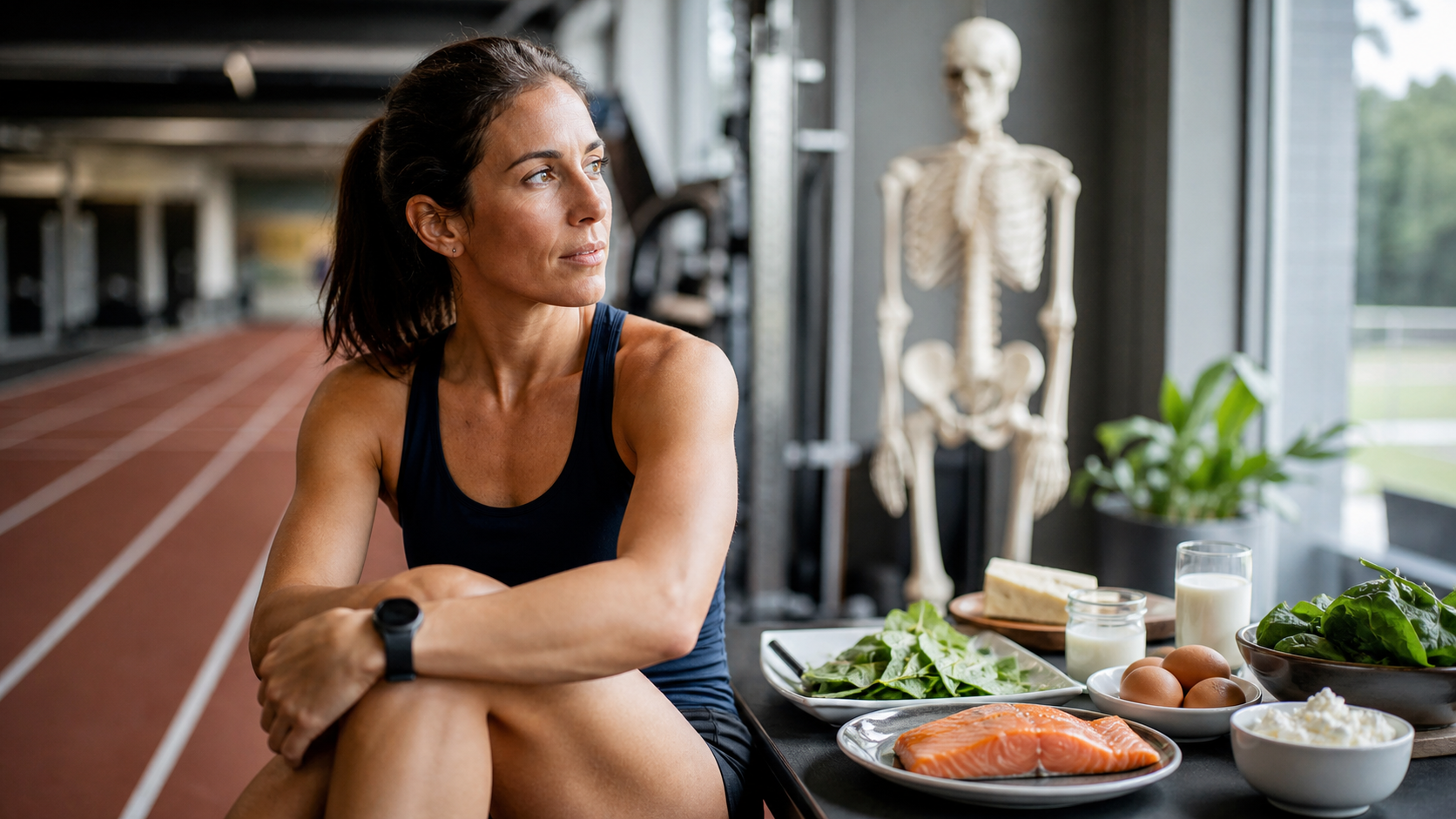
Starting with an Athlete Who Kept Getting Fractures No Matter How She Trained
I once coached a female runner in her early thirties—let’s call her Xiao-Min. She pushed her weekly mileage to over 70 kilometers, and her diet was very “clean”—breakfast was a cup of oat milk with fruit, lunch was mostly salad when eating out, and dinner was almost completely free of starch. Her weight dropped nicely, and her pace improved. But that year she fractured twice: first a stress fracture in her right tibia, which sidelined her for six weeks; shortly after returning to training, her left metatarsal cracked. Frustrated, she asked me: “Coach, I’m clearly taking good care of my body—why are my bones so fragile?”
I had her get blood work done, measured her bone density, and carefully reconstructed her diet. The answer was hidden in the details: she had been in a state of chronic low energy availability, with low vitamin D, and calcium intake far below what her high-impact sport demanded. Her menstrual cycle had also been irregular for months. What she thought was a “healthy diet” was, for a body under heavy training load, actually a chronic nutritional and energy deficit. The bones were simply the first organ to protest.
In this article, I want to organize the bone nutrition principles I’ve accumulated over more than a decade of coaching athletes and continuously reading sports physiology and nutrition literature into a complete protocol. Not to scare you, but to help you lay a solid foundation before you break. Because the cruelest thing about bone health is this—it gives almost no warning. By the time you notice, it’s often already a crack.
Foundational Concepts: Bones Are Alive, and They’re Very “Picky”
Bones Are Constantly Being Broken Down and Rebuilt
Many people assume that once bones are fully grown, they stay fixed forever. In reality, the opposite is true. Bone is a living tissue undergoing continuous “remodeling”: osteoclasts are responsible for breaking down old bone, while osteoblasts build new bone. In healthy adults, these two processes maintain a delicate balance. In youth, building outpaces breakdown, and bone mass accumulates. Around age thirty, bone mass reaches its “peak bone mass,” after which it begins a slow decline.
This has two implications for athletes. First, the bone bank you accumulate in your youth largely determines your skeletal reserves for the rest of your life—the teenage years through your twenties are the golden window for building bone mass. Second, bones are very “picky”—they decide whether to invest based on the mechanical load you give them. Regular impact sports (running, jumping, weight training) stimulate bone formation. But if nutrition and energy don’t keep up at the same time, the body judges that “resources are insufficient right now—let’s not build bone,” and the balance tips toward loss.
Bones Don’t Want “Quantity”—They Want the Right “Signals”
I often use this analogy with my athletes: bone is like a construction site manager. Every impact, every weight-training session, is like placing an order on his desk that says, “This area needs to be stronger.” Only when the order arrives does he deploy workers to thicken the bone. If no order comes, he won’t bother investing. That’s why, even with equally serious training, runners and lifters tend to have better lower-limb bone density than pure swimmers or cyclists—not because they work harder, but because the type of signal they give their bones is correct.
But there’s a critical prerequisite: when the order arrives, the construction site also needs materials and a budget to build. The materials are nutrients like calcium and protein; the budget is energy availability. If you bombard the site with orders (training hard) but don’t supply materials or budget (insufficient energy and nutrition), the bone won’t just fail to build—it may actually accumulate repeated micro-damage that turns into a stress fracture. So “stimulus” and “nutrition/energy” must both be in place simultaneously. Neither can be missing.
Energy Availability: The Foundation of the Entire Protocol
If there’s only one thing you remember from this article, I hope it’s this term: Energy Availability (EA).
Its definition is simple: the calories you consume, minus what you expend during exercise, leaves the amount available for your body to maintain basic physiological functions—then divided by your “fat-free mass (in kilograms).” The thresholds commonly used in research are:
- EA below approximately 30 kcal/kg fat-free mass/day: the body enters energy-saving mode, hormones are suppressed, and bone health begins to suffer
- To maintain bone health, EA is generally recommended to stay above 30, with an ideal range around 40–45 kcal/kg fat-free mass/day
Here’s a practical example: a female runner with 50 kg of fat-free mass, targeting an ideal EA of 45, would need about 2,250 kcal per day left over for bodily functions outside of exercise. If she burns 600 kcal running that day but consumes only 2,400 kcal total, then after subtracting exercise she has 1,800 kcal left, giving an EA of 36—still acceptable. But if her total intake is only 2,000 kcal, her EA drops to 28, and over the long term her bones will suffer. This was the core of Xiao-Min’s problem: her training volume and dietary gap kept her chronically immersed in a low-EA environment.
Low energy availability harms bone by suppressing hormones (estrogen in women, testosterone in men, as well as thyroid hormones and IGF-1, among others). This is why a nutrition protocol can’t just focus on “calcium and vitamin D supplementation”—you must first get total energy intake adequate. Calcium and vitamin D are the building materials; energy availability is the boss who decides whether construction gets started.
Men Get Hit Too: Don’t Assume This Is a Female-Only Issue
I want to break a common misconception here: many people think low energy availability and bone loss are concerns only for “female athletes.” Wrong. I coached a male mountain biker and trail runner in his twenties, A-Zhe, who was lean and highly accomplished, but over two years he kept experiencing nagging pain in his feet and lower legs. Blood work revealed low testosterone and insufficient vitamin D. He wasn’t female, yet he fell into the same low-energy-availability trap.
In recent years, sports medicine has expanded this concept from the early “Female Athlete Triad” (low energy availability, menstrual dysfunction, and low bone density) into the gender-neutral “Relative Energy Deficiency in Sport (RED-S / REDs),” precisely because research found that men also develop hormonal, skeletal, and metabolic problems from chronic energy deficits. Men don’t have menstruation as an obvious warning signal, making it easier to overlook—until the bone cracks. So regardless of your sex, energy availability is the shared foundation.
An Often-Overlooked Detail: Energy Needs to Be Replenished “Promptly”
Beyond daily total EA, researchers in recent years have also proposed the concept of “within-day energy availability”—even if you consume enough total calories in a day, if you keep your body in an energy deficit for extended periods around training (e.g., fasted lifting, or waiting a long time after a workout before eating), your body may still activate energy-saving and bone-unfavorable responses during those windows. This is especially relevant for many Taiwanese office-worker athletes: fasted early-morning cycling or running, then rushing to work and not eating a proper first meal until noon. Even if total daily calories are adequate, this pattern doesn’t necessarily keep bones and hormones happy. In practice, I recommend having at least one easily digestible serving of carbohydrates and protein around training sessions, so your body isn’t left hungry for too long.
The Three Main Characters and Supporting Cast of Bone Nutrition
Main Character One: Calcium — The Building Material Itself
Calcium is the primary component of bone minerals. For the general adult population, most guidelines in Taiwan and internationally land around 1,000 mg per day; for athletes with high training volumes, heavy sweating, or inherently low bone density, the literature commonly recommends increasing this to about 1,200 mg per day, with some prevention studies targeting high-risk groups using even higher doses.
Here’s a reality that people in Taiwan especially need to note: our diets are generally insufficient in calcium. Dairy intake is low, and for those who eat out frequently, daily calcium intake often only reaches half the recommended amount. Below are several easily accessible calcium sources to give you a tangible sense of quantity (figures are approximate ranges and vary by food type and portion size):
| Food | Approximate Portion | Calcium Content (Approx.) |
|---|---|---|
| Milk / Yogurt | 240 ml | About 240–300 mg |
| Traditional firm tofu | Half a block (about 150 g) | About 200–260 mg |
| Dried baby fish / Whitebait | A small handful | High, but varies greatly by portion |
| Black sesame seeds | One tablespoon | Medium-high |
| Dark leafy greens (Chinese broccoli, amaranth) | One plate | Medium |
| Cheese slice | One slice | About 100–150 mg |
I usually tell my clients who eat out frequently: rather than memorizing numbers, build a habit — aim for at least two to three “clear calcium sources” every day, such as a glass of milk at breakfast, a block of firm tofu at lunch, and a plate of dark leafy greens at dinner. This way, you’ll naturally get close to the required amount.
Main Character Two: Vitamin D — Getting the Building Materials to the Construction Site
No matter how much calcium you consume, without vitamin D’s help, your intestines can’t absorb it. Vitamin D’s role is to “transport” calcium from the intestines into the bloodstream and then deliver it to the bones.
The common blood marker for vitamin D status is serum 25(OH)D concentration. The general consensus in the literature for athletes is roughly: maintaining blood levels above 50 nmol/L (about 20 ng/mL) is the baseline, and many researchers believe athletes should aim somewhat higher for safety; levels below about 75 nmol/L have been identified in some studies as a risk factor for stress fractures. In terms of intake, combining diet and supplementation, the common target range is approximately 800 to 2,000 IU (about 20–50 mcg) per day, with actual dosing adjusted based on blood test results and medical professional judgment.
Here’s the paradox in Taiwan: we clearly have abundant sunshine, yet vitamin D deficiency is widespread. The reasons aren’t hard to understand — office workers and students spend most of their time indoors; those concerned about aesthetics use sun protection thoroughly; and outdoor exercisers often head out in the early morning or evening when the sun is at a low angle. Abundant sunshine does not equal sufficient vitamin D — this is something you must remember.
Main Character Three: Protein — The Most Misunderstood One
There’s a long-standing myth: “Eating too much protein causes calcium loss from bones and makes them brittle.” Recent research has flipped this view — provided calcium intake is adequate (generally considered above 800 mg per day), higher protein intake is not only harmless for bones but may even be beneficial, because protein is a key component of the bone matrix and also supports muscle and overall structure.
For athletes, protein intake should already be sufficient (common recommendations are about 1.4–2.0 grams per kilogram of body weight per day). The key point is not to deliberately reduce it out of fear of harming bones. What truly harms bones isn’t protein — it’s low energy availability and insufficient calcium and vitamin D.
Don’t Forget the Supporting Cast
Bone health is the result of a whole set of nutrients working together. Besides the three main characters, a few supporting players deserve mention: vitamin K (involved in activating osteocalcin), magnesium (part of bone minerals and also affects vitamin D metabolism), and overall adequate trace elements. Rather than supplementing one by one, I prefer to have my clients first nail down dietary diversity with real food — a varied intake of whole foods naturally covers all these supporting players.
The table below summarizes the roles, common food sources, and general dosage directions of the main players, so you can see at a glance how they divide the work (dosages are approximate directions; individual needs should be based on professional assessment):
| Nutrient | Role in Bone | Good Food Sources | General Target (Approx.) |
|---|---|---|---|
| Calcium | Main component of bone minerals | Dairy, firm tofu, dried baby fish, dark leafy greens, black sesame seeds | About 1,000–1,200 mg/day |
| Vitamin D | Helps calcium absorption and bone utilization | Sunlight, fatty fish, egg yolks, fortified foods | Based on blood tests, commonly 800–2,000 IU/day |
| Protein | Builds bone matrix, supports muscle | Meat, fish, eggs, soy products, dairy | About 1.4–2.0 g per kg body weight/day |
| Vitamin K | Activates osteocalcin | Dark leafy greens, fermented foods | Naturally achieved through varied vegetables |
| Magnesium | Bone structure, involved in vitamin D metabolism | Nuts, whole grains, dark leafy greens, legumes | Naturally achieved through varied whole foods |
Why I Always Emphasize “Food First”
Some clients ask me: “Coach, can’t I just make up for everything with supplements?” My answer is: supplements can fill gaps, but don’t put the cart before the horse. The calcium, protein, and trace elements in real food come “packaged” together, working synergistically for absorption and utilization; a bunch of single high-dose pills not only lacks this synergy but also risks neglecting one thing while overdoing another (for example, loading up on calcium while ignoring vitamin D and protein). More practically, people who eat well tend to also take care of their overall energy availability — and that’s the foundation of the entire plan. So my order of priority is always: first get your meals right and eat enough, then use supplements to fill the gaps that food truly can’t cover (vitamin D being the most common one).
High-Risk Groups: Who Needs to Be Especially Vigilant
Not everyone carries the same risk. Over the years of coaching, I’ve kept a mental “special attention list” — if you match several of these criteria, please take the advice in this article more seriously.
| High-Risk Group | Why to Be Vigilant | Priority Action |
|---|---|---|
| High training volume with intentional weight loss | Most prone to falling into low energy availability | First restore total energy and EA |
| Female athletes with irregular menstruation/menopause | Low estrogen accelerates bone loss | Seek medical evaluation, restore energy and menstrual cycle |
| Endurance sports (long-distance running, long-distance cycling, triathlon) | High training volume, low body weight, sun exposure at oblique angles | Comprehensive review of EA + calcium and vitamin D |
| Pure cycling/swimming and other low-impact sports | Lack of the mechanical loading bones prefer | Add impact/strength training |
| Vegetarians/vegans, those with very low dairy intake | Prone to calcium and certain nutrient deficiencies | Plan alternative calcium sources, get blood tests |
| Those with a history of stress fractures | Higher risk of recurrence | Full evaluation of metabolism and diet |
| Adolescent athletes | Building peak bone mass; gaps affect them for life | Energy and calcium/vitamin D must be sufficient |
Here, I want to say a special word for cyclists and swimmers. Cycling is the core demographic of this platform, but both cycling and swimming are low-impact, non-weight-bearing sports — bones don’t get the “pounding” stimulus that running and jumping provide. The literature shows that athletes who only do cycling or swimming long-term don’t necessarily have higher bone density than the general population; some even have lower density. So if you’re a cycling enthusiast, I strongly recommend scheduling two to three sessions of strength training or impact exercises per week (squats, deadlifts, jumps, brisk uphill walking) to give your bones the stimulus they need. This isn’t about turning you into a gym rat — it’s about helping you ride longer and be less likely to break something in a crash.
Practical Plan: How to Eat and Schedule Your Week
After all these principles, here’s something you can use directly. Below is the bone nutrition framework I commonly give to different groups; you can adjust it to your own situation.
Daily Bone Health Checklist
| Item | General Athlete Target (Approximate) | How to Implement |
|---|---|---|
| Energy Availability (EA) | ≥ 30, ideally 40–45 kcal/kg fat-free mass/day | Make sure to replenish expended energy on training days; don’t let weight drop too quickly |
| Calcium | About 1,000–1,200 mg/day | Aim for 2–3 obvious calcium sources daily |
| Vitamin D | Maintain serum 25(OH)D in the sufficient range | Moderate sun exposure + decide on supplementation based on blood test results |
| Protein | About 1.4–2.0 g/kg body weight/day | Include a clear protein source at every meal |
| Micronutrients | Diverse, whole foods | Rotate through dark leafy greens, nuts, and minimally processed foods |
One-Day Eating-Out Example (Taiwan Context)
A reference for busy office-worker athletes who eat out all day; the key is “easy to hit the target without extra effort”:
- Breakfast: Buffet or convenience store—one serving of milk or unsweetened yogurt + two tea eggs + a sweet potato. Milk provides calcium, eggs provide protein, and sweet potato provides energy.
- Lunch: Bento shop—don’t skip the rice, choose fish or soy products for the main dish, and add a serving of dark leafy greens (sweet potato leaves, bok choy).
- Snack: A small handful of black sesame seeds and nuts, or a glass of soy milk.
- Dinner: Hot pot or buffet—firm tofu, dried small fish, clams, dark leafy greens, and enough carbohydrates.
- Key Reminder: On high-volume training days, increase both carbohydrates and total intake. Don’t cut out rice just to lose weight—that’s the most damaging thing you can do for your bones.
Should You Take Supplements?
My stance has always been: Food first, supplements fill the gaps. I recommend getting calcium primarily from food, because dietary calcium comes with other nutrients and is absorbed and utilized more completely. If you truly can’t meet the target, then consider calcium supplements—but don’t take too large a single dose (the body can only absorb a limited amount at once; split doses are better). Vitamin D, on the other hand, is more often in need of supplementation because dietary sources are scarce and sun exposure is frequently insufficient. However, the dosage should ideally be determined by medical professionals based on blood test results—don’t self-prescribe high doses long-term.
Bone Nutrition Rhythm Across the Macrocycle and Season
Bone nutrition isn’t just about “doing the same thing every day”—it should fluctuate with your training macrocycle. This is how I typically plan with my athletes:
| Training Phase | Bone Nutrition Focus | Common Pitfall |
|---|---|---|
| Base Phase (building volume) | Adequate energy, build calcium and vitamin D foundation, add strength training | Cutting energy too low for “base-building fat loss” |
| Intensity Phase (raising quality) | Recovery must keep up, sufficient protein, watch for fatigue-related bone pain | High intensity plus high fatigue leads to micro-damage accumulation |
| Pre-Race Taper | Maintain energy; don’t rush major weight loss | Crash dieting before races leads to low EA |
| Race Season/Competition | Adequate fueling, complete post-race recovery | Racing back-to-back without giving bones a break |
| Transition/Rest Phase | Maintain basic nutrition; don’t completely stop | Stopping all training drops bone stimulus to zero |
Taiwan has races year-round—from Wuling, the Tour of East Taiwan, to marathons everywhere—and many people race continuously through autumn and winter. The biggest danger in this “continuous combat” mode is incomplete recovery and chronic energy deficit, leaving bones no chance to repair between repeated micro-damages. My advice: deliberately schedule recovery weeks during the season, fully replenish energy, calcium, and protein, and don’t let your body run on empty until it collapses at the end of the season.
Common Mistakes and Fixes
Over the years, I’ve seen too many smart, hardworking athletes fall into the same traps. I’ve listed them here so you can avoid them.
Mistake 1: Equating “clean eating” with “eating less.”
Many people chase physique and lightness by slashing carbohydrates and fats to extremely low levels, falling into low energy availability. Fix: The top priority for bone health is eating enough energy, not loading up on supplements. When training volume goes up, food intake must go up too.
Mistake 2: Only supplementing calcium, ignoring vitamin D and energy.
Calcium is the building material, but without vitamin D it can’t be transported in, and without enough energy the “boss” won’t start construction. Fix: All three must be addressed together—don’t bet on just one.
Mistake 3: Cyclists/swimmers doing zero strength training and impact work.
No matter how diligently you train in low-impact sports, your bones won’t get the stimulus they need. Fix: Schedule strength training and impact-loading movements every week.
Mistake 4: Women treating “irregular periods” as a badge of training achievement.
This is the point I most want to emphasize. Amenorrhea or irregular menstruation is not proof that you’re “training hard enough”—it’s your body crying for help. Low estrogen accelerates bone loss. Fix: If you experience menstrual irregularities, seek medical evaluation and review your energy intake and training load.
Mistake 5: Waiting until something breaks to deal with it.
Stress fractures give almost no warning. Fix: High-risk individuals should get regular check-ups; don’t wait for something to happen.
Mistake 6: Buying high-dose vitamin D online and taking it recklessly.
Vitamin D is fat-soluble, and excess carries risks. Fix: Get a blood test first, then follow professional advice on dosage.
Tracking: How to Know If You’re Going Off Track
Bone health is invisible and intangible, so “tracking” is especially important. I usually recommend that athletes build observation at several levels:
Signals You Can Watch for Yourself
- Whether weight is dropping too fast or too much in a short period
- For women: whether menstruation is regular
- Whether recovery after training is noticeably slower, or you constantly feel tired
- Whether you have recurring, dull pain in the same spot (could be a precursor to a stress fracture)
- Whether mood, sleep, or appetite have been chronically low
These aren’t diagnoses, but they are warning lights telling you to seek professional help.
Tests Requiring Professional Assistance
In Taiwan, the NHI system and medical access are quite convenient—make good use of them. Here are common evaluation directions (actual tests are determined by your physician):
| Test/Evaluation | What It Looks At | Who It’s For |
|---|---|---|
| Serum 25(OH)D | Whether vitamin D is sufficient | Worth testing for almost all serious athletes |
| Serum calcium, kidney function, and other metabolic markers | Calcium metabolism and overall status | High-risk individuals or those with symptoms |
| Bone density (DXA) | Whether bone mass is low | Those with fracture history, amenorrhea, or long-term low EA |
| Gynecological/endocrine evaluation | Hormones and menstruation | Female athletes with menstrual irregularities |
| Nutrition consultation | Identifying dietary gaps | Those who want a systematic adjustment |
For friends who train seriously and fall into the high-risk category, I’d recommend at least getting vitamin D tested once—it’s the highest cost-performance, easiest way to spot a problem. If you have recurrent stress fractures, or if you’re a woman with menstrual issues, don’t delay—seek proper evaluation from sports medicine, orthopedics, or relevant specialists.
Tracking Rhythm
There’s no standard answer, but a practical rhythm is: for generally serious trainees, review diet and serum vitamin D once a year; for high-risk individuals or those currently making adjustments, follow medical professional advice for more frequent monitoring. The key is to make it a habit, not to scramble only when something goes wrong.
Actionable Advice for Readers at Different Levels
If You’re Just Starting Out with Low Training Volume
You actually have the lowest risk, but you’re also in the best position to plant good habits now. Three things: eat enough, hit two to three calcium sources daily, and find opportunities for some sun exposure. Don’t rush to buy supplements—building a solid dietary foundation matters more than anything. If you’re a teenager, remember: you’re banking your bone capital for life right now.
If You Have Moderate Training Volume and Are Starting to Chase Performance
This is the stage where you can most easily slip into low EA without realizing it. Start being intentional: replenish what you burn on training days, don’t slash carbohydrates to lose weight, and schedule some strength or impact training each week (especially if you’re a cyclist or swimmer). Get your vitamin D tested once to put your mind at ease.
If You Have High Training Volume and Are Competition-Focused
You need to manage bone nutrition as part of your training. My recommendations: regularly track vitamin D and related markers, work with sports nutrition and medical professionals, women must pay close attention to menstrual status, and address any recurring bone pain immediately rather than pushing through. Your goal isn’t just this season’s results—it’s staying on the course for the long haul.
If You’ve Already Had a Stress Fracture or Low Bone Density
Put this at the highest priority. Be sure to seek sports medicine or orthopedic professionals for a complete evaluation and individualized plan. Review energy, calcium, vitamin D, hormones, and training load all together—don’t just fix one thing and assume you’re fine.
Another Case Study: The Bone Blind Spot of Heavy Cyclists
Earlier I mentioned the low-impact issue for cyclists. Let me use a real scenario to explain it thoroughly. One of our students, Dawei, is a typical cycling enthusiast on our platform: he rides three to four hundred kilometers a week, is a regular on classic routes like Wuling and Fengguizui, has impressive power numbers, and keeps his weight well managed. He was proud of himself, thinking, “With all this exercise, my bones must be really strong.” But in his early forties, he had a bone density test, and the results came back on the low side—which shocked him.
This is actually not surprising at all. Cycling is a seated, non-weight-bearing, low-impact sport. Body weight is distributed between the saddle and the pedals, so the bones barely receive the “pounding” signals that running and jumping provide. Add to that the fact that long-distance riding causes calcium loss through sweat, and if his diet didn’t specifically make up for it, his bones were getting neither stimulation nor building materials over the long term. Dawei’s adjustment plan was clear:
- Strength training two to three times a week: Weight-bearing movements like squats, deadlifts, and lunges provide mechanical stimulation to the bones of the lower limbs and spine.
- Add some impact activities: For example, jump rope, brisk walking up steep slopes, or simply insert a short run once a week.
- Replenish calcium: Pay special attention to calcium and overall energy intake on long-distance riding days.
- Get vitamin D tested: His levels came back low, and he supplemented under his doctor’s advice.
What I want to convey is this: a high training volume does not equal strong bones. What matters is whether the “type of stimulus” you give your bones is correct. If you also focus primarily on cycling or swimming, be sure to schedule strength and impact training into your routine—this isn’t a distraction; it’s an investment that lets you keep riding for longer.
Frequently Asked Questions (FAQ)
Q: I drink a glass of milk every day. That should be enough calcium, right?
A: One glass of milk provides roughly 240–300 mg of calcium, which is still a ways off from the daily target of 1,000–1,200 mg. Milk is a great starting point, but you typically still need other sources like firm tofu, dark leafy greens, and dried baby fish to make up the difference.
Q: I’m lactose intolerant and milk gives me diarrhea. How do I get enough calcium?
A: This is very common in Taiwan. You can switch to lactose-free milk or yogurt (fermentation reduces lactose), or rely on non-dairy sources such as firm tofu, dried baby fish, dark leafy greens, black sesame seeds, and fortified soy milk. There are plenty of calcium sources—you can hit your target without drinking milk.
Q: How long and when should I sunbathe to get vitamin D?
A: The general principle is to expose your limbs moderately and spend about ten to fifteen minutes in the sun during periods when UV is more abundant (avoiding prolonged exposure at noon when sunburn risk is highest), on a regular basis. However, skin tone, season, sunscreen use, and latitude all have a big influence. Adequate sun exposure doesn’t guarantee adequate blood vitamin D levels—the most reliable way is still a blood test.
Q: I’ve never been injured. Is it worth spending money to get my vitamin D tested?
A: If your training volume is high and you fall into the high-risk categories mentioned earlier, I think it’s worth getting tested once—it’s the most cost-effective item and the easiest way to uncover a problem. Medical access is convenient in Taiwan, so treat it as an investment in your health.
Q: Won’t calcium supplementation cause kidney stones or harm my cardiovascular system?
A: This is also a common concern. In principle, “getting calcium from food and keeping total intake within a reasonable range” is a relatively safe approach; it’s taking extremely high doses of calcium supplements at once that warrants more caution. If you have a history of kidney stones or cardiovascular disease, please consult your doctor before supplementing calcium for an individualized assessment.
Q: I’ve gone through menopause but my performance has improved. Do I really need to address it?
A: Yes. The cessation of menstruation means low estrogen levels, which is a real and tangible harm to your bones. Short-term performance gains cannot mask the long-term risk. Please seek medical evaluation and also review your energy availability—don’t treat it as a badge of honor.
Q: Are vegetarians destined to have weaker bones?
A: No. A well-planned vegetarian diet can absolutely support bone health. The key is to deliberately arrange calcium sources (firm tofu, fortified soy milk, dark leafy greens, black sesame seeds, nuts), get enough protein, and pay attention to nutrients that are easy to fall short on, such as vitamin D and B12. Get blood tests to fill any gaps if necessary.
Conclusion: Build the Foundation First, Then You Can Build High
Let’s return to Xiaomin’s story. What she did afterward wasn’t actually complicated: she ate more, brought her energy intake up, got her vitamin D tested and supplemented under her doctor’s advice, added two strength training sessions per week, and went to a gynecologist to address her menstrual issues. A little over a year later, she hasn’t had another fracture, and because her body finally had the “resources” it needed, her pacing actually improved steadily. She said something to me that I really liked: “Turns out, when you eat enough, you can run farther.”
Bone health is exactly this kind of counterintuitive thing—the more you try to be light, fast, and economical, the more you may hollow out your foundation. What truly lets you ride long, run far, and stay mobile in old age is the skeleton you can’t see every day, yet which is constantly being broken down and rebuilt. Eat enough energy, take care of your calcium and vitamin D, give your bones the stimulus they need, and periodically check the data—this complete approach isn’t flashy, but it will hold you up exactly when you need it most.
May we all stay healthy and keep doing the sports we love well into old age.
This article is for educational purposes and cannot replace individual diagnosis and treatment advice from a physician, physical therapist, or nutritionist. If you have menstrual irregularities, recurrent stress fractures, or any chronic condition (such as diabetes, hypertension, heart disease, etc.), please seek professional medical evaluation and individualized advice. Do not self-treat with high-dose supplements.
References
- Gatorade Sports Science Institute — Nutrition & Athlete Bone Health: https://www.gssiweb.org/sports-science-exchange/article/nutrition-athlete-bone-health
- Nutrition and Athlete Bone Health (Sports Medicine / PMC): https://www.ncbi.nlm.nih.gov/pmc/articles/PMC6901417/
- Female Athlete Triad and Relative Energy Deficiency in Sport (REDs): Nutritional Management (PMC): https://www.ncbi.nlm.nih.gov/pmc/articles/PMC10857508/
- Vitamin D and Stress Fractures in Sport: Preventive and Therapeutic Measures — A Narrative Review (MDPI): https://www.mdpi.com/1648-9144/57/3/223
- Supplemental Vitamin D3 for the Prevention of Bone Stress Injuries in Collegiate Athletes (PMC): https://pmc.ncbi.nlm.nih.gov/articles/PMC12126936/
Related Reading
- Calcium and Vitamin D: The Cornerstone of Bone Health—A Bone-Building Guide for Athletes and the General Population
- Bone Adaptation to Exercise: Impact, Loading, and Bone Density—A Hidden Concern Endurance Athletes Can’t Ignore
- Exercise and Osteoporosis Prevention: A Safety Guide for Weight-Bearing Exercise, Bone Density, and High-Risk Groups
- Special Nutritional Needs of Female Athletes: A Complete Coaching Guide to Menstrual Cycles, Iron and Calcium, and Energy Availability
CT暗黑廚房) 車友必備 宇宙無敵鮮蚵湯 幫助訓練恢復 天然食補 好市多 超肥鮮蚵 破PR
7 年前
西進武嶺 免費訓練分析服務 Intervals | 練不夠還是練過頭?你哪一種類型選手?AI模型告訴你! | 備戰神器 | 公路車 訓練 | CT Yeh
4 年前
秘境雪場 日本 八甲田 冰樹探險與滑雪體驗 ft. Q老師 & 運動生活
7 年前
一日北高/長距離團騎 常見問題補充篇 / 組團或跟團的眉角 / 壯車友容易被瘦車友慢性拉爆 / 原來屁股痛可能是這個原因...? / 風場配速法 / 公路車 / CT Yeh
2 年前
摔車後補裝備: 好市多新款單車安全帽& Specialized Romin 北高整路屁股都不痛的坐墊 | 一千元居然有MIPS | CT Yeh | 公路車
4 年前
靠單車減肥35公斤 心得分享與整理
7 年前
一個測試有沒有認真練車的方法😂 #公路車
10 個月前
爬陡坡被爆胎的車友跑步超車 #cycling #里佳部落
9 個月前