Cognitive Nutrition for Athletes: Eating for Focus — A Practical Guide to the Brain, Caffeine, and Hydration
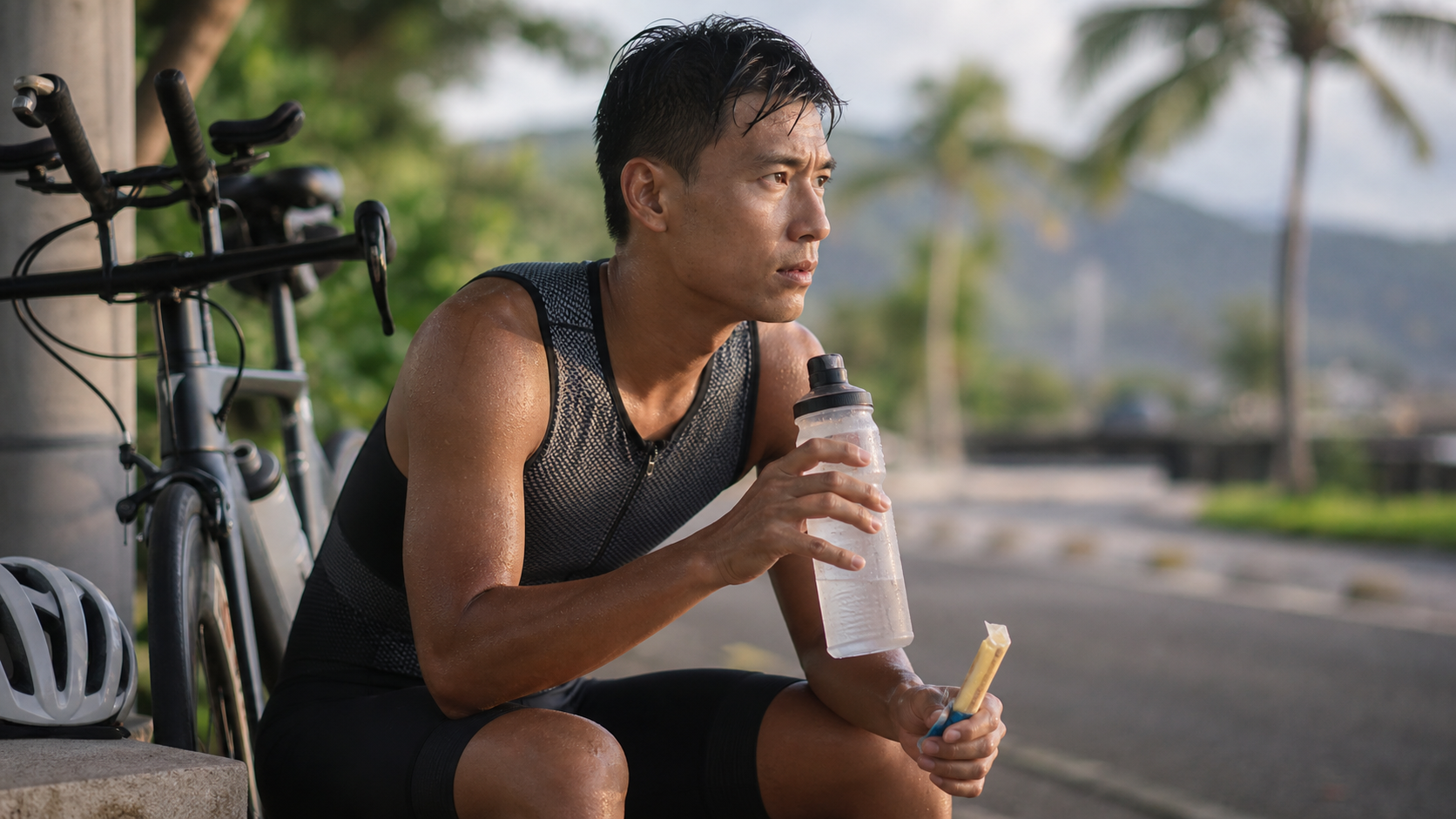
That One Moment of Distraction That Made Me Seriously Study “How the Brain Eats”
I once coached an amateur triathlete; let’s call him A-Kai. His fitness was unquestionable — an FTP of 280 watts, steady run pacing, and decent swimming. But in the latter half of every race, he would “crash” — not because his legs gave out, but because his brain gave out. He described it himself: “Coach, during that stretch at T2 changing shoes, I’d suddenly lose track of which lap I was on, whether I needed to refuel, and once I even almost rode past the aid station.”
At first, like most coaches, my instinct was to look at fitness and pacing for answers. But after repeatedly reviewing his race data, food logs, and sleep, I slowly realized something: A-Kai’s problem wasn’t in his muscles; it was in his brain’s fuel supply. To “travel light,” he’d skimped on breakfast before the race, and during it, he only took electrolyte water, barely any carbs. Add in Taiwan’s humid summer heat, and by the later stages, dehydration had caused that energy-hungry organ — the brain — to start throttling down.
After that, I spent years seriously studying the topic of “cognitive nutrition” — not to make my athletes smarter, but to ensure their brains could still function properly at the moment they were most exhausted and needed judgment the most. This article is the framework I actually use with my athletes, from the scientific foundation to practical application, explained as clearly as possible so you can use it starting today.
Let me start with the most important point: Focus is not willpower; it’s a metabolic state. You can force yourself to concentrate for three minutes, but you cannot force your brain to sustain four hours of judgment when it’s short on sugar, water, and with imbalanced neurotransmitters. Instead of blaming yourself for not focusing enough, feed your brain properly and correctly first.
The Brain: A Power-Hungry, Picky-Eating Machine
How Energy-Intensive Is the Brain?
The human brain makes up only about 2% of your body weight, yet it consumes roughly 20% of your resting energy. In other words, a 70 kg person with a basal metabolic rate of about 1600 kcal per day uses roughly 300 to 400 kcal just lying still — and that’s just the brain. This is only at rest; when you’re in a race, maintaining power output, calculating pace, and reading your opponents’ moves simultaneously, the workload on your prefrontal cortex rises significantly.
More critically, the brain relies almost exclusively on glucose as its immediate fuel (it only shifts substantially to ketones during prolonged fasting or ketosis). It has almost no energy reserves and depends on a steady supply of blood sugar via blood flow. That’s why low blood sugar causes dizziness, irritability, and impaired judgment — it’s not a lack of mental toughness; it’s a hardware power shortage.
The Three Nutritional Axes Affecting Focus
When working with athletes, I like to break “cognitive nutrition” into three axes to manage, so we don’t fix one thing while neglecting another:
| Axis | Core Role | Typical Symptoms of Deficiency | Primary Control Methods |
|---|---|---|---|
| Energy Supply | Stable blood sugar, mitochondrial efficiency | Dizziness, irritability, slowed reactions, drowsiness | Carbohydrate strategy, meal timing, regular meals |
| Neurotransmission | Dopamine, norepinephrine, acetylcholine, GABA | Low motivation, scattered attention, anxiety or over-arousal | Caffeine, L-theanine, protein quality, sleep |
| Hydration & Electrolytes | Plasma volume, cerebral blood flow, neural transmission environment | Slowed reactions, longer decision time, headaches, irritability | Hydration schedule, sodium/potassium/magnesium intake, environmental control |
These three axes are interconnected. Dehydration reduces glucose utilization efficiency, low blood sugar amplifies caffeine’s jittery effects, and poor sleep makes you rely more on caffeine to push through — so you can’t focus on just one. Let me break down each one for you.
Axis One: Keeping the Brain’s “Power” Stable — Energy and Blood Sugar
Stable Blood Sugar Matters More Than High Blood Sugar
Many people think that to focus, you need to “eat something sweet to fuel the brain,” so they chug a sugary drink before a race. The problem is, sharp spikes and crashes in blood sugar are worse for focus than a stable, moderate level. After a rapid spike, insulin surges, followed by a rebound hypoglycemia — that “hazy, heavy-headed crash” is exactly what that feels like.
My principle for athletes is simple: Don’t let your blood sugar ride a roller coaster between meals. Practically, that means pairing carbohydrates with protein, moderate fat, and fiber at every meal so the sugar “discharges slowly.” For people eating out in Taiwan, there are actually plenty of good options — sweet potatoes, brown rice, oden with an egg, or unsweetened soy milk with an onigiri — all of which are far more stable than a sugary hand-shaken drink.
Carbohydrate Strategy During Training and Racing
During exercise, it’s a different story. When you exercise for more than 60 to 90 minutes and muscle glycogen starts running low, actively taking in carbs isn’t just for your legs — it’s for your brain too. There’s a very practical finding in research: supplementing carbohydrates during prolonged exercise not only maintains physical performance but also helps sustain central nervous system judgment and reaction time — which is especially crucial for cycling and triathlon, where you’re constantly making decisions.
Here are the carbohydrate recommendations I typically give for different exercise durations (individual variation is large; use these as a starting point and adjust):
| Exercise Duration | Recommended Carbs per Hour | Practical Examples (Easy to Find in Taiwan) | Notes |
|---|---|---|---|
| < 60 minutes | Usually no extra needed | Plain water or light electrolytes | Unless fasted or doing high-intensity intervals |
| 60–150 minutes | About 30–60 g | Energy gels, bananas, onigiri, sports drinks | A single sugar source is sufficient |
| > 150 minutes | About 60–90 g | Energy gel + sports drink mix, alternating salty and sweet | Recommend glucose + fructose mix for better absorption |
A-Kai’s turnaround came from changing from “barely any carbs in the later stages” to “a fixed refuel every 30 to 40 minutes,” plus eating a proper meal focused on complex carbs 3 hours before the race. Just that alone — he said the “brain fog” in the latter half noticeably improved. He stopped riding past aid stations.
How to Structure Your Pre-Race Meal
Three to four hours before the race, I recommend a meal centered on complex carbohydrates, with moderate protein and not too much fat or fiber (too much fat or fiber delays gastric emptying and causes discomfort during the race). Thirty to sixty minutes before the start, you can top up with some easily digestible carbs if needed (half a banana, a small energy snack).
Key reminder: Don’t try new foods or supplements you’ve never had before on race day. I’ve seen too many people “use a certain brand of energy gel for the first time on race day” only to have stomach issues — before focus even becomes a factor, the bathroom has already defeated them. Every fueling strategy must be practiced during training.
Axis Two: Fine-Tuning Neurotransmission — Caffeine and L-Theanine
This section is what most people are curious about, and also where they make the most mistakes.
Caffeine: The Most Studied—and Most Misused—Sports Supplement
Caffeine blocks adenosine receptors in the brain. Adenosine is the signaling molecule that makes you “feel tired and sleepy.” Caffeine blocks it, so you subjectively feel more alert and energized, which in turn boosts vigilance and athletic performance. It’s one of the few supplements in sports science with a high level of evidence.
The common effective dose range is roughly 3 to 6 mg per kilogram of body weight, taken about 45 to 60 minutes before exercise. For a 60 kg person, that’s about 180 to 360 mg. To give you a sense of scale:
| Common drink/source | Approximate caffeine content | Positioning for a 60 kg person |
|---|---|---|
| A medium Americano from a convenience store | About 150–200 mg | Close to the lower limit, suitable as a baseline dose |
| A pour-over / double espresso | About 120–180 mg | Depends on the amount of coffee grounds |
| One caffeine tablet | Commonly 100 mg | Easy to dose, convenient for practice |
| One can of energy drink | About 80–160 mg | Watch out for extra sugar and other ingredients |
But more caffeine is not necessarily better. Beyond your personal tolerance, you’ll get heart palpitations, shaky hands, gastrointestinal discomfort, anxiety, and actually more scattered attention—especially in the high-pressure context of a race, where the jitteriness from excess caffeine can directly ruin your technical movements and judgment. I’ve seen athletes who were nervous before a race and downed two cans of energy drink, only to have their heart rate spike to 190 bpm after the start and their hands shake so much they couldn’t hold the handlebars steady.
L-Theanine: The Partner That Puts the Brakes on Caffeine
This brings me to a combination I love discussing with athletes: caffeine + L-theanine.
L-theanine is an amino acid naturally found in green tea. Its hallmark is inducing a state of “relaxed but not sleepy.” When used together with caffeine, many studies have observed an interesting phenomenon: caffeine handles alertness and wakefulness, while L-theanine smooths out the anxiety and heart palpitations caffeine brings. Together, attention (especially the kind that requires task-switching and resisting distraction) and subjective alertness tend to be better than with caffeine alone, with fewer side effects.
According to a study published in Nutritional Neuroscience, about 97 mg of L-theanine combined with 40 mg of caffeine helped subjects maintain focus on cognitively demanding tasks (Owen et al., 2010, Nutritional Neuroscience); another double-blind crossover study published in the British Journal of Nutrition, conducted on young adults with acute sleep deprivation, found that a higher dose of 200 mg L-theanine combined with 160 mg caffeine improved selective attention hit rates and reaction times (British Journal of Nutrition, 2025).
In practice, a common ratio falls around 1:1 to 2:1 L-theanine to caffeine. Here’s an easy-to-start dosing reference table (always start from the lowest dose and try it during training—never use it for the first time on race day):
| Scenario | Caffeine | L-Theanine | Suitable for and notes |
|---|---|---|---|
| Beginner trial | 40–50 mg | 80–100 mg | For those sensitive to caffeine, or afternoon training without affecting sleep |
| General training focus | 80–100 mg | 100–200 mg | The comfort zone for most people |
| Key races / long distance | 3–6 mg/kg | 100–200 mg | Must be fully rehearsed during long training sessions, including gut response |
A Few Practical Reminders About Caffeine
- Long half-life: Caffeine’s half-life in the body is roughly around 5 hours (highly individual; some people are slower). If you supplement caffeine for evening or nighttime training, you may well sacrifice that night’s sleep—and sleep is the most fundamental foundation of focus. In Taiwan, many people are used to night riding or night running after work, so this deserves special attention.
- Don’t rely on it daily to push through: Long-term high doses create tolerance, and the effect diminishes. I’d suggest treating caffeine as a “weapon for key occasions.” Use it moderately for regular training, and before important races, you can even strategically cut back for a few days to restore sensitivity on race day.
- It can’t replace sleep and nutrition: Caffeine “borrows” you wakefulness; it doesn’t “give” you energy. Chronically sleeping poorly while propping yourself up with caffeine is like constantly swiping a credit card without paying it off—eventually, something breaks.
The Third Axis: The Most Underrated Focus Switch—Hydration
If I had to pick one “most overlooked but easiest to improve” cognitive nutrition factor, I’d unhesitatingly choose hydration.
Even Slight Dehydration Starts Dulling the Brain
Many people think dehydration only counts when you’re desperately thirsty or cramping. In reality, before you even “feel thirsty,” your body has usually already begun to be mildly dehydrated. There’s a frequently cited observation in research: when fluid loss reaches about 2% or more of body weight, cognitive performance tends to decline—such as reduced alertness, longer decision times, slower reactions, and worse working memory. At 3% to 4% or higher, the effects become more pronounced, and they worsen more easily in hot environments (heat stress) (Gatorade Sports Science Institute, hydration and team sport cognitive review).
What does 2% mean? A 70 kg person only needs to lose about 1.4 kg of water to cross that line. Taiwan’s summers are hot, humid, and sweat doesn’t evaporate easily for cooling. Losing one to two kilograms of sweat during a two-hour long training ride is par for the course. You think you’re just “a bit tired,” but your brain may already be operating under dehydration.
Note that individual differences are large—not everyone becomes noticeably dull at 2%—but the direction is clear: don’t wait until you’re thirsty to drink, especially during long exercise that requires judgment.
A Workable Hydration Rhythm
Hydration isn’t about “chugging as much as possible.” Drinking too fast and too much can dilute blood sodium, cause gastrointestinal discomfort, and in extreme cases carry a risk of hyponatremia. What I give athletes is a “rhythm-based” approach:
| Time period | Hydration recommendation | Notes |
|---|---|---|
| 2–4 hours before exercise | About 5–10 ml/kg, sipped gradually | Gives the body time to absorb and excrete the excess |
| During exercise | Sip about 100–200 ml every 15–20 minutes | Go toward the upper limit in heat or with heavy sweating, and add electrolytes |
| After exercise | Replenish based on losses; sodium helps retain water | Estimate losses using pre- and post-exercise body weight difference |
A super practical self-check method: Weigh yourself before and after a ride or long run (wearing similar clothing, subtracting the weight of any fuel/water consumed). The weight you lost is roughly the fluid you lost. Losing 1 kg means you “owe” yourself about 1 to 1.5 liters of water that wasn’t replenished—make it up gradually afterward. Also, checking urine color is intuitive—pale yellow like lemonade is about right; dark yellow like strong tea usually means it’s time to drink.
Electrolytes: It’s Not Just Sodium
What you lose through sweat isn’t just water—it’s also electrolytes, and sodium is the main player. If you sweat heavily for a long time (especially in a Taiwanese summer) and only replace fluids with plain water, your blood sodium can actually drop, leading to dizziness, weakness, and decreased focus. So for long-distance exercise, what you need to replenish is “water with electrolytes,” not pure water. Potassium and magnesium also play roles, but a balanced diet usually prevents severe deficiencies; prioritizing sodium during long-distance efforts is the first concern.
The Overlooked Fourth Factor: Sleep, Protein, and Long-Term Diet Quality
The three axes above are about “how to adjust in the moment,” but if the foundation isn’t solid, more caffeine and fuel are just robbing Peter to pay Paul. I have to dedicate a separate section to three “long-term foundational” elements.
Sleep: The True Foundation of Focus
I often tell my athletes something a bit blunt: If you don’t sleep well, any nutritional advice I give you is only half as effective. When you’re sleep-deprived, your brain’s ability to clear metabolic waste, consolidate memory, and restore neurotransmitter balance declines. The next day, you’re more easily distracted, your judgment slows, and you’re more prone to a vicious cycle where caffeine “feels less effective the more you drink, yet you sleep even worse.”
The reality for many Taiwanese working athletes is: work during the day, train in the evening, scroll on the phone late into the night, and sleep gets squeezed to under six hours. Instead of agonizing over whether to take some supplement, get sleep back to seven to eight hours first. It’s free, has no side effects, and its return on focus far exceeds any supplement. In that high-dose L-theanine + caffeine study mentioned earlier, the subjects were young people under “acute sleep deprivation”—in other words, supplements are for “emergency rescue,” not a license to stay up late.
Protein Quality: The Raw Material for Neurotransmitters
Neurotransmitters like dopamine and norepinephrine—highly correlated with “motivation and focus”—are built from amino acids (e.g., tyrosine, tryptophan), which come from the protein you eat. Long-term inadequate or poor-quality protein intake is like forcing your brain to “produce with missing materials.”
For regular exercisers, protein recommendations generally fall in the range of 1.2 to 2.0 grams per kilogram of body weight per day (depending on training volume and goals; individual variation is large). Eating out in Taiwan makes this easy to hit—chicken breast bento boxes, braised tofu and eggs from the luwei stand, unsweetened soy milk, tuna rice balls, and boiled eggs are all convenient sources. The key is spreading it across three meals, with some at every meal, rather than cramming it all in at night.
Long-Term Diet Quality: Don’t Keep Your Brain in a State of Inflammation and Swings
An occasional meal of fried chicken or a bubble tea is fine, but if your daily diet is chronically highly processed, high in sugar, and low in fruits and vegetables, your blood sugar swings wildly every day and you carry chronic low-grade inflammation—your brain’s operating environment stays suboptimal long-term. This isn’t about becoming a dietary purist; it’s about making “eating steadily most of the time” your baseline, and treating caffeine and energy gels as occasional tools.
FAQ
These are the questions about cognitive nutrition that I get asked to death by athletes. I’ve compiled them all here:
Q1: Does coffee make me urinate more and dehydrate me?
For habitual coffee drinkers, the diuretic effect of moderate daily intake is actually limited, and caffeinated beverages still count toward your fluid intake. Don’t avoid coffee out of fear of diuresis, but during long, heavy-sweating exercise, your primary fluid source should still be electrolyte-containing water—don’t rely on coffee for hydration.
Q2: I train very late. Can I still use caffeine?
Yes, but you need to be very careful with dosage and timing. Caffeine’s half-life is about five hours. If you take a 100 mg caffeine pill at 8 PM, half of it may still be active in your system at midnight. For night trainers, I usually recommend switching to low doses or focusing on L-theanine to avoid sacrificing sleep—remember, sleep is the foundation.
Q3: Energy gels, sports drinks, or bananas—which should I choose during a race?
There’s no standard answer. The key is what your gut has practiced in training, can absorb, and won’t throw a tantrum. Energy gels are concentrated and easy to carry but need water; bananas are natural but bulky and awkward to eat on climbs; sports drinks can deliver both sugar and electrolytes but you need to watch the concentration. Most people find “mixing it up + alternating salty and sweet” holds up best over the long haul.
Q4: If I don’t drink coffee or take supplements, am I at a disadvantage?
Not at all. Getting energy, hydration, and sleep right covers the basics and already puts you ahead of most people. Caffeine and L-theanine are “icing on the cake” fine-tuning tools, not necessities. Piling on supplements while the foundation is weak gives you the worst return on investment.
Q5: It’s so hot in Taiwan’s summer. Do I need to do all this on the indoor trainer too?
Yes, and it’s often underestimated. Indoors there’s no wind and heat dissipation is worse—you can sweat more on the trainer than outdoors. Turn on a fan, have electrolyte water ready, and pay attention to your hydration rhythm. The dehydration risk during long indoor sessions is no lower than outdoors.
Q6: I did all this but still find myself getting distracted in the later stages. What could be wrong?
Don’t rush to add supplements. Go back and check the four basics: Did you sleep enough the night before? Did you eat enough at the pre-race meal? Did you consistently take in carbs and fluids during the event? Was the caffeine excessive or mistimed? When I troubleshoot “late-race distraction” with athletes, nine out of ten times the problem falls into one or two of these four categories—not a missing miracle supplement. The power of cognitive nutrition comes precisely from executing the mundane basics consistently.
Another Case Study: The Effect of Restoring the “Basics”
Besides A-Kai, I’d like to share the example of another athlete, Xiao-Ting. She’s a long-distance cycling enthusiast, weighing about 55 kg. Her biggest issue wasn’t fitness—it was that “after three or four hours of riding, I start getting irritable, my tone with riding buddies turns impatient, and my route judgment starts to slip.”
The first thing I asked her to do wasn’t to buy any supplements, but to track four basic data points for two straight weeks: hours of sleep the night before, the content of the pre-ride meal, how many carbs and fluids she took in per hour during the ride, and her caffeine sources and amounts that day. Two weeks later, we reviewed the log together, and the pattern was obvious—on her long ride days, she slept barely five-plus hours, ate only a slice of toast before the ride, drank less than one bottle of water over three to four hours of riding, and took in almost no carbs.
We didn’t do anything flashy. We only adjusted four things: sleep a solid seven hours the night before, eat a sweet potato plus a tea egg plus unsweetened soy milk three hours before the ride, take in carbs on a fixed schedule every 30 minutes, and sip electrolyte water every 15 to 20 minutes. Three weeks later, she reported back: “That irritable, want-to-snap-at-someone feeling in the later stages is almost gone.”—This is the best example that restoring the basics first often delivers more noticeable results than chasing advanced supplements. The details of these two cases are contextualized descriptions, but the underlying principle is identical: get energy, hydration, and sleep right first, and your brain will have the resources to fight with you to the finish.
Common Mistakes and Fixes—I Encounter These Almost Every Month
In years of coaching, the pitfalls in cognitive nutrition are highly repetitive. I’ve organized them into a “mistake → fix” comparison table you can check directly:
| Common Mistake | Why It’s a Problem | My Recommended Fix |
|---|---|---|
| Skipping breakfast before a race to feel light | Brain runs low on sugar; late-race judgment collapses | Eat a complex-carb meal 3–4 hours before; top up with easily digestible carbs right before |
| Relying on a big sugary drink to “fuel the brain” | Blood sugar spikes and crashes, leaving you groggy | Pair carbs with protein, fat, and fiber for steady blood sugar |
| Chugging caffeine/energy drinks when nervous | Excess causes heart palpitations and shaky hands; focus gets worse | Stick to 3–6 mg/kg, can pair with L-theanine to smooth it out |
| Taking high-dose caffeine for evening training | Sacrifices sleep; more caffeine dependence the next day | After late afternoon, cut the dose or switch to low-dose L-theanine as the main tool |
| Waiting until thirsty to drink | By the time you’re thirsty, you’re already mildly dehydrated and your brain is sluggish | Hydrate on a schedule; don’t wait for thirst during long exercise |
| Heavy sweating but only replacing with plain water | Blood sodium gets diluted, causing dizziness and weakness | Switch to electrolyte drinks for long distances; prioritize sodium |
| Trying a new supplement for the first time on race day | Gut issues derail everything | Every supplement must be practiced during training |
Special Note: For Those with Chronic Conditions or Taking Medication
I will always emphasize this: if you have high blood pressure, heart disease, diabetes, anxiety disorders, thyroid issues, or are taking any medication, caffeine, electrolyte supplementation, and carbohydrate strategies may interact with your condition or medications. For example, caffeine can affect heart rhythm and blood pressure, and blood sugar strategies for diabetics need to be highly individualized. In these cases, please discuss with your physician or pharmacist first—do not blindly follow generic advice from anyone online (including me). In Taiwan, medical access is convenient, and the National Health Insurance provides excellent resources. If in doubt, ask—don’t skip this step.
Actionable Advice for Readers of Different Levels
Understanding sports nutrition doesn’t mean you have to get everything right at once or make it overly complicated. Based on three common levels, here’s a checklist you can start “today.”
For Beginners / Weekend Warriors
If you’re just starting out or exercising two to three times a week, focus on the three most basic things first—no supplements needed:
- Eat regular meals and don’t train on an empty stomach. Have easily digestible carbs 1 to 2 hours before training.
- Get into the habit of weighing yourself and checking urine color before and after training to establish your own hydration awareness.
- Getting enough sleep is more important than any supplement—sleep is the foundation of focus; without it, everything else is just a patch.
At this stage, advanced tactics like caffeine + L-theanine are completely unnecessary. Solidify the foundation first—that yields the greatest benefit.
For Advanced Enthusiasts / Racers
You already have training volume and care about performance. You can take it a step further:
- Establish a personalized in-race carbohydrate rhythm (refer to the duration table above) and rehearse it repeatedly during long training sessions until your gut fully adapts.
- Treat caffeine as a “strategic weapon.” Start with a low dose, find your sweet spot, and pair it with L-theanine if needed to mitigate side effects.
- Do heat acclimatization and hydration drills for Taiwan’s summers—don’t face high heat and heavy sweating for the first time on race day.
- Strategically reduce daily caffeine intake a few days before an important race to restore sensitivity on race day.
For Coaches and Team Leaders
If you also lead others, my biggest reminder is: incorporate sports nutrition into your training logs and pre-race checklists. Many “late-race blowups” are misdiagnosed as insufficient fitness when the brain simply wasn’t fueled properly. Help your athletes keep a simple record of “breakfast, hydration, fueling, and sleep”—you’ll quickly spot patterns, and it’s the cheapest, fastest-acting intervention.
A Ready-to-Follow “Key Race Day Sports Nutrition Timeline”
Finally, here’s a race-day template I actually give my athletes (adjust it based on your race time, personal tolerance, and rehearsal results—this is just a framework):
| Time | What to Do | Purpose |
|---|---|---|
| 3–4 hours before race | Complex carb meal, moderate protein, start hydrating in intervals | Stabilize blood sugar, build a solid hydration base |
| 45–60 minutes before race | Top up with easily digestible carbs as needed; nail down caffeine dose (can pair with L-theanine) | Boost alertness, avoid starting with low glycogen |
| 15 minutes before race | Sip water, empty your bladder | Avoid urgent bathroom needs or bloating at the start |
| Every 30–40 minutes during race | Consume carbs consistently (long distance) | Maintain fuel for the brain and legs |
| Every 15–20 minutes during race | Sip electrolyte-containing water | Keep cognition and performance from dropping |
| After race | Rehydrate based on weight loss + sodium, eat normally | Restore fluids and glycogen, prepare for the next event |
Conclusion: Fuel the Brain First, and Focus Will Follow
Back to A-Kai’s story. He didn’t become some super athlete, but in his next triathlon, his “brain was on point” the entire race—his most memorable quote was: “Coach, so I wasn’t unfocused before—I just never gave my brain enough sugar and water.”
That’s the core message I want to convey through this article: focus is largely a metabolic outcome that can be “eaten, drunk, and slept into existence,” not something you tough out with sheer willpower. Take care of the three axes—energy, neurotransmission, and hydration—and your brain will have the resources to fight alongside you to the very end, at the moment you’re most exhausted and need to make the right call.
You don’t have to get it all right at once. Pick one thing you can change today—maybe it’s having a proper breakfast before tomorrow’s training, or starting to weigh yourself before and after workouts—just get moving, and your body will respond.
This article is educational content and cannot replace individualized diagnosis and treatment advice from a physician, physical therapist, or nutritionist. If you have a chronic condition, are taking medication, or have any concerns about caffeine or supplements, please consult your healthcare professional first and take an individualized approach.
References
- Owen G. N., et al. The combination of L-theanine and caffeine improves cognitive performance and increases subjective alertness. Nutritional Neuroscience.(tandfonline)
- High-dose L-theanine–caffeine combination improves neurobehavioural and neurophysiological measures of selective attention in acutely sleep-deprived young adults. British Journal of Nutrition.(PMC)
- Hydration and Team Sport Cognitive Function, Technical Skill and Physical Performance. Gatorade Sports Science Institute.(GSSI)
- Effects of hypohydration and fluid balance in athletes’ cognitive performance: a systematic review.(PMC)
Related Reading
- Caffeine Tolerance and Withdrawal in Athletes: Periodized Use Makes Every Caffeine Hit Count
- Coffee and Athletes: Beyond Caffeine—A Holistic Look at Compounds, Timing, and Sleep
- Cognitive Fatigue in Exercise: When the Brain Tires, the Legs Go Soft—How Mental Fatigue Steals Your Endurance and How to Train It Back
- The Complete Guide to Caffeine Supplementation: Dosage, Timing, and Genetic Differences—Coaches Show You How to Use Caffeine Right
CT暗黑廚房) 車友必備 宇宙無敵鮮蚵湯 幫助訓練恢復 天然食補 好市多 超肥鮮蚵 破PR
7 年前
西進武嶺 自製新版AI配速表產生器 x 賽前攻略 抱佛腳! 沒有功率計也可以產生配速表嗎?有什麼其他眉角賽前要注意的呢? | 西進武嶺 / 東進武嶺 KOM 攻略 | 公路車 | CT Yeh
4 年前
西進武嶺 免費訓練分析服務 Intervals | 練不夠還是練過頭?你哪一種類型選手?AI模型告訴你! | 備戰神器 | 公路車 訓練 | CT Yeh
4 年前
一個測試有沒有認真練車的方法😂 #公路車
10 個月前
FTL 與 SYB 車隊專訪 西進武嶺 實用攻略分享! 2小時 如何練?!你不知道的眉角!新手準備武嶺必看 EP1 | 實力派女車友 | 精華版 | 公路車 | CTYeh
4 年前
CT 喇低賽) 武嶺牽車 才是王道 西進牽車四小時內秘訣 攝手位置 如何判斷 防抽筋小秘訣
7 年前
#KOM 夏季登山王之路 比賽實況 #東進武嶺
7 年前
福隆鐵人團練隨拍
8 年前