Nutrition Strategies for Cold Environments: The Underestimated Energy and Hydration in Low Temperatures, and the Significance of a Hot Meal
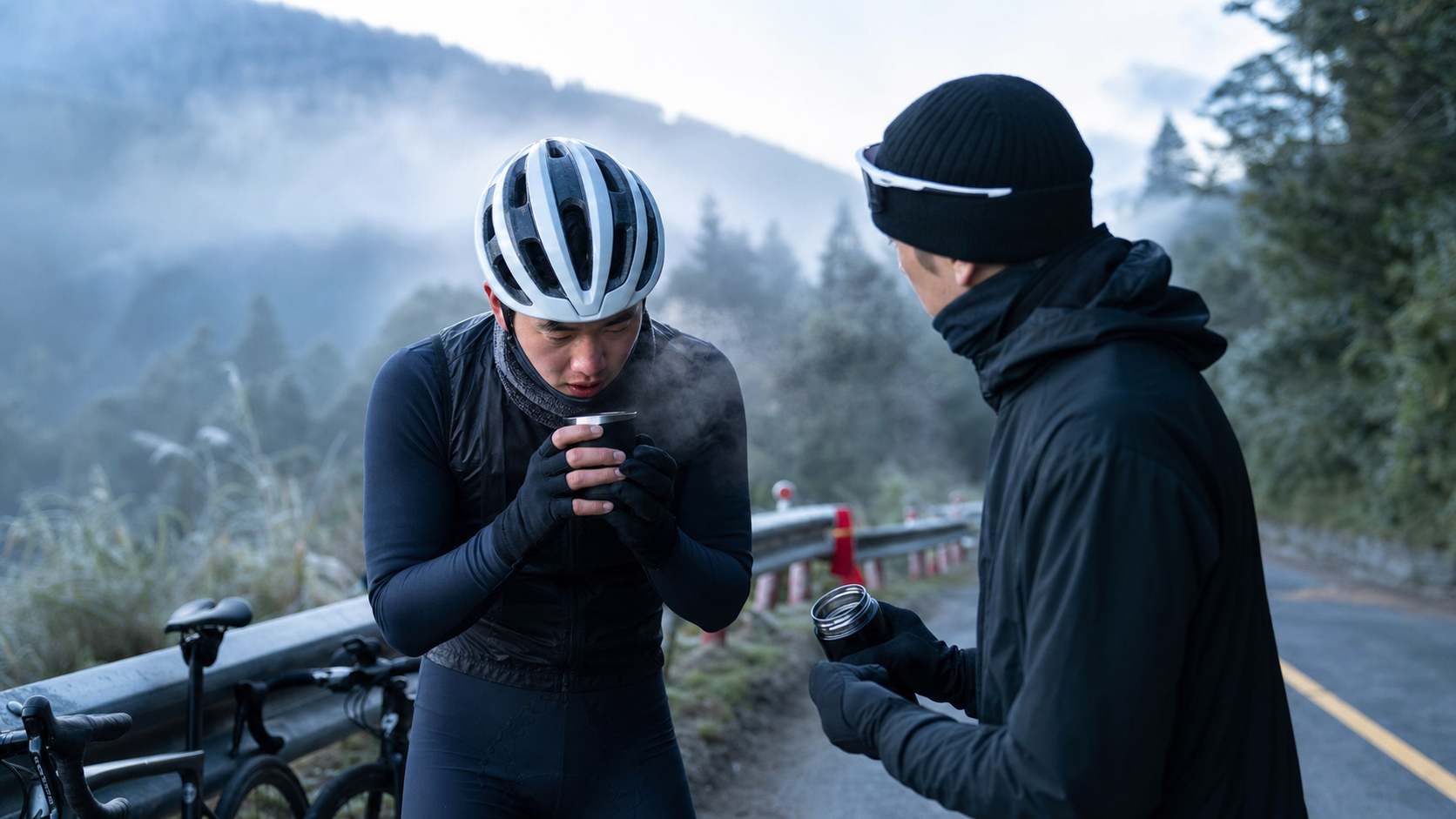
Opening: One Cup of Warm Water Down, He Finally Realized How Thirsty He Was
A few years ago, on a December morning, I took a long-time athlete I train on a ride up the Beihuan (Northern Cross-Island Highway). The temperature was around 8°C, and even lower in the mountains. We climbed steadily from Sanxia. He’s a serious rider—steady power, good heart-rate control—but that day, by the time we reached Baling, his face was pale and his fingers were too stiff to open his feed bag. I handed him a cup of warm sports drink from my thermos. He took a sip, paused, and said, “Coach, I didn’t feel thirsty at all just now, and I wasn’t sweating. How is that possible?”
That moment was a classic cold-weather fueling failure. He hadn’t trained wrong; he made the mistake of using summer instincts to deal with winter physiology. Not sweating in the cold, not feeling thirsty, and being too lazy to pull out the water bottle—these three things stacked together, plus the fact that cold itself makes the body burn more carbohydrates, ended in depleted energy and silent dehydration. In this article, I want to lay this out clearly: in cold environments, your energy needs are actually higher, your fluids are being lost in ways you can’t see, and a bowl of hot food or a warm drink is not just psychological comfort—it’s a fueling tool with real physiological significance.
Taiwan isn’t a cold-climate country, but don’t think we don’t need this knowledge. Winter cold fronts hit one after another, and even at low elevations temperatures can drop to 8–10°C; up on Wuling, Hehuan Mountain, Taiping Mountain, and Lala Mountain, early mornings in the mountains often sit between 0 and 5°C. Even urban winter morning runs, early-morning open-water swims, and cold-front hiking traverses are genuine cold-environment exercise scenarios. The fueling logic in these situations is completely different from summer.
Foundational Concept (1): Why Do You Burn More Carbohydrates When It’s Cold?
Let’s start with a fact that runs counter to many people’s intuition: low temperatures raise your energy expenditure, and the increase leans particularly toward carbohydrates.
Maintaining your core body temperature at around 37°C is an energy-intensive task. When the environment turns cold and heat loss from the skin accelerates, the body either generates heat through muscle activity (exercise itself, or shivering) or through metabolic heat production. In research, acute cold exposure can raise energy expenditure to several times the resting metabolic rate; and when the body starts shivering thermogenesis, the metabolic rate can be pulled up to several times resting values.
The key point is what gets burned. In a warm, resting state, the body prefers fat as its primary fuel; but once cold exposure begins and shivering starts, the fuel mix shifts markedly toward carbohydrates. The literature shows that carbohydrate oxidation rises substantially during shivering (studies have observed increases of several-fold), while the increase in fat oxidation is comparatively small. In other words, shivering in the cold isn’t “burning a bit more fat”—it’s dipping heavily into your glycogen and blood glucose. (Sources listed in the references at the end.)
This has several very practical implications for athletes:
- Your glycogen drops faster than it would at the same intensity in summer. Because beyond the carbohydrate cost of exercise itself, maintaining body temperature, fighting the cold, and even mild shivering are all drawing from the same glycogen pool simultaneously.
- Hypoglycemia and “hitting the wall” arrive earlier and more easily in the cold. Especially during long, low-to-moderate intensity rides or hikes where you feel cold, you may experience dizziness, chills, and impaired judgment before you’ve even reached the distance where you’d normally feel hungry.
- The priority of carbohydrate fueling needs to be moved earlier in the cold. In summer, you might be able to hold off 90 minutes before your first bite; in the cold, I often ask my athletes to start regular carbohydrate intake at the 45- to 60-minute mark.
I often use this analogy with my athletes: in summer, your engine runs mostly in “economy mode”; winter cold switches the engine to “full warm-up + high horsepower,” so fuel consumption naturally rises—and it’s burning the high-octane tank (carbohydrates). If you stick to summer fueling frequency, it’s no surprise you run out of gas halfway.
Foundational Concept (2): Dehydration in the Cold Is “Silent”
The second thing that’s severely underestimated: fluid loss in cold environments is invisible. You won’t be drenched in sweat like in summer to remind yourself to drink, but water is constantly leaking away—through pathways you mostly don’t notice. Cold-weather dehydration is dangerous precisely because it combines two traits: “high loss” and “you don’t feel thirsty.”
There are several main routes of loss:
1. Respiratory fluid loss (a greatly underestimated route)
Cold air is typically dry and cold. When you inhale dry, cold air, the body warms and humidifies it before it reaches the lungs, and this process continuously strips moisture from the respiratory tract. At rest, the volume lost through this route is small; but during intense exercise in the cold, when breathing is fast and deep, respiratory fluid loss can multiply several times over. The white mist you exhale when exercising in the cold is literally a picture of water leaving your body. (Source listed in the references at the end.)
2. Cold-induced diuresis
Many people are completely unaware of this pathway. In cold weather, blood vessels in the skin constrict, pushing blood toward the core. Central blood volume and blood pressure rise, the body “mistakenly” thinks there’s too much fluid, and urination speeds up. This diuretic response has nothing to do with whether you’re actually dehydrated—even if you’re already somewhat dehydrated, cold-induced diuresis will still send you to the bathroom more often. If you constantly need to urinate during long winter exercise, this mechanism is often the culprit. (Source listed in the references at the end.)
3. Blunted thirst sensation
The most troublesome part: cold dampens your sense of thirst. At the same level of blood concentration (dehydration), the thirst you feel in a cold environment is noticeably weaker than in a hot one. In other words, you have to become more severely dehydrated before you feel thirsty. That’s why my athlete at Baling in 8°C weather “didn’t feel thirsty at all,” even though his body was already short on fluids. (Source listed in the references at the end.)
4. Hidden sweating under heavy layers
In cold weather, you dress in layers and bundle up. Once you heat up from exercise, you still sweat—it’s just that the sweat is absorbed by the layers or evaporates quickly, so you don’t see or feel obvious wetness and assume you aren’t sweating. In reality, moderate-to-high intensity exercise in the cold can still produce a fair amount of sweat.
Add these four together, and you get a dangerous combination: more loss (respiration + diuresis + invisible sweat) + less intake (no thirst + too lazy to grab the bottle + water too cold to want to drink). That’s the essence of “silent” winter dehydration. And once dehydration sets in, pace drops, heart rate drifts, focus declines, you feel colder, judgment worsens—and in cold mountain environments, it even raises the risk of hypothermia and falls.
Foundational Concept (3): Hot Food and Warm Drinks Are More Than Just Comfort
The third topic—and one many people dismiss as merely “psychologically warming” while overlooking its practical value—is this: hot food and warm drinks are fueling tools with real function in cold environments.
Their value operates on several levels:
- Maintaining core temperature and reducing the extra burden of heat production. When you drink or eat something warm, you’re giving the body heat and energy from the inside, reducing the need to generate heat through shivering. Less shivering means less carbohydrate drawn from your stores, which indirectly saves your glycogen.
- Increasing the willingness to drink. In the cold, the psychological resistance to gulping down ice-cold water is enormous; but if your bottle holds warm sports drink or hot tea, compliance with hydration goes way up. Fueling that you can actually get down is fueling that works.
- Addressing energy and hydration at the same time. A bowl of hot sweet potato soup, a cup of warm sports drink, a serving of hot congee—these deliver carbohydrates, water, and warmth simultaneously, with very high efficiency.
- The gut is more sensitive to cold food in winter. Many people experience stomach cramps or nausea after eating cold energy gels or drinking ice water during long winter efforts; switching to warm fueling smooths things out considerably.
This is why aid stations at many winter ultramarathons, long-distance mountain treks, and cold-climate rides stock hot soup, hot cocoa, and warm sports drinks. This isn’t romanticism—it’s a strategy with a physiological basis. When you head into Taiwan’s mountains in winter, the significance of a bowl of hot food at a rest stop or mountain hut is far greater than it would be in summer.
Conceptual Foundation (4): Electrolytes in Cold Weather—Don’t Paint with a Broad Brush
Some people hear “you still sweat and dehydrate in cold weather” and assume they should chug electrolytes just like in summer. Let’s calibrate that idea: electrolyte loss in cold weather is generally not as severe as in the scorching summer, because your total sweat volume is usually less than in the heat. But that doesn’t mean electrolytes can be completely ignored.
The key is pairing “hydration” with “sodium intake.” The most common pitfall in cold weather is: you realize you need to drink more, so you chug plain water without adding a bit of sodium. Downing large amounts of plain water without sodium following along can actually dilute your blood sodium concentration, which over time is bad for both performance and your body. So my principle for athletes is:
- Short sessions (under one hour) in cold weather: Plain or warm water is usually sufficient; no need to deliberately supplement electrolytes.
- Cold-weather sessions lasting one to three hours: I recommend switching to warm sports drinks, solving water, carbs, and sodium all at once—this is also my most recommended winter fueling format.
- Long sessions over three hours, or those with noticeable sweating: Pay extra attention to sodium intake. You can pair sports drinks with salt tablets or salty hot food (e.g., salty hot soup), adjusting based on sweat rate and how you feel.
In other words, cold weather doesn’t mean “no electrolytes”—it means “use warm sports drinks to bundle hydration, carbs, and sodium in one go,” which is both convenient and easy to stick with. This again echoes what was said earlier: warm drinks are the core vehicle for winter fueling.
Conceptual Foundation (5): Pre-Exercise Carbohydrate Storage Matters More
Since cold weather burns carbs especially hard, how full your carb stores are before exercise becomes even more critical. In summer, you might refuel frequently mid-ride and can top up as you go; in cold weather, mid-session fueling compliance is naturally low (you don’t want to stop, water is too cold, gels turn thick), so the strategy of “fill the tank before you leave” holds even greater value.
Here’s how I typically arrange pre-exercise carbs for my athletes:
- The night before: Normal to slightly higher carbohydrate intake (rice, noodles, sweet potatoes, etc.) to build baseline glycogen stores—no need to deliberately binge.
- 2–3 hours before exercise: A easily digestible, carb-focused, low-fat, low-fiber meal or snack (e.g., white rice with lightly oiled vegetables, toast, steamed buns, sweet potato, banana). Portion size varies by individual—aim for no bloating and a comfortable fullness.
- Within 30 minutes before exercise: You can top up with a small serving of fast-absorbing carbs (half a banana, a small sip of sports drink, a slice of toast) and drink 200–300 ml of warm water, so you head out with full carb stores and adequate hydration.
This “pre-loading” approach is especially noticeable in cold weather: with a full tank, you last longer, slow down later, and are less likely to suffer early hypoglycemia-induced chills, shaking hands, and impaired judgment.
Practical Approach: Specific Cold-Weather Fueling Methods
Now that the concepts are covered, here’s something you can follow directly. The table below is the cold-weather fueling framework I commonly use with my athletes. You can adjust it according to your exercise intensity, duration, and perceived temperature.
Table 1: Fueling Framework for Different Low-Temperature Scenarios
| Scenario | Approximate Perceived Temperature | Carb Fueling Start Point | Hydration Frequency/Type | Hot Food/Warm Drink Focus |
|---|---|---|---|---|
| Winter morning run 40–60 min | 8–15°C | Usually no mid-run carbs needed; eat beforehand | 200–300 ml warm water before starting; no mid-run hydration needed for short sessions | A warm carb-containing drink after the run |
| Half-day ride/hike 2–3 hours | 5–12°C | Start 45–60 min after departure, 30–60 g carbs per hour | Small sips every 15–20 min, roughly 400–600 ml per hour, preferably warm | One hot food mid-session (hot soup/sweet potato/rice ball) is very helpful |
| Full-day long ride/Hehuan Mountain-level | 0–8°C | Start within 45 min of departure, 45–75 g carbs per hour | Set regular reminders to drink; don’t rely on thirst; insulated bottle with warm sports drink | Must eat hot food at aid stations; carry ready-to-eat high-carb calories |
| Winter open-water swimming | Water temp 16–22°C | Fuel up before entering the water; replenish carbs ASAP after exiting | Hydrate before entering; warm drinks + warmth after exiting | Hot drink + hot food immediately after exiting, prioritize rewarming |
(Numbers in the table are general ranges; actual values need adjustment based on individual body weight, intensity, and tolerance.)
Table 2: Comparison of Common Cold-Weather Fueling Products (Easily Available in Taiwan)
| Fueling Product | Reference Carb Content | Cold-Weather Advantages | Cold-Weather Cautions |
|---|---|---|---|
| Warm sports drink (insulated bottle) | ~25–35 g carbs per 500 ml | Hydrates, fuels carbs, and warms simultaneously; high compliance | Don’t mix too concentrated; overly high concentration affects absorption |
| Sweet potato/taro (can be warmed) | ~25–35 g carbs per medium one | Easy to digest, warm, locally available | If too dry, pair with water |
| Rice ball/hot congee | ~40–60 g carbs per serving | Hot food, filling, gut-friendly | Avoid overly oily fillings to prevent digestive burden |
| Energy gel | ~20–30 g carbs per packet | Compact, fast absorption | Becomes thick and hard to squeeze in cold; cold gel can irritate the stomach—keep it close to your body for warmth |
| Hot cocoa/brown sugar ginger tea | ~15–30 g carbs per cup | Warm, appealing, increases willingness to hydrate | Count it as part of total carb intake; don’t overdo it on top of other fueling |
You’ll notice I specifically treat “temperature” as a fueling metric. In summer, we choose fueling based on carb content, electrolytes, and absorption speed; in winter, we add one more column: Is this thing warm or cold? Can I actually get it down? Fueling so cold you don’t want to touch it is the same as no fueling at all.
Three Cold-Weather Principles You Can Apply Immediately
- Fuel by the clock, not by feel. In cold weather, your thirst and hunger signals are unreliable, so switch to a timer: take small sips every 15 to 20 minutes, and top up carbs every 45 to 60 minutes. Setting a vibration reminder on your watch is the tool I most recommend to my athletes.
- Find ways to keep your bottles/bladders insulated. An insulated bottle with warm sports drink is the simplest solution. With a hydration pack in low temperatures, be aware the straw can freeze or turn icy—tuck the straw inside your clothing against your body.
- Do a fueling round before you head out. Many people consistently under-fuel in cold weather, so this “pre-start” round is especially important: drink 200 to 300 ml of warm water or warm sports drink before departure, and eat enough carbs, so you leave with fuller carb stores and hydration.
Case Studies: Three Typical Cold-Weather Fueling Mistakes
In my years coaching athletes, cold-weather fueling errors are highly repetitive. Let me share three of the most common cases with you (scenarios are for teaching illustration; the focus is on the error patterns).
Case 1: The athlete at Baling on the Northern Cross-Island Highway—“Not thirsty, so didn’t drink”
The athlete mentioned earlier had a core problem of relying entirely on thirst sensation. At 8°C with a long climb, thirst was blunted, and he drank less than 500 ml over three-plus hours. The fix was simple: a watch vibrating every 20 minutes to take a sip, and swapping the bottle for a warm sports drink. On the next attempt of the same route, he drank about 500 ml per hour, arrived at Baling with normal complexion and no more stiff hands, and could even hold power in the final stretch. What changed wasn’t fitness—it was fueling discipline.
Case 2: Winter marathon runner—“No gels needed in cold weather”
A full-marathon runner insisted that since winter is cool and he barely sweats, he cut his gels in half. The result: severe slowdown after 30 km, chills, and rubbery legs. This is a classic case of overlooking the fact that “cold weather burns more carbs”—he assumed cool meant less effort, but maintaining body temperature was quietly draining his glycogen. After correction, I had him move his carb start earlier, bring total intake back to normal or even slightly higher, and switch to body-warmed energy gels to avoid cold-induced stomach irritation. The latter half stabilized.
Case 3: Hehuan Mountain hiking group—“Cold, dry snacks caused a gut strike”
A group of weekend hikers brought room-temperature or even cold cookies and convenience-store rice balls. After eating them in low temperatures, several people experienced stomach discomfort and lost all appetite, barely able to take in anything in the second half, with energy plummeting. The fix was straightforward: bring an insulated bottle of hot soup, ready-to-eat warm food, or eat hot meals at mountain huts during rest stops. Once the temperature changed, they could eat again, and both energy and morale returned. This case best illustrates that “hot food isn’t just comfort.”
Common Mistakes and Corrections
Generalizing the cases above into principles, the most common cold-weather fueling mistakes and their corresponding corrections are as follows:
- Mistake: Waiting until thirsty to drink. → Correction: Use a timer to drink water regularly; thirst signals are inherently unreliable in cold weather.
- Mistake: Assuming no sweat means no need for fluids. → Correction: Respiratory fluid loss, cold-induced diuresis, and invisible sweating under layers all drain fluids—hydrate anyway.
- Mistake: Reducing carbohydrate intake because it’s cool. → Correction: Cold weather burns more carbs; start carb intake earlier and at least maintain total amounts.
- Mistake: Consuming cold fuel the entire ride. → Correction: Use insulated bottles and hot food to improve compliance and gastrointestinal tolerance.
- Mistake: Focusing only on fueling while neglecting warmth and changing clothes. → Correction: Fueling and warmth go hand in hand; change out of soaked base layers promptly to avoid core temperature drops and shivering that burns massive carbs.
- Mistake: Chugging a big gulp of ice water at once. → Correction: Drink warm fluids in small, frequent sips to avoid irritating the stomach and worsening diuresis.
A special warning here about the warning signs of hypothermia: persistent shivering, slurred speech, clumsiness, noticeably impaired judgment, or even a strange loss of feeling cold (paradoxical undressing) are all danger signals. You must stop activity immediately, add insulation, consume warm carbohydrate-containing food and drink, and seek help or medical attention as appropriate. Cold-weather exercise fueling strategy must always be considered together with warmth and risk assessment—never focus only on eating and drinking while overlooking environmental hazards.
Advanced Concept: Warm-Up, Insulation, and Fueling Are One Integrated System
By now, you should sense that cold-weather fueling is never a standalone task—it’s tied together with warm-up and insulation as one system. Let me connect it with a simple logic:
The colder your body → the more heat you need to produce → the more heat production and shivering → the more carbs you burn → the sooner you hit empty. Conversely, if you insulate well and keep your core temperature stable, your body doesn’t need to spend as many carbs on heat production, making your fueling more efficient and your glycogen stores last longer. So good insulation, in a sense, is “saving you fuel.”
This leads to several practical actions:
- Warm up progressively; don’t sprint out the door. Muscles, joints, and the cardiovascular system all need a longer warm-up in cold weather. Sudden high intensity not only raises injury risk but is more dangerous for those with cardiovascular risk. Spend the first 10 to 15 minutes at an easy effort to truly warm the body up.
- Dress in layers and adjust with temperature. Peel a layer off when climbing and hot, put it back on when descending and cold, keeping core temperature in a comfortable range. Once your core drops and shivering starts, fueling gets eaten up by “heat production.”
- Moisture-wicking base layer, windproof outer layer. A soaked base layer rapidly pulls heat away in cold wind—a common starting point for hypothermia. For long rides, plan to change into a dry base layer mid-ride, especially after heavy sweating.
- Don’t neglect extremities. Fingers too cold to grip fuel or tear open packaging is a very real cold-weather problem (like that Baleng rider mentioned earlier). Insulated gloves and easy-to-open packaging directly affect your ability to “get fuel in.”
Treat warm-up, insulation, and fueling as the three legs of a stool—remove one and it wobbles. That’s why I never talk about “what to eat in cold weather” in isolation, but always together with the entire winter training preparation.
Post-Exercise Rewarming Fueling: A Step Often Skipped
The moment cold-weather exercise ends is where many people’s fueling plan hits a dead end—tired and cold, everyone just wants to pack up and head home, hastily skipping the most important “rewarming and recovery fueling.” That’s a regrettable mistake.
Once exercise stops, your heat source (exercise) is gone, but your body is still in a cold environment and still losing heat. At this point, your core temperature may actually continue to drop (especially if you’re sweaty and exposed to wind). So the first priorities after finishing are:
- Change out of wet clothes and add insulation layers as soon as possible—don’t let damp cold keep draining body heat.
- Get a warm carbohydrate-containing food or drink immediately: hot sports drink, hot cocoa, hot soup, or hot food all work, achieving rewarming, carb replenishment, and hydration at once.
- Recovery fueling should combine carbs plus protein: conceptually carb-dominant with moderate protein (a common ratio is roughly 3 to 4 parts carbs to 1 part protein) to support glycogen restoration and muscle repair. Consuming it in “warm” form in cold weather improves compliance and gastrointestinal comfort.
In Taiwan’s winters, after descending a mountain, finishing a run, or completing a swim, a bowl of hot noodle soup, a hot meal, or a cup of warm soy milk makes an excellent rewarming recovery fuel. Don’t underestimate this step—good recovery means you can train again tomorrow and are less likely to get sick.
Actionable Advice for Readers of Different Levels
Everyone’s needs differ, so I’ve divided the advice into three tiers. Find where you fit.
General Recreational Exercisers (winter morning runs, flat rides, weekend hikes)
- Pre-fuel before heading out: 200–300 ml of warm water or warm sports drink, plus an easily digestible carb source (toast, sweet potato, banana).
- Exercise under one hour usually doesn’t require mid-session carb intake, but still remember to sip water—don’t skip drinking entirely just because you’re not thirsty.
- Beyond 90 minutes, start timed carb intake (30–60 g per hour) and hydration, and try to keep fuel warm.
- After returning home, don’t forget post-workout fueling: a warm carbohydrate drink with a bit of protein to aid rewarming and recovery.
Advanced Athletes with Training Goals (long-distance riding, marathons, long treks)
- Start carb intake earlier, at 45–60 minutes after departure, consuming roughly 45–75 g of carbs per hour (adjust by intensity and tolerance); for longer efforts, consider multiple carbohydrate sources.
- Hydrate by the clock, taking small sips every 15–20 minutes, totaling around 400–600 ml per hour, adjusted by feel and losses; use insulated bottles as a rule.
- Keep energy gels close to your body for warmth, avoiding them becoming thick and hard to squeeze or icy cold and irritating to the stomach.
- Make use of hot food at aid stations: hot soup and hot meals at long events are key to stabilizing core temperature and morale—build them into your fueling plan.
Those with Chronic Conditions or Special Circumstances (diabetes, hypertension, cardiovascular disease, etc.)
I’ll be conservative and clear here. Cold environments add extra stress to both cardiovascular and blood sugar control: low temperatures constrict blood vessels and may raise blood pressure, making cold-weather exercise inherently harder on the heart; and shivering combined with exercise burns large amounts of carbs, so for those who need to manage blood sugar, the risk of hypoglycemia demands more careful monitoring and preparation.
My recommendations are therefore:
- Discuss winter exercise intensity, duration, and fueling plans with your physician first and make individualized adjustments—don’t blindly copy any generic advice online (including this article).
- For those with blood sugar issues, always carry fast-acting glucose fuel during cold-weather exercise, monitor closely, and avoid long solo sessions in remote, low-temperature environments.
- For those with hypertension or cardiovascular disease, be especially cautious with early-morning outdoor exercise during cold snaps: insulate well, progress gradually, and stop immediately and seek medical attention if you experience chest tightness, unusual breathlessness, or dizziness.
- Taiwan’s NHI makes medical access convenient—use it: getting a basic health assessment before exercising and regular follow-ups for chronic conditions is the cheapest insurance. When in doubt, ask a doctor, dietitian, or physical therapist first—far safer than dealing with consequences afterward.
Example: A Full-Day Fueling Timeline for a Winter Wuling-Summit Long Ride
Many trainees ask me, “After all that talk, how do I actually schedule an entire day?” Here’s a concrete example you can copy and adjust to your own situation. Assume a clear winter day after a cold snap, riding from Cingjing toward Wuling in the morning, with an estimated 5 to 6 hours of riding and temperatures around 2 to 5°C in the mountains in the early morning. Treat the following timeline as a framework, not a rigid rule.
Table 3: Example of a Winter Long-Ride Daily Nutrition Timeline
| Time Period | What to Do | Carbohydrate Focus | Fluid/Electrolyte Focus |
|---|---|---|---|
| Night Before | Normal-to-higher-carb dinner, go to bed early | Rice/noodles as the base, top off glycogen stores | Drink water normally before bed; don’t fall asleep dehydrated |
| 2–3 Hours Before Departure | Easily digestible carb breakfast | White rice/toast/sweet potato + small amount of protein | 250–300 ml warm water |
| 30 Minutes Before Departure | Final top-up before heading out | Half a banana or a slice of toast | A small sip of warm sports drink |
| Riding 0–45 Minutes | Warm up, settle into a rhythm | No special intake yet; let the body get going | Small sips of warm fluids every 15–20 minutes |
| Every Hour from 45 Minutes On | Scheduled fueling (set an alarm) | 45–75 g carbs per hour, alternating warm drinks and solids | About 400–600 ml warm sports drink per hour |
| Arriving at Rest Stop | Stop to eat hot food, warm up | One hot meal (hot noodle soup/sweet potato soup/rice) | Top up with warm fluids; salty hot soup for sodium |
| Return Leg, Descending Section | Pay extra attention to staying warm | Descents burn fewer carbs but body temperature drops fast; keep fast-absorbing carbs on hand to prevent hypoglycemia | Keep drinking warm fluids; don’t forget to fuel just because it’s downhill |
| 30–60 Minutes After Finishing | Cool down and refuel | Carbs + protein (roughly 3–4:1 ratio concept) | Warm carb-containing drink; continue hydrating and warming up |
This table is meant to emphasize two things above all: the hidden risk of the downhill section and the value of hot food at rest stops. Many people fuel reasonably well while climbing, but once they hit the descent they think, “This is easy, no need to fuel.” The result is that the wind-chill effect on descents is strong, body temperature drops quickly, and the body starts shivering and burning carbs without you realizing it. Add insufficient fueling beforehand, and you can easily hit sudden hypoglycemia, chills, and shaking hands near the finish. A descent is not a break from fueling—it’s a critical period for staying warm and preventing hypoglycemia.
Cold-Weather Fueling FAQ
Here are the questions I get asked most often by athletes, all answered in one place.
Q1: It’s this cold out—if I drink warm water, do I still need a sports drink?
For short efforts (under an hour), warm water is usually enough. But once you go beyond one to two hours, I’d recommend going straight to a warm sports drink, because it handles water, carbs, and sodium in one go, and it’s easy to keep down—making it the most efficient primary fuel in winter.
Q2: In cold weather, do I need to calculate sweat loss and drink as much as in summer?
Total volume is usually less than in scorching heat, but don’t rely on thirst to decide. Use a timer to take small sips at set intervals, and check urine color (dark urine may mean you’re not drinking enough) as a rough indicator—far more reliable than waiting until you feel thirsty.
Q3: What do I do if my energy gels harden in the cold and won’t squeeze out?
Keep the gel in an inner pocket against your body to warm it with your own heat, or switch to warm, easy-to-consume options (sweet potato, rice balls, warm sports drink). A cold gel isn’t just hard to squeeze in winter—it can also easily upset your stomach.
Q4: I’m managing my blood sugar / I have high blood pressure. Can I follow these cold-weather recommendations as-is?
Don’t follow them verbatim. If you have a chronic condition, you must discuss winter exercise intensity, duration, and fueling with your doctor first and make individualized adjustments. This article is educational general guidance, not a personal prescription for you.
Q5: Can I drink alcohol to warm up? A sip of kaoliang liquor on the mountain?
Strongly not recommended. Alcohol dilates blood vessels near the skin, accelerates core heat loss, and has diuretic and judgment-impairing effects—outdoors in the cold, it actually increases the risk of hypothermia and accidents. To warm up, rely on hot food, hot drinks, and proper insulation, not alcohol.
Q6: In cold weather, should I eat more than in summer?
In terms of “carbs” for fueling, because cold weather burns extra carbs, you should at least maintain, and usually slightly increase, the frequency and total amount of carb intake—especially bringing the “starting point” of fueling earlier. Total calories depend on your exercise volume and goals; don’t mistake “eat more carbs in the cold” as a license to eat whatever you want.
Taiwan-Specific Reminders
A few practical points specific to our local context:
- For those who eat out, winter fueling is actually very convenient. Convenience store warm sweet potatoes, oden, hot tea, and rice balls are all ready-made cold-weather fuel. Buying a hot meal at a convenience store before heading up the mountain beats carrying a bunch of cold, dry snacks.
- Mountain temperature swings are large; don’t be fooled by conditions at sea level. It might be 15°C in the lowlands, but at Wuling it could be only 2–3°C or even lower. Check the destination’s temperature before you go, and prepare fueling and clothing for “the mountain,” not the plains. Bring a thermos.
- Be cautious about early mornings during cold snaps. Early mornings during a cold front are a high-risk window for cardiovascular events, especially for older adults and those with chronic conditions. Better to head out later and warmer, and make sure you’re hydrated and fueled.
- Open-water winter swimming / winter triathlon training: Rewarming after getting out of the water is the key priority. Hot drinks, hot food, and insulation in the first moments matter more than swimming a few extra laps in the water.
Conclusion: Treat Winter Fueling as Something You Must “Actively Plan”
The biggest trap of exercising in cold weather is that it “feels easy”—not hot, not stuffy, not that thirsty, no heavy sweating. It all seems like there’s nothing to worry about. But it’s exactly this comfortable illusion that lets energy quietly run dry and fluids silently slip away. In low temperatures you burn more carbs, lose more invisible water, and your thirst sensation is dulled—put those three together, and you have the reason that athlete turned pale in Baling.
Remember the core of cold-weather fueling in three phrases: Fuel carbs early, hydrate by the clock, and keep everything as warm as possible. Do a fueling round before you leave, fuel and hydrate on a schedule during the ride, use a thermos and hot food to maintain core temperature and your willingness to fuel, and factor in insulation, changing clothes, and risk assessment. Do all this, and winter isn’t just safe for training—it can build a more solid base than summer ever could.
That warm sports drink I handed out in Baling taught my athlete something that wasn’t really “you need to drink water.” It was “in winter, you have to take care of yourself proactively—don’t wait for your body to send signals, because in the cold, those signals often come too late.”
This article is educational content and does not replace individual diagnosis or treatment advice from a physician, physical therapist, or nutritionist. If you have chronic conditions such as diabetes, high blood pressure, or heart disease, or if you experience discomfort during winter exercise, be sure to seek professional medical help and undergo an individualized assessment.
References
- Nutritional Needs In Cold And In High-Altitude Environments — Influence of Cold Stress on Human Fluid Balance(NCBI Bookshelf):https://www.ncbi.nlm.nih.gov/books/NBK232870/
- Muscle Metabolism and Shivering During Cold Stress(NCBI Bookshelf):https://www.ncbi.nlm.nih.gov/books/NBK232868/
- Physiology of Cold Exposure(NCBI Bookshelf):https://www.ncbi.nlm.nih.gov/books/NBK232852/
- Energy metabolism during cold exposure(PubMed):https://pubmed.ncbi.nlm.nih.gov/1483772/
- Cold-Induced Diuresis — an overview(ScienceDirect Topics):https://www.sciencedirect.com/topics/medicine-and-dentistry/cold-induced-diuresis
Related Reading
- Caloric Needs for Cold-Weather Cycling: The Extra Energy Cost of Riding in Low Temperatures
- Nutrition and Hydration Strategies for Hot Environments: A Complete Guide to Energy, Sodium Supplementation, and Cooling Foods for Hot-Weather Training
- Exercising in Cold Environments: The Hidden Costs of Hypothermia, Pacing Illusions, and Cold Airways
- The Science of Warming Up: How to Warm Up Properly So It Isn’t a Waste of Time
CT暗黑廚房) 車友必備 宇宙無敵鮮蚵湯 幫助訓練恢復 天然食補 好市多 超肥鮮蚵 破PR
7 年前
水金九不厭五分 10度寒流冷到不願停!feat. 卡卡 / 公路車 / CT Yeh
6 個月前
4K 東眼山 x 水蜜桃冰沙 百人單車約騎! 操完再吃冰 多爽快
7 年前
嘉義大埔、阿婆灣挑戰賽,美到以為在日本!ft. 環騎5 Cool 西拉雅188 / 公路車 / CT Yeh
7 個月前
JJSC南台灣單車走春三日行 DAY 1 / 強度 x 美食 x 節慶體驗 / 公路車 CT Yeh
5 個月前
秘境雪場 日本 八甲田 冰樹探險與滑雪體驗 ft. Q老師 & 運動生活
7 年前
單車 一日北高 ( 雙城 ) 肥宅雙人瘋狂行 紀錄片 REACTO
10 年前
西進武嶺 免費訓練分析服務 Intervals | 練不夠還是練過頭?你哪一種類型選手?AI模型告訴你! | 備戰神器 | 公路車 訓練 | CT Yeh
4 年前