Nutrition and Sleep Balance for Night Trainers: How to Eat and Sleep Without Conflict After an Evening Ride
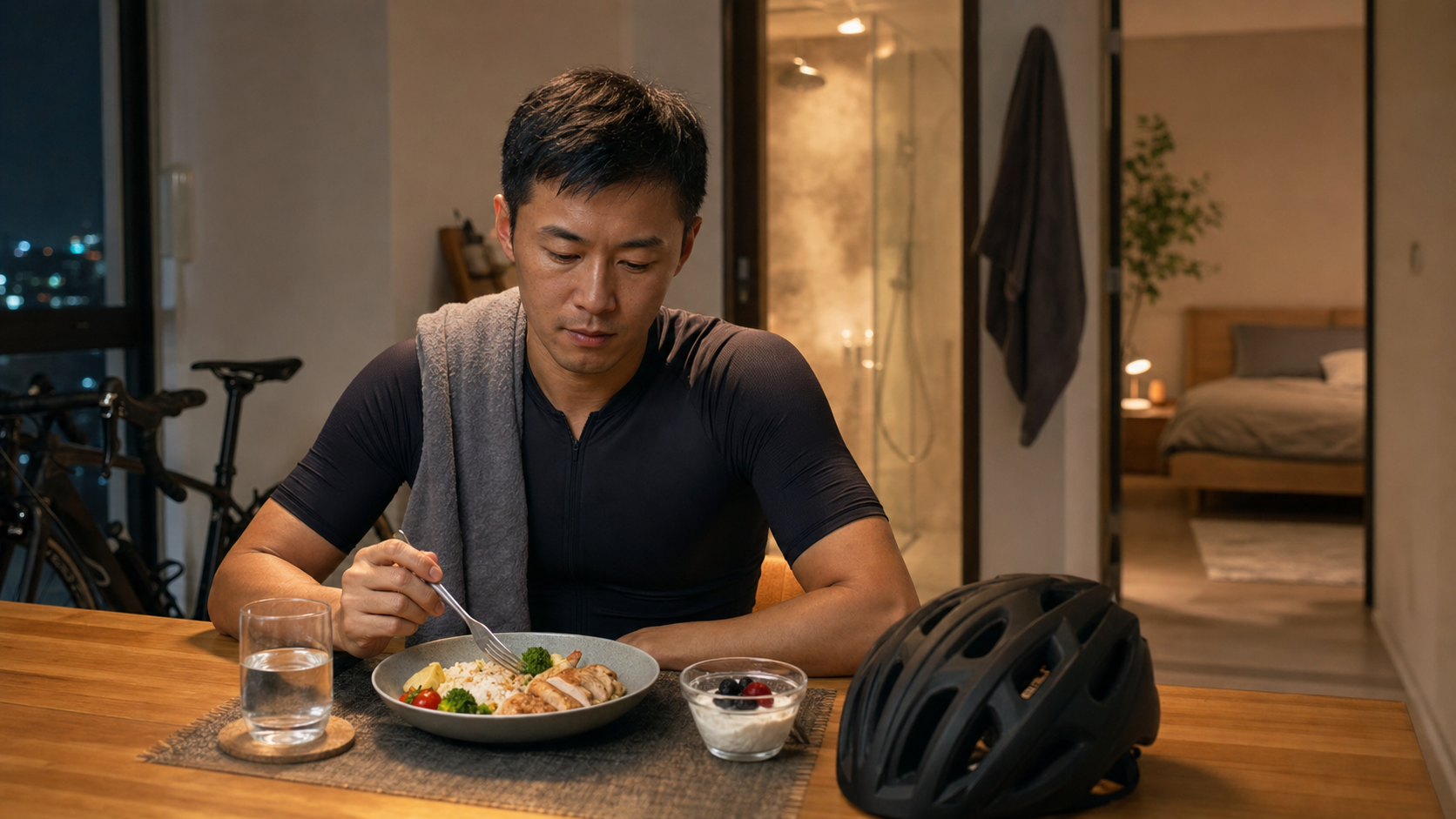
Starting with the Evening of a Taiwanese Office Worker
More than half of the athletes I’ve coached are people who “have no choice but to train at night.” A-Che is a typical case: a tech industry engineer living in Hsinchu, in the office during the day, with his only reliable riding window being the riverside paths and Provincial Highway 1 from 8 to 10 PM. When he first came to me, his opening line wasn’t about getting faster—it was: “Coach, lately after I ride home, I’m dead tired, but I toss and turn for over an hour before falling asleep, and I wake up feeling like I’ve been run over by a truck.”
I asked him to write down a week of his schedule and diet, and the answer was almost on the page: at 7 PM he’d scarf down a pack of cookies at the office as his “pre-workout fuel,” do high-intensity intervals from 8:30 to 10, get home at 10:30 and chug a big protein shake plus half an energy drink, then eat instant noodles with braised snacks, scroll his phone in the shower until 12:30 before lying down. His problem wasn’t really “can’t sleep”—it was that he was forcing a body in a high-intensity sympathetic state into a pre-bed routine packed with caffeine, heavy food, and blue light.
In this article, I want to lay out three things clearly, drawing on years of experience coaching night-training athletes plus the principles that hold up in current exercise physiology and sleep research: how to time your nutrition around night training, why night training affects sleep, and what you can concretely do to adjust. If you’re also someone who only has time to exercise after work, this is written for you.
Concepts and Scientific Basis: Does Night Training Really Ruin Your Sleep?
First, Let’s Bust a Myth
Many people assume “exercising at night definitely harms sleep,” but that’s not entirely true. In recent years, multiple systematic reviews and meta-analyses have pointed out that for healthy adults without sleep disorders, evening exercise completed before bedtime does not, on the whole, worsen subsequent sleep quality; the time gap between finishing exercise and going to bed (whether half an hour to an hour and a half, two hours, or more than two hours) shows no consistent negative effect on objective sleep metrics (see references at the end).
But here’s the key—research also reveals a critical detail: if high-intensity exercise ends about an hour before bedtime, it’s more likely to delay sleep onset and shorten sleep duration; the same high-intensity exercise finished about two hours before bed may actually help objective sleep. In other words, the problem often isn’t “evening exercise” itself, but rather “how intense it is, what time it ends, and what you do afterward.”
A-Che’s situation was a problem with the latter two: high-intensity intervals ending at 10 PM, less than an hour before bed, plus caffeine and heavy meals—disrupted sleep was almost inevitable.
What Happens to the Body After Night Training
To understand how to adjust, you first need to know the physiological responses after an evening high-intensity session:
- Core body temperature rises: Exercise raises core temperature. One of the physiological prerequisites for falling asleep is that core temperature must “drop.” If your temperature hasn’t come down, the brain has a harder time switching into sleep mode.
- Sympathetic nervous system activity increases: After high-intensity training, heart rate, blood pressure, adrenaline, and noradrenaline remain elevated—this is the “fight or flight” excited state, the opposite of the parasympathetic (relaxed) state needed for sleep.
- Cortisol and metabolic demand: The metabolic stress from training takes time to settle. Meanwhile, muscles enter a repair phase after training, requiring amino acids and energy.
- Heart rate variability (HRV) temporarily drops: After a high-intensity session, HRV—which reflects autonomic recovery status—typically dips first and takes several hours to a day to recover.
These responses are normal training stimuli, not bad things. What we need to do isn’t “eliminate” them, but leave enough buffer time and use nutrition and a pre-bed routine to help the body accelerate the switch from excited back to relaxed.
Circadian Rhythm, Light, and the Invisible Tug-of-War with Night Training
Beyond body temperature and the sympathetic nervous system, there’s another often-overlooked player: the circadian rhythm and melatonin. In the evening, melatonin gradually rises, pushing the body toward sleep. But night trainers face two factors fighting against this mechanism—one is the excitement of the training itself, and the other is the heavy light exposure during and after training (bright gym lights, phone bike computers, screens after getting home). Light, especially blue light, suppresses melatonin secretion, essentially telling the brain “it’s still daytime.”
This is why I always emphasize that the “pre-bed routine” matters just as much as “nutrition.” You can nail your pre-sleep fueling perfectly, but if you get home from a ride and keep scrolling under bright lights until midnight, melatonin stays suppressed and sleep remains elusive. To win back sleep, night trainers must address body temperature, nervous system excitement, and light—all three fronts. The practical strategies later in this article correspond to each of these.
One more common scenario I should flag for Taiwanese night trainers: many people, after an evening riverside ride, habitually continue with late-night snacks and chat until very late. Socializing is of course part of the joy of cycling, but if you’re in a high training volume phase and chronically sleeping poorly, this kind of “extended post-training excitement window” is the first thing to scrutinize. This isn’t about giving up socializing—it’s about scheduling it on recovery days or weekends, not on high-intensity training days when you have to get up early for work the next morning.
What Role Does Nutrition Play Here?
Night training nutrition has two seemingly contradictory tasks to accomplish simultaneously:
- Support recovery: After training, muscles need protein for repair and glycogen needs replenishing, especially when you have work the next day and possibly another session the day after.
- Don’t interfere with sleep: Eating too much too late, eating the wrong things, or consuming caffeinated drinks can re-excite a body that’s barely settled, or cause gastrointestinal discomfort that disrupts falling asleep.
Balancing these two comes down to timing, portion size, and food choices. Now let’s get practical.
Practical Methods: A Complete Framework for Night Training Nutrition Timing
I typically break a night trainer’s evening into four time windows: pre-training, during training, post-training (1.5–2 hours before bed), and 30–60 minutes before bed. The table below is the general framework I give most office-worker athletes; you can shift it according to your own finish-work and bedtime.
Table 1: A Night Trainer’s Evening Nutrition Timeline (Example: Training ends by 22:30, bedtime at 00:00)
| Time Window | Time Until Bed | Goal | Recommended Content | Local Taiwanese Examples |
|---|---|---|---|---|
| 60–90 min pre-training | — | Provide fuel, avoid low blood sugar | Easily digestible carbs, low fat and low fiber | One banana + a slice of toast, or a small bowl of white rice, sweet potato |
| During training (>60 min session) | — | Maintain blood sugar, avoid bonking | 30–60 g carbs per hour + water and electrolytes | Sports drink, energy gel, diluted juice |
| 15–45 min post-training | About 1.5–2 hours | Kickstart repair, replenish glycogen | Protein at about 0.3 g per kg body weight + moderate carbs | A serving of steamed egg with rice, tuna rice ball, unsweetened soy milk + steamed bun |
| 30–60 min before bed | 0.5–1 hour | Provide slow-release amino acids overnight without GI burden | 20–40 g slow-release protein (casein), keep portion small | A cup of warm milk, unsweetened Greek yogurt, a small amount of cottage cheese |
Why That Pre-Bed Protein Is Worth Saving For
The thing night trainers agonize over most is: “Should I really eat protein this late?” My answer is usually—yes, but choose the right type and portion.
Sleep is the longest “fasting” period of the day. During seven to eight hours of sleep, muscle protein breakdown continues, but because blood amino acid levels drop, synthesis slows down. Research shows that consuming 20–40 g of casein (a slow-digesting milk protein) about 30 minutes before bed provides a steady amino acid source throughout the night, enhancing overnight whole-body and muscle protein synthesis, with no negative effects on sleep quality or next-morning appetite in healthy adults (see references at the end). Casein is suited for bedtime because it digests slowly in the gut, releasing amino acids steadily over six to eight hours—just covering the entire sleep period.
Key reminders:
- Keep portions in check: Bedtime isn’t the time for a big meal. 20–40 g of protein with a small amount of food is enough—don’t turn it into a midnight feast.
- Local alternatives: You don’t have to buy casein powder. Easily available in Taiwan, milk, unsweetened Greek yogurt, and cottage cheese are rich in casein and are excellent whole-food choices. For those with lactose intolerance, choose lactose-free milk or yogurt.
- Sensitive stomachs, move it earlier: If you’re prone to acid reflux or bloating when lying down, move this meal earlier to 60–90 minutes before bed and reduce the portion.
Practical Strategies for Taiwan’s Eating-Out Crowd
I know many athletes get home at 11 PM after a ride and can’t possibly cook a proper meal. Taiwan’s advantage is the density of convenience stores and street food—use them well and you can eat decently:
- Convenience store combos: Tea egg (protein) + onigiri or sweet potato (carbs) + unsweetened soy milk or milk. Avoid fried items and heavy microwaved bento boxes.
- Street food stalls: Blanched vegetables, skinless braised chicken leg, a small bowl of white rice, miso soup—these are less oily and easier to digest than a big braised platter or fried items.
- Avoid: Instant noodles (high sodium, prone to bloating, oily seasoning hard to digest), Taiwanese fried chicken (high fat delays gastric emptying, affects sleep), sugary hand-shaken drinks (sugar + often caffeine too).
Carbs and Glycogen: The Most Under-Fueled Area for Night Trainers
Many night trainers focus only on protein and neglect carbs. For sessions over an hour, or those with high-intensity intervals, glycogen depletion is actually significant. If you train at night several days in a row without replenishing carbs, it slowly builds into a vicious cycle of “glycogen deficiency → heavy legs, low mood, and shallower sleep.” I’ve seen plenty of athletes who thought they were “overtraining” when they were really just chronically under-fueling carbs.
A few practical principles:
- Your post-training recovery meal should include carbs, not just a protein shake and done. An easily digestible carb (white rice, rice ball, sweet potato, banana) paired with protein repairs muscle and replenishes glycogen at the same time.
- Don’t fear carbs at night causing weight gain. Body weight is determined by total daily calories, not “what time you eat carbs.” For night trainers, eating moderate carbs in the evening actually helps sleep—carbs promote tryptophan entry into the brain, indirectly supporting melatonin synthesis.
- Match portions to the session: For an easy ride, no extra carbs are needed—a normal dinner suffices; after high-intensity or long-distance work, you can bump up the carb portion.
- If you have a session tomorrow, replenish more: If you train tonight and tomorrow night too, tonight’s carb intake is tomorrow night’s fuel.
Hydration and Electrolytes: The Hidden Issue of Taiwan’s Night Rides
Taiwan’s summer nights are hot and humid, and the fluid and sodium lost in an hour of night riding is often more than you’d expect. Your hydration strategy needs to balance “drink enough” with “don’t disrupt sleep”:
- Rehydrate and replace sodium promptly during and after training, especially with heavy sweating—plain water alone isn’t enough; you need sodium-containing electrolytes.
- But taper off large fluid intake 60–90 minutes before bed to avoid frequent middle-of-the-night bathroom trips breaking your sleep. Get most of your fluids in right after training, and only sip a little to moisten your throat before bed.
- Monitor simply with urine color and body weight: Light yellow urine after training and the next morning indicates roughly adequate hydration; persistently dark yellow, or post-training weight loss exceeding 2% of body weight, means you’re under-hydrated.
- Cramps aren’t just dehydration: Nighttime calf cramps have complex causes involving fatigue, electrolytes, posture, and more. If they happen frequently and affect sleep, it’s worth reviewing your fueling and seeing a doctor if needed.
Caffeine: The Sleep Killer Night Trainers Most Often Overlook
This is the issue I catch most often—and the easiest to fix—in my night-training athletes. Many people, to “get through the evening session,” down coffee, energy drinks, or caffeinated pre-workout before training. The session gets done, but sleep gets sacrificed along with it.
Caffeine’s half-life varies by person but generally falls between 3 and 6 hours, meaning that cup you drink at 7 or 8 PM still has a significant amount lingering in your system at midnight. Research indicates that even caffeine consumed six hours before bed can significantly reduce total sleep time; pooled analyses across multiple controlled studies also find that caffeine reduces total sleep time by about 45 minutes on average and decreases deep sleep—and many people “subjectively don’t notice” they’re sleeping worse (see references at the end). This is especially dangerous: you think you’re sleeping fine, but deep sleep is being stolen and recovery is compromised.
Table 2: Common Caffeinated Drinks and Recommended Cutoff Times for Night Trainers
| Item | Approximate Caffeine Content | Recommendation for Night Trainers |
|---|---|---|
| American coffee (large) | About 150–200 mg | Finish by 2–3 PM |
| Hand-shaken tea (large, unsweetened) | About 100–180 mg | Avoid after late afternoon |
| Energy drink (one can) | About 80–160 mg | Not recommended before night training |
| Pre-workout (one serving) | About 150–300 mg | Caffeinated versions not recommended for evening trainers |
| Cola (one can) | About 35–50 mg | Avoid within several hours of bedtime |
The first change I made for A-Che was swapping his pre-training energy drink for “a banana + a glass of water.” Just removing that energy drink, two weeks later he reported his sleep onset time dropped from over an hour to about 20 minutes. Many times, poor sleep after night training isn’t a body problem—it’s that caffeine was consumed too late.
If you truly rely on caffeine to stay alert, move it to the afternoon and use caffeine-free ways to wake up your body before training (dynamic warm-up, upbeat music, cold water on the face)—that’s the most direct and effective adjustment.
Pre-Bed Routine: A Cooling-Down Ritual to Switch from “Excited” to “Relaxed”
Once nutrition is dialed in, half the work remains in the “pre-bed routine.” After night training, your body is in a state of sympathetic excitement and elevated core temperature. If you come home and keep up high stimulation (scrolling your phone, binge-watching shows, handling work), it’s like pressing the accelerator while trying to stop the car.
My Pre-Bed Cooling Checklist for Night Trainers
- Warm shower, not cold: Take a warm shower (about 38–40°C) 60–90 minutes before bed; the post-shower drop in body temperature actually helps you fall asleep. A cold rinse right after training feels refreshing, but the overstimulation can delay relaxation.
- Dim the lights, reduce blue light: Leave at least 30–60 minutes of “dim environment” buffer between training and bed. Set your phone brightness to minimum or turn on night mode—ideally, put the phone down entirely.
- Simple stretching and diaphragmatic breathing: 5–10 minutes of gentle stretching plus slow, deep belly breathing (inhale 4 seconds, exhale 6 seconds) actively pushes the autonomic nervous system toward the parasympathetic side.
- Room temperature and humidity: Taiwan’s summers are muggy and humid. Keep the sleep environment cool (air conditioning around 26–27°C, plus dehumidification) so core temperature drops more easily. In winter, keep hands and feet warm—warm extremities help with falling asleep.
- Fixed bedtime: Night trainers are most vulnerable to erratic schedules. Keep your bedtime as stable as possible so your circadian clock knows “this is when I sleep.”
Table 3: Post-Night-Training vs. Common Mistake Routine Comparison
| Component | Common Mistake | Recommended Approach |
|---|---|---|
| Training end time | High intensity dragged to within 1 hour of bed | Finish high intensity at least 2 hours before bed |
| Wake-up method | Energy drink/coffee before training | Use warm-up, music, cold water on face |
| Post-training meal | Instant noodles + braised snacks + sugary drink at home | Easily digestible protein + moderate carbs, low fat and low sugar |
| Pre-bed fueling | Big protein shake + midnight feast | 20–40 g slow-release protein (milk/yogurt), small portion |
| Shower | Cold rinse immediately after training | Warm shower 60–90 min before bed |
| Pre-bed activity | Scrolling/watching shows until late | Dim environment, stretching, diaphragmatic breathing |
Common Mistakes and Corrections
Over the years, I’ve repeatedly seen night trainers fall into the same traps. Here are the most common mistakes and their corresponding fixes.
Mistake 1: Treating “Post-Training Feasting” as a Reward
Many people think, “I worked hard on the bike, so I deserve a nice meal,” and then down fried food and a big midnight snack. The problem is that high-fat meals delay gastric emptying, causing bloating and reflux when you lie down, directly interfering with sleep onset. Fix: Design your recovery meal as “just enough to repair, without burden.” If you really want to indulge, schedule it for a non-training day’s lunch.
Mistake 2: Eating Nothing After Training and Going to Bed Hungry
The other extreme is “it’s too late to eat, I’m afraid of gaining weight,” resulting in going to bed hungry, waking up hungry in the middle of the night or sleeping shallowly, and having worse recovery and muscle soreness the next day. Fix: Eating a small amount of easily digestible protein at night won’t make you fat—the key is total daily calories and quantity, not “what time you eat.” That pre-bed slow-release protein actually helps overnight recovery.
Mistake 3: Using Alcohol to Sleep
“A little beer helps me sleep better” is one of the misconceptions I most often have to correct. Alcohol may make you drowsy faster, but it disrupts the sleep architecture of the second half of the night, reduces deep sleep and REM sleep, and is a diuretic that sends you to the bathroom at night—overall sleep quality goes down. After night training, when you’ve already lost fluids, alcohol can also worsen dehydration. Fix: For relaxation, use warm milk or caffeine-free herbal tea instead, and let the routine—not alcohol—handle sleep.
Mistake 4: Replacing Fluids Without Electrolytes
Taiwan’s summer night rides produce astonishing sweat rates. Drinking only plain water without electrolytes can lead to dilutional hyponatremia, nighttime cramps, and possibly frequent urination disrupting sleep. Fix: For long sessions or heavy sweating, supplement with sodium-containing electrolytes during and after training, but reduce large fluid intake within 1 hour of bed to avoid nocturia.
Mistake 5: Not Sleeping Enough on Weekdays, Trying to Catch Up on Weekends
Night trainers often accumulate sleep debt during the week and sleep in massively on weekends. Occasional catch-up sleep helps, but long-term “sleep debt” can’t be fully repaid on weekends and can also disrupt your circadian rhythm. Fix: Prioritize protecting nightly sleep hours during the week (7–9 hours for most adults), treating it as a training component as important as your workout plan—sleep is the cheapest, most effective recovery tool there is.
Actionable Advice for Readers at Different Levels
Everyone’s training volume, schedule, and physical condition differ. I’ve divided the advice into three tiers so you can find where you fit.
Beginner / Commuter and Recreational Riders (2–4 hours per week, low-to-moderate intensity)
Your night training is mostly easy aerobic work or commuting, so the impact on sleep is actually minimal. Focus on:
- Cut out caffeine after late afternoon—this is the highest return-on-investment step.
- Eat one easily digestible normal dinner after training; no special supplements needed.
- If hungry before bed, a cup of warm milk or a small yogurt is enough.
- Establish a fixed bedtime and a 30-minute dim environment before sleep.
Intermediate / Amateur Riders with a Structured Plan (5–10 hours per week, including intervals)
You’re starting to do high-intensity sessions, so the trade-off between sleep and recovery becomes important:
- Try to finish high-intensity sessions at least 2 hours before bed; if it’s really too late, switch that day to low-to-moderate intensity or skills practice.
- Within 45 minutes post-training, take in protein (about 0.3 g per kg body weight) + carbs, then before bed add 20–40 g slow-release protein (milk/Greek yogurt/cottage cheese).
- Strictly enforce the afternoon caffeine cutoff, warm shower before bed, and breathing relaxation routine.
- Start tracking subjective recovery (morning heart rate, energy, leg feel) and reduce volume when needed.
Advanced / Race-Preparation or High-Volume Riders (10+ hours per week)
Your recovery needs are the highest, and every detail can affect your next performance:
- Manage sleep as a training session, prioritizing 7–9 hours every night.
- Be more precise with nutrition timing: consciously hit all four windows—pre-training, during, post-training, and pre-bed—to avoid energy deficiency (RED-S, Relative Energy Deficiency in Sport).
- If you still chronically sleep poorly after night training, experience daytime sleepiness, notably low HRV, or stagnating performance, this is beyond self-adjustment—seek evaluation from sports medicine or a sleep specialist.
- Supplements (like casein powder) can be a convenient option when busy, but whole foods are always the foundation.
Special Populations and When to Seek Medical Care (Taiwan’s Healthcare Environment)
Taiwan’s National Health Insurance makes medical access convenient—that’s our advantage, so don’t hesitate to use it when needed.
- Those with chronic conditions: For people with diabetes, hypertension, or heart disease, nighttime exercise and dietary arrangements must be individualized and discussed with your primary physician first. For example, for diabetic patients, post-night-training and pre-bed carb intake and medication timing involve nighttime hypoglycemia risk and absolutely cannot follow general recommendations; for hypertension and heart disease patients, high-intensity sessions and timing also need physician evaluation. This article provides general principles, not a prescription for any individual.
- Sleep disorders: If you’ve adjusted nutrition and pre-bed routines but still have long-term difficulty falling asleep, early waking, loud snoring with daytime sleepiness (possibly sleep apnea), see a pulmonologist, neurologist, or sleep center—this isn’t something milk can fix.
- Gastrointestinal conditions: Those with acid reflux or peptic ulcers need extra caution with pre-bed fueling—advance both the portion and timing, and consult a physician or dietitian.
- Female athletes: Long-term high training volume combined with insufficient energy intake can affect menstrual health and bone health, requiring more careful nutritional planning—consult a sports dietitian.
Red-flag signs for when to see a doctor: Severe insomnia lasting weeks, uncontrollable daytime sleepiness, unusual chest tightness or palpitations after exercise, marked weight and performance decline, or low mood—none of these should be tough out on your own. Seek medical care promptly.
An Integrated One-Week Example for Night Trainers
Finally, here’s a directly usable one-week plan that ties the principles above together. This is a template I designed for office workers like A-Che who train primarily at night during the week; adjust intensity to your own ability.
Table 4: One-Week Integrated Example for a Night-Training Office Worker
| Day | Session Type | Target End Time | Post-Training Fuel | Pre-Bed Fuel |
|---|---|---|---|---|
| Mon | Low-to-moderate aerobic 60 min | 2 hours before bed | Normal dinner (protein + carbs) | Warm milk or none |
| Tue | Interval session | Finish 2 hours before bed | Protein + carbs recovery meal | 20–40 g slow-release protein |
| Wed | Recovery ride or rest | — | Balanced dinner | As needed |
| Thu | Tempo ride | 2 hours before bed | Protein + carbs recovery meal | Greek yogurt |
| Fri | Easy aerobic or rest | 2 hours before bed | Normal dinner | None |
| Sat | Long endurance (daytime) | Complete during the day | Full proper meal | As needed |
| Sun | Rest or easy ride | — | Balanced diet | None |
Key usage notes:
- High-intensity days (Tue, Thu) should finish earlier to leave enough cooling-down time, and make sure to get the pre-bed slow-release protein on those two days.
- Put long rides on Saturday daytime to avoid the sleep impact of nighttime high intensity.
- The afternoon caffeine cutoff, dim pre-bed environment, and breathing relaxation are daily fundamentals, regardless of session intensity.
A Second Case Study: A Nurse Who Works Night Shifts
A-Che is the typical “works days, trains at night” case, but night trainers actually include another type—shift workers. Xiao-Ting is a nurse in Taipei working a three-shift rotation, and during her night-shift week, her schedule is completely inverted from most people’s. She came to me asking: “Coach, I want to ride during my night-shift week. When should I train and when should I eat?”
The challenge for shift workers is that the circadian rhythm is repeatedly disrupted, which is trickier than simple night training. The principles I gave Xiao-Ting were:
- Don’t bounce training times around within the same week. During a night-shift week, fix training at “her own daytime” (i.e., the first half of the awake period after work, before sleep), rather than forcing it to match the social clock.
- Protect the quality of every sleep period. Shift workers often have compressed sleep hours, so you have to maximize sleep quality with blackout curtains, earplugs, and a cool environment. If her daytime sleep environment is too bright and noisy, no amount of sleep will be deep.
- Caffeine strategy should match her “bedtime,” not the clock time. Her “bedtime” might be 8 AM, so caffeine should be cut off several hours before her planned sleep, not based on what time it is.
- Nutrition principles stay the same: protein + carbs after training, a small amount of slow-release protein before bed—just shifted to follow her schedule.
Shift workers need professional help even more. If you’re a long-term shift worker trying to train seriously, I strongly recommend consulting sports medicine or a sleep specialist for a more individualized plan. The general principles in this article can only be a starting point for shift workers.
Night Training Nutrition and Sleep FAQ
These are the questions I get asked most often in training plan consultations. Here they are, all in one place.
Q1: Won’t eating before bed make me gain weight?
Body weight is determined by total daily calorie balance, not “what time you eat.” A small amount of easily digestible protein before bed (like a glass of milk or a yogurt) won’t make you fat—it actually helps overnight recovery. What makes you fat is usually the “extra” calories from late-night fried food and big midnight feasts.
Q2: Should I take protein powder after night training or not?
It depends on your session and your total daily protein intake. If you did resistance or high-intensity training today and your daily protein is insufficient, supplementing protein after training and before bed is reasonable. If it was just an easy ride and your daily protein is adequate, a normal dinner is enough—no need for extra supplements.
Q3: Should I take sleep aids like melatonin or magnesium?
Supplements have their role, but they shouldn’t be the first line of defense. First, fix the behavioral aspects—caffeine, pre-bed routine, light exposure—which often have more noticeable effects than supplements. If you’re considering any sleep supplement, especially with a chronic condition or current medications, consult a physician or pharmacist first to avoid interactions.
Q4: I feel especially wired after night training and can’t sleep. Does that mean night training isn’t for me?
Not necessarily. First check three things: Is the session too late and too high-intensity? Did you consume caffeine before training? Did you leave a cooling-down buffer before bed? Most “night training hyperarousal” improves after adjusting these three. If you’ve adjusted everything and still have severe insomnia, only then consider individual differences and seek professional evaluation.
Q5: What if I occasionally train very late and have to get up early the next day?
Drop the intensity of that session (make it an easy ride or skills practice), simplify post-training fueling, speed up the pre-bed cooling routine, and prioritize protecting sleep hours. An occasional compromise won’t ruin your training—chronic sleep deprivation will.
Q6: Can I drink whey for that pre-bed protein?
Whey digests quickly and releases amino acids quickly, making it better suited for immediate post-training replenishment; for bedtime, slower-digesting casein (or whole foods rich in casein like milk and yogurt) better covers the entire sleep period. Of course, drinking whatever you have is better than going to bed hungry—but if you’re choosing, prioritize casein-type options before bed.
Conclusion: Night Training Isn’t the Problem—Imbalance Is
Back to A-Che. Three months later, he came to see me again. His sleep tracking showed sleep onset time stable at under 20 minutes, deep sleep percentage recovered, daytime energy much better, and his training performance improved along with it. We didn’t do anything magical—we just got four things right: removed the too-late caffeine, finished high-intensity sessions earlier, fueled the right amount of slow-release protein before bed, and built a pre-bed routine that switches from excited to relaxed.
Night training was never the culprit. For the vast majority of healthy office-worker cyclists, evening exercise isn’t just feasible—it’s often the only option that can be sustained. What actually ruins your sleep are the imbalances hidden in the details—that caffeine consumed too late, that too-heavy midnight meal, that over-stimulated stretch of time before bed. Bring those back into balance, and you can fully enjoy night rides while sleeping deeply and recovering well.
Starting tonight, pick the easiest thing first: cut out caffeine after late afternoon. You’ll feel the difference quickly.
This article is educational content and cannot replace individualized diagnosis and treatment advice from a physician, physical therapist, or dietitian. If you have chronic disease, sleep disorders, or special health conditions, consult your medical team before adjusting training, nutrition, or daily routines, and rely on individualized assessment.
References
- Different Intensities of Evening Exercise on Sleep in Healthy Adults: A Systematic Review and Network Meta-Analysis — https://www.tandfonline.com/doi/full/10.2147/NSS.S388863
- The effects of evening high-intensity exercise on sleep in healthy adults: A systematic review and meta-analysis (ScienceDirect) — https://www.sciencedirect.com/science/article/abs/pii/S1087079221001209
- Pre-sleep casein protein ingestion: new paradigm in post-exercise recovery nutrition (PubMed) — https://pubmed.ncbi.nlm.nih.gov/32698256/
- The Impact of Pre-sleep Protein Ingestion on the Skeletal Muscle Adaptive Response to Exercise in Humans: An Update (Frontiers in Nutrition) — https://www.frontiersin.org/journals/nutrition/articles/10.3389/fnut.2019.00017/full
- Dose and timing effects of caffeine on subsequent sleep: a randomized clinical crossover trial (Oxford Academic, SLEEP) — https://academic.oup.com/sleep/article/48/4/zsae230/7815486
- The effect of caffeine on subsequent sleep: A systematic review and meta-analysis (ScienceDirect) — https://www.sciencedirect.com/science/article/pii/S1087079223000205
Related Reading
- Exercise and Insomnia: Moving Your Way to Better Sleep—A Coach’s Guide to Trading Intensity and Timing for a Good Night’s Rest
- Sleep Nutrition for Athletes: What to Eat to Sleep Well—A Coach’s Practical Guide from the Dinner Table to the Bedside
- Sleep and Athletic Performance: The Most Underrated Recovery Tool
- Recovery Day Nutrition for Athletes: What to Eat on Rest Days to Keep the Gains from Your Hard Work
CT暗黑廚房) 車友必備 宇宙無敵鮮蚵湯 幫助訓練恢復 天然食補 好市多 超肥鮮蚵 破PR
7 年前
iPhone 12 Pro 夜間騎車動態錄影 效果屌打 GoPro Hero 9 | 公路車 團練
5 年前
一個測試有沒有認真練車的方法😂 #公路車
10 個月前
2016/4/20 - 中社路 夜騎 半年甩肉14KG 後測
10 年前
一日北高 11小時 賽後心得分享篇 | TWB北高360 | 一日雙城 | 單車 | 公路車
6 年前
JJSC南台灣單車走春三日行 DAY 1 / 強度 x 美食 x 節慶體驗 / 公路車 CT Yeh
5 個月前
一日北高常見問題大集合 | 攻略 | 路線 | 訓練 | 補給 | 自行車 單車 | 一日雙城 | 雙塔 | TWB北高360 | 屁股痛
6 年前
碟煞公路車 銑面器 !? 原來銑完差這麼多! 降低蹭碟機率! | TIME 公路車 保養小記錄 | CT Yeh
3 年前