Athlete's Collagen: Tendons and Skin — A Complete Guide to the Evidence, Timing, and Dosage of Collagen + Vitamin C
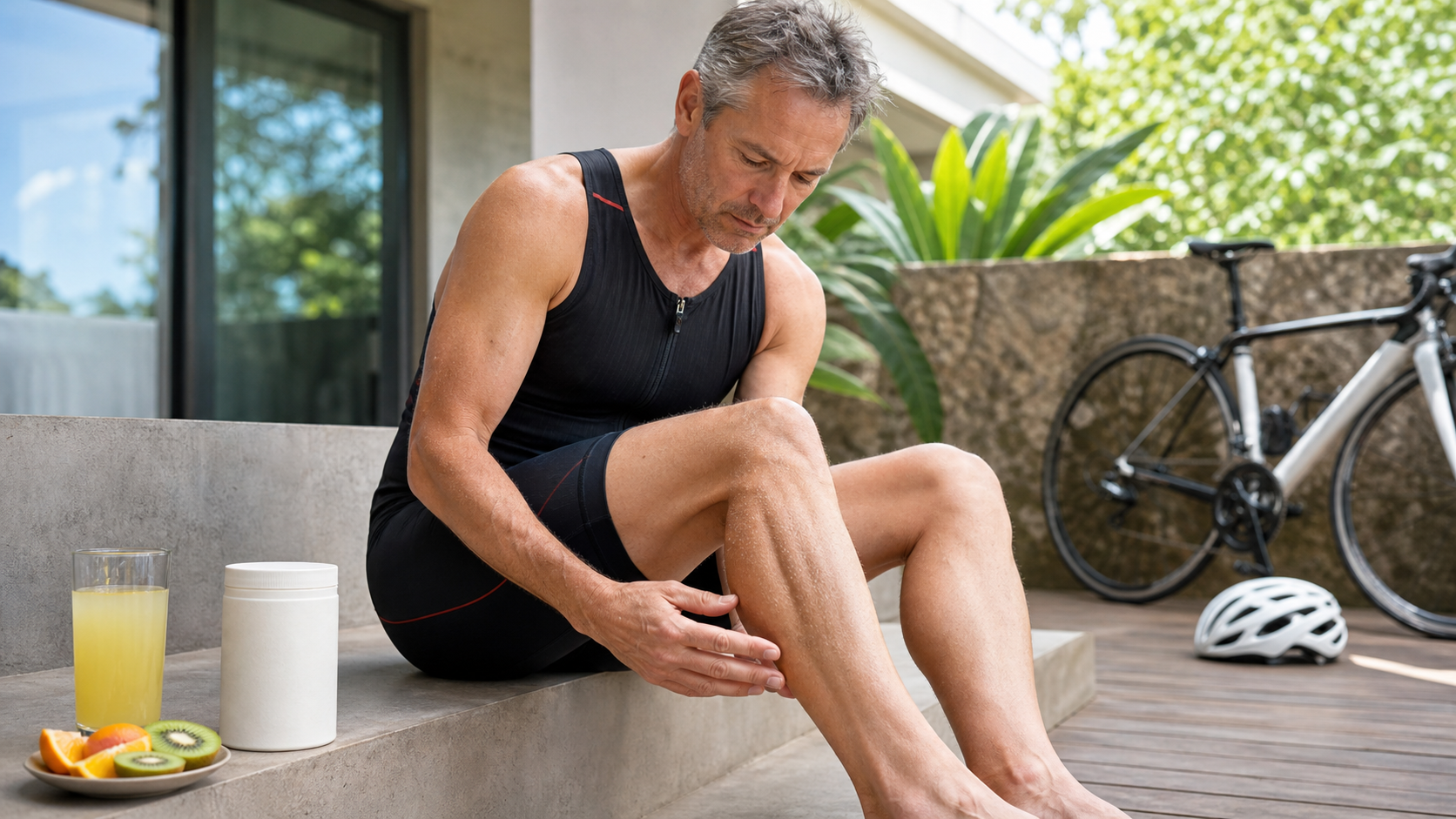
Starting with a Chronically Inflamed Achilles Tendon
I once coached an amateur triathlete in his early 40s—let’s call him A-Zhe. His cardio, strength, and willpower were all beyond reproach; he could steadily ride 250 kilometers a week plus run three times. The problem was his right Achilles tendon, which was like a ticking time bomb. Every three or four months, it would tighten up and hurt, forcing him to stop training for two weeks, then rebuild and get injured again—a cycle that went on for nearly two years.
When he came to me, his first words were: “Coach, my muscles are clearly getting stronger with every workout, so why can’t my tendons keep up?”
That’s an excellent question, and it hits on a blind spot most endurance athletes overlook: muscles adapt far faster than tendons and connective tissue. Your quadriceps might visibly get stronger and bigger in two or three months, but tendons, ligaments, and fascia—tissues built primarily from collagen—have poor blood flow, slow metabolism, and long remodeling cycles that are measured in “seasons” or even “years.” When muscle power surges ahead and the tendon hasn’t caught up yet, that gap is where injuries happen.
This is also why “collagen with vitamin C” has become popular in the sports world in recent years—it’s not a beauty topic; it’s a nutrition strategy genuinely tied to tendon health and injury prevention. Today, drawing on my years of experience coaching athletes, plus the solid scientific evidence currently available, I’ll walk you through the whole thing from start to finish: what collagen actually is, why vitamin C is the key partner, how much to take, when to take it, how to fit it into your training schedule, and—since everyone loves asking—whether it actually helps your skin.
Let me give you the bottom line first so you can grab the key points: Collagen’s value isn’t in “taking it and having it go straight to your tendon.” It lies in providing the building blocks, with vitamin C acting as an enzyme cofactor, combined with exercise that loads the tendon, so your body synthesizes the collagen itself and weaves it into the tendon. All three conditions are indispensable. Now let’s break it down layer by layer.
By the way, A-Zhe’s case isn’t unusual. Over the years, among the cyclists, runners, and triathletes I’ve coached in Taiwan, the proportion of people stuck because of recurring tendon, ligament, or fascia problems is astonishingly high. The reason often isn’t that they’re not working hard enough—quite the opposite: they’re working too hard, pushing their strength and cardio too fast, leaving connective tissue far behind. So if you’re the type who “trains seriously but keeps getting injured in the same spot,” this article was probably written for you.
Conceptual Foundation: What Collagen Is and Why Athletes Should Care
Your Tendons, Skin, and Ligaments Are All Made of the Same Core Material
Collagen is the most abundant protein in the human body, roughly accounting for about one-third of total body protein. It’s a structural protein, like the rebar in a building, responsible for providing tensile strength and toughness to tissues. Your:
- Tendons (transmitting muscle force to bone)
- Ligaments (connecting bone to bone, stabilizing joints)
- The dermal layer of your skin
- Cartilage, bone matrix, blood vessel walls, fascia
The primary structural building block of all these tissues is collagen. So when we talk about “collagen being good for tendons” and “collagen being good for skin,” we’re actually talking about the same raw material performing in different tissues—which is why this article discusses tendons and skin together.
Collagen’s amino acid composition is unique, rich in glycine, proline, and hydroxyproline. Hydroxyproline in particular is the key to stabilizing the triple-helix structure of collagen, and its formation requires vitamin C. This detail will come up repeatedly, so keep it in mind.
Why Tendons Are So Hard to Train and So Prone to Trouble
I often explain it to athletes this way: muscles are the “metropolitan area”—dense with blood vessels, high metabolism, fast repair; tendons are the “rural countryside”—relatively sparse blood flow, slow nutrient delivery, low-key cellular metabolism. This inherent difference leads to two consequences:
- Slow adaptation: Tendon collagen remodeling takes a long time, so when you increase training volume, your strength improves but your tendon hasn’t finished reinforcing itself yet, making it easy to get “shaken” into injury.
- Slow recovery: Once a tendon is injured or inflamed (like A-Zhe’s Achilles, the common patellar tendon, a runner’s plantar fascia, or a cyclist’s IT-band-related issues), recovery is often measured in months.
This is where a collagen nutrition strategy takes the stage: if you can provide the raw materials at the right time, plus the right exercise stimulus, you can theoretically accelerate this naturally slow synthesis process and help the tendon “catch up” to the muscle.
I often remind athletes of a harsh truth: most overuse injuries are, at their core, the result of “tendon remodeling speed failing to keep pace with the rate of training volume increase.” A runner’s patellar tendon, plantar fascia, a cyclist’s knee discomfort after long hours in the saddle, a lifter’s elbow and rotator cuff—these areas rarely break down because of a single violent movement, but rather because cumulative load exceeds the tissue’s remodeling capacity. Once you understand this, you’ll see why the combination of “nutritional raw materials + progressive loading + sufficient time” is so important, and why no supplement can let you skip the “time” factor.
Key Evidence: 15g Collagen/Gelatin + Vitamin C + Exercise
Here I want to be completely honest about the evidence—no exaggeration, no doom-and-gloom.
The most frequently cited study in the sports nutrition world is the randomized double-blind crossover trial by Shaw et al., published in 2017 in the American Journal of Clinical Nutrition. The study design was roughly this: subjects consumed a placebo, 5 grams, or 15 grams of gelatin (a form of collagen), paired with about 50 mg of vitamin C (from vitamin-C-rich blackcurrant juice), and one hour after ingestion performed 6 minutes of jumping rope to provide a loading stimulus to connective tissue.
The results were interesting:
- Just 6 minutes of jumping rope significantly raised collagen synthesis markers in both the placebo and 5-gram groups.
- The group that consumed 15 grams of gelatin showed serum procollagen I N-terminal propeptide (a blood marker reflecting collagen synthesis) elevated even further above the other groups, indicating synthesis was amplified even more.
In other words, exercise itself is the stimulus (waking up the construction site), while sufficient collagen/gelatin plus vitamin C is stocking the raw materials (giving the site materials to work with). Stacked together, the collagen synthesis signal is stronger. This also supports the clinical practice of using “collagen + vitamin C” alongside “progressive tendon loading training” to address issues like patellar tendon and Achilles tendon problems.
I want to emphasize two honest caveats:
- These studies mostly measure blood synthesis markers, which are indirect evidence of a “stronger synthesis signal,” not exactly proof that “the tendon is definitely stronger and thicker.” Long-term (multi-month) studies have indeed observed improvements in tendon stiffness and function, but individual variation is large, and taking it doesn’t guarantee you’ll be injury-free.
- It cannot replace training and rehabilitation. No matter how abundant the raw materials, without exercise stimulus waking up the construction site, collagen won’t obediently weave itself into the places you need it.
A Detail Often Overlooked: Synthesis and Breakdown Happen Simultaneously
Many athletes assume exercise only “builds” tissue, but that’s not the case. After a tendon experiences load, it simultaneously activates both synthesis (building new collagen) and breakdown (removing old, damaged collagen) pathways. In the first few hours after exercise, breakdown can even temporarily exceed synthesis; it takes more time (on the order of “hours”) for synthesis to clearly overtake it. This “break down first, then build up” window is exactly why recovery time and training frequency matter so much—if you hammer the same tendon with high intensity every single day and never give it time to enter a “net synthesis” phase, no amount of collagen will help.
This is also a core principle I use when scheduling my athletes’ training: high-intensity tendon loading for the same area typically isn’t done on consecutive days; low-impact or different-area training is interspersed so the tendon has room to complete its “break down, then build up” cycle. Collagen + vitamin C is the raw material, but “when to let the construction site rest” is equally part of the strategy.
Why Vitamin C Is an Indispensable Partner
Many people only focus on the “grams” when buying collagen, overlooking vitamin C. That’s a missed opportunity.
Vitamin C is an essential cofactor for the enzyme prolyl hydroxylase. This enzyme is responsible for hydroxylating proline on procollagen into hydroxyproline, and hydroxyproline is exactly what allows the collagen triple helix to stabilize and form properly. Without enough vitamin C, this step stalls, and the collagen structure becomes unstable and its quality suffers.
Using a construction-site analogy: collagen/gelatin is the rebar, and vitamin C is the welder who “welds” the rebar joints together. You can have all the rebar in the world, but without a welder, the structure you build will be loose and unable to withstand tension. This is also why severe vitamin C deficiency historically led to scurvy—one of its classic symptoms being poor wound healing and fragile connective tissue, because the entire collagen synthesis pathway is blocked. Of course, it’s not easy for the average Taiwanese person to become severely vitamin C deficient through daily diet, but this extreme example perfectly illustrates just how critical vitamin C is to collagen’s role.
The good news is that the required amount of vitamin C isn’t high. Most relevant studies use around 50 mg of vitamin C, which is very easy to achieve in Taiwan—a glass of orange juice, a few guavas, a kiwi, or a readily available vitamin C tablet all far exceed that. The key is to take it together with collagen, at the time when synthesis is active, rather than splitting vitamin C into a separate time slot.
Easily Accessible Vitamin C Sources in Taiwan
Taiwan has abundant fruits and vegetables year-round, so reaching roughly 50 mg of vitamin C is actually effortless. Here’s a table with some handy references (values are approximate ranges and will vary by variety, ripeness, and season, so don’t treat them as precise figures):
| Source | Approximate Vitamin C Content | Practical Notes |
|---|---|---|
| Guava (half to one whole) | High, usually far exceeds 50 mg | Available at supermarkets and convenience stores in Taiwan; great value |
| Kiwi (one) | Medium-high, most can reach or approach the requirement | Both green and gold kiwi work |
| Orange juice (one glass, ~250 ml) | Medium, usually sufficient | Freshly squeezed is better; limit sugary packaged drinks |
| Bell peppers (small amount) | High | Eat raw or lightly stir-fried to minimize vitamin C loss |
| Vitamin C tablets | Per label, usually one tablet is enough | Most convenient and easiest to control dosage |
My practical advice is: if you have time before training, eat fruit (bonus: other nutrients and hydration); if not, a glass of juice or a vitamin C tablet will do. Don’t obsess over high-dose vitamin C—anything beyond what the body needs gets excreted. What matters is “getting it in, and getting it in at the right time.”
Practical Approach: Dosage, Timing, and Integration into Your Training Plan
This section is the main event. I’ve organized the principles I actually use with my athletes into tables so you can apply them directly.
Practical Principles for Dosage and Timing
| Item | Practical Recommendation | Explanation |
|---|---|---|
| Collagen/gelatin dosage | ~10–15 g per serving | Studies show more noticeable effects at 15 g; 10–15 g of hydrolyzed collagen powder is a common range |
| Vitamin C | At least ~50 mg | Take together with collagen; easily achieved with Taiwanese fruit, juice, or vitamin C tablets |
| Timing | ~30–60 minutes before training | Gets the raw materials into the bloodstream so the training-induced synthesis signal can use them |
| Paired exercise | Movements that load the target tissue | Without load stimulus, supplementation has no clear direction |
| Frequency | Consistently on training days; daily during rehab | Tendon remodeling takes months—consistency is everything |
| Duration | At least 8–12 weeks, even 3–6 months | This is a long-term project, not something to judge after three days |
Note: The dosages above are “ranges,” not precise prescriptions. Body weight, training volume, and whether you’re in a rehab phase all matter. Heavier athletes or those in tendon rehab should lean toward the upper end (15 g); for general maintenance, the lower end is fine.
Which Form to Choose: Gelatin, Hydrolyzed Collagen, or Whole Foods?
My athletes often ask me: “Coach, which one should I actually buy?” Here’s a comparison table I’ve put together.
| Form | Pros | Cons | Best For |
|---|---|---|---|
| Gelatin (gelatin/Jell-O base) | Cheap, commonly used in research, can make homemade jelly | Requires preparation; some don’t like the texture | People willing to DIY and save money |
| Hydrolyzed collagen powder | Dissolves easily, tasteless, convenient to carry | Higher unit price | People who eat out often, office workers, commuters needing on-the-go supplementation |
| Whole foods (skin-on, tendon-rich meats, fish skin, chicken feet, pork trotters, bone broth) | Natural, provides other nutrients at the same time | Dosage hard to calculate; often comes with more fat | People who prefer getting nutrients from food and don’t want supplements |
Taiwan actually has a big advantage when it comes to “whole foods.” The chicken feet, pork trotters, and pork skin at braised food stalls, plus the bone broth and beef tendon at noodle shops, are all traditional sources of gelatin. But honestly, the collagen dosage in these foods is hard to pin down, and they often come with a fair amount of fat and sodium, making daily consumption less than ideal. So my usual recommendation is: keep your daily diet balanced and varied with adequate total protein as the foundation, then use hydrolyzed collagen powder or homemade vitamin C jelly before/after training for “precise supplementation”—the two don’t conflict.
A One-Day Practical Example for Taiwanese People Who Eat Out
Many of my athletes are standard eat-out types—breakfast at the convenience store, lunch from a bento box, dinner at a noodle stall—and the phrase “nutrition strategy” makes their heads spin. It really doesn’t need to be complicated. The principle I’ve designed for eat-out athletes is “get enough total protein first, then precisely supplement collagen + vitamin C before training.” Here’s an example for an office worker who trains in the evening:
| Time | Content | Key Point |
|---|---|---|
| Breakfast (convenience store) | 2 tea eggs + unsweetened soy milk + a piece of fruit | Lay the protein foundation and vitamin C groundwork |
| Lunch (bento box) | Lean meat/fish as the main dish + a serving of blanched vegetables | Don’t just eat white rice with a little meat |
| ~45 minutes before training | 10–15 g hydrolyzed collagen powder + a glass of orange juice or a vitamin C tablet | The key precision supplement moment |
| After training | Normal dinner, ensuring adequate protein | Supports overall recovery |
| Before bed | Plenty of sleep | Golden hours for recovery and tissue remodeling |
You’ll notice there’s nothing exotic here—a convenience store and a bento shop can handle it all. The key isn’t eating fancy; it’s consistently hitting “enough total protein” and “pre-training supplementation.” The most common mistake eat-out athletes make is being severely protein-deficient all day while hoping a single pack of collagen powder will turn things around. That’s impossible.
A Real, Applicable Training Plan Integration Example
Using A-Zhe’s Achilles tendon as an example, here’s roughly the direction I planned for him at the time (this was coordinated with his physical therapist, not decided unilaterally by me):
- 45 minutes before training: 15 g hydrolyzed collagen powder dissolved in a glass of orange juice (getting vitamin C in at the same time), sipped slowly.
- Main session: Progressive, slow calf tendon loading exercises as the core (eccentric heel raises, slow controlled movements), rather than explosive jumping from the start. Load goes from light to heavy, slow to fast, giving the tendon time to adapt.
- Cycling and running: Maintain aerobic work, but first reduce high-intensity running that impacts the Achilles tendon heavily; gradually add it back once the tendon stabilizes.
- Duration: Give it at least 12 weeks of patience, and report pain and tightness levels every two to three weeks.
I want to emphasize this again: collagen is not the star—progressive loading rehab training is the star, and collagen + vitamin C are the supporting cast helping with the raw materials. Treating the supporting cast as the lead is the most common mistake, which brings us to the next section.
The Progressive Rhythm of Tendon Loading (A Timeframe for You)
Many people don’t know how to “progress” tendon training. I’ve organized the common concept of pacing into the table below. Please note this is a general framework; the actual progression should be adjusted based on your condition and professional assessment, not a rigid prescription:
| Phase | Approximate Timeline | Training Focus | Pain Tolerance Principle |
|---|---|---|---|
| Phase 1: Building Tolerance | First 2–4 weeks | Low-load, slow, controlled isometric or eccentric movements | Pain during training and the next day should be mild and subside |
| Phase 2: Progressive Loading | Approximately 4–8 weeks | Gradually increase load and range of motion | Pain does not worsen, and you recover by the next day |
| Phase 3: Functional Integration | Approximately after 8–12 weeks | Gradually reintroduce speed, plyometrics, and sport-specific movements | Return to sport-specific training without triggering the old pain |
I often tell my athletes: The biggest taboo in tendon rehab is “skipping levels.” You might feel “it doesn’t hurt anymore” by the third week and want to jump straight back to your original training volume, only to relapse completely. Better to go a bit slower and steadier, solidifying the foundation at each stage—that’s the real time-saver. And the role of collagen + Vitamin C throughout this process is to consistently have the raw materials ready before each training session, maximizing the “building efficiency” of every loading stimulus.
Common Mistakes and Corrections
After all these years, the pitfalls I’ve seen can almost all be categorized below. Check and see how many you’ve hit.
Mistake 1: Only Taking Supplements, Not Doing Loading Training
This is the number one mistake. Many people think collagen is a miracle drug—swallow it and it will automatically repair tendons. As mentioned earlier, collagen synthesis needs “mechanical stimulus” to provide direction; without load, the raw materials don’t know where to weave.
Correction: Position supplements as an “aid to training,” not a “replacement for training.” First, have a proper rehab or strength program, then consider adding collagen.
Mistake 2: Focusing Only on Collagen Grams, Forgetting Vitamin C
You buy expensive collagen powder but don’t pair it with Vitamin C—it’s like having a pile of rebar but no welder.
Correction: Ensure that every time you take collagen, you also get adequate Vitamin C. Orange juice, guava, kiwi, or Vitamin C tablets all work; no need to pick an expensive product.
Mistake 3: Poor Timing
Some take it before bed, some just with breakfast—completely disconnected from training time. The concentration of raw materials in the blood fluctuates; if they aren’t available around the most active synthesis period (before/after training), you waste the timing advantage.
Correction: Try to take it approximately 30–60 minutes before training.
Mistake 4: Ignoring the “Total Protein” Foundation
Collagen is just one piece of the puzzle. If your daily total protein intake is insufficient (a common issue for many Taiwanese who eat out or are dieting), then muscle repair, immunity, and overall recovery will all suffer. Supplementing collagen alone is putting the cart before the horse.
Correction: First, get your daily total protein intake adequate (athletes typically need more than the general population, depending on training volume and body weight), then consider collagen as a “specialized supplement.”
Mistake 5: Expecting Results Too Quickly, Giving Up Too Early
Taking it for two weeks and feeling nothing means it doesn’t work. Tendon remodeling is a process measured in months; two weeks proves nothing.
Correction: Give it at least 8–12 weeks, ideally with quantifiable tracking (pain scores, loadable weight, pain-free riding/running distance). Judge with data, not feelings.
Mistake 6: Using Supplements as an Excuse to Push Through Training
This is the most dangerous one. Some people are still in pain but want to rely on collagen to “push through” and keep training hard. Collagen is not a painkiller; pain is your body’s signal.
Correction: For acute, severe, or continuously worsening pain, seek medical attention. In Taiwan, rehabilitation, orthopedics, and sports medicine clinics are relatively accessible, and physical therapy under National Health Insurance is also an important resource. Don’t use nutritional strategies as a reason to ignore pain.
I want to say something specific to the “never-give-up” crowd. Athletes commonly have a mindset of “pain just means you’re not tough enough; push through it.” This might be somewhat acceptable for muscle soreness, but it’s very dangerous for tendons. Pain signals in tendons often mean the tissue is under a load exceeding its current capacity. Continuously ignoring it and pushing through can turn a minor issue that could be resolved in weeks into a chronic injury lasting months. The truly strong aren’t those who train through pain, but those who know when to hit the brakes, rebuild the foundation, and then come back for the long haul.
What About Skin? The Other Side Athletes Care About
Since tendons and skin use the same raw materials, many athletes (especially cyclists and runners who spend a lot of time outdoors) often ask: “Does collagen actually do anything for the skin?”
My view is: In terms of evidence, the benefits of oral collagen peptides for skin elasticity and hydration are more frequently discussed than the evidence for tendons, but you still need to be pragmatic and not get carried away by marketing hype. A few practical points:
- For those training under Taiwan’s intense sunlight, sun protection and UV management protect skin collagen far more directly than any supplement. The biggest external killer of collagen loss is ultraviolet radiation. Long-sleeved jerseys, arm sleeves, sunscreen, brims, and sunglasses—these “physical protections” are the first line of skin care.
- Vitamin C is equally important for the skin, as it’s also a cofactor for collagen synthesis and has antioxidant properties. Taiwan has a wide variety of fruits and vegetables, so a balanced diet usually provides enough.
- If collagen supplementation does help the skin, it’s “long-term, gradual, and supportive”—not a few sachets for instant suppleness. A balanced diet, adequate sleep, and proper sun protection are a much more important foundation than supplements.
So my advice is consistent: whether you care about tendons or skin, take care of the foundation first (total protein, Vitamin C, sleep, sun protection, training), and use collagen supplements for precise support—don’t put the cart before the horse.
The Skin Reality for Taiwan’s Outdoor Athletes
Taiwan has intense sunlight, long summers, and high humidity. Cyclists and runners who love the sport have their faces, arms, and the backs of their necks exposed year-round. I’ve seen too many veteran riders with excellent fitness but prematurely aged skin—or even skin issues requiring medical evaluation—due to years of no sun protection. I want to be blunt here: Instead of spending your entire budget on collagen supplements, prioritize sun protection first. The order should be:
- Physical shielding first: Long-sleeved jerseys, sun-protective arm sleeves, gear with brims, sunglasses—cover up as much as possible.
- Sunscreen as backup: Choose products suitable for sweaty exercise and reapply regularly; don’t just apply once for long outdoor sessions.
- Diet and routine as the foundation: A balanced intake of fruits and vegetables (including Vitamin C), adequate sleep, and sufficient hydration.
- Collagen supplements as the final bonus: Only consider them if the foundation is solid and you have extra resources—don’t do it in reverse.
If you notice spots that don’t fade, wounds that won’t heal, or any changes that feel off, this isn’t something collagen can fix—please see a dermatologist directly. Dermatology clinics in Taiwan are relatively accessible; don’t delay.
Actionable Advice for Readers at Different Levels
Everyone starts from a different point, so I’ve divided the advice into three tiers. Find where you fit.
Beginners (Just starting exercise, want to prevent injury, no significant pain)
- Build the foundation first: Get adequate daily total protein, eat a variety of fruits and vegetables for Vitamin C, get enough sleep, and use sun protection for outdoor training.
- Don’t rush to buy supplements: A balanced diet already contains collagen raw materials. If you really want to add it, a glass of orange juice with hydrolyzed collagen powder before training is simple enough—no need for expensive, high-end formulas. At the beginner stage, building the habit matters more than choosing the brand.
- Increase training volume gradually: Tendons adapt slowly. Don’t spike your training volume in a week; give your connective tissue time to catch up. An easy principle to remember: when you want to increase mileage, intensity, or frequency, take small steps rather than one big leap. Your body’s feedback (next-day soreness/tightness, any unusual pain) is your best dashboard.
Intermediate/Advanced Athletes (Regular training, high volume, want to strengthen tendon tolerance)
- Timed supplementation: 30–60 minutes before training, take 10–15 grams of collagen/gelatin with about 50 mg of Vitamin C.
- Add tendon loading elements: It’s not just cardio—schedule slow, controlled eccentric strength work (calf raises, squats, single-leg stability) to give tendons a clear remodeling signal.
- Build a tracking habit: Record changes in pain, tightness, and loadable weight, observing for at least 8–12 weeks. Use a phone memo or training app to jot down a few key metrics. The point is to see the “trend,” not to be swayed by how any single day feels.
Rehabilitation / Injury Group (existing tendon discomfort, recurring episodes)
- Seek medical attention and get a diagnosis first: Get evaluated at a rehabilitation, orthopedics, or sports medicine clinic to rule out conditions requiring medical intervention. Collagen is not a diagnostic tool, nor is it a treatment prescription.
- Focus on progressive-load rehabilitation as the core: Conduct it under the guidance of a physical therapist or physician. Collagen + Vitamin C is a supplement, not the main act.
- Patience and discipline: During the rehabilitation period, you can use collagen + Vitamin C regularly every day while strictly following your rehab exercises; the cycle often takes 3–6 months. If there is acute worsening, be sure to return for a follow-up. The hardest part of this journey is often not the exercises themselves, but “staying patient and not rushing back to your previous training volume.” Get your mindset right, and you are halfway to success.
Quick Q&A (FAQ)
Q: What about vegetarians? Collagen all comes from animals.
A: Most commercially available collagen/gelatin currently comes from animals (cattle, pigs, fish). Vegetarians cannot supplement collagen directly, but they can focus on “providing the building blocks + cofactors”: consume adequate high-quality plant protein, ensure sufficient vitamin C, and rely on training stimulus to let the body synthesize it on its own. The strategy differs, but the direction is the same.
Q: Do I have to buy expensive collagen powder?
A: No. Inexpensive gelatin (gelatine) has been shown to be effective in studies, and you can even make your own vitamin C jelly. Hydrolyzed collagen powder costs more for convenience, not for effectiveness.
Q: Will taking collagen make me gain weight or cause side effects?
A: Collagen/gelatin is essentially protein, and 10–15 grams is not high in calories. Most people tolerate it well; a minority may experience gastrointestinal discomfort. Anyone with kidney disease or special health conditions should consult a physician or dietitian before any protein supplementation.
Q: Can I just rely on bone broth, pork trotters, and chicken feet?
A: They can be one source, but the dosage is hard to calculate precisely, and fat and sodium content is often high, so they are not recommended in large amounts daily. Treat them as part of a varied diet; for precise supplementation, supplements or homemade jelly are easier to control.
Q: Can collagen cure my tendinitis?
A: Do not treat it as a “cure.” It is a nutritional strategy that supports synthesis; the core of truly addressing tendon problems is progressive-load training and medical evaluation. If you have obvious or persistent pain, see a doctor.
Q: Will taking collagen before training affect my stomach or cause nausea while running?
A: It varies from person to person. The burden of 10–15 grams of collagen/gelatin is usually not large, but everyone’s gastrointestinal sensitivity differs. If you are prone to discomfort on an empty stomach, move the supplementation time earlier, take it with a small amount of food, or start with a lower dose to test the waters. Finding what works for you is what matters most—don’t force someone else’s approach onto yourself.
Q: Can I supplement more than once a day?
A: During rehabilitation or for those with very high training volume, some people do plan multiple doses per day (e.g., once before training, plus another scheduled dose). But for the average person, consistently getting the pre-training dose right is usually sufficient. Instead of obsessing over frequency, first make sure you have “regularity, vitamin C, and proper timing.”
Q: I’m not injured; I just want prevention. Do I need to supplement?
A: Not necessarily. If your diet is balanced, total protein is adequate, and training progression is sound, you already have the raw materials from your daily diet. Collagen supplementation is more like “icing on the cake” or a bonus tool when training volume is especially high or your tendon history is more fragile—it is not essential for everyone. Rather than spending money for peace of mind, first confirm that your foundation (diet, sleep, progressive loading) is truly in place.
Conclusion: Treat Your Tendons as a Long-Term Investment
Back to A-Zhe. After a full cycle of adjustment—progressive tendon-load rehabilitation as the core, regular collagen + Vitamin C before training as support, and explosive training pushed to the back—his Achilles tendon stopped flaring up every three months. Not because collagen is some miracle cure, but because we finally used the whole logic correctly: waking up the construction site (load training), preparing the rebar (collagen), bringing in the welders (Vitamin C), and then giving it enough time (the cycle).
What I hope you take away from this article is not “go buy collagen right now,” but a more mature concept: Tendons and connective tissue are long-term investments—you can’t rush them, and you can’t fool them. Supplements can help, but they will always be the supporting role. The foundation—adequate total protein, regular progressive loading, sufficient sleep, sun protection outdoors, and respect for pain—is the main act.
Put this logic into your training. Whether you care about tendon tolerance or skin condition, you will go further, longer, and with fewer injuries than if you only stared at the gram count on the supplement jar.
Finally, I want to leave one thought for every one of you quietly accumulating miles on Taiwan’s roads, riverside paths, and mountain routes: The length of an athletic career is often not determined by your strongest day, but by whether you take good care of the tissues you can’t see. Muscles will win you a day’s results, but tendons and connective tissue determine whether you can stand healthy at the starting line year after year. Collagen with Vitamin C is just one small piece of that bigger picture; putting the whole puzzle together is the real work.
May your tendons keep up with your ambitions. See you on the descents, on the next long ride, and at the finish line of the next road race—healthy. See you there.
This article is educational content and cannot replace individual diagnosis and treatment advice from a physician, physical therapist, or dietitian. If you have persistent tendon or joint pain or any chronic condition (such as diabetes, hypertension, heart disease, kidney disease, etc.), please consult a qualified medical professional and adjust according to your individual situation before any supplementation strategy or training modification.
References
- Shaw et al., Vitamin C–enriched gelatin supplementation before intermittent activity augments collagen synthesis, American Journal of Clinical Nutrition: https://pubmed.ncbi.nlm.nih.gov/27852613/
- Full text of the same study (PMC): https://pmc.ncbi.nlm.nih.gov/articles/PMC5183725/
- Journal page of the same study (AJCN): https://ajcn.nutrition.org/article/S0002-9165(22)04737-2/fulltext
Related Reading
- The Benefits of Glycine and Collagen Supplementation for Tendon Repair: The Synergistic Study of Vitamin C
- Collagen + Vitamin C: The Scientific Truth About Runner Supplements
- Collagen and Vitamin C: Nutritional Repair Strategies for Tendons and Ligaments
- Joint Nutrition for Athletes: Glucosamine vs. Collagen—Where Does the Evidence Stand?
CT暗黑廚房) 車友必備 宇宙無敵鮮蚵湯 幫助訓練恢復 天然食補 好市多 超肥鮮蚵 破PR
7 年前
#公路車 #Fitting 靠人工智慧APP 幫你調整單車
6 年前
一日北高/長距離團騎 常見問題補充篇 / 組團或跟團的眉角 / 壯車友容易被瘦車友慢性拉爆 / 原來屁股痛可能是這個原因...? / 風場配速法 / 公路車 / CT Yeh
2 年前
大家都在開箱的...單車用藍芽對講耳機真的有幫助嗎? SENA BiKom 20 長距離旅遊 & 海鷗繞圈賽 實際體驗心得 / 公路車 / CT Yeh
9 個月前
西進武嶺 免費訓練分析服務 Intervals | 練不夠還是練過頭?你哪一種類型選手?AI模型告訴你! | 備戰神器 | 公路車 訓練 | CT Yeh
4 年前
滑雪新手們慘摔學習全紀錄(請開字幕),滑雪好好玩 | Snowboard + Ski | 岩原 スキー場 | 滑雪APP使用 | GoPro Max
6 年前
靠單車減肥35公斤 心得分享與整理
7 年前
iPhone內建一秒變長腿🤣 車友必備#cycling
2 年前