The Athlete's Guide to Melatonin and Sleep Supplementation: Usage, Jet Lag Applications, and Safety
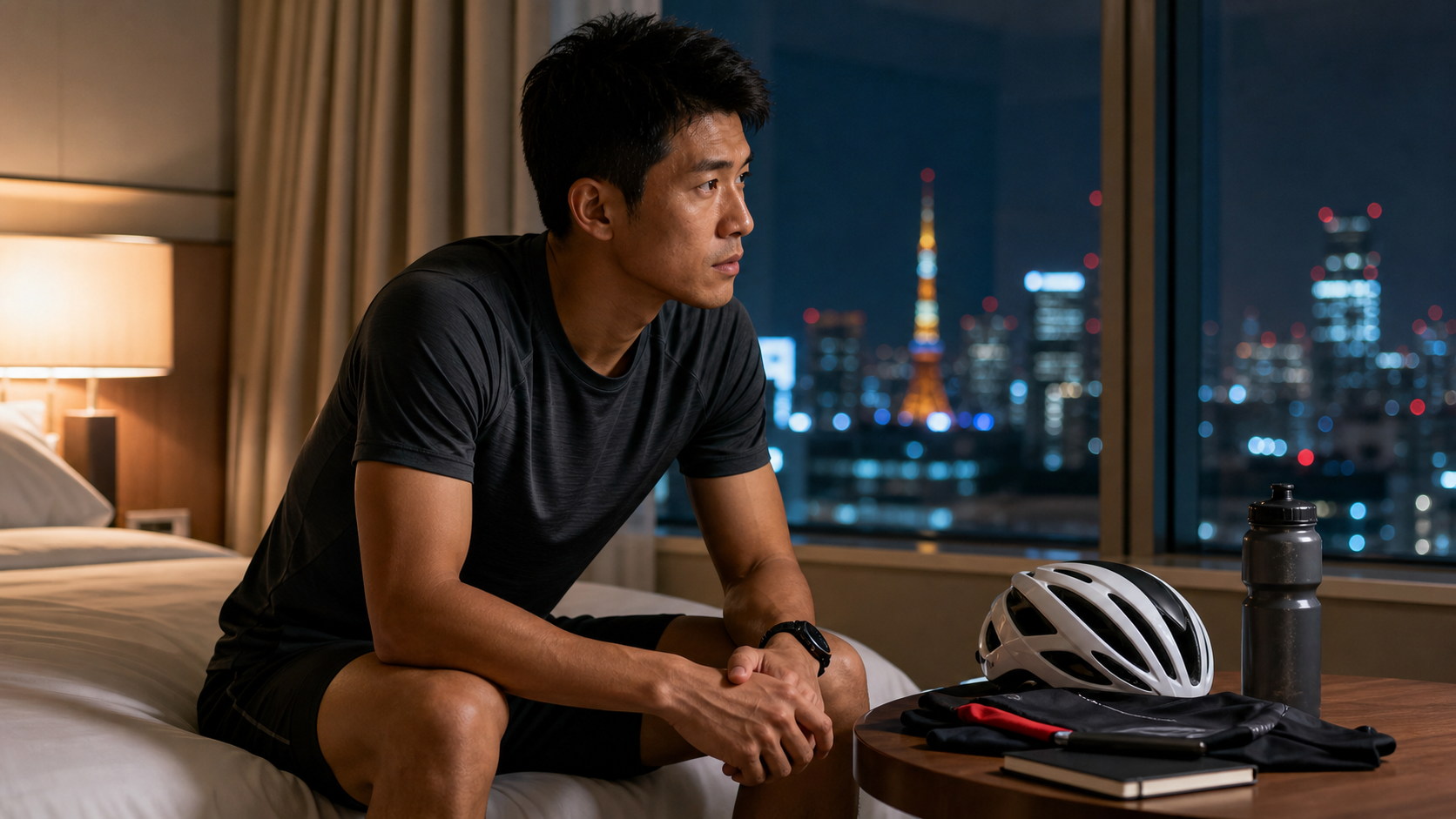
Starting with a Sleepless Night on a Training Camp in Tokyo
I once coached an amateur triathlete—let’s call him A-Zhe. Three years ago, he signed up for a time trial in Asia, and I accompanied him to Japan for pre-race training. The night we landed, he tossed and turned in his hotel bed, texting me at 3 a.m.: “Coach, I can’t sleep at all. How am I supposed to train tomorrow?” The next day, he showed up at the meeting point with dark circles under his eyes. His power numbers dropped by nearly 20%, while his heart rate was about 10 bpm higher than usual. It wasn’t a lack of effort—it was that his circadian clock was still on Taiwan time. His body thought it was the middle of the night and time for deep sleep, but he was being dragged into training.
After that experience, I started seriously researching melatonin. Many people treat it like a “natural sleeping pill,” casually picking up 5 mg or 10 mg high-dose bottles at the drugstore and swallowing one before bed. But after years of use, reviewing countless studies and case histories, I can tell you directly: The key to melatonin has never been “how high the dose is,” but “whether the timing is right.” It’s not a hammer that knocks you out; it’s a signal telling your brain, “It’s dark out; you can get ready for sleep.” Sending that signal at the wrong time is worse than not sending it at all.
In this article, I want to explain melatonin clearly, in the same tone I use with my athletes: what it actually is, how athletes should use it for jet lag and sleep, common mistakes, and how to use it safely and practically in Taiwan—where eating out is convenient, medical care is easily accessible through the National Health Insurance, and summers are hot and humid.
Foundational Concepts: Melatonin Is a “Clock Signal,” Not a “Sleeping Pill”
Your Body Produces It Naturally, and in Very Small Amounts
Melatonin is a hormone naturally secreted by the pineal gland in our brain after dark. Its concentration begins to rise a few hours before sleep onset, peaks in the middle of the night, and drops around dawn. This curve is the body’s “nighttime signal,” telling every organ: this is the period for rest and repair.
There’s one number I think everyone should know: the total amount of melatonin your body naturally secretes over an entire night is on the order of only 0.1 to 0.3 mg. Yet when you go to the pharmacy, commercial products routinely come in 3 mg, 5 mg, or even 10 mg per pill—that’s ten to thirty times your body’s natural production. This gap is one of the main reasons so many people “feel groggy the entire next morning” after taking it.
Two Different Uses—Don’t Confuse Them
When I work with athletes, I always help them categorize melatonin’s uses into two types first, because this determines the dose and timing:
- Sleep onset aid: Simply wanting to fall asleep a bit faster and sleep a bit deeper tonight. This is closer to the familiar “sleep aid” use.
- Circadian phase shift (chronobiotic): Shifting your entire circadian clock forward or backward, helping your body redefine “what time to sleep and what time to wake.” This is what you need for crossing time zones for races, shift work, or resetting a chronically late sleep schedule back to normal.
The optimal dose and timing for these two purposes are completely different. For sleep onset, you typically need a slightly higher dose (around 1 to 3 mg), taken 30 to 60 minutes before bed. For circadian phase shifting, a lower dose is actually better (around 0.2 to 0.5 mg), and it should be taken 2 to 3 hours before the time your body would naturally begin secreting melatonin. Timing is the critical factor here.
This brings up a counterintuitive point that is remarkably consistent across the literature: When it comes to shifting your circadian clock, a higher dose does not mean better results. Studies show that increasing the dose from 0.3 mg up to 5 mg provides almost no additional benefit for “moving the circadian clock,” because the receptors in the brain quickly become saturated. What the extra dose often buys you is more noticeable residual grogginess the next day.
Dosage: Why I Almost Always Start Low
The Trade-offs Between Low and High Doses
Based on the current evidence, I’ve put together a table so you can see the trade-offs of different doses at a glance. The values here are given as ranges because individual body composition, weight, and metabolic rates vary greatly—there’s no one-size-fits-all answer precise to the decimal point.
| Dose Range | Primary Use Case | Advantages | Things to Watch Out For |
|---|---|---|---|
| 0.2–0.5 mg | Shifting circadian rhythm, crossing time zones, gradually adjusting sleep schedule | Closest to natural secretion, least next-day grogginess, more aligned with physiological curve | Rarely available in such low doses in Taiwan’s commercial products; may need to split pills or find specific products |
| 1–3 mg | Simple sleep onset aid, occasional difficulty falling asleep | Faster sleep onset, subjectively deeper sleep | Some people still experience mild residual effects the next day |
| 5 mg | Severe jet lag, wanting to fall asleep quickly | Most noticeable effect on sleep onset speed and depth | Highest risk of next-day grogginess; almost no additional benefit beyond this dose |
| Over 5 mg | Almost no justification | No significant additional benefit | Increased likelihood of grogginess, headaches, and excessive dreaming |
The general consensus in the literature is roughly this: Between 0.5 mg and 5 mg per day, the effects are similar; the difference is that 5 mg produces a more noticeable subjective feeling of “falling asleep faster and sleeping deeper” compared to 0.5 mg, but anything above 5 mg offers no further improvement. So if you ask me for a practical starting point, I’d say: Start with the lowest effective dose. If 0.5 mg solves the problem, don’t jump to 5 mg. You can always fine-tune upward later, but you’ll rarely need to go very high.
A Common Case: Taking 10 mg and Feeling More Tired
One of my athletes originally bought a 10 mg product from the drugstore and swallowed a whole pill before bed. He complained, “I did fall asleep, but the whole next day I felt like I was underwater. I had no energy for training.” I asked him to reduce the dose to around 1 mg and take it consistently one hour before bed. Two weeks later, he reported: his sleep onset hadn’t worsened, but the daytime heaviness had almost completely disappeared. This isn’t some miraculous story—it’s simply bringing the dose from “supraphysiological” back into a range closer to “physiological.”
Why People in Taiwan Are Especially Prone to Falling into the High-Dose Trap
There’s a Taiwan-specific situation I need to highlight here. Many of my athletes have melatonin brought back from overseas by friends or family, and the most common specifications of commercial products abroad start at 5 mg, or even 10 mg—because there, it’s sold as a general supplement, and the shelves push “higher dose, better sleep.” The result is that many people’s first exposure to melatonin is a high-dose product, and they naturally assume “this is the normal dose.”
But as mentioned earlier, this amount is often dozens of times what the body naturally produces. My advice is: when you get a high-dose product, don’t assume you have to take the whole pill. You can absolutely split it in half, or even into smaller pieces, and start with a low dose. Rather than chasing “one pill and I’m out cold,” aim for “using the smallest amount to get just enough of a signal.” This is a concept I emphasize repeatedly with my athletes, and it’s also the one most easily overlooked.
Jet Lag Applications: Practical Strategies for Cross-Time-Zone Races
First, Understand the Direction: East or West
For athletes, melatonin’s most valuable application is jet lag adjustment for races across time zones. There’s a major principle to clarify first:
- Flying east (e.g., from Taiwan to the U.S. West Coast, or to Australia/New Zealand): You need to advance your circadian clock (fall asleep earlier, wake earlier). This is generally harder to adjust, and melatonin helps the most in this direction.
- Flying west (e.g., from Taiwan to Europe): You need to delay your circadian clock. This direction is relatively easier for most people, because “staying up late” is inherently simpler than “forcing yourself to sleep early.”
The overall conclusion in the literature on jet lag is quite positive: Taking melatonin at the right time can effectively reduce the symptoms of jet lag caused by flights crossing more than 5 time zones. Most trials recommend: On the first night after arrival, take it close to local bedtime (roughly between 10 p.m. and midnight), and continue taking it at local bedtime for the next several days (approximately 2 to 5 days), with doses ranging from 0.5 to 5 mg.
A Ready-to-Use Example of Cross-Time-Zone Adjustment
The table below is the framework I commonly use when planning “eastward multi-time-zone race travel” for my athletes. Please note this is a general example—the actual number of days depends on how many time zones you cross, which day the race falls on, and your personal adaptation speed. All times are based on local time.
| Time Point | Sleep & Light Arrangement | Melatonin | Notes |
|---|---|---|---|
| 2–3 days before departure | Go to bed about 30–60 minutes earlier than your usual schedule each day | Low dose before bed (about 0.5 mg) can be considered | Prepare in advance to reduce the gap after landing |
| Day of flight | After boarding, set your watch to destination time; decide whether to sleep or stay awake based on the local time zone | Arrange according to the first night after arrival; don’t take it randomly on the plane | Avoid taking it during the destination’s daytime hours |
| Night 1 after arrival | Lie down close to local bedtime, room completely dark | 0.5–5 mg before bed | The most critical night |
| Nights 2–5 after arrival | Stick to local schedule, get plenty of natural light in the morning | Continue the same dose each night before bed | Help your clock stabilize to local time |
| Night before the race | Prioritize total sleep and consistency; don’t suddenly increase the dose to “sleep better” | Maintain the existing dose | Don’t try it for the first time the night before an important race |
Light exposure is just as important as melatonin. Melatonin handles the “nighttime signal,” while morning natural light handles the “daytime signal.” The two work best together. When adjusting eastward, get outside and soak up sunlight in the morning, and avoid being interrupted by bright light (including blue light from phones and computers) during the evening hours when you should be sleeping—these steps will speed up your adaptation.
A Complete Eastward Race Case: From Planning to Landing
Let me tie the principles together with a realistic scenario. Suppose an athlete is flying from Taiwan to a location that is several hours ahead, with the race on the fifth day after arrival.
Three days before departure, I asked him to go to bed about 40 minutes earlier each night and wake up earlier the next morning, deliberately getting more natural light in the morning and reducing bright light exposure in the evening. This is about “warming up” the body first to shrink the gap after landing. The night before departure, he tried a low dose of 0.5 mg before bed to confirm he wouldn’t feel groggy the next day—this step is about testing in a familiar environment, not waiting until he’s abroad to try it for the first time.
On the day of the flight, he set his watch to destination time as soon as he boarded. Since he would arrive in the evening local time, he rested as much as possible on the plane, wore an eye mask and earplugs, avoided alcohol, and hydrated frequently in small amounts. The first night after arrival was the core of the plan: he lay down close to local bedtime, kept the room completely dark, and took the predetermined dose before bed. Nights two through four, he stuck to the local schedule, went outside to get sunlight every morning, and continued the pre-bed supplement. On the night before the race, I specifically reminded him: don’t increase the dose just because you’re nervous—maintain the established rhythm and let the body follow the pattern it has already built. That’s more reliable than any last-minute adjustment.
The result was that when he woke up on race morning, his body had largely accepted that “morning here is morning.” His resting heart rate was back to normal, and his warm-up felt right. There was no magic trick in this case—it was simply honestly arranging the three elements of “light + sleep + melatonin timing” according to local time.
Wrong Timing Can Backfire
I must emphasize one risk: If you take melatonin at the wrong time, it will pull your clock in the wrong direction. The literature clearly states that if you mistakenly take it too early in the day (e.g., during the destination’s daytime), it can actually make you sleepy during the day and delay—rather than speed up—your adaptation to local time. So the principle of “take it at local bedtime” matters more than the dose. This is also why I don’t recommend randomly taking it on long flights based on how you feel—first set your watch to destination time, and arrange everything according to the destination’s “bedtime.”
Effects on Athletic Performance: Will It Make Me Weaker the Next Day?
This is the question athletes ask me most often. It’s a reasonable concern—nobody wants to trade a good night’s sleep for a lackluster performance on race day.
Based on the available evidence, for people in good physical condition, taking about 5 mg of melatonin before bed is unlikely to have a substantial impact on physical performance the next morning. In other words, the “next-morning residual effect” for well-trained individuals is usually not as scary as people imagine. However, this is a conclusion at the group level—individual differences definitely exist. Some people are particularly sensitive to melatonin and will feel sluggish the next day no matter what. So my principle is always: Never try anything new on race day itself, including melatonin. Make sure you’ve tested it during regular training, confirmed your personal response, and only then incorporate it into your race plan.
Why Athletes Should Care Especially About Sleep: The Link Between Recovery and Performance
Before discussing how to use melatonin, I want you to agree on one thing: For athletes, sleep isn’t a bonus item where “getting some sleep is good enough.” It’s the critical link that determines whether your training effects actually materialize.
I often use this analogy with my athletes: training is “placing an order,” and sleep is “shipping the goods.” The stimuli you accumulate in your training plan—whether it’s power intervals on the bike, long runs, or the breakdown from strength training—can only be truly repaired, supercompensated, and turned into a stronger you during sleep. Without enough sleep, no matter how many orders you place, nothing gets shipped. In practice, with chronic sleep deprivation, I frequently see several phenomena: the same training plan feels harder, resting heart rate runs high, mood deteriorates, you catch colds easily, and injury risk rises. These aren’t mystical—they’re your body telling you “recovery isn’t keeping up.”
This is also why I take sleep so seriously when it comes to cross-time-zone races or disrupted schedules. It’s not just about “feeling good”—it directly affects whether all your hard preparation can be realized. In this context, melatonin is a tool that helps us recalibrate the clock and reclaim sleep—but it’s a tool, not the main character. The main character is always consistent routines and solid sleep hygiene.
A Deeper Look at the Physiology: Why “Timing” Matters More Than “Dose”
This section is a bit more technical, but once you understand it, you’ll see why I keep harping on timing.
Melatonin’s ability to “shift the clock” relies on a principle called the phase response curve. Simply put, the same pill, taken at different times, has opposite effects on your circadian clock:
- Taken in the evening before your body’s natural secretion begins, up to bedtime, it shifts the clock earlier (making you want to sleep earlier and wake earlier). This is exactly what people need when flying east across time zones, or when trying to shift a late sleep schedule earlier.
- Taken in the middle of the night to early morning, it actually shifts the clock later. This works against anyone trying to shift their schedule earlier.
So the same 0.5 mg can be a help if the timing is right, or a hindrance if the timing is wrong. This is why I keep saying: Set your watch to destination time first, and arrange everything according to “local bedtime”—that matters far more than agonizing over whether to take 1 mg or 3 mg.
Another key concept is receptor saturation. The receptors in your brain that receive melatonin signals (MT1, MT2) are limited in number, and a low dose can largely occupy them all. Once they’re saturated, adding more dose doesn’t make the “signal” clearer—it just creates a high, rapidly fading concentration spike in your blood. This supraphysiological spike is precisely the source of next-day grogginess, headaches, and vivid dreams. The reason a low dose is “closer to physiology” is that it produces a curve more similar to the body’s own gentle nighttime curve, rather than a sharp spike.
Understanding these two points, you’ve grasped the essence of melatonin: It’s a directional signal. Send it at the right time, in just the right amount, and you get the best results.
Other Sleep Tools Within the Day: Napping and In-Transit Strategies
Melatonin isn’t the only sleep tool. Often it needs to be combined with other strategies.
Strategic Napping
During cross-time-zone travel or heavy training periods, a moderate strategic nap during the day is a great remedy. I usually advise athletes to keep naps to 20 to 30 minutes, avoiding longer naps that lead to being woken from deep sleep and feeling even groggier (the so-called “wake up more tired” effect). Timing of the nap also matters: Don’t nap too close to evening bedtime, or it will dilute your nighttime sleep drive and make it harder to fall asleep at night—this is the same principle as using melatonin at the wrong time: both interfere with the body’s accumulated “sleep pressure.”
Sleep Layout for Long Flights
On long-haul flights, my principles for athletes are:
- Immediately set your watch to destination time after boarding, and mentally start living on the destination’s schedule.
- If it’s daytime at the destination, try to stay awake, drink plenty of water, and get up and move around; if it’s nighttime, wear an eye mask and earplugs to create a sleep environment.
- Don’t take melatonin just to force yourself to sleep on the plane, unless that time happens to correspond to the destination’s bedtime. If the timing isn’t right, it’s better not to take it at all.
- Caffeine and alcohol should both be limited on the plane. Alcohol may make you think you’re sleeping better, but it actually disrupts sleep architecture and worsens dehydration—both are detrimental to jet lag adaptation.
Frequently Asked Questions (FAQ)
These are the questions athletes ask me most often, compiled here.
Q: Will I become dependent on melatonin, or will it stop working over time?
A: Its mechanism of addiction is different from traditional sleeping pills, and it’s generally not considered to produce physiological dependence. But if you become “psychologically unable to do without it” and need it every night, that usually signals a more fundamental sleep problem underneath. The right move is to find the root cause (stress, overtraining, environment, sleep apnea, etc.), rather than taking it indefinitely.
Q: Can I combine it with other sleep aids?
A: This is beyond what you should decide on your own. For any questions about combining it with other medications or supplements, please ask your doctor or pharmacist directly—especially if you’re taking medication for chronic conditions.
Q: Can I use it if I have a chronic condition (e.g., diabetes, high blood pressure, heart disease)?
A: In these cases, I always recommend seeking medical evaluation first and making an individualized decision—don’t self-experiment. Melatonin may interact with certain conditions or medications, and this isn’t something an internet article can determine for you. Medical care is easily accessible in Taiwan; spending a little time to book an appointment and letting a professional check things out is far more cost-effective than taking risks on your own.
Q: Can pregnant women, nursing mothers, or adolescents use it?
A: Use in these populations requires even more caution. Please be sure to have it evaluated by a professional medical provider; it falls outside the scope of this article’s general recommendations.
Q: What if I take it and it doesn’t work?
A: Don’t rush to increase the dose. Go back and check three things: Is the timing right? Is your sleep hygiene (light, caffeine, environment) in order? And is your problem even something melatonin can solve (e.g., sleep apnea)? Clarifying these three points is usually more effective than swallowing another pill.
Q: What if I still feel groggy on race morning?
A: That means the dose is too high for you personally, or you’re naturally more sensitive. The correction is to lower the dose next time, and remember the golden rule—never try something new for the first time on race day. Ideally, you should have figured out your personal response during training long before.
Common Mistakes and Corrections
Having coached so many athletes, I’ve found that people step into the same melatonin traps over and over. Avoid these, and you’ll be ahead of most people.
Mistake 1: Treating It Like a Sleeping Pill—Increasing the Dose When You Can’t Sleep
Many people who sleep poorly tonight will double their dose tomorrow night on their own. Correction: Melatonin’s effect isn’t “the more you take, the more dead asleep you are.” Once you’re past the effective dose, adding more usually buys you grogginess, not better sleep. First examine your timing and sleep environment, rather than blindly increasing the dose.
Mistake 2: Sloppy Timing—Only Thinking About It at Bedtime
Some people only get up and take it after lying in bed unable to sleep. This misses the optimal window and can disconnect the timing of the dose from its effect. Correction: For sleep onset, take it consistently 30 to 60 minutes before bed; for circadian shifting, take it even earlier, following the principle of 2 to 3 hours before natural secretion. Make it a fixed ritual, not an emergency rescue.
Mistake 3: Relying Only on the Pill and Ignoring Sleep Hygiene
Melatonin is just a signal. If your room is bright, you’re scrolling on your phone before bed, and you’re drinking caffeine into the evening, even the best signal will be drowned out by noise. Correction: Get the fundamentals right—room completely dark, stay away from bright screens for an hour before bed, cut caffeine after the afternoon, and keep consistent bed and wake times. Do these, and many people won’t need supplements at all.
Mistake 4: Ignoring Product Quality and Anti-Doping Risks
This is especially important for competitive athletes. In many places (including the U.S.), melatonin is classified as a “supplement” rather than a drug, and is not subject to the same strict quality controls as prescription medications. As a result, a very small number of commercial products may have labels that don’t match actual content, or even contamination—which can pose a risk to athletes subject to anti-doping regulations. Correction: Choose reputable brands with third-party testing; if you’re an athlete subject to drug testing, always confirm with your team doctor or sports nutritionist before using any supplement.
Mistake 5: Using It as a Long-Term Crutch
Melatonin is best suited for “specific situations”—jet lag, short-term schedule disruption, occasional insomnia. Correction: Treat it as a tool, not a crutch. If you find yourself needing it every night long-term to fall asleep, there’s usually a more fundamental sleep issue underneath (stress, overtraining, sleep apnea, etc.). At that point, the right move is medical evaluation, not indefinite self-medication.
Taiwan-Specific Context: Eating Out, Climate, and Medical Access
Taiwan’s Purchasing and Regulatory Landscape
I need to point out a very practical difference here: In Taiwan, melatonin is not as readily available over the counter as a single-ingredient oral supplement as it is in the U.S. The regulations differ from country to country. Many people have it brought back from abroad or purchase it through specific channels. I won’t give you specific instructions on “where to buy it or which one to buy,” because regulations change and everyone’s health status is different. The right approach is to treat it as something that requires professional consultation—if you have long-term sleep issues or cross-border race needs, talk to a doctor or pharmacist first and let them assess whether it’s suitable for you and what form to use.
Leveraging Taiwan’s NHI and Accessible Healthcare
Taiwan has an advantage that many countries envy: the National Health Insurance makes seeing a doctor extremely convenient. If your sleep problems persist for more than a few weeks and significantly affect your training and daily life, don’t keep fumbling with supplements on your own. Booking an appointment with a family medicine doctor, psychiatrist, or ENT specialist (to evaluate snoring and sleep apnea) is all very easy. Especially if you have severe snoring, still feeling exhausted after waking, or daytime sleepiness, these could be signs of sleep apnea—a problem melatonin absolutely cannot solve and which requires professional evaluation. Making good use of this accessibility is a major blessing for Taiwan’s athletic community.
Humid, Hot Climate and the Sleep Environment
Taiwan’s summers are humid and hot, and this can be just as damaging to sleep quality as jet lag. Melatonin sends the “time to sleep” signal, but if your room is so stuffy and hot that you’re tossing and turning and waking up sweating all night, the signal won’t help no matter how accurate it is. My advice to athletes is low-tech but effective: Turn on the air conditioning or dehumidifier before bed to lower the perceived temperature and humidity. A drop in core body temperature is a natural trigger for sleep onset, and a hot, humid environment slows that process down. Taking care of your sleep environment often delivers more noticeable results than taking an extra supplement.
The Hidden Interference of Eating Out and Caffeine
Taiwan’s convenient food culture and ubiquitous bubble tea and coffee shops create a hidden problem: caffeine consumption often happens too late in the day. Caffeine’s effects can last for hours, and a latte at 3 or 4 p.m. can effectively drown out your melatonin signal at night. I usually advise athletes: Try to stop after noon, and cut off even earlier before important races. This is the most practical way to improve sleep without spending a cent or swallowing anything.
Tracking Your Sleep and Reactions in a Simple Way
One last practical habit: Keep a simple sleep log for yourself. You don’t need expensive equipment—a notebook or a note on your phone is enough. I ask athletes to consistently record a few fields: what time you went to bed last night, roughly when you fell asleep, what time you woke up, how refreshed you felt on waking (1 to 10), whether you used melatonin and at what dose, and how training felt the next day.
After a week or two, you’ll see your own patterns—which dose works for you, what time works best, and which behaviors (late caffeine, binge-watching shows before bed) noticeably drag down your sleep. This kind of personalized observation is more accurate than any generic article, because it’s specific to you. If you have a wearable device, you can also reference its sleep data, but don’t get fixated on a single night’s numbers—look at trends over weeks, not day-to-day fluctuations.
Actionable Advice for Readers at Different Levels
Everyone’s needs are different, so I’ve divided the advice into three categories. Find where you fit.
General Fitness Enthusiasts (Weekend Cycling, Running, Gym)
You probably don’t have cross-time-zone race needs. Your sleep problems are often caused by “irregular routines” plus “scrolling on your phone before bed.” My advice: Max out your sleep hygiene first—consistent schedule, stay away from screens before bed, cut caffeine in the afternoon, and manage your room’s temperature and humidity. If you occasionally have trouble falling asleep (e.g., sleeping in a different bed on a business trip), then consider short-term use of a low dose of melatonin to help. Don’t start with a high dose, and don’t take it every day.
Advanced Athletes Training Seriously and Occasionally Competing Away
You may encounter domestic cross-region races, or even occasional cross-time-zone ones. The key is planning ahead: start adjusting your schedule a few days before departure, use melatonin at local bedtime after landing, and combine it with morning sunlight. Make sure you’ve tested your personal response during regular training and confirmed it doesn’t affect your next-day performance before putting it into your race plan. Remember: never try it for the first time on race day.
Competitive Athletes Who Frequently Travel Across Time Zones
You face the most complex scenario and are also the highest-risk group. In addition to all the principles above, you must pay special attention to product quality and anti-doping compliance—only use products with third-party testing, and run any supplement past your team doctor or sports nutritionist first. Jet lag adjustment is best planned by the whole team (coach, team doctor, nutritionist) as a complete schedule of light exposure, sleep, and medication, rather than the athlete improvising by feel. Your career can’t afford a doping violation caused by a contaminated product.
A Quick “Should I Use It?” Self-Check
Finally, here’s a quick checklist. When you encounter a sleep problem, think through it in this order:
| Ask Yourself First | If the Answer Is “Not Done Yet” | Recommendation |
|---|---|---|
| Is my schedule regular? Fixed bed and wake times? | No | Fix your schedule first—this matters more than any supplement |
| Do I stay away from bright screens before bed? | No | Turn off screens 1 hour before bed, dim ambient light |
| Am I still consuming caffeine after the afternoon? | Yes | Try to stop after noon |
| Is my room’s temperature and humidity comfortable? | No | Turn on AC/dehumidifier first to lower perceived temperature |
| Is this a short-term, specific situation (jet lag, different bed on a trip)? | Yes | This is when melatonin is most appropriate |
| Do I have long-term trouble sleeping every night and daytime fatigue? | Yes | Don’t tough it out on your own—use the NHI and get a medical evaluation |
You’ll notice that melatonin ranks very low on this list. That’s not because it’s useless, but because it’s a “precise tool for specific situations,” not a “universal answer to sleep problems.” Get the fundamentals right, and you’ll need it far less often. And when you genuinely do need it, it will work at maximum effectiveness.
Conclusion: Treat It as a Signal, Not a Hammer
Let’s return to A-Zhe, who couldn’t sleep in Tokyo at the beginning of this article. We later re-planned his training camp schedule and light exposure. After landing, he used a low dose of melatonin at local bedtime and got morning sunlight. When he went back to race the following year, he was able to sleep more soundly by the second night, and his training data returned to normal. What changed wasn’t that he got better at taking pills—it was that he learned to respect his body’s clock.
The core philosophy of melatonin can be summed up in one sentence: It’s a signal telling your brain “it’s dark out,” not a hammer that knocks you out. Start with a low dose, nail the timing, max out basic sleep hygiene, and never try it for the first time on race day—do these things, and you’ve captured 90% of its value. The remaining 10% is best left to professional medical and nutrition teams to oversee.
Sleep is the most underestimated yet most powerful tool for training and recovery. May you not only train hard, but also sleep smart.
This article is educational content and cannot replace individual diagnosis and treatment advice from a physician, physical therapist, or nutritionist. If you have long-term sleep disorders, snoring, or daytime sleepiness, please seek medical evaluation promptly; competitive athletes should confirm with their team doctor or sports nutritionist before using any supplement to avoid anti-doping compliance risks.
References
- Medications for Sleep Schedule Adjustments in Athletes — https://pmc.ncbi.nlm.nih.gov/articles/PMC5753971/
- Melatonin for the prevention and treatment of jet lag (PMC) — https://pmc.ncbi.nlm.nih.gov/articles/PMC8958662/
- Melatonin for the prevention and treatment of jet lag (Cochrane) — https://www.cochrane.org/evidence/CD001520_melatonin-prevention-and-treatment-jet-lag
- Are there hangover-effects on physical performance when melatonin is ingested by athletes before nocturnal sleep? — https://pubmed.ncbi.nlm.nih.gov/11354528/
- Can Melatonin Prevent or Treat Jet Lag? (AAFP) — https://www.aafp.org/afp/2002/1201/p2087
Related Reading
- Sleep Supplement Analysis: The Scientific Evidence for Melatonin, Magnesium, and Glycine
- Exercise and Jet Lag: A Complete Guide to Physiological Adjustment for Cross-Time-Zone Races
- Athletes’ Sleep Nutrition: What to Eat to Sleep Well—A Coach’s Practical Guide from the Table to the Bedside
- Jet Lag Management for Cross-Time-Zone Races: A Sleep Adjustment Guide for Overseas Competition
西進武嶺 免費訓練分析服務 Intervals | 練不夠還是練過頭?你哪一種類型選手?AI模型告訴你! | 備戰神器 | 公路車 訓練 | CT Yeh
4 年前
CT暗黑廚房) 車友必備 宇宙無敵鮮蚵湯 幫助訓練恢復 天然食補 好市多 超肥鮮蚵 破PR
7 年前
#公路車 #Fitting 靠人工智慧APP 幫你調整單車
6 年前
西進武嶺 自製新版AI配速表產生器 x 賽前攻略 抱佛腳! 沒有功率計也可以產生配速表嗎?有什麼其他眉角賽前要注意的呢? | 西進武嶺 / 東進武嶺 KOM 攻略 | 公路車 | CT Yeh
4 年前
FTL 與 SYB 車隊專訪 西進武嶺 實用攻略分享! 2小時 如何練?!你不知道的眉角!新手準備武嶺必看 EP1 | 實力派女車友 | 精華版 | 公路車 | CTYeh
4 年前
2026 車錶排行榜!誰是最多車友正在使用?練家子最愛哪款?🏆 (2萬名車友數據) / 公路車 / CT Yeh
5 個月前
福隆鐵人團練隨拍
8 年前
Garmin Edge 1050 旗艦車錶 全台首測!/ 環法冠軍指定 / 對比Edge 1040改進哪些? / 公路車 / CT Yeh
2 年前