The Athlete's Guide to Omega-3 Supplementation: Dosage, EPA/DHA Ratios, and Quality Identification
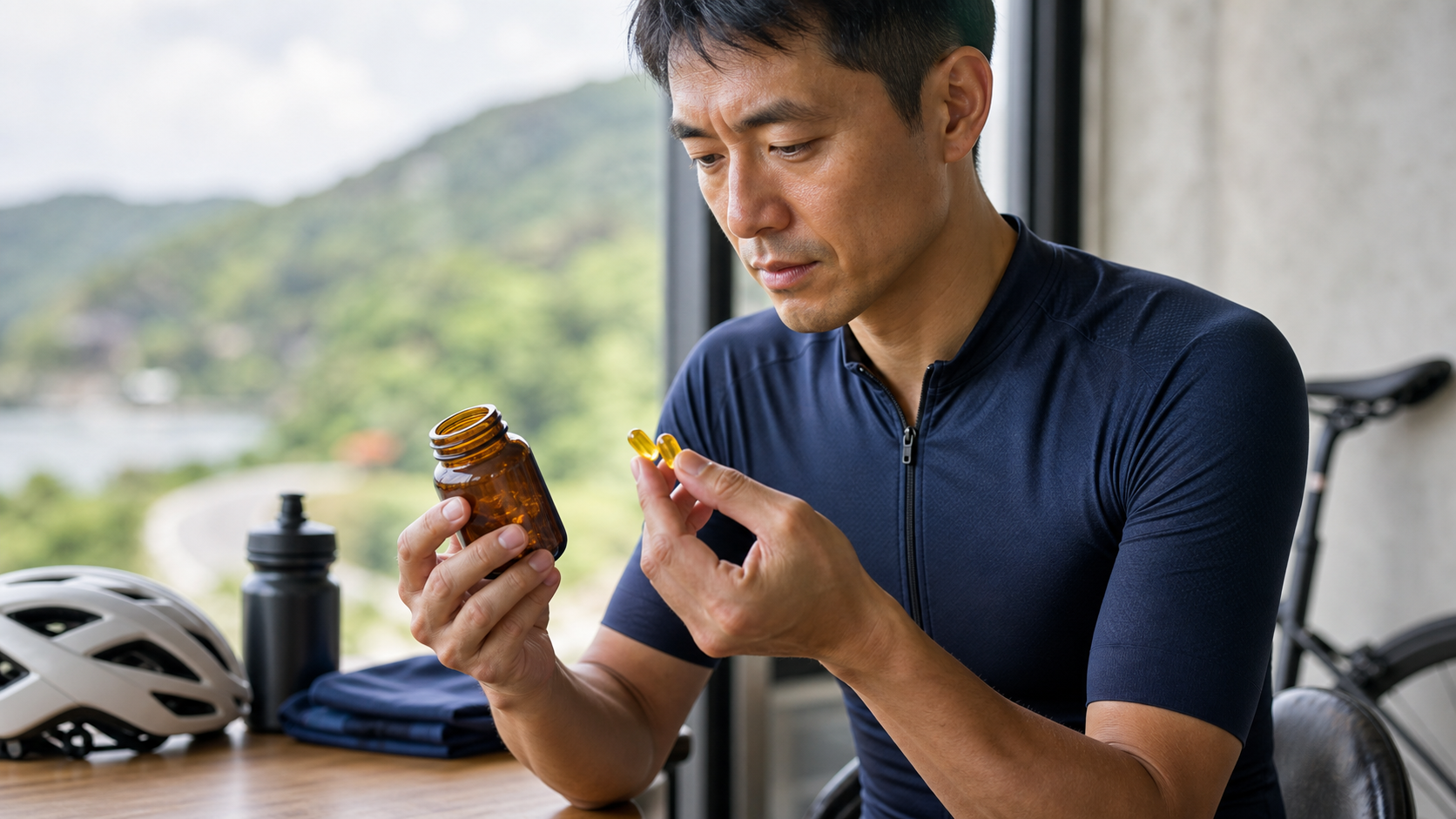
Starting with a Jar of Fish Oil That Sat in the Backseat for Three Months
A few years ago, an athlete training for the Westbound Wuling climb showed me the fish oil he was taking. That jar had been sitting in the backseat of his car for nearly three months. In Taiwan’s summer, car interior temperatures can easily exceed 50°C. The capsules felt soft and sticky, and opening the lid revealed a strong rancid odor. He said proudly, “Coach, I take this every day for recovery, so why are my calves still so sore and my recovery so slow?”
I didn’t scold him. I just asked him to cut open a capsule and smell it. That smell was the answer. He wasn’t taking good anti-inflammatory oil; he was taking a highly oxidized, bad oil that might actually be creating free radicals in his body. What’s worse, he couldn’t even tell me how much EPA and DHA he was consuming daily—he only knew “two capsules a day.”
This case is actually very typical. Over the past fifteen years, I’ve coached everyone from beginners just riding along the riverside, to amateur triathletes chasing personal bests, to elite athletes needing intensive recovery during the season. Omega-3 is the supplement I get asked about most often, yet it’s also the one most commonly taken incorrectly. Everyone has heard “fish oil is good for athletes,” but ask “How much EPA do you take daily?”, “What’s the TOTOX value of your fish oil?”, or “What EPA to DHA ratio should you use?”—and nine out of ten people can’t answer.
In this article, I want to lay out clearly the practical experience I’ve accumulated from coaching athletes over the years, combined with the principles that currently have relative consensus in sports nutrition. We’ll start with the scientific foundation, move to specific dosage tables, then discuss the pitfalls Taiwanese people are especially prone to, and how different levels of athletes should get started. Let me give you the conclusion first: Getting the dosage right, choosing the right ratio, and buying the right quality—these three things are all essential. Doing only one of them often means you might as well not have taken it.
Friendly reminder: This article discusses nutritional strategies for the general athletic population. If you have a chronic disease, are taking medication (especially anticoagulants), or are pregnant, please discuss this with your physician or dietitian first. This article cannot replace individualized medical advice.
Concepts and Scientific Foundation: Why Athletes Need to Pay Special Attention to Omega-3
What Exactly Is Omega-3
Omega-3 is a large class of polyunsaturated fatty acids. For athletes, the two truly important ones are the long-chain marine forms: EPA (eicosapentaenoic acid) and DHA (docosahexaenoic acid). You may also have heard of ALA (alpha-linolenic acid), which is found in plants like flaxseed, walnuts, and chia seeds. However, the human body’s conversion of ALA into EPA and DHA is very inefficient, typically only a few percent. So for those with high training volumes, relying solely on plant-based ALA makes it nearly impossible to achieve meaningful EPA/DHA intake. This is why, when we talk about sports supplementation, the focus is always on EPA and DHA.
How It Affects Athletic Performance and Recovery
The sports science community has accumulated evidence pointing in several directions regarding Omega-3’s effects on athletes. Let me explain in plain language, the way I talk to my athletes:
- Modulating inflammatory response: High-intensity training generates a lot of inflammatory and oxidative stress. This is normally a signal for the body to adapt and get stronger, but when excessive or combined with poor recovery, it becomes a burden. EPA is a raw material for the body to synthesize anti-inflammatory signaling molecules like resolvins, theoretically helping to “wrap up” inflammation more cleanly.
- Cell membranes and muscle repair: DHA is abundant in nerves and cell membranes and is thought to be involved in muscle cell membrane fluidity and repair signaling.
- Subjective recovery and delayed onset muscle soreness (DOMS): Quite a few studies have observed that after Omega-3 supplementation, subjective muscle soreness in the days following exercise, as well as some markers of muscle damage, tend to be lower.
- Cardiovascular and nervous system: There’s also discussion about its role in cardiac load for endurance athletes and in neurological focus during prolonged exercise.
Here I must be honest: These directions have supporting evidence, but many results are still accumulating. Dosage, population, and exercise type all lead to widely varying effects. I don’t overpromise to my athletes by saying “take this and you’ll ride faster.” Instead, I frame it as “helping raise your recovery ceiling a bit and cushioning the inflammatory floor”—a long-term foundational project.
I especially want to help everyone develop this mindset: The real value of sports supplements is often not “making you super strong,” but “making you less likely to fall apart.” A season is long. You’re dealing with accumulated training stress, nutritional gaps from eating out, and nights of insufficient sleep. Something like Omega-3 is more about thickening the stress buffer of your entire system, so that during high-load weeks, inflammation doesn’t spiral out of control and recovery doesn’t drag on too long. It won’t make you shine in any single workout, but stretched over months, you’ll be grateful you built this foundation well. That’s why I always categorize it as “foundation” rather than “magic bullet.”
The Dietary Gap for Taiwanese People
Why do I emphasize that Taiwanese athletic populations especially need to pay attention? It’s our eating-out structure. Taiwanese people eat out for a very high proportion of their meals. At bento shops, buffet restaurants, and noodle stands, the main dishes are mostly chicken legs, pork chops, and fried foods. Deep-sea fish (mackerel, Pacific saury, salmon, sardines) don’t appear very frequently. Many of my athletes eat Omega-3-rich deep-sea fish zero to one time per week. At the same time, the salad oil, soybean oil, and sunflower oil used heavily in restaurants are Omega-6. Over time, the Omega-6 to Omega-3 intake ratio becomes severely imbalanced. When your training volume is increasing and your body’s inflammatory demands are rising, but your diet is moving in the opposite direction, that gap is what I consider the core reason athletic populations should consider supplementation.
How Much Can You Get from Natural Foods? A Conversion Concept Table
Many athletes ask me, “Can’t I just eat more fish instead of taking supplements?” That’s a great question. The answer is: Natural food is always the first priority; supplements fill the gaps. But you need to know roughly how much you can get from food. Here’s a conceptual table of Omega-3 content in common foods (actual numbers vary by origin, season, and cooking method—use this to get a feel):
| Food (approximate one serving) | Approximate EPA+DHA Content | Coach’s Notes |
|---|---|---|
| Mackerel, Pacific saury (about a palm-sized piece) | Relatively high | Easy to find in Taiwan, great value deep-sea fish |
| Salmon (one fillet portion) | High | Common at restaurants and supermarkets |
| Sardines, anchovy canned | Medium-high | Cheap, convenient, good to stock up |
| General white fish (sea bass, tilapia) | Relatively low | Tasty, but Omega-3 isn’t the main feature |
| Shrimp, crab, shellfish | Low to medium | Some, but not a primary source |
| Flaxseed, chia seeds, walnuts | ALA only, low conversion | Vegetarians need to pay extra attention to sources |
Here’s how I usually plan with my athletes: First, aim for 2 to 3 servings per week of “high Omega-3 deep-sea fish” (rotate among mackerel, Pacific saury, salmon, and sardines). Once you achieve this step, you’ve raised your floor significantly. Supplements are for filling the gap when “I really didn’t eat fish this week” or “training volume was especially high.” For vegetarian athletes, because plant ALA conversion is too low, algae oil-derived DHA/EPA is a more practical supplement option. Vegetarian athletes absolutely need to know this, or they can be chronically deficient without realizing it.
Practical Method 1: How to Determine Your Dosage
This is what athletes want to know most. I’ll give you the table first, then explain. All dosages below refer to the actual total amount of EPA+DHA (in milligrams), not the total weight of the capsules or fish oil—this is the most common point of confusion, and I’ll address it specifically later.
Daily EPA+DHA Dosage Reference Table
| Target Population and Goal | Daily EPA+DHA Reference Amount | Notes |
|---|---|---|
| General adult, basic health | About 250–500 mg | Equivalent to the lower limit concept for general health maintenance |
| Regular exercise, aiming to improve recovery | About 1,000–2,000 mg | Most athletic scenarios fall within this range |
| High training volume, intensive in-season recovery | About 2,000–3,000 mg | Requires good quality products and consistent long-term use |
| Generally recommended upper safety limit | Usually no more than 3,000–4,000 mg/day | Higher doses should only be done under professional guidance |
International principles are roughly: For general health maintenance, start at about 250 mg; to pursue athletic performance and recovery benefits, the common range is about 1 to 3 grams (1,000–3,000 mg) of EPA+DHA per day; health organizations generally cap the upper limit at about 3,000 to 4,000 mg per day, and going higher is recommended only with professional assessment. My simple advice to athletes is: For most people training seriously, targeting 1,500 to 2,000 mg of EPA+DHA per day is a safe, practical, and cost-effective starting point.
How to Think About “Accumulating” Dosage
There’s one concept you must establish: Omega-3 is not a painkiller. It’s not “take it today, feel it today.” It takes time to accumulate into your cell membranes and red blood cells (there’s a marker called the “Omega-3 Index” that measures the proportion in red blood cell membranes). In my experience, it typically takes 8 to 12 weeks of consistent, stable supplementation before your body’s Omega-3 status changes noticeably. That’s why I dread athletes who “load up the week before a race”—it’s almost meaningless. This is a marathon, not a sprint.
Practical Method 2: How to Choose Your EPA/DHA Ratio
When buying fish oil, you’ll see various ratios. This actually relates to your goals.
Common Ratios and Their Appropriate Uses
| Goal Direction | Preferred EPA/DHA Configuration | My Practical Notes |
|---|---|---|
| Anti-inflammatory, sports recovery focus | Higher EPA ratio (e.g., 2:1 or even more EPA) | The most common choice for athletes |
| Balanced | About 1:1 | A versatile, hard-to-get-wrong option |
| Neurological, cognitive, visual focus | Higher DHA ratio | More for general health or specific needs |
For sports recovery and anti-inflammatory purposes, configurations leaning toward EPA (e.g., EPA:DHA around 1:1 to 2:1, or even higher EPA) are currently considered more supportive of muscle recovery and inflammation modulation. This is why you see many “sports” fish oils with particularly high EPA content.
But I want to pump the brakes for general readers: Unless you’re an advanced athlete who cares about details, don’t obsess over the ratio. For a recreational cyclist training 10 hours a week, if you “get the total dosage right, choose good quality, and stay consistent long-term,” you’ve already captured 80% of the benefit. The ratio is the last 20% of optimization, not something to stress about at the entry level. I often tell my athletes: a perfect 2:1 ratio in oxidized oil with insufficient dosage is far worse than a fresh, adequately dosed 1:1.
When to Take It and How to Improve Absorption
Besides how much to take, many people overlook “how to take it.” EPA and DHA are fat-soluble, so taking them with a meal that contains fat generally leads to better absorption than on an empty stomach. My practical recommendations:
- Take with a meal that contains fat: For example, the meal with stir-fried vegetables, meat, or fish. Taking fish oil on an empty stomach not only absorbs worse but also more easily causes gastrointestinal discomfort and fishy burps.
- Split doses or take all at once—the key is hitting your daily target: If your daily goal is 2,000 mg of EPA+DHA and each capsule only has 500 mg, you need to take four. You can take two in the morning and two in the evening, or all four with dinner. The key is “hitting the amount that day,” not being precise about the exact time.
- What to do about noticeable fishy burps: Try taking it with a meal, or refrigerate it before taking (some people find cold capsules less nauseating). But if it’s a “rancid, spoiled” smell rather than just fishy, that’s not a consumption method issue—the oil is oxidized, and it’s time to switch.
- Those with sensitive stomachs should ramp up from a low dose: Don’t hit 2,000 mg on day one. Start at 500 to 1,000 mg, let your body adapt for a week or two, then increase. This can significantly reduce the chance of bloating and loose stools.
Second Case Study: The Triathlete Who Spent Big but Felt Nothing
Here’s a contrasting case. A female athlete training for half-ironman distance was willing to invest. She bought an imported, high-end fish oil with adequate EPA+DHA per capsule. But she complained that after three months she “felt nothing” and wanted to quit. I asked her to describe her actual consumption method, and the problem appeared immediately: She was afraid of gaining weight, so she took it every morning on an empty stomach, washed down with just black coffee. And with training and work being busy, she actually only managed to take it about three or four days a week.
In other words, her product quality was fine and the per-capsule dosage was adequate, but “reduced absorption on an empty stomach” plus “taking it sporadically” cut the benefits of a good oil by more than half. I asked her to switch to taking it with dinner, set a recurring reminder on her phone, and prioritize “actually taking it” over “taking the exact amount.” After another two months, she subjectively reported improvements in sleep after training and less heaviness in her legs the next day. Same jar of oil, right method, different story. I often use this case to remind my athletes: The benefit of fish oil is the product of “quality × dosage × adherence × time.” If any one factor is zero or very low, the result gets dragged down.
Practical Method 3: Quality Identification—Where Most People Stumble
Back to that jar of fish oil that sat in the backseat for three months. The biggest risk with fish oil isn’t “ineffectiveness”—it’s oxidation. Polyunsaturated fatty acids are highly vulnerable to light, heat, and oxygen. Once oxidized, not only do the benefits diminish, but it can also produce oxidation products that aren’t friendly to the body. Taiwan’s hot, humid climate makes this problem more severe than in temperate countries. Here’s the quality identification checklist I teach my athletes.
Look at Freshness Indicators: TOTOX, PV, AV
The industry uses several laboratory indicators to measure whether fish oil is “fresh or oxidized.” The most comprehensive is TOTOX (total oxidation value), which combines the “peroxide value (PV)” and “secondary oxidation products (p-anisidine value, AV).” The formula concept is TOTOX = (2 × PV) + AV. The lower the number, the fresher the oil.
| Indicator | Ideal Reference Range | Meaning |
|---|---|---|
| TOTOX (Total Oxidation Value) | The lower the better; generally considered good below 10 | Comprehensive oxidation indicator; the most important one to check |
| PV (Peroxide Value) | Lower is better | Primary oxidation products |
| AV (p-Anisidine Value) | Lower is better | Secondary oxidation products |
The industry’s common quality grading concept is: TOTOX around 10 or below is very fresh, barely oxidized; about 11 to 20 is an acceptable, good range; anything higher starts leaning toward oxidized. There’s a third-party fish oil certification called IFOS. It tests the finished product (meaning the actual capsules or oil you buy). To earn the highest star rating, the product must meet thresholds for PV, AV, and a TOTOX ceiling, while also being tested for heavy metals, PCBs, and confirming EPA+DHA concentration. The key point is that IFOS tests the “finished product” and requires annual re-testing—because if the same oil is stored poorly, it could pass last year and fail this year.
Practical Checklist Before and After Purchase
Here’s a checklist of actions I have my athletes take:
- Check that the label shows EPA+DHA content, not total fish oil weight: A “1000 mg fish oil” capsule might only contain 300 mg of EPA+DHA, or even less. Be sure to flip to the back and look at the actual EPA and DHA milligrams per capsule, then multiply by how many you take daily—that’s your true intake.
- Look for brands that disclose third-party testing or oxidation indicators: Brands willing to publish TOTOX, PV, AV, or hold certifications like IFOS usually have more confidence in their quality.
- Pay attention to the form (TG vs. EE): The market has triglyceride forms (rTG/TG) and ethyl ester forms (EE). This involves discussions about absorption and stability. General consumers don’t need to get bogged down in the details, but it’s one aspect you can factor into comparisons.
- Smell it, taste it: Fresh fish oil has at most a mild sea scent. A strong, pungent rancid or spoiled smell is an oxidation signal. Don’t be sentimental—throw it out.
- Storage method: This is the most overlooked yet most critical step for Taiwanese people. After opening, refrigerate, protect from light, and keep the lid tightly closed. Never leave it in a scooter compartment, car backseat, next to the kitchen stove, or on a balcony. Liquid fish oil is especially vulnerable.
- Check the expiration date and purchase turnover: Don’t stockpile a six-month supply. Buy only what you can finish within three months. Stockpiling too much often ends with the last half-jar slowly oxidizing in the cupboard—money down the drain.
- Don’t be fooled by unit price; calculate cost per milligram: When two products have very different prices, converting to “cost per milligram of EPA+DHA” sometimes reveals the expensive one is actually better value, while the cheap one might have low concentration and require taking many capsules. Learn to do this conversion, and you won’t be fooled by the sticker price.
Common Mistakes and Corrections
In all my years coaching, I see the same mistakes repeated. Let me list the most common ones so you can check whether you’re guilty of any.
Mistake 1: Confusing “Total Fish Oil Weight” with “Effective Dosage”
This is the number one mistake. An athlete says, “I take 2,000 mg of fish oil a day!” Then we flip the label, and each 1,000 mg capsule contains only 300 mg of EPA+DHA. Two capsules give just 600 mg—far short of the target range for sports recovery. Correction: Only ever count EPA+DHA milligrams. Take out the jar you have right now and calculate it once.
Mistake 2: Cramming Right Before a Race
As mentioned earlier, Omega-3 takes 8 to 12 weeks to show effects. Correction: Treat it like brushing your teeth—a long-term habit, not a pre-race supplement. Not taking it regularly and then gulping it down before a race won’t work, and your stomach might rebel.
Mistake 3: Completely Ignoring Storage, Turning Good Oil into Bad Oil
The athlete from the beginning of this article is a prime example. Taiwan’s summer car interiors and scooter compartments are oxidation accelerators. Correction: The first thing you do after buying it is decide “where this jar will live.” Refrigeration and light protection are the safest default.
Mistake 4: Only Supplementing Fish Oil While Ignoring the Dietary Basics
Some people spend big money on premium fish oil but eat fried foods and refined carbs for every meal. Supplements “supplement” deficiencies; they don’t offset a poor diet. Correction: First set the goal of eating deep-sea fish (mackerel, Pacific saury, salmon, sardines) 2 to 3 times a week. Supplements raise the floor; they’re not a substitute.
Mistake 5: Endlessly Increasing Dosage, Thinking More Is Always Better
Dosage isn’t better the higher it goes. Excessively high doses can affect blood clotting and cause gastrointestinal discomfort. The risk is especially high for those taking anticoagulant medication, those with upcoming surgery, or those with a bleeding tendency. Correction: Stay within a reasonable range (1,500–2,000 mg for most people). If you want to go higher, consult a professional first.
Mistake 6: Ignoring Interactions with Medications and Medical Conditions
This is especially important and also touches on compliance. If you have cardiovascular disease, diabetes, hypertension, or are taking anticoagulant, blood pressure, or blood sugar medication, your Omega-3 supplementation strategy must be individualized. Correction: Don’t just look up dosages online and start loading up. Bring your product label and ask your physician or pharmacist. This is actually quite convenient within Taiwan’s outpatient and National Health Insurance system—don’t be afraid of the hassle.
Action Recommendations for Readers at Different Levels
Everyone starts from a different point. I’ve divided the action plan into three levels—just find where you fit.
Beginners / Those Just Starting Regular Exercise
- Step one is not buying fish oil; it’s fixing your diet: First, try making “eat deep-sea fish 2 to 3 times a week” your first goal. This is more fundamental than any supplement.
- If you do supplement, choose a solid, middle-of-the-road product with third-party testing or disclosed oxidation indicators and clearly labeled EPA+DHA milligrams. No need to chase premium versions.
- Target about 1,000 mg of EPA+DHA per day, take it with meals, and stay consistent for at least 8 weeks before evaluating how you feel.
- Store it properly and don’t leave it in the car—that alone puts you ahead of half the people.
Advanced Amateur Athletes / High Weekly Training Volume
- You can raise the target to about 1,500–2,000 mg of EPA+DHA per day.
- Since the goal is recovery and anti-inflammation, choose a configuration with a higher EPA ratio.
- Start paying attention to freshness indicators like TOTOX and factor quality into your purchasing decisions.
- During high-intensity in-season periods, you can adjust toward the upper end of the range as appropriate, while monitoring gastrointestinal response and overall recovery.
- It’s recommended to take it consistently with the same meal (a meal containing fat) for better absorption and consistency.
Elite / High Training Load Athletes
- Dosage can be evaluated toward 2,000–3,000 mg of EPA+DHA per day under professional monitoring, but only with high-quality, low-oxidation products.
- If possible, get blood work to understand your Omega-3 status, making supplementation evidence-based rather than based on feel.
- Before races, surgeries, or when using specific medications, proactively confirm strategy and discontinuation timing with your team physician or dietitian.
- Integrate it into your overall periodized nutrition plan, not as an isolated capsule.
A Quick Self-Check Table
| Check Item | Your Status |
|---|---|
| Do I know how many milligrams of EPA+DHA I take daily? | □ Yes □ No |
| Is my fish oil refrigerated or stored away from light? | □ Yes □ Left in car/room temperature |
| Have I taken it consistently for 8+ weeks? | □ Yes □ Sporadically |
| Do I eat deep-sea fish 2+ times a week? | □ Yes □ Almost never |
| Do I have a chronic condition or take medication, and have I asked a professional? | □ Asked □ Haven’t asked |
If any box is checked on the right side, that’s where you should prioritize improvement next.
Frequently Asked Questions and Myth-Busting (FAQ)
These are the questions I get asked to death at training camps and lectures. Let me answer them all at once.
Q1: Will fish oil damage my liver or kidneys?
For generally healthy people, at reasonable dosages, Omega-3 is a relatively gentle nutritional supplement. But “reasonable dosage” is the key. Endlessly increasing the amount, or having existing liver or kidney disease, or taking medication, all require individualized assessment. If you have a chronic condition or are on medication, don’t decide on your own—bring the product to your physician or pharmacist.
Q2: Can fish oil be taken with other supplements?
Most common vitamins and minerals can be taken together. What you need to be especially careful about is if you’re also taking anticoagulant or antiplatelet medications, or other supplements that affect blood clotting—the risks can stack. In such cases, you must consult a professional first, especially before surgery, tooth extraction, or invasive procedures.
Q3: How can vegetarians get EPA/DHA?
Plant-based ALA converts to EPA and DHA very inefficiently. Relying solely on flaxseed, walnuts, or chia seeds is usually insufficient. Algae oil is a plant-based option that extracts DHA directly from microalgae (some also contain EPA). It’s the more practical source for vegetarian athletes. When purchasing, still check the EPA+DHA milligrams and quality information carefully.
Q4: How do I choose between fish oil, krill oil, and algae oil?
All three provide Omega-3. The differences lie in source, form, and price. For the vast majority of people, choosing a product with adequate dosage, sufficient freshness, and clear labeling matters more than obsessing over which raw material it is. Krill oil typically has a higher unit price, and the EPA+DHA per capsule is sometimes not that high. Before buying, be sure to calculate actual intake and cost per milligram.
Q5: Can fish oil help me lose fat or gain muscle?
Please set your expectations correctly. Omega-3’s role is to support recovery, modulate inflammation, and serve as a long-term nutritional foundation. It’s not a fat-loss drug or a muscle-building miracle. What truly determines your physique and performance is always training, total calories, protein intake, and sleep. Fish oil is a supporting actor, not the lead.
Q6: I saw a product labeled “deep-sea fish oil concentrate” and it sounds impressive. Does that mean it’s better?
Marketing terms don’t equal quality. “Concentrated” usually just means higher EPA+DHA concentration, which is a completely different thing from freshness (whether it’s oxidized). You still need to return to the two core questions: How many milligrams of EPA+DHA per capsule? Is there third-party testing or oxidation indicators available? No matter how pretty the marketing language, if these two questions can’t be answered, hold off.
Q7: Do child and adolescent athletes need supplementation too?
Nutritional strategies for growing children should be more conservative and more individualized. Prioritize natural foods (eat more fish). Whether supplementation is needed and how much should be discussed with a pediatrician or dietitian. Don’t directly apply adult athlete dosages.
Q8: Is refrigeration really necessary? Does room temperature really make that much difference?
It makes a huge difference, especially in Taiwan. Taiwan’s summer room temperatures, car interiors, and scooter compartments are all breeding grounds for oxidation. Capsule forms are relatively more resistant; liquid fish oil is the most vulnerable and almost always needs refrigeration after opening. My default recommendation is: whether capsules or liquid, after opening, refrigerate, protect from light, and keep the lid tight. Rather than memorizing a bunch of exceptions, just develop the habit of “fish oil goes in the fridge.”
Fitting It into Your Year-Round Training Rhythm: A Simple Periodization Concept
Finally, here’s something advanced athletes often ask about: Should Omega-3 be adjusted according to the training cycle? My view is—maintaining a baseline supplement year-round without interruption is the most worry-free approach and best matches its “accumulative” nature, because it works by gradually raising your body’s Omega-3 status over the long term, not by spiking it on certain days. But you can adjust the “dietary side”—the frequency of deep-sea fish—in relation to training load:
| Training Phase | Supplementation Strategy Concept | Coach’s Reminder |
|---|---|---|
| Base period / General weeks | Maintain daily target dosage; try to eat fish in your diet | Habit-building phase; the key is “hitting it every day” |
| High-intensity period / In-season | Keep it uninterrupted; be more proactive about eating fish | Recovery demands are high; don’t stop now |
| Taper / Week before race | Take it as usual; no need to add extra | Cramming is meaningless; consistency is best |
| Post-race recovery period | Maintain supplementation alongside overall recovery nutrition | Treat it as part of your recovery foundation |
Please note the point here is not “load up before the race”—we’ve established that doesn’t work—but rather treat it as a year-round baseline, keeping your body’s Omega-3 status at the level you want. The only times you need to actively “adjust” are usually downward: for example, approaching surgery, or when your physician recommends pausing due to your medications or condition. In those cases, always listen to the professionals.
Conclusion: Getting the Foundation Right Matters More Than Chasing Fancy Products
Back to the athlete who left his fish oil in the backseat for three months. I asked him to do three things: switch to a product with clear labeling and testing information; calculate his daily intake to about 1,500 mg of EPA+DHA; and refrigerate it, taking it with dinner. At the same time, I helped him increase his weekly deep-sea fish frequency from zero to two servings. About two months later, he reported on his own that the tightness in his calves after long climbs did resolve faster, and his overall recovery rhythm smoothed out. I didn’t credit the fish oil entirely—training planning, sleep, and overall diet were all being adjusted simultaneously—but at least he was no longer the person “spending money on bad oil and not even taking enough.”
This is the core message I want to convey: Omega-3 is not a magic pill; it’s one of the foundations of the recovery building. Get the dosage right, choose the right ratio, verify the quality, stay consistent long-term, and store it properly—these five unglamorous things. Do them, and the jar of fish oil in your hand will truly start working for you. Rather than constantly switching to more expensive, flashier star products, it’s better to firmly solidify these basics. This is the deepest lesson I’ve learned from countless athletes over these fifteen years: Great athletes are simply the ones who do the unremarkable fundamentals more solidly than everyone else.
This article is educational content and cannot replace individualized diagnosis and treatment advice from a physician, physical therapist, or dietitian. If you have a chronic disease (such as diabetes, hypertension, heart disease), are taking medication (especially anticoagulants), have upcoming surgery, or are pregnant or breastfeeding, please consult your physician, pharmacist, or dietitian for an individualized assessment before supplementing with Omega-3.
References
- Gatorade Sports Science Institute — Promoting Optimal Omega-3 Fatty Acid Status in Athletes:https://www.gssiweb.org/sports-science-exchange/article/promoting-optimal-omega-3-fatty-acid-status-in-athletes
- Healthline — How Much Omega-3 Should You Take per Day?:https://www.healthline.com/nutrition/how-much-omega-3
- BIOGENA — Omega-3 in sports: benefits, intake & dosage for athletes:https://biogena.com/en/knowledge/blog/omega-3-sport
- NFO — Crash course on TOTOX value: How fresh is your Omega-3 fish oil?:https://nfo.com/blogs/news/crash-course-on-totox-value-how-fresh-is-your-omega-3-fish-oil
- Omega-3 Certifications Explained (IFOS, MSC, Friend of the Sea):https://www.omega3-test.net/uk/quality/omega-3-certifications.html
Related Reading
- Omega-3 and Exercise: From Inflammation, Recovery to Adaptation—How Should You Actually Take Fish Oil
- The Complete Guide to Omega-3 Fatty Acids: Inflammation, Recovery, and Cardiovascular Health—How to Take Fish Oil Effectively
- The Enhanced Benefits of Fish Oil Omega-3 on Muscle Protein Synthesis: Research on DHA’s mTOR Activation
- Omega-3 and Heart Rate Variability (HRV): Real-World Recovery Benefits of 2g EPA+DHA Daily
CT暗黑廚房) 車友必備 宇宙無敵鮮蚵湯 幫助訓練恢復 天然食補 好市多 超肥鮮蚵 破PR
7 年前
#公路車 #Vo2Max #最大攝氧量 測驗 體驗 | 心肺測試
6 年前
西進武嶺 免費訓練分析服務 Intervals | 練不夠還是練過頭?你哪一種類型選手?AI模型告訴你! | 備戰神器 | 公路車 訓練 | CT Yeh
4 年前
一日北高/長距離團騎 常見問題補充篇 / 組團或跟團的眉角 / 壯車友容易被瘦車友慢性拉爆 / 原來屁股痛可能是這個原因...? / 風場配速法 / 公路車 / CT Yeh
2 年前
靠單車減肥35公斤 心得分享與整理
7 年前
一日北高常見問題大集合 | 攻略 | 路線 | 訓練 | 補給 | 自行車 單車 | 一日雙城 | 雙塔 | TWB北高360 | 屁股痛
6 年前
#KOM 夏季登山王之路 比賽實況 #東進武嶺
7 年前
FTL 與 SYB 車隊專訪 西進武嶺 實用攻略分享! 2小時 如何練?!你不知道的眉角!新手準備武嶺必看 EP1 | 實力派女車友 | 精華版 | 公路車 | CTYeh
4 年前