Beetroot Juice and Nitrate Supplementation: A Coach's Guide to Dosage, Timing, and Side Effects
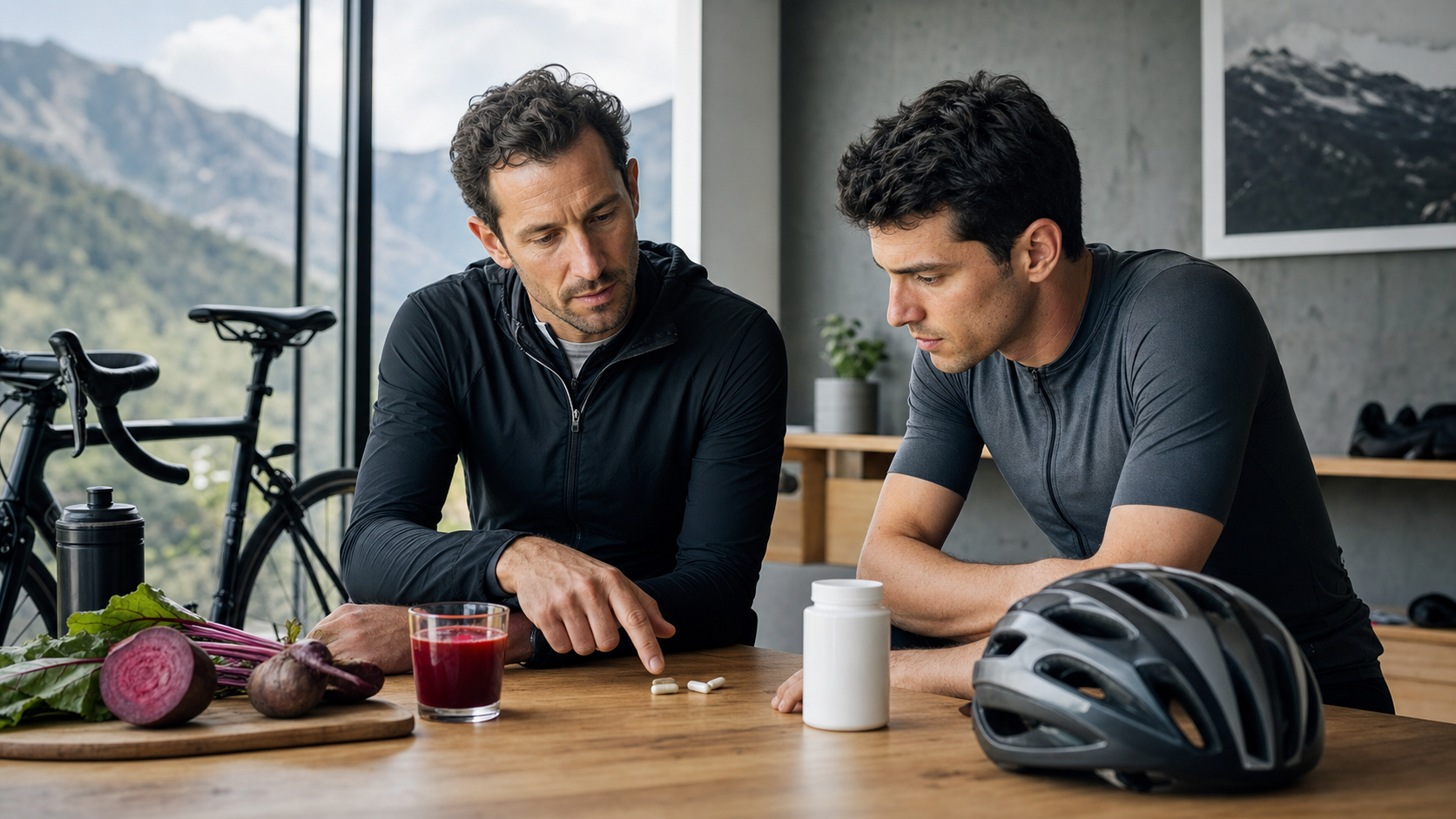
Starting with an Athlete Who Set a PB
A few years ago, I coached an amateur cyclist preparing for Taiwan’s King of the Mountain Challenge (Wuling), let’s call him A-Kai. A-Kai’s functional threshold power (FTP) was around 250 watts, and he weighed 68 kilograms—a typical “trains hard but has plateaued” advanced rider. He asked me a question I get from different athletes almost every season: “Coach, everyone online is pushing beetroot juice, saying it’ll make you faster. Is this just another marketing gimmick to tax the gullible?”
My answer usually disappoints the salespeople and surprises the complete skeptics. Beetroot juice is not a miracle cure, but it’s not baseless hype either. It’s backed by solid exercise physiology mechanisms and is one of the few legal sports supplements with a reasonably solid evidence base. The question has never been “does it work,” but rather “who does it work for, at what dose, at what timing, and can you tolerate the side effects.”
In this article, I want to use the tone I’d take with my athletes to cut through the marketing fog around beetroot and nitrate supplementation and turn it into a concrete strategy you can start evaluating tonight. I’ll give you dosage tables, timing tables, a list of common mistakes, and I’ll honestly tell you who shouldn’t bother spending the money.
Here’s the bottom line for those short on time: If you’re a recreational to advanced endurance athlete, consuming a beetroot product containing approximately 300 to 600 mg of nitrate 2 to 3 hours before a race or key workout is currently the best-supported protocol in the research. However, about one in five people are “non-responders,” and it won’t fix insufficient training volume.
Concepts and Scientific Basis: What Nitrate Does in Your Body
Nitric Oxide Is the Real Star; Beetroot Is Just the Vehicle
Many people think beetroot itself contains some magical ingredient, but the real protagonist is nitrate (NO3-). Vegetables like beetroot, spinach, arugula, and celery are naturally rich in nitrate—beetroot just happens to be a high-concentration, convenient source for concentrated juice.
Once you ingest nitrate, it follows an interesting pathway that exercise physiologists call the “nitrate-nitrite-nitric oxide pathway”:
- Nitrate is absorbed into the bloodstream, and a portion returns to the oral cavity via the salivary glands.
- Symbiotic bacteria on the tongue reduce nitrate into nitrite (NO2-).
- Nitrite is further converted into nitric oxide (NO) in the body, especially in hypoxic, acidic exercising muscle environments.
Nitric oxide is a signaling molecule that dilates blood vessels, improves blood flow distribution to muscles, and enhances mitochondrial efficiency. In plain terms, it lets you use slightly less oxygen and feel a bit easier at the same speed or power output.
There’s an often-overlooked detail worth emphasizing: nitric oxide’s effects are especially pronounced in “hypoxic, acidic” environments—which is exactly the state your muscles are in during high-intensity exercise. This also explains why nitrate’s effects are often more noticeable in moderate-to-high-intensity endurance exercise than in low-intensity walking—because the exercise itself creates the favorable environment for converting nitrite into nitric oxide. Additionally, nitric oxide is thought to be particularly beneficial for improving blood flow to fast-twitch muscle fibers, which are heavily recruited when you’re climbing, accelerating, or sprinting—another reason why many studies see effects in high-intensity intermittent sports.
The Small but Real Improvement in “Exercise Economy”
Here’s a key term: exercise economy, which refers to the amount of oxygen you need to sustain a given intensity. Nitrate’s most widely validated effect is a modest improvement in exercise economy—you do the same work with less oxygen.
That sounds abstract, but translated into racing, it’s tangible. Multiple meta-analyses show that in trained endurance populations, nitrate supplementation yields an average performance improvement of about 2% to 3%, with some studies even seeing around 5%. For a 3-hour Wuling challenge, 2% to 3% could mean a difference of several minutes—or even the line between making or missing the cutoff time.
Why Some People Respond and Others Don’t
This is the part I most want my athletes to understand. Nitrate’s effects depend heavily on “who you are”:
- General exercisers, recreational to advanced athletes: Responses are usually most pronounced. Research consistently finds the most stable effects in non-elite populations during high-intensity endurance efforts lasting about 10 to 17 minutes.
- Elite and professional athletes: Effects often fail to reach statistical significance. A reasonable explanation is that their nitric oxide systems are already optimized near their ceiling through extensive training, leaving little marginal benefit from additional supplementation.
- People with disrupted oral bacteria: Because step two depends on oral bacteria, using antibacterial mouthwash within a few hours before or after supplementation can effectively zero out the effect. This is a trap many people fall into without realizing it.
Additionally, research consistently observes that roughly 15% to 20% of people are “non-responders”—they feel almost nothing no matter how you adjust dose or timing. This may be related to genetics, oral microbiome composition, or dietary habits. So I always tell my athletes: treat beetroot as a tool “worth personal testing,” not a guarantee that it “will definitely work.”
Practical Application: Dosage, Timing, and Product Selection
Now that the concepts are covered, let’s get to the operational side you most want to know. I’ll give you tables you can follow directly.
Effective Dosage: Look at “Milligrams of Nitrate,” Not “How Many c.c.”
This is the most common communication gap. You buy a bottle of beetroot juice that says 500 ml on the label, but that doesn’t equal an effective dose. What really matters is how many milligrams of nitrate each serving contains—commercial products can vary enormously.
The International Society of Sports Nutrition (ISSN) position stand provides a practical range: in the form of beetroot or sodium nitrate, a single dose of approximately 300 to 600 mg of nitrate, taken 2 to 3 hours before exercise. Most research-grade beetroot concentrate “shots” are designed to deliver roughly 400 mg (about 6.4 to 6.5 mmol) of nitrate per small bottle.
Here’s a table summarizing common dosing approaches:
| Target Scenario | Recommended Nitrate Dose | Conversion Reference | Notes |
|---|---|---|---|
| General test: “Am I a responder?” | ~400 mg | Usually 1 small concentrate shot | Confirm tolerance and effect first |
| Standard race-day dose | ~400 to 600 mg | 1 to 1.5 concentrate shots | Best-supported range |
| Trying a higher dose | 800 mg or more | 2+ shots | Benefits don’t scale linearly; GI discomfort risk rises |
| Long-distance / chronic supplementation | ~400 to 600 mg daily | 3 to 6 consecutive days | Maintains a higher baseline of nitrite in the body |
Please especially remember the key point in the last two rows of the table: the dose begins to plateau around 500 to 600 mg. Forcing 750 or even 1000 mg won’t proportionally improve performance—it just makes beeturia, bloating, and diarrhea more likely. This is a mistake many eager athletes make.
Timing: Acute Supplementation vs. Chronic Supplementation
Nitrate can be used in two ways, either separately or combined:
Acute supplementation (single pre-race dose): Consume 2 to 3 hours before exercise. The reason is that blood nitrite levels peak approximately 2 to 3 hours after ingestion, so you want that “peak” to align exactly with your start time or the key section of the course.
Chronic supplementation (consecutive days): Consume daily for 3 to 6 consecutive days to raise your baseline levels, then add one acute dose on race day. For important target races, I usually recommend this “continuous loading + pre-race boost” combination to advanced athletes.
Below is a sample pre-race timeline I actually give to athletes (using a mountain race starting at 7:00 AM as an example):
| Time Point | Action | Purpose |
|---|---|---|
| From 6 days before race | 1 serving of beetroot concentrate daily (approx. 400 mg) | Chronic loading, raise baseline |
| From 3 days before race | Stop using mouthwash containing antibacterial agents | Protect oral reducing bacteria |
| Night before race | Normal carbohydrate intake, get good sleep | Fundamentals matter more than supplements |
| 2.5 hours before start (approx. 4:30) | 1 serving of beetroot concentrate (400 to 600 mg) + breakfast | Align nitrite peak with start time |
| 45 to 60 minutes before start | If accustomed to caffeine, consume now | The two supplements work via different mechanisms and can be stacked |
| Before start | Avoid antibacterial mouthwash, avoid chewing gum or antiseptic lozenges | Preserve the effect |
Beetroot Juice vs. Capsules/Powder: How to Choose
The second most common question from athletes is about the form. Let me clarify with a comparison table:
| Form | Advantages | Disadvantages | Best For |
|---|---|---|---|
| Concentrated shot (small bottle of pure juice) | Nitrate dosage clearly labeled, most research uses this form | Earthy taste, higher unit price, requires refrigeration | Those who want to “follow the research exactly” |
| Regular beetroot juice (large bottle) | Cheap, easy to find in supermarkets | Nitrate concentration is inconsistent, may need to drink a lot to get enough | Those on a budget, willing to experiment |
| Beetroot powder | Convenient to carry, can be added to sports drinks | Processing may degrade some nitrate, labeling varies | Frequent travelers, those who need light luggage |
| Beetroot capsules/extracts | No earthy taste, easy to swallow | Many capsules have extremely low or even negligible nitrate content, labeling is often opaque | Those who just want to swallow one pill (must choose very carefully) |
I want to give a special warning about capsules here: many beetroot capsules on the market tout “beetroot extract,” but what actually matters is the nitrate content, and many capsule products simply don’t have enough nitrate, or the labeling is unclear. If you buy capsules, you must look for products that clearly state “milligrams of nitrate per serving”; otherwise, you might just be swallowing an expensive purple placebo. For people in Taiwan who eat out frequently and find the juice inconvenient, I usually still recommend starting with a clearly labeled concentrated shot to confirm whether you’re a responder before deciding on a long-term investment.
Common Mistakes and Corrections
After leading teams for so many years, the mistakes I’ve seen can almost all be categorized into the following types. Check whether any of these apply to you.
Mistake 1: Trying It for the First Time on Race Day
This is the most classic and most damaging mistake. The earthy taste of beetroot juice, plus the gastrointestinal reactions some people experience, means trying it for the first time on race day is using your most important day as a guinea pig.
Correction: Any nutrition strategy must follow the iron rule of “never try anything new on race day.” First rehearse it 2 to 3 times during regular long training sessions or mock races to confirm the taste is acceptable, your stomach handles it fine, and you can feel the effect—only then bring it into race day.
Mistake 2: Using Antibacterial Mouthwash or Chewing Mint Antiseptic Lozenges Right After Consuming
As mentioned earlier, nitrate conversion depends on oral bacteria. Many people habitually rinse their mouths or chew mint lozenges to mask the earthy taste after supplementing, which ends up killing the reducing bacteria and directly diminishing the effect.
Correction: Avoid mouthwash containing antibacterial agents like chlorhexidine and antiseptic lozenges for several hours before and after supplementation. To remove the taste, rinse with plain water or simply take it with food.
Mistake 3: Thinking More Is Always Better
Some overeager athletes double or triple the dose to 3 or 4 small bottles, thinking “more must work faster.” In reality, the benefit plateaus at around 500 to 600 mg, and excess only brings purple urine, bloating, diarrhea, or even disrupts race pacing.
Correction: Stick to the sweet spot of 300 to 600 mg. If you want more effect, adjust your training and sleep—that’s where the real room for improvement lies.
Mistake 4: Using Beetroot Juice to Mask Inadequate Training
This is a mindset mistake, and the one I most want to correct. The 2% to 3% is an “icing on the cake” figure, provided your engine (aerobic base, strength, fatigue management) is already built. If your weekly training volume is insufficient, no amount of beetroot juice will conjure up fitness.
Correction: Place supplements at the very top of the pyramid. First take care of training, sleep, and daily balanced nutrition (eating plenty of dark leafy greens and beets themselves is already a natural source of nitrate), and only then use supplements for fine-tuning.
Mistake 5: Ignoring That You Might Be a “Non-Responder”
Some people try it several times without feeling any effect, yet force themselves to keep drinking because “everyone recommends it,” wasting money and suffering through the earthy taste.
Correction: Give yourself an honest testing protocol (I’ll provide one in the next section). If you feel nothing after 3 to 4 trials, graciously accept that you might be among the 15% to 20% non-responders and spend your budget elsewhere.
Side Effects and Safety: What You Need to Know
Beetroot products are generally safe overall, but a few things must be clarified upfront.
Purplish-Red Urine and Stool
The most common and completely harmless effect is beeturia: urine or stool turning pink or purplish-red. This is caused by betalain pigments, not blood in the urine, and it usually returns to normal within a day or two. Don’t be alarmed the first time you see it, but if you’re certain you haven’t eaten beets recently and your urine appears bloody, seek medical attention—don’t just assume it’s beeturia.
Gastrointestinal Discomfort
Some people experience bloating, abdominal cramping, or diarrhea, especially at higher doses or in those with sensitive stomachs. This is why I insist on rehearsing during training days—you don’t want to be searching for a restroom halfway up Wuling.
Blood Pressure and Chronic Disease Populations: Please Read This Section Carefully
Nitrate causes vasodilation and has a mild blood-pressure-lowering effect. This is usually not a problem for healthy people, but certain groups need to be especially careful, and these are the ones I always ask athletes to confirm with their healthcare provider first:
- Those currently taking blood pressure medication: Nitrate’s blood-pressure-lowering effect may stack with the medication and requires discussion with your physician.
- Those taking nitrate-based cardiac medications (e.g., for angina): There are concerns about mechanistic interactions; be sure to consult your physician first.
- Those taking erectile dysfunction medications: These drugs also act on the nitric oxide pathway, and combining them may cause excessively low blood pressure.
- Those with impaired kidney function or specific metabolic diseases: Individual assessment is required.
Medical care is very accessible in Taiwan, and under the NHI system, it’s not difficult to book a consultation with a cardiologist, nephrologist, or family medicine physician. If you have any chronic condition or take long-term medication, spending one clinic visit to confirm before starting any supplement is far more cost-effective than dealing with side effects afterward. What I can provide here are general principles; true individualized decisions should be left to your physician.
Below is a quick-reference safety table:
| Situation | Risk Level | Recommended Action |
|---|---|---|
| Healthy adult, no medication | Low | Can try on your own; start with a small dose to test tolerance |
| Beeturia (purplish-red urine/stool) | Harmless | No need to worry; usually resolves on its own |
| Sensitive stomach | Moderate | Start with a low dose, rehearse on training days |
| Taking blood pressure/cardiac medication | High | Must consult physician before supplementing |
| Taking erectile dysfunction medication | High | Avoid self-combining; ask your physician first |
| Pregnancy, breastfeeding, chronic kidney disease | Needs assessment | Leave to medical professionals for individual judgment |
Local Context in Taiwan: Eating Out, Climate, and Practical Adjustments
Theory is one thing, but there are some nuances to executing it in Taiwan.
Natural Nitrate Sources for Those Who Eat Out: You don’t necessarily have to rely on supplements. Vegetables are easy to come by in Taiwan—dark leafy greens (spinach, arugula, celery, amaranth) and beetroot itself are all excellent sources of nitrate. Eating plenty of vegetables daily is already beneficial for cardiovascular health and athletic performance. Supplements are a “concentrated, quantifiable” tool, not the only tool.
Hydration First in Hot, Humid Climates: Taiwan’s summers are hot and muggy. When cycling or road running, dehydration and electrolyte loss often determine your performance more than nitrate does. Don’t get your priorities backwards—take care of hydration, electrolytes, and energy intake first. Beetroot is the final layer of fine-tuning.
Practical Testing on Common Training Grounds: Whether you train on riverside bike paths, Yangmingshan, Fengguizui, or track intervals, these are all great venues for testing a beetroot strategy. Pick a training session with intensity similar to your target race, drink it 2 to 3 hours beforehand, and record your perceived exertion, gastrointestinal response, and data. That’s more reliable than any marketing copy.
The Timing Challenge of Early-Morning Races: Many of Taiwan’s hill-climb races and road races start very early to avoid the heat and traffic—often kicking off at 5 or 6 a.m. This means if you want to supplement “2.5 hours before the start,” you might have to get up at 3 a.m. to drink it, plus have a little breakfast. That’s hard to execute in practice and could cost you sleep. My compromise is this: focus on “chronic loading”—supplement daily for several days leading up to the race to raise your baseline. That way, even if race day is too early for more than one simple dose, or the timing isn’t perfect, the loss in effectiveness is smaller. This is a local adjustment that many textbooks don’t teach but is crucial in real-world practice.
Storage and Purchasing: Most concentrated shots are best kept refrigerated. In Taiwan’s summer, don’t leave them in the car for long or in direct sunlight. When buying, be sure to check the nutrition label for nitrate content (or the value expressed as nitrate). Don’t be swayed by marketing terms like “beetroot content” or “concentration ratio.” If you really can’t find a product with the label, it’s better to switch to one that has it.
In-Depth Case Study: How A-Kai Ran His Three Tests
Talking principles alone is too abstract, so let me lay out the testing process A-Kai went through so you can replicate this framework directly. A quick disclaimer: the perceived-exertion descriptions below are from a real case, but individual responses vary widely. This is a demonstration of “how to test,” not a guarantee that “you’ll respond the same way.”
A-Kai’s goal was the Wuling Challenge—a long-duration, climbing-heavy event with intensity ranging from aerobic to threshold. I asked him to pick a fixed test route: an 8-kilometer mountain road near his home with an average gradient of 6%. A fixed route is best for eliminating variables and comparing differences.
The three tests we designed were as follows:
| Test | Supplement Content | Intake Timing | Items Recorded |
|---|---|---|---|
| First (Baseline) | No supplement, normal breakfast | Breakfast 2.5 hours before departure | Finish time, average power, average heart rate, perceived exertion |
| Second | Beetroot concentrate, approx. 400 mg | 2.5 hours before departure | Same as above, plus gastrointestinal and taste reactions |
| Third | Beetroot concentrate, approx. 400 mg | 2.5 hours before departure | Repeat verification to see if results are reproducible |
We controlled the variables as much as possible across all three sessions: the same route, similar sleep and daily routines, weather that wasn’t too different, no coffee on test days (to avoid caffeine interfering with interpretation), and deliberately avoiding antibacterial mouthwash.
A-Kai’s perceived results were: on the two supplemented sessions, at the same target power, his heart rate was slightly lower, and the subjective feeling of “legs not giving out as quickly” in the latter part of the climb was more noticeable. This sensation of “same intensity but less effort” fits exactly with nitrate’s mechanism of improving exercise economy. The key point is that the third session reproduced the second session’s experience—that’s what let me judge him as a “true responder,” rather than it being a placebo effect or luck the first time.
If he’d felt nothing in two of the three sessions, or the data was all over the place and couldn’t be reproduced, I’d have leaned toward telling him to stop spending money and refocus on training itself. This “baseline—intervention—replication” three-step test is the general framework I give to all athletes who want to try supplements, not just for beetroot.
Can Beetroot Be Combined with Other Supplements?
Athletes love asking about stacking, so I’ve organized the common combinations into a table so you can see at a glance whether they conflict.
| Combination | Do Mechanisms Conflict? | Practical Advice |
|---|---|---|
| Beetroot + Caffeine | Different mechanisms (NO pathway vs. central nervous system), can be stacked | Beetroot 2–3 hours before; caffeine 45–60 minutes before |
| Beetroot + Carbohydrate Intake | No conflict | Fuel carbs normally; beetroot doesn’t replace energy |
| Beetroot + Electrolytes/Hydration | No conflict, and more important | In Taiwan’s hot, humid environment, hydration and electrolytes take higher priority |
| Beetroot + Antibacterial Mouthwash | They conflict | Mouthwash kills oral bacteria, directly weakening beetroot’s effect—be sure to separate them |
| Beetroot + Antacids/Certain Stomach Medications | May be affected | Altering the oral/stomach acid environment could interfere with conversion; consult a pharmacist if in doubt |
The thing this table most wants to emphasize is that “conflict” row: antibacterial mouthwash. It’s not a side-effect issue—it’s that it directly wastes your money, and yet it’s the most overlooked factor. As for caffeine, the two mechanisms are different and can be stacked, but you should also test your tolerance to each one individually first. Don’t throw two new things into race day at once.
Natural Foods vs. Concentrated Supplements: A Comparison Table
Many Taiwanese readers actually don’t lack vegetables—they just don’t realize everyday foods already contain nitrate. I’ve organized common sources for your reference so you know supplements aren’t the only option:
| Source | Nitrate Concentration Concept | Advantages | Limitations |
|---|---|---|---|
| Beetroot concentrate shot | High and quantifiable | Precise dosing; this is what research uses | Costs money; earthy taste |
| Fresh beetroot | Medium-high but inconsistent | Natural, inexpensive | Need to eat a lot; time-consuming to prepare |
| Dark leafy greens (spinach, amaranth, arugula) | Medium-high | Easy to get daily; nutritionally complete | Nitrate content varies by variety and season |
| Celery, radish leaves | Medium | Common in Taiwanese markets | Same issue with inconsistent concentration |
| Regular processed juice | Usually low | Tastes good | Hardly any effective dose |
The conclusion is simple: if you just want to get nitrate in your daily life for cardiovascular and overall health, eating plenty of vegetables is enough. But if you want to “precisely raise to an effective dose before a race,” a concentrated shot is the controllable tool. The two don’t conflict—eating vegetables daily and using a shot on race day is a very sensible division of labor.
FAQ
Let me wrap up by answering the questions students ask me most often.
Q1: Is beetroot juice effective for both cycling and road running?
The mechanism is the same—both benefit from improved exercise economy. Any endurance sport that is primarily aerobic and sustained for a certain duration could theoretically benefit. In practice, the most consistent results are seen in “high-intensity endurance events lasting from a few minutes to under an hour for recreational to advanced athletes.” Evidence for ultra-long distances is more mixed, so don’t treat it as a miracle cure for ultramarathons or ultra-endurance events.
Q2: Do I have to drink it for several consecutive days? Is drinking it only on race day enough?
A single dose 2 to 3 hours before the event can already show effects—that’s the simplest approach. But for an important goal race, “building a base for 3 to 6 consecutive days + a boost on race day” is usually safer. You can start by testing the single-dose version, confirm you’re a responder, and then decide whether to upgrade to the chronic protocol.
Q3: It really tastes bad. Can I add something to flavor it?
You can add some water or mix it with food, but avoid anything that kills bacteria (mouthwash with antibacterial ingredients, antibacterial lozenges). Adding a little lemon or juice for flavor is usually fine. If you truly can’t stand the earthy taste, clearly labeled powders or capsules are an alternative, but keep a close eye on the nitrate content.
Q4: My urine turned purple-red after drinking it. Is that kidney damage or blood in the urine?
In the vast majority of cases, it’s harmless “beeturia” caused by the pigment, and it usually returns to normal within a day or two. But if you see blood-colored urine without having eaten beets, you can’t attribute it to beets—you should see a doctor. This kind of “rule-out” judgment is safest left to a physician.
Q5: I have high blood pressure and take medication. Can I drink it?
This is exactly the situation where I’d want you to be most cautious. Nitrate has a mild blood-pressure-lowering effect that may stack with your medication. Please discuss this with your doctor before deciding. In this article, I can only offer general reminders, not replace your physician’s individualized judgment.
Q6: I’ve tried it several times and felt nothing. Did I do something wrong?
First check three things: Is the dose sufficient (look at milligrams)? Is the timing right (2 to 3 hours before the event)? Was it destroyed by antibacterial mouthwash? If all three are correct and you still feel nothing, you’re likely one of the 15% to 20% of non-responders. That’s perfectly normal—just redirect your budget toward something more valuable.
Q7: Should elite athletes use it or not?
Studies often fail to show statistical significance in professional and elite populations because their nitric oxide systems have already been optimized by heavy training to near-ceiling levels. But “no significant group average” doesn’t mean “no effect for any individual”—a minority of elite individuals still respond well. So my advice is: elites can test it, but judge it with rigorous self-controlled data. Don’t treat it as essential just because “everyone is using it,” and don’t dismiss your own potential just because “studies say it doesn’t work for elites.”
Q8: Is it safe to drink every day long-term?
Most studies use supplementation periods ranging from a few days to about six weeks, and short-to-medium-term use is generally considered safe for healthy adults. What truly warrants caution is the interaction with chronic diseases and long-term medication use. If you simply want to incorporate vegetables and nitrates into your daily diet long-term, getting them through natural foods is usually the safest and most worry-free approach.
Actionable Advice for Readers at Different Levels
Finally, here are different starting points based on your current level.
Beginners New to Exercise
Honestly, at this stage you don’t need to rush into beetroot juice. The vast majority of your improvement will come from consistent training, smoothing out your running form or pedaling, getting enough sleep, and eating a balanced diet daily. Rather than spending money on supplements, focus on completing “8 consecutive weeks of consistent training.” If you really want to try it, just treat it as eating more vegetables—add more beets and dark leafy greens to your daily diet.
Advanced Athletes Looking to PR in a Specific Race
This is the group where beetroot is most worth the investment. Recommended protocol:
- Test your response first: Before 3 to 4 quality training sessions, drink one concentrated shot with about 400 mg 2.5 hours beforehand, and log how you feel and your data.
- Confirm tolerance: Observe your gastrointestinal response and whether you can handle the taste.
- Formal implementation: If you feel a response and tolerate it well, use the “daily base-loading for 3 to 6 days before the race + a boost 2.5 hours before race day” combination, keeping the dose between 400 and 600 mg.
- Protect the effect: Avoid antibacterial mouthwash and antibacterial lozenges throughout.
Elite Athletes or Those Already Training at High Volume
Be mentally prepared: the effect may be subtle, because your nitric oxide system has already been optimized by training. You can still test it, but don’t expect a statistical leap. Treat it as “one of the many fine-tuning options before a race,” and honestly judge whether it’s worth it based on your own data.
Those with Chronic Conditions or Long-Term Medication
Regardless of your level, if you have high blood pressure, heart disease, kidney disease, or are on long-term medication, the first step is not buying beetroot—it’s having a conversation with your doctor. This isn’t just a polite phrase; it’s a genuine safety consideration.
Conclusion
Let’s return to A-Kai’s question from the beginning. He later tested it over three training sessions, confirmed he was among the responders, and used the “daily base-loading + pre-race boost” strategy before the Wuling Challenge. That year, he set a new personal best. But I’ve always reminded him, and I’ll remind you too: the true value of beetroot juice lies in that final 2% to 3% fine-tuning, after you’ve already taken care of your training, sleep, and diet. It’s not a shortcut, and it’s not a tax on gullibility—it’s a tool that requires personalized testing.
Understand the dose (about 300 to 600 mg of nitrate), the timing (2 to 3 hours before the event), the form (look at milligrams, not c.c.), and the side effects (purple urine is harmless; those with chronic conditions should be cautious), and you’ll already be using it better than most people who blindly follow trends. As for the rest, let your own body give you the answer.
This article is educational content and does not replace individualized diagnosis or treatment advice from a physician, physical therapist, or nutritionist. If you have high blood pressure, heart disease, kidney disease, or are on long-term medication, please consult a qualified medical professional before starting any supplementation strategy.
References
- International Society of Sports Nutrition position stand (including nitrate dosage and timing recommendations): https://pmc.ncbi.nlm.nih.gov/articles/PMC12915426/
- Effects of Nitrate Supplementation on Exercise Performance in Humans: A Narrative Review: https://pmc.ncbi.nlm.nih.gov/articles/PMC8465461/
- The effects of nitrate ingestion on high-intensity endurance time-trial performance: A systematic review and meta-analysis: https://pmc.ncbi.nlm.nih.gov/articles/PMC9287610/
- Effects of Beetroot Juice on Physical Performance in Professional Athletes and Healthy Individuals: An Umbrella Review: https://pmc.ncbi.nlm.nih.gov/articles/PMC12195723/
- Beetroot juice and exercise: pharmacodynamic and dose-response relationships (Journal of Applied Physiology): https://journals.physiology.org/doi/full/10.1152/japplphysiol.00372.2013
Related Reading
- The Sports Science of Nitrate and Beetroot: A Complete Analysis of the Nitric Oxide Pathway, Endurance Effect Sizes, and Dosing Timing
- Beetroot Juice and Nitrate: A Triathlon Coach’s Guide to This Legal Supplement Worth Trying
- The Science of Beetroot Juice: Can Nitrate Supplementation Really Improve Endurance
- Beetroot Juice and Ferritin: The Natural Performance-Boosting Duo for Endurance Athletes
CT暗黑廚房) 車友必備 宇宙無敵鮮蚵湯 幫助訓練恢復 天然食補 好市多 超肥鮮蚵 破PR
7 年前
大家都在開箱的...單車用藍芽對講耳機真的有幫助嗎? SENA BiKom 20 長距離旅遊 & 海鷗繞圈賽 實際體驗心得 / 公路車 / CT Yeh
9 個月前
西進武嶺 免費訓練分析服務 Intervals | 練不夠還是練過頭?你哪一種類型選手?AI模型告訴你! | 備戰神器 | 公路車 訓練 | CT Yeh
4 年前
台北闊瀨陡坡 騎旅 / 日本單車雜誌編輯車友臨時加入!/ 髮香才是最強的 / feat. 北迴歸線小隊 / 公路車 CT Yeh
6 個月前
單車AI教練!全新 ChatGPT4o 幫你分析訓練成果!排武嶺課表,分析騎車姿勢! 太神了! / 公路車 / CT Yeh / feat. 緯緯
2 年前
一日北高/長距離團騎 常見問題補充篇 / 組團或跟團的眉角 / 壯車友容易被瘦車友慢性拉爆 / 原來屁股痛可能是這個原因...? / 風場配速法 / 公路車 / CT Yeh
2 年前
#公路車 #西進武嶺 配速配瓦實驗 坡度分析 四小時內攻略 建大盃 NeverStop #西進武嶺攻略
6 年前
秘境雪場 日本 八甲田 冰樹探險與滑雪體驗 ft. Q老師 & 運動生活
7 年前