The Athlete's Guide to Beta-Alanine: Complete Breakdown of Dosing, Paresthesia, and Stacking Strategies
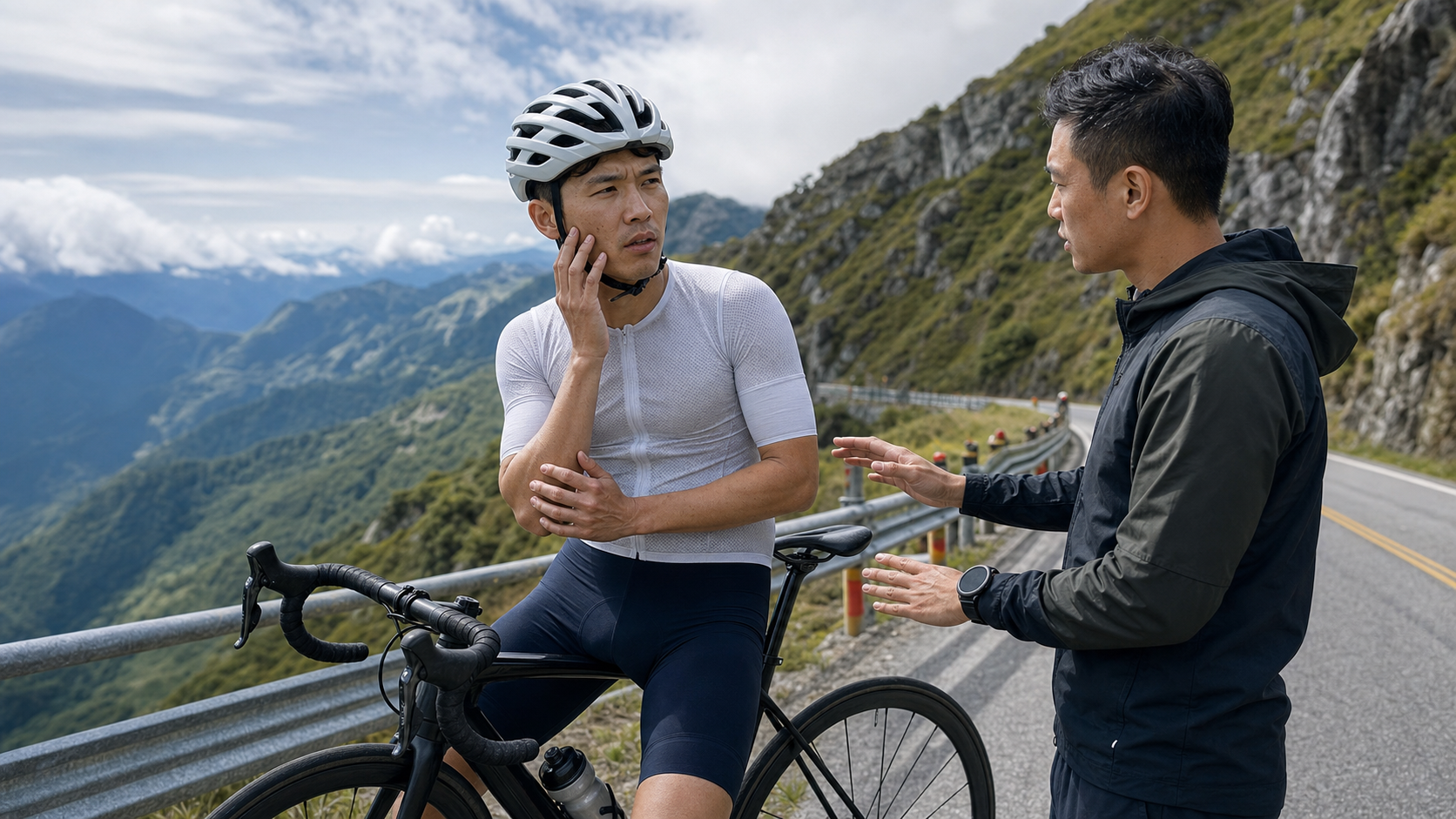
Starting with a Student Who Went “Numb” Halfway Up Wuling
A few years ago on a weekend, I accompanied an amateur road cyclist on a climbing workout on Provincial Highway 14A. After passing Cingjing Farm, the gradient started to bite, and he suddenly pulled over to the side of the road, looking confused, and asked me: “Coach, why do my face and arms feel prickly and numb in waves? Is this a sign of heatstroke? Should I head back down?”
I laughed out loud because I had a pretty good idea what was going on. The night before, he had texted me saying, “I heard beta-alanine can help with climbing, so I swallowed a full six grams all at once this morning.” That tingling, numb sensation spreading from his cheeks, scalp, and down to his forearms wasn’t heatstroke, and it wasn’t oxygen deprivation—it was beta-alanine’s most famous side effect: paresthesia.
That incident later became a teaching story I often share with my students. Beta-alanine is one of the few supplements in sports nutrition that is “well-supported by evidence, cheap, and easy to misuse.” It’s not as widely known as creatine, but it plays a solid role in high-intensity, intermittent exercise. But precisely because most people only see the words “heard it helps endurance” and jump in, the key details—how to split the dose, when you should feel the tingling, and whether to stack it with other supplements—are rarely explained clearly.
In this article, I want to break down beta-alanine from start to finish the way I would with my students: what it actually does in the body, how to split the dosage, how to handle that annoying paresthesia, and stacking strategies with creatine, caffeine, and sodium bicarbonate. Whether you’re a beginner just getting into supplements or a seasoned athlete looking to fine-tune the details, you’ll find actionable protocols here you can follow directly.
Concepts and Scientific Foundation: Beta-Alanine Isn’t Fighting the Battle Itself
The Real Star Is Muscle Carnosine
Many people assume that when you take beta-alanine, it’s beta-alanine itself doing the work in the muscle. That’s not the case. Beta-alanine’s real job is to serve as raw material.
In the body, it combines with another amino acid, histidine, to synthesize a dipeptide called carnosine, which is stored in skeletal muscle. And carnosine is the one quietly helping you out during high-intensity efforts.
The key point: the rate of carnosine synthesis in muscle is limited by the amount of beta-alanine, not histidine. Histidine is usually abundant in the body; beta-alanine is the “rate-limiting substrate.” So supplementing extra beta-alanine effectively opens up the bottleneck in carnosine synthesis, allowing muscle carnosine levels to build up.
What Does Carnosine Do? Mainly “Buffering Acid”
When you do high-intensity, predominantly anaerobic exercise—like track sprints, that final standing climb on a steep slope, a 400-meter all-out run, or a rowing erg sprint—your muscles rapidly accumulate hydrogen ions (H⁺), making the inside of the muscle more acidic (pH drops). This acidification is one of the major causes of that “burning, locking up, no strength left” feeling in the muscles.
Carnosine’s core function is to act as an intracellular acid-base buffer, helping neutralize these hydrogen ions and delaying muscle acidification. The higher your muscle carnosine, the longer you can theoretically hold on at that painful threshold where you’re about to give out.
So beta-alanine’s benefits are concentrated in high-intensity efforts lasting roughly 1 to 10 minutes, dominated by anaerobic metabolism. That’s why it’s particularly effective for track time trials, interval training, CrossFit-style workouts, rowing, and 400- to 1500-meter running; while its direct benefit for purely aerobic, low-intensity long-duration work (like an easy long ride) is relatively limited.
Why “Taking a Huge Dose at Once” Is Pointless
This is where most people get it wrong, and it’s the root cause of my student’s numbness.
Muscle carnosine accumulation is a gradual process that takes time—it’s not “eat X today, get X combat power today.” According to the International Society of Sports Nutrition (ISSN) position stand and related research, supplementing 4 to 6 grams daily for 2 to 4 weeks increases muscle carnosine by roughly 20 to 60 percent; continuing longer (e.g., 10 weeks) can even reach increases of around 80 percent.
In other words, beta-alanine is about “total amount” and “consistency,” not “one massive dose.” Swallowing six grams all at once this morning, besides making yourself tingle and feel miserable, does almost nothing for your performance that day—because carnosine is built up over weeks of accumulation, not poured in all at once.
Once this concept is established, all the dosage-splitting advice that follows will make sense.
Can You Get It from Food? Yes, but It’s Hard to Get Enough
Students often ask: “I don’t want to take supplements—can I just eat more meat to get carnosine?” The answer is: partially yes, but it’s hard to get enough.
Carnosine naturally exists in animal muscle—red meat, chicken, and fish all contain meaningful amounts. In theory, eating more of these foods can provide beta-alanine and preformed carnosine. But there are two problems: first, carnosine from food, once it enters the digestive tract, is largely broken down by an enzyme called carnosinase, so the proportion that actually gets stored in muscle is limited; second, to reach an amount equivalent to supplementation through diet alone, you’d have to consume a considerable volume of meat, which is impractical for most people, and the calories and saturated fat become a burden.
This also incidentally explains a phenomenon: athletes who are long-term vegans or lacto-ovo vegetarians typically have slightly lower baseline muscle carnosine than omnivores. This doesn’t mean vegetarians can’t train well—it means that supplementing beta-alanine may be relatively more “noticeable” for them, because with a lower starting baseline, there’s more room to build up. Below is a conceptual comparison of carnosine content in common foods (for relative comparison only; actual values vary by cut and cooking method):
| Food Category | Relative Carnosine Content | Practical Notes |
|---|---|---|
| Beef, pork (red meat) | Higher | Decent content, but reaching supplement-equivalent amounts is tough |
| Chicken, turkey (white meat) | Moderately high | Common protein source, helpful in daily diet |
| Fish | Moderate | Varies greatly by species |
| Eggs, dairy | Very low | Contains almost no carnosine |
| Plant-based foods | Nearly none | Carnosine sources approach zero on a vegan diet |
Conclusion: Food is a good daily foundation, but if your goal is to deliberately raise muscle carnosine to a level that affects performance, supplementation remains the most efficient and controllable way to dose. Diet handles keeping overall protein and histidine raw materials stocked up.
That Annoying “Tingling Sensation”: What Paresthesia Is All About
What It Feels Like and When It Comes
Paresthesia typically appears about 10 to 20 minutes after ingestion, presenting as waves of tingling, itching, numbness, or a warm sensation on the face, scalp, neck, forearms, palms, and even the ears. Intensity varies from person to person—some people barely feel it, while others on their first dose feel like “ants crawling all over my face.” It usually resolves on its own within 30 minutes to an hour, with no treatment needed.
I want to emphasize one thing first, which I tell every student: paresthesia is harmless. It’s not an allergy, not poisoning, not a warning sign that something is wrong with your body, and it doesn’t indicate whether the supplement is working or not. It’s simply a physiological phenomenon.
Why It Tingles—Just the Key Points
The scientific community hasn’t fully settled on the exact molecular mechanism, but the mainstream explanation is: when blood beta-alanine concentration spikes rapidly to a peak, it activates certain receptors on peripheral sensory nerves beneath the skin, triggering that tingling signal.
The key word here is “rapidly spikes to a peak.” In other words, the severity of the tingling is directly related to how fast and how high your blood beta-alanine concentration rises. The more you take at once, and the faster it’s absorbed, the higher the blood peak, and the more pronounced the tingling.
This point is crucial because it directly points to the solution: as long as you don’t let the blood concentration spike so high all at once, you can dramatically reduce the tingling. This is exactly the scientific basis behind the two main strategies: “split dosing” and “sustained-release formulations.”
When to Be Alert
Although simple tingling is harmless, I still want to give a conservative warning: if after taking it you experience not brief tingling but rather difficulty breathing, swelling of the lips or throat, widespread hives, dizziness, or nausea, then that’s not typical paresthesia—it could be an allergic reaction to some ingredient, and you should stop immediately and seek medical attention. In Taiwan, going straight to the emergency room or seeing an allergist/immunologist for evaluation is easy and convenient—don’t tough it out on your own.
Practical Approach: How to Schedule Your Dosage
This section is the core of the article. I’ll break it down into three levels: “Total Daily Amount,” “Splitting the Dose,” and “Loading vs. Maintenance,” with tables you can copy directly.
Step 1: Determine Your Daily Total
The effective range supported by research falls roughly between 3.2 and 6.4 grams per day. For most athletic populations, here’s how I approach it in practice:
- General fitness, beginners: About 3.2 grams per day is enough to see benefits.
- Competitive athletes, primarily high-intensity interval training: 4 to 6 grams per day yields more noticeable effects.
- Going beyond 6.4 grams offers no additional benefit and increases the risk of tingling and gastrointestinal discomfort, so it’s not recommended.
Step 2: Split the Total Dose—This Is Key
Remember what was mentioned earlier: tingling comes from blood concentrations spiking too high at once. So the smart way to take it isn’t “swallow it all in one dose per day,” but rather split the daily total into several smaller doses, keeping each dose at or below 1.6 grams, taken every 3 to 4 hours.
This approach has a twofold benefit:
- Significantly reduces tingling—each blood concentration peak is kept lower.
- It’s easier on the stomach and makes it easier to maintain the daily habit.
Here’s the most common dosing schedule I give to my athletes:
| Daily Total | Split Schedule | Dose Per Serving | Expected Tingling Level |
|---|---|---|---|
| 3.2 g | 2 servings | 1.6 g | Mild, tolerable for most |
| 3.2 g | 3 servings | ~1.1 g | Barely noticeable |
| 4.8 g | 3 servings | 1.6 g | Mild |
| 6.0 g | 4 servings | 1.5 g | Mild |
| 6.4 g | 4 servings | 1.6 g | Mild |
Practical tip: If you bought bulk powder, a small digital scale will give you the most accurate measurement; if you’re using capsules, check how many milligrams each one contains (commonly 800 mg, i.e., 0.8 g) and convert to the number of capsules. At 800 mg per capsule, four capsules a day equals 3.2 grams.
Step 3: Loading Phase vs. Maintenance Phase
Because carnosine builds up gradually, it’s practical to manage it in two phases:
| Phase | Purpose | Daily Dose | Duration | Splitting Recommendation |
|---|---|---|---|---|
| Loading Phase | Build up muscle carnosine levels | 4–6 g | At least 2–4 weeks; can extend to 8–10 weeks for fuller saturation | Split into 3–4 servings, each ≤1.6 g |
| Maintenance Phase | Maintain already-elevated carnosine levels | ~1.2 g | Continue as long as you’re in-season/consistently training | 1–2 servings is sufficient |
There’s one often-overlooked fact that’s crucial for season planning: muscle carnosine declines very slowly. After you stop supplementing, it takes approximately 14 to 15 weeks for half of the gains to be lost. This means:
- You don’t need to worry about “losing everything if you miss a day”—occasionally skipping a day or two is completely fine.
- If you want to be in peak condition for a key race (for example, a closed-road hill climb or time trial), you need to start loading at least 4 weeks before the race to have enough time to build up carnosine. Starting just one week out is far too late.
How to Fit It Into Your Day: A Practical Schedule for People Who Eat Out
Just saying “split into 3–4 servings, each under 1.6 grams” is still abstract. Let me turn that into a realistic daily schedule for a Taiwanese office-worker athlete that you can copy directly. Assume the goal is 4.8 grams per day, split into 3 servings:
| Time | Context | β-Alanine Dose | Notes |
|---|---|---|---|
| 07:30 | Breakfast (egg pancake + soy milk) | 1.6 g | Take with food to slow absorption |
| 12:30 | Lunch (buffet / bento box) | 1.6 g | Swallow with water after the meal |
| 19:00 | Dinner or post-workout | 1.6 g | If training in the evening, take it with the post-workout meal |
The key is to take it with your regular meals—no need to set extra alarms or deliberately fast. This naturally spreads out the dose, keeps tingling low, and makes it easiest to build a habit you won’t forget. In the long run, consistency matters more than precise dosing—because carnosine is built up by “taking it every day.”
Sample 4-Week Pre-Race Loading Calendar
If you have a key race in mind, you can map out your loading phase like this calendar for a clear overview:
| Week | Time to Race | Daily Dose | Carnosine Accumulation (Illustrative) | Focus for the Week |
|---|---|---|---|---|
| Week 1 | 4 weeks out | 4.8 g / 3 servings | Starting to rise | Establish the split-dose habit, adapt to tingling |
| Week 2 | 3 weeks out | 4.8 g / 3 servings | Noticeable accumulation | Stay consistent, don’t skip doses |
| Week 3 | 2 weeks out | 4.8 g / 3 servings | Approaching fuller saturation | Coordinate with training taper |
| Week 4 | 1 week out | 4.8 g or switch to maintenance | Plateau phase | Stick to the plan before the race, don’t suddenly increase the dose |
| Race Day | — | Stick to maintenance dose | Built up from the previous 4 weeks | Don’t let tingling distract you on race day |
Please note that the “Carnosine Accumulation” column is only an illustrative trend of individual accumulation, not exact numbers—everyone’s starting baseline, diet, and physiology differ. The only truly quantifiable methods are muscle biopsies or magnetic resonance spectroscopy, which the average person doesn’t need. Just grasp the principle that “the earlier you start, the more saturated you’ll be,” and that’s enough.
Stacking Strategies: What to Take with β-Alanine
Athletes often ask me: “I’m already taking creatine—can I add β-alanine?” “Does it conflict with caffeine?” This section covers stacking.
With Creatine—The Classic Combination
These two are my most recommended pairing because their effects are complementary without overlapping:
- Creatine primarily enhances very short-duration (a few seconds to ~15 seconds) explosive power and maximal power output, relying on the phosphocreatine system.
- β-Alanine enhances slightly longer (roughly 1 to 10 minutes) high-intensity endurance, relying on acid-base buffering.
One handles “starting burst,” the other handles “holding off acidification”—together they cover high-intensity demands across different time domains. This is especially suitable for track events, interval training, and sports requiring repeated sprints. There are no known interaction issues between the two, so you can safely use them together.
With Caffeine—Just Stagger the Timing
Caffeine improves alertness, focus, and tolerance to perceived exertion—a completely different mechanism from β-alanine, so they don’t conflict. The only thing to watch is timing: caffeine is most meaningful when taken 30 to 60 minutes before exercise, while β-alanine works through long-term accumulation and can be taken at any time. So you don’t need to adjust your caffeine schedule for β-alanine—just take each on its own schedule.
Since Taiwanese people love bubble tea and coffee, here’s a side note: if you already rely on caffeine for energy, count that pre-workout drink toward your total daily intake to avoid heart palpitations and disrupted sleep.
With Sodium Bicarbonate (Baking Soda)—An Advanced Buffering Stack
This is a more advanced combination. Sodium bicarbonate (baking soda) is an extracellular acid-base buffer, while the carnosine built up from β-alanine is an intracellular buffer. One works outside the cell, the other inside—theoretically, their buffering effects can stack, potentially providing an additive benefit for high-intensity events.
However, I generally don’t proactively recommend baking soda to my regular athletes, because its gastrointestinal side effects (bloating, diarrhea) are very common and unpredictable. Experimenting with it right before a race is a recipe for disaster. If you do decide to use it, be sure to test the dose and timing repeatedly during training sessions first—never try it for the first time on an important race day.
Quick Stack Reference Table
| Combination | Recommended? | Key Points |
|---|---|---|
| Beta-alanine + Creatine | Strongly recommended | Complementary mechanisms, cover different time scales, no interaction |
| Beta-alanine + Caffeine | Recommended | Mechanisms don’t conflict; remember to take caffeine before exercise and count total intake |
| Beta-alanine + Sodium Bicarbonate | Use with caution (advanced) | Buffering stacks inside and outside cells, but GI side effects are significant; must test first |
| Beta-alanine + Whey Protein Blend | Acceptable | No issues; protein provides histidine and other precursors |
Common Mistakes and Fixes
Over years of coaching athletes, I’ve seen all sorts of wrong ways to take this. Here are the most common ones—check whether you’ve fallen into any of these traps.
Mistake 1: Treating it like a “pre-race stimulant” and taking it only on race day
Problem: Like the athlete mentioned at the start, thinking a big dose before the race will give you a “cheat code.” In reality, carnosine builds up over the long term; taking it last-minute only gives you a tingling face and GI discomfort, with zero immediate performance benefit.
Fix: Treat it as “background engineering.” Start supplementing daily at least 4 weeks before the race so carnosine accumulates gradually. The dose on race day is just maintenance, not the deciding factor.
Mistake 2: Taking the entire daily dose at once
Problem: For convenience, taking all 5–6 grams in one go, resulting in tingling so intense you question your life choices—or even quit altogether.
Fix: Split it into 3–4 doses of 1.6 grams or less each, taken 3–4 hours apart. The tingling improves dramatically, and it’s much easier to stick with long-term.
Mistake 3: Expecting it to make long-distance aerobic riding faster
Problem: Someone takes it for two months and complains, “My average speed on easy rides hasn’t improved at all.”
Fix: Beta-alanine’s domain is high-intensity, anaerobic-dominant short efforts, not pure aerobic endurance. What you should evaluate with it is your ability to hold on during intervals and performance at the tail end of sprints—not your average speed on easy long rides. Using the wrong metric, of course it seems ineffective.
Mistake 4: Quitting after being scared by the first tingling sensation
Problem: Not knowing the tingling is normal, mistaking it for an allergy, and tossing it aside after one dose.
Fix: First, understand that the tingling is harmless and will subside on its own. Then, suppress it by splitting doses and taking them with meals. If you simply don’t like the feeling, switch to a sustained-release formulation, which raises blood concentration more slowly, noticeably reducing the tingling and allowing for slightly higher single doses.
Mistake 5: Thinking faster/more intense tingling = better quality
Problem: Some people go the opposite way, treating the tingling as a sign of “effectiveness,” even deliberately taking it on an empty stomach to chase that intense sensation, thinking “no tingle, no gain.”
Fix: The intensity of the tingling has absolutely nothing to do with how well carnosine is accumulating; it only reflects how fast your blood concentration spikes. What actually determines effectiveness is “total dose × number of weeks,” which has zero correlation with how tingly you feel. Chasing the tingling has no benefit and may even make you uncomfortable enough to quit.
Mistake 6: Chugging it all at once on an empty stomach
Problem: On an empty stomach, absorption is faster, blood peak levels spike higher, and both tingling and GI discomfort are amplified.
Fix: Take it with or after meals. This is actually easy to arrange for people who eat out in Taiwan—have one dose with breakfast (egg pancake and soy milk), one after your lunch bento, and one with afternoon tea or dinner. It naturally spreads out. Taking it with food also slows absorption, killing two birds with one stone.
How Do I Know If It’s Actually Helping Me?
This is the question athletes ask me most, yet it’s the hardest to answer. Because beta-alanine’s benefit is “delaying muscle acidification and holding on for those extra seconds,” not “average speed up by 3 km/h,” it’s hard to judge by feel alone. Instead of relying on feel, I recommend using several quantifiable, repeatable self-tests: do a baseline before supplementing, then compare after 4–8 weeks of loading:
- Completion rate of a fixed interval set: For example, “30 seconds all-out / 30 seconds easy × 8 sets,” recording average power (watts) or average pace for each set. After supplementing, observe whether the drop-off in the later sets (6, 7, 8) becomes smaller. Beta-alanine is most likely to improve exactly this “still holding on in the back half” ability.
- Performance on repeated segments of a fixed climb: Find a short climb you know well, about 2–5 minutes long, and ride it repeatedly with the same strategy. See whether your output at the same heart rate (bpm) improves, or whether your perceived exertion at the same output gets better.
- RPE on the same workout: Use a 0–10 or 6–20 scale to record your subjective effort after completing the same high-intensity workout. If total volume and pace are the same but you feel “less like dying,” that’s also a useful signal.
Note that these are all relative comparisons, not about chasing absolute numbers. Training itself, sleep, weather, and daily condition all interfere with results, so don’t draw conclusions from a single test—look at the trend over several weeks. This echoes what I always emphasize: supplements are fine-tuning; what truly makes you stronger is that solid training plan.
Actionable Advice for Readers at Different Levels
If You’re a Beginner (Just Starting to Consider Supplements)
- First ask if it applies to you: Does your training include a significant amount of high-intensity, anaerobic work (intervals, sprints, out-of-saddle steep climbs)? If it’s mostly easy aerobic riding, beta-alanine’s priority isn’t that high—focus on sleep, diet, and training volume first.
- Start with a low dose: 3.2 grams per day, split into 2–3 doses with meals, to let your body adapt.
- Accept that tingling is normal: Don’t panic if you feel some tingling the first time; it subsides within 30 minutes to an hour.
- Give it at least 4 weeks: Don’t rush to judge effectiveness after just two or three days.
If You’re an Advanced/Competitive Athlete
- Periodize it: Pick your key races and start a loading phase at least 4 weeks out (4–6 grams daily, split into 4 doses).
- Take advantage of slow washout: Once the season starts, switch to a maintenance phase (about 1.2 grams daily). No need to obsess over daily precision; missing a day or two is fine.
- Stack with creatine: If you’re not already taking creatine, this is an extremely cost-effective combination—use them together.
- Consider sustained-release formulations: If you want higher single doses without the tingling, sustained-release is a great option.
- Be cautious with sodium bicarbonate: Only consider adding it if you’re willing to repeatedly test your GI response during training, and never try it for the first time before a race.
Practical Tips for Taiwan
- Climate: Taiwan’s summers are hot and humid, and high-intensity training is already tough. Don’t confuse normal exercise fatigue and heat discomfort with beta-alanine tingling. The tingling is a skin sensation shortly after taking it—completely different from heatstroke symptoms like dizziness, nausea, and skyrocketing body temperature. The latter requires immediately stopping exercise, cooling down, and seeking medical attention if necessary.
- Eating out: Eating all three meals out actually makes splitting doses easier—just take them with your meals, no need to set extra alarms.
- Healthcare access: Seeing a doctor in Taiwan is convenient and affordable. If you have any chronic conditions, are on medication, or experience atypical reactions after taking supplements, consult a family medicine, sports medicine, or nutrition clinic directly—don’t guess on the internet.
- Product selection: Choose products with third-party testing and clear per-dose labeling. Avoid “pre-workout blasts” with unclear ingredients, which often mix beta-alanine with a bunch of stimulants, making it impossible to tell where the tingling comes from.
FAQ Quick Questions and Answers
Q: Should beta-alanine be taken with meals or on an empty stomach?
A: It is recommended to take it with or after meals. Food slows absorption and lowers peak blood levels, making tingling and gastrointestinal discomfort milder.
Q: I don’t feel any tingling. Is it fake or ineffective?
A: No. The presence and intensity of tingling vary from person to person, and it also depends on whether you split the dose and take it with food. No tingling does not mean it’s ineffective—carnosine is still accumulating.
Q: Can I take it every day? Do I need to cycle off?
A: Yes, you can take it daily. There is currently no clear reason to cycle off. It works through long-term accumulation, so consistent supplementation is the key point.
Q: Can women and older adults take it?
A: Mechanistically, there is no gender restriction. However, if you are pregnant, breastfeeding, have a chronic illness, or are on medication, please consult a physician or dietitian first.
Q: Do pure-endurance long rides or marathons need it?
A: The direct benefit is limited. It only becomes meaningful if your race includes a significant amount of high-intensity segments (such as climbing surges, sprint finishes, or interval pacing).
Q: What happens if I miss a day?
A: Almost nothing. Carnosine declines very slowly (half-life of about 14 to 15 weeks). An occasional missed dose doesn’t affect the big picture—just resume as usual the next day.
Q: Should I choose sustained-release capsules or regular powder?
A: If you are very sensitive to tingling, or want to take a higher single dose without splitting it into so many servings, sustained-release is a good choice—it raises blood levels more slowly and tingling is noticeably milder. If you don’t mind the tingling and want to save money, regular powder split into multiple doses is more than sufficient. Both ultimately aim for the same carnosine accumulation.
Q: Is beta-alanine the same as “pre-workout” formulas that contain beta-alanine?
A: Many pre-workouts do contain beta-alanine—that tingling, numb feeling in the face after taking them is often from it. But pre-workouts usually also contain stimulants like caffeine, and the beta-alanine dosage and timing are not designed for “long-term accumulation.” If you want to seriously supplement beta-alanine, I recommend buying pure beta-alanine separately and splitting the dose yourself for better control.
Q: Will it affect sleep?
A: Beta-alanine itself is not a stimulant and does not affect sleep. What affects sleep is usually the caffeine taken at the same time. If your evening dose is pure beta-alanine, there’s no need to worry.
Who Should Be Especially Cautious and Consult a Professional First
One final safety reminder. For the following groups, I always recommend consulting a physician or dietitian first for individualized assessment, rather than following online advice on your own:
- Pregnant or breastfeeding women: Data is limited; err on the side of caution.
- Those with kidney or liver disease: All supplement metabolism passes through these organs and must be evaluated by a physician.
- Those with chronic conditions (e.g., hypertension, heart disease, diabetes) and currently on medication: The point is not that beta-alanine itself is dangerous, but to confirm there are no concerns with your overall condition and medications, and not to neglect regular follow-ups and proper treatment because of supplements.
- Minors and adolescent athletes: Supplement use during growth stages should be more conservative, with decisions made jointly by professionals and parents.
Taiwan has highly accessible healthcare. Family medicine, sports medicine clinics, and nutrition consultations are not difficult to book. Spending a small consultation fee to clarify your concerns is far more reassuring than listening to people on forums say “I take it this way and I’m fine.”
Conclusion: Treat It as Background Engineering, Not a Firefighter
Back to the student who went numb halfway up Wuling at the start of this article. I later reworked his plan: 4.8 grams daily, split into 1.6 grams after breakfast, lunch, and dinner, starting one month before the race. At that time trial four weeks later, during the final stretch of steep climbing out of the saddle, he clearly felt that “my legs were still sore, but they didn’t just lock up like before.” More importantly, he never panicked about tingling again, because he knew what it was and how to keep it under control.
That’s what beta-alanine should be: it’s not a magic potion that makes you instantly stronger on race day, but a background project that needs to be planned ahead and built up over time. Split the total dose, take it with meals, start a few weeks early, pair it with creatine, accept and manage the tingling—get these things right, and it’s a cheap, safe, genuinely helpful tool for high-intensity performance.
Supplements are always a “fine-tuning” layer on top of the fundamentals of training, sleep, and nutrition—not a way to patch holes. Build the basics first, then use beta-alanine to push the ceiling of high-intensity tolerance a little higher. That’s the right order.
Wishing you smooth training. Next time you’re climbing out of the saddle, hold on for those extra few seconds.
This article is educational content and does not replace individualized diagnosis and treatment advice from a physician, physical therapist, or dietitian. If you have a chronic condition (such as hypertension, heart disease, diabetes, or kidney disease), are on medication, are pregnant or breastfeeding, or experience atypical reactions after taking supplements, please consult a qualified medical professional first and rely on individualized assessment.
References
- International Society of Sports Nutrition position stand: Beta-Alanine (PMC full text): https://www.ncbi.nlm.nih.gov/pmc/articles/PMC4501114/
- International society of sports nutrition position stand: Beta-Alanine (PubMed): https://pubmed.ncbi.nlm.nih.gov/26175657/
- Beta-Alanine benefits, dosage, and side effects (Examine.com): https://examine.com/supplements/beta-alanine/
- An Update On Beta-Alanine Supplementation For Athletes (Gatorade Sports Science Institute): https://www.gssiweb.org/sports-science-exchange/article/an-update-on-beta-alanine-supplementation-for-athletes
- Effect of a sustained-release formulation of β-alanine on paresthesia (Frontiers in Nutrition): https://www.frontiersin.org/journals/nutrition/articles/10.3389/fnut.2023.1213105/full
Related Reading
- Beta-Alanine and Muscle Buffering Capacity: The Hidden Throttle for High-Intensity Sprints—Dosage, Side Effects, and Practical Use for Taiwanese Athletes
- Beta-Alanine’s Enhancement of Muscle Buffering Capacity: Research on Lactate Tolerance in High-Intensity Training
- Creatine and Beta-Alanine: Do Endurance Athletes Need Them? A Coach’s Look at the Evidence and Practice
- Beta-Alanine and Sodium Bicarbonate: An Update on the Scientific Evidence for Legal Supplements
一日北高/長距離團騎 常見問題補充篇 / 組團或跟團的眉角 / 壯車友容易被瘦車友慢性拉爆 / 原來屁股痛可能是這個原因...? / 風場配速法 / 公路車 / CT Yeh
2 年前
一日北高常見問題大集合 | 攻略 | 路線 | 訓練 | 補給 | 自行車 單車 | 一日雙城 | 雙塔 | TWB北高360 | 屁股痛
6 年前
CT暗黑廚房) 車友必備 宇宙無敵鮮蚵湯 幫助訓練恢復 天然食補 好市多 超肥鮮蚵 破PR
7 年前
Never Stop 西進武嶺 前後雙機 完整全程錄影 訓練台 實境
8 年前
#北橫 + #北進武嶺 最硬的員工旅遊 EP1 | #公路車 #拉拉山 | 明池 | 武嶺 | 武陵農場 | 雲海 | Taiwan Cycling Route Wulin
6 年前
台北闊瀨陡坡 騎旅 / 日本單車雜誌編輯車友臨時加入!/ 髮香才是最強的 / feat. 北迴歸線小隊 / 公路車 CT Yeh
6 個月前
西進武嶺 自製新版AI配速表產生器 x 賽前攻略 抱佛腳! 沒有功率計也可以產生配速表嗎?有什麼其他眉角賽前要注意的呢? | 西進武嶺 / 東進武嶺 KOM 攻略 | 公路車 | CT Yeh
4 年前
北宜騎車⋯好刺激 差點被🐒尻 / 露營單車旅 / 公路車後背攜車架開箱!/ 百人大團露 / YAKIMA 設備開箱儀式感都來了 / 公路車 / CT Yeh
12 個月前