Need a Bathroom Mid-Run? A Complete Guide to the Mechanisms of Exercise-Induced Diarrhea, Dietary Adjustments, and Pre-Race Strategies
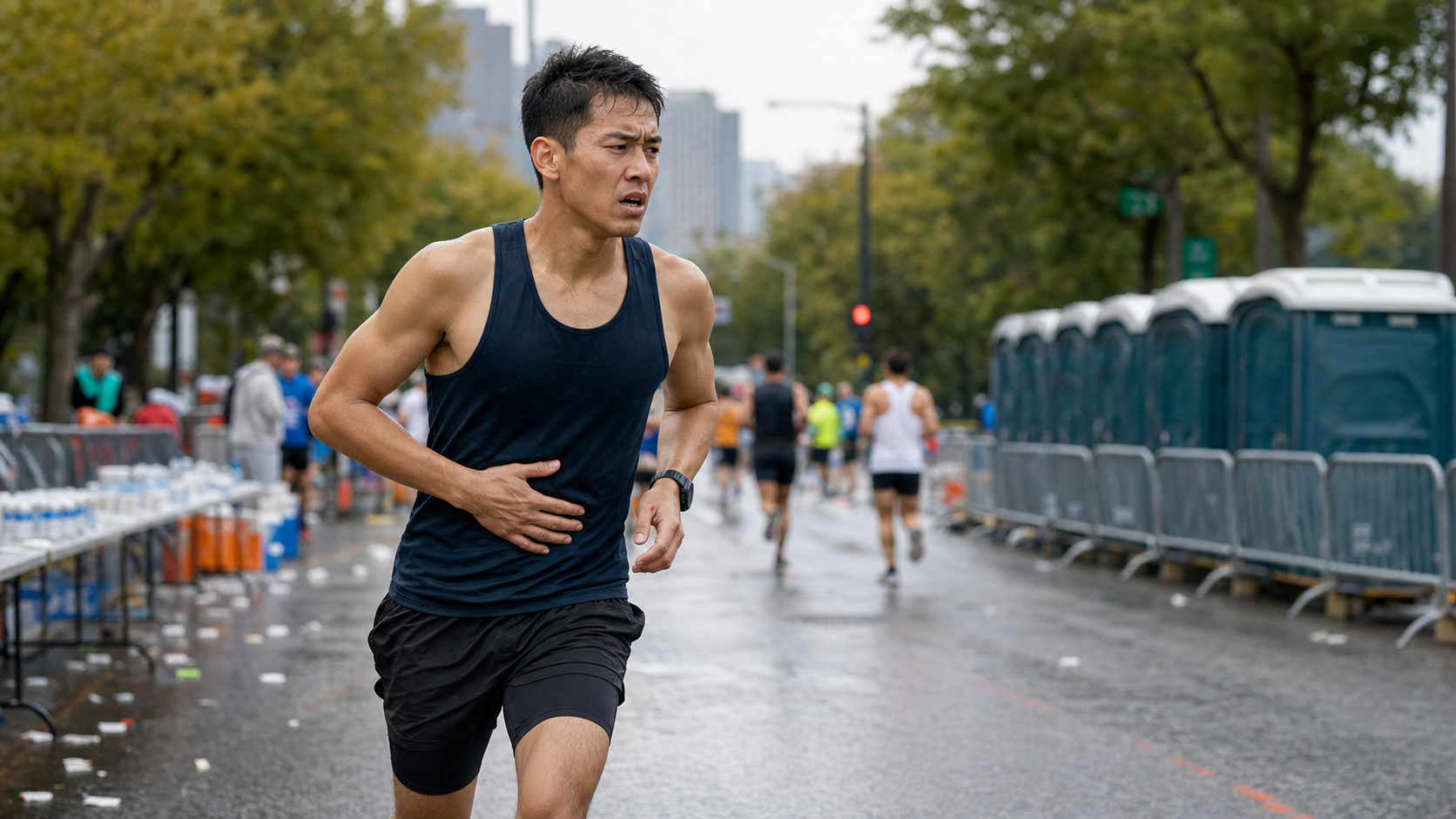
The Race That Made Me Decide to Write This
A few years ago, I took one of my athletes, Little K, to run a full marathon in Taipei. His training was solid, his pacing was steady, and everything went according to plan until the 35K mark. Shortly after passing the aid station at 35K, he suddenly stopped, turned pale, and clutched his stomach. I was pacing alongside him and could only watch as he sprinted toward a portable toilet that already had three people queued up. By the time he came out, his pace had dropped by nearly 90 seconds. His goal of breaking four hours was gone, and he finished almost ten minutes slower than planned.
After the race, he was devastated and kept asking me: “Coach, I trained better than last year, so why did my stomach give out first?”
Over the past fifteen years, I’ve been asked this question well over a hundred times. From recreational runners to age-group athletes, from full marathons to ultramarathons and triathlons, exercise-induced gastrointestinal syndrome is arguably the most common—yet least seriously addressed—performance killer in endurance sports. Many people assume it’s just “a weak stomach” or “not enough willpower,” but in reality, there is a very clear physiological mechanism behind it. In this article, I want to lay it all out clearly, combining the practical experience I’ve accumulated coaching athletes over the years with the sports physiology and nutrition literature I continuously read.
Let me start by giving you a number to put your mind at ease: according to multiple studies on endurance runners, the prevalence of exercise-induced gastrointestinal discomfort ranges roughly between 30% and 90% (varying greatly depending on research methodology and exercise intensity), and up to about 70% of endurance athletes report experiencing abdominal pain, borborygmus (stomach gurgling), or diarrhea during or after exercise. In other words, you’re not the exception—you’re the majority.
First, Establish the Concept: Why Your Gut Acts Up When You Run
To solve a problem, you first need to understand the mechanism. Exercise-induced diarrhea isn’t caused by a single factor; it’s the result of several pathways acting simultaneously. I usually help my athletes build an overall picture using four angles: “blood flow being stolen + the nervous system stepping on the gas + the gut being jostled + eating the wrong things.”
Mechanism One: Splanchnic Blood Flow Gets “Stolen” by Working Muscles
This is the most fundamental pathway. When you start exercising, your body must prioritize sending large amounts of blood to the working skeletal muscles and the skin for heat dissipation. Blood is a finite resource, so the splanchnic circulation (the gastrointestinal tract, liver, and surrounding area—medically referred to as the splanchnic circulation) gets significantly sacrificed.
How dramatic is this sacrifice? According to sports physiology literature, when running at approximately 70% of VO₂max, blood flow to the hepatic portal vein drops by about 20% within 10 minutes, and can decline by up to 80% after a full hour. At near-maximal exercise intensity, splanchnic blood flow can be reduced by as much as 80%, all redirected to support the muscles and thermoregulation.
When blood flow decreases, the gut enters a state of relative ischaemia and hypoxia. Ischaemia damages the intestinal mucosal barrier and increases intestinal permeability—commonly known as worsening “leaky gut.” Once the barrier loosens, bacterial endotoxins in the gut are more likely to enter the bloodstream, triggering an inflammatory response. At the same time, the gut’s ability to absorb water and electrolytes declines, fluid remains in the intestinal lumen, stool becomes loose, and peristalsis is stimulated and accelerated—and diarrhea happens.
This is also why the hotter the weather, the more likely you are to have diarrhea. Taiwan’s summers are humid and hot, so the body needs to divert more blood to the skin for cooling, leaving even less for the internal organs. When I take athletes on long runs along the riverside in June and July, the rate of gastrointestinal issues is noticeably higher than in winter.
Mechanism Two: The Sympathetic Nervous System Steps on the Gas, and the Gut Gets the Brakes
The second pathway is neuroendocrine. During exercise, the sympathetic nervous system is strongly activated (that’s the “fight or flight” system), and stress hormones like adrenaline and cortisol rise. The design logic of this system is: we’re about to fight or flee, so digestion—this “non-urgent matter”—gets put on the back burner.
As a result, gastric emptying slows and small intestinal motility is suppressed. But paradoxically, the large intestine (especially the lower segment) may actually be stimulated into faster motility, producing a strong urge to defecate. This also explains a common experience shared by many runners: even if you didn’t eat much before the race, you desperately need to poop right after the start. Most of the time, it’s not food—it’s the nervous system at work.
Pre-race psychological tension makes this pathway even worse. The more stress, the stronger the sympathetic activation. I often tell my athletes that the “excited but afraid of getting hurt” anxiety before a race—your gut feels all of it.
Mechanism Three: The Vertical Impact of Running (Mechanical Factor)
The biggest difference between running and cycling or swimming is the repeated vertical impact. With every footstrike, the intestines and mesentery are pulled, stretched, and rubbed up and down. This mechanical stimulation can directly trigger motility and the urge to defecate in the lower bowel. This is why runners’ gastrointestinal issues (especially lower-GI symptoms like diarrhea and the urge to go) are significantly more severe than those of cyclists or swimmers.
Many triathletes have told me that the swim and bike legs are fine, but the moment they start the run, their stomach begins to misbehave—this is exactly why. This also gives us a practical inference: if your exercise-induced diarrhea mainly occurs during running and is worst in the later stages, mechanical impact and cumulative ischaemia are likely the primary causes. In that case, adjusting your nutrition will be less effective than adjusting your pace and body temperature. Conversely, if you experience upper-abdominal discomfort shortly after eating, then your fueling strategy carries more weight. Learning to categorize which type of symptom you have allows you to put your effort where it counts.
Mechanism Four: Eating and Drinking the Wrong Things
The first three pathways come from “running itself,” but the fourth is what we feed ourselves. High concentrations of sugar, excessive fiber, fat and protein, hypertonic sports drinks you chug without being accustomed to, and random foods eaten under pre-race nerves—all of these become a burden when the gut is ischaemic and its absorption capacity is reduced, accelerating diarrhea. This is also the area we have the most control over and the greatest room for improvement.
Symptoms Fall into Two Zones: Upper GI vs. Lower GI
Before discussing solutions, let me help you categorize your symptoms, because the causes and strategies differ by zone.
| Zone | Common Symptoms | Predominant Causes | Typical Timing |
|---|---|---|---|
| Upper GI | Nausea, belching, GERD, bloating, feeling like vomiting | Slowed gastric emptying, overly concentrated fuel, eating too much before the race | After eating, when intensity increases |
| Lower GI | Abdominal cramps, borborygmus, gas, urge to defecate, diarrhea, (rarely) bloody stool | Splanchnic ischaemia, mechanical impact, excess fiber/fat | Later stages of long distances, hot days |
| Systemic | Dizziness, weakness, chills | Often coexists with dehydration, electrolyte imbalance, ischaemic inflammation | Later stages of ultras and triathlons |
Exercise-induced diarrhea falls under lower-GI symptoms. If you experience bloody stool, a single occurrence may be ischaemic damage to the intestinal mucosa (which usually resolves on its own after exercise), but if it recurs, is voluminous, or is accompanied by weight loss, nighttime diarrhea, or fever, then don’t guess on your own—see a gastroenterologist. You need to rule out inflammatory bowel disease, infection, or other pathological causes. I’ll emphasize this again later.
Practical Method One: Dietary Adjustments (The Area with the Most Control)
This is where I invest the most effort when coaching athletes, because the results are the most direct. The core strategies are called FODMAP reduction and pre-race low-residue diet.
Understanding FODMAP: Short-Chain Carbs That Ferment Easily and Produce Gas
FODMAP is a collective term for short-chain carbohydrates that are not fully absorbed in the small intestine, travel to the large intestine where they are fermented by bacteria, producing gas and pulling water into the intestinal lumen. For runners with sensitive guts, reducing these foods 24 to 48 hours before a race can significantly improve diarrhea and bloating for many. This doesn’t mean you should avoid them forever, but rather it’s a short-term strategy before a race or key long run.
The table below is a Taiwan-localized reference I’ve put together for my athletes, making it practical to apply at convenience stores, buffet restaurants, and noodle shops.
| Category | Reduce Before Race (High FODMAP) | Relatively Safe Before Race (Low FODMAP) |
|---|---|---|
| Staples | Large amounts of wheat products, bread with fructose syrup | White rice, white toast, white noodles, rice vermicelli, potatoes |
| Vegetables | Onions, garlic, leeks, broccoli, shiitake mushrooms | Bok choy, spinach (moderate), carrots, cucumber |
| Fruits | Apples, watermelon, mangoes, lychees, longan | Bananas (moderate ripeness), kiwifruit, grapes, citrus |
| Dairy | Fresh milk, ice cream containing lactose | Lactose-free milk, small amounts of hard cheese |
| Legumes/Others | Large amounts of soy milk, red beans, green beans, honey | Small amounts of firm tofu, white rice with low-fat protein |
Soy milk, which Taiwanese people love, should be used with caution before a race for those with certain sensitivities. Braised dishes, spicy hot pot, and deep-fried crispy chicken are also pre-race landmines—high fat significantly delays gastric emptying and irritates the gut. I usually ask my athletes to start tightening up their eating out 2 to 3 days before the target race.
Pre-Race Low-Residue (Low-Fiber) Diet
Fiber itself is healthy, but it increases stool bulk and promotes peristalsis. That’s a good thing normally, but on race day it can backfire. So my advice is:
- 24 to 36 hours before the race: Switch to low-fiber, easily digestible foods like white rice, white noodles, skinless chicken breast, steamed fish, and white toast.
- During regular training: Eat enough fiber normally to maintain gut health; no need for long-term low-residue eating.
- Last pre-race meal: At least 3 hours before the start, focus on easily absorbed carbs, low fat and low fiber, and stop at about 70% full.
Fuel Concentration and Osmolality: Don’t Let Sports Drinks Hurt You
Carbohydrate fueling during a race also requires attention. A common mistake is drinking sports drinks or taking gels too concentrated and too quickly. When the gut is in an ischemic state, a sudden influx of high-concentration sugar (high osmolality) can pull water back into the intestinal lumen, directly triggering diarrhea.
Practical principles:
- Take energy gels with water; don’t swallow them dry and then chug high-sugar drinks.
- For long distances, carbohydrate intake is generally recommended at about 30 to 60 grams per hour; for efforts exceeding 2.5 to 3 hours, those who have trained their gut can go up to 60 to 90 grams per hour, but be sure to use a combination of “glucose + fructose” to utilize different transport channels, improving absorption and reducing intestinal residue.
- Never use a fuel product for the first time on race day if you haven’t tried it in training. This is an iron rule I have for every athlete.
Practical Method 2: Gut Training
Many people don’t know that the gut can be trained. Just as muscles adapt to load, the gut’s ability to absorb carbohydrates and tolerate fueling improves with repeated practice. This is a very important concept in sports nutrition in recent years.
The approach is: during your regular long runs, deliberately practice the fueling strategy and amounts you’ll use on race day. Your gut may protest at first, but after several weeks of consistent practice, gastric emptying and intestinal absorption will gradually adapt, and race day will be less likely to go wrong.
Here’s a 4-week progressive gut training example I commonly use, suitable for recreational runners with a solid base targeting a half or full marathon. Adjust the intensity and amounts based on your individual situation; this is just a framework.
| Week | Key Fueling Practice During Long Run | Hourly Carb Target | Observation Metrics |
|---|---|---|---|
| Week 1 | Drink water every 20 minutes, start with small amounts of energy gel | About 30 grams | Any bloating or urge to defecate |
| Week 2 | Alternate between gels and sports drinks at fixed intervals, practice water pacing | About 40 grams | Whether gastric emptying is smooth |
| Week 3 | Simulate race fueling pack, practice with actual brands | About 50 to 60 grams | Any signs of diarrhea in the later stages |
| Week 4 | Full simulation of race-day routine (including pre-race meal) | Target race set amount | Overall tolerance |
Gut training has an added benefit: you’ll identify your own trigger foods and trigger amounts during practice. Pre-race meals, fueling products, and hydration pacing all get validated in advance, so there are no surprises on race day.
Practical Method 3: Hydration, Electrolytes, and Body Temperature Management
Dehydration worsens the insufficient splanchnic blood flow, creating a vicious cycle: the more dehydrated you are, the more ischemic the gut becomes, the more likely diarrhea occurs, and diarrhea causes further fluid loss. So hydration management is the invisible key to preventing diarrhea.
In principle:
- Don’t over-hydrate before the race, as that dilutes electrolytes, increases gastrointestinal burden, and raises the frequency of needing to use the bathroom. Top up fluids 2 to 3 hours before the race, and adjust based on thirst just before the start.
- Hydrate during the race based on thirst and sweat rate. Taiwan’s hot, humid environment means heavy sweating, so for long distances, remember to replenish electrolytes (including sodium), not just plain water.
- On hot days, deliberately reduce intensity, seek shade, and pour water over your head and neck to cool down. The lower your core temperature, the less your body needs to shunt blood to the skin, allowing the internal organs to retain more blood flow.
In Taiwan’s summer, when training long distances along riverside paths or on track fields, I ask my athletes to schedule long runs in the early morning and avoid midday. This isn’t just about preventing heatstroke; it’s genuinely protecting your gut. Places like the Greater Taipei riverside bike paths, Kaohsiung’s Love River trail, and Taichung’s Fazi River bike path can have temperature differences of several degrees between before 6 a.m. and noon in summer, and the protection for splanchnic blood flow is tangible. If you really can only train during the hot, stuffy hours, then proactively slow your pace, shorten the single long-run distance, and make sure to properly hydrate and take sodium at aid stations—trade “lower load” for “gut stability.”
I also remind my athletes of an easily overlooked detail: the temperature of fuel and water. In Taiwan’s summer, energy gels stored in a waist pack can get baked hot. A thick, warm, high-sugar gel hitting an already ischemic gut can easily trigger nausea and diarrhea. If conditions allow, the ice-cold sports drink at aid stations is actually easier on the stomach and also helps cool the body down a bit.
Common Mistakes and Corrections
Having coached athletes for so many years, I’ve seen all kinds of landmines. These are the most common ones—check if any apply to you:
Mistake 1: Trying New Fuel for the First Time on Race Day
This is the number one culprit. You see someone else using a certain brand of energy gel and it works great, so you follow suit on race day, but your gut has never adapted to it. Fix: All fuel products and pre-race meals must be fully tested at least 2 to 3 times during training.
Mistake 2: A Big Celebration Meal the Night Before the Race
Many people go out with running buddies the night before for an all-you-can-eat buffet, hot pot, or drinking. High fat, high fiber, alcohol, and spice all at once—your gut will of course explode the next morning. Fix: The night before the race, eat familiar, light, easily digestible food. White rice with low-fat protein is the safest bet.
Mistake 3: Losing Control of Caffeine Intake Before the Race
Caffeine can indeed enhance performance, but it also stimulates intestinal motility and promotes the urge to defecate. Some people are already nervous before a race and then chug a large strong coffee, adding more stress to the gut. Fix: If you’re used to using caffeine before a race, keep the amount consistent with your usual intake and validated in training; if you don’t normally drink coffee, don’t try it for the first time before a race.
Mistake 4: Ignoring “Pooping Before the Start”
Many lower-gut issues can actually be alleviated by taking care of bowel movements before the race. Fix: Train your body to complete a bowel movement before the start through a consistent wake-up time, a warm drink before the race, and a regular routine. I ask my athletes to “cultivate” this physiological clock by following a fixed routine starting a few weeks before the race.
Mistake 5: Treating Every Episode of Diarrhea as Normal
Exercise-related diarrhea is mostly benign and temporary, but if you experience recurrent bloody stools, unexplained weight loss, nighttime diarrhea, or chronic abdominal pain, these are not simply caused by exercise—there may be an underlying gastrointestinal condition. Fix: If these warning signs appear, see a gastroenterologist for further examination. With National Health Insurance, seeing a doctor is easy—don’t tough it out on your own.
Three Real Cases: See Which One You Resemble
Now that the theory is covered, I’d like to use three types of athletes I’ve actually coached (details adjusted to protect privacy, but the situations and reasoning are real) to help you find your match.
Case A: The Anxious Office Runner, Little J
Little J is an engineer in the Hsinchu Science Park. He’s under heavy pressure at work, and on race days he’s so anxious he can’t sleep the night before. His problem is classic: within 20 minutes of the starting gun, he absolutely has to sprint to the bathroom—even though he’s barely eaten anything at that point. I knew immediately this was the sympathetic nervous system plus anxiety stimulating the lower colon, not a food issue.
Our approach wasn’t to change his fueling—it was to change his “emotions and routine.” I asked him to wake up and have a bowel movement at the same fixed times every day for the week before the race, to establish his biological rhythm. On race day, he arrived at the venue 90 minutes early, did the same warm-up routine as in training to reduce the unfamiliarity, and I taught him simple deep breathing (with extended exhales) to suppress sympathetic activation before the start. After three races, his frequency of bathroom dashes after the gun dropped from “every single race” to “almost never.” This case shows you: not all gut issues are solved by diet—sometimes the key lies in the nervous system and psychology.
Case B: The Over-Fueling PB-Chaser, Ade
Ade is the type of runner who’s highly driven and willing to invest in gear. To break his half-marathon PB, he watched a bunch of overseas guides and on race day cranked his carbohydrate intake to over 80 grams per hour, downing gel after gel, paired with concentrated sports drink. The result: severe abdominal cramping and diarrhea after 15 kilometers. He didn’t break his PB and nearly had to drop out.
His problem was aggressive fueling progression + zero gut training. In an ischemic state, the gut simply cannot absorb that high a concentration and volume of sugar—the excess stays in the intestinal lumen and pulls water in. We tore down his strategy and rebuilt it: back to 40–50 grams per hour, four full weeks of gut training, gels always taken with water, and switching to a glucose-plus-fructose blend product. At the next race, not only did he avoid diarrhea, he actually broke his PB. More is not better—what counts is what your gut can actually absorb.
Case C: The Summer-Training Runner Who Gets Worse in the Heat, Xiao Mei
Xiao Mei ran fine in winter, but once Taiwan’s summer training hit, she had diarrhea frequently. She briefly thought her gut had gotten worse. In reality, this is classic heat-aggravated splanchnic ischemia: in summer, blood flow is heavily diverted to the skin for cooling, leaving even less for the internal organs, and with sweat-induced dehydration, the gut suffers even more.
Our adjustments were simple: move long runs to early morning, avoid midday heat; always include sodium electrolytes in hydration; actively pour water over the head and neck during long runs to cool down; and deliberately slow the pace on especially hot days. After these changes, her summer diarrhea episodes dropped dramatically. The same person, with the same diet, can have vastly different gut reactions at different temperatures—Taiwanese runners especially need to remember this.
Supplement Tolerance: A Reference Table for Dosing and Timing
Many athletes ask me how to “figure out the right amount” of supplements. I’ve put together a reference table for common endurance fueling amounts and their gut-risk points. These are general ranges—individual variation is large. You must verify your own tolerance in training; don’t copy this as a prescription.
| Supplement Type | Common Usage Range | Gut Risk Points | My Practical Advice |
|---|---|---|---|
| Carbohydrates (gels/drinks) | 30–60 g/hour; up to 60–90 g/hour for ultra-long efforts | High concentration or single large dose causes osmotic diarrhea | Always take with water; glucose + fructose blends are better |
| Sodium/Electrolytes | ~300–700 mg sodium/hour (depending on sweat rate) | Too much or too little can both cause discomfort | In humid-hot Taiwan, aim mid-to-high; plain water isn’t enough |
| Caffeine | ~3–6 mg per kg body weight | Stimulates gut motility, increases urge to defecate | Use your habitual amount; don’t add more on race day |
| Probiotics | Product-dependent; needs long-term regular use | Possible bloating initially | Start weeks in advance, not as a last-minute race-day addition |
For example, a 65 kg runner who habitually uses caffeine would fall into a very wide range of roughly 195 to 390 mg—but the key point is always: how much do you use in training, and what’s your tolerance, rather than forcing a formula. Formulas give you a range; training gives you the answer.
Use a “Symptom Log” to Find Your Triggers
The most valuable tool for preventing exercise-related diarrhea isn’t some fancy supplement—it’s a plain training log. I have every athlete prone to gut issues record a few fields after long runs, and within a few weeks, patterns emerge.
| Log Field | Why It Matters |
|---|---|
| What you ate 3 hours before the run | Identify pre-run meal trigger foods |
| Temperature and humidity that day | Verify whether heat worsens symptoms |
| Fuel type and hourly amount | Pinpoint your tolerance ceiling |
| Distance/time point when symptoms appeared | Determine if it’s mechanical or fueling-related |
| Symptom severity (1–5 scale) | Track whether adjustments are working |
With this log, you’re no longer “guessing”—you’re making decisions with your own data. I’ve seen countless athletes, after two or three weeks of logging, have their own lightbulb moment: “Oh, it’s that brand of gel” or “Oh, it’s because I drank too much soy milk.” Your body will give you the answers—you just need to be willing to write them down.
72 Hours to Race Start: A Timeline You Can Follow Directly
Here’s the above principles consolidated into a timeline—this is the operational checklist I give athletes preparing for a race.
| Time Point | What to Do |
|---|---|
| 3 days before | Start reducing high-FODMAP and high-fried foods; cut back on spicy, heavy flavors |
| 2 days before | Shift to a low-fiber diet; top up carbs normally (carb loading); avoid alcohol |
| Night before | Light, easily digestible dinner—white rice with low-fat protein; sleep early; no new foods |
| 3 hours before | Finish your pre-race meal (easily absorbed carbs, low-fat, low-fiber, 70% full); start hydrating |
| 1 hour before | Complete bowel movement; sip small amounts of water; use your habitual, tested caffeine (if any) |
| After the start | Fuel per your training rhythm; gels with water, electrolytes by thirst; actively cool down on hot days |
What to Do If It Hits Mid-Race
If gut discomfort strikes during a race, don’t panic—try this sequence:
- Slow down: Ease off your pace to lower sympathetic activation and body temperature, giving splanchnic blood flow a chance to return. Many mild symptoms will resolve on their own.
- Stop solid food and high-sugar fuel: Temporarily take only small amounts of water or electrolytes—don’t push anything else into the gut.
- Actively cool down: Pour water over your head, neck, and wrists; find shade. Heat is an accomplice.
- Go when you need to: If the urge is strong, finding a toilet often recovers faster than toughing it out. Holding it in will only distract you the whole race and make things worse.
- Assess whether to drop out: If you experience severe dehydration, dizziness, collapse, or heavy bloody stools, safety always comes before performance. Drop out if you need to, and find a medical station if you must.
Actionable Advice for Readers at Different Levels
Everyone starts from a different point, so I’ve split the advice into three tiers.
For Beginners Who Just Started Running and Occasionally Have Diarrhea
What you need most is actually simple: don’t eat too much, too greasy, or too high in fiber within 2 hours before a run, and schedule your run after a bowel movement. Get “don’t eat recklessly before running” right first, and 80% of minor issues are solved. You don’t need to dive into FODMAPs right away—just establish a basic rhythm first.
For Intermediate Runners with Half or Full Marathon Goals
You need to seriously start gut training and 48-hour pre-race dietary adjustments. Take your race fueling strategy into long training runs and verify it repeatedly, identifying your trigger foods and optimal fuel amounts. Follow the 72-hour timeline, and your race-day experience will be dramatically different.
For Experienced Ultramarathon and Triathlon Athletes
You face a longer accumulation of splanchnic ischemia. Gut issues are almost inevitable and can only be “managed,” not “eliminated.” The key points are: spread out your fueling, control sugar concentration per serving, use a glucose + fructose mix, strictly manage body temperature and hydration, and have an on-the-spot action plan ready. It’s also recommended to schedule a gastroenterology check-up during the season to ensure no underlying issues are being masked by training.
Quick Q&A on a Common Question
Q: Can I take anti-diarrheal medication before a race to prevent issues?
A: Routine self-medication is not recommended. Anti-diarrheals can mask more severe dehydration or pathological problems, and individual drugs carry their own risks and contraindications. If you have recurrent, severe exercise-induced diarrhea, you should first have a physician evaluate whether medication is needed, which one, and how to use it. This must be individualized—don’t buy and take things on your own.
Q: Are probiotics useful?
A: Some studies have explored the effects of probiotics on gastrointestinal symptoms in endurance athletes, with inconsistent results. They may help some people, but they’re not a magic bullet. If you want to try them, treat it as part of long-term gut maintenance (regular supplementation starting weeks in advance), not as a last-minute fix before a race. And as always, verify your tolerance during training first.
Q: Does this mean I have a gut disease?
A: Most exercise-induced diarrhea is a normal response in healthy people under the physiological stress of exercise; it doesn’t mean you’re sick. But as emphasized earlier, if it’s accompanied by recurrent bloody stools, weight loss, nighttime diarrhea, fever, or other warning signs, seek medical attention to rule out pathological causes.
Q: Do NSAIDs affect the gut?
A: Yes, and this deserves special attention. Anti-inflammatory painkillers like ibuprofen can further damage the intestinal mucosal barrier and worsen exercise-induced intestinal permeability. Some runners habitually pop a painkiller before a race to “prevent soreness,” but in long, hot endurance events, this can actually increase the risk of gastrointestinal bleeding and discomfort. Always consult a physician or pharmacist before using any medication; don’t take it routinely on your own.
Q: Does running on an empty stomach reduce the chance of diarrhea?
A: Not necessarily. Fasting does avoid food causing trouble in the gut, and short, low-intensity morning runs are feasible for many people. But fasting on long distances leads to energy depletion, making it easier to slow down later, and long runs without fueling don’t simulate race conditions. In practice, a better approach is to find your personal optimal solution for “what to eat before a race, how much, and how many hours before,” rather than simply not eating.
Q: Does the menstrual cycle make symptoms worse?
A: Some female runners report that their gut is more sensitive and diarrhea is more likely around their period, which is related to hormonal fluctuations affecting gut motility. If you notice a clear link between symptoms and your menstrual cycle, record it in your log and be more conservative with diet and fueling on particularly sensitive days. If the problem is severe, consider discussing it with an OB/GYN or family physician.
Gut Health Is a Long-Term Project, Not a Last-Minute Race Prep
Finally, I want to raise the level of discussion. Most of what I’ve covered so far are short-term strategies for “before and during the race,” but a gut that truly doesn’t cause problems is built through daily habits.
The gut-brain axis has been a hot topic in sports science in recent years. There’s bidirectional neural and hormonal communication between your gut and your brain. Chronic sleep deprivation, ongoing stress, and irregular routines all show up in gut function. I often see athletes whose long runs are especially prone to gut issues during weeks when they’re particularly busy at work and sleeping poorly—this isn’t a coincidence.
Long-term maintenance you can do in daily life includes:
- Regular routines and adequate sleep: Keep your gut’s autonomic nervous system regulation stable.
- Eat a diverse range of whole foods and adequate fiber in daily life: Nurture a healthy gut microbiome (note: this is “daily life,” not race week).
- Increase training volume progressively: A sudden spike in mileage won’t give your body (including your gut) time to adapt.
- Manage life stress: If your sympathetic nervous system is chronically on edge, your gut will struggle.
Treat your gut as a system that needs long-term investment, not as a problem you think about only on race day. You’ll find that even your daily training comfort improves. This is why I often tell my athletes: training isn’t just about building your cardio and legs; it’s also about building a gut that can go the distance with you.
Conclusion: The Problem with Your Stomach Is Actually a Problem with Your Plan
Let’s go back to the athlete K from the beginning. Over the course of a full season, we completely redid his pre-race nutrition, gut training, and hydration strategy. The following year at the same race, he not only didn’t have to run to the bathroom, but he also broke four hours. He told me, “It turns out my gut wasn’t weak—I just never took this seriously before.”
I want to give that message to every runner who has ever been betrayed by their stomach in a race. Exercise-induced diarrhea isn’t a matter of willpower; it’s a matter of physiological mechanisms plus preparation strategy. Blood flow will be shunted, nerves will hit the accelerator, and your gut will be jostled—you can’t change those. But what you can change is: what you eat, how you drink, whether you train your gut, and how you plan before the race. Added together, that’s often the difference between making it to that roadside toilet or not.
Save this article and run through the checklist the next time you’re preparing for a race. Your gut deserves to be taken seriously.
This article is for educational purposes and does not replace individual diagnosis and treatment advice from a physician, physical therapist, or nutritionist. If you have recurrent bloody stools, chronic diarrhea, unexplained weight loss, or other gastrointestinal warning signs, please seek medical evaluation promptly.
References
- Dietary restrictions in endurance runners to mitigate exercise-induced gastrointestinal symptoms — https://pmc.ncbi.nlm.nih.gov/articles/PMC7288429/
- Systematic review: exercise-induced gastrointestinal syndrome — https://onlinelibrary.wiley.com/doi/10.1111/apt.14157
- Physiology and pathophysiology of splanchnic hypoperfusion and intestinal injury during exercise — https://journals.physiology.org/doi/full/10.1152/ajpgi.00066.2012
- Exercise-Induced Gastrointestinal Symptoms in Endurance Sports: A Review of Pathophysiology, Symptoms, and Nutritional Management — https://www.mdpi.com/2674-0311/2/3/21
Related Reading
- Exercise and Digestion: Why Do You Need the Bathroom When Running? A Complete Guide from Gut Ischemia to On-the-Spot Management
- Gastrointestinal Issues in Endurance Athletes: Solutions for Runner’s Diarrhea and Cyclist’s Bloating
- Preventing Race-Day Gut Issues: What to Do When You Feel Like Vomiting Mid-Run? A Coach’s Guide from Mechanisms to On-the-Spot Management
- Runner’s Gut Issues: Preventive Dietary Strategies for Abdominal Pain and Diarrhea During Races
2018 田中馬拉松 全程健跑 VR 360 環景錄影 體驗現場狂野加油氣氛! Insta 360
7 年前
約騎爆笑地獄梗 大腸怎麼了🤣 #公路車 #cycling
3 年前
Never Stop 西進武嶺 前後雙機 完整全程錄影 訓練台 實境
8 年前
靠單車減肥35公斤 心得分享與整理
7 年前
一日北高常見問題大集合 | 攻略 | 路線 | 訓練 | 補給 | 自行車 單車 | 一日雙城 | 雙塔 | TWB北高360 | 屁股痛
6 年前
4K 東眼山 x 水蜜桃冰沙 百人單車約騎! 操完再吃冰 多爽快
7 年前
Live) 備戰2019彰化經典百K 賽前攻略 (已完賽請看新影片
7 年前
西進武嶺 免費訓練分析服務 Intervals | 練不夠還是練過頭?你哪一種類型選手?AI模型告訴你! | 備戰神器 | 公路車 訓練 | CT Yeh
4 年前