The Truth About Exercise and Weight Management: Can Exercise Really Help You Lose Weight? A Coach Breaks Down the Division of Labor Between Exercise and Diet
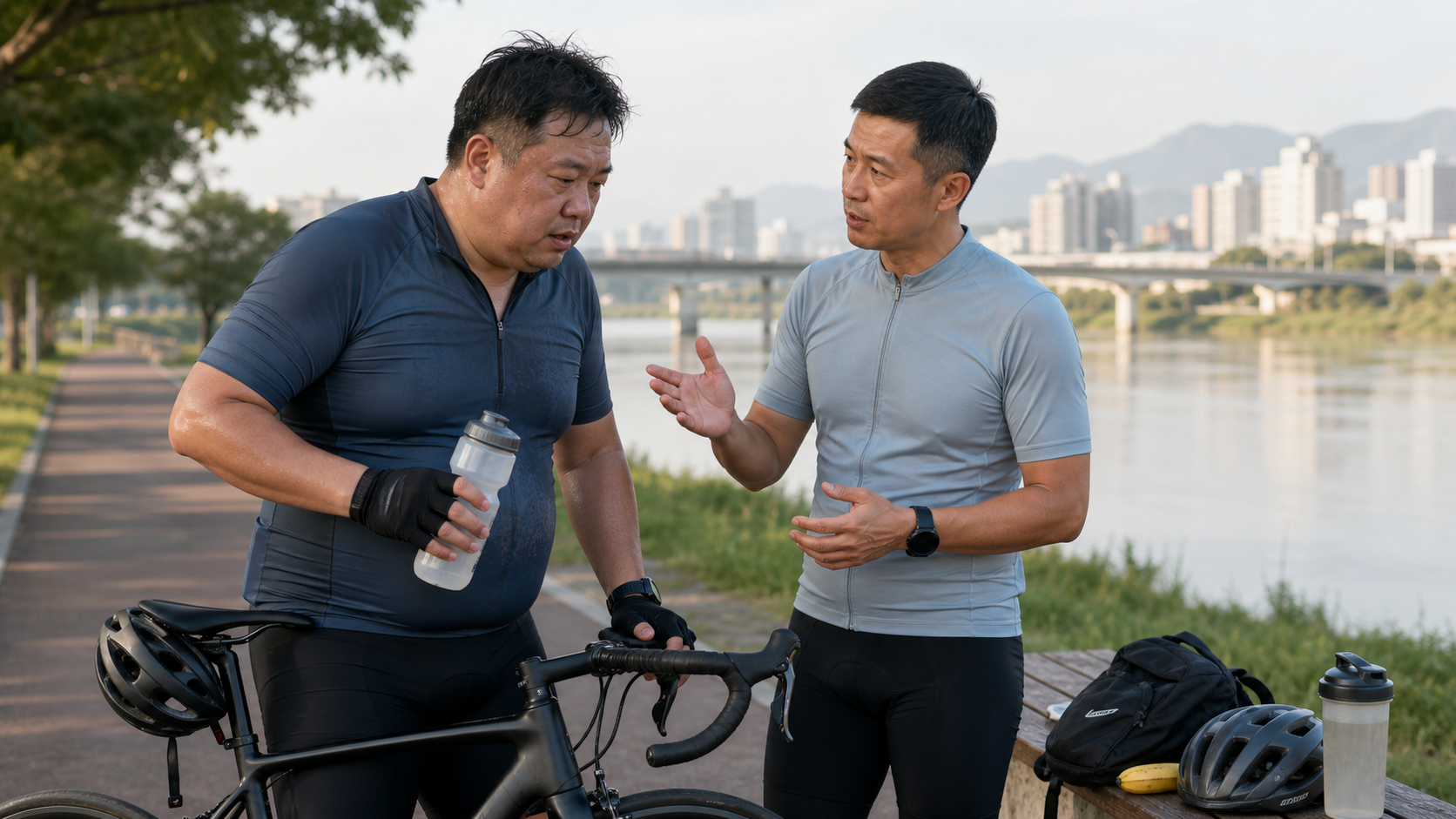
Opening: The Student Who Rode Every Day but Couldn’t Lose Weight
I’ve been in the fitness industry for fifteen years, and the most common opening line I hear during consultations is: “Coach, I’m already exercising, so why can’t I lose weight?”
A few years ago, there was a student named A-Cheng, a tech engineer in his early forties, weighing about 92 kilograms. He was determined to lose weight, bought a nice road bike, and rode 25 to 30 kilometers along the Xindian River bikeway every morning, rain or shine, for three full months. Given his weight and intensity, each ride burned roughly 500 to 700 kcal. By all logic, that level of exercise should have produced a noticeable drop on the scale.
So what happened? Three months later, he stepped on the scale and had lost 1.2 kilograms. He looked at me dejectedly and asked, “Is it because I’m not trying hard enough?”
I didn’t answer directly. Instead, I asked him: “After you finish your ride and get home, what do you eat for breakfast?” He paused and said, “Well, since the workout is tiring, I treat myself a bit more. Usually an egg pancake with a large iced milk tea. At lunch, I figure since I exercised, I’ll add some braised snacks…”
That’s the core of the problem. A-Cheng’s weight didn’t drop significantly not because he wasn’t trying hard enough, but because he misunderstood the role exercise plays in weight loss. In this article, I want to lay this out completely, because it’s tied to years of frustration and self-doubt for so many people.
Let me give you the conclusion first, then explain it step by step: Exercise is a great investment in your health, but if your only goal is “the number on the scale,” exercise is far less efficient than most people think. What truly drives body weight is diet.
Foundational Concepts: Energy Balance Isn’t That Simple
“Calorie Deficit” Is Correct, But It’s Not the Whole Story
The underlying logic of weight loss is indeed energy balance: when calories consumed are less than calories expended, the body taps into stored fat. This principle is correct and won’t be overturned.
The problem is that many people imagine this principle as a simple arithmetic calculator: “If I ride my bike today and burn 500 kcal, my weight will drop by the equivalent of 500 kcal.”
The real human body doesn’t work that way. The body is a system that actively regulates and strives to maintain balance. When you increase exercise expenditure, the body finds various ways to “compensate.” In exercise physiology, this phenomenon has a name: energy compensation.
Energy Compensation: The Body Quietly Balances the Books
Energy compensation occurs through two main pathways:
- Behavioral compensation: Increased appetite after exercise leads to unconsciously eating more; or becoming lazier and more sedentary outside of exercise (i.e., a drop in non-exercise activity thermogenesis, or NEAT). A-Cheng’s “reward breakfast” and “adding braised snacks” are classic behavioral compensation.
- Physiological compensation: The body down-regulates other aspects of energy expenditure, such as lowering resting metabolism and reducing unconscious fidgeting.
Professor Herman Pontzer’s team at Duke University analyzed large-scale data and pointed out that a significant portion of the calories we burn through exercise gets “saved” elsewhere in the body and offset. In some cases, this compensatory effect can nearly cancel things out entirely, bringing the net additional expenditure from exercise close to zero (Pontzer team research report).
This explains why many rigorously designed studies find that: simply increasing exercise without adjusting diet results in actual weight loss that is often far below what calorie-expenditure calculations would predict. A systematic review and meta-analysis of human trials also noted that exercise-only interventions have quite limited effects on weight loss, while diet-focused or diet-plus-behavioral intervention programs show significantly better weight-loss outcomes (Systematic review of diet vs. exercise vs. combined programs).
Two Often-Overlooked Compensation Details: Appetite and NEAT
I want to break down the compensation mechanism a bit further, because understanding it is what keeps you from wasting your effort.
The first is appetite regulation. After exercise—especially prolonged or high-intensity endurance work—many people experience noticeable hunger. This is the body’s natural self-protection: it detects increased energy expenditure and, through hormones and neural signals, raises appetite to drive you to replenish the energy you burned. The problem is that people often “over-replenish,” and what they replenish tends to be high-calorie, high-sugar, high-fat foods. That’s why A-Cheng craved egg pancakes with milk tea after his rides—it wasn’t entirely weak willpower; physiology was pushing him.
The second is a drop in NEAT (non-exercise activity thermogenesis). NEAT refers to all the activity you do in a day outside of formal exercise: walking, climbing stairs, housework, standing, even unconscious fidgeting. Interestingly, when you add formal exercise, the body often unconsciously reduces this category—you might collapse on the couch after a workout, walk fewer steps, take the elevator instead of the stairs. These “savings” can add up to a considerable amount, yet almost no one notices. That’s why I always remind my students: rather than pinning all your hopes on that one hour of exercise, also find ways to “raise your baseline activity throughout the day”—walk more, stand more, take the stairs instead of the elevator. The cumulative effect of these small bits of activity in counteracting compensation is vastly underestimated.
A Harsh but Important Piece of Arithmetic
Let me use a simplified example to show you the “numerical reality” of exercise-based weight loss. Suppose you want to lose 1 kilogram of pure fat through exercise alone. You’d need to create a deficit of roughly 7,000 to 7,700 kcal (a commonly used estimate for the energy density of fat tissue).
Let’s calculate for a 70-kilogram person:
| Exercise Type | Intensity | Approx. Calories per Hour | Time Needed to Lose 1 kg of Fat |
|---|---|---|---|
| Brisk walking | Moderate | 250–350 kcal | About 20–30 hours |
| Jogging | Moderate-high | 450–600 kcal | About 12–16 hours |
| Cycling (general commuting) | Moderate | 300–450 kcal | About 16–24 hours |
| Cycling (serious training) | High | 500–750 kcal | About 9–14 hours |
(These are general estimates; actual values vary significantly based on body weight, fitness level, terrain, and wind resistance.)
See the point? Even if you cycle seriously, you need to accumulate over a dozen hours of exercise just to “trade” for 1 kilogram of fat—and that’s under the ideal scenario of zero energy compensation and zero change in diet. In reality, if you eat one egg pancake plus a large iced milk tea after your workout (roughly 500–600 kcal), a hard ride is almost entirely negated.
This isn’t meant to discourage you; it’s meant to help you put your effort where it counts.
The “Hidden Calories” Comparison Taiwanese People Most Often Fall For
I often ask my students to do one thing: put “exercise expenditure” and “calories eaten back in one bite” on the same table. This kind of comparison is more effective than any lecture. Here’s a comparison I commonly use; the numbers are general estimates and will vary by establishment and portion size:
| Common Taiwanese Foods | Approx. Calories | Exercise Needed to Burn It Off (for a 70 kg person) |
|---|---|---|
| Large full-sugar pearl milk tea | About 500–650 kcal | Brisk walking about 1.5–2 hours |
| One fried chicken cutlet | About 550–700 kcal | Jogging about 1–1.5 hours |
| Scallion pancake with egg | About 400–500 kcal | Cycling about 1–1.5 hours |
| Bento with fried pork chop (with gravy) | About 700–900 kcal | Serious cycling about 1–1.8 hours |
| One slice of cream cake | About 350–450 kcal | Brisk walking about 1–1.5 hours |
| Medium order of Taiwanese fried chicken bites | About 500–800 kcal | Jogging about 1–1.8 hours |
When students see this table, their first reaction is often: “So my one hour of exercise is undone by one bubble tea.” Exactly. That’s why “watching what you eat” is usually less effort and more effective for weight loss than “exercising a bit more.” This doesn’t mean you can’t eat anything; it means recognizing that one casual high-calorie choice can wipe out the results of your hard-earned exercise. Save this table on your phone, and the next time you’re hesitating at a bubble tea shop, take a look—you’ll often make a different choice.
So Why Exercise at All? The Real Value of Exercise
You might be feeling a bit discouraged at this point: “So exercise is useless then?”—Not at all. I want to say this very seriously: exercise is extremely valuable; it’s just that most of its value doesn’t show up on the scale.
This is the mindset shift I most want to create in my students. If you measure exercise’s effectiveness only by body weight, you’ll underestimate it—or even give it up—and that would be the real loss. The real benefits of exercise include:
- Preserving muscle and improving body composition: During weight loss, if you rely only on dieting, a significant portion of the weight lost is muscle. Adding exercise (especially resistance training) helps you preserve muscle, so you end up with better definition, more stable metabolism, and a lower chance of regaining weight.
- Improving insulin sensitivity and blood sugar control: Regular exercise enhances the muscles’ ability to use blood sugar, which is especially important for people with elevated blood sugar or at risk of metabolic syndrome.
- Reducing visceral fat: Interestingly, even if body weight doesn’t change much, regular exercise can still effectively reduce visceral fat—the fat wrapped around your organs that poses the greatest health threat.
- Cardiorespiratory fitness and cardiovascular health: Improvements in resting heart rate, blood pressure, and blood lipids are things the scale will never show.
- Maintaining weight loss and preventing regain: This is crucial. Research consistently shows that exercise plays a more prominent role in “weight maintenance” and “preventing regain” than in “weight loss” itself. About 150 to 300 minutes per week of moderate-intensity activity helps maintain weight over time (U.S. Physical Activity Guidelines related recommendations).
- Mood, sleep, and stress: Exercise improves sleep quality and lowers stress hormones, and both insufficient sleep and chronic stress are themselves drivers of weight gain.
So I often tell my students: “Diet determines how much weight you lose; exercise determines what you look like after you lose it and whether you can keep it off.”
A Second Case Study: Mei-Hui, Who Only Dieted Without Exercising
If A-Cheng represents “exercise only, no attention to diet,” then Mei-Hui is the opposite extreme. She was an office worker and mother in her early fifties who used a popular very-low-calorie approach and lost 6 kilograms in two months. She was thrilled at first. But when she came to see me, she was pale, got winded climbing stairs, often felt cold in her hands and feet, and her weight had been stuck for over a month—with any slight increase in eating causing immediate rebound.
When I measured her body composition, the problem became clear: a large portion of those 6 kilograms was muscle and water; her body fat percentage hadn’t dropped much. She had lost muscle, her basal metabolic rate had dropped accordingly, and she’d entered a vicious cycle of “eating even less but not losing, and rebounding the moment she relaxed.” This is the classic outcome of pure dieting with no exercise at all.
Our adjustment direction was clear: make the calorie deficit gentler, get enough protein, and add resistance training to rebuild muscle. Three months later, her weight had dropped only another 2 kilograms—the number looked slow—but her body fat percentage had clearly decreased, her strength was back, she no longer got winded on stairs, and she had more energy.
Putting A-Cheng and Mei-Hui side by side perfectly illustrates the core of this article: relying only on exercise, or only on dieting, leads to a dead end. Exercise and diet are teammates, not substitutes.
Why “Maintenance” Is Harder Than “Weight Loss,” and Where Exercise Matters Most
Many people think the hardest part of weight loss is “getting slim.” In reality, the true boss battle is “staying slim after getting there.” Statistically, a high proportion of people who lose weight through short-term methods regain it within a year or two. The reason: once you’re lighter and have lost muscle, your daily total energy expenditure drops. Combined with metabolic adaptation, you need to eat even less than before just to maintain—which is very hard to sustain psychologically and physiologically over the long term.
This is where exercise truly shines. Regular exercise (especially muscle-preserving resistance training) can prop up your daily total energy expenditure and counteract metabolic adaptation, allowing you to maintain your weight without having to restrict your diet to a miserable degree. This is also why physical activity guidelines specifically emphasize exercise’s role in “weight maintenance”—about 150 to 300 minutes per week of moderate-intensity activity helps maintain weight over time. In other words, diet helps you win the battle of weight loss; exercise helps you hold the territory.
Practical Approach: The Correct Division of Labor Between Exercise and Diet
The Division of Labor in One Sentence
Weight-loss phase: diet takes the lead (creating the deficit), exercise holds the line (preserving muscle, protecting health, aiding maintenance).
The table below is a division-of-labor concept I use with my students to help you allocate your energy in the right proportions:
| Goal | Role of Diet | Role of Exercise | Approximate Contribution Ratio (Conceptual) |
|---|---|---|---|
| Reducing body weight | Leads: creates calorie deficit | Supports: modestly increases expenditure, preserves muscle | Diet about 7, exercise about 3 |
| Improving body composition | Provides adequate protein | Leads: resistance training stimulates muscle | About half and half |
| Maintaining weight without regain | Maintains stable eating habits | Leads: regular activity counters metabolic decline | Exercise’s share rises significantly |
| Cardiorespiratory and metabolic health | Supports | Leads | Exercise primary |
The point of this table isn’t precise numbers; it’s the conceptual weighting: if you’re trying to lose weight but put 90% of your mental energy into “should I exercise today?” and only 10% into “what did I eat today?”, you’ll likely end up like A-Cheng—putting in twice the effort for half the results.
On the Diet Side: Start with the Big Picture, Don’t Overthink the Details
The details of diet could fill an entire book, but for most people trying to lose weight, just getting these few things right will already produce impressive results:
- Create a moderate deficit: Aim for a daily deficit of about 300–500 kcal, corresponding to roughly 0.3–0.5 kilograms per week. Don’t crash-diet—an overly large deficit causes muscle loss, down-regulates metabolism, and is harder to sustain.
- Get enough protein: Protein is especially important during weight loss; it preserves muscle and increases satiety. A general recommendation is about 1.2–1.6 grams per kilogram of body weight (those with kidney disease should consult a physician first). For people who eat out often in Taiwan, braised chicken legs, tea eggs, soy milk, unsweetened tofu pudding, and chicken breast bentos are convenient ways to hit the target.
- Handle Taiwanese eating-out traps: The sugar in hand-shaken drinks, fried mains and gravy in bentos, and breads and cakes are the most common sources of hidden calories. Swapping a large iced milk tea for unsweetened tea, fried pork chop for braised chicken leg, and halving your rice can easily save 400–600 kcal a day—more effective than riding an extra half hour.
- Eat more whole foods and vegetables: Increase fiber and satiety, and stabilize blood sugar.
“Smart Swaps” Comparison Table for Eating Out in Taiwan
Weight loss doesn’t mean starving yourself or never eating out—that’s unrealistic. What actually works is “same situation, smarter choice.” Here’s a practical list I give to students who eat out frequently:
| What You Usually Eat | Swap It For | Approx. Calories Saved |
|---|---|---|
| Large full-sugar hand-shaken drink | Unsweetened tea / black coffee | About 400–600 kcal |
| Bento with fried pork chop + full rice | Braised chicken leg / steamed fish + half rice | About 300–500 kcal |
| Bacon egg pancake + milk tea | Vegetable egg pancake (light sauce) + unsweetened soy milk | About 300–400 kcal |
| Fried chicken bites as a late-night snack | Tea egg + unsweetened yogurt | About 400–600 kcal |
| Ramen (drinking all the rich broth) | Ramen without drinking broth, add vegetables and egg | About 200–400 kcal |
The key point: these swaps don’t require iron willpower; they’re just replacing “habitual choices” with “smarter choices,” saving you the calorie equivalent of an hour of exercise in a single day. This again confirms the article’s central theme: small changes on the diet side often have far more leverage than exercise.
On the Exercise Side: A Sample One-Week Schedule for People Trying to Lose Weight
Here’s a beginner-to-intermediate schedule I design for students who “have basic fitness and want to lose weight while staying healthy.” Adjust it to your own situation. The key point: resistance training is non-negotiable—it’s the key to preserving muscle.
| Day | Training Content | Intensity / Duration | Purpose |
|---|---|---|---|
| Monday | Full-body resistance training | Moderate, 40–50 minutes | Preserve / increase muscle |
| Tuesday | Cardio (brisk walking / easy cycling) | Heart rate at about 60–70% of max, 40 minutes | Increase expenditure, cardiorespiratory fitness |
| Wednesday | Rest or stretching / walking | Easy | Recovery |
| Thursday | Full-body resistance training | Moderate, 40–50 minutes | Preserve muscle |
| Friday | Cardio (cycling / jogging) | Moderate, 45–60 minutes | Expenditure, endurance |
| Saturday | Longer outdoor ride or hike | Easy to moderate, 60–90 minutes | Accumulate activity, mood |
| Sunday | Complete rest | — | Recovery |
This schedule accumulates roughly 200–250 minutes of cardio per week, falling within the activity range that supports long-term weight loss (the American College of Sports Medicine, ACSM, recommends about 200–300 minutes per week of moderate-intensity activity for long-term weight loss, related guideline summary). It also includes two days of resistance training—the component that many cardio-only exercisers overlook but which matters most.
Practical Adjustments for the Taiwanese Context
- What to do when summer is too hot: Taiwan’s summers are humid and hot, and outdoor exercise at noon carries a high risk of heatstroke. Schedule outdoor rides and jogs for early morning or evening; at midday, switch to indoor strength training or spinning. Hydrate well and watch your electrolytes.
- Venue choices: Riverside bikeways (Xindian River, Dahan River, Erchong Floodway, etc.) are flat and safe, ideal for accumulating cardio; the strength-training areas and spinning classes at community sports centers offer great value; on rainy days, resistance bands and dumbbells at home can get the job done.
- Medical checkups: If your BMI is elevated, or you have high blood pressure, high blood sugar, high cholesterol, or a history of heart disease, get a basic health check through the National Health Insurance system and consult a physician before starting higher-intensity exercise. Medical care is convenient in Taiwan—don’t skip this step.
Common Mistakes and Corrections
Over the years, I’ve watched countless people repeat the same errors. Correct any of the following, and results often change immediately.
Mistake 1: Treating Exercise as a “License to Eat More”
This was A-Cheng’s problem. “I exercised today, so I can eat more”—that sentence is a weight-loss killer.
Correction: Decouple exercise from diet. Exercise is for health and physique, not for earning the right to eat more. If you’re genuinely hungry after a workout, prioritize protein and whole foods (soy milk, tea eggs, fruit) rather than high-sugar, high-fat rewards.
Mistake 2: Doing Only Cardio and No Resistance Training at All
Many people think “the more I sweat, the more I lose,” so they run and ride obsessively but never touch weights. The result: weight drops a little, but the body becomes soft and flabby, metabolism gets lower and lower, and any relaxation leads to rebound weight gain.
Correction: Do resistance training at least twice a week—it’s the foundation for preserving muscle and protecting your metabolism. Women don’t need to fear turning into bodybuilders—that requires an extreme amount of training and dietary manipulation. Normal training will just make you firmer and better defined.
Mistake 3: Overly Aggressive Dieting and Treating Exercise as Punishment
Some people get fierce and eat only one meal a day while forcing themselves to exercise two hours daily. The scale drops fast in the short term, but they lose a lot of muscle, wreck their metabolism, and exhaust themselves physically and mentally—eventually leading to binge eating and rebound weight gain, ending up heavier than before (the yo-yo effect).
Correction: Use a moderate deficit (300–500 kcal per day), get enough protein, and progress exercise gradually. The method you can sustain long-term is the good method. Weight loss is a marathon, not a sprint.
Mistake 4: Only Watching the Scale and Ignoring Other Progress Indicators
Body weight fluctuates 1–2 kilograms daily due to water, glycogen, menstrual cycle, and salt from the previous meal. Weighing yourself daily and agonizing over the number makes it easy to mistake progress for failure and give up.
Correction: Diversify your tracking metrics—waist circumference, body fat percentage, how your pants fit, strength gains, not getting winded on climbs, mood and sleep. These often reflect your progress earlier and more honestly than body weight.
Mistake 5: Ignoring Sleep and Stress
Staying up late and chronic stress disrupt appetite hormones, increase cravings for high-sugar, high-fat foods, and reduce exercise performance. Many people obsess over diet and exercise while sleeping fewer than 6 hours a night—naturally, results suffer.
Correction: Treat sleep as part of your training. Aim for 7–8 hours per night. Manage stress and keep a regular routine, and the weight-loss journey will go much more smoothly.
Actionable Advice for Readers at Different Levels
If You’re a Beginner Who’s Sedentary and Barely Exercises
Don’t worry about weight-loss efficiency yet. Getting your body moving and building the habit is the first priority.
- Start with brisk walking or easy cycling 3 times a week, 20–30 minutes each session. Riverside bikeways are a great starting point.
- Add 1–2 sessions per week of simple resistance training (squats, push-ups, or band rows are enough), about 20 minutes each.
- Change just one thing in your diet first: swap your daily sugary drinks for unsweetened ones. Many people see changes from this alone.
- The goal isn’t speed; it’s staying injury-free and consistent. If you experience any chest tightness or dizziness, stop immediately and seek medical attention.
If You’re Intermediate, Have Exercise Habits, but Are Stuck
You’re probably A-Cheng—you’re moving, but the weight isn’t. The problem is almost certainly diet and energy compensation.
- Honestly log your food for 3–5 days (using a phone app or taking photos). You’ll be shocked at how many calories you’re drinking and casually eating.
- Check whether you’re getting enough protein and whether you’re using exercise as an excuse to reward yourself.
- Rebalance your cardio-to-resistance-training ratio; stop doing only cardio.
- Establish a moderate deficit. A weekly target of 0.3–0.5 kilograms is fine—steady and consistent.
If You’re an Advanced Exerciser Looking to Further Optimize Your Physique
Your training volume is probably already sufficient. The key lies in refining your diet and periodizing your training.
- During a fat-loss phase, push protein to the upper end of the range and manage the timing of refined carbohydrates.
- Use periodization in your training to avoid overtraining and metabolic down-regulation from prolonged high volume.
- Pay more attention to recovery, sleep, and life-stress management. At this stage, the bottleneck is often not whether you’re training enough.
If You Have a Chronic Condition (Diabetes, High Blood Pressure, Heart Disease, etc.)
I want to make this point with extra care: exercise is likely extremely beneficial for you, but it must be individualized and done under the supervision of your medical team.
- Before starting exercise, consult your primary care physician and (if available) a dietitian to assess cardiovascular risk and medication status.
- People with diabetes need to watch for hypoglycemia risk and monitor blood sugar during exercise; people with high blood pressure should avoid heavy loads with breath-holding.
- Taiwan’s National Health Insurance makes medical care convenient—use it. No exercise prescription should replace an individualized assessment by a physician.
FAQ
Q: So should I just skip exercise and focus only on dieting?
A: Absolutely not. With pure dieting, a high proportion of the weight lost is muscle, leaving you weaker, more prone to regain, and missing out on all the health and psychological benefits of exercise. The correct understanding is: diet creates the deficit; exercise protects muscle, preserves results, and safeguards health. They’re teammates, not an either/or choice.
Q: Does fasted exercise burn more fat and help me lose weight faster?
A: Fasted exercise may indeed use more fat for fuel at that moment, but total daily calorie deficit is what determines body weight; this difference has very little impact on total weight loss. If fasted exercise makes you dizzy or hurts your performance, it’s not worth it. Prioritize what allows you to train safely and consistently.
Q: Is spot reduction possible? Will doing tons of crunches slim my belly?
A: Unfortunately, “spot reduction” isn’t physiologically valid. Fat is gained and lost systemically; you can’t choose to lose it from one specific area. Crunches strengthen your core, but they can’t specifically burn belly fat. To slim your belly, you still need an overall calorie deficit and time.
Q: Why does my friend eat more than me but stay slimmer?
A: Genetics, muscle mass, activity level, gut microbiota, and sleep all play a role. Don’t use someone else’s physiology as your benchmark. Focus on the variables you can control: what you eat, how much you move, and how much you sleep.
Q: My sports watch/app says I burned 800 kcal. Can I safely eat that back?
A: Never treat wearable-device calorie numbers as gospel. These estimates can have significant error, and energy expenditure in particular is often overestimated. If you “eat back” according to your watch, you’ll easily overeat—this is fertile ground for energy compensation. Treat the watch numbers as a reference for “relative comparison and trend tracking,” not as a license to eat back calories.
Q: Do I have to join a gym? Can I do it at home or outdoors?
A: Absolutely. Resistance training doesn’t require a gym. Resistance bands, dumbbells, or even bodyweight squats, push-ups, and planks can be done at home; for cardio, use riverside cycling, brisk walking in parks, or stair climbing. The method you can sustain and integrate into your life is the best method. Lack of time for the gym has never been a valid excuse not to exercise.
Q: I’m older (50, 60+). Can I still improve with this approach?
A: Not only can you, but you should. Aging naturally causes muscle loss (sarcopenia risk), and resistance training is especially important for middle-aged and older adults to preserve muscle, maintain mobility, and support metabolism. Just progress intensity gradually and use proper form. If you have chronic conditions or joint issues, consult a physician or physical therapist first, and start under professional guidance if needed.
Q: What should I do about a weight-loss plateau?
A: Plateaus are normal and usually result from metabolic adaptation. Don’t panic, and don’t immediately crash-diet harder. Check: are you unconsciously eating more (log your food for a few days again), is your protein adequate, how are your sleep and stress, and does your training need variation? Sometimes scheduling a “maintenance phase” to give your body and mind a breather is more beneficial than pushing through.
Conclusion: Put Exercise Back in Its Proper Place
Back to A-Cheng at the beginning. Together, we did a few things: he swapped his post-ride “reward breakfast” for soy milk and tea eggs, stopped adding braised snacks at lunch, and switched all sugary drinks to unsweetened ones. For training, he kept cycling but added two strength-training sessions per week. Diet created the deficit; exercise protected muscle.
Six months later, he had lost 8 kilograms. And—this is what gratified me most—his physique was firmer, he no longer got winded on climbs, and his blood lipids and blood sugar had improved on his health check. More importantly, he no longer treated exercise as “penance to earn the right to eat more.” He genuinely enjoyed those early-morning rides along the river.
This is what I believe is the truth about exercise and weight management: Exercise is not the most efficient tool for weight loss, but it is the most indispensable partner for “losing weight healthily, losing weight beautifully, and keeping it off once you’ve lost it.” Hand the job of creating a deficit to diet, and hand the roles of protecting your body, consolidating results, and managing your health to exercise—each doing its own job, and you’ll go further, more steadily.
Stop staring only at the number on the scale. Feel your body becoming stronger, less winded, sleeping better, and more emotionally stable. Those are exercise’s most honest and most precious rewards.
If you remember only one thing from this article, I hope it’s this: In the race of weight loss, diet is the engine; exercise is the steering wheel and seatbelt. The engine determines whether you move forward and how far you go; the steering wheel and seatbelt determine whether you reach the finish line steadily, safely, and for the long haul. May you put your effort where it counts, and manage your body and health in a way that can accompany you for a lifetime. This path doesn’t need to be extreme, but it’s worth persisting in.
This article is educational content and does not replace individualized diagnosis or treatment advice from a physician, physical therapist, or dietitian. If you have a chronic condition (such as diabetes, high blood pressure, heart disease, etc.) or special health circumstances, please consult a qualified medical professional before starting a new exercise or diet program, and rely on individualized assessment.
References
- Pontzer team energy compensation research report: https://hi.kormedi.com/en-us/articles/2788772
- Systematic review and meta-analysis of diet, exercise, and combined behavioral intervention programs (PMC): https://pmc.ncbi.nlm.nih.gov/articles/PMC4180002/
- Physical Activity Guidelines for Americans, 2nd edition: https://odphp.health.gov/sites/default/files/2019-09/Physical_Activity_Guidelines_2nd_edition.pdf
- Physical activity needed for weight loss and weight maintenance (Obesity Medicine Association, including ACSM recommendation summary): https://obesitymedicine.org/blog/how-much-physical-activity-is-needed-for-weight-loss-weight-loss-maintenance-and-weight-gain-prevention/
Related Reading
- The Truth About Exercise and Weight Management: Can Exercise Help You Lose Weight? A Coach Explains Compensation Mechanisms and the Division of Labor with Diet
- Long-Term Management of Exercise and Obesity: A Coach’s Sustainable, Injury-Free Weight-Loss Strategy
- Exercise and Appetite: Why You Sometimes Get Hungrier the More You Train, and Sometimes Have No Appetite at All
- Weight Loss and Body Composition Management: Scientific Fat Loss for Athletes—Energy Deficit, Muscle Preservation, and Timing Choices
靠單車減肥35公斤 心得分享與整理
7 年前
2016/4/20 - 中社路 夜騎 半年甩肉14KG 後測
10 年前
#公路車 #Fitting 靠人工智慧APP 幫你調整單車
6 年前
16/02/16 - 夜訪中社路 緩慢進步中
10 年前
一個測試有沒有認真練車的方法😂 #公路車
10 個月前
CT暗黑廚房) 車友必備 宇宙無敵鮮蚵湯 幫助訓練恢復 天然食補 好市多 超肥鮮蚵 破PR
7 年前
大家都在開箱的...單車用藍芽對講耳機真的有幫助嗎? SENA BiKom 20 長距離旅遊 & 海鷗繞圈賽 實際體驗心得 / 公路車 / CT Yeh
9 個月前
西進武嶺 免費訓練分析服務 Intervals | 練不夠還是練過頭?你哪一種類型選手?AI模型告訴你! | 備戰神器 | 公路車 訓練 | CT Yeh
4 年前