Exercise and Arthritis: To Move or Not to Move? A Coach's Guide to Understanding Why "The Less You Move, the Worse It Gets"
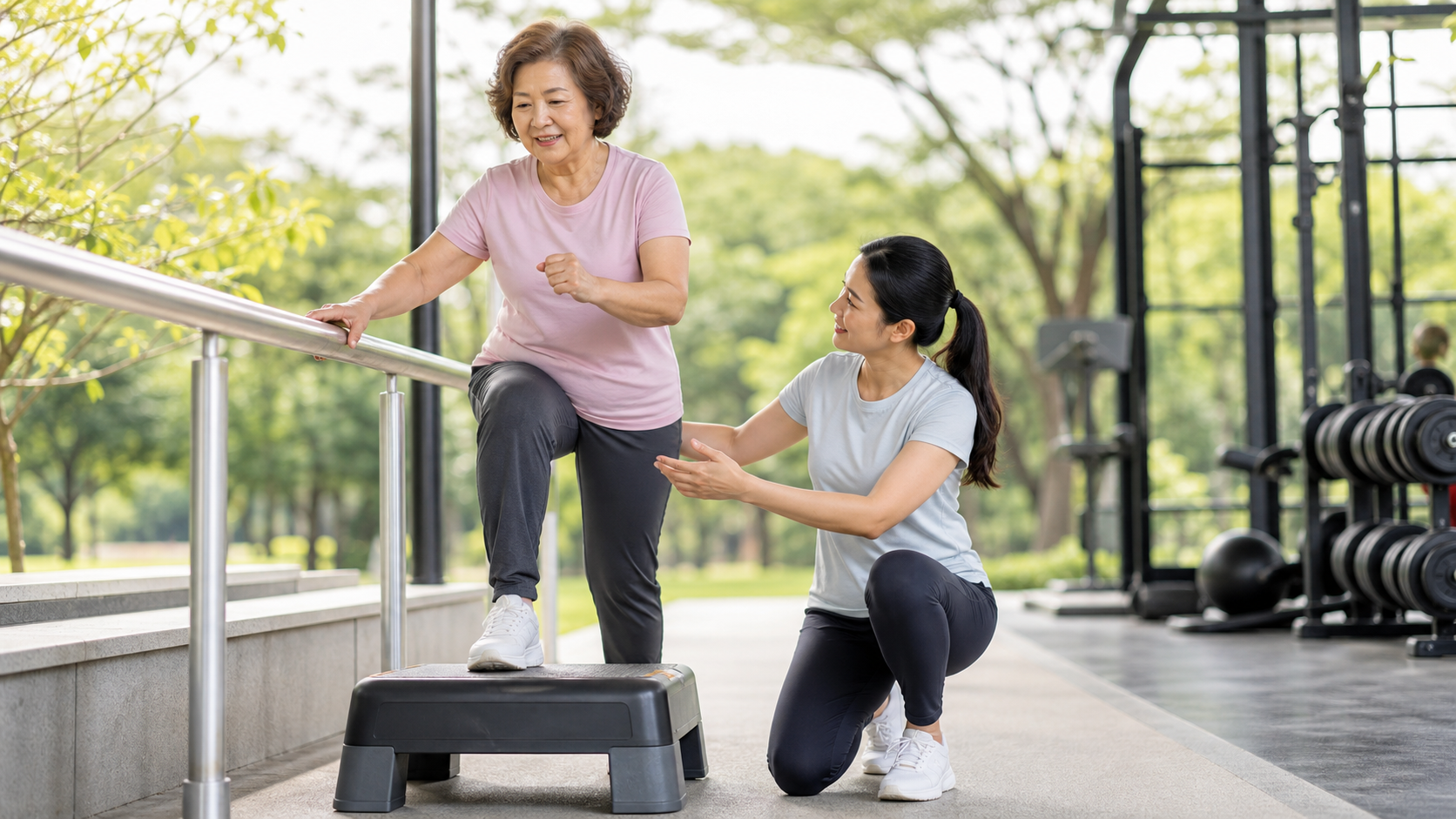
Opening: Aunt Zhang, Who Was Afraid to Move
I still remember a few years ago, when a woman in her early sixties, Aunt Zhang, was half-pushed, half-pulled by her family to come see me. She had been diagnosed with knee osteoarthritis for three years, and during those three years, her primary “treatment” was—simply put—not moving. She took the elevator instead of the stairs, stopped her daily habit of walking in the park, and even asked family members to do her grocery shopping whenever possible. Her reasoning sounded perfectly logical: “If it hurts when I move, then of course I should rest more and let my joints wear down less.”
And the result? After three years, her knees weren’t any better—they were stiffer, more painful, and weaker. She used to be able to squat down to mop the floor herself; now she had to grip the armrest and struggle for a long time just to get up from the sofa. Her weight had also quietly crept up by nearly eight kilograms. Sitting in front of me, her voice full of helplessness, she asked: “Coach, does this mean I’m destined for a wheelchair for the rest of my life?”
I often say that Aunt Zhang’s story is perhaps the most typical—and most heartbreaking—script I’ve seen in my fifteen years of working with people who exercise. She had latched onto a very intuitive but misguided belief: if you have arthritis, you should move less. In reality, for the vast majority of arthritis cases (especially the most common type, osteoarthritis), appropriate exercise doesn’t just fail to accelerate wear and tear—it’s actually one of the most effective non-drug interventions supported by evidence. In this article, I want to lay out the whole “move or not to move” question clearly, from the science to the practical application, and even to the local context here in Taiwan.
Let me start with the conclusion: for most people with arthritis, the answer is move—but move correctly, move enough, and move safely. “Not moving at all” is usually the fastest path to worsening joints.
Concepts and Scientific Basis: Why “Not Moving” Actually Harms Your Joints?
Joints Aren’t Tires—They Don’t Get Thinner the More You Use Them
Many people imagine joints like car tires—the tread wears thinner and thinner, and once it’s gone, you’re done. This analogy sounds intuitive, but it misleads a great many people. Articular cartilage is actually living tissue. It has no blood vessels; its nutrients mainly come from the “squeeze-and-release” cycle of joint fluid during movement. You can think of it like a sponge: you need it to open and close, repeatedly absorbing and releasing, for nutrients and waste to flow in and out.
If a joint stays immobile for a long time, this “pump” stops working. The cartilage doesn’t get enough nutrients, joint fluid circulation deteriorates, and the surrounding muscles and ligaments also atrophy and tighten. The result is what we saw with Aunt Zhang: the less you move, the stiffer and weaker you get; and because you’re weak, moving hurts more, so you’re even more afraid to move—a classic vicious cycle.
What Exactly Does Exercise Help With?
According to arthritis-related health organizations and large research reviews, regular exercise offers multifaceted, evidence-backed benefits for arthritis. In summary, there are several core benefits:
- Strengthens the muscles around the joints: Muscles are the best shock absorbers and protective gear for your joints. The stronger your quadriceps (the muscles at the front of your thigh), the better the impact on your knee joint is distributed.
- Reduces pain and improves mobility: Multiple studies involving tens of thousands of participants have shown that exercise can effectively reduce pain, improve mobility and quality of life, and has a good safety profile.
- Controls weight and reduces load: For every extra kilogram of body weight, the pressure on your knees while walking can be amplified several times over. Weight loss has a very direct benefit for lower-limb arthritis.
- Maintains joint range of motion: Regular stretching and mobility training can prevent joints from “locking up” and getting progressively tighter.
- Improves mood and sleep: Chronic pain is often accompanied by anxiety and insomnia, and exercise has positive effects on both.
One large study that reviewed over two hundred trials and included more than fifteen thousand participants found that aerobic exercise (such as walking, cycling, and swimming) was particularly effective at improving pain and physical function in knee osteoarthritis, and was considered safe enough to be used as a first-line intervention. This strongly supports the idea we promote in Taiwan that “cycling maintains your knees.”
I especially enjoy sharing the significance of this research direction with my students: it’s not telling you to do some exotic, expensive treatment. It’s clearly telling you—walking, cycling, and swimming, things you already know how to do and can do anywhere, are among the most helpful interventions for your joints. This is fantastic news for the average person, because it means the key to protecting your joints has been in your own hands all along.
The Difference Between “Weight-Bearing” and “Non-Weight-Bearing” Determines Whether It Hurts
To understand exercise for arthritis, there’s one key term you must remember: weight-bearing. Activities like walking, running, and climbing stairs transmit your body weight through your lower-limb joints and subject them to impact—these are weight-bearing exercises. In contrast, with cycling, swimming, and water exercises, most of your body weight is supported by the saddle or the buoyancy of the water, so your joints don’t have to carry the full load—these are non-weight-bearing or low-weight-bearing exercises.
This distinction is very important for people with lower-limb arthritis. It’s not that weight-bearing exercise is bad—moderate weight-bearing actually helps bone density and muscle strength—but when your joints are painful and in the adaptation phase, using non-weight-bearing exercise as your mainstay allows you to accumulate sufficient activity without pain. This is why I often treat cycling and swimming as the two pillars of exercise for people with arthritis. You can think of weight-bearing exercise as an “advanced option” to gradually incorporate once your joints are stable and your strength has improved.
What If “The More I Move, The More It Hurts”? Pain Doesn’t Mean Injury
This is a point I spend a lot of time explaining to every new student. Pain does not equal damage. Arthritis pain often comes from inflammation, stiffness, and tightness in surrounding tissues, not from “wearing away another piece of cartilage.” Some mild discomfort or soreness during or after exercise is a normal signal that your body is adapting—there’s no need to be scared into stopping all activity.
I usually communicate with students using a simple principle, which is the “Pain Traffic Light” below:
| Pain Signal | Approximate Feeling (0–10 scale) | What It Means | What To Do |
|---|---|---|---|
| Green Light | 0–3, post-exercise discomfort subsides within 24 hours | Safe range, joint is adapting | Maintain current intensity, can progress gradually |
| Yellow Light | 4–5, some swelling or stiffness the day after exercise | Slightly too much, but not necessarily injured | Reduce intensity or frequency, observe for 1–2 days |
| Red Light | 6 or above, obvious joint swelling and heat, pain causing a limp, pain lasting over 48 hours | Possible overloading or acute inflammation | Stop that movement, ice and rest, seek medical attention if necessary |
This table isn’t meant for you to memorize numbers; it’s to help you build a framework for judgment: mild pain can be continued; obvious swelling, heat, and persistent severe pain require you to hit the brakes. I often tell my students, we’re aiming for “smartly enduring a little pain,” not “bravely enduring pain to the end,” and certainly not “not moving at all because you’re afraid of pain.”
Practical Methods: An Exercise Framework You Can Follow
Now that we’ve covered the concepts, let’s talk about what everyone really wants to know—so how exactly should you move? I break down exercise for people with arthritis into four pillars: aerobic, strength, mobility, and balance. These four aren’t a multiple-choice question; they need to be combined like a balanced meal plate.
Weekly Exercise Volume: A Practical Reference Framework
For general adult physical activity recommendations (including for people with arthritis), a commonly cited framework is: at least 150 minutes of moderate-intensity aerobic activity per week (or 75 minutes of vigorous intensity, or a combination), plus strength training on 2 days per week. Older adults are also advised to add balance training.
Hearing “150 minutes” makes many people gasp and think they can’t do it. Don’t worry—this number can be accumulated. Breaking it down to about 30 minutes a day, 5 days a week, or even splitting it into 15 minutes in the morning and 15 minutes in the evening, all counts. For those just starting out or with more noticeable pain, I have them begin at a level far below this. Getting moving and building the habit is the most important thing in the first phase. Research also suggests that even relatively small amounts of regular activity can help with arthritis symptoms—so don’t skip exercise entirely just because you can’t hit 150 minutes.
The Four Pillars and Local Taiwanese Options
| Pillar | Purpose | Common Joint-Friendly Options in Taiwan | Frequency Reference |
|---|---|---|---|
| Aerobic | Cardio, weight control, joint fluid circulation | Indoor cycling / flat outdoor cycling, brisk walking, swimming, water walking, riverside trails | Accumulate 150 minutes of moderate intensity per week |
| Strength | Strengthen the “protective” muscles around joints | Bodyweight squats (holding a chair), seated leg raises, resistance bands, light dumbbells | 2–3 days per week, non-consecutive days |
| Mobility | Keep joints from locking up, reduce stiffness | Slow circles and stretches for knees, ankles, and wrists daily | Almost daily, especially in the morning |
| Balance | Prevent falls (crucial for older adults) | Single-leg stands (holding a wall), Tai Chi, simple balance pads | 2–3 days per week |
I especially want to put in a good word for cycling. Cycling is, in my opinion, one of the most knee-friendly aerobic exercises out there, because it’s non-weight-bearing—most of your body weight is supported by the saddle, so your knees don’t have to repeatedly absorb the impact of landing like they do when running, yet you still get regular flexion and extension that activates the “joint pump.” Given Taiwan’s humid, hot climate and the high risk of heatstroke from outdoor activities in summer, indoor cycling or stationary bikes at the gym are excellent options that can be done year-round, regardless of the weather.
However, cycling has its nuances. A saddle that’s too low causes excessive knee flexion during pedaling, increasing pressure on the patella—this is a common reason people experience anterior knee pain after riding. I usually recommend that students with arthritis raise the saddle a bit (so the knee is nearly straight at the bottom of the pedal stroke, but not completely locked out), and use a lighter gear with a higher cadence (like a relaxed, smooth pedaling style at 70–90 revolutions per minute), rather than grinding a heavy gear. Pedal lightly and smoothly, and your knees will be happy.
One-Week Beginner Sample Schedule (Suitable for Those with Stable Pain and Just Starting to Build Habits)
The table below is the starter version I often give to students who are “between green and yellow light, wanting to start moving.” Please note this is a sample framework—the actual intensity must be adjusted according to your own condition.
| Day | Main Activity | Content & Duration | Intensity Cue |
|---|---|---|---|
| Monday | Aerobic | Indoor cycling / stationary bike for 20 minutes, light gear, high cadence | Can still speak in full sentences, slightly breathless |
| Tuesday | Strength + Mobility | Chair squats, seated leg raises, resistance bands, 2 sets each; knee and ankle stretches for 10 minutes | Slow movements, feel the muscles working |
| Wednesday | Rest or Walk | Slow, flat walk for 15–20 minutes | Green light range, easy |
| Thursday | Aerobic | Swimming or water walking for 20–30 minutes | Water buoyancy reduces load |
| Friday | Strength + Balance | One round of bodyweight strength + wall-supported single-leg stand practice | Balance exercises need support nearby |
| Saturday | Aerobic (slightly longer) | Riverside cycling for 30–40 minutes, rest breaks allowed | Accumulate distance, don’t chase speed |
| Sunday | Complete rest / Stretching | Full-body cool-down stretches for 10–15 minutes | Let the body recover |
The design logic of this schedule is to alternate higher-weight-bearing activities (walking) with non-weight-bearing ones (cycling, swimming), giving your joints room to recover, while steadily accumulating aerobic time each week and ensuring strength training doesn’t hit the same muscle groups on consecutive days. Once your body adapts and pain stabilizes in the green light range, we gradually increase time and frequency—this is the spirit of “progressive overload.”
Six-Week Progressive Schedule: Making “Adding Volume” Rhythmic
Many students’ biggest problem isn’t unwillingness to move; it’s “not knowing when to add more and how much.” Either they stay stagnant for months, afraid to progress, or they get a sudden burst of motivation and add too much at once, ending up with swollen knees the next day. I usually use a six-week progressive table to make progress rhythmic and predictable. Here’s an example using “indoor cycling aerobic exercise”:
| Week | Duration per Session | Sessions per Week | Cadence Reference | Progression Criteria |
|---|---|---|---|---|
| Weeks 1–2 | 15 minutes | 3 times | 60–70 rpm, light gear | Only progress if green light throughout |
| Weeks 3–4 | 20 minutes | 3–4 times | 70–80 rpm | Add time only if no swelling the next day |
| Week 5 | 25–30 minutes | 4 times | 80 rpm | Can add 1–2 minutes of slightly faster segments |
| Week 6 | 30 minutes | 4–5 times | 80–90 rpm | Approaching the 150 minutes per week goal |
I condense the core principle of this table into one sentence: “Change only one variable at a time.” If you want to add time, keep the gear and frequency the same that week; if you want to add frequency, keep the time the same. Never increase time, intensity, and frequency all at once—that’s the standard recipe for swollen joints. And before moving to the next level, you must pass the checkpoint of “green light throughout the previous level, no swelling the next day.” It’s okay to go slow; what we want is for you to still be moving three months from now, not for you to be in so much pain you give up after three weeks.
Different Types of Arthritis Require Slight Adjustments to Exercise Strategy
I want to establish an important concept here: “arthritis” isn’t a single disease; it’s an umbrella term for a large group of conditions. The most common is osteoarthritis (degenerative arthritis), related to mechanical wear and aging. Another major category is inflammatory arthritis, such as rheumatoid arthritis and ankylosing spondylitis, which are related to systemic inflammation involving the immune system. The overarching principles of exercise for both are the same—neither should involve complete immobility—but the details need fine-tuning.
| Aspect | Osteoarthritis (Degenerative Arthritis) | Inflammatory Arthritis (e.g., Rheumatoid) |
|---|---|---|
| Main Problem | Mechanical wear, pain with weight-bearing | Systemic inflammation, may affect multiple joints |
| Typical Stiffness | Stiffness after sitting, improves with movement | Morning stiffness often longer and more pronounced |
| Acute Flare Phase | Widespread redness/swelling/heat less common | When joints are red, swollen, and hot, reduce volume, focus on mobility |
| Exercise Focus | Strength + non-weight-bearing aerobic + weight loss | Gentle mobility + exercise under medical team guidance |
| Special Note | Watch out for impact from downhill and descending stairs | Medication and exercise must be coordinated with a rheumatologist |
For friends with inflammatory arthritis, I want to emphasize one thing: the acute flare phase (when joints are clearly red, swollen, hot, and painful) is not the time to push through exercise. During this phase, the focus should be on gentle joint mobility to prevent the joints from completely stiffening up, not on forcing strength or aerobic work. Once the inflammation is under control and you enter a stable phase, you can return to the four-pillar framework we discussed earlier. Moreover, inflammatory arthritis often involves systemic medication, so your exercise plan absolutely must be coordinated with your rheumatologist and physical therapist—this isn’t an area where you can just wing it on your own.
If you’re not sure which type of arthritis you have, or haven’t even been diagnosed yet, you should see a doctor first. Taiwan’s National Health Insurance makes it easy to access care; orthopedic, rehabilitation, and rheumatology departments can all help clarify your condition. First figure out what kind of problem you have, so your exercise strategy isn’t aimed in the wrong direction.
Another Case Study: Brother Chen, Who Loved Cycling But It Hurt More and More
In contrast to Aunt Zhang, Brother Chen is another typical case. In his mid-fifties, he fell in love with cycling after retirement, riding over a hundred kilometers a week and being an active member of his community cycling club. The problem was his right knee osteoarthritis—after every long ride with climbing, the front of his knee hurt so badly he once thought he’d have to give up his favorite activity.
When he came to see me, his first words were: “Coach, is cycling bad for my knees? Should I quit?” I asked him to demonstrate how he normally rides. I immediately spotted three problems: the saddle was too low, he habitually ground heavy gears, and when climbing, his cadence dropped to around 50 rpm and he’d just power through. Combined, these three things meant every pedal stroke was putting extra pressure on his already-degenerated patellofemoral joint.
We didn’t tell him to quit cycling. Instead, we made three adjustments: raised the saddle so his knee was nearly straight at the bottom of the pedal stroke, switched to lighter gears to maintain a cadence above 80 rpm, and broke his single 100+ km epic rides into several medium-distance rides. We also added the quadriceps strength training he had completely neglected, twice a week. About two months later, he reported that the pain in the front of his knee during climbs had significantly decreased, and he was happily riding with his club again.
Brother Chen’s story illustrates one thing: the problem is often not “exercise itself,” but “the way you exercise.” With cycling, whether your posture is correct, whether the intensity is appropriate, and whether you have supporting strength training can make a world of difference. This is why I keep emphasizing that exercise for people with arthritis needs to be “done correctly,” rather than a simple binary of move or don’t move.
Common Mistakes and Corrections: I’ve Seen Too Many People Fall Into These Traps
Over years of coaching, I’ve found that the mistakes people with arthritis make in exercise are highly repetitive. Let me list the most common ones, along with directions for correction.
Mistake 1: “Stop Completely When It Hurts, Then Do a Lot at Once When It’s Better”
This is the Aunt Zhang type. Alternating between inactivity and sudden bursts of activity, followed by long periods of sitting and then overdoing it, is a double blow to your joints. The correct approach is “small amounts, regular, a little bit every day,” maintaining joint activity with a steady low dose, rather than compensating for a week of inactivity with one big weekend workout. Your body adapts through “frequency,” not through single bouts of excessive volume.
Mistake 2: Only Doing Aerobic Exercise, No Strength Training at All
Many older adults think walking is enough. Walking is great, but it barely trains the quadriceps strength that knees need most. Without strength as protective gear, your joints lose their most important shock absorber. Even just doing seated leg raises or half-squats holding onto a chair back, twice a week, makes a huge difference for knee protection over the long term.
Mistake 3: Rushing Through Warm-Up and Jumping Straight into the Main Exercise
Arthritic joints are naturally “tighter,” especially in the morning or after prolonged sitting. Going straight into load with cold joints amplifies discomfort. The fix is simple: spend 5–10 minutes on low-intensity activity and joint circles before the main exercise, getting the joint fluid moving and tissues warmed up. You’ll find the same movements feel much more comfortable.
The standard warm-up I give my arthritis students goes something like this: first, 3–5 minutes of marching in place or very easy pedaling on a stationary bike to get your heart rate up slightly and warm the body; then, slow circles for the knees, ankles, and hips, 10 reps each, to “wake up” the joints you’ll be using; finally, a few dynamic stretches with gradually increasing range of motion. The whole thing takes less than ten minutes, but for someone with arthritis, those ten minutes are often the difference between “today’s workout feels great” and “today’s workout feels awful.” Many students initially find it a hassle and want to skip it, but after experiencing the difference a few times, it becomes the one part they refuse to skip.
Mistake 4: Chasing “Zero Pain” or, Conversely, Believing “No Pain, No Gain”
These are two extremes. One end is being unable to tolerate any discomfort at all, stopping at the slightest soreness; the other end is believing “if it doesn’t hurt, it’s not working” and pushing through. The right place is in the middle—use the traffic light table from earlier to gauge: green light means continue, yellow light means dial back, red light means stop.
Mistake 5: Ignoring the Big Variable of Body Weight
For people with lower-limb arthritis, the benefits of weight loss are often underestimated. The force on your knees while walking is several times your body weight, so a reduction in body weight has an “amplified” effect on reducing joint pressure. In Taiwan, where eating out is common and sugary drinks are convenient, many people unknowingly consume excess calories. Combining exercise with dietary adjustments (like cutting out the calories from a daily sugary hand-shaken drink, which could save over a thousand kcal a week) often helps your joints more than you’d imagine.
I often do a simple calculation with my students: a full-sugar hand-shaken drink is roughly 200–300 kcal. If you normally have one every day and switch to unsweetened tea or water, that single change could save you 6,000 to 9,000 kcal per month. This isn’t about painful dieting; it’s about removing obvious “empty calories.” Weight loss and exercise reinforce each other—lose a little weight, and exercise feels more comfortable on your joints; exercise a little more, and your metabolism improves, making weight loss easier. Once this positive cycle gets going, your arthritis situation becomes the complete opposite of that “the less you move, the worse it gets” vicious cycle.
Mistake 6: Directly Copying Someone Else’s Workout Plan
This is a particularly common trap in the internet age. You see a cycling buddy riding 300 km a week, or someone at the gym squatting heavy weights, and you want to copy them. Exercise prescriptions for arthritis are highly individualized. Two people with the same knee osteoarthritis—one at grade 1 and one at grade 3—can tolerate very different loads. Whether you have other chronic conditions also affects the plan. Someone else’s successful workout plan could be a disaster for you. The safest approach is to use the principles in this article as a skeleton, then have a physical therapist or doctor fine-tune it based on your actual condition—this is something Taiwan’s rehabilitation departments are very good at helping with.
Quick FAQ (Frequently Asked Questions)
Q: Can I still exercise if my joints make cracking sounds?
A: Simple joint sounds without accompanying pain or swelling usually don’t indicate injury, and you can generally exercise normally. If the sound is accompanied by obvious pain or a catching sensation, it’s advisable to seek medical evaluation.
Q: My joints hurt when the weather is cold and damp. Should I exercise on those days?
A: Taiwan’s winters are cold and damp, and many people’s joints feel particularly uncomfortable. On such days, you can switch to indoor, non-weight-bearing exercise (indoor cycling, stretching) and extend your warm-up time. It’s not that you can’t move; it’s about changing how you move.
Q: Can I use hiking or stair climbing as exercise?
A: Downhill and descending stairs put particularly high impact on the knees, so people with knee osteoarthritis need to be extra cautious. If you want to hike, start with gentle slopes and short distances, slow down on descents, and use trekking poles to share the load. As for using stairs as daily training, know your limits—if pain is noticeable, take the elevator down.
Q: Can supplements (like glucosamine) replace exercise?
A: The effects of supplements vary from person to person, and the strength of evidence is inconsistent. Moreover, they can never replace the structural protection provided by exercise and strength training. Whether to take them and at what dosage should be discussed with your doctor or pharmacist—don’t arbitrarily increase the dose on your own.
Q: Should I use heat or ice?
A: The general principle is “heat for stiffness, ice for swelling and heat.” If your joints feel tight and stiff before exercise, you can apply heat or extend your warm-up to warm the tissues and improve mobility. If your joints feel somewhat swollen and warm after exercise, use ice to help reduce inflammation. If you’re unsure which situation applies to you, consult a physical therapist or doctor.
Q: Do knee braces help?
A: Knee braces can provide proprioceptive feedback and make some people feel more secure during exercise, so short-term assistance is fine. But braces cannot replace strength training—what truly protects your joints long-term is your own muscle. Don’t use a brace as an excuse to skip strength work.
Q: It’s too hot in Taiwan’s summers. What if outdoor exercise is difficult?
A: This is a very practical concern. Taiwan’s summers are hot and humid, and exercising outdoors at noon carries a high risk of heatstroke. I recommend scheduling outdoor aerobic exercise for early morning or evening, or simply switching to indoor cycling, gym stationary bikes, or indoor pools—these aren’t affected by weather, allowing people with arthritis to exercise consistently year-round, which actually makes it easier to build a regular habit.
Q: Should I pay attention to hydration and calorie control during exercise?
A: Yes. Especially in Taiwan’s humid, hot environment, you sweat a lot during exercise, so remember to hydrate regularly. As for calories, weight loss has a direct benefit for lower-limb arthritis, but extreme dieting is not recommended—that leads to muscle loss, which actually leaves your joints without their protective gear. It’s best to consult a dietitian for dietary adjustments, aiming for “losing fat while preserving muscle.”
Actionable Advice for Readers at Different Levels
Everyone starts from a different point. I’ve roughly divided readers into three scenarios and given corresponding first steps. Please find the one that fits you.
Scenario 1: Noticeable Pain, Barely Exercising (Like Aunt Zhang Three Years Ago)
Your primary task is not to hit 150 minutes, but to “break through the psychological wall of being afraid to move.”
- Start with 5–10 minutes of low-intensity activity every day, such as seated leg raises, chair-assisted half-squats, or easy pedaling on an indoor bike.
- Use the traffic light principle for self-monitoring, staying in the green light range.
- If your joints have acute swelling and heat, or if you also have chronic conditions like diabetes, high blood pressure, or heart disease, get evaluated by a doctor or physical therapist first and obtain individualized exercise clearance and advice before starting.
- Set your goal as “building the habit of moving a little every day,” and only talk about increasing volume after two to three weeks.
Aunt Zhang started exactly this way. Three months later, she could stand up from the sofa without support; six months later, she was back to walking in the park and even told me she wanted to sign up for a community water exercise class. Her cartilage didn’t magically regenerate, but her strength, mobility, and confidence all came back—that’s the power of exercise.
Scenario 2: You’re Active, But It’s Scattered and Unstructured
You already have a foundation; what you lack is structure.
- Check whether you’re “only doing aerobic and no strength training.” If so, immediately add 2 days of strength training per week.
- Use the one-week sample schedule above as a skeleton, alternating weight-bearing and non-weight-bearing activities.
- Start keeping records: what you did each day, how your joints felt the next day. This record is also very useful to show your doctor during visits.
- Aim toward 150 minutes of aerobic per week + 2 strength sessions.
Scenario 3: Stable Condition, Wanting Long-Term Maintenance and Progression
You’re already a model student; the focus is on sustainability and fine-tuning.
- Make non-weight-bearing aerobic exercise like cycling and swimming your mainstay—it protects your joints and extends your exercise lifespan.
- Gradually increase resistance in strength training with resistance bands or light dumbbells, but progress slowly, following the principle of “observe for a week after adding new intensity.”
- As you age, don’t forget to include balance training—preventing falls is an important part of protecting your joints (and your whole self).
- Have regular follow-up visits. Taiwan’s NHI makes medical access easy; make good use of orthopedic or rehabilitation specialists’ assessments to keep your exercise plan dynamically adjusted to your body’s condition.
Comparison of Key Points Across the Three Scenarios
| Scenario | Your Current State | First Step | Three-Month Goal |
|---|---|---|---|
| 1 | Painful, barely moving | 5–10 minutes of low-intensity daily + (if chronic conditions) see a doctor first | Build the habit of moving daily |
| 2 | Active but scattered | Add strength training + use sample schedule to build structure | Approach 150 minutes per week + 2 strength sessions |
| 3 | Stable, wanting to progress | Non-weight-bearing aerobic as mainstay + slow resistance increase + balance | Sustainable maintenance, regular follow-ups and fine-tuning |
Conclusion: Make “Moving” the Maintenance for Your Joints
Back to the original question: exercise and arthritis—move or not?
My answer is clear—for the vast majority of people, it’s move. But this “move” isn’t about pushing through pain or ignoring it; it’s about moving smartly, with strategy, with dosage, and with the wisdom to know when to advance and when to back off. What you need to do is treat exercise as long-term maintenance for your joints, not a one-time test. Small amounts done regularly beat occasional bursts; non-weight-bearing exercise protects joints; strength training acts as protective gear; warm-ups and the traffic light principle help you gauge intensity—get these things right, and your joints will repay you with a longer, healthier lifespan.
Taiwan’s environment is actually quite friendly for people with arthritis: the extensive riverside cycling paths, the indoor bikes and pools at community sports centers, and the convenient NHI medical resources. What you often lack isn’t the conditions, but the decision to “move a little today.”
I want to consolidate the most important points one more time, in the plainest language, so you can stick them on your fridge as a reminder: First, pain doesn’t necessarily equal injury—use the traffic light principle to judge intensity; Second, non-weight-bearing cycling and swimming are the most joint-friendly aerobic options for people with arthritis; Third, strength training is the protective gear for your joints—don’t only do aerobic; Fourth, small amounts done regularly always beat occasional bursts; Fifth, change only one variable at a time, and confirm the previous level was all green light before increasing volume. Remember and implement these five sentences, and you’ll already be ahead of most people lost in the “move or don’t move” dilemma.
If you’re currently in the same kind of struggle Aunt Zhang was in three years ago—afraid to move because of pain, and getting worse because you don’t move—I want to tell you: that wall isn’t as high as you think, and the view on the other side is worth taking that first step.
This article is for educational purposes and cannot replace individual diagnosis and treatment advice from a physician, physical therapist, or dietitian. If you have osteoarthritis, rheumatoid arthritis, or also have chronic conditions such as diabetes, high blood pressure, or heart disease, please consult a qualified medical professional for individualized assessment and advice before starting or adjusting an exercise program.
References
- Arthritis Foundation — Benefits of Exercise for Osteoarthritis:https://www.arthritis.org/health-wellness/healthy-living/physical-activity/getting-started/benefits-of-exercise-for-osteoarthritis
- BMJ Group — Walking, cycling and swimming likely best exercise for knee osteoarthritis:https://bmjgroup.com/walking-cycling-and-swimming-likely-best-exercise-for-knee-osteoarthritis/
- CDC — Adult Activity: An Overview(Physical Activity Basics):https://www.cdc.gov/physical-activity-basics/guidelines/adults.html
- Mayo Clinic — Exercise helps ease arthritis pain and stiffness:https://www.mayoclinic.org/diseases-conditions/arthritis/in-depth/arthritis/art-20047971
- Arthritis Foundation — Exercise: How Much Is Enough?:https://www.arthritis.org/health-wellness/healthy-living/physical-activity/getting-started/exercise-how-much-is-enough
Related Reading
- Can You Still Cycle and Run with Osteoarthritis? The Logic of Choosing Between Weight-Bearing and Non-Weight-Bearing Exercise
- The Complete Cycling Guide for Arthritis Patients: A Low-Impact, High-Benefit Joint Maintenance Exercise
- Protecting Joints with Water Training: Aquatic Rehabilitation Programs for Osteoarthritis
- Pain Doesn’t Mean Broken: Using Exercise to Manage Chronic Pain—Mechanisms, Graded Exposure, and Overcoming Fear Avoidance
CT 喇低賽) 武嶺牽車 才是王道 西進牽車四小時內秘訣 攝手位置 如何判斷 防抽筋小秘訣
7 年前
再一組! 全碳幅條 碟煞/無內胎輪組 開箱! 到底好騎嗎? UNAAS X40 | 公路車 | CT Yeh
4 年前
碟煞公路車 銑面器 !? 原來銑完差這麼多! 降低蹭碟機率! | TIME 公路車 保養小記錄 | CT Yeh
3 年前
Never Stop 西進武嶺 前後雙機 完整全程錄影 訓練台 實境
8 年前
大禹嶺 到 武嶺牌樓 全程前後實況錄影 | 北進武嶺 | 東進武嶺 | KOM | 訓練台 | 坡度分析 | Taiwan KOM Last 10 km HARD | 公路車
6 年前
白沙屯媽祖進香在家走!UREVO 坡度自調走步機 / 可連接訓練遊戲APP MyWhoosh / 邊看直播邊走起來 / CT Yeh
11 個月前
一日北高/長距離團騎 常見問題補充篇 / 組團或跟團的眉角 / 壯車友容易被瘦車友慢性拉爆 / 原來屁股痛可能是這個原因...? / 風場配速法 / 公路車 / CT Yeh
2 年前
靠單車減肥35公斤 心得分享與整理
7 年前