Exercise and Fertility: How Exercise Helps and Hurts? A Guide to the Dual Impact on Men and Women and How to Strike a Balance
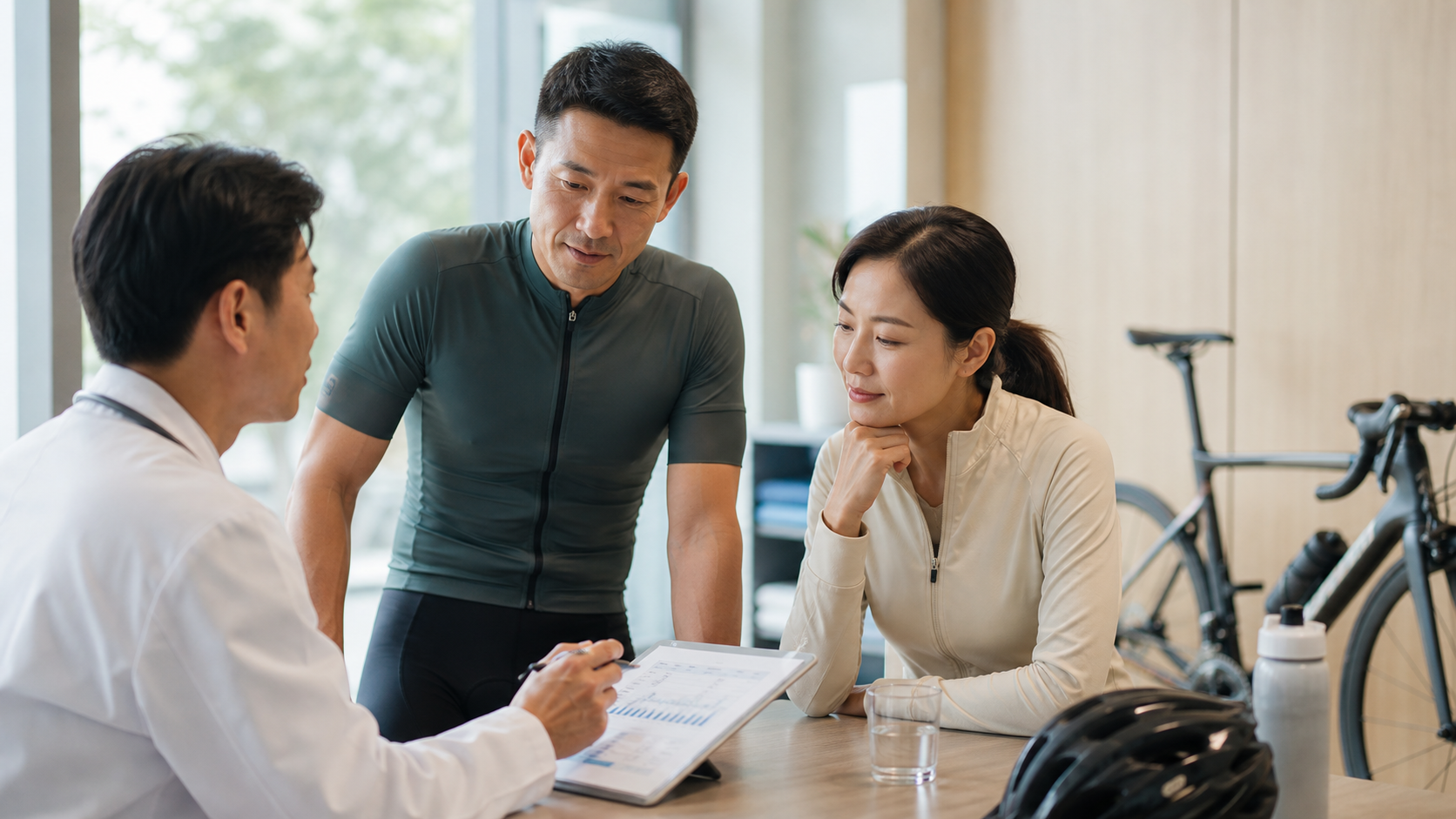
Starting with a Student Who “Trained More but Had No News”
A few years ago, I coached a male student in his early forties; let’s call him A-Kai. He was the typical upgraded version of a Taiwanese weekend warrior—determined to have a child, he decided, “If I get my body in top shape, the baby will come,” and so he ramped up his exercise volume aggressively. On weekdays after work, he’d rush to the riverside bike path to train, and on weekends he’d routinely knock out century rides of over 100 km, even signing up for grueling events like Wuling and the Taipei-Kaohsiung ride. His body fat dropped to impressive levels, his resting heart rate was in the low 40s bpm, and his power numbers kept climbing. By all accounts, this was a body that was “unbelievably healthy.”
But he and his wife had been trying to conceive for over a year with no good news. His wife’s gynecological exams were largely normal, so he went and got a semen analysis himself. The results shocked him: low motility and a poor percentage of normally shaped sperm. He sat in front of me and asked a question I still remember to this day: “Coach, I’m clearly so much healthier than before, so why did things get worse?”
That question is the core of this article. The impact of exercise on fertility is never a straight line of “more is better”; it’s an inverted U-shaped curve. Moderate, regular exercise is generally beneficial for fertility in both men and women. But once you cross a certain threshold—into long-term, high-volume, high-intensity training without adequate energy replenishment—it can come back to bite you. And cycling, because of its unique seated position, pressure, and thermal environment, deserves special attention when it comes to male fertility.
In this article, I’ll explain the concepts of exercise physiology, nutrition, and sports medicine from a coach’s perspective, and give you actionable tables and plans you can actually implement. Here’s the bottom line: You don’t need to give up exercise for fertility, but you may need to redesign your training.
I also want to help lower everyone’s anxiety a bit. In recent years, there’s been a lot of discussion in clinics and online about whether exercise harms fertility, which can easily cause panic—one moment you think cycling causes infertility, the next you hear exercise is beneficial. In fact, both statements are true, and both are incomplete—the key is always “dose” and “supporting measures.” The goal of this article is to help you find a solid, actionable, evidence-based middle path through this seemingly contradictory information, rather than scaring you with sensational headlines.
A note upfront: This article is educational and conceptual. All the numbers I provide will be given as ranges rather than pretending to be precise. Fertility involves too many individual factors; any actual diagnosis and treatment should be left to your obstetrician, urologist, or reproductive medicine specialist. What this article can do is help you clarify the concepts and direction, so you can ask more precise questions and understand better when you walk into the clinic.
Conceptual Foundation: How Does Exercise “Interact” with the Reproductive System?
To understand why exercise can both help and disrupt, you first need to know a key player—the hypothalamic-pituitary-gonadal (HPG) axis. Think of it as a chain of command: the hypothalamus is the commander-in-chief. It releases gonadotropin-releasing hormone (GnRH) in a pulsatile fashion, commanding the pituitary gland to secrete LH and FSH. These two hormones then signal the gonads (the testes in men, the ovaries in women) to produce sex hormones, generate sperm, or drive ovulation.
The most important characteristic of this axis is: it is highly sensitive to “energy availability.” The body has an ancient survival logic—when it detects a long-term energy deficit and persistently elevated stress hormones, it judges that “the current environment isn’t suitable for reproduction” and proactively downgrades fertility on its priority list. This makes perfect evolutionary sense: during a famine, keeping the body alive matters more than having a baby.
Exercise affects fertility through this axis in two ways:
- Positive: Regular, moderate exercise improves insulin sensitivity, helps maintain a healthy weight, reduces chronic inflammation, regulates hormonal balance, and improves blood circulation and emotional stress. All of these are pluses for the reproductive environment of both men and women.
- Negative: Long-term, high-volume, high-intensity training combined with insufficient energy intake puts the body into a state of “energy deficit,” suppressing the HPG axis. In men, this manifests as decreased testosterone and poorer sperm quality; in women, as menstrual irregularities or even amenorrhea and suppressed ovulation.
It’s worth emphasizing that this axis doesn’t respond like an on/off switch; it’s a gradual, dose-dependent response. An occasional particularly hard long-distance session, with adequate recovery and energy replenishment, is usually not a problem at all. What actually causes trouble is the chronic stress of “long-term, cumulative, and never fully replenished.” That’s why when I assess students, I never look at any single workout in isolation, but rather at the total training load, sleep, diet, and stress over the past several weeks to months. The reproductive system looks at trends, not single data points.
I also want to clear up a common misconception: stress hormones (like cortisol) aren’t inherently bad. The rise in cortisol during exercise is a normal acute response that helps you mobilize energy. The problem is when it stays “chronically elevated”—when training stress, sleep deprivation, life stress, and energy deficit pile up, keeping the body in a chronically high stress-hormone state, which then disrupts the normal rhythm of the HPG axis. That’s why I often say that designing training during the preconception period is largely about “managing total chronic stress load,” not just managing mileage.
The Male Side: Heat, Pressure, and Oxidative Stress
Beyond the HPG axis, male fertility has several additional “physical” sensitive points, and these happen to be particularly relevant to endurance sports, especially cycling:
First is temperature. The reason the testicles hang outside the body is that sperm production requires a slightly cooler environment than core body temperature. Prolonged high-intensity exercise raises core body temperature, and tight cycling shorts plus prolonged sitting without ventilation can make the scrotal area hot and stuffy, affecting sperm production.
Second is mechanical pressure. The bicycle saddle compresses the perineal area, and over long durations and distances, this can affect blood flow and nerves in that region.
Third is oxidative stress. Overtraining generates large amounts of free radicals. If the antioxidant system can’t keep up, sperm—which are particularly vulnerable to oxidation—can be damaged, including increased DNA fragmentation.
According to a systematic review of male athletes (Sports Medicine - Open, 2024), endurance exercise can indeed reduce semen quality. In cyclists and triathletes specifically, researchers observed a lower percentage of normally shaped sperm, and triathletes showed more DNA fragmentation. However, the review honestly noted that these changes “in most cases did not reach a clinically meaningful level that would actually cause infertility,” and the quality of the included studies was variable with limited sample sizes.
Let me say something fair on behalf of cycling: other epidemiological data show that even riding more than eight hours per week shows no clear association with infertility; some analyses even found that men who cycled four to six hours per week had a lower probability of infertility. So please don’t lock your bike in the shed after reading this—the problem is never “whether you ride,” but “how you ride, how long, and whether you have the right supporting measures.”
There’s also a time-related concept many people overlook: sperm takes about two to three months to develop from stem cells to mature ejaculation. This has two implications. First, if your semen analysis numbers look bad right now, that reflects your training, sleep, and diet from “two to three months ago,” not yesterday. Second, conversely, this is good news—the adjustments you start making today will only be honestly reflected in your next analysis two to three months later. I often remind students not to rush into a retest after just two weeks of adjustments and get discouraged if the numbers haven’t improved—it’s not harvest time yet. For male adjustments during the preconception period, I generally recommend observing at least one full sperm production cycle.
The Female Side: Energy Availability Is the Core
Female fertility is even more directly and obviously sensitive to “energy availability.” There’s a crucial concept here called RED-S (Relative Energy Deficiency in Sport), which evolved from the earlier “Female Athlete Triad” (low energy availability, menstrual dysfunction, and low bone density) into a more comprehensive framework proposed by the International Olympic Committee, and it applies to both sexes.
Its core logic is: when the calories you consume minus the calories you burn through exercise leaves too little energy to support basic bodily functions, the hypothalamus reduces its pulsatile release of GnRH, leading to what’s called “functional hypothalamic amenorrhea,” along with bone loss. This isn’t a pathological willpower issue; it’s the body’s self-protective mechanism during energy shortage.
Research shows that menstrual problems are significantly more common among female endurance athletes than the general population. In the data I found, about one-third of female endurance athlete populations reported amenorrhea. Clinically, amenorrhea and oligomenorrhea typically refer to no menstruation for three consecutive months or menstrual cycles lengthening beyond 45 days. The good news: in most cases, this is reversible. Reducing training intensity and restoring energy intake often allows menstrual function and fertility to recover.
I want to elaborate on a key point that’s often misunderstood—low energy availability doesn’t necessarily come with being visibly underweight. Many people think, “My BMI is normal and I don’t look thin, so I should be fine,” but RED-S is about “how much energy is left for basic bodily functions after subtracting exercise expenditure,” not about the number on the scale. A person who looks normal weight but trains heavily every day without eating enough can still fall into an energy deficit and experience menstrual dysfunction. That’s why I place special importance on “menstrual regularity” as a signal—it’s more honest than the scale and gives earlier warning.
I once coached a female student who did ultramarathons and trail running; let’s call her Xiao-Jie. She had a proportionate build and looked perfectly fine on the outside, but her period hadn’t come for over six months. She’d assumed it was “a normal sign of a body getting lean from serious training.” I urged her to get a gynecological evaluation, and at the same time, we worked together to reduce her training volume and seriously restore her daily food intake, especially the carbohydrates and fats she’d long been afraid to touch. A few months later, her period returned. She later told me that during those six months, she’d had a nagging feeling something was off but hadn’t wanted to admit it. This is exactly what I want to remind every female athlete: Don’t dress up your body’s distress signals as medals of effort.
Practical Methods: Designing “Volume” and “Energy” Correctly
Now that the science is covered, let’s talk about how I actually adjust things for my students. There are only two dials: training load and energy intake. These two dials need to be turned together; turning only one won’t work.
Table 1: The Inverted-U Relationship Between Exercise Volume and Fertility
| Exercise Level | Approximate Weekly Training Volume | Tendency for Fertility | My Recommendation |
|---|---|---|---|
| Sedentary | Almost no exercise | Negative (obesity, insulin resistance, inflammation) | Recommend increasing to regular activity |
| Moderate, regular | ~150 minutes of moderate intensity per week | Mostly positive | The sweet spot for those trying to conceive |
| Moderate-to-high enthusiast | ~5–8 hours per week, including some high intensity | Neutral to individualized | Just manage energy and recovery well |
| High volume/competitive | 10+ hours per week, chronically high intensity | Increased risk | Needs monitoring, supporting measures, and reduction if necessary |
| Overtraining + energy deficit | High training volume + deliberate dieting | Clearly negative | Requires active intervention and adjustment |
The key takeaway from this table: most ordinary people who exercise for health fall in the positive range and have nothing to worry about. What truly needs attention are people like A-Kai who push their training to competitive levels without correspondingly managing their energy and recovery.
The consensus across international guidelines for those trying to conceive generally falls around “about 150 minutes of moderate-intensity physical activity per week,” which translates to roughly 30 minutes a day, five days a week. This is a dose that’s safe for the vast majority of people and tends to be positive for fertility.
Table 2: Training Adjustment Framework for Preconception (Male Version, Using a Cycling Enthusiast as an Example)
| Aspect | Overdone Approach (May Deduct Points) | Recommended Approach (Protecting Fertility) |
|---|---|---|
| Weekly mileage | Chronically high mileage, frequent century rides | Bring mileage back to a recoverable range; keep one long ride per week at most |
| High-intensity ratio | Interval training or climbing to failure almost daily | Reduce the proportion of high intensity; do more low-to-moderate intensity |
| Saddle and time | Hard saddle, long periods without standing | Get a properly fitted saddle, stand periodically to relieve pressure, avoid excessively long single sessions |
| Scrotal heat environment | Tight and stuffy the whole time, prolonged sitting without ventilation | Change out of sweaty, damp clothing promptly after training; avoid prolonged hot environments |
| Recovery | Insufficient sleep, continuous hard training | Sleep 7–9 hours, schedule complete rest days |
| Energy | Deliberately crash dieting to lower body fat | Eat enough calories, adequate protein, don’t let body fat get too low |
The adjustments I made for A-Kai weren’t drastic: I cut his weekly training volume by about a third, kept the long ride but reduced its frequency, changed intervals from nearly every day to once or twice a week, switched to a saddle that better fit his sit bones, and required him to shower and change promptly after training rather than sitting around in damp cycling shorts until after breakfast. On the diet side, we restored the calories he’d been deliberately suppressing to get lean, with adequate protein. None of these are magic prescriptions—they simply reduce the negative factors of “energy deficit + heat and pressure” all at once.
I want to address “reducing volume” specifically, because many people who love exercise resist it, seeing it as regression or giving up. But the words I used with A-Kai were “temporarily shifting gears.” Trying to conceive is usually a finite window in life. For the goal of this phase, temporarily shifting training from “pursuing breakthroughs” to “maintaining health and balance,” then gradually building back up once the goal is achieved, is no loss at all. In fact, after reducing volume, A-Kai slept better, had more daytime energy, and his life stress dropped—and these improvements themselves are all pluses for the reproductive environment. Reducing volume isn’t taking your foot off the gas; it’s turning the steering wheel toward what truly matters in this phase.
Table 3a: “Overdone” vs. “Balanced” Weekly Training Schedule (Male Enthusiast Example)
| Day | Overdone Approach | Balanced Approach |
|---|---|---|
| Monday | High-intensity intervals | Complete rest |
| Tuesday | Moderate ride | Easy ride |
| Wednesday | Climbing to failure | Moderate ride |
| Thursday | Moderate ride | Complete rest or walking |
| Friday | High-intensity intervals | One high-intensity session (quality first) |
| Saturday | Century ride | One long ride (keep it, but not extreme) |
| Sunday | Another long ride | Complete rest |
This sample table isn’t meant to be copied exactly—the right volume varies greatly from person to person. The point is to convey the “rhythm”: the balanced approach includes clear complete rest days, high intensity is compressed to once a week, and the long ride is kept but no longer stacked on consecutive days. Recovery is treated as part of the training plan, not something you do only if you have time.
Table 3: Energy Availability Self-Check (Female Athletic Population)
| Indicator to Observe | Possible Warning Signs | Direction I’d Recommend |
|---|---|---|
| Menstrual cycle | Cycle lengthening beyond 45 days, no period for three consecutive months | Seek medical evaluation promptly; simultaneously review energy intake |
| Weight and body fat | Significant short-term drop, body fat too low | Reduce training volume and replenish calories |
| Fatigue and mood | Chronic lethargy, irritability, poor sleep | Review the training-to-recovery ratio |
| Injury frequency | Recurrent overuse injuries, bone aches | Be alert to bone loss; seek medical attention |
| Appetite and diet | Anxiety about eating, deliberate severe restriction | Seek help from a dietitian and medical professionals |
Female readers, please remember this one sentence: Your period is a free health dashboard your body gives you. When your cycle starts to become irregular or stops altogether, this is often the earliest, most honest signal of energy deficiency. Don’t treat it as a “medal for training hard enough.” It’s actually your body waving a white flag at you.
The Local Taiwanese Context: Climate, Eating Out, and Healthcare
Putting these principles back into real life in Taiwan, there are a few local details worth discussing.
Climate and heat. Taiwan’s summers are hot and humid, which is already unfriendly to scrotal heat dissipation in men. After long outdoor rides or runs in summer, if you stay in damp, clinging clothing for a long time, you’re prolonging local heat buildup. I’d recommend showering and changing into dry, breathable clothing as soon as possible after summer training—don’t stay in soaked tight shorts through breakfast and a trip to the market before heading home. It’s a small habit, but it’s very practical for “don’t keep your testicles soaking in heat for extended periods.”
Eating out and energy quality. Eating out is convenient in Taiwan, but during the preconception period, I care more about “eating enough and eating balanced” than telling people to eat super clean. Many people who exercise hard for conception actually over-restrict their diet, creating a hidden energy deficit. The principle is simple: eat enough calories, get adequate protein, and don’t skimp on vegetables, fruits, and good fats. Taiwanese buffet restaurants (自助餐) are actually a great tool—a main dish with two or three vegetables plus a serving of beans, fish, eggs, or meat supports training and fertility energy far better than what many people think of as “healthy meals.”
Healthcare and the NHI system. In Taiwan, the barrier to seeing an obstetrician or urologist is actually quite low and relatively accessible. The principle I often remind students of is: rather than anxiously searching online, leave the infertility evaluation to specialists. The common clinical recommendation is that if you’ve been trying for about a year without contraception and with normal frequency without success (shorter if the woman is older), it’s worth having both partners evaluated together. A semen analysis for the man and ovulation and related tests for the woman are relatively standard first steps. And importantly—fertility is a two-person matter; the man should be tested too. Don’t assume the problem is on one side.
The Nutrition Piece: Getting Energy and the Basics Right
Any discussion of exercise and fertility eventually comes back to eating. I want to state my position upfront: what follows is general dietary guidance, not a nutritional prescription for any individual; those with specific medical conditions or needs should seek individualized assessment from a dietitian. The big principles aren’t mysterious—they’re simply “don’t put yourself in a hidden energy deficit, and take care of a few basic nutrients.”
Table 4: General Dietary Principles for Preconception (Educational, Not Individual Prescription)
| Aspect | Why It Matters | General Direction |
|---|---|---|
| Total calories | Energy deficit directly suppresses the HPG axis | When training volume is high, eat enough calories accordingly; don’t hard-restrict to lose body fat |
| Protein | Tissue repair, hormone building blocks | Include beans, fish, eggs, or meat at every meal; athletes have higher needs |
| Good fats | Building blocks for sex hormones, absorption of fat-soluble vitamins | Don’t eliminate fat entirely; nuts, fish, and olive oil are all good |
| Carbohydrates | Replenishing glycogen, avoiding energy deficit | Athletes shouldn’t stay on very low-carb long-term, especially women |
| Vegetables, fruits, and antioxidants | Counteracting exercise-induced oxidative stress | Eat a variety of colorful produce daily; Taiwan’s seasonal fruit is very convenient |
| Micronutrients | E.g., folate is especially important for women trying to conceive | Prioritize a balanced diet; supplements should be evaluated by a physician |
I deliberately didn’t write precise gram and milligram amounts in this table because everyone’s weight, training volume, and needs vary greatly—giving hard numbers would be misleading. The single point I want to convey is: for many athletes trying hard to conceive, the deduction isn’t from “eating something bad,” but from “simply not eating enough.” Especially those who train heavily while deliberately dieting to maintain their physique are the most likely to fall into this trap.
I’m calling out folate specifically because it’s a nutrient with relatively strong consensus and clear importance for women trying to conceive, and it’s generally recommended to start paying attention to intake before pregnancy. But even for folate, I’d ask students to consult their obstetrician or dietitian about the actual form and dosage rather than buying things online on their own.
FAQ
In my years of coaching, a few questions come up from almost everyone. I’ve compiled them into an FAQ.
Q1: Do I need to stop exercising completely during the preconception period?
Most people don’t, and not moving at all could actually be a negative. For the vast majority who exercise for health, maintaining moderate, regular exercise is a plus. Only if you’re already at high volume/competitive level and showing warning signs of energy deficit do you need to actively and temporarily reduce volume.
Q2: I love cycling. Do I have to give it up during the preconception period?
No. Epidemiological data does not equate moderate cycling with infertility. The key is getting the supporting measures right: a properly fitted saddle, avoiding excessively long sessions without standing, changing out of damp clothing promptly after training, and managing overall training volume and recovery. Instead of agonizing over “whether to ride,” focus on designing “how to ride” correctly.
Q3: I’m a woman and my period has been very regular. Does that mean my energy is fine?
A regular period is a very good positive signal, usually indicating that your energy availability is acceptable. But it’s not the only indicator. If you also have chronic fatigue, recurrent overuse injuries, or abnormal weight loss, it’s still worth reviewing the balance between training and diet.
Q4: After making adjustments, how long until I see improvement?
For men, because the sperm production cycle is about two to three months, you typically need to wait for a full cycle before an analysis honestly reflects changes. For women, the recovery time for menstrual function varies—some see it return within a few months, others need longer. Give your body time; don’t rush to conclusions after just two weeks.
Q5: Do I need to take a bunch of preconception supplements?
Supplements can’t replace the fundamentals of “eating enough, sleeping enough, and training moderately.” Get the lifestyle fundamentals right first; the necessity and choice of supplements should be evaluated individually by a physician or dietitian, not stockpiled based on online recommendations.
Q6: What if I have a chronic condition (e.g., diabetes, hypertension)?
Then you need even more individualized care. The chronic condition itself, as well as your medications, can affect fertility and exercise planning—this absolutely can’t be handled by a single article. Please make sure your primary care physician knows you’re trying to conceive, and have a professional team plan together. Don’t adjust medications or exercise on your own.
Common Mistakes and Corrections
In my years of coaching, the misconceptions I’ve seen about exercise and fertility are highly repetitive. Let me pick out the most common ones and correct them one by one.
Mistake 1: Equating “Healthier” Directly with “More Fertile”
This was A-Kai’s initial blind spot and the most widespread myth. Low body fat, low heart rate, and high power are indicators of athletic performance, not indicators of reproductive environment. When you push your body into a chronic energy deficit to chase performance, the reproductive system gets downgraded by the body. Correction: The goal during the preconception period isn’t “stronger”; it’s “more balanced.”
Mistake 2: Not Exercising at All Is Also Safe
Some people, upon hearing “exercise can harm fertility,” swing to the other extreme and stop moving entirely. But a sedentary lifestyle, obesity, and insulin resistance are clearly negative factors for fertility in both men and women. Correction: The problem lies in “excess + energy deficit,” not exercise itself. Moderate, regular exercise is a plus for the vast majority.
Mistake 3: Adjusting Training Without Adjusting Diet
Many people are willing to reduce training volume but reluctant to restore the calories they’ve deliberately suppressed, for fear of gaining weight. But if the energy deficit persists, the effect of reducing volume is greatly diminished. Correction: The two dials of training load and energy intake need to be turned together.
Mistake 4: Treating Menstrual Irregularity in Women as Proof of Serious Training
This is the one I most want to correct loudly. Amenorrhea is absolutely not a medal for “training hard enough.” It’s a core warning sign of RED-S, and over the long term, it also affects bone density. Correction: The moment your cycle becomes irregular, take it seriously—actively reduce volume, replenish energy, and seek medical care if necessary.
Mistake 5: Only Testing One Partner
Traditionally, many families assume the problem is with the woman first, sending her through a battery of tests while the man delays getting a semen analysis. Correction: Evaluate both partners together from the start—it’s more efficient and fairer.
Mistake 6: Stockpiling Supplements for Peace of Mind
When anxious about conception, many people hoard supplements they’ve seen online. But supplements can’t replace the fundamentals of “eating enough, sleeping enough, and training moderately,” and some ingredients aren’t suitable for everyone. Correction: Get the lifestyle fundamentals right first; leave supplements to individualized evaluation by a physician or dietitian.
Action Recommendations for Readers at Different Levels
Finally, let me distill all the concepts above into actionable checklists for three groups.
If You’re “Sedentary and Want to Start Exercising” While Trying to Conceive
- Aim for about 150 minutes of moderate-intensity activity per week, such as brisk walking, easy cycling, or jogging, spread across most days.
- Don’t rush into high intensity or high volume; progress gradually. Consistency matters more than intensity.
- Simultaneously manage weight and eat a balanced diet. Especially if you have overweight, insulin resistance, or PCOS, the benefits of regular exercise will be very noticeable.
- The core message for this group: You’re mostly moving in a positive direction—feel confident about getting active.
If You’re a “Moderate-to-High Volume Enthusiast” (Weekend Warrior, Amateur Racer)
- Regularly self-check your energy and recovery: Is sleep sufficient? Is weight dropping abnormally? Is your period regular (for women)?
- Don’t do high-intensity training every day; schedule complete rest days and treat recovery as part of training.
- Male cyclists: pay attention to saddle fit, avoid excessively long sessions without standing, and change out of damp clothing promptly after training.
- You don’t need to give up the sport you love for conception—just get the supporting measures right.
If You’re “High Volume/Competitive” or Already Showing Warning Signs
- If you already have menstrual irregularities, abnormal semen analysis, recurrent overuse injuries, or other warning signs, treat this as a clear distress signal from your body.
- Actively and temporarily reduce volume and restore energy intake; in most cases, these changes are reversible.
- Seek medical care proactively. Have an individualized evaluation by an obstetrician, urologist, or reproductive medicine specialist. Don’t self-diagnose based on the internet.
- Remember: reducing volume isn’t regression; it’s temporarily shifting gears for a more important goal.
Quick Self-Checklist
| Question | Yes | No |
|---|---|---|
| Is my training volume chronically high with deliberate dieting? | Needs attention | Safer |
| Women: Is my period regular (without deliberate contraception)? | Safer | Needs attention |
| Do I often stay in damp, sweaty clothing for long periods after training? (Men) | Needs adjustment | Safer |
| Is my sleep consistently 7–9 hours? | Safer | Needs adjustment |
| If trying for over a year without success, have both partners been evaluated? | Safer | Recommend seeing a doctor |
Conclusion: Exercise Is a Helper; Imbalance Is the Problem
Back to A-Kai’s story. After a few months of adjusting training volume, energy intake, saddle, and heat environment together, he later messaged me with good news—his wife was pregnant. I won’t credit that adjustment entirely; fertility is the result of multiple factors, and his wife also cooperated with medical evaluation. But I’m certain that pulling the body out of a chronic energy deficit and letting the reproductive system regain its priority was absolutely a step in the right direction.
The core message I want to leave you with is just one sentence: Exercise is never the enemy of fertility; imbalance is. Moderate, regular exercise with adequate energy intake and proper recovery is generally a plus for fertility in both men and women. The real risk lies in the combination of “long-term high-volume, high-intensity training + energy deficit + heat and pressure.” You don’t need to choose between “exercise” and “having a baby.” What you need is an exercise prescription redesigned for this phase of life.
If you’re trying to conceive and love exercise, don’t panic, and don’t go to extremes. Pull out the self-checklist above and go through it: reduce volume where needed, replenish energy where needed, and see a doctor where needed. Your body has been communicating with you all along; you just need to be willing to listen. Exercise and fertility were never opposing forces. Get the rhythm right, and they can both be your best teammates in this phase of life. I wish everyone working toward this goal the right news at the right time.
This article is educational content and cannot replace individualized diagnosis and treatment advice from a physician, physical therapist, or dietitian. If you have menstrual irregularities, abnormal semen quality, infertility evaluation needs, or chronic conditions such as diabetes, hypertension, or heart disease, be sure to seek individualized evaluation and management from an obstetrician, urologist, reproductive medicine specialist, or relevant specialist. Do not self-diagnose or delay seeking medical care.
References
- The Effect of Endurance Exercise on Semen Quality in Male Athletes: A Systematic Review (Sports Medicine - Open) — https://sportsmedicine-open.springeropen.com/articles/10.1186/s40798-024-00739-z
- The Impact of Intense Exercise on Semen Quality (PMC) — https://pmc.ncbi.nlm.nih.gov/articles/PMC5675222/
- The effect of physical activity on fertility: a mini-review (F&S Reports) — https://www.fertstertreports.org/article/S2666-3341(23)00044-2/fulltext
- Physical activity and fertility (PMC / NIH) — https://pmc.ncbi.nlm.nih.gov/articles/PMC7614776/
- The Female Athlete Triad / Relative Energy Deficiency in Sports (RED-S) (PMC) — https://pmc.ncbi.nlm.nih.gov/articles/PMC10304901/
Related Reading
- Athlete Nutrition and Long-Term Health: Keeping You Riding Strong for 30 Years—Sustainable Diet and Chronic Disease Prevention
- The Bone Density Crisis for Cyclists: Why Pure Cyclists Need to Add Strength Training
- Cycling and Bone Health: The Impact of Low-Impact Exercise on Bone Density and Supplementation Strategies
- The Truth About Exercise and Weight Management: Can Exercise Actually Help You Lose Weight? A Coach Clarifies the Division of Labor Between Exercise and Diet
靠單車減肥35公斤 心得分享與整理
7 年前
大家都在開箱的...單車用藍芽對講耳機真的有幫助嗎? SENA BiKom 20 長距離旅遊 & 海鷗繞圈賽 實際體驗心得 / 公路車 / CT Yeh
9 個月前
CT 喇低賽) 單車 比賽總是沒照片? 攝影師的觀點大公開 姿勢就是力量! 請加速1.25倍收看
7 年前
一個測試有沒有認真練車的方法😂 #公路車
10 個月前
4K 東眼山 x 水蜜桃冰沙 百人單車約騎! 操完再吃冰 多爽快
7 年前
「悲情男車友」創作單曲 爆笑MV / 公路車 / CT Yeh / 4K劇情版
7 個月前
一日北高/長距離團騎 常見問題補充篇 / 組團或跟團的眉角 / 壯車友容易被瘦車友慢性拉爆 / 原來屁股痛可能是這個原因...? / 風場配速法 / 公路車 / CT Yeh
2 年前
單車AI教練!全新 ChatGPT4o 幫你分析訓練成果!排武嶺課表,分析騎車姿勢! 太神了! / 公路車 / CT Yeh / feat. 緯緯
2 年前