Youth Sports and Health: A Coach's Complete Practical Guide from Physical and Mental Benefits, Safety to Motivation
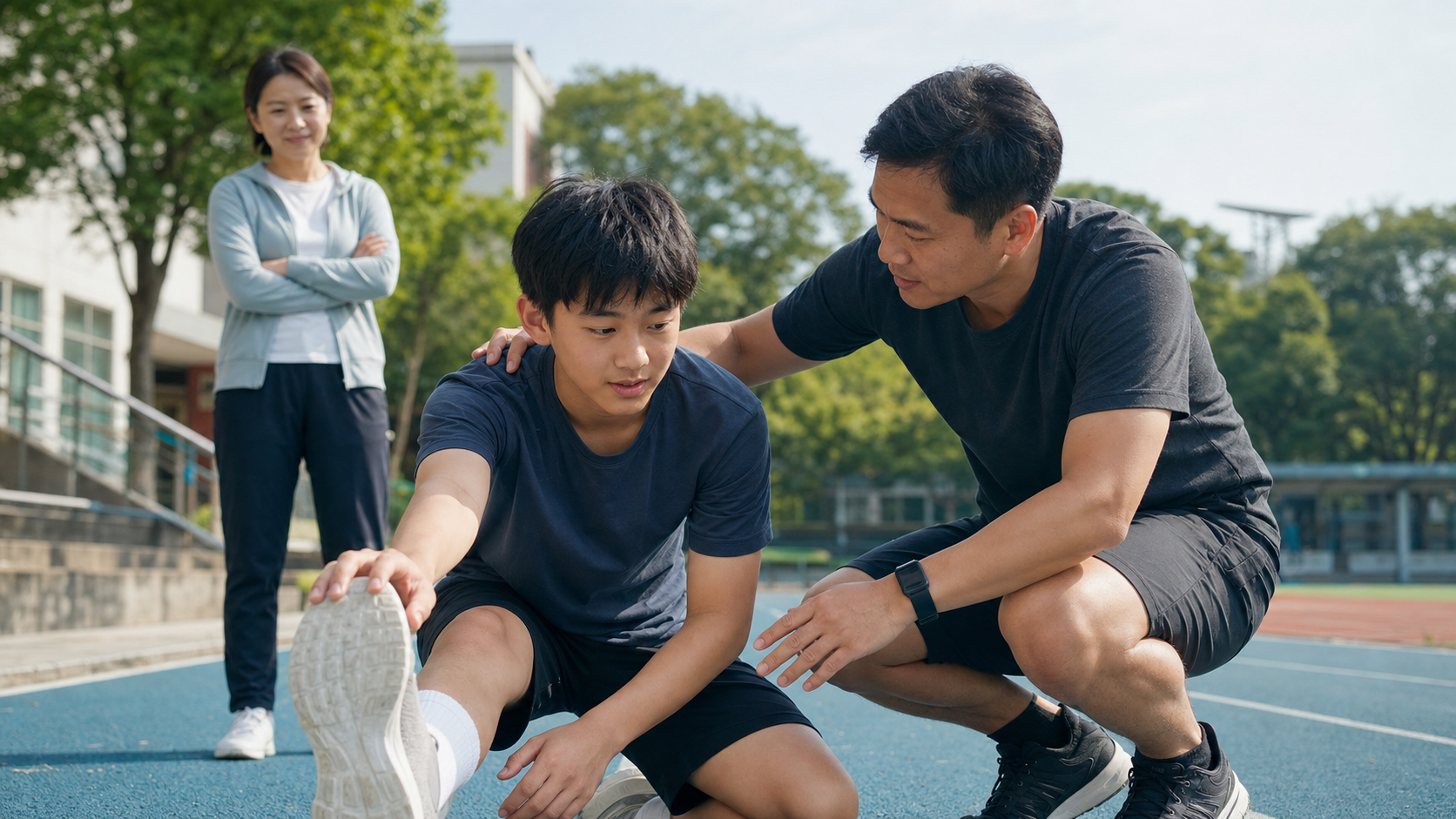
Starting with an Eighth Grader Who Refused to Move from His Chair
A few years ago, a mother brought her eighth-grade son, Xiao Yu, to see me. I still remember her opening line: “Coach, every day after school he just scrolls on his phone and plays video games. He skips PE whenever he can. His health check report says his body fat is high and his physical fitness is at the bottom. I really don’t know what to do.”
Xiao Yu sat nearby, curled up in his chair, his eyes completely avoiding mine. That image is actually a microcosm of countless teenagers in Taiwan—heavy academic pressure, long commutes spent sitting, high-calorie takeout meals, extended screen time, and exercise becoming something to “get to when there’s time” or even “skip if possible.”
I’ve spent fifteen years training athletes and general fitness populations, from elementary school kids, junior and senior high school team players, to senior students on the verge of collapse from exam prep, and parents who want to exercise alongside their children—I’ve encountered every kind of situation. In this article, I want to systematically organize the observations I’ve accumulated over the years on the sidelines, in classrooms, and on referral forms, for three types of readers: parents worried about their children, teachers and coaches who want to help their students, and teenagers themselves who are hesitating about whether to start moving.
I’ll keep the language plain, but the principles behind it are all grounded in sports science. Let me state the conclusion first: when youth sports are done right, the returns far exceed your imagination; when done wrong, the greatest damage is often not physical, but the psychological scar of “never wanting to exercise again in this lifetime.” And the latter is the pit I most want to help everyone avoid.
1. Why Must Teenagers Exercise? The Scientific Basis of Physical and Mental Benefits
The Golden Savings Period for the Body
Adolescence (roughly ages 10 to 18) is the most rapid stage of development for bones, muscles, cardiorespiratory function, and the nervous system in a person’s life. The foundation built during this time affects the rest of one’s life. I often use this analogy with parents: this is the body’s “golden savings period”—every bit you deposit now, you’ll withdraw with interest in the future.
The World Health Organization (WHO) 2020 physical activity guidelines clearly recommend that children and adolescents accumulate at least 60 minutes of moderate-to-vigorous physical activity daily, primarily aerobic, and include vigorous-intensity activities at least 3 days per week, along with activities that strengthen muscles and bones. The guidelines also note that exceeding 60 minutes provides additional health benefits.
These 60 minutes aren’t mystical—they correspond to several key things:
- Bone density accumulation: A person’s bone mass peaks around age 20 (peak bone mass). Regular weight-bearing and impact activities during adolescence (running, jumping, ball sports, appropriate resistance training) can significantly raise this peak. The higher the peak you store, the lower your risk of osteoporosis and fractures in middle and old age. This is one of the few health investments where “the earlier you act, the more you win, and it doesn’t wait for anyone.”
- Cardiorespiratory foundation: Adolescence is a critical window for boosting aerobic capacity (the developmental potential of VO₂ max). A cardiorespiratory base built during this time is relatively easier to maintain later in life.
- Metabolism and body composition: Regular exercise improves insulin sensitivity and helps maintain healthy body fat levels. For the increasingly common metabolic issues in Taiwanese adolescents (elevated body fat, higher fasting blood glucose, etc.), this is the first-line non-pharmacological intervention.
Brain and Psychology: The Severely Underestimated Half
Many parents worry, “Will exercise crowd out study time?” I usually respond with a question: Have you noticed that when a child buries their head in books all day, their efficiency is actually terrible?
The WHO evidence review clearly states that physical activity in adolescents is associated with better physical, psychological, and cognitive health outcomes. From my actual observations on the sidelines, children who exercise regularly tend to share several traits:
- Better sleep: They fall asleep faster, sleep more deeply, and have better energy the next day. Taiwanese teenagers generally suffer from insufficient sleep, and exercise is one of the cheapest sleep aids available.
- More stable emotions: The brain chemicals released during exercise help alleviate anxiety and low mood. Facing academic pressure, this is a crucial buffer.
- Better focus and memory: Many students report that after moderate exercise, going back to study feels like “their brain is clearer.” This is related to exercise promoting cerebral blood flow and neuroplasticity.
- Enhanced self-efficacy: When a child goes from not being able to finish a 400-meter run to easily completing 3 kilometers, that sense of “I can do it” transfers to academics and interpersonal relationships. This is the aspect I value most.
I’ll tell Xiao Yu’s story later, but let me give a spoiler: after three months, the biggest change wasn’t his body fat—it was the aura of him standing tall with his chest out, willing to look you in the eye when speaking.
Socialization and Character: The Sports Field Is the Best Classroom
Team sports teach children things textbooks can’t: how to win gracefully, how to lose with dignity, how to keep your mouth shut and not blame a teammate after a mistake, and how to still play your role well when you’re having an off day. These are what we call “non-cognitive skills,” and their long-term impact on life is no less than academic grades.
The Cost of Sedentary Behavior: The Real Situation of Taiwanese Teenagers
I want to specifically highlight the structural predicament Taiwanese teenagers face. Long commutes sitting at school, sitting through after-school tutoring, sitting again to do homework at home, with a large amount of screen time sandwiched in between—phones, tablets, computers, game consoles. Over an entire day, the actual time spent “moving” might not even reach the WHO-recommended 60 minutes.
Sedentary behavior is itself an independent health risk factor. Even if a child exercises daily, if the remaining 14 or 15 waking hours are spent nearly glued to a chair, they’re still at a metabolic disadvantage. So I often remind parents and teachers: besides “scheduling exercise,” you must also “break up sitting.” Every 40 to 50 minutes of sitting, stand up and move around, take a few steps, stretch—these fragmented “movement accents” accumulate benefits beyond imagination over the long term. This is also why I include “cycling to commute” and “moving during breaks” in my plans—they’re not just padding the minutes; they’re fighting against sedentary behavior.
2. Overview of the Three Major Benefit Areas of Youth Sports
To make it easy to grasp at a glance, I’ve organized the benefits into the table below. This is also the framework I often sketch directly on the whiteboard during my first consultation with parents.
| Area | Specific Benefits | Corresponding Exercise Types | Coach’s Notes |
|---|---|---|---|
| Physical | Bone density accumulation, cardiorespiratory improvement, healthy body composition, motor skills, reduced injury rates | Running, jumping, ball sports, swimming, cycling, appropriate resistance training | This is the “can’t be saved later” golden period—don’t waste it |
| Psychological | Better sleep, relief from anxiety and low mood, improved focus and memory, building confidence | Almost all regular exercise is effective | The most underestimated piece by parents, yet the most critical |
| Social/Character | Teamwork, stress resilience, emotional regulation, time management, grace in winning and losing | Team ball sports, clubs, competitions | What textbooks can’t teach, the sports field can teach it all |
3. Different Age Groups Have Different Priorities
Before discussing how to structure training plans, I want to emphasize a concept that is often overlooked: Adolescents are not miniature adults. A fifth grader and a high school sophomore are at completely different developmental stages, with different training capacities and different priorities. Applying the same standard to both is a recipe for either undertraining or overtraining.
I’ve organized the training priorities for each stage into the table below. These are the general guidelines I use when planning programs for children of different ages:
| Stage | Approximate Age | Developmental Focus | Training Priorities | Things to Watch Out For |
|---|---|---|---|---|
| School-age Children | 6-10 years | Rapid development of neural coordination and fundamental movement skills | Learning through play, running/jumping/throwing, varied games | Avoid early specialization; don’t treat them as mini athletes |
| Pre-puberty | 10-13 years | Continued coordination gains, growth begins to accelerate | Movement technique, bodyweight exercises, ball handling | Joints are more vulnerable during the growth spurt; keep loading conservative |
| Mid-puberty | 13-16 years | Hormonal changes, potential for strength gains opens up | Introduce structured strength training, aerobic base | Individual variation is huge; same-age peers can differ greatly in development |
| Late puberty | 16-18 years | Approaching adult capacity, can handle higher loads | Can progressively increase intensity and load | Academic pressure peaks; recovery and sleep are often sacrificed |
The core message of this table is: The younger the child, the more emphasis should be placed on “diverse movement skills and fun”; structured intensity and load should only be introduced gradually as they get older. Reversing this order—specializing too early, pushing heavy weights too soon—is the most common source of long-term problems I’ve seen.
A special note on the growth spurt: during this period, children’s height increases rapidly, but the maturation of tendons, ligaments, and growth plates lags behind the rate of bone lengthening. This makes joints relatively vulnerable, and certain overuse injuries (such as knee and heel pain) are more likely to occur. Training plans during this phase should be more conservative, with greater emphasis on flexibility and recovery—it’s not the time to ramp things up.
4. Practical Approach: How to Structure Exercise for Adolescents?
Now that we’ve covered the “why,” let’s tackle the “how,” which is where most people get stuck. I’ll break it down into three levels: distribution of exercise volume, proper resistance training practices, and how to structure a weekly plan.
3-1 How to Distribute Weekly Exercise Volume
Based on WHO recommendations, here’s a general weekly blueprint I design for Taiwanese adolescents. Please note that this is a “cumulative” concept—you don’t need to complete 60 minutes all at once. PE class, running around during recess, biking to commute, and club activities all count.
| Day | Main Content | Intensity | Approximate Duration | Notes |
|---|---|---|---|---|
| Monday | Aerobic focus (jogging / cycling / swimming) | Moderate | 40-60 minutes | Can hold a conversation but slightly breathless |
| Tuesday | Strength and bone strengthening (bodyweight focus) | Moderate-high | 20-30 minutes | Movement quality over load |
| Wednesday | Ball or team sports (basketball / badminton, etc.) | Moderate-high (intermittent) | 60 minutes | Combines fun and social interaction |
| Thursday | Light activity or active recovery (walking / stretching) | Low | 30 minutes | Allows the body to recover |
| Friday | High-intensity intervals or sprint games | High | 20-30 minutes | Weekly high-intensity day |
| Saturday | Extended outdoor activity (suburban cycling / hiking) | Moderate | 60-120 minutes | Taiwan’s riverside paths and suburban hills are great options |
| Sunday | Free activity or rest | Depends on condition | Flexible | Moving with family counts too |
Key reminder: This table represents an ideal, not an exam. Taiwanese adolescents carry a heavy academic load, and when you genuinely can’t fit this in, my bottom-line advice is—better to do 20-30 minutes every single day than to be completely sedentary all week and then do a 3-hour exercise binge on the weekend. The latter carries a higher injury risk and yields worse results.
3-2 Can Adolescents Do Weight Training? Yes, But With Rules
This is the question parents ask me most often, and it’s also the most misunderstood. The common belief is that “kids who lift weights won’t grow tall and will damage their growth plates.” Let me give you the bottom line directly:
According to the American Academy of Pediatrics (AAP) position statement, well-designed resistance training with proper supervision has not been shown to have negative effects on growth plates, height, or the cardiovascular system. On the contrary, it improves strength, reduces sports injuries, and enhances bone density. The key lies in the two prerequisites: “well-designed” and “proper supervision.”
So how do you do it safely? I’ve compiled the principles from the AAP and related sports science organizations into this “Adolescent Resistance Training Dosage Chart”:
| Parameter | Recommended Approach | Explanation |
|---|---|---|
| Frequency | 2-3 times per week, with rest days in between | Muscles need time to recover |
| Session Duration | About 20-30 minutes | No need to train for long periods |
| Repetitions | 8-15 reps per set; only add weight when you can complete reps with “proper form” | Movement quality is the iron rule |
| Sets | 1-3 sets per exercise | No need to overdo it |
| Progression | Only after completing 8-15 reps with proper form, increase resistance slightly | Progress gradually |
| Absolutely Avoid | Powerlifting-style maximal loads, bodybuilding-style training, purely testing 1-rep max | Not until the skeleton has matured |
When I work with adolescents, for the first 4-6 weeks I almost exclusively use bodyweight exercises (squats, push-ups, planks, lunges, assisted pull-ups) to nail down movement patterns. Only after that do I gradually introduce light loads. Once you’ve learned the movement properly, it’s yours for life; rushing to add weight and letting your form break down only leads to injury and bad habits.
3-3 Practical Local Venues and Approaches in Taiwan
Many parents say, “There’s no gym near our house.” In reality, Taiwan’s exercise environment is more usable than you might think:
- Riverside bike paths: The riverside paths in Taipei, New Taipei, Taichung, and Kaohsiung are great for adolescent cycling—safe, car-free, and flat. Go as a family and make it quality time.
- School tracks and PU running tracks: Most are open on weekends and holidays, perfect for jogging, sprinting, and jump rope.
- Community sports centers: Most counties and cities have public sports centers with affordable entry fees, offering pools, basketball courts, and fitness areas.
- Suburban mountain trails: Yangmingshan, Four Beasts Mountain, Guanyinshan, Dakeng, etc. Hiking is excellent for cardiovascular fitness and leg strength, plus it gets kids into nature and away from screens.
Taiwan climate reminder: Summers are hot and humid. Avoid high-intensity exercise in the midday sun (roughly 10 AM to 3 PM) to prevent heat-related illness; opt for early morning or evening instead. Hydrate well before and after exercise, and for sessions with heavy sweating lasting over an hour, consider electrolyte-containing drinks. In winter, temperature swings between morning and evening are significant, so warm-ups need to be more thorough.
3-4 How Should Active Kids Eat and Hydrate?
For exercise to be effective, “eating” and “drinking” are the half that’s often overlooked. Teenagers are still growing, so their energy and nutritional needs are already high; add in the demands of sports, and it deserves even more attention. In Taiwan, eating out is convenient, but it’s also easy to fall into the traps of high oil, high sugar, and insufficient protein. I’ve organized a few practical principles into the table below (all values are given as ranges; actual needs vary by individual body type, activity level, and developmental stage—these are not precise prescriptions):
| Item | General Practical Advice | How to Do It in the Taiwanese Context |
|---|---|---|
| Balanced meals | Every meal should include quality protein, whole grains, and vegetables | Add an extra serving of vegetables to your bento, choose braised chicken leg or steamed fish, and avoid fried foods |
| Protein | Spread it across meals; avoid concentrating it in just one meal | Add an egg or soy milk at breakfast, have some unsweetened yogurt in the afternoon |
| Before exercise | Eat easily digestible carbs 1-2 hours before exercise | A banana or a slice of toast is enough; don’t push yourself hard on an empty stomach |
| After exercise | Moderately replenish carbs and protein to aid recovery | Tea eggs + soy milk from the convenience store is a convenient option |
| Hydration | Drink water before and after exercise; don’t wait until you’re thirsty | Carry a water bottle with you and build the habit of taking small sips regularly |
| Electrolytes | Only consider sports drinks after heavy sweating for about 1 hour or more | For short-duration exercise, plain water is fine; don’t make sugary drinks a daily habit |
Coach’s reminder: The last thing I want to see is teenagers crash-dieting or randomly taking supplements just to “see quick results.” At this stage, the body is still being built, and adequate, balanced nutrition is far more important than any supplement. Commercial whey protein, mass gainers, and the like are unnecessary for the vast majority of teenagers who eat three regular meals; if there’s a genuine special need, consult a nutritionist first rather than blindly following advice from the internet or classmates. Energy drinks loaded with caffeine are something I strongly advise teenagers to avoid.
5. Common Mistakes and Fixes: I’ve Seen These Pitfalls Too Many Times
After all these years of coaching, I’ve found that when problems arise in youth sports, 80% of the time it’s not the sport itself—it’s that the adults (and sometimes the kids themselves) are using the wrong approach. Here are the most common ones, along with the fixes.
Mistake 1: Weekend Warrior Syndrome
Symptom: Completely inactive during the week, then riding 80 km in one go or playing basketball for 4 straight hours on the weekend.
Problem: The body has no base of adaptation, so the sudden spike in load on muscles, bones, and the cardiovascular system is a high-risk factor for sports injuries.
Fix: Spread the total volume across the week. A consistent 20-30 minutes daily is far more effective than a weekend blowout.
Mistake 2: Using Exercise as Punishment
Symptom: “If you do badly on your test, go run ten laps around the track!”
Problem: This is the one that breaks my heart the most. When exercise gets tied to “punishment and pain,” a child’s brain categorizes it as a negative experience, and they’ll naturally avoid it as they grow up.
Fix: Link exercise to “fun, achievement, and relaxation.” Let the child choose activities they enjoy; prioritize fun first, then progress.
Mistake 3: Over-Specialization—Training in Only One Sport Too Early
Symptom: In elementary school, practicing only the same sport every day, seven days a week.
Problem: Repeating a single movement pattern excessively raises the risk of overuse injuries and also makes burnout more likely due to monotony.
Fix: Encourage multi-sport participation around puberty. Exposure to different activities builds more well-rounded movement skills, leads to fewer injuries, and helps kids find what they truly love.
Mistake 4: Ignoring Warm-Ups, Recovery, and Sleep
Symptom: Start training the moment you arrive, leave as soon as you’re done, and stay up late binge-watching shows or gaming.
Problem: Inadequate recovery diminishes training results and increases injury risk. Teenagers are still growing, so sleep is especially critical.
Fix: Do 5-10 minutes of dynamic warm-up before every session, and cool down with stretching afterward. Aim for 8-9 hours of sleep per night (I know it’s tough in Taiwan’s academic environment, but this is the baseline worth fighting for).
Mistake 5: Only Watching the Scale, Ignoring Overall Development
Symptom: Parents constantly stare at the scale, and the child gets so stressed they develop anorexia or binge eating.
Problem: Body composition changes rapidly during puberty; fixating on weight alone leads to misjudgment and damages a child’s body image and self-esteem.
Fix: Look at the big picture—has stamina improved? Are they sleeping well? How’s their mood? Can they complete workouts more easily? These matter far more than the number on the scale.
Mistake 6: Pushing Through Pain, Treating “Pain” as Effort
Symptom: Continuing to train despite nagging pain in the knees, heels, or lower back, thinking “athletes just have to tough it out.”
Problem: Teenagers are still developing. Persistent joint pain can be a signal of overuse injuries or even growth-plate-related issues. Pushing through pain can turn a small problem into a big one.
Fix: Teach kids to distinguish between “muscle soreness” and “joint pain.” Soreness is normal; pain is not. If localized pain persists for more than two or three days, or if it’s severe enough to affect movement, it’s time to rest and seek medical evaluation. In Taiwan, orthopedic, rehab, and sports medicine clinics are all easily accessible—don’t put it off.
Mistake 7: Directly Applying Adult Training Videos to Kids
Symptom: Watching high-intensity programs or heavy squat videos from adult fitness influencers online and having kids follow along exactly.
Problem: Adult training intensity, loads, and exercise progressions are not suitable for teenagers whose skeletons haven’t matured yet—it leads to injuries and burnout.
Fix: Youth training should follow the dosing principles discussed earlier: emphasize movement quality, light loads, and supervision. Getting guidance from a professional who understands youth training is far safer than copying internet videos.
5. Motivation: Getting Kids to “Want to Move” Is the Ultimate Goal
All the training plans and all the science amount to zero if a kid doesn’t want to move. Motivation is the core of this entire matter. Let me share a few practical principles.
Principle 1: Autonomy Over Orders
There’s a crucial concept in psychology: when a person feels something is “their own choice,” intrinsic motivation is much stronger. So I never directly dictate to teenagers, “You must train this.” Instead, I offer options: “Do you want to try running, cycling, or ball sports?” It gives them a sense of control.
Principle 2: Break Big Goals into Small Wins
“Lose five kilos in three months” is both vague and stressful for a teenager. I’d reframe it as: “This week, our goal is to jog continuously for 10 minutes without stopping.” Every time a small goal is achieved, a sense of accomplishment builds up—this positive feedback is the strongest fuel.
Principle 3: Adults Lead by Example
This one is especially important for parents. If mom and dad sit on the couch scrolling their phones all day but tell the kids to go exercise, the persuasive power is zero. The most effective families I’ve seen are the ones that “move together”—riding along the riverside or hiking suburban trails together on weekends. Children’s behavior is, to a large extent, modeled on what they see.
Principle 4: The Power of Peers
Teenagers care intensely about their peers. Finding friends to exercise with, joining a club or a school team—that sense of belonging and the peer-driven momentum is often far stronger than any lecture.
What happened to Xiao Yu afterward?
Let’s return to Xiao Yu, curled up in his chair at the beginning. I didn’t assign him a strict training plan right away. In the first month, I only did two things: let him choose “cycling” (because he said riding was “at least less boring than running”), and set a very small goal for him—ride along the riverside with me every Saturday. The first time, we only rode 5 kilometers, and he was already out of breath.
I didn’t push him; I just slowly added a little distance each week. By the fourth week, he could ride 12 kilometers, and that day he excitedly told me, “Coach, I don’t seem to be as out of breath anymore.” At that moment, the spark of motivation was lit.
To give everyone a more concrete sense of this “gradual progression” process, I’ve roughly summarized Xiao Yu’s riding progress over the first twelve weeks as follows (this is an illustrative progression, not a rigid plan; the key is the rhythm of “adding just a little each week”):
| Week | Rides per Week | Distance per Ride | Subjective Feeling | Coach’s Adjustment |
|---|---|---|---|---|
| Weeks 1-2 | 1-2 times | About 5 km | Very breathless, sore legs | Just aim to finish, no talk of speed |
| Weeks 3-4 | 2 times | About 8-12 km | Starting to adapt, less breathless | Add light bodyweight training |
| Weeks 5-8 | 2-3 times | About 12-18 km | More confident, looking forward to weekends | Introduce gentle slopes, add fun |
| Weeks 9-12 | 3 times | About 18-25 km | Actively inviting classmates to join | Hand over planning to him |
Three months later, not only had his body fat decreased and his fitness improved, but more importantly—he began to “proactively” invite classmates to ride together on weekends. His mom said his mood at home was much more stable and his sleep had improved. As I mentioned earlier, the biggest change was in his eyes and his demeanor. This is the most precious gift exercise gives to teenagers.
The point I want to emphasize with this case isn’t “how amazing cycling is,” but that rhythm—adding just a little each week, always making sure he “can do it,” and giving the choice back to him. Motivation isn’t forced through willpower; it’s “nurtured” through a series of small successes. This logic applies equally to running, swimming, and ball sports.
6. Actionable Advice for Different Readers
By now, you might be wondering, “So where exactly should I start?” Here are suggestions for different groups that you can act on “today.”
If you’re a teenager who doesn’t exercise at all
- Start with the lowest threshold: Don’t aim to run 5 km right away. Start with “walking more, taking the stairs, and moving around after class.” The WHO also recommends starting small and gradually increasing frequency, intensity, and time.
- Pick something you don’t dislike: If you hate running, don’t run. Go cycling, play ball, or swim. You’ll stick with it only if you enjoy it.
- Find a buddy: Get a classmate to join you. Keeping each other accountable greatly increases your chances of success.
- Set a small goal: For example, “Move three times this week, 20 minutes each time.” Reward yourself when you achieve it.
If you’re a teenager who already exercises and wants to improve
- Add structured strength training: Following the dosage table earlier, do bodyweight or light-load resistance training 2 to 3 times per week, prioritizing movement quality.
- Prioritize recovery: Progress happens during rest. Don’t push yourself to exhaustion every day. Schedule recovery days and get enough sleep.
- Maintain variety: Even if you have a main sport, don’t completely give up other activities to avoid overuse injuries and burnout.
If you’re a parent
- Be a cheerleader, not a taskmaster: Encourage and accompany, but don’t turn exercise into a command or punishment.
- Lead by example, get active as a family: If you move, your kids will move.
- Look at the big picture, not just weight: Pay attention to improvements in energy, sleep, and mood.
- See a doctor first if there are health concerns: If your child has a history of heart, asthma, joint, or metabolic issues, consult a physician before starting exercise for individualized adjustments. With Taiwan’s National Health Insurance, it’s easy to see a pediatrician or family doctor, and get a referral to a sports medicine clinic if needed.
If you’re a teacher or coach
- Emphasize supervision and movement instruction: The key to safe resistance training lies in supervision and proper technique—this is exactly the value that PE classes and clubs can provide.
- Create a positive, fun atmosphere: Don’t let PE class become a stage for only the most athletic few. Give every child a sense of participation and small successes.
- Progress gradually and individualize: Fitness levels vary greatly within a class. Assign tasks by level and ability.
7. FAQ
Q1: With such heavy schoolwork, how can kids find time to exercise?
I understand this reality. But remember, exercise isn’t “wasting study time”—it’s an investment in “improving study efficiency.” Regular exercise improves sleep, focus, and mood, and many students actually find they study more effectively. If you really can’t find a solid block of time, use fragmented moments—commuting by bike, moving around between classes, or one outdoor activity on the weekend all count.
Q2: Will lifting weights really stunt your growth?
According to the American Academy of Pediatrics, well-designed resistance training with proper supervision has not been shown to affect height or damage growth plates. The real risk comes from “lack of supervision, poor form, and ego-lifting maximum weights.” Follow the rules and it’s safe.
Q3: Is strength training suitable for girls?
Absolutely. It’s very beneficial for bone density, body composition, and confidence. Teenage girls generally tend to be even less active than boys and need more encouragement. Appropriate strength training won’t make girls “bulky”—that’s a common myth.
Q4: What if my child says they’re too tired to exercise?
First, figure out where the “tiredness” comes from—is it too high intensity (then lower it and restart from the lowest threshold), or is it psychological resistance (then switch activities, find a buddy, lower the goal, and rebuild a positive connection). Never force it; linking exercise with pain is the worst possible outcome.
Q5: Is it safe to exercise outdoors in such hot summer weather?
Taiwan’s summers are hot and humid, so heat-related illness is a real concern. Avoid the midday sun and choose early morning or evening; wear breathable, moisture-wicking clothing and a hat; and most importantly, hydrate—don’t wait until you’re thirsty, drink small amounts frequently. If your child experiences dizziness, nausea, hot skin with no sweating, or confusion, these are warning signs of heat illness. Move to shade immediately, cool down, rehydrate, and seek medical attention promptly if severe. Rather than pushing through the blazing sun, consider moving the session to an indoor sports center or swimming pool.
Q6: Can children with asthma or other chronic conditions exercise?
In most cases, adolescents with well-controlled chronic conditions like asthma or diabetes can and should exercise, but it’s essential to discuss this with their primary care physician first for individualized assessment and adjustments (e.g., having an inhaler ready before exercise, monitoring blood sugar). Exercise itself is often beneficial for the long-term management of these conditions, but it must be done under the guidance of a medical team. This article cannot replace individual diagnosis.
8. Conclusion: It’s Never Too Late to Start
After fifteen years in this field, I’m more convinced than ever of one thing: for teenagers, exercise is never really about “achieving great results,” but about building a solid physical foundation during the most critical developmental window, planting the joy of exercise in their hearts, and establishing the confidence of “I can do it.”
These three things will stay with them for life.
If you’re a teenager, don’t overthink it. Go out and move for 20 minutes today, starting with the activity you don’t dislike. If you’re a parent or teacher, be the one who lights the spark, the one who runs alongside—not the taskmaster with a stopwatch.
Xiao Yu is in high school now. He recently messaged me saying he joined the school’s cycling club. You see, that kid who was once curled up in a chair is now someone who actively chases the wind himself. That is the power of exercise.
This article is for educational purposes and cannot replace individual diagnosis and treatment advice from a physician, physical therapist, or nutritionist. If your child has a history of heart, respiratory, joint, or metabolic conditions, please consult a qualified medical professional for an individualized assessment before starting a new exercise program.
References
- WHO Guidelines on Physical Activity and Sedentary Behaviour: https://www.ncbi.nlm.nih.gov/books/NBK566046/
- WHO 2020 guidelines on physical activity and sedentary behaviour (summary): https://pmc.ncbi.nlm.nih.gov/articles/PMC7719906/
- Resistance Training for Children and Adolescents, American Academy of Pediatrics: https://publications.aap.org/pediatrics/article/145/6/e20201011/76942/Resistance-Training-for-Children-and-Adolescents
Related Reading
- Children’s Exercise and Healthy Development: A Coach’s Guide to Benefits, Developmental Appropriateness, and Avoiding Early Specialization
- Igniting Passion: How to Help Adolescents Maintain Exercise Motivation
- Adolescent Body Weight and Athletic Performance: A Healthy Development Perspective That Discourages Weight Loss
- Exercise for Older Adults: A Complete Prescription for Extending Healthy Lifespan — A 15-Year Coach’s Field Notes
靠單車減肥35公斤 心得分享與整理
7 年前
滑雪新手們慘摔學習全紀錄(請開字幕),滑雪好好玩 | Snowboard + Ski | 岩原 スキー場 | 滑雪APP使用 | GoPro Max
6 年前
一日北高/長距離團騎 常見問題補充篇 / 組團或跟團的眉角 / 壯車友容易被瘦車友慢性拉爆 / 原來屁股痛可能是這個原因...? / 風場配速法 / 公路車 / CT Yeh
2 年前
一日北高常見問題大集合 | 攻略 | 路線 | 訓練 | 補給 | 自行車 單車 | 一日雙城 | 雙塔 | TWB北高360 | 屁股痛
6 年前
#PUSHBIKE 原來這麼好玩! 小朋友 滑步車 初體驗 超可愛
6 年前
4K 東眼山 x 水蜜桃冰沙 百人單車約騎! 操完再吃冰 多爽快
7 年前
摔車後補裝備: 好市多新款單車安全帽& Specialized Romin 北高整路屁股都不痛的坐墊 | 一千元居然有MIPS | CT Yeh | 公路車
4 年前
單車 一日北高 ( 雙城 ) 肥宅雙人瘋狂行 紀錄片 REACTO
10 年前