Exercise for Older Adults: A Complete Prescription for Extending Healthspan—Practical Notes from a 15-Year Coach
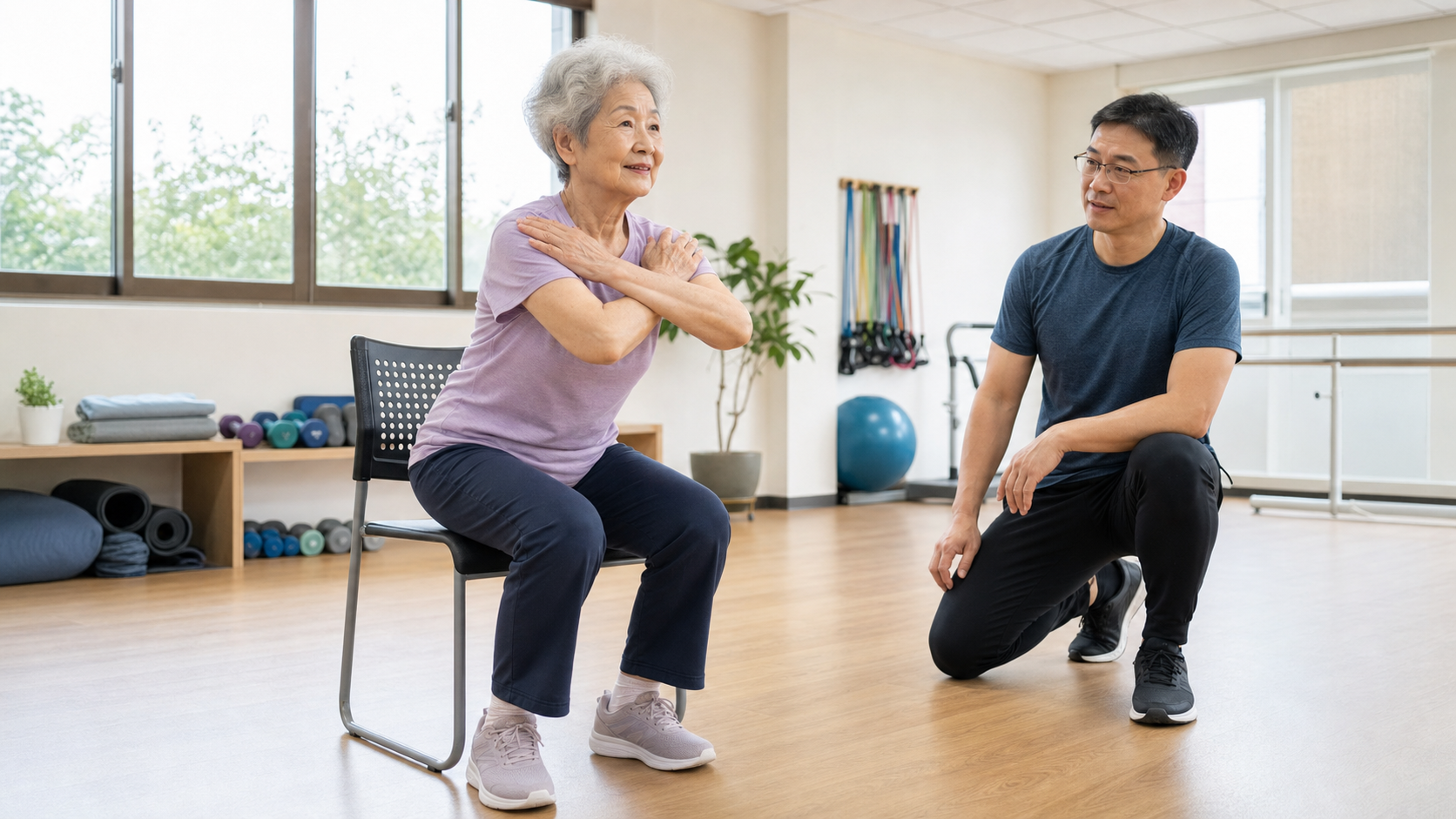
Starting with a 78-Year-Old Grandma’s First Squat
I’ve been in the fitness industry for 15 years and have trained all kinds of clients, but the ones who truly leave a lasting impression aren’t the young athletes breaking PBs — it’s a 78-year-old grandma, Chen, who was “dragged in” by her daughter to see me.
At our first meeting, she needed both hands on the armrests just to get up from a chair, and after standing, she had to pause for two seconds to steady herself before daring to take a step. She said, “Coach, I just don’t want to end up lying in bed someday, having my kids wipe me down.” I still remember those words to this day.
Eight months later, she could stand up and sit down from a chair 10 times in a row with her arms crossed over her chest and no support, and she could carry two bags of groceries through the traditional market on her own. Her weight and blood pressure didn’t change dramatically, but her independence in daily living was a completely different story. That’s the core message I want to convey in this article — the true purpose of exercise for older adults isn’t to extend “lifespan,” but to extend “healthspan” — the period of your life during which you can take care of yourself, stay mobile, and enjoy life.
In 2025, Taiwan officially entered a “super-aged society,” with adults over 65 accounting for more than 20% of the total population. This means that all of us — our parents, our elders, and even ourselves in a few years — will face a harsh reality: if we do nothing, our bodies will deteriorate faster than we can imagine. And the good news is — for this, exercise is almost the only prescription that has been repeatedly proven effective, with virtually no side effects.
I’ll try to make this article as comprehensive as possible: first, I’ll explain why the body declines (the scientific foundation); then I’ll give you methods you can apply directly (including specific workout plans and dosage tables); then I’ll point out the most common mistakes I see; and finally, I’ll offer action recommendations for readers at different starting points. It’s on the longer side, but exercise for older adults is worth your time to read through.
Why Does the Body Decline? Understanding the Three Decline Curves
After middle age, the body doesn’t just “age uniformly” — instead, several key systems each follow their own decline curves. Once you understand these three curves, you’ll see why exercise prescriptions are designed the way they are.
Curve One: Muscle Mass and Strength (Sarcopenia)
This is the one I care about most. According to multiple review studies, after age 40, skeletal muscle declines by approximately 3% to 8% per decade, and after 65, the loss of muscle mass and strength accelerates noticeably. In other words, muscle loss isn’t linear — it’s “the older you get, the faster it drops.”
What’s even more critical — strength declines faster than muscle mass. This means that even if your weight and appearance haven’t changed much, your “power” may have already been quietly slipping away. This progressive, generalized loss of skeletal muscle mass and strength is medically termed “sarcopenia.” It’s highly correlated with falls, disability, hospitalization, and even mortality.
Why is sarcopenia so deadly? Because it’s the first domino in a chain: insufficient strength → poor balance → falls → fractures → bedridden → even faster muscle loss → more complications. I’ve seen too many seniors whose entire health trajectory took a sharp turn for the worse after a single slip in the bathroom.
The good news is, this curve is the most reversible. Research consistently shows that resistance training (strength training) significantly improves grip strength, walking speed, and functional performance. Multiple systematic reviews indicate that with regular progressive resistance training, older adults can achieve considerable gains in strength and a measurable increase in lean mass. In other words, even if you start training at 70 or 80, your muscles will still grow — this is well-established in the literature.
Curve Two: Cardiorespiratory Fitness
Maximal oxygen uptake (VO₂max, an indicator of cardiorespiratory endurance) gradually declines with age, and it declines even faster in sedentary individuals. Poor cardiorespiratory fitness shows up in daily life as “getting winded after walking a short distance” or “needing a break to climb the stairs,” and over the long term, it’s associated with cardiovascular disease risk.
This curve is maintained through aerobic exercise — brisk walking, cycling, swimming, and dancing all count. For older adults, indoor spinning or riding a road bike along the riverside is an approach I highly recommend, because it puts far less impact on the knees than running, making it suitable for seniors whose joints are already somewhat worn. And the cardiorespiratory system is a very “honest” system: stop training for a few weeks and it declines; train regularly and it comes back. Even if you start at 70, your cardiorespiratory endurance will still improve. I often tell my clients, don’t think “I’m old, so being out of breath is normal” — for many seniors, that “wheezing” is actually caused by “not having moved in too long,” not by aging itself, and that’s exactly the part that can be improved through training.
Curve Three: Balance and Neuromuscular Control
This one is the most easily overlooked, yet it directly determines “whether you’ll fall.” Balance isn’t a single ability — it’s a combined performance of vision, the inner ear’s vestibular system, proprioception, and muscle reaction speed. These abilities also decline after middle age, especially the capacity for “rapid response” — a young person who misses a step will instinctively grab hold of something, while an older adult may not react in time and falls.
The World Health Organization (WHO) physical activity guidelines specifically single out “balance,” recommending that older adults engage in varied, multi-component activities emphasizing functional balance and strength at least 3 days per week to enhance functional capacity and prevent falls.
More Than Just Muscle: The Comprehensive Benefits of Exercise for Older Adults
I’ve noticed that when many people talk about exercise for older adults, they only focus on “muscle” and “not falling.” But over 15 years of coaching, I’ve seen that exercise’s impact on seniors goes far beyond the physical — it’s almost a “whole-body systemic” prescription. Let me break down the common benefits into several dimensions, and you’ll better understand why I’m so insistent that seniors get moving.
For the Brain and Emotions
Regular exercise is associated with better cognitive function and a lower risk of dementia. Exercise promotes cerebral blood flow and stimulates neurotrophic factors related to memory and learning. One senior I trained was described by his family as “increasingly reluctant to talk and often forgetful.” After a few months of regular exercise, his family reported that he became more energetic and more willing to go out and socialize. Exercise is also an excellent tool for emotional regulation — it helps improve sleep and reduce anxiety and depressive moods, which is especially important for seniors who may fall into loneliness after retirement or the loss of a spouse.
For Chronic Disease Management
I need to say this in very cautious terms: exercise is not medicine, and it cannot replace medicine, but it is a very important component of chronic disease management. Regular physical activity is positively associated with better blood sugar, blood pressure, and blood lipid control, and with lower cardiovascular disease risk. The prevalence of the “three highs” (hypertension, hyperglycemia, and hyperlipidemia) among Taiwanese seniors is considerable. Exercise combined with physician-prescribed medication and dietary control is currently the recognized core of a healthy lifestyle. But please remember: any medication adjustments must be decided by a physician — never stop or reduce your medication on your own just because you’ve started exercising.
For Bone Health and Metabolism
Weight-bearing and resistance exercise help maintain bone density, which is especially important for postmenopausal women, as they are a high-risk group for osteoporosis and fractures. Additionally, muscle is an important metabolic organ — maintaining muscle mass helps sustain basal metabolic rate and blood sugar regulation.
For “Social Connection”
This is the point I most want to emphasize, yet it’s the most often overlooked. Going to classes at a sports center, practicing tai chi with old friends at the park, or joining a community walking group — the social connection that exercise creates is itself a major factor in extending healthspan. Staying shut in at home alone versus moving together with a group of people — the difference over the long term is enormous.
What Do the Official Guidelines Say? Translating WHO Recommendations into Plain Language
Many people ask me, “So exactly how much should I exercise per week?” I usually start by citing the WHO’s 2020 physical activity guidelines, because they are currently the framework with the greatest international consensus. I’ve organized them into a table and translated them into plain language that can actually be put into practice.
| Exercise Type | WHO Recommendation | Plain-Language Translation | Real-Life Examples in Taiwan |
|---|---|---|---|
| Aerobic Exercise | 150–300 minutes of moderate intensity, or 75–150 minutes of vigorous intensity per week | Get in 2.5 to 5 hours of movement per week—breathing hard and sweating, but still able to talk | Riverside brisk walking, community spinning, park folk dancing |
| Strength Training | 2+ days per week, covering all major muscle groups, at moderate intensity or above | Do full-body resistance training at least twice a week | Resistance bands, water bottles filled with water, gym machines |
| Balance & Functional Training | 3+ days per week, emphasizing multi-component exercises for balance and strength | Three times a week, practice standing balance and transition movements | Tai Chi, single-leg standing, sit-to-stand exercises |
| Reduce Sedentary Time | Minimize prolonged sitting; move whenever possible | Get up and walk around every 30–60 minutes of sitting | Step in place during TV commercial breaks |
This table may look like a lot, but note one key point: The WHO explicitly states that “doing something is better than doing nothing.” For frail or less mobile older adults, the guidelines even emphasize that they don’t need to hit the targets right away—“being as active as one’s abilities allow” is beneficial in itself. I often tell my trainees: Don’t let the perfect workout plan become the excuse for not starting.
Practical Approach: A 12-Week Progressive Framework from Zero
Principles alone aren’t enough. I’ve distilled my hands-on experience working with older adults into a 12-week progressive framework. This isn’t a rigid schedule—it’s a “thinking sequence”—first build movement quality, then add volume, and only then address intensity.
Phase 1 (Weeks 1–4): Awakening and Building Habits
The goal of this phase is not to get stronger, but to remind the body how to move and to make exercise a habit. Many older adults have been sedentary for so long that the muscle–nerve connections have “rusted.” Adding load too quickly will only cause injury.
- Sit-to-Stand: Standing up from and sitting down into a chair—this is the most important functional movement. If you can’t do it unassisted, use your hands to push off. As you improve, let go of the hands, then cross your arms over your chest. Target: 8–10 reps per set, 2–3 sets.
- Wall Squat: With your back against the wall, slide down slowly. Keep your knees from going past your toes, hold for a few seconds, then come back up.
- Calf Raises: Hold onto a chair back, rise up onto your toes, then lower back down. Works the calves and balance.
- Aerobic: Walk 10–15 minutes daily at a pace where “you can talk but are slightly breathless.”
- Balance: Hold onto a stable object and stand on one leg, 10–20 seconds per side.
Phase 2 (Weeks 5–8): Adding Volume and Introducing Resistance
Once the body has adapted, it’s time to formally introduce external resistance. You don’t need to spend a lot of money—a 600 ml water bottle filled with water weighs about 0.6 kg, and a 1500 ml bottle about 1.5 kg. A resistance band costs around a hundred NT dollars. Both are excellent entry-level equipment.
- Seated Shoulder Press: Hold a water bottle or resistance band in each hand and press upward.
- Resistance Band Row: Anchor the band and pull it toward your body to work the back.
- Glute Bridge: Lying on your back, lift your hips to work the glutes and core—important for protecting the lower back.
- Aerobic: Extend sessions to 20–30 minutes. You can switch to a stationary bike or spinning, with slightly higher intensity.
- Balance Progression: Extend single-leg standing to 30 seconds, or try heel-to-toe walking in a straight line.
Phase 3 (Weeks 9–12): Progressive Overload and Functional Integration
This phase emphasizes “progressive overload”—when you can easily complete the prescribed number of reps for an exercise, moderately increase the weight, reps, or sets. This is the key to continued muscle growth.
- Resistance exercises can progress to dumbbells or gym machines, with the weight chosen so that “the last 2–3 reps feel challenging but your form remains correct.”
- Introduce compound movements and real-life scenario practice, such as simulating “bending down to pick something up and standing back up” or “getting up from the floor.”
- Build the habit of aerobic exercise 3–5 times per week.
The resistance training dosage table below shows the parameter ranges I commonly use with older clients. Please remember these are ranges and principles, not precise prescriptions—actual intensity must always be adjusted to the individual.
| Parameter | Beginner (First 1–2 Months) | Advanced (After Adaptation) | Notes |
|---|---|---|---|
| Sessions per week | 2 times | 2–3 times | Allow at least 48 hours between sessions for the same muscle group |
| Sets per exercise | 1–2 sets | 2–3 sets | Progress gradually |
| Reps per set | 10–15 reps | 8–12 reps | Lower reps generally mean relatively heavier weight |
| Perceived effort | Easy to moderate | Moderate to somewhat hard | Use “rate of perceived exertion” rather than memorizing weights |
| Movement speed | Slow and controlled | Slow and controlled | Older adults should never chase explosive power—control is what matters |
| Rest | 60–90 seconds between sets | 60–120 seconds between sets | Those with higher blood pressure can extend rest periods |
How to Arrange a Week? A Sample Weekly Schedule
Many trainees ask me: “I understand the three components, but how do I fit them into seven days?” Here’s a sample weekly schedule for older adults who “already have a foundation and are generally healthy.” This is a template, not a rigid rule—adjust flexibly based on your routine, the weather, and how you feel.
| Day | Main Content | Duration | Intensity |
|---|---|---|---|
| Monday | Full-body resistance training (sit-to-stand, shoulder press, row, glute bridge) | 30 minutes | Moderate |
| Tuesday | Aerobic (riverside brisk walking or stationary bike) + balance exercises | 30–40 minutes | Moderate |
| Wednesday | Active recovery (walking, stretching, light housework) | As desired | Light |
| Thursday | Full-body resistance training (change exercises or increase load) | 30 minutes | Moderate |
| Friday | Aerobic (Tai Chi, folk dancing, or spinning) + balance exercises | 30–40 minutes | Moderate |
| Saturday | Outdoor activity (hiking, cycling, gentle hill climbing) | Based on stamina | Moderate |
| Sunday | Complete rest or light stretching | As desired | Light |
Key reminders: Alternate resistance training and aerobic exercise, and allow at least one day of recovery between two strength sessions for the same muscle group. Balance exercises can be “squeezed into” daily life—for example, practice single-leg standing while waiting for the bus, brushing your teeth, or during TV commercials.
Different Exercise Modalities—What Does Each One Provide?
Older adults often ask: “Coach, should I swim, cycle, or walk?” The answer is—it depends on what you want to work on. Each exercise has different characteristics. I’ve put together a comparison table to help you choose.
| Exercise Modality | Main Benefits | Joint Impact | Especially Suitable For |
|---|---|---|---|
| Brisk Walking / Power Walking | Cardiorespiratory fitness, lower-limb endurance, convenient and free | Low to moderate | Beginners and those looking to build a habit |
| Cycling / Spinning | Cardiorespiratory fitness, leg muscular endurance, knee-friendly | Very low | Those with knee wear or higher body weight |
| Swimming / Water Exercise | Full-body, cardiorespiratory fitness, nearly zero impact | Extremely low | Those with joint pain, obesity, or in rehabilitation |
| Resistance Training | Strength, muscle mass, bone density | Controllable | Everyone (core prescription for sarcopenia) |
| Tai Chi / Yoga | Balance, flexibility, mental relaxation | Low | Those with poor balance or at risk of falls |
Looking at this table, you’ll see that no single exercise covers everything. That’s why the WHO emphasizes “multi-component exercise”—the ideal exercise program for older adults combines aerobic, strength, and balance training, rather than sticking to just one activity.
Case 2: From “Afraid to Fall, Afraid to Go Out” to Riding a Bicycle
Let me share another client who gave me a great sense of accomplishment: 65-year-old Uncle Lin. Before retirement, he worked at a desk job. After retiring, he missed a step on the doorstep at home. Although he wasn’t injured, he was frightened, and from then on became very afraid of going out and walked stiffly and cautiously. The more afraid he became, the less he moved; the less he moved, the weaker his muscles got—a vicious cycle.
I started him with the most basic sit-to-stand and balance exercises. For the first month, we didn’t touch any weights at all, focusing first on rebuilding his confidence to “dare to move.” In the second month, we introduced resistance bands and water bottles. By the third month, he could ride a bicycle along the riverside, covering 5 to 8 kilometers each time. Six months later, at his follow-up appointment, his blood pressure and blood sugar were more stable than before (his doctor kept his original medication). More importantly—he was willing to go out again and meet up with old friends for bike rides.
Uncle Lin’s story illustrates one thing: The biggest enemy for older adults is often not their body, but “fear.” And the way to overcome “fear” is to start with small, safe movements and gradually rebuild confidence step by step.
Nutrition: Don’t Let Your Efforts Go to Waste
Exercise is the stimulus; nutrition is the material. Both are essential. I’ve seen too many seniors exercise diligently yet progress slowly—and when I ask, they eat like birds at mealtimes, with severely insufficient protein intake.
Older adults actually need more adequate protein than younger people, because aging reduces the body’s efficiency in utilizing protein (this is called “anabolic resistance”). In general nutritional guidelines, the recommended protein intake for healthy older adults is typically around 1.0 to 1.2 grams per kilogram of body weight per day (those with kidney dysfunction must follow individual assessment by their physician and dietitian—do not self-apply). For a 60-kilogram grandmother, that’s roughly 60–72 grams of protein per day, and distributing it evenly across three meals is more beneficial for muscle synthesis than concentrating it in one meal.
Since eating out is common in Taiwan, here are some practical suggestions:
- Add an egg or a cup of unsweetened soy milk at breakfast—don’t just eat sesame flatbread with youtiao and milk tea.
- At the buffet, add an extra piece of fish, a serving of tofu, or chicken—don’t have a whole plate of vegetables with braising sauce over rice.
- Have a cup of unsweetened soy milk or a tea egg as an afternoon snack to fill the protein gap.
- Don’t forget fluids and fruits/vegetables. Seniors often avoid drinking water because they fear frequent urination, which actually increases the risk of dehydration and constipation.
Vitamin D and calcium are also important for muscles and bones. It’s actually quite common for Taiwanese seniors to have vitamin D deficiency due to sun avoidance and not going out much. But whether to supplement and how much—must be determined by a physician or dietitian after a blood test. Don’t buy health supplements on your own and swallow them indiscriminately. I’ve seen too many seniors with a row of supplements on the table, yet they don’t eat enough protein. Remember, real food always comes first; supplements are only to “fill the gaps,” not to replace meals. Rather than spending a fortune on supplements of questionable origin, it’s better to eat plenty of fish, meat, eggs, and legumes at your three meals.
Common Mistakes and Corrections: I’ve Seen These Pitfalls Too Many Times
Having worked with so many seniors, there are some mistakes almost everyone makes. Let me list the most common ones and provide correction strategies.
Mistake 1: Only Walking, No Strength Training
This is the most widespread misconception. Many seniors think, “I walk 10,000 steps every day, so I’m very healthy.” Walking is certainly good, but it barely builds muscle strength and has limited effect on preventing sarcopenia. Aerobic exercise alone cannot reverse muscle loss; resistance training must be added. Correction: Upgrade from “just walking” to “walking plus strength training twice a week.”
Mistake 2: Afraid of Injury, So Not Moving at All
The other extreme. Seniors or their children worry, “What if exercise causes a back strain or knee injury?” so they simply don’t move at all. But the muscle loss, cardiopulmonary decline, and fall risk from prolonged sitting and inactivity are far greater than the risks of appropriate exercise. Correction: The answer to risk management is “progress gradually under professional guidance,” not “don’t move.”
Mistake 3: Chasing Speed and Explosiveness
Some seniors see how younger people train and try to imitate them, moving fast and forcefully. Older adults’ joints, tendons, and ligaments have reduced elasticity, and explosive movements and rapid direction changes carry a high risk of injury. Correction: Slow down all movements, emphasize control and full range of motion. Better to go lighter, slower, and with proper form.
Mistake 4: Neglecting Balance Training
Many people equate exercise with “strength plus cardio” but overlook balance. Yet for older adults, balance training is directly related to fall prevention, and its importance is no less than the other two. Correction: Schedule balance exercises regularly each week, even if it’s just standing on one leg while brushing your teeth.
Mistake 5: Skipping Warm-Up and Cool-Down
Many seniors (and even younger people) start exercising immediately upon arrival and head home right after finishing. But older adults’ muscles and tendons have poorer elasticity in a “cold” state; lifting weights without warming up significantly increases the risk of strains. And without a cool-down after exercise, the sudden drop in heart rate and blood pressure can cause dizziness. Correction: Before each session, spend 5–10 minutes on brisk walking, joint mobility, and light stretching to warm up; after the session, spend 5 minutes on slow walking and gentle stretching to cool down. Don’t underestimate these 15 minutes—they’re an important insurance policy against injury.
Mistake 6: Holding Your Breath While Exerting
Seniors often unconsciously hold their breath when exerting force (e.g., standing up, pushing weight). This is called the “Valsalva maneuver,” which causes a sudden spike in blood pressure and is especially dangerous for those with hypertension or cardiovascular issues. Correction: Develop the habit of “exhale on exertion, inhale on relaxation,” maintaining smooth breathing throughout—never hold your breath.
Mistake 7: Playing Doctor When You Have a Chronic Condition
For seniors with hypertension, diabetes, heart disease, or arthritis, exercise indeed has many benefits, but intensity, timing, and precautions must be individualized. For example, those with poorly controlled blood pressure should avoid breath-holding exertion (Valsalva maneuver); those on blood sugar medication should watch for hypoglycemia during exercise; and heart patients need physician evaluation before exercising. Correction: If you have a chronic condition, consult your physician before starting exercise, and inform your coach or therapist about your medications and physical condition.
Fall Risk Self-Assessment
Falls are one of the leading causes of disability in older adults. The following simple home self-checks can help you preliminarily assess your risk (this is only self-awareness, not a diagnosis):
| Check Item | Can Do | Needs Attention |
|---|---|---|
| Standing up from a chair without support | Stands up smoothly | Needs to push with hands to get up |
| Standing on one leg | Can stand steadily for 10+ seconds | Cannot reach 10 seconds or sways noticeably |
| Walking speed | Can cross the street within the green light | Often can’t finish crossing before the light changes |
| Timed Up and Go test | Stands up, walks 3 meters, and returns smoothly | Hesitates, unsteady, or very slow during the process |
| Falls in the past year | None | Has fallen once or more |
If you have two or more items falling under “Needs Attention,” I would strongly recommend seriously incorporating balance and strength training into your routine and considering seeking evaluation from a physical therapist or relevant professional. Taiwan’s National Health Insurance and the Long-Term Care 2.0 system have many resources—community long-term care centers, hospital rehabilitation departments, and physical therapy clinics can all help. Don’t try to tough it out on your own.
Taiwan-Specific Context: Fitting Exercise into Real Life
No matter how good a program is, if it doesn’t fit into real life, it’s just a piece of paper. Here are some practical reminders based on Taiwan’s environment.
Climate: Taiwan’s summers are hot and humid. Seniors have reduced ability to regulate heat and are prone to heatstroke or dehydration. It’s recommended to schedule outdoor exercise in the early morning or evening, avoiding the high-temperature window from 11 AM to 3 PM. Carry water and wear breathable clothing. During the plum rain season and typhoons, move exercise indoors—you can do sit-to-stand, resistance band work, and marching in place right in the living room.
Venues: Taiwan’s riverside bike paths, parks, and sports centers in every city and county are excellent resources. National sports centers typically have equipment and classes suitable for seniors at affordable prices. The tai chi and Yuanji dance classes at community activity centers are themselves excellent combinations of balance and aerobic exercise.
Healthcare Access: Taiwan’s National Health Insurance is convenient—make good use of it. If you have concerns before exercising, you can get a basic evaluation at a family medicine or cardiology clinic; for joint discomfort, see rehabilitation or orthopedics; for sarcopenia and nutritional issues, ask your physician for a referral to a dietitian. Before starting a new exercise program—especially for seniors with chronic conditions or who haven’t exercised in a long time—getting a physical check-up is a worthwhile investment.
Action Recommendations for Readers at Different Levels
Everyone starts from a different point. I’ve divided readers into three categories, each with a set of starting strategies.
If You (or Your Elderly Relative) Barely Exercise and Are Physically Frail
Don’t try to do everything at once. This week’s goal is only one thing: stand up and sit down from a chair 5 times a day, and stand on one leg for 10 seconds on each side while holding onto something. That’s it. Keep it up for a week. Add more next week. Building the habit is a hundred times more important than intensity. Also, find a family member to do it with you—reminding each other greatly increases the success rate.
If You Already Have a Walking Habit but Have Never Lifted Weights
Your biggest gap is muscle strength. Starting this week, pick two days per week and do a full-body resistance routine using resistance bands or water bottles, 20 minutes each session. Seated shoulder press, rows, bridges, and sit-to-stands—these four movements make up a very complete beginner combination. Keep up your walking, but be sure to add this strength component.
If You Already Exercise Regularly and Want to Be More Systematic
You can refer to the 12-week framework and dosing table above, start introducing the concept of “progressive overload,” and make sure all three key elements (strength, cardio, balance) are covered. Also review your nutrition, especially whether protein is adequately distributed across three meals. If you want to break through, consider working with a professional coach for a movement assessment to fine-tune the details.
Frequently Asked Questions (FAQ)
Q: Is it still useful to start training at 70 or 80?
A: Very useful. The literature repeatedly confirms that older adults can significantly improve strength and functional performance through resistance training, and muscle can also grow. Age is not a reason not to train—it’s actually a reason to train even more.
Q: I have bad knees. Can I still exercise?
A: Yes, and you should. Strengthening your thighs and glutes actually protects the knee joints. You just need to choose appropriate movements (prefer seated positions, avoid deep squats, avoid high impact), and it’s best to get an assessment from a rehabilitation physician or physical therapist first.
Q: Does exercise only count if I’m drenched in sweat and sore the next day?
A: No. Training for older adults is about “consistency, safety, and progress,” not pushing yourself to the limit. Mild muscle soreness is normal, but severe pain, dizziness, or chest tightness is your body telling you to stop—be sure to stop.
Q: Is it safe to exercise alone at home?
A: Bodyweight and low-resistance exercises are generally safe, but it’s recommended to do them near a handrail or sturdy furniture, on a non-slip floor, and let family members know you’re exercising. If you want to lift heavier weights, it’s best to have someone with you or train at a facility with professional staff.
Q: Do I need to exercise every day? Can I rest?
A: You don’t need to do the same intensity every day. Muscles need recovery time—leave at least one day between strength training sessions for the same muscle groups. But “reducing sedentary time” is a daily task—even on rest days, try to get up and move around, do some light chores, and avoid sitting or lying down all day.
Q: What should my heart rate be during exercise?
A: For generally healthy older adults, I usually find the “talk test” more practical than staring at a heart rate monitor: moderate intensity means “you’re breathing harder but can still speak in full sentences”; if you’re too breathless to talk, that’s too intense. For older adults with a history of heart disease or a pacemaker, the target heart rate range must be individually set by a cardiologist.
Q: What if I can’t afford a coach or can’t get to a gym?
A: You don’t need to spend a lot of money at all. A chair, a wall, a resistance band, and a few water bottles filled with water are enough for a complete full-body workout. Community long-term care centers, parks, and public sports centers also offer affordable or even free resources. The most expensive cost of exercise has never been money—it’s “the determination to start.”
Q: Is morning or evening exercise better?
A: Go with the time you can sustain long-term. In Taiwan’s summer, avoid the midday heat; some older adults have higher blood pressure in the morning, so check your blood pressure and warm up gradually before morning exercise—don’t do vigorous activity right after getting up. Those on diabetes medication should avoid fasting hypoglycemia; consult your doctor about how to coordinate exercise timing with meals and medication.
Conclusion: Every Sit-to-Stand You Do Today Is Paying for Your Future
Let’s return to Grandma Chen from the beginning. Eight months of training didn’t make her younger, but it let her walk on her own, shop for groceries on her own, and use the bathroom on her own—things we take for granted when we’re young, but for older adults, they are everything that constitutes dignity and freedom.
The essence of exercise in later life has never been about running faster or lifting heavier—it’s about being able to stand, walk, and live on your own through the final stretch of life. Muscle will be lost, but it can also come back with training; balance will decline, but it can also be regained through practice. This is the fairest thing our bodies give us—treat it well, and it will repay you.
If you’re caring for aging parents, or you yourself have started to feel changes in your body, I sincerely suggest: start today, with the smallest step. One sit-to-stand, one single-leg stand, one extra piece of fish. These tiny actions accumulate into your healthy lifespan for the next ten or twenty years.
Finally, I want to share with you the three principles I’ve distilled from years of coaching: First, movement quality always takes priority over weight and speed—better to go lighter, slower, and more precisely; Second, consistency beats short-term intensity—exercising three times a week for a year is far more valuable than pushing yourself to the limit for a month and then quitting; Third, individualization and safety are the bottom line—if you have chronic conditions or concerns, ask your doctor and professionals first, and don’t treat a generic online program as a personalized prescription.
Extending healthy lifespan has no shortcuts and no miracle pills, but there is a path that has been repeatedly validated and is accessible to nearly everyone—and that is: exercise regularly, safely, and consistently. Start today, with the smallest step.
Don’t wait until you fall to regret not starting. It’s never too late to get moving.
This article is educational content and does not replace individual diagnosis or treatment advice from physicians, physical therapists, or nutritionists. If you have chronic conditions (such as diabetes, hypertension, heart disease, kidney disease, etc.) or have been inactive for a long time, please consult your healthcare professional before starting any new exercise program, and adjust according to your individual situation.
References
- WHO guidelines on physical activity and sedentary behaviour: https://www.who.int/europe/publications/i/item/9789240014886
- Recommendations — WHO Guidelines on Physical Activity and Sedentary Behaviour (NCBI Bookshelf): https://www.ncbi.nlm.nih.gov/books/NBK566046/
- A Review on Aging, Sarcopenia, Falls, and Resistance Training in Community-Dwelling Older Adults: https://www.mdpi.com/1660-4601/19/2/874
- Effects of Resistance Training on Sarcopenia Risk Among Healthy Older Adults: A Scoping Review of Physiological Mechanisms: https://pmc.ncbi.nlm.nih.gov/articles/PMC12112962/
Related Reading
- The Science of Exercise and Longevity: Evidence for Extending Lifespan, Optimal Doses, and a Lifestyle You Can Maintain for Life
- Exercise Science for Older Adults: Sarcopenia, Frailty, and Exercise Prescription—A Practical Guide to Resistance Training, Balance, and Fall Prevention
- A Blueprint for Exercise and Healthy Aging: How to Combine Exercise by Age Group
- Youth Exercise and Health: A Coach’s Complete Practical Guide from Physical and Mental Benefits, Safety, to Motivation
實景訓練台) 彰化經典百K 高強度喵團 90分鐘 跟著一起練功 2019 Indoor workout Changhua Classic 100 Taiwan
7 年前
CT暗黑廚房) 車友必備 宇宙無敵鮮蚵湯 幫助訓練恢復 天然食補 好市多 超肥鮮蚵 破PR
7 年前
2019 柯P 超越北高 第一集團實錄 (11小時實錄請參考另一部影片) 一日雙城 一日北高 NeverStop Taiwan Long Distance Cycling Challenge
7 年前
靠單車減肥35公斤 心得分享與整理
7 年前
秘境雪場 日本 八甲田 冰樹探險與滑雪體驗 ft. Q老師 & 運動生活
7 年前
一日北高/長距離團騎 常見問題補充篇 / 組團或跟團的眉角 / 壯車友容易被瘦車友慢性拉爆 / 原來屁股痛可能是這個原因...? / 風場配速法 / 公路車 / CT Yeh
2 年前
單車 一日北高 ( 雙城 ) 肥宅雙人瘋狂行 紀錄片 REACTO
10 年前
台北大雁西飛 約騎挑戰 feat. Doris | 公路車 | CT Yeh
3 年前