The Complete Guide to Tennis Elbow and Golfer's Elbow: From Tendinopathy Mechanisms to Eccentric Strengthening and Load Management
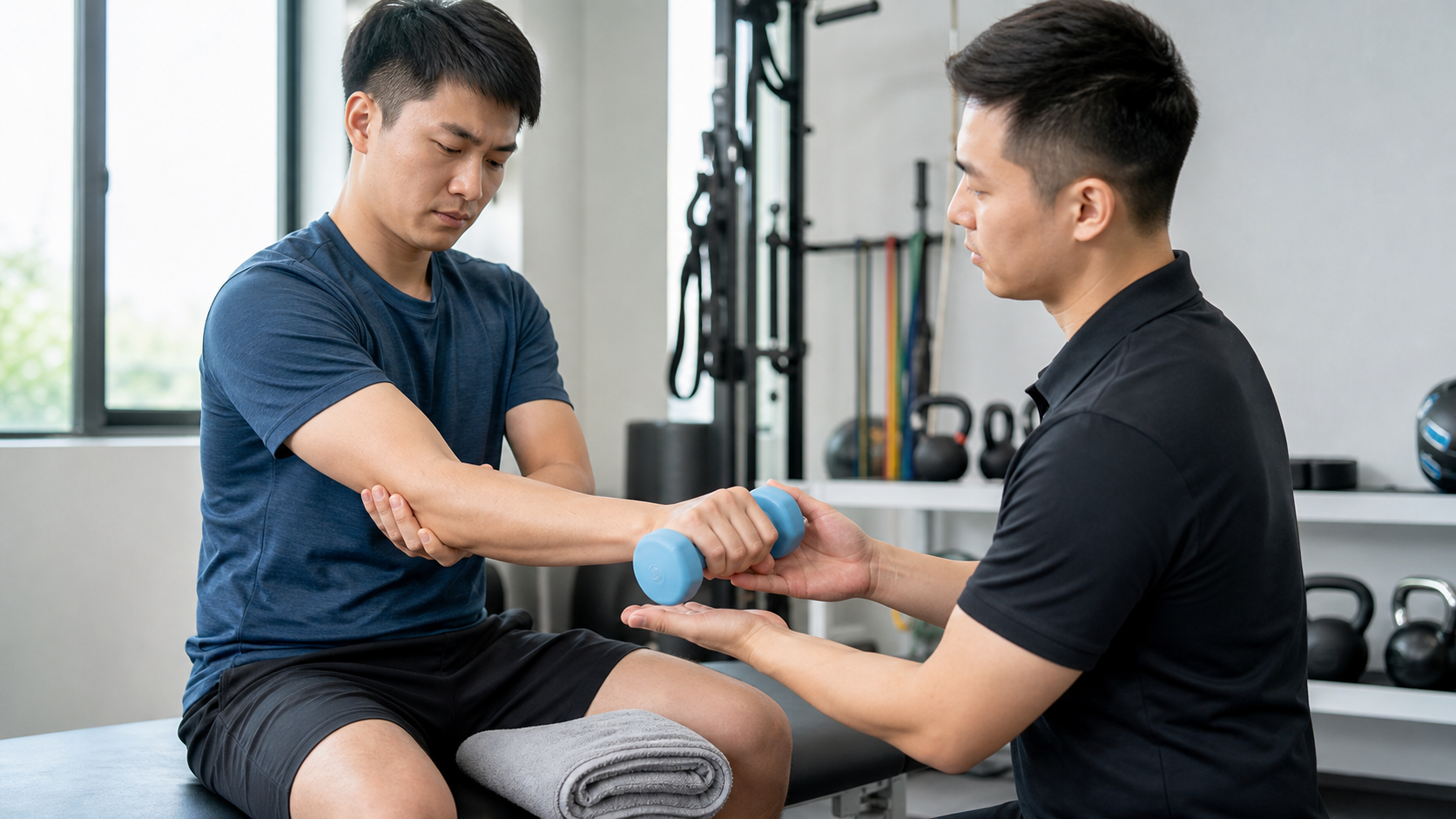
Starting with a Towel That Wouldn’t Wring Out
A few years ago, an engineer from Hsinchu Science Park came to see me. His surname was Chen, early forties, playing tennis on weekends and glued to a mouse all weekdays. As soon as he sat down, he gave a wry smile and said, “Coach, lately even wringing out a towel, opening bottle caps, and picking up my kid hurts. That spot on the outside of my elbow—the slightest touch feels like an electric shock. I went to the clinic, got anti-inflammatories, and applied medicated patches for two weeks. It got a bit better, then flared up again. It’s been dragging on for over three months now.”
I asked him to straighten his arm and bend his wrist upward. I gently pressed against the back of his hand with my fingers to apply resistance, and he immediately winced—this is the classic presentation of tennis elbow (lateral epicondylitis / lateral elbow tendinopathy). Two weeks later, his wife was dragged in as well, with symptoms on the inner side of the elbow. Years of carrying their child plus doing housework had led to golfer’s elbow (medial epicondylitis).
This couple’s story is actually the most common scenario seen in outpatient clinics across Taiwan. Interestingly, neither of them actually made a living playing tennis or golf—the names are just labels left over from history. What really matters is understanding the shared tendinopathy mechanism behind both problems, and why “rest plus anti-inflammatories” is often not enough, while eccentric strengthening and load management are the core of nursing the elbow back to health.
In this article, I’ll use the practical tone I use with my athletes to walk through the concepts, the scientific basis, practical training programs, common mistakes, and how readers at different stages should get started. It’s on the longer side, but elbow rehabilitation is inherently a patient, long-term battle—worth reading slowly.
First, Let’s Bust the Biggest Myth: This Isn’t “Inflammation,” It’s “Degeneration”
The biggest conceptual shift in sports medicine in recent years has been moving from “tendinitis” to “tendinopathy” or “tendinosis.” One word makes a world of difference in treatment direction.
In the past, everyone thought tennis elbow was tendon “inflammation,” so they went all in on anti-inflammatories, ice, and rest. But when researchers actually cut into these chronically painful tendon tissues and looked at them, they found almost no classic inflammatory cells (like macrophages, lymphocytes, or neutrophils). Instead, what they found was disorganized collagen fiber arrangement, fibers spread apart by excess ground substance, and abnormal neovascularization—what’s known as “angiofibroblastic degeneration.”
In other words, this is more like a rope that’s been used for a long time, subjected to repeated microtrauma without being able to repair properly: the fibers inside are coming loose one by one, their alignment is disrupted, and their strength is compromised—not the red, swollen, hot, painful state of acute inflammation.
This mechanistic difference directly explains three things we see all the time clinically:
- Why pure rest often doesn’t work: A degenerated tendon lacks the stimulus for “realignment and re-strengthening.” Staying completely still only leaves the tissue with even less capacity to handle daily loads.
- Why anti-inflammatories have limited effect: Without typical inflammation, anti-inflammatory treatment naturally misses the target; at best, it temporarily suppresses the discomfort.
- Why progressive loading (especially eccentric) is the real medicine: Appropriate, controlled tension stimulates collagen resynthesis and realignment, allowing the tendon to gradually “grow back its strength.”
Coach’s plain-language version: Think of the tendon as a climbing rope that’s been frayed and has knotted fibers. You don’t restore it to a new rope by “letting it lie there”—you need “regular, controlled tension” to gradually comb the fibers back into order and weave them tighter.
Tennis Elbow vs. Golfer’s Elbow: Different Location and Movement, Same Essence
The mechanism is the same for both; the difference lies in the muscle groups affected and the location of pain. This table will help you tell them apart quickly:
| Comparison Item | Tennis Elbow (Lateral Epicondyle) | Golfer’s Elbow (Medial Epicondyle) |
|---|---|---|
| Pain location | Bony prominence on the outer side of the elbow | Bony prominence on the inner side of the elbow |
| Main muscles affected | Wrist extensor group (especially extensor carpi radialis brevis, ECRB) | Wrist flexor and pronator group |
| Aggravating movements | Wrist extension/upward bend, gripping, backhand strokes | Wrist flexion/downward bend, pronation, forehand strokes and golf swings |
| Common populations | Mouse users, carpenters, tennis backhand players, heavy lifting | Parents carrying children, housework, golf swings, throwing, gripping in the gym |
| Self-test | Pain with resisted wrist extension | Pain with resisted wrist flexion and forearm pronation |
| Prevalence reference | About 1–3% in general adults, higher among tennis players | Less common than the lateral side, but mechanism and treatment principles are the same |
Research shows the prevalence of tennis elbow in the general population aged 35–54 is approximately 1–3%, while among tennis enthusiasts across age groups, the incidence can be as high as 9–40% (see references at the end). That’s why it carries the “tennis” label—but don’t forget, mouse use, housework, moving boxes, and heavy gripping in the gym can all cause it too.
Self-Confirmation First: Is It Really Tendinopathy?
Before starting any program, I help my athletes run through a few simple self-checks to determine the source of the pain. This is not a diagnosis, but it helps you understand yourself better and know when to seek medical care:
- Localization test: Press with one finger on the bony prominence on the outer or inner elbow. Is the most painful spot right in that small area? Tendinopathy usually has a distinct tender point.
- Resisted test: When you bend your wrist upward (lateral) or downward (medial) while I apply resistance from the other side, does it reproduce the familiar pain?
- Stretch test: When you passively stretch the wrist in the opposite direction, does the tendon feel tight and painful?
If all of these match, tendinopathy is highly likely. But if you have numbness in the fingers, sudden loss of grip strength, vague or radiating pain, or the joint feels locked and can’t fully extend, be alert—these may involve nerves (such as the radial or ulnar nerve), joints, or other structures that require professional evaluation to differentiate. Don’t just apply this article’s program blindly.
This table helps you distinguish between “simple tendinopathy” and “signs that warrant caution”:
| Observation Point | More Likely Simple Tendinopathy | Needs Caution, Seek Medical Care Soon |
|---|---|---|
| Pain location | Fixed at the outer or inner bony prominence | Vague, radiating, extending into the fingers |
| Sensory changes | No numbness or tingling | Numbness or tingling in fingers or forearm |
| Muscle strength | Afraid to exert due to pain, but not truly weak | Marked weakness, can’t grip things |
| Trigger factors | Specific resisted or stretch movements | Pain even at rest, waking at night |
| Appearance | Usually no obvious redness, swelling, or heat | Obvious redness, swelling, and warmth |
The Science of Tendinopathy: The Imbalance Between Load and Repair
To understand how to treat it, you first need to understand how it breaks down. The core of tendinopathy comes down to one sentence:
The cumulative load placed on the tendon exceeds its capacity to repair and adapt.
This is a balance scale. On the left side is “load”—number of repetitions, intensity, frequency, insufficient rest. On the right side is “repair capacity”—age, sleep, blood flow, nutrition, hormones, and the existing health of the tissue. When the left side chronically outweighs the right, the tendon can’t keep up with repair, microdamage accumulates, and it gradually progresses toward degeneration.
Common “Scale-Tipping” Scenarios
Based on Taiwanese lifestyles, these are the ones I see most often:
- Sudden increase in volume: Not playing at all during the week, then playing three hours in one weekend; or a gym newbie suddenly going all in on deadlifts, pull-ups, or farmer’s walks, spiking grip load.
- Long-duration, low-intensity but high-repetition: Typing, using a mouse, and scrolling on a phone all day, never truly relaxing the wrist muscles.
- Poor technique or equipment: Tennis racket grip too thin, string tension too high, faulty swing mechanics; work postures that keep the wrist at unnatural angles for long periods.
- Repair side already compromised: Sleep deprivation, post-menopausal hormonal changes, chronic stress, or metabolic conditions affecting tissue repair.
Why “Eccentric Contraction” Matters So Much
Muscles have three types of contraction:
- Concentric contraction: The muscle exerts force and shortens, e.g., curling a dumbbell upward.
- Isometric contraction: The muscle exerts force but length stays the same, e.g., holding a static position.
- Eccentric contraction: The muscle exerts force while being lengthened, e.g., the process of slowly lowering a dumbbell.
What makes eccentric contraction special is that it can stretch the tendon under relatively high tension. It’s believed to effectively stimulate collagen resynthesis and realignment, promote tendon remodeling, and also enhance the tendon–muscle unit’s ability to withstand tensile forces. This hits the nail on the head: what a degenerated tendon needs is precisely “controlled tension stimulus.”
However, I’ll be honest: the current research evidence is actually “eccentric exercise works, but it’s not necessarily magical enough to beat all other approaches.” Systematic reviews have found that eccentric exercise does reduce pain and increase strength, but compared to other exercise interventions (isometric, concentric), its advantage isn’t always overwhelming (see references at the end). Clinically, the more important point is: choosing an approach the patient can tolerate at the moment without excessively provoking pain matters more than obsessing over which type of contraction.
So my practical strategy is: In the acute phase, use isometrics for pain relief and tolerance building; then progressively introduce eccentric strengthening; and finally return to full-range functional training. Now let’s get to the most practical part.
Why Do Tendons Heal So Slowly?
Many people can’t accept “why does it take months?” This actually comes down to the physiological characteristics of tendons. Compared to muscles, which have rich blood flow, tendons have relatively sparse blood supply and slow metabolism; collagen synthesis and remodeling happen on a timescale of “weeks to months.” This explains two things: first, why recovery after injury requires patience; second, why “regular, sustained” stimulus matters more than “short bursts of intense effort”—you’re giving a slow-metabolizing tissue enough time and consistent signals to reweave its fibers.
This is also what I keep reminding my athletes: Rehabilitation should feel like saving money, not gambling. A little stimulus every day within the green zone accumulates into the principal for tendon remodeling; going at it sporadically, or pushing to the point of blowing up in one session, makes the account swing between positive and negative, and progress naturally stalls. For those who are older, sleep poorly, or have metabolic conditions or hormonal changes, the repair side is already stretched thin, so you need to be even more conservative with “volume” and more disciplined with “consistency.”
Practical Approach: A Staged, Progressive Rehabilitation Program
I divide elbow rehabilitation into four phases. Please note: this is an educational, generalized framework. The actual pace of each phase varies from person to person. If you have a confirmed diagnosis or concurrent neurological symptoms, be sure to have a physician or physical therapist evaluate you first.
Throughout the entire rehabilitation process, follow one golden rule—the “Pain Traffic Light”:
| Pain Signal | Pain During Training (0–10) | Meaning and Action |
|---|---|---|
| Green light | 0–3 | Acceptable, continue, even slightly increase load |
| Yellow light | 4–5 | At the upper limit, hold steady, observe next-day response |
| Red light | 6 or above, or significantly more pain/swelling the next day | Overdone, step back to the previous level, reduce load |
The key is the “24-hour rule”: whether you’ve overdone it isn’t judged by how it feels during the exercise, but by how the elbow responds the next morning. If it’s within 3 during the session and no worse the next day, it’s a safe training stimulus.
Phase 1: Pain Relief and Tolerance Building (Approximately Weeks 1–2)
The goal is to bring the pain down and get you willing to move, not to completely shut down. The main tool is isometric contractions, because they have good pain-relieving effects and are gentle on the tendon.
| Exercise | How To | Dosage |
|---|---|---|
| Isometric wrist extension hold (tennis elbow) | Gently bend the wrist upward, apply resistance with the other hand, hold still | 30–45 seconds per rep, 30 seconds rest, 4–5 reps, 1–2 sets per day |
| Isometric wrist flexion hold (golfer’s elbow) | Gently bend the wrist against resistance, hold still | Same as above |
| Isometric grip | Squeeze a rolled towel or soft ball with light-to-moderate force | 30 seconds per rep, 4–5 reps |
In this phase, we’re not chasing soreness or volume; we’re chasing “being able to exert force without pain.” At the same time, start reviewing and reducing daily aggravating movements (more on this later).
Phase 2: Eccentric Strengthening as the Focus (Approximately Weeks 3–8, the Core Phase)
This is the centerpiece of the entire program. The classic approach uses a light dumbbell or a water-filled PET bottle for slow eccentric lowering.
Tennis elbow (wrist extensors) eccentric:
- Rest your forearm flat on a table, with the wrist and hand hanging over the edge, palm facing down, holding a light dumbbell.
- Use the other hand to assist in bringing the affected wrist up to the “extended” top position (skipping the demanding concentric phase).
- Release the assisting hand and let the affected side slowly lower the wrist over 3–4 seconds all the way down.
- That “slow lowering” is the eccentric. Repeat.
Golfer’s elbow (wrist flexors) eccentric: The movement direction is reversed—palm facing up, slowly lower to let the wrist drop downward.
| Parameter | Recommendation |
|---|---|
| Sets/reps | 3 sets × 10–15 reps |
| Eccentric tempo | 3–4 seconds per lowering rep |
| Frequency | Once daily or every other day |
| Starting weight | 0.5–1 kg (a water-filled bottle works); if painful, start with bodyweight only |
| Progression | Only when all 3 sets are completed in the green zone and there’s no flare-up the next day, add about 0.5 kg each time |
Discipline in progression is absolutely critical: the most common failure in elbow rehab is rushing to jump levels when you “feel much better.” Think of progression like climbing stairs—one step at a time, giving the tissue time to adapt. This phase typically takes 4–6 weeks or more; tendon remodeling is inherently slow, so don’t rush.
Phase 3: Combined Loading and Strength Integration (Approximately Weeks 8–12)
Once pain is stable in the green zone and eccentric weight is progressing smoothly, start adding full concentric + eccentric movements and more functional gripping and rotational loads.
- Full-range wrist curls / wrist extensions (including the lifting phase on your own)
- Forearm pronation / supination (using a hammer or a long water-filled bottle, controlling the rotation)
- Progressive grip training (grip strengtheners, therapy putty)
- If you have a gym routine, reintroduce deadlifts, rows, farmer’s walks, and other gripping movements with reduced weight
Phase 4: Return to Sport and Work (Approximately After Week 12)
This phase focuses on sport-specific and technique correction: tennis swing mechanics, gym grip posture, and workplace ergonomics. At the same time, maintain 1–2 sessions of maintenance eccentric training per week as “preventive care”—like brushing your teeth, don’t stop completely once you’re better.
The actual outcome for Mr. Chen: Around week 3, his pain dropped from 6–7 to 3 out of 10. By week 8, he could use 2 kg for eccentrics and wring towels without pain. By week 14, he was back on the court, but starting with singles only and shorter sessions. His wife couldn’t truly “rest” due to housework, so we adjusted her posture for carrying the child and wringing cloths, plus started with isometrics for pain relief first. Her progress was slower, but she stabilized in about four months.
An Integrated 12-Week Progress Map
Many athletes ask me: “What exactly should I be doing by which week?” This table integrates the four phases into a reference timeline. Again, this is an educational, generalized example, not a hard rule. Everyone progresses at a different pace—if it hurts, step back; only move forward when it doesn’t:
| Week | Focus | Typical Content | Signs You Can Progress |
|---|---|---|---|
| Weeks 1–2 | Pain relief and tolerance | Isometric holds 30–45 sec, daily load management | Daily movements less painful, willing to exert force |
| Weeks 3–5 | Introduce eccentrics | Bodyweight or 0.5–1 kg slow eccentric lowering | All 3 sets in green zone, no flare-up next day |
| Weeks 6–8 | Increase eccentric load | Eccentrics up to 1.5–2 kg | Wringing towels and gripping noticeably improved |
| Weeks 9–10 | Combined strength | Full wrist curls/extensions, pronation/supination | Strength symmetrical, pain-free completion |
| Weeks 11–12 | Functional integration | Gripping, sport-specific technique, reduced-weight return to training | Sport-specific movements in green zone |
| After week 12 | Maintenance and return | 1–2 maintenance eccentric sessions per week | No rebound the day after returning |
Warm-Up and Cool-Down: Don’t Get Injured Before You Even Start
In Taiwan, many people rush through warm-ups before playing sports or lifting weights. Especially on cold winter mornings, when tissues are stiff, tendons are most vulnerable when they’re cold, tight, and suddenly loaded. My forearm warm-up for athletes is simple:
- Dynamic wrist circles: Rotate the wrist clockwise and counterclockwise 15–20 times each to wake up the joints and muscles.
- Gentle wrist extension/flexion stretches: Arm straight, use the other hand to gently press the palm down (stretching wrist extensors) and up (stretching wrist flexors), holding each for 15–20 seconds. Don’t chase the extreme; just loosen up.
- Progressive grip activation: Use a soft ball or grip trainer, going from light to moderate for 10–15 reps, to get the grip system online first.
- Sport-specific first set at reduced intensity: Before actual play or heavy lifting, do a technique-focused, half-weight warm-up set.
For cool-down, do the reverse—gentle stretching and relaxation to bring the tight forearm muscles back to neutral length. Taiwan’s summers are hot and humid, and dehydration is easy; don’t forget to hydrate during exercise. While hydration itself won’t directly cure a tendon, overall tissue health and performance depend on it.
Common Mistakes and Corrections
After all these years of coaching, I’ve found that the mistakes people make are highly repetitive. Please be sure to read this section.
Mistake 1: Complete Rest and Waiting for It to Heal on Its Own
A degenerated tendon won’t regain strength through pure rest. After a period of complete immobility, you’ll find your elbow is even “weaker” and hurts more easily with any movement. Correction: It’s not about not resting; it’s about “relative rest”—avoid movements that put you in the red zone, but maintain progressive loading within the green zone.
Mistake 2: Treating Anti-Inflammatories/Patches as the Treatment
Anti-inflammatories and patches can provide short-term relief, but they don’t address the root cause of “tendon degeneration.” Relying solely on painkillers long-term is like keeping the alarm off while never fixing the fire. Correction: Treat pain relief as an aid to “get you started on eccentric training,” not as the treatment itself. Always follow medical advice for any medication.
Mistake 3: Chasing “More Pain Means More Effective” During Training
Many people mistakenly believe rehab has to hurt to work, so they push to 7 or 8 out of 10 every session, only to have more swelling the next day. Correction: Keep the pain traffic light and the 24-hour rule firmly in mind. Staying within 3 during the session and no flare-up the next day is what makes the stimulus effective and safe.
Mistake 4: Only Training the Elbow, Ignoring the Upstream
A lot of the load on the wrist and elbow comes from insufficient scapular stability, poor grip posture, and bad body mechanics. Fixating only on the painful spot leads to recurring problems. Correction: Include scapular stability, grip force distribution, and work/sport posture in your assessment.
Mistake 5: Progressing Too Fast and Rushing Back Too Soon
As mentioned, tendon remodeling is measured in “weeks.” Correction: Add about 0.5 kg at a time, climbing one step at a time; when returning to sport, reduce volume, shorten duration, and lower intensity first, then gradually restore.
Mistake 6: Ignoring Daily “Micro-Loads”
You might be doing your program perfectly, but eight hours of mouse use a day, scrolling on your phone during the commute, and carrying your child and wringing cloths at home—these low-intensity, high-repetition cumulative loads are often the real weight on the scale. Correction: Start with ergonomics (see next section) to bring down daily loads.
Daily Adjustment Checklist for the Taiwanese Context
- Mouse users: Adjust desk and chair height so the elbow is at about 90 degrees and the wrist stays neutral without bending upward; consider a vertical mouse or wrist rest; every 30–40 minutes, relax and stretch the wrist muscles.
- Housework: For wringing cloths, switch to a “pressing” motion or use tools; carry bags by hooking them over the forearm or on the back to reduce wrist and grip load.
- Carrying children: Use the forearm and body to bear weight as much as possible, avoiding prolonged wrist strain; switch hands and break it into segments.
- Gym-goers: Reduce weight on heavy gripping movements first, use lifting straps to share the forearm load, and only add weight once technique is solid.
- Commuting: Avoid long periods of one-handed phone scrolling on the MRT or bus; give your wrists a break.
Action Recommendations for Readers at Different Stages
Everyone’s situation is different. I’ve divided common scenarios into three types to give you a more tailored starting point.
Scenario 1: Just Starting to Feel Sore, Not Yet Affecting Daily Life
This is the easiest stage to handle. Action: Start with ergonomic adjustments plus daily isometric and light eccentric work within the green zone, keeping the volume low enough not to trigger next-day discomfort. Most people see clear improvement in 2–4 weeks with these adjustments. The worst thing at this stage is thinking “I can still tolerate it” and continuing to accumulate load.
Scenario 2: Pain for Several Weeks, Daily Activities Affected
Like Mr. Chen at the start of this article. Action: Honestly work through Phases 1 to 3, with eccentric strengthening lasting at least 6–8 weeks, combined with daily load management. At this stage, patience is the biggest variable—many people don’t have the wrong program; they just give up or rush to increase load before the payoff period arrives.
Scenario 3: Dragging on for Over Three Months, Recurrent Flare-Ups, or Concurrent Symptoms
Chronic tendinopathy remodels even more slowly, and you need to watch out for other issues mixed in. Action: Be sure to seek medical evaluation to rule out nerve compression (e.g., finger numbness, weakness), joint, or other structural problems. Medical access in Taiwan is convenient—you can see a rehabilitation medicine, orthopedics, or sports medicine clinic. National Health Insurance covers general consultations and physical therapy; if necessary, the physician may arrange ultrasound or other examinations and treatments. Rehab exercise remains the long-term core, but it should be done under professional guidance.
Please seek medical care promptly in the following situations—don’t tough it out on your own:
- Numbness, tingling, or marked weakness in the fingers or forearm (may involve nerves)
- The elbow is obviously red, swollen, warm, or severely painful even at rest (need to rule out infection or other inflammatory conditions)
- Pain that appeared after a clear injury or fall
- No improvement after more than three months of serious rehabilitation
Comparison Table for the Three Reader Scenarios
| Scenario | Starting Focus | Approximate Timeline | Need to See a Doctor |
|---|---|---|---|
| Just starting to feel sore | Ergonomics + isometrics/light eccentrics | Improvement in 2–4 weeks | Usually can self-manage first |
| Pain for several weeks | Full staged program + 6–8 weeks of eccentrics | 2–4 months | Recommended for evaluation to speed up the right direction |
| Chronic/recurrent | Professional evaluation + long-term remodeling | 3–6 months or more | Strongly recommended |
Frequently Asked Questions (FAQ)
Q: Should I ice or apply heat?
A: Since this isn’t classic inflammation, the role of ice and heat is more about “relieving discomfort” than treating. Brief icing when it’s acutely uncomfortable can help you feel better; warming up before activity to relax the tissue is also fine. The focus should always be progressive loading, not ice or heat.
Q: Do elbow sleeves or counterforce straps help?
A: The counterforce brace worn on the forearm can reduce pain during activity for some people and serve as an aid. But it can’t replace training—it’s more like a “crutch” than a “treatment.”
Q: Should I get injections (steroids, prolotherapy, etc.)?
A: These are medical procedures, and the benefits and risks vary by individual. Some studies caution that certain injections provide short-term pain relief but may not be better long-term. Leave this to your physician to judge based on your situation. This article makes no prescription recommendations.
Q: How long until I’m better?
A: Honestly, it’s usually measured in “months.” Mild cases can be weeks, moderate cases months, and chronic cases six months or more. People who consistently do eccentrics and manage load generally have good outcomes.
Q: What if both elbows hurt?
A: Assess and progress each side separately, and be more conservative with volume because you don’t have the “healthy side to compensate.” Daily load management needs to be even stricter.
Nutrition and the Repair Side: Raising the Right Side of the Scale
Training is the stimulus; repair is the outcome. Both are essential. Here are some general principles (not individualized prescriptions):
- Adequate protein: Collagen synthesis needs raw materials. For generally active adults, roughly 1.2–1.6 grams of protein per kilogram of body weight per day is a common reference range, adjusted according to individual circumstances and medical advice. In Taiwan, people who eat out often get insufficient protein and excess carbohydrates; make sure each meal has a clear protein source (soy milk, eggs, chicken breast, fish, tofu).
- Sleep: Much of the repair happens during sleep. Chronic sleep deprivation directly slows tendon remodeling.
- Overall diet quality: Enough fruits and vegetables, minimal processed foods, to maintain a stable metabolic and repair environment.
- Be conservative with supplements: There are all kinds of “joint and bone” supplements on the market, but the evidence strength varies. Don’t treat them as the main event. For any supplement, especially if you have a chronic condition or are on medication, ask your doctor or nutritionist first to avoid interactions.
If you have diabetes, hypertension, heart disease, thyroid, or hormone-related conditions, these can affect tissue repair speed and exercise tolerance. Be sure to individualize your training and diet under the guidance of a medical team—don’t just apply generic online programs or supplement advice on your own.
Prevention: Don’t Wait Until It Hurts to Think About Your Elbow
Having handled so many cases, what I most want to convey is “prevention.” Once tendinopathy takes hold, it can take months to nurse back, which is far more effort than spending a few extra minutes on maintenance beforehand. Here are some practical prevention principles for common Taiwanese populations:
- Office mouse users: This is the largest group. Adjust your workstation so the elbow is at about 90 degrees and the wrist stays neutral without bending upward; make good use of a vertical mouse or wrist rest; every 40–50 minutes, stand up, shake out your hands, and do a few light stretches. Long-duration, high-repetition use is the invisible killer.
- Tennis, badminton, and table tennis enthusiasts: Check that the grip size and equipment suit you, and don’t let string tension get too high; technically, generate power from the trunk and shoulders rather than “flicking” the wrist. Always warm up properly before returning to play.
- Weightlifters: Progress heavy gripping movements (deadlifts, rows, pull-ups, farmer’s walks) gradually, and use lifting straps to share the forearm load; don’t sacrifice grip posture for heavier weights.
- Family caregivers: For unavoidable daily loads like carrying children and doing housework, the key is posture and breaking it up—use the forearm and body to bear weight, switch hands frequently, and split long tasks into segments.
- Universal principle: Whenever you increase any sport or work volume, follow the “add a little at a time” progressive principle, giving the tendon time to adapt. Maintaining basic forearm and grip strength on a regular basis is itself the best protective measure.
The core of prevention is actually the same as treatment: load management—keeping the amount placed on the tendon from chronically exceeding its capacity to repair and adapt. That balance scale is worth keeping in mind every day.
Conclusion: Nursing Your Elbow Back to Health Is a Disciplined, Long-Term Battle
Back to that towel that wouldn’t wring out at the beginning. Mr. Chen later told me that what truly helped him wasn’t any particular pill or magical movement, but three very simple things: understanding it was degeneration, not inflammation; doing that seemingly boring slow eccentric lowering every day; and managing away the small loads that were silently accumulating in daily life.
Tennis elbow and golfer’s elbow are, at their core, the result of “load chronically exceeding repair.” The treatment logic follows clearly: reduce unnecessary load, use controlled tension (especially eccentric) to re-strengthen the tendon, and give the tissue enough time and repair resources. There are no shortcuts, but if the direction is right, most people can return to the sports and life they want.
Remember that most important coach’s reminder: whether you’re doing it right isn’t judged by how it feels in the moment, but by how it feels the next day. Stay in the green zone, no flare-up the next day, and keep moving steadily forward. Your elbow will slowly remember how to become strong again.
This article is educational content and cannot replace individual diagnosis and treatment advice from a physician, physical therapist, or nutritionist. If you have a chronic condition, neurological symptoms, or symptoms that persist without improvement, be sure to seek professional, individualized evaluation.
References
- Physiopedia — Medial Epicondyle Tendinopathy: https://www.physio-pedia.com/Medial_Epicondyle_Tendinopathy
- Physiopedia — Lateral Epicondyle Tendinopathy Toolkit: Section E - Exercise Prescription: https://www.physio-pedia.com/Lateral_Epicondyle_Tendinopathy_Toolkit:_Section_E_-_Exercise_Prescription
- Journal of Hand Therapy — Effectiveness of eccentric strengthening in the treatment of lateral elbow tendinopathy: A systematic review with meta-analysis: https://www.jhandtherapy.org/article/S0894-1130(20)30027-2/abstract
- Systematic review — Is eccentric exercise an effective treatment for lateral epicondylitis?: https://journals.sagepub.com/doi/abs/10.1177/0269215513491974
- Patient.info — Tennis Elbow and Golfer’s Elbow: https://patient.info/doctor/orthopaedics/tennis-elbow-and-golfers-elbow
Related Reading
- Elbow Bone Spurs and Ligaments: Long-Term Changes in Basketball Players’ Shooting Elbows
- Swimmer’s Tendinitis: Overuse Injuries of the Wrist, Shoulder, and Knee Tendons
- Achilles Tendinopathy: Why Eccentric Training Is the Gold Standard in Rehabilitation
- Exercise and Hand & Wrist Health: From Cycling Handlebars to Daily Support, a Coach’s Guide to Building Strong, Pain-Free Wrists
CT 喇低賽) 武嶺牽車 才是王道 西進牽車四小時內秘訣 攝手位置 如何判斷 防抽筋小秘訣
7 年前
一日北高/長距離團騎 常見問題補充篇 / 組團或跟團的眉角 / 壯車友容易被瘦車友慢性拉爆 / 原來屁股痛可能是這個原因...? / 風場配速法 / 公路車 / CT Yeh
2 年前
一起升級!海鷗盃LSD團練...JJSC Zone2招待 騎到手抖 / 公路車 / CT Yeh
2 天前
Canyon 公路車斷把手 五年老車特規還能修嗎? 維修保養全記錄 feat. 501單車監理站 | 公路車 | CT Yeh
4 年前
抖肩舞 台灣x日本交流版 (台灣 vs 前橋) 赤城山登山賽 coincidance
8 年前
[教學] Premiere 影片 手震 修正 教學 防抖 單眼 影像 GoPro 穩定 Video Stabilization
8 年前
把帶被我推爛,換新的防推爛款💪 #cycling #公路車 #曜越單車
2 年前
西進武嶺 免費訓練分析服務 Intervals | 練不夠還是練過頭?你哪一種類型選手?AI模型告訴你! | 備戰神器 | 公路車 訓練 | CT Yeh
4 年前