Preventing and Recognizing Stress Fractures: From Mechanisms and Risk Factors to Early Warning Signs — A Coach's Guide to Keeping Small Cracks at Bay
Opening: The Shin That “Never Quite Healed”
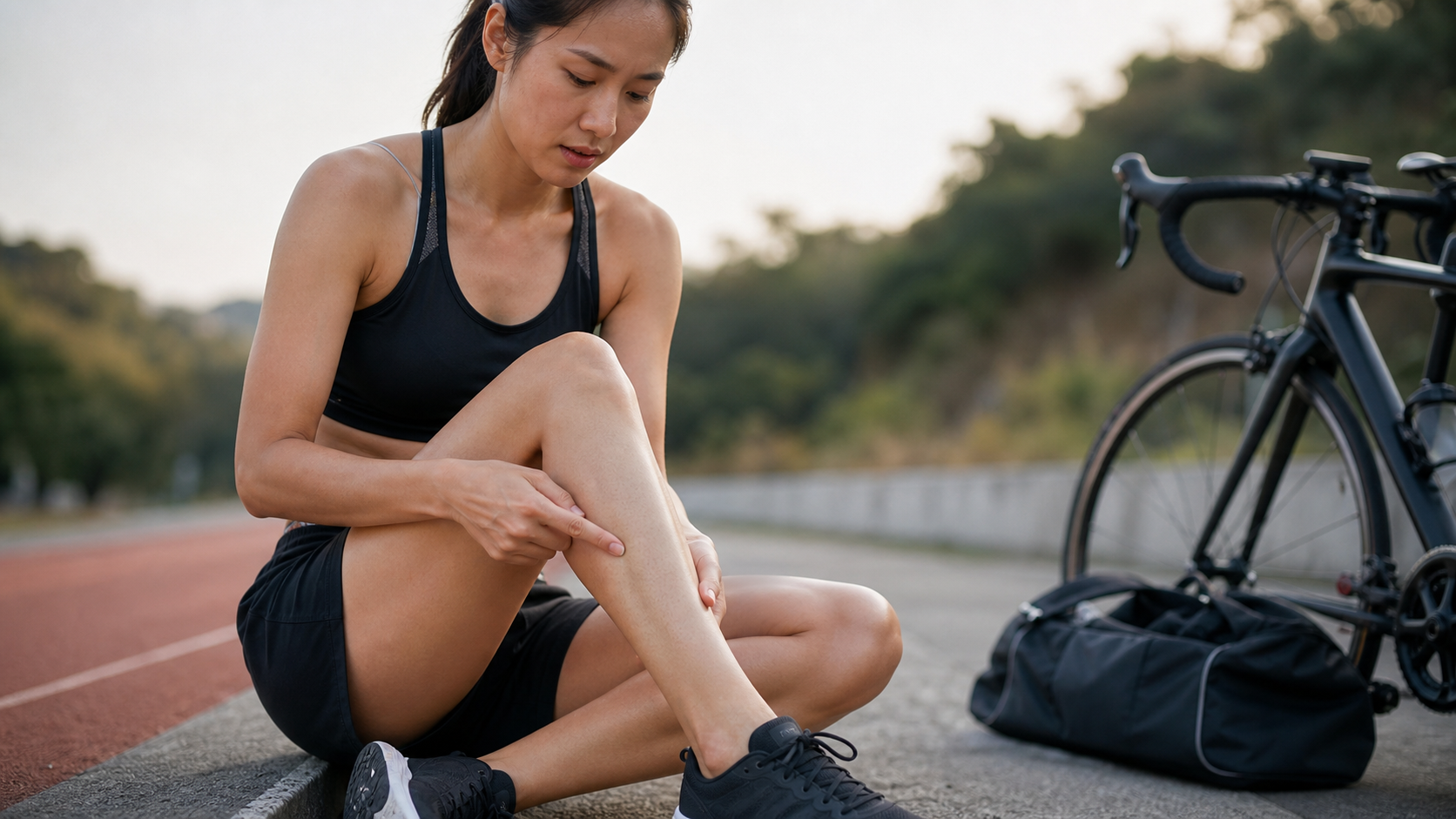
I once coached a female client in her early thirties; let’s call her Little K. She was the kind of athlete you want to keep around—no complaints, no shortcuts, she absorbed whatever the training plan threw at her. That season, she was aiming for her first full marathon. Her weekly mileage climbed steadily from 30 kilometers, and she also did road cycling in a pace group for cross-training. Around week eight, she started mentioning a “spot” on the inner side of her right shin that hurt. It wasn’t whole-leg soreness; it was a specific point you could press with one finger.
At first, she didn’t think much of it. Once she warmed up during a run, the pain would ease, and after two days of rest, it seemed fine again. So she kept training. Three weeks later, that spot had progressed to a sharp twinge with walking and going down stairs, and even a dull ache at night while lying down. I sent her to a sports medicine clinic. The initial X-ray looked “normal” (early stress fractures often don’t show up on X-rays), but a follow-up MRI confirmed a stress fracture in her tibia.
At that moment, Little K almost cried—not from the pain, but because “I should have stopped the moment that spot first appeared.” And I made a mental note myself—this type of injury almost always has early warning signs; we’re just too quick to dismiss them as “normal training soreness.”
In this article, I want to distill over a decade of stress fracture cases into a practical guide: how it actually happens, who’s especially at risk, how your body tries to warn you first, and what you can do today depending on the severity. Cyclists, runners, gym-goers, and even office workers who’ve just “suddenly started exercising” should all read this to the end.
1. Foundational Concepts: Stress Fractures Are “Accumulated,” Not “Impacted”
Bone Is Constantly Demolishing and Rebuilding
Many people think of bone as dead, hard, and fixed like a concrete pillar. Wrong. Bone is living tissue, undergoing “remodeling” every day: osteoclasts break down old, micro-damaged bone, while osteoblasts build new bone in its place. Under normal conditions, breakdown and buildup are balanced. In fact, with regular impact loading, buildup can slightly outpace breakdown, which is how bone gets stronger with training.
The problem arises when the rhythm is disrupted. When you repeatedly impose a load on bone that exceeds its repair rate—such as a sudden spike in mileage, daily long runs on hard surfaces, or a sudden influx of jumping—osteoclasts break down old bone faster than osteoblasts can replace it, and micro-cracks appear on the bone surface. These micro-cracks accumulate, first becoming a “bone stress reaction,” and then worsening into a visible “stress fracture.”
So remember this core concept:
A stress fracture is a fatigue injury accumulated from repeated, sub-threshold loads—not the result of a single heavy impact. It cracks slowly; it doesn’t snap all at once.
This is also why it’s often overlooked—because each individual training session, taken alone, doesn’t seem “excessive.”
Bone Stress Injury Is a Spectrum, Not a “Yes” or “No”
Clinically, the more precise term is “bone stress injury (BSI),” and it exists on a continuous spectrum:
| Stage | Bone State | Typical Symptoms | Imaging |
|---|---|---|---|
| Bone stress reaction (early) | Periosteal and marrow edema, no clear fracture line yet | Localized pain during exercise, relieved by rest | X-ray often normal; MRI shows edema |
| Stress fracture (progressive) | Micro-fracture line present | Pain early in exercise; pain during daily activities | MRI definitive; X-ray may lag by weeks |
| Complete fracture (severe) | Fracture line extends through, possible displacement | Continuous severe pain, unable to bear weight | Visible on X-ray; a medical emergency |
The key takeaway from this table: the earlier you intervene on the left side of the spectrum, the smaller the cost and the faster the recovery. Delay it to the right side, and you’re looking at crutches, bracing, or even surgery, with a long road back to competition. If Little K had addressed it at the stage where “the spot just appeared and rest helped,” a two-to-three-week adjustment might have resolved it. Instead, she waited until “walking hurt,” and it took nearly three months for a full return.
High-Risk and Low-Risk Sites Are Not the Same
Not all stress fractures are equally dangerous. Clinically, they’re divided into “low-risk” and “high-risk” sites:
- Low-risk (heal more readily, fewer complications): posteromedial tibia, fibula, metatarsals (foot bones), calcaneus, etc.
- High-risk (poorer blood flow or concentrated forces; may heal slowly or progress to complete fracture): femoral neck (junction of the thigh bone and hip joint), patella, anterior tibia, navicular bone, base of the fifth metatarsal, etc.
Why does this matter? Because if the pain is located in the groin, deep hip, or mid-foot—these high-risk zones—you cannot take a “let’s just watch it” approach; you must seek medical evaluation promptly. I’ll emphasize this principle repeatedly later.
2. Why Athletes (Especially Cyclists) Need to Be Especially Vigilant About Bone
I want to dedicate this section to cyclists, because it’s often overlooked.
Cycling Doesn’t Make Bones Stronger
Intuitively, we’d think “athletes must have very hard bones.” But the type of sport determines bone strength. For bone to get stronger, it needs “impact” and “mechanical loading”—activities like running, jumping, and weight training that transmit force through the skeleton and let bone sense pressure, stimulating osteoblasts to build new bone.
Cycling, by contrast, is a non-weight-bearing, low-impact sport. Most of your body weight is supported by the saddle and the frame, and your skeleton receives almost no mechanical stimulus from ground reaction forces. That’s kind to your joints, but bad news for bone density.
Research is quite consistent in showing that low bone density is common among elite cyclists. One study of elite cyclists found that the prevalence of low lumbar spine bone density was approximately 27%, 64%, and 50% among early-career, advanced, and retired male elite cyclists, respectively (see references at the end). In other words, the more you push cycling to its limits and the less you do other impact sports, the higher your risk of lumbar bone loss. Some reports have even described certain elite cyclists’ bone density as approaching that of a “seventy-year-old.” This isn’t scaremongering—it’s the combined result of “only low-impact exercise plus years of weight control.”
Practical Advice for Cyclists in Taiwan
Taiwan’s cycling culture is heavily oriented toward long climbs and long-distance routes like Wuling, Fengguizui, Beiyi, and Sun Moon Lake. Many riders’ weekly training is almost exclusively cycling, and they deliberately control body weight and eat lightly for climbing. This combination hits exactly the three drivers of bone loss: low impact, low energy availability, and potentially low body weight.
I’m not telling you to ride less. I’m reminding you: if your athletic life is almost entirely cycling, you must add impact and strength training to protect your bones. I’ll give specific recommendations in the action section later.
3. Risk Factors: Breaking Down the Danger
Stress fractures are rarely caused by a single factor. They usually result from an imbalance across three areas: “training load × physical condition × energy and hormones.” Let me break them into three categories.
(1) Training and Biomechanical Factors
| Risk Factor | Why It’s Dangerous | Common Scenario |
|---|---|---|
| Sudden spike in training volume | Bone repair can’t keep up with load accumulation | Doubling mileage within two to three weeks after signing up for a race |
| Hard surfaces / monotonous terrain | Repeated impact in the same direction concentrates on one spot | Only running on asphalt or a track, never changing terrain |
| Shoes too old or ill-fitting | Cushioning fails, impact transmits directly to bone | Running in the same pair of shoes until they fall apart |
| Biomechanical issues | High/low arches, abnormal gait concentrate forces | Flat feet, bowlegs, running form problems |
| Insufficient strength or fatigue | Muscle is bone’s shock absorber; when muscles tire first, bone takes all the impact | Posture collapses in the late stages of a long run but you push through |
| Sleep deprivation | Repair time is compressed | Staying up late to hit training targets, shift work |
The most common—and most controllable—factor here is a sudden spike in training volume. A conservative principle widely cited in sports science is: keep weekly training volume increases to roughly within 10% (this is an empirical starting point, not an iron rule; individual variation is large). Little K piled on mileage too quickly, and her bones couldn’t adapt in time.
(2) Energy, Nutrition, and Hormonal Factors
This is the most critical and most easily overlooked piece, especially for women and athletes who control their weight.
The core concept is called “low energy availability (LEA)”: when the calories you consume, minus what you burn through exercise, leave too little energy to sustain basic physiological function, your body switches into “economy mode” and withdraws resources from “non-essential” functions—including reproductive hormones and bone repair.
In female athletes, there’s a classic cascade known as the “Female Athlete Triad”:
- Low energy availability (often accompanied by disordered eating or under-eating)
- Menstrual dysfunction (irregular, lighter, or absent periods)
- Decreased bone density
These three are interlinked: under-eating → lower estrogen, menstrual dysfunction → accelerated bone loss → sharply increased stress fracture risk. Research shows that the more Triad factors present, the higher the risk of bone stress injury: with 1 factor, the incidence is about 15%–21%; with 2 factors, about 21%–30%; and with all 3, it can reach approximately 29%–50% (see references). That’s a striking compounding effect.
In recent years, a broader concept called “Relative Energy Deficiency in Sport (RED-S),” proposed by the IOC, emphasizes that low energy availability affects not just bone and menstruation, but also metabolic, immune, cardiovascular, gastrointestinal, and psychological systems—and it happens in men too. Male cyclists can equally suffer from low bone density due to chronic energy deficiency and low-impact exercise.
So engrave this sentence in your mind:
A stress fracture is often not a “leg problem” but a signal that your body’s overall energy account is overdrawn, and the bone is the first place it blows up.
(3) Individual and Physiological Factors
- Sex and age: Adolescent girls and young women are at relatively higher risk; adolescent bones are still developing, and energy deficiency causes greater harm.
- Past history: People who have had a stress fracture before have a significantly higher chance of recurrence.
- Insufficient vitamin D and calcium intake: These are the raw materials for bone. Vitamin D deficiency is common in Taiwan (more on this later).
- Rapid loss of body weight or body mass: Dropping weight too quickly in a short period is often accompanied by energy and hormonal imbalances.
- Certain medications or endocrine conditions: Such as long-term steroid use, thyroid or parathyroid issues—these must be evaluated by a physician and are outside the scope of self-management.
4. Early Recognition: Your Body Raises Red Flags First
This is the section I most want you to remember. Stress fractures almost always have warning signs; the key is whether you know how to read them.
Five Typical Early Red Flags
- Pain at “one specific point”: Not a broad ache, but a small area you can pinpoint with a finger, and pressing on it hurts. This is the most important distinguishing feature. General muscle soreness is diffuse and vague; a stress fracture is point-specific and localizable.
- The timing of pain moves “earlier”: Initially, pain appears only late in a workout or after finishing. Gradually, it appears at the start of exercise, and eventually it hurts with walking, stairs, and even at rest at night. A lowering pain threshold is a sign of worsening.
- Rest helps, but it returns as soon as you move: In the early stage, two to three days of rest brings clear relief, making you think it’s fine—but resuming training immediately triggers the same spot again.
- Localized swelling or warmth: Some sites (like the metatarsals on the top of the foot) may feel slightly swollen or warm to the touch.
- Single-leg hop test reproduces it: Hopping lightly in place on the affected leg a few times; if it elicits clear pain at that specific point, it’s a simple home clue that you should see a doctor (but note: this is a hint, not a diagnosis—if it hurts, don’t force the hop).
Self-Checklist: If Any of These Apply, Step Down and Seek Medical Care
| Check Item | Yes | Recommendation |
|---|---|---|
| Pain can be precisely located with one finger | ☐ | High alert; stop impact training first |
| Pain appears at the very start of exercise | ☐ | Stop that activity; see a doctor |
| Pain occurs with walking, stairs, or at night | ☐ | Seek medical care promptly; avoid weight-bearing |
| Pain is in the hip/groin/mid-foot (high-risk zone) | ☐ | Seek medical care immediately; do not observe |
| Recent mileage/training volume has clearly spiked | ☐ | Re-examine your training plan |
| Female with recent irregular or absent periods | ☐ | Also get evaluated for energy and hormonal status |
If you hit pain in a high-risk zone or pain during daily activities, please stop “watching and waiting.”
Don’t Confuse It With These
Beginners often mix up stress fractures with other problems. Here’s a quick clarification:
- Delayed-onset muscle soreness (DOMS): Diffuse, often symmetrical, worst 1–2 days after training, resolves within a few days. Pressing feels “sore,” not “sharp and point-specific.”
- Tendon or fascia issues (e.g., plantar fasciitis, anterior tibialis tendinitis): Usually distributed along a tendon or a line, not a single bony point.
- “Shin splints” (medial tibial stress syndrome): Pain is a band-like area along the inner tibia, whereas a stress fracture is one point. In fact, they’re different stages of the same spectrum. If shin splints keep worsening and the pain becomes more concentrated into a single point, it may be progressing toward a stress fracture—another reason not to take it lightly.
A Note on Seeking Care in Taiwan
Confirming a stress fracture in Taiwan isn’t difficult. If you have the red flags above, consider booking an appointment with sports medicine, orthopedics, or rehabilitation. Be mentally prepared: early X-rays often show nothing—that’s normal and doesn’t mean you’re fine. If the physician has a high suspicion, they may arrange an MRI or bone scan. There are options between National Health Insurance and self-pay; discuss them with your doctor. Do not reassure yourself and keep training just because the X-ray is “normal”—Little K’s first X-ray was normal.
5. Practical Methods: Specific Prevention Steps (Including Tables)
Preventing stress fractures ultimately comes down to three things: don’t let load spike, supply the raw materials for bone, and train your body to absorb impact.
(1) Training Load Management
| Principle | Specific Practice |
|---|---|
| Progressive loading | Keep weekly volume increases around 10%; feeling great doesn’t mean you can add arbitrarily |
| Schedule deload weeks | Every 3–4 weeks, include a “deload week” with reduced volume so bone can catch up on repair |
| Vary surface and direction | Alternate asphalt, PU track, and trail; avoid repeated stress on the same point |
| Cross-training | Runners can use cycling and swimming to spread impact; cyclists, however, need to add impact |
| Listen to your body, don’t push through | When point-specific pain appears, step down first; don’t mask it with painkillers and keep training |
I want to emphasize the last point: painkillers can let you “feel no pain” while training your bone all the way to a complete fracture. I’ve seen athletes take anti-inflammatory painkillers and keep running, progressing directly from a bone stress reaction to a complete fracture. Pain is a protective mechanism, not an enemy to be silenced.
(2) Nutrition and Bone Raw Materials
For bone to build, the raw materials can’t be missing. Below are commonly cited reference ranges for general adult athletic populations (individual needs should be assessed by a physician or dietitian; values are for educational reference only, not a prescription):
| Nutrient | Common Adult Reference Intake Range | Examples of Local Taiwanese Sources |
|---|---|---|
| Calcium | Approximately 1000–1200 mg per day | Milk, unsweetened yogurt, dried tofu, dried small fish, dark leafy greens, black sesame |
| Vitamin D | Common supplementation range about 800–2000 IU per day (deficient individuals may need more; adjust based on blood tests with a physician) | Moderate sun exposure, salmon, egg yolks, fortified dairy |
| Protein | Athletic populations about 1.4–2.0 g per kg body weight | Chicken breast, eggs, soy milk, tofu, fish, lean meat |
| Total calories | Sufficient to support training expenditure; avoid prolonged deficits | Don’t eat too little overall just for body weight |
A few practical reminders for the Taiwanese context:
- Vitamin D: Although Taiwan has abundant sunshine, many people spend long hours indoors and use heavy sun protection, so blood vitamin D levels are often low. If you have recurrent injuries or suspect deficiency, get a blood test and then decide on supplementation. Don’t self-prescribe high doses (fat-soluble vitamins carry overdose risks).
- Calcium for those who eat out: Taiwanese diets commonly fall short on calcium. A simple approach is to include one serving of dairy or unsweetened soy milk plus one serving of dark leafy greens daily to build a solid calcium foundation.
- Don’t cut out rice to lose weight for climbing: This is what I most often advise against in the cycling community. Being lighter does make you faster on climbs, but a long-term energy deficit costs you bone and hormones—it’s not worth it.
(3) Train Your Body to Be a Shock Absorber
- Strength training: Squats, deadlifts, lunges, and other loaded movements directly stimulate bone and strengthen lower-limb musculature. This is especially important for cyclists—it’s how you restore the mechanical stimulus missing from a non-weight-bearing sport. Twice a week is enough to see benefits.
- Impact training: Moderate jumping, jump rope, brisk walking, and light jogging give bone the mechanical signals it needs. Introduce it progressively; don’t do too much at once.
- Core and gluteal strength: A stable pelvis and hips distribute landing forces more evenly, reducing concentration on a single point.
- Sleep: Bone repairs while you sleep. Chronic sleep deprivation means you’re constantly running a repair deficit.
(4) A Practical Example of Progressive Loading
Many people hear “10% weekly increase” and still don’t know how to apply it. Here’s a concrete example. Suppose a runner currently runs 30 km per week and wants to build up over several weeks while including deload weeks:
| Week | Weekly Mileage (km) | Notes |
|---|---|---|
| Week 1 | 30 | Starting point |
| Week 2 | ~33 | +10% |
| Week 3 | ~36 | Another +10% |
| Week 4 | ~27 | Deload week, down to about 75% of the previous week |
| Week 5 | ~39 | Build back up from the deload |
| Week 6 | ~43 | Another +10% |
The point isn’t to memorize these numbers precisely; it’s the rhythm: three steps up, one step back, letting bone catch up on repair during the deload week. For contrast, look at a “spike” example of what not to do—30 → 45 → 60 km, doubling in two weeks. That’s exactly the path Little K took. Bone adapts on a timescale of weeks, not on “how badly you want to finish the race.”
6. A Second Case: Ah-Ming, Who Only Rode, and His Femoral Neck
I want to share a second case, very different from Little K’s, because it breaks the myth that “only runners, only women get stress fractures.”
Ah-Ming was a male cycling enthusiast in his forties. He rode five to six days a week, rotating through Wuling, Fengguizui, and Beiyi, with an annual goal of setting a new personal climbing record. To climb faster, he had deliberately dropped his weight from 72 kg to 63 kg over two years, eating extremely lightly, almost never touching weights, and rarely running—in his words, “Running hurts my knees; I only ride.”
One day, he started noticing a deep ache in his right groin after long rides. At first, he assumed it was a hip flexor strain—applied patches, stretched, and kept riding. After more than a month of persistent pain that grew increasingly obvious, it reached the point where swinging his leg over the bike or even brisk walking caused a sharp twinge. The moment I heard “deep groin pain, getting worse, hurts with brisk walking,” I told him to stop all training and see a doctor immediately—because that’s the classic location for the femoral neck, a high-risk site. The workup confirmed a bone stress injury of the femoral neck.
Ah-Ming’s case stacked several risk factors together:
- Long-term exclusive non-weight-bearing, low-impact exercise (cycling), leaving bone without mechanical stimulus.
- Lost 9 kg over two years with a very light diet, likely in a state of chronic low energy availability.
- No strength training at all, abandoning the most powerful tool for protecting bone.
- Pain in a high-risk site, yet he “observed” it for over a month.
He was fortunate not to progress to needing surgery, but he still had to stop training completely for several months and was advised by his physician to seriously evaluate his bone density and nutrition. He later told me: “So the exercise I thought was gentlest on my knees actually made my bones brittle.” I often use that line to remind my cycling clients.
Two cases—a female runner who ramped up too fast, and a male cyclist who only rode and dieted—arrived at the same destination: stress fracture. That illustrates that this is never a problem exclusive to one group.
7. Common Mistakes and Corrections
Here’s a summary of the mistakes I’ve repeatedly seen over the years. See if any fit you.
Mistake 1: “It’s just a little pain; it’ll go away once I warm up.”
Correction: Pain easing after warming up is a classic early sign of a stress fracture, not proof that “nothing’s wrong.” When point-specific pain appears, step down.
Mistake 2: “My X-ray is normal, so I don’t have a fracture.”
Correction: Early stress fractures often don’t show on X-ray and may take weeks to appear. If your doctor suspects one, get further imaging. Don’t treat a normal X-ray as a get-out-of-jail-free card.
Mistake 3: Taking painkillers to push through a race.
Correction: Painkillers only turn off the alarm; the damage continues, and may even worsen because “you don’t feel pain, so you push harder.” If you truly care about performance, protect your bones.
Mistake 4: Chronically under-eating for performance or appearance.
Correction: Low energy availability is one of the core drivers of stress fractures. Lower body weight isn’t always better. Being able to train consistently, having normal periods, and staying injury-free is what real strength looks like.
Mistake 5: Cyclists only ride and never do strength or impact training.
Correction: Cycling protects joints but doesn’t build bone. Cyclists need strength training and moderate impact even more.
Mistake 6: Returning immediately to pre-injury training volume once healed.
Correction: Return should be a “re-climb,” not a direct jump back to where you left off; otherwise, recurrence is highly likely.
Mistake 7: Ignoring sleep and life stress.
Correction: Repair happens during rest. Not sleeping enough, high stress, and hard training is like flooring the accelerator while never adding oil.
8. If You’ve Already Been Diagnosed: Principles for a Safe Return
Let me be clear first: after diagnosis, your treatment plan belongs entirely to your physician and physical therapist. The following is to help you build the right mindset, not a self-treatment guide.
In general, the management principles for a stress fracture include: first “unloading” the bone with rest (possibly bracing, crutches, or switching to completely pain-free alternative exercise), restoring your nutrition and energy account, identifying and correcting the root cause that led to the injury in the first place (training spike? under-eating? shoes? gait?), and finally returning progressively.
Here’s a “conceptual” return ladder. Actual timelines vary enormously by person, site, and severity—always follow your medical team’s instructions:
| Stage | Goal | Advancement Criteria |
|---|---|---|
| Stage 1 | Pain-free daily activities | No pain with walking, stairs, or at night |
| Stage 2 | Pain-free low-impact cardio (e.g., swimming, stationary bike as appropriate) | No pain during or the day after the activity |
| Stage 3 | Introduce light impact (brisk walking, short run-walk intervals) | No recurrence at the original pain site each session |
| Stage 4 | Progressively restore sport-specific training volume | No recurrence after each increase, with sleep and nutrition in place |
The iron rule at every stage is the same: if that original pain point reappears, step back one stage. Returning isn’t about who’s fastest; it’s about who doesn’t get injured again.
9. Action Recommendations for Readers at Different Levels
For Those Just Starting to Exercise and Want to Get Healthier
- The most important thing: increase volume slowly. Enthusiasm is what hurts people most. In the first few weeks, it’s better to feel like you “didn’t work hard enough.”
- Choose shoes with basic cushioning that fit well; don’t wear them until they’re falling apart.
- Have one serving of dairy or unsweetened soy milk plus one serving of dark leafy greens daily to build your calcium foundation.
- If “one specific point hurts,” stop. Don’t push through. Stopping early costs the least.
For Serious Runners/Cyclists With Goal Races
- Plan your schedule with roughly 10% weekly increases and a deload week every 3–4 weeks.
- Do 1–2 strength sessions per week, especially cyclists—this is non-negotiable.
- Vary surfaces and routes; don’t stay on the same course and direction long-term.
- Women: treat “regularity of your period” as one of your training metrics. If it becomes irregular, your body is protesting an energy deficit—see a doctor.
- Don’t do extreme dieting to drop weight before a race. An energy deficit buys you cracks in your bones.
For Advanced Athletes Focused on Weight/Performance
- Take low energy availability and RED-S seriously. If needed, work with a sports dietitian to establish sufficient intake.
- Regularly track bone-related indicators (discuss with your physician whether to measure bone density).
- If you have a history of stress fractures, treat “preventing recurrence” as a long-term project, not just “get back to training ASAP.”
- Treat sleep, energy, and hormones as training assets as important as watts and pace.
10. FAQ
Q1: How long do I need to rest from running/cycling after a stress fracture?
A: It varies widely by site and severity—anywhere from weeks to months—and return must be progressive. Instead of asking “how soon can I train,” ask “how do I train back without breaking again.” The timeline should be based on your medical team’s assessment.
Q2: Can I keep training through the pain as long as it’s tolerable?
A: Not recommended. The pain of a stress fracture is a signal that damage is ongoing. “Training through pain” is the classic path from mild to severe.
Q3: If I take calcium and vitamin D supplements, am I immune to stress fractures?
A: Nutrition is only one piece. If training spikes, energy is chronically low, and sleep is poor, supplements won’t save you. Also, dosages should be individualized; excess vitamin D can be harmful. Get tested first, then decide.
Q4: Can men get this too? I don’t have menstrual issues.
A: Yes. Men can equally suffer from low bone density due to low energy availability and low-impact exercise. The RED-S concept emphasizes that this is not a female-only problem.
Q5: I ride a lot, so my bones must be strong, right?
A: Quite the opposite. Cycling is a non-weight-bearing, low-impact sport. Long-term exclusive cycling can actually lead to low bone density, which needs to be offset with strength and impact training.
Q6: Are shin splints the same as a stress fracture?
A: They can be viewed as different stages of the same spectrum. Shin splints are a band-like pain. If the pain becomes more concentrated into a single point and the threshold keeps lowering, it may be progressing toward a stress fracture and needs to be taken seriously.
Q7: Do heat, ice, massage, or medicated patches help?
A: These may provide temporary relief for soft-tissue soreness, but they do nothing to repair a crack in bone. Worse, they might make you “feel better” and misjudge the situation, leading you to keep training. What actually works is unloading rest, restoring energy and nutrition, identifying the root cause, and returning progressively—all under the guidance of your medical team.
Q8: I’ve never been injured. Do I need to get a bone density test now?
A: Not everyone needs routine screening. But if you fit multiple high-risk criteria—long-term low-impact exercise only, a prior stress fracture, irregular or absent periods (for women), chronic dieting for weight control, or relevant endocrine history—it’s worth discussing with your physician whether to arrange a bone density test and blood work. Rather than self-anxietizing or ignoring it, let a professional assessment guide the decision.
Q9: Do child and adolescent athletes need special attention?
A: Yes, even more so. Adolescent bones are still developing, and long-term energy deficiency can harm bone accumulation for years, potentially affecting lifelong bone health. If a teenager in your family trains heavily and deliberately diets, or if a girl has had her first period and then it stops, please take them to a doctor. Don’t treat “thin” and “pushing hard” as normal.
Conclusion: Treat “That Spot” as a Friend’s Warning
Back to Little K. She fully recovered and completed her first full marathon the following season. But what truly gratified me wasn’t her finish time—it was that she learned to respect that specific point. Now, whenever she feels a “spot you can press with a finger,” she immediately steps down, observes, and seeks care if needed, rather than swallowing the pain.
Stress fractures are one of the few sports injuries that “almost always give advance warning.” They aren’t fate; they’re the accumulated result of a series of choices that can be recognized and adjusted: the pace of loading, whether you eat enough, whether you sleep enough, whether you’ve trained your bones to be strong, and—whether you’re willing to listen when that spot first appears.
Manage your load, take care of your energy account, train your body to absorb impact, and learn to recognize that early red flag. That’s how you keep the crack outside the door before a true break ever happens.
May you train long, train well, and keep going into your later years.
This article is educational content and cannot replace individual diagnosis and treatment advice from a physician, physical therapist, or dietitian. If you have a chronic condition (such as diabetes, hypertension, heart disease), endocrine issues, or are taking specific medications, any training or nutritional adjustments should be discussed individually with your medical team first. All values in this article are general reference ranges, not personalized prescriptions.
References
- Update on stress fractures in female athletes: epidemiology, treatment, and prevention (PMC): https://pmc.ncbi.nlm.nih.gov/articles/PMC3702771/
- Risk factors of stress fractures due to the female athlete triad: Differences in teens and twenties (PubMed): https://pubmed.ncbi.nlm.nih.gov/31100189/
- A Systematic Review of Bone Health in Cyclists (PMC): https://pmc.ncbi.nlm.nih.gov/articles/PMC3230645/
- Cycling and bone health: a systematic review (BMC Medicine): https://link.springer.com/article/10.1186/1741-7015-10-168
- Low bone density in cyclists (Mysportscience): https://www.mysportscience.com/post/low-bone-density-in-cyclists
Related Reading
- Early Recognition of Stress Fractures: From Tibial Tenderness to Imaging Confirmation
- Stress Fractures: The Skeletal Warning Sign of Overtraining
- Fatigue Fractures in Running: How to Distinguish Stress Fractures by Pain Characteristics
- Running-Related Stress Fractures: Six Early Recognition Signals and Science-Based Return-to-Running Timing
摔車後補裝備: 好市多新款單車安全帽& Specialized Romin 北高整路屁股都不痛的坐墊 | 一千元居然有MIPS | CT Yeh | 公路車
4 年前
Never Stop 西進武嶺 前後雙機 完整全程錄影 訓練台 實境
8 年前
一日北高/長距離團騎 常見問題補充篇 / 組團或跟團的眉角 / 壯車友容易被瘦車友慢性拉爆 / 原來屁股痛可能是這個原因...? / 風場配速法 / 公路車 / CT Yeh
2 年前
一日北高常見問題大集合 | 攻略 | 路線 | 訓練 | 補給 | 自行車 單車 | 一日雙城 | 雙塔 | TWB北高360 | 屁股痛
6 年前
西進武嶺 免費訓練分析服務 Intervals | 練不夠還是練過頭?你哪一種類型選手?AI模型告訴你! | 備戰神器 | 公路車 訓練 | CT Yeh
4 年前
西進武嶺 自製新版AI配速表產生器 x 賽前攻略 抱佛腳! 沒有功率計也可以產生配速表嗎?有什麼其他眉角賽前要注意的呢? | 西進武嶺 / 東進武嶺 KOM 攻略 | 公路車 | CT Yeh
4 年前
單車胎壓觀察到的有趣現象,SRAM Quarq TyreWiz 2.0 無內胎胎壓計 / 裝了有哪些幫助? / Tubeless / 公路車 / CT Yeh
1 年前
大武山20%魔王陡坡【JJSC南台灣遊騎Day2】!屁股真的要裂開了...凡士林抹滿也沒用?神秘金教堂還有超便宜夜市
3 個月前