Understanding and Preventing Exercise-Related Sudden Death: Causes, Screening, and the Warning Signs That Shouldn't Be Ignored
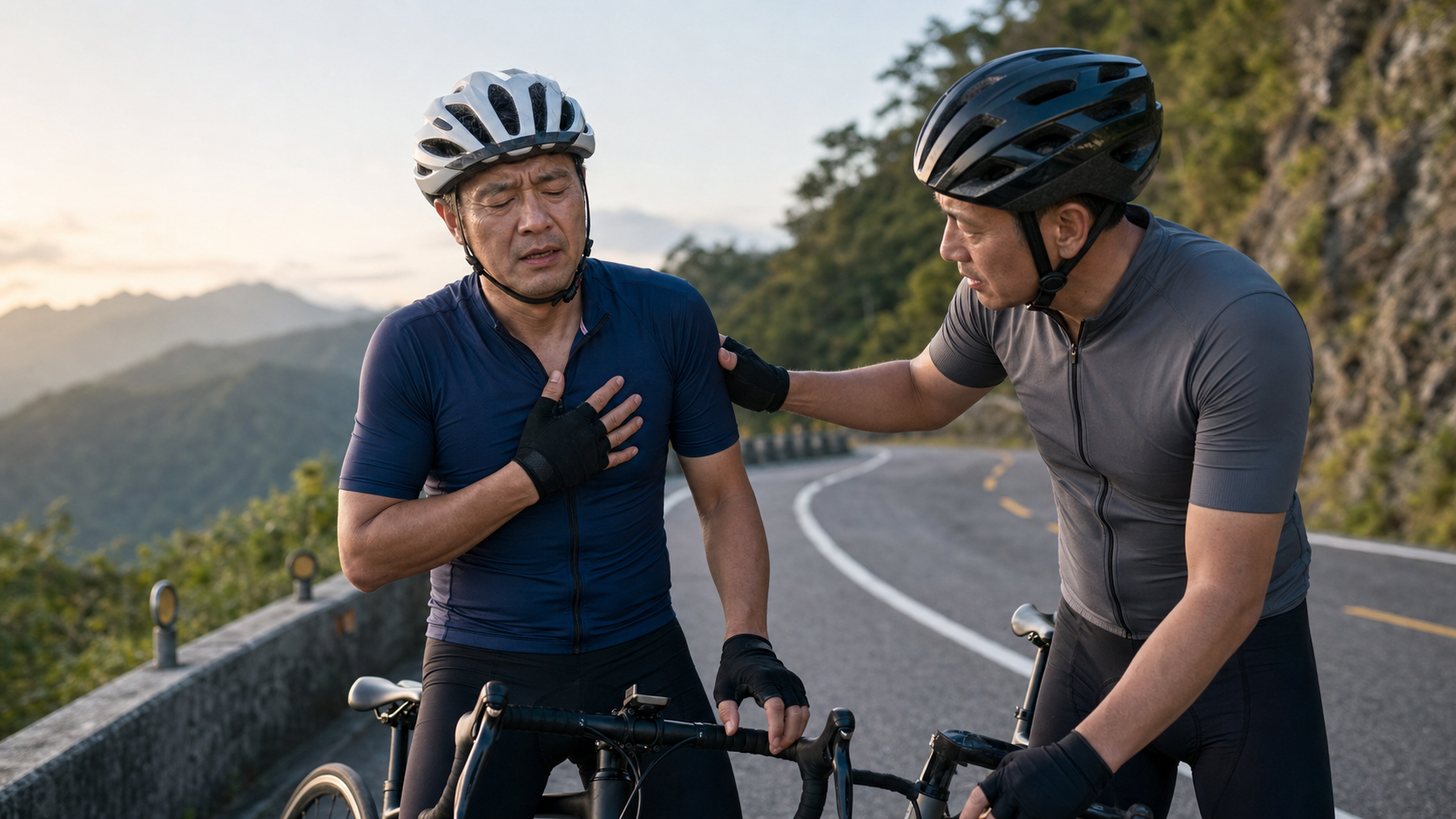
Opening: The Student Who Collapsed at Fengguizui Changed My Definition of “Healthy”
In my fifteen years of leading teams, I’ve sent many students up Wuling, helped them break their own half-marathon records, and accompanied several who went from sedentary office workers to completing 100 km challenges. But what truly made me put “safety” ahead of training was a weekend morning several years ago.
That day, a group of us were riding Fengguizui. There was a guy in his early forties on the team—sturdy build, never fell behind on climbs, the kind of person everyone saw as “the last one you’d worry about.” Halfway up the climb, he told me his chest felt a bit tight and he was a little short of breath. A thought flashed through my mind at the time, but he laughed it off, saying, “It’s just age, didn’t sleep well last night,” and we kept riding. Fortunately, nothing happened that day, but after we descended, I insisted on dragging him to see a cardiologist. The results showed that one of his coronary arteries was already narrowed by more than 70%. The doctor put it bluntly: if he had pushed himself harder that day, the outcome could have been completely different.
Since then, the first thing I say to every student isn’t “how strong can you get,” but “how well do you know your own body.” Because the cruelest thing about exercise-related sudden cardiac death is that it almost always strikes the people who look the healthiest and most energetic. In this article, I want to use my perspective as a coach and sports science consultant to explain this clearly: why it happens, how to screen for it, and which warning signs you truly cannot dismiss as “just being tired.”
Let me say the most important thing first: this article is educational content, meant to help you better protect yourself and those around you, but it cannot replace an individual diagnosis from a physician. If you have concerns after reading this, the best action isn’t to keep Googling—it’s to book an appointment with a cardiologist.
Foundational Concepts: What Exercise-Related Sudden Cardiac Death Actually Is, and How Rare It Is
Definition and Time Window
Exercise-related sudden cardiac death academically refers to: an unexpected death caused by cardiac reasons that occurs during exercise or within a short period after exercise (most definitions say within 1 hour). The core mechanism in the vast majority of cases is fatal arrhythmia—the heart suddenly beats chaotically (ventricular tachycardia or ventricular fibrillation), losing its ability to pump blood effectively, and the brain and body become oxygen-deprived within minutes.
There’s a key concept to establish here: exercise itself is usually not the “cause,” but the “trigger.” In other words, these people often already had underlying heart problems that simply hadn’t manifested; during high-intensity exercise, sympathetic nerve activation, soaring heart rate, electrolyte fluctuations, and a surge in myocardial oxygen demand become the straw that breaks the camel’s back.
How Rare Is It, Really? Putting the Numbers in Context
Many people panic when they see the news and think exercise is dangerous. But you need to look at the actual numbers. According to international statistics on young competitive athletes, the annual incidence of sudden death during sports is approximately 0.5 to 2 cases per 100,000 people, with variations depending on the study, population, and definition. This is a number that is “very low, but not zero.”
I often use this analogy with my students: the overall health benefits of regular exercise (reducing cardiovascular disease, diabetes, cancer, and all-cause mortality risk) far outweigh the tiny acute risk during exercise itself. The long-term harm of not exercising is far greater than the short-term risk of exercising. So the right attitude isn’t to stop exercising out of fear, but to “exercise smartly”—screen out what needs screening, remember the warning signs to watch for, and push that already-low probability even lower.
Age Is the Dividing Line: Two Completely Different Stories
Exercise-related sudden cardiac death has almost two entirely different scripts depending on age group. This is crucial because it directly affects how you should screen:
| Age Group | Most Common Primary Cause | Characteristics |
|---|---|---|
| Under 35 (younger population) | Congenital/hereditary cardiac structural or electrophysiological abnormalities | Usually asymptomatic, often first manifests during intense exercise, family history is a key clue |
| 35 and above (middle-aged and older) | Coronary artery disease (atherosclerosis, vascular narrowing) | Related to metabolic syndrome, smoking, family history, and age; can be addressed through lifestyle and screening |
In Taiwan, a large portion of the cycling and running community consists of people in their thirties and forties and above—those who started taking exercise seriously after establishing their careers. The biggest threat to this group is actually coronary artery disease—which is why the story of the guy in the opening is so typical. He didn’t have some rare genetic disease; it was the most common kind of vascular narrowing, and this type of problem is precisely the kind that can be dramatically reduced through screening and lifestyle management.
Athlete’s Heart vs. Pathological Cardiac Hypertrophy: Don’t Scare Yourself, and Don’t Comfort Yourself Either
Let me clarify a commonly misunderstood concept here. Long-term endurance training causes normal adaptations in the heart, such as enlarged ventricular chambers, slightly thickened heart walls, and a slower resting heart rate (many well-trained endurance athletes can have resting heart rates as low as 40 to 50 bpm or even lower). This is called “athlete’s heart,” and it’s a benign, reversible physiological adaptation.
The problem is that some features of athlete’s heart can partially overlap with pathological hypertrophic cardiomyopathy on examination, and it takes professional interpretation to tell them apart. This means two things: first, if you see a very low resting heart rate or some structural changes in your heart, don’t scare yourself first—it’s likely just a training adaptation; second, conversely, don’t rationalize away a real abnormality just because “I’m an athlete, my heart is supposed to change.” Whether you should actually worry, and whether it’s a benign adaptation or a pathological problem, should be left to a cardiologist to determine with a complete workup—that’s precisely the value of professional screening.
The Main Causes of Sudden Death: Identifying the “Enemies” One by One
Understanding the causes is how you know what to screen for and why the warning signs are warning signs. Below, I’ve divided the common causes into two major categories.
Younger Population: Congenital and Hereditary Problems
Hypertrophic cardiomyopathy (HCM): This is the single most frequently cited cause of sudden death in young athletes. It’s a hereditary disease where the ventricular muscle thickens abnormally, affecting blood outflow and easily triggering fatal arrhythmias. The tricky part is that many carriers are completely asymptomatic in daily life, and some even perform well athletically—they’re often only discovered after a family member dies suddenly or through screening. It’s not extremely rare in the general population, so family history deserves particular vigilance.
Other common causes in the younger population include:
- Congenital coronary artery anomalies: The origin or course of the coronary arteries is abnormal, and they get compressed during exercise, causing myocardial ischemia.
- Ion channelopathies: Such as long QT syndrome, Brugada syndrome, etc. The heart structure looks normal, but there’s an electrophysiological abnormality that can easily trigger fatal arrhythmias under certain conditions; an ECG is often the only clue.
- Myocarditis: Commonly occurs after viral infections. This is a very practical reminder for Taiwan’s athletic community—don’t rush back to heavy training after a cold, fever, or upper respiratory infection. The virus may be attacking the heart muscle, and the risk of intense exercise is significantly elevated during this time.
- Aortic dissection/rupture: Associated with connective tissue diseases like Marfan syndrome. People who are tall and slender with particularly long limbs and fingers should be alert if there’s a family history.
Middle-Aged and Above: Coronary Artery Disease Is the Number One Enemy
Past 35, the story shifts to the blood vessels. Years of hypertension, high cholesterol, high blood sugar, smoking, obesity, sedentary behavior, and family history cause plaque to slowly build up in the coronary arteries. Under normal conditions, blood flow is barely sufficient, but during intense exercise when myocardial oxygen demand spikes, supply can’t keep up, potentially triggering myocardial ischemia, arrhythmias, or even plaque rupture forming a clot, causing an acute myocardial infarction.
This is why I keep emphasizing: for Taiwan’s middle-aged athletic population, what you really need to manage often isn’t some rare genetic disease, but the basics—metabolic syndrome control and cardiovascular health. It doesn’t sound glamorous, but it saves the most lives.
Non-Structural Trigger Factors
Beyond problems with the heart itself, there are additional “compounding” trigger conditions, which are especially important in Taiwan’s environment:
- Extreme heat and dehydration: Taiwan’s summers are hot and humid. Riding or running at midday can cause heat-related harm that increases the cardiac workload and affects electrolytes.
- Electrolyte imbalance: Heavy sweating while only replenishing with plain water—without electrolytes—can lead to sodium and potassium imbalances that may trigger arrhythmias.
- Sleep deprivation, extreme fatigue, hangovers, or incomplete recovery from illness: These all reduce the body’s ability to buffer stress.
- Improper use of stimulants: Excessive caffeine, certain weight-loss drugs, mixing energy drinks, illegal stimulants, etc.
- Blunt chest impact: In rare cases, a blow to the chest at a specific moment (e.g., from a ball or collision) can trigger a fatal arrhythmia. Although rare, this reminds us that protective measures and AED placement at sports venues are just as important.
Given Taiwan’s climate, I especially want to emphasize one more point about heat. Taiwan’s summer isn’t just about high temperatures—humidity is the key factor. High humidity makes it harder for sweat to evaporate and cool the body, amplifying both the perceived and actual cardiovascular strain. When you sweat heavily and only drink plain water, the sodium in your blood gets diluted. Combined with the sympathetic nervous system activation from exercise itself, it’s like pressing several arrhythmia-triggering buttons at once. This is why I keep stressing: in hot, humid weather, move your training to early morning or evening, replenish electrolytes along with fluids, and stop immediately if anything feels off. These seemingly basic habits are genuinely helping to lower your risk.
Practical Approach: A Layered Screening Protocol You Can Follow
Screening isn’t just about “getting it done”—it should be layered according to age, risk, and family history. Below is the framework I actually recommend to my athletes. Please note that this is a reference framework to help you communicate with your physician; the specific tests you need must be determined by a doctor based on your individual situation.
Step 1: The Free but Most Important “Medical and Family History” Self-Assessment
The first step in international screening consensus is always history-taking and family history, because it has the lowest cost yet a very high hit rate. You can start by honestly answering the checklist below. If you answer “yes” to any item, it’s worth proactively raising it with your doctor.
| Category | Self-Check Question | Why It Matters |
|---|---|---|
| Personal symptoms | Have you ever had chest pain, chest tightness, or unusual shortness of breath during exercise? | Could be a sign of myocardial ischemia |
| Personal symptoms | Have you ever fainted, nearly fainted, or had blackouts during or immediately after exercise? | A major warning sign, especially fainting “during” exercise |
| Personal symptoms | Have you ever felt your heart racing, skipping beats, fluttering, or pounding uncontrollably? | Could be an arrhythmia |
| Personal symptoms | Has your exercise capacity inexplicably declined, or are you more short of breath than your peers? | Need to rule out cardiopulmonary issues |
| Family history | Has anyone in your family died suddenly from unknown causes, drowned, or died in a car accident before age 50? | Could be a clue to inherited heart disease |
| Family history | Has anyone in your family been diagnosed with hypertrophic cardiomyopathy, long QT syndrome, or arrhythmic disorders? | Direct hereditary risk |
| Chronic disease | Do you have hypertension, diabetes, high cholesterol, or a smoking history? | Major risk factors for coronary artery disease |
Two red flags deserve special emphasis: “fainting during exercise” and “family history of sudden death before age 50.” Clinically, these are considered signals that warrant further investigation. Looking back at many tragedies, the family history was often already there—it just wasn’t taken seriously.
Step 2: Deciding Whether Further Testing Is Needed Based on Age and Risk
Internationally, there are differing approaches to whether all athletes should undergo routine ECG screening: Europe (e.g., Italy) tends to include 12-lead ECGs in routine screening for young athletes, and studies suggest this strategy has significantly reduced sudden death rates in younger populations. In contrast, US guidelines lean more toward detailed history and physical examination. This means there is no one-size-fits-all answer—it depends on individual circumstances and available resources.
Here is the layered reference I give to different groups in practice (again, the final decision should be left to your physician):
| Group | Minimum Recommended | Further Options (to be evaluated by a physician) |
|---|---|---|
| Under 35, asymptomatic, no family history | Complete medical/family history, blood pressure measurement | Resting 12-lead ECG |
| Under 35, with symptoms or family history | Above + proactive cardiology consultation | ECG, echocardiogram, and exercise testing if necessary |
| Over 35, preparing to start or increase exercise intensity | History, blood pressure, blood tests for metabolic syndrome | Resting ECG, and exercise ECG if necessary |
| Over 35, with metabolic syndrome, family history, or prior symptoms | Proactive cardiology consultation | Exercise ECG, echocardiogram, and further imaging assessment |
Echocardiography looks at structure (e.g., whether the myocardium is thickened); resting ECG looks for electrophysiological clues (e.g., QT abnormalities); exercise ECG (stress test) observes how the heart performs during exercise and is especially useful for assessing coronary artery risk in middle-aged adults. Each test has its own role—more isn’t necessarily better; it’s about “prescribing the right test for the right problem.”
The Practical Advantages of Taiwan’s Healthcare System
In Taiwan, getting this done isn’t a high barrier. Cardiology is widely accessible, and under the National Health Insurance system, ECGs and basic blood tests are affordable. Many hospitals also offer self-pay athlete or middle-age health checkup packages. For friends who are only starting to take exercise seriously in middle age, I usually recommend: before significantly ramping up weekly mileage or elevation gain, get a baseline cardiovascular assessment first—know your blood pressure, lipid profile, and blood sugar numbers, and get screened for what needs screening. The cost of this visit is trivial compared to the risk it could potentially prevent.
Warning Signs: Distress Signals Often Dismissed as “Just Being Tired”
This section is what I most want you to remember from this entire article. Because no matter how thorough the screening, it can never guarantee catching every problem. Many bodies actually send signals before something goes wrong—they’re just ignored as fatigue, aging, or poor sleep.
Red Flag Symptoms During or After Exercise
The following symptoms should be taken especially seriously when they occur in the context of exercise:
- Chest pain, chest tightness, or a pressing sensation in the chest: Especially chest tightness that appears during exercise and resolves with rest—this is a classic presentation of angina and absolutely cannot be ignored.
- Fainting or near-fainting during exercise: This is the highest-level red flag. Unlike “feeling dizzy when standing up too quickly after exercise,” losing consciousness during active exercise should be treated as a cardiac issue until proven otherwise.
- Shortness of breath disproportionate to the workload: At the same intensity and on the same route, you suddenly become unusually breathless and recovery is much slower.
- Palpitations or an abnormal heart rhythm: Racing, skipping beats, suddenly pounding uncontrollably, or alternating between fast and slow.
- Unusual cold sweats, nausea, or radiating discomfort in the upper abdomen, jaw, or left arm: Myocardial ischemia doesn’t always present as “chest pain.” Sometimes it appears in these atypical ways, and diabetics are especially prone to atypical symptoms.
- Extreme, abnormal fatigue: Not ordinary tiredness, but a “something is wrong” feeling of collapse.
The Principle I Teach My Athletes
I often tell my team: “When a new symptom appears during exercise, treat it as cardiac until proven otherwise.” Better to stop, better to go get checked and have the doctor say it’s nothing, than to gamble on that one time. Especially that phrase “I’m just more tired lately”—I’ve heard it too many times in my coaching career. Most of the time it really is just fatigue, but you never know which time it isn’t.
The people around you matter just as much. If your riding partner or running buddy looks off during exercise—pale, speaking strangely, suddenly quiet, or unsteady on their feet—proactively check on them and get them to stop. That could be the critical moment.
If Someone Collapses in Front of You: CPR and AED
In sudden cardiac death during sports, time is everything. For every minute delayed after cardiac arrest, survival rates drop significantly. In recent years, Taiwan has widely installed AEDs (Automated External Defibrillators) in public places (MRT stations, sports centers, schools, major events). These are devices that ordinary people can operate and that can genuinely save lives.
In practice, remember three things: First, call 119 immediately; second, start chest compressions immediately (push hard, push fast—compress the chest about 5 to 6 centimeters at a rate of about 100 to 120 per minute); third, get and use an AED as soon as possible—the device will guide you with voice prompts. I strongly recommend that everyone who exercises regularly take an in-person course on these skills, and event organizers and cycling teams should make it a basic requirement. You hope you never need it, but in that moment, it may be the only thing that can save a life.
Common Mistakes and Corrections: These Myths I Have to Correct Almost Every Season
Having led teams for so long, the same misconceptions keep appearing. I’ve listed the most common and most dangerous ones below, along with the corrections.
Mistake 1: “I’m so athletic and fit, there’s no way I could have heart problems.”
Correction: Athletic performance and structural heart safety are two different things. Many carriers of hereditary heart disease actually have above-average athletic ability. Being fit is not a get-out-of-jail-free card; on the contrary, it means you should get baseline screening done.
Mistake 2: “I’m still coughing from a cold, but I can’t skip my training plan. I’ll just push through.”
Correction: This is one of the behaviors I strictly prohibit. During fever or obvious signs of infection, high-intensity exercise should be paused, because the virus may be attacking the heart muscle. Wait until symptoms fully resolve and energy returns before gradually easing back in. Missing a few days of training won’t ruin you; pushing through might.
Mistake 3: “Chest tightness will pass if I just tough it out. It’s probably my posture or acid reflux.”
Correction: Maybe it is, but chest tightness that is triggered by exercise and relieved by rest should not be self-diagnosed before heart problems are ruled out. This kind of “rationalizing” is the most dangerous, because it makes you miss the golden window for seeking medical attention.
Mistake 4: “Training at noon in the heat builds the most mental toughness.”
Correction: Taiwan’s summers are humid and hot. Exercising at high temperatures at midday significantly increases cardiovascular and heat-related risks. Schedule long-distance and high-intensity training in the early morning or evening, stay hydrated with fluids and electrolytes, and pay attention to sweat rate and how you feel. Don’t sacrifice your body as an offering to mental toughness.
Mistake 5: “Having done a health check-up once means I’m set for life.”
Correction: Health is dynamic, especially after middle age, when blood pressure, blood sugar, and cholesterol levels, as well as vascular conditions, can change. Regular follow-up check-ups and ongoing lifestyle management are the real protection, rather than treating a report from years ago as a lucky charm.
Mistake 6: “Just drinking plain water is enough.”
Correction: During prolonged, heavy sweating, drinking only pure water can dilute blood sodium and cause electrolyte imbalance. For endurance exercise lasting over roughly an hour, or when sweating heavily, remember to replenish with electrolyte-containing sports drinks or supplements.
Two Realistic Scenario Snapshots: Understanding Risk Profiles Through Case Studies
No matter how many numbers and terms I throw at you, nothing is as memorable as concrete scenarios. The following two are “composite” scenarios based on the types of people I’ve encountered over years of coaching (details have been adjusted; they do not refer to specific individuals). The goal is to help you understand what the risk profiles of different groups look like. Please note that the conclusions in these scenarios still point to “seeking medical attention” — I cannot and should not diagnose anyone in an article.
Scenario 1: A 28-Year-Old, Highly Fit Road Runner
A-Jhe (pseudonym) has been running for five years, with a sub-4-hour marathon. He’s one of the best on the team and never complains of fatigue. During one interval session at a group practice, after the final sprint, he suddenly squatted down, his face pale, saying “everything went black, I almost passed out,” and only recovered a few seconds later. He thought it was “just pushing too hard, low blood sugar,” and wanted to rest a bit and continue.
I stopped him on the spot and asked two questions: First, was this the first time? He thought about it and said there was actually a similar but milder episode last month. Second, did anyone in his family die suddenly at a young age? He froze — he had an uncle who passed away in his sleep in his thirties, and the family always said it was “exhaustion.” A near-syncope episode during exercise, combined with a suspected family history of premature sudden death — these two red flags together are a combination that requires medical evaluation. I asked him to go to a cardiologist for further assessment, including an ECG and echocardiogram, and to refrain from high-intensity training until things were clarified. For young people like A-Jhe — no metabolic syndrome, excellent performance — the greatest fear is exactly the kind of silent hereditary or electrophysiological problem. Being fit has never been a guarantee.
Scenario 2: A 52-Year-Old Tech Executive Newly Hooked on Cycling
Brother Chen (pseudonym) is successful in his career. Two years ago, he got into cycling and improved rapidly, starting to take on long climbs like Wuling. He has mild hypertension managed with medication, is overweight, has a history of smoking, and his father had a myocardial infarction at sixty. He came to ask me for a training plan, wanting to jump straight into high-intensity intervals to “accelerate his progress.”
I didn’t give him a training plan first. Instead, I asked him to get a complete cardiovascular assessment: blood pressure measurement, blood tests for lipids and glucose, and a discussion with his physician about whether an exercise stress ECG was needed. The reasoning was simple: He had nearly every risk factor for coronary artery disease — age, hypertension, weight, smoking history, and family history. For someone like him, abruptly ramping up intensity is pushing the heart toward that tipping point of “supply-demand mismatch.” His tests later came back without major issues, so we started with an aerobic base at a conversational, low intensity and progressed gradually. Six months later, he completed Wuling successfully — safe and with a sense of accomplishment. Assess first, then progress. The order cannot be reversed.
Post-Infection Return to Exercise: A Reference Table to Save You from Needless Detours
Taiwan has colds, flu, and gastroenteritis circulating year-round, and this is one of the questions I get asked most often: “Coach, I’m still coughing. Can I train?” Regarding returning to exercise after an infection, there’s a widely known simple principle called the “neck rule”: if symptoms are all above the neck (mild nasal congestion, scratchy throat), with no fever and no general malaise, low-intensity activity is usually acceptable. But if you have fever, body aches, chest tightness, or significant fatigue — these “below-the-neck” or systemic symptoms — you should rest completely.
Below is the return-to-exercise pacing reference I use with my athletes in practice (this is only a general guideline; please adjust based on your physician’s advice and how you feel):
| Infection Condition | Exercise Recommendation | Return Focus |
|---|---|---|
| Mild nasal congestion, scratchy throat, no fever | Low intensity, shortened duration allowed | Monitor constantly; stop if it worsens |
| Fever, body aches | Complete rest until fever breaks and symptoms resolve | Rest a few extra days after the fever breaks |
| Previous chest tightness, palpitations, shortness of breath | Stop training and seek medical evaluation | No high intensity until myocarditis is ruled out |
| Symptoms resolved, preparing to return | Start with low intensity, short duration, progress gradually | Don’t try to make up missed volume within one week |
I know stopping training is painful, especially during a race preparation period. But remember the old saying: Training plans can be redone; your heart cannot. Seeing someone push through an infection and trigger myocarditis-related risks is one of the tragedies I least want to witness.
Frequently Asked Questions (FAQ)
Q: I wear a sports watch and can see my heart rate. Does that count as having been screened?
A: No. The heart rate and HRV data from a sports watch can help you observe trends and catch clues of some abnormal rhythms — it’s a great aid — but it cannot replace a medical-grade ECG, echocardiogram, or physician evaluation. When your watch flags an abnormality, treat it as a reminder to “go see a doctor,” not as a diagnosis.
Q: So should I still exercise or not? This all sounds scary.
A: Yes, you should — even more so. Overall, people who exercise regularly have lower long-term cardiovascular risk and all-cause mortality. What you need to do is not avoid exercise, but “exercise smartly”: get screened when needed, remember the warning signs, rest during infections, and progress intensity gradually. The long-term benefits of exercise far outweigh the extremely small acute risk in the moment.
Q: My company health check-up is normal every year. Do I still need special cardiac testing?
A: A general health check-up and an “assessment targeting exercise risk” don’t focus on exactly the same things. If you plan to significantly increase your training intensity (especially if you’re middle-aged, have metabolic syndrome, or a family history), it’s worth proactively telling your physician about your exercise plan and letting them determine whether additional tests like an exercise stress test are needed.
Q: Is there a risk to drinking coffee or energy drinks before exercise?
A: Moderate caffeine is fine for most people, but excessive caffeine, mixing multiple energy drinks, or combining that with sleep deprivation and dehydration may increase the chance of arrhythmias. The principle is: don’t rely on large amounts of stimulants to push through exercise when you’re extremely fatigued, dehydrated, or sleep-deprived.
Q: A family member has hypertrophic cardiomyopathy. Do I need to be checked?
A: Hereditary heart diseases cluster in families. When a first-degree relative is diagnosed, evaluation of other family members is highly valuable. Please proactively seek medical attention and let your physician determine whether an echocardiogram, ECG, or even genetic counseling is needed. This is one of the rare cases where “knowing early truly can change the outcome.”
Actionable Advice for Readers at Different Levels
Now that the concepts are covered, the most important thing is to turn them into action. Below are concrete starting points based on your situation.
If You’re a Beginner Just Starting to Exercise (Especially 35+)
- Get a baseline cardiovascular assessment before ramping up intensity: Measure blood pressure, get blood tests for metabolic syndrome markers, and talk to your physician about the exercise you plan to start.
- Progress gradually; don’t rush to follow a training plan: Start at a low intensity where you can easily hold a conversation, giving your cardiovascular system time to adapt.
- Fill out the self-check table above; proactively seek medical attention for any red flags.
- Learn CPR and how to use an AED — this is insurance for yourself and for your training partners.
If You Are an Advanced Athlete with Some Foundation
- Develop the Habit of Keeping a “Symptom Log”: Write down any new symptoms during exercise (chest tightness, unusual breathlessness, palpitations) and show them to your doctor at your next visit.
- Absolutely Reduce Volume or Stop Training During Infection, and after recovery, progress gradually—don’t rush to make up for lost ground.
- Middle-aged and Older Adults Should Undergo Regular Exercise Stress Evaluations, especially if you frequently challenge Wuling, long distances, or high-intensity intervals.
- Prioritize Recovery and Sleep; overtraining lowers your body’s buffer capacity and makes warning signs harder to distinguish.
If You Have a Chronic Condition (Hypertension, Hyperlipidemia, Diabetes, Heart Disease History, etc.)
- Your Exercise Plan Must Be Individualized and Developed Together with Your Primary Care Physician—don’t copy someone else’s training schedule.
- Communicate Fully with Your Doctor About Medications, Symptoms, and Exercise Responses; some medications can affect heart rate and exercise performance.
- Start with Low Intensity and Heart-Rate Monitoring, and make your safety limits clear.
- For these readers, remember this above all: Being conservative and asking more questions is always a better deal than pushing your limits. The management of any disease must be individually assessed by a physician; this article does not provide any diagnosis or prescription.
For Team Captains, Event Organizers, and Ride Leaders
- Put Safety Before Training: When members sign up or join the team, learn about their basic medical and family history.
- Equip Events and Group Rides with AEDs, and Plan Emergency Response Procedures and Nearby Medical Access Routes.
- Foster a Culture Where “Calling a Stop Is Not Shameful”: Let members know that stopping when something feels wrong is brave, not weak.
A Quick Checklist You Can Stick on the Fridge
| Situation | What to Do Immediately |
|---|---|
| Chest tightness or chest pain during exercise | Stop exercising immediately, rest; if it doesn’t subside, seek medical help / call an ambulance |
| Fainting or near-fainting during exercise | High-level warning sign; seek medical attention promptly to rule out cardiac causes; stop exercising |
| Cold with fever | Stop high-intensity exercise; resume gradually after recovery |
| Family history of unexplained sudden death before age 50 | Proactively inform your doctor; assess whether further testing is needed |
| Someone collapses unresponsive in front of you | Call 119, start chest compressions immediately, use an AED |
| Planning a major increase in training volume (especially for middle-aged and older adults) | Get a baseline cardiovascular evaluation first |
Conclusion: Keep the Worst Risks at Bay, So You Can Safely Pursue the Best Version of Yourself
Back to the guy at the beginning. He later received treatment, adjusted his lifestyle, and got back on the bike—only this time, he learned to listen to his body. Not long ago, he even completed a relaxed century ride and told me with a smile, “Good thing you pushed me to see the doctor that day.”
What I want to say is this: Understanding exercise-related sudden cardiac death isn’t meant to scare you away from exercise—it’s meant to help you enjoy it more safely and for longer. Exercise is the best “medicine” I’ve ever seen; its benefits far outweigh the tiny risks. And all we need to do is apply a little caution—get screened when needed, heed the warning signs, and learn the emergency skills—to push that already-low risk down even further.
That way, year after year, you can keep climbing the hills you want to climb, finish the distances you want to finish, and grow older and stronger alongside the people around you. That, truly, is what exercise is meant to give us.
This article is educational content and does not replace individual diagnosis or treatment advice from a physician, physical therapist, or nutritionist. If you have any chest pain, fainting, palpitations, or a family history of sudden death, please seek medical attention promptly and have a professional healthcare provider conduct an individualized assessment.
References
- Sudden Cardiac Death in Young Athletes: JACC State-of-the-Art Review — https://www.jacc.org/doi/10.1016/j.jacc.2023.10.032
- Hypertrophic cardiomyopathy and other causes of sudden cardiac death in young competitive athletes (PubMed) — https://pubmed.ncbi.nlm.nih.gov/17961794/
- Cardiac screening to prevent sudden death in young athletes (PMC) — https://pmc.ncbi.nlm.nih.gov/articles/PMC5532197/
- Cardiac Screening of Young Athletes: a Practical Approach to Sudden Cardiac Death Prevention (PMC) — https://www.ncbi.nlm.nih.gov/pmc/articles/PMC6132782/
- Guidelines for Screening Athletes to Prevent Sudden Cardiac Arrest, Sarver Heart Center — https://heart.arizona.edu/guidelines-screening-athletes-prevent-sudden-cardiac-arrest
Related Reading
- Exercise-Related Sudden Cardiac Death: How Real Is the Risk, What the Screening Debate Is About, and How to Read Your Body’s Warning Signs
- The Science of Sports Injury Prevention: Risk Factors, Load Management, and the Invisible Line
- Cardiac Screening and Cycling: Heart Health Assessment Recommendations for Amateur Riders
- Recognizing and Recovering from Exercise Burnout: A Coach’s Guide to Reading Your Body’s Distress Signals
風櫃嘴 | 全台最多大砲的單車路線 | 尋寶網攝影師告訴你怎麼擺拍起來才好看 | 熱門攝影地點巡禮
6 年前
風櫃嘴時間 預測西進武嶺時間?13000名車友統計數據分析告訴你 !
5 年前
爬陡坡被爆胎的車友跑步超車 #cycling #里佳部落
9 個月前
一日北高/長距離團騎 常見問題補充篇 / 組團或跟團的眉角 / 壯車友容易被瘦車友慢性拉爆 / 原來屁股痛可能是這個原因...? / 風場配速法 / 公路車 / CT Yeh
2 年前
Never Stop 西進武嶺 前後雙機 完整全程錄影 訓練台 實境
8 年前
西進武嶺 免費訓練分析服務 Intervals | 練不夠還是練過頭?你哪一種類型選手?AI模型告訴你! | 備戰神器 | 公路車 訓練 | CT Yeh
4 年前
CT 喇低賽) 武嶺牽車 才是王道 西進牽車四小時內秘訣 攝手位置 如何判斷 防抽筋小秘訣
7 年前
2026 輪霸西濱200K 挑戰VLOG / 第一集團 / 首次參加..經驗不足、膀胱不足 /死守6H內 / AI戰鬥力顯示系統 / 公路車 / CT Yeh
4 個月前