Athletes' Teeth Can't Wait: From Sports Drinks, Mouth Breathing to Protection—Everything You Need to Know About Oral Health
Starting with an athlete who set a PB but needed a root canal
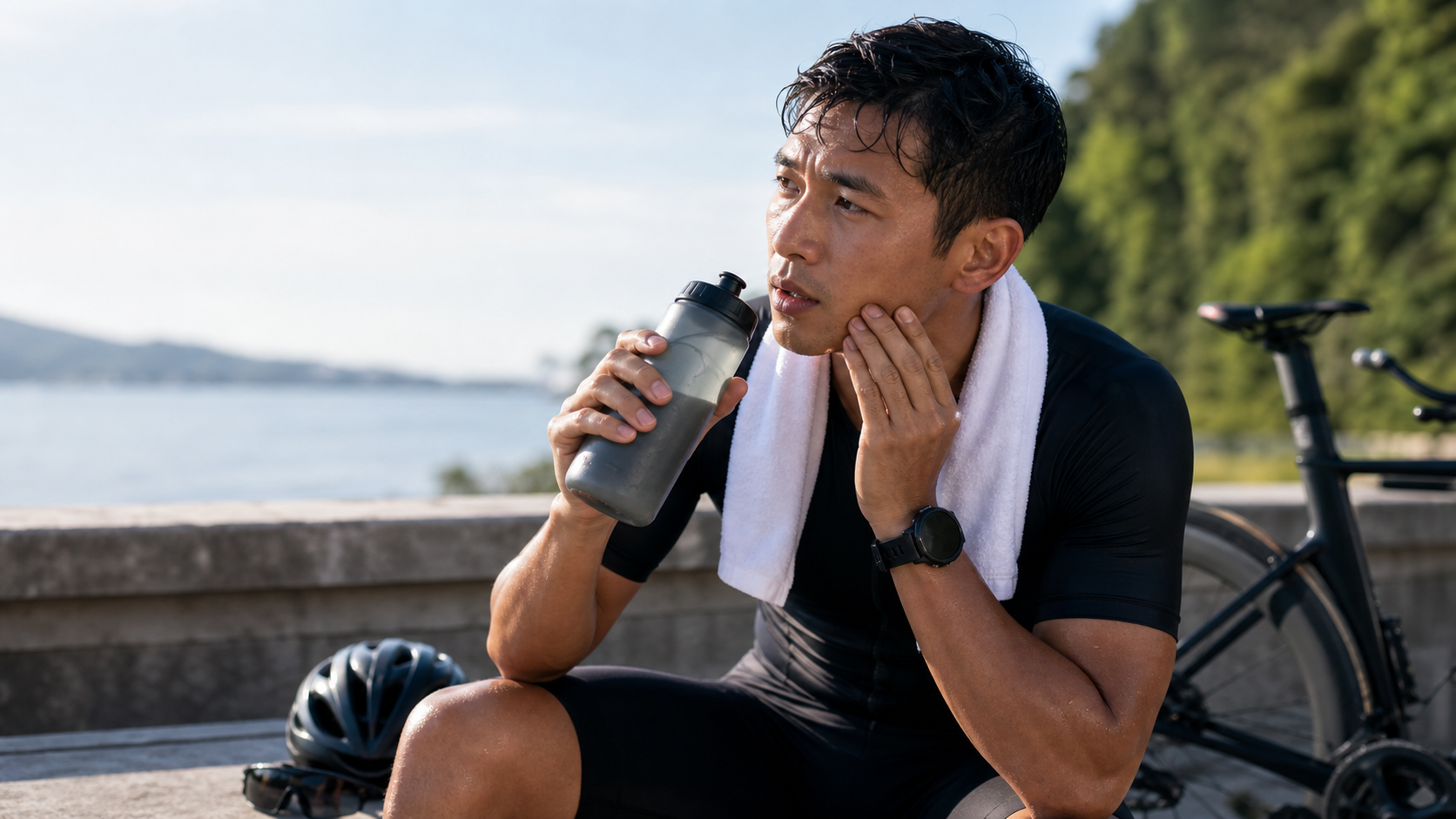
I once coached a very dedicated triathlete; let’s call him A-Jhe. That year, he set a personal record in the half marathon, dropped his body fat from 22% to 14%, and his power, pace, and heart rate zones were all textbook-perfect. But after one session, he held his face and told me that eating ice or drinking hot soup had become painful, and that a tooth on his upper right side had been throbbing so badly at night that he couldn’t sleep. He later saw a dentist and was diagnosed with severe dental erosion and a molar with decay so deep it nearly reached the nerve, requiring a root canal.
He was baffled: “Coach, I brush my teeth. How can this happen? I’m not someone who neglects hygiene.”
I completely understood his frustration. Because the problem wasn’t laziness—it was that his training lifestyle itself was inherently unfriendly to his teeth. Long-duration endurance exercise, frequent small sips of sports drinks, heavy mouth breathing, pre-race carb loading, and being too exhausted to brush after training—these behaviors, some helpful for performance and some unavoidable, combined to create a breeding ground for cavities and erosion.
In this article, I want to explain this often-overlooked issue clearly. Teeth and oral health are not side notes to athletic performance. Tooth pain disrupts your sleep, causes bite compensation, and even affects training focus; severe infections can trigger systemic inflammation. As a coach and sports science consultant, I want you to take care of those 32 partners (including wisdom teeth) in your mouth while you chase your PBs.
Key point first: Endurance athletes have significantly higher rates of cavities and dental erosion than the general population. International observations show that cavity rates in elite athletes can range from 15–75%, and erosion rates from approximately 36–85%, far higher than non-athletic peers of the same age (see references at the end). This isn’t meant to scare you—it’s a reminder that your teeth need to be planned for just like your training.
Foundational Concepts: Why Does Exercise Damage Teeth?
To solve a problem, you first need to understand the mechanism. Exercise damages teeth not through a single cause, but through three pathways acting simultaneously: erosion, caries (cavities), and dry mouth / mouth breathing (xerostomia / mouth breathing).
1. Erosion: Enamel’s Enemy is “pH”
The outermost layer of the tooth, the enamel, is mainly composed of hydroxyapatite, which dissolves in acidic environments. The critical threshold is around pH 5.5: when the oral environment drops below this value, the enamel begins to demineralize.
Here’s the problem—most sports drinks and energy drinks on the market have a pH between approximately 3.1 and 3.7 (measured range from systematic reviews), far below the critical value of 5.5. In other words, every sip of a sports drink is like dipping your teeth into an acid bath. Studies that immersed teeth in sports drinks for one hour measured enamel thickness loss on the order of approximately 1–5 micrometers (μm). A single instance sounds minor, but endurance training is day after day, several hours at a time—it accumulates.
Here’s a key point many people don’t realize: Erosion is not about “sugar”; it’s about “acid.” Even if you choose a sugar-free sports drink, sparkling water, or water with lemon squeezed in, as long as it’s acidic, it will dissolve enamel. This is why “sugar-free equals tooth-friendly” is a dangerous misconception.
To give you a tangible sense of this, I’ve compiled the approximate acidity of common supplements and beverages in the table below (actual values vary by brand and formulation; these are general ranges—the point is to feel how far they are from the 5.5 threshold):
| Beverage/Supplement | Approximate pH Range | Significance for Enamel |
|---|---|---|
| Plain water | ~7 (neutral) | Safe, and can also dilute acid in the mouth |
| Sports drinks (sugared/sugar-free) | ~3.1–3.7 | Clearly acidic; frequent, prolonged contact causes erosion |
| Energy drinks | ~3.0–3.5 | Acidic and often contain sugar; among the highest-risk group |
| Sparkling water | ~4–5 | Weakly acidic; milder than sugary drinks but still below the threshold |
| Lemon water/citrus | ~2.5–3.5 | Very acidic; don’t hold it in your mouth for long |
| Sugary bubble tea | ~4–6 | Acidic + high sugar; dual risk of cavities and erosion |
| Milk | ~6.5–6.8 | Near neutral, contains calcium, relatively friendly |
Looking at this table, you’ll notice one thing: almost every “flavorful, enjoyable” drink falls into the acidic zone. This isn’t to say you should drink nothing, but to remind you—the frequency of consumption, the duration it stays in your mouth, and whether you rinse afterward determine how much damage your teeth absorb.
2. Caries: Sugar + Bacteria + Time
Cavities (dental caries) follow a different pathway. Bacteria in the mouth, such as Streptococcus mutans, ferment the sugars you consume (especially the carbohydrates from frequent fueling and the glucose/fructose in sports drinks) into acid, which then attacks the teeth.
The fueling pattern of endurance sports is exactly what cavities love: “frequent, small amounts, over a long duration.” During a three-hour long ride, you might sip a sports drink every 15–20 minutes and have a gel or fuel every 40 minutes. For your teeth, this means oral pH is repeatedly driven down, with almost no time to recover to neutral. International research has found that cavity rates are positively correlated with weekly cumulative training hours—the greater the training volume, the longer the teeth are exposed to sugar and acid.
3. Dry Mouth and Mouth Breathing: The Saliva Defense Line Fails
Saliva is the teeth’s most important natural defense. It washes away food debris, neutralizes acid, provides calcium and phosphate to aid remineralization, and contains antibacterial components. When saliva flow is adequate, oral pH can return to neutral within about 20–40 minutes after eating.
But what happens during exercise?
- Dehydration: Heavy sweating and insufficient fluid intake reduce overall body water, which in turn decreases saliva production.
- Mouth breathing: During high-intensity exercise, nasal breathing alone can’t supply enough air, so you open your mouth and breathe heavily. The airflow constantly passes over the oral cavity, evaporating saliva, and the front teeth area is particularly prone to drying out.
- Sympathetic nervous system activation: During exercise, the sympathetic nervous system dominates, which inherently suppresses salivary gland secretion, making saliva less abundant and more viscous.
Research has also observed that saliva flow rate decreases and its properties change after intense exercise. When this saliva defense line weakens, the damage from the previous two pathways (erosion and caries) is amplified. This is why athletes can brush diligently and still have dental problems—it’s not that cleaning is insufficient, but that the defense system is compromised during training.
Here’s a classic concept in dentistry: the “pH recovery curve after acid attack.” Every time you put sugar or acid into your mouth, oral pH drops rapidly below the critical threshold, then gradually rises as saliva slowly neutralizes it. The full recovery typically takes 20–40 minutes. This leads to a brutal calculation: if you fuel with sugar water every 20 minutes, oral pH never has a chance to return to the safe zone—your teeth are essentially bathed in acid for the entire session. This is why “fueling frequency” is more damaging to teeth than “total fuel intake.”
I often use this analogy with athletes: in a three-hour ride, if you sip a sports drink every 20 minutes, that’s 9 acid attacks, and your teeth could be in a demineralized state for over two hours total. With the same amount of sugar, if you concentrated it into a few larger drinks at specific fueling points and rinsed with plain water in between, the acid exposure time could drop to a third. The “timing and method” of drinking have far more impact than you’d imagine.
The Taiwan Context: Our Climate and Eating-Out Culture Add Another Layer of Risk
Applying international research back to Taiwan, several local factors raise the risk further:
- Hot, humid climate: Taiwan summers routinely exceed 32°C with high humidity. Exercise at the same intensity causes more sweating and easier dehydration, increasing both dry mouth and sports drink consumption.
- Eating out and sugary drink culture: A half-sugar bubble tea after training, a convenience store sports drink, sugary yogurt as a recovery snack—these are too convenient and too routine in Taiwan.
- Riding/running terrain: Long climbs like Yangshan, Beiyi, or the East Entrance to Wuling mean hours of continuous fueling; riverside bike paths and track intervals are also scenarios of prolonged mouth breathing.
- The healthcare environment is actually quite friendly: The good news is that dental visits are very convenient under Taiwan’s National Health Insurance, and cleanings (once every six months for adults) are mostly covered. This is our advantage—there’s no excuse for skipping check-ups.
- Aid stations and convenience stores are too convenient: Almost every cycling and running route in Taiwan has convenience stores, making fueling extremely easy—but also making it easy to grab sugary drinks and energy drinks without thinking. Convenience is a double-edged sword; it makes it effortless to consume acid and sugar all day without realizing it.
I often tell athletes that Taiwan’s environment is “higher difficulty for tooth protection, but ample resources for remediation.” The difficulty comes from the heat, humidity, eating out, and sugary drink culture; the remediation resources come from the widespread availability of dental care under the NHI. The key is whether you’re willing to proactively use these resources—don’t wait until it hurts to see a dentist. A simple principle: pair your twice-yearly dental cleaning and check-up with your seasonal bike maintenance or a fitness test as a reminder, making it a fixed routine. You regularly maintain your body and equipment; there’s no reason to leave your teeth out.
Practical Methods: Fitting Oral Care into Your Training Cycle
Now that you understand the concepts, here’s the most important part—what to do. I’ve broken the methods down into three timings: “during fueling,” “after training,” and “daily,” with specific tables.
Fueling Strategy: How You Drink Matters More Than What You Drink
Many people ask me: “Coach, do I need to give up sports drinks?” No, you don’t. Sports drinks are valuable for electrolyte replacement and performance in high-intensity, long-duration, heavy-sweating situations. The key is how you drink them to minimize damage.
Here’s the “fueling tooth-protection principles” table I give my athletes:
| Situation | Recommended Approach | Rationale |
|---|---|---|
| Training under 90 minutes | Prioritize plain water; sports drinks aren’t always necessary | Short-duration sweat and electrolyte loss are limited; reduces acid and sugar exposure |
| Long endurance sessions | When you need a sports drink, take big gulps and swallow quickly—don’t savor it in your mouth | Shortens the time acid contacts teeth |
| Between fueling | Alternate by rinsing with plain water before swallowing | Helps dilute acid and raise oral pH |
| Use a straw or bottle | Direct liquid away from the front teeth as much as possible | Reduces erosion hotspots on the front teeth |
| After training ends | Drink water or rinse first; don’t brush immediately | Enamel is temporarily softened after acid exposure; brushing right away removes more of it |
The most commonly misunderstood point: After finishing a sports drink or consuming acidic fuel, the enamel is in a temporarily softened state, and “brushing hard immediately” will actually brush away the softened enamel. The correct approach is to rinse with plain water first, wait about 30–60 minutes for saliva to bring the pH back up, then brush.
The Golden Post-Training Routine
After training, you’re tired and want to sleep, but this is exactly when your teeth are most vulnerable and most in need of care. I require my athletes to develop a simple cool-down routine:
- Rinse with plain water: Rinse as soon as training ends to wash away residual sugar and acid.
- Rehydrate: Drink plain water, which also helps stimulate saliva recovery.
- Wait 30–60 minutes before brushing (if you’ve just had acidic drinks).
- Brush with fluoride toothpaste: Fluoride aids remineralization and strengthens enamel’s acid resistance.
- Don’t stay up late or sleep with sugar in your mouth: Saliva production is at its lowest during sleep, making pre-bed sugar the biggest contributor to cavities.
This routine sounds simple, but its power lies in “consistency.” I often remind athletes: in those 10 minutes after training, you’ve already completed the hardest part (finishing the workout)—don’t slack off on the last mile. Rinsing and hydrating cost almost nothing, and in return you get years of dental health. Tie it to your cool-down, foam rolling, and training log, making it part of a complete “wrap-up ritual” so you won’t forget.
Daily Oral Care Training Plan
Treating oral care like a “weekly training plan” works best. Here’s a general version I give to different individuals:
| Item | Frequency | Key Points |
|---|---|---|
| Brushing with fluoride toothpaste | Twice daily, 2 minutes each | Morning and night; the pre-bed brushing is most important |
| Floss/interdental brushes | Once daily | Interdental spaces are cavity-prone areas toothbrush bristles can’t reach |
| Fluoride mouthwash | Once daily or every other day | Reinforces remineralization, especially for high erosion risk |
| Dental cleaning and check-up | Every 6 months | Mostly covered by NHI; catches erosion and cavities early |
| Sports mouthguard (if needed) | Every contact sport session | Protects teeth from impact and excessive bite forces |
| Bite/night grinding assessment | When symptoms appear | Night grinding and bite compensation are common in high-stress training |
Aligning Oral Care with Your Training Cycle
Many people like to divide training into base, build, taper, and race phases. Oral care can follow the same rhythm, making it an automated part of the process:
| Training Phase | Oral Focus | Specific Actions |
|---|---|---|
| Base (high volume, low intensity) | Build habits, practice nasal breathing | Practice nasal breathing during low-intensity sessions; make daily brushing and flossing an automatic routine |
| Build (dense fueling) | Reduce acid and sugar exposure | Strictly follow big gulps and quick swallowing, rinse afterward; increase fluoride mouthwash use |
| 2–3 months pre-race | Eliminate hidden issues in advance | Get a complete dental check-up, address cavities and inflammation—don’t carry landmines into the season |
| Taper/race week | Avoid last-minute issues | No invasive dental procedures; maintain cleanliness; bring mouthguard and other gear |
The benefit of this arrangement: the major dental check-up is placed 2–3 months before the race, giving any needed treatment time to be handled and recovered from, so you won’t suddenly get a toothache on race week. I’ve seen too many people discover a painful cavity the week before a race, when it’s already too late.
Mouth Breathing: The Often-Overlooked Hidden Threat
I want to spend a bit more time on mouth breathing because it affects both oral health and athletic performance, yet receives the least attention.
Mouth breathing during high-intensity exercise is nearly unavoidable—it’s the body’s natural response to ventilate, and I won’t tell you to force nasal breathing during a sprint. The problem is that some people habitually mouth-breathe even at low intensity, or even during daily static activities, and that’s what truly needs addressing.
The effects of chronic mouth breathing include:
- Persistent dryness in the front teeth area: The front teeth lose saliva protection, increasing the risk of erosion and gum problems.
- Reduced sleep quality: Mouth breathing is often associated with snoring and sleep apnea, worsening recovery quality and directly undermining training adaptation.
- Potential impact on facial structure and dental alignment (especially in adolescent athletes during development).
Practical Recommendations
- Practice nasal breathing during low-intensity, aerobic base sessions: In heart rate zones where you can still talk, deliberately breathe through your nose. This not only protects teeth but also helps with breathing efficiency and CO2 tolerance.
- Breathe normally through your mouth during high-intensity intervals: Don’t sacrifice ventilation to protect your teeth; the focus at that point is post-training remediation (rinsing, hydrating).
- If you suspect sleep mouth breathing/snoring: If you’re chronically sleep-deprived, sleepy during the day, or your partner complains about snoring, seek medical evaluation for a deviated septum, allergic rhinitis, or sleep apnea. Taiwan’s ENT and sleep clinics are well-developed—don’t tough it out on your own.
- Address nasal congestion issues: Allergic rhinitis is highly prevalent in Taiwan, and many people are forced into mouth breathing by chronic nasal congestion. If you’re often congested, get the nasal issue treated first, then you can work on nasal breathing. Leave this to an ENT physician’s assessment—don’t self-medicate with nasal sprays long-term.
I want to clarify a common misconception here: practicing nasal breathing doesn’t mean forcing yourself to inhale through your nose during all-out efforts. That will only cause inadequate ventilation and worse performance. The point is to deliberately use nasal breathing in the “aerobic base, easy conversation” low-intensity zone, training it into a habit; when intensity rises and your body needs heavy ventilation, you’ll naturally open your mouth. Maintaining nasal breathing during daily static activities (walking, sitting, sleeping) is the key to protecting teeth and improving sleep. With my athletes, I usually have them start during the easiest recovery runs or warm-up rides, gradually extending the time they can maintain nasal breathing—no forcing, no oxygen debt.
Protection: Dental Protection for Contact and Impact Sports
If your sport carries a risk of collision, falls, or being hit by equipment (mountain biking downhill, off-road, ball sports, combat sports, or even road cycling crashes), a sports mouthguard is equipment I strongly recommend.
A mouthguard’s function goes beyond preventing tooth fractures and avulsion; it also cushions jaw impacts and reduces concussion risk. There are roughly three types on the market:
| Type | Features | Suitable For |
|---|---|---|
| Stock | Cheap, ready to use, but poor fit and prone to loosening | Temporary, low-frequency use |
| Boil-and-bite | Softened in hot water, then you bite to shape it; moderate fit | General amateur athletes; best value |
| Custom-fitted (dentist-made) | Made from a mold taken by a dentist; best fit and protection | High-frequency, high-impact, professional athletes |
For most amateur cyclists and runners in Taiwan, a boil-and-bite mouthguard is sufficient; but if you’re a downhill rider who crashes often or have combat sports habits, it’s worth spending the money on a custom-fitted one from a dentist.
I’d also like to flag an often-overlooked group: weightlifters. During heavy squats and deadlifts, many people unconsciously clench their teeth hard. Over time, this causes tooth wear, excessive tension in the masticatory muscles, and even nighttime grinding. If you have this habit, a soft training mouthguard or having a dentist evaluate you for a bite splint are options worth considering.
Mouthguard Maintenance Matters Too
Buying a mouthguard is just the beginning; using it incorrectly is as good as not using it. I remind my athletes of a few things:
- Rinse with clean water after each use and clean it regularly with a toothbrush or specialized cleaning tablets; otherwise, the mouthguard becomes a bacterial breeding ground—essentially putting dirt into your mouth during exercise.
- Store it in a ventilated, dry place away from high heat; don’t leave it in a hot car or a backpack in direct sunlight—boil-and-bite materials can deform from heat.
- Check the fit regularly; replace the mouthguard if it’s worn, loose, or cracked. A loose mouthguard offers greatly reduced protection and could even come dislodged and become a choking hazard during exercise.
- Adolescent athletes need more frequent remakes or adjustments because their teeth are still developing and alignment changes; don’t keep using a mouthguard from two or three years ago.
These details sound trivial, but a well-maintained mouthguard could save you a front tooth—or prevent a serious oral injury—at a critical moment. If you buy the gear, use it correctly and take care of it.
Common Mistakes and Corrections
Over years of coaching, I’ve compiled the most common—and most easily correctable—mistakes:
Mistake 1: “I drink sugar-free sports drinks, so they won’t hurt my teeth”
Correction: Sugar-free only avoids the “cavity” pathway, not “erosion.” Sugar-free sports drinks are still acidic. The way you drink (big gulps, quick swallowing, rinsing afterward) is the key, not whether it has sugar.
Mistake 2: Brushing hard immediately after training
Correction: Enamel is softened after acid exposure; brushing immediately accelerates wear. Rinse first, wait 30–60 minutes, then brush.
Mistake 3: Treating sports drinks as everyday beverages
Correction: Sports drinks are a “tool,” not a “beverage.” On days when you’re not sweating heavily, plain water is fine. I’ve seen too many people sipping sports drinks throughout the day, essentially bathing their teeth in acid around the clock.
Mistake 4: Sipping slowly and “savoring” the drink in your mouth
Correction: This is the most damaging way to drink. The longer liquid stays in your mouth, the longer acid contact lasts. When you drink, finish it in big gulps.
Mistake 5: Being too tired to brush before bed
Correction: Saliva is at its lowest during sleep, making the pre-bed brushing the most important one of the day. If you’re truly exhausted, at least rinse and use a fluoride mouthwash—don’t let sugar and acid spend the night with you.
Mistake 6: Toughing out tooth pain or bleeding without seeing a dentist
Correction: Dental visits are very convenient in Taiwan, and cleanings are mostly covered by NHI. Dental problems only get more expensive and more painful the longer you wait. Temperature sensitivity, bleeding gums, and bite pain are all your body’s way of telling you something.
Actionable Advice for Readers at Different Levels
Oral care doesn’t have to be all-or-nothing; you can implement it in stages based on your training volume and current situation.
Beginners New to Exercise
- For training under 90 minutes, build the habit of drinking only plain water.
- Rinse your mouth before fueling after training.
- Establish the basics: brushing twice daily with fluoride toothpaste and flossing once daily.
- Get a dental cleaning and check-up every six months (take advantage of NHI).
Intermediate Athletes Training 5–10 Hours Per Week
- Follow the “big gulps, quick swallowing, rinse afterward, don’t brush immediately” principles during fueling.
- Add a fluoride mouthwash to reinforce remineralization.
- Start paying attention to mouth breathing habits during training and daily life; practice nasal breathing in low-intensity sessions.
- If you have contact/impact risk, get a sports mouthguard.
Competitive Athletes Training 10+ Hours Per Week
- Schedule oral check-ups into your season plan; get a complete dental check-up 2–3 months before races to avoid tooth pain ruining race day.
- Discuss custom mouthguards, fluoride varnish, and other professional protection with your dentist.
- During carb-loading weeks and high-fueling training camps, pay extra attention to rinsing and pre-bed cleaning.
- If you have nighttime grinding or bite issues, have a dentist evaluate you for a bite splint.
Frequently Asked Questions (FAQ)
Q: What if I really don’t have time to rinse during training?
A: At minimum, take a sip of plain water to rinse and swallow your sports drink completely—don’t hold it in your mouth. Rinse immediately after training ends to make up for it. Do what you can; don’t abandon the whole approach just because you can’t be perfect.
Q: Does chewing sugar-free gum help?
A: It helps to a degree. Sugar-free gum containing xylitol stimulates saliva production, helping neutralize acid and remineralize. Chewing it after training or meals is a good supplement. But it’s a “bonus,” not a replacement for brushing and rinsing.
Q: I already have visible erosion/dents in my teeth. Can it be reversed?
A: Lost enamel won’t grow back on its own, but you can stop it from getting worse. See a dentist for evaluation, strengthen fluoride protection, and change your drinking habits and brushing timing. Severe dents can be repaired by a dentist. The earlier you address it, the easier it is.
Q: Does pre-race carb loading hurt my teeth?
A: Carb loading itself is a reasonable strategy, but those days involve high sugar intake frequency, increasing tooth exposure. The approach is the same: make it meal-based and concentrated, don’t sip sugar water sporadically all day, rinse after meals, and clean thoroughly before bed.
Q: Is the fluoride in mouthwash and toothpaste too much combined?
A: Standard commercial fluoride toothpaste and mouthwash, used as directed on the packaging (spit out after brushing, spit out mouthwash without swallowing), are safe for adults. The real concern for fluoride intake is young children (swallowing risk). If you’re unsure about your needs, ask your dentist at your next cleaning.
Q: My teeth are so sensitive it affects my training focus. What should I do?
A: Don’t just buy sensitivity toothpaste and use it long-term without seeing a dentist. Temperature sensitivity could be from erosion, cavities, gum recession, or even cracked teeth—different causes require different treatments. Sensitivity toothpaste can provide temporary relief, but the root cause needs a dentist’s diagnosis. Don’t suppress the symptom while leaving the underlying problem untreated.
Q: If I use an electric toothbrush, do I still need to worry about brushing timing?
A: Electric toothbrushes are indeed efficient at cleaning, but they don’t change the fact that “enamel softens after acid exposure.” Right after drinking acidic beverages, whether manual or electric, it’s not recommended to brush hard immediately. The principle of rinsing first and waiting before brushing still applies. No matter how good the tool, brushing at the wrong time will still wear away more enamel.
Q: Do I have to use fluoride toothpaste? Is fluoride-free okay?
A: For a high acid-exposure group like athletes, I’d clearly recommend fluoride toothpaste. Fluoride helps remineralize enamel and improves acid resistance, which is very helpful against your daily acid and sugar attacks. Fluoride-free toothpaste may be adequate for cleaning, but without this protective layer, it’s a missed opportunity for high-risk groups. If you have concerns about ingredients, ask your dentist at your next cleaning.
Don’t Overlook: Oral Health Is Connected to Your Whole Body
Finally, I want to add an aspect many athletes don’t realize—the mouth is not an isolated region; it’s linked to overall health.
Chronic periodontal inflammation means there’s a long-term source of inflammation in the mouth. For athletes pursuing recovery and adaptation, any additional chronic inflammatory burden is undesirable and may affect overall recovery quality. And if a dental infection becomes acute (e.g., a periapical abscess), it can range from severe pain that halts training to requiring emergency treatment. I’ve seen an athlete whose wisdom tooth became inflamed and swollen the week before a race—he couldn’t sleep all week, couldn’t train properly, and his race performance suffered significantly.
I need to speak carefully here about people with chronic diseases. If you have diabetes, blood sugar control and periodontal health affect each other; oral care for this group needs to be more aggressive and must be managed jointly with your physician and dentist—this isn’t something general rules from an article can handle; it requires individualized assessment. Similarly, if you have a history of heart valve conditions, whether certain dental procedures require prophylactic antibiotics must be determined by your physician and dentist based on your situation. I can only remind you here to “proactively disclose and seek medical care”—I cannot and will not give you any diagnosis or medication instructions.
The point I want to convey is simple: treat dental check-ups as part of your health management. When you see the dentist, proactively tell them about your training volume, fueling habits, and any chronic conditions, and let the professionals make individualized judgments. That’s far safer than self-diagnosing symptoms online and buying products randomly.
A Second Case: Xiao-Min, an Office Worker Who Runs Along the Riverside
Let me share a case very different from A-Jhe’s, to show you this problem isn’t limited to elite athletes.
Xiao-Min is an office worker who runs along the riverside after work, with a weekly mileage of about 30–40 km at moderate intensity—her fueling needs should be minimal. But she had two habits: first, she always brought a bottle of sports drink on her runs, saying “sipping it slowly gives me motivation”; second, after running home exhausted, she’d collapse into bed, often without brushing her teeth.
She originally came to me to adjust her running form, and it was only when we talked about her daily life that I discovered these two habits. Her teeth later developed erosion and sensitivity in the front teeth area. Her problem was actually easier to solve than A-Jhe’s—because her exercise intensity didn’t require sipping sports drinks throughout the run at all. My adjustments for her were simple: bring only plain water on runs, save sports drinks for truly long distances or very hot days; no matter how tired after a run, always rinse and brush before bed. Two small changes, no sacrifice in training, and her acid exposure dropped dramatically.
Xiao-Min’s case highlights a crucial point: many people don’t need nearly as many sports drinks as they consume, yet they sip them long-term out of habit or psychological dependence. For low-to-moderate intensity, shorter-duration exercise, plain water is the best fuel and the most tooth-friendly. Asking yourself “do I really need a sports drink for this session?” often solves a large part of the problem.
Conclusion: Treat Your Mouth Like a Muscle That Needs Training
Back to A-Jhe from the beginning. After he changed his fueling to big gulps and quick swallowing, made rinsing a fixed post-training habit, drank only water for sessions under 90 minutes, and always brushed before bed, he returned for a check-up six months later. The dentist said the erosion had not progressed and there were no new cavities. He told me: “Coach, it turns out my teeth needed a training plan too.”
That’s well said. We spend enormous time planning power zones, pacing, fueling, and recovery, yet often forget—oral health is part of athletic performance. Tooth pain can ruin your sleep and recovery, and severe infections can sideline you for weeks. And preventing it only requires a few small habits that take almost no effort: how you drink, when you brush, and how often you get checked.
Incorporate these into your daily routine, like scheduling an easy but consistent recovery plan. Your PBs will thank you, and so will your teeth.
This article is educational content and does not replace individual diagnosis and treatment advice from physicians, physical therapists, or nutritionists. If you have tooth pain, bleeding gums, suspected sleep apnea, or chronic conditions such as diabetes, hypertension, or heart disease, please seek medical care and follow professionals’ individualized assessments. Do not self-diagnose or delay treatment.
References
- Effect of endurance training on dental erosion, caries, and saliva (Frese et al., 2015, Scandinavian Journal of Medicine & Science in Sports) — https://onlinelibrary.wiley.com/doi/10.1111/sms.12266
- Sports Diet and Oral Health in Athletes: A Comprehensive Review (PMC) — https://www.ncbi.nlm.nih.gov/pmc/articles/PMC10890155/
- Erosive Potential of Sports, Energy Drinks, and Isotonic Solutions on Athletes’ Teeth: A Systematic Review (PMC) — https://www.ncbi.nlm.nih.gov/pmc/articles/PMC11820644/
- Sports Drinks and Dental Erosion: A Systematic Review (Current Oral Health Reports, Springer) — https://link.springer.com/article/10.1007/s40496-025-00401-x
- The effects of endurance training on athletes’ oral health (Dentistry IQ) — https://www.dentistryiq.com/dental-hygiene/student-hygiene/article/16365655/the-effects-of-endurance-training-on-athletes-oral-health
Related Reading
- Runner’s Tooth Wear and Jaw Bite: The Overlooked Hidden Sports Injury
- Athlete Nutrition and Long-Term Health: Staying Healthy After 30 Years of Cycling—Sustainable Diet and Chronic Disease Prevention
- Sleep Nutrition for Athletes: What to Eat to Sleep Well—A Coach’s Practical Guide from Kitchen to Bedside
- Iron and Endurance Sports: The Hidden Threat of Iron Deficiency—Why You Get More Tired the More You Train
碟煞公路車 銑面器 !? 原來銑完差這麼多! 降低蹭碟機率! | TIME 公路車 保養小記錄 | CT Yeh
3 年前
一日北高/長距離團騎 常見問題補充篇 / 組團或跟團的眉角 / 壯車友容易被瘦車友慢性拉爆 / 原來屁股痛可能是這個原因...? / 風場配速法 / 公路車 / CT Yeh
2 年前
一日北高常見問題大集合 | 攻略 | 路線 | 訓練 | 補給 | 自行車 單車 | 一日雙城 | 雙塔 | TWB北高360 | 屁股痛
6 年前
CT暗黑廚房) 車友必備 宇宙無敵鮮蚵湯 幫助訓練恢復 天然食補 好市多 超肥鮮蚵 破PR
7 年前
秘境雪場 日本 八甲田 冰樹探險與滑雪體驗 ft. Q老師 & 運動生活
7 年前
戰略) Zwift Race 如何咬在第一集團 如何評估自己要開多少推力 (請開1.5倍速看)
7 年前
一個測試有沒有認真練車的方法😂 #公路車
10 個月前
洗單車神器 吹水機! 實際洗車用用看 暴力洗鍊條大法 | 公路車 | CT Yeh
4 年前