The Science of Exercise and Longevity: Evidence for Extending Lifespan, Optimal Dosage, and a Lifestyle You Can Maintain for Life
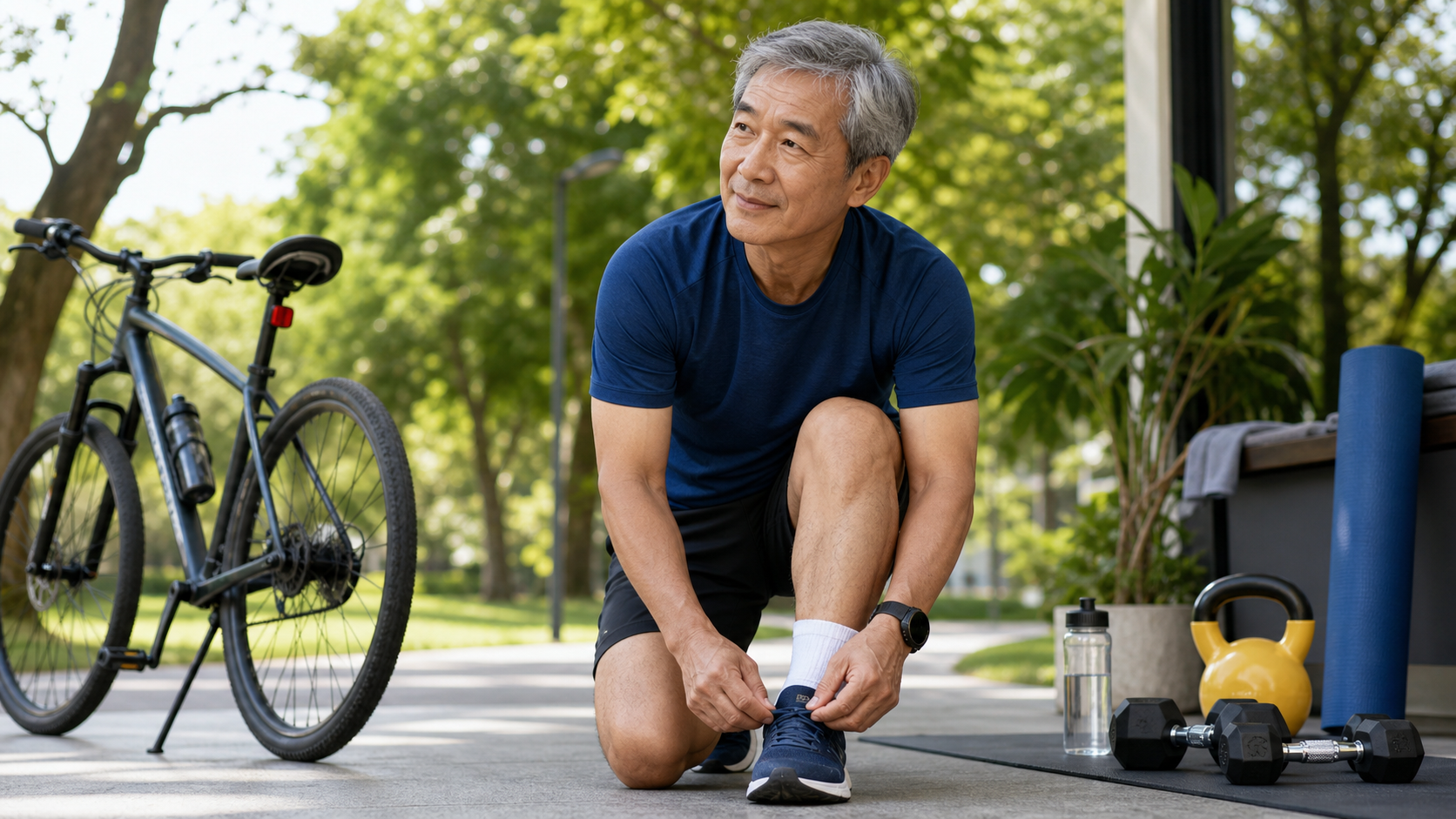
Opening: A 60-Year-Old Man Turned Me from a Coach into a Believer
I’ve been training athletes and fitness enthusiasts for fifteen years. Over the years, I’ve worked with competitive athletes chasing PBs, office workers trying to lose weight, and seniors returning after surgery. But the one who truly made me a firm believer in “exercise for longevity” was a student I’ll call “Brother Chen.”
When Brother Chen first came to see me, he had just turned sixty. His health check-up was a wall of red flags: elevated fasting blood sugar, blood pressure on the edge of requiring medication, and body fat approaching 30%. His wife added, “The doctor said if he doesn’t start moving, he’ll be in the ‘three highs club’ in ten years.” I didn’t give him a motivational speech. I just said one thing: “Our goal isn’t to make you faster. It’s to make sure you can still walk to the bathroom on your own at eighty, and still squat down to tie your own shoelaces.”
Two and a half years later, Brother Chen was riding a stationary bike three times a week and doing simple strength training twice a week. His blood sugar returned to the normal range, his blood pressure medication went from two pills down to one (that was adjusted by his cardiologist, not me), and his body fat dropped by nearly 8 percentage points. But what impressed me most was when he told me once with a smile, “Coach, I don’t get winded chasing the bus anymore.”
This isn’t a miracle. It’s the inevitable physiological response of the human body to exercise at the right dose plus time. In this long article, I want to distill fifteen years of coaching experience and my ongoing reading of exercise physiology, nutrition, and sports medicine literature into a practical “exercise-for-longevity manual” you can actually use. We’ll talk about the evidence, the doses, the most common pitfalls, and give each of you at different levels a starting point.
Let me give you the conclusion first, in case you don’t have the patience to read the whole thing: The evidence for exercise extending lifespan is very solid, but the key isn’t “going all out”—it’s “consistency” and “the right dose.” Move for 150 to 300 minutes a week, add a bit of strength training, and you’ve secured the highest-return health asset of your life.
1. The Scientific Foundation: How Exactly Does Exercise Help You “Live Longer”
1-1 All-Cause Mortality: The Core Metric for Exercise and Longevity
In exercise science, the most common metric for measuring “extended lifespan” is all-cause mortality—in plain terms, “the probability of dying from any cause within a given period.” Researchers track hundreds of thousands, even millions, of people over long periods, comparing death rates between those who exercise regularly and those who are largely sedentary, to calculate just how much exercise reduces your risk.
The accumulated evidence points in a very consistent direction: People who exercise regularly have significantly lower all-cause mortality than those who are sedentary. The World Health Organization’s (WHO) 2020 physical activity guidelines, summarizing a large body of research, state that regular physical activity improves all-cause mortality and cardiovascular mortality, and reduces the risk of hypertension, several cancers, type 2 diabetes, and mental health problems (see references at the end).
A large analysis pooling data from over a million adults found that the most active group had an approximately one-quarter (about 26%) lower risk of all-cause mortality compared to the least active group. How striking is that number? I often tell my students: if there were a pill that could lower your risk of death by over 20%, had almost no side effects, and was free, wouldn’t you take it? That pill is called “exercise.”
1-2 What Actually Happens Inside Your Body When You Exercise
Exercise isn’t saving you through a single mechanism—it’s an entire system upgrading simultaneously. Let me break down the main physiological pathways using the analogies I use most often with my students:
- Cardiopulmonary system (bigger engine): Regular aerobic exercise raises your maximal oxygen uptake (VO2max), allowing your heart to pump more blood per beat and lowering your resting heart rate. Cardiorespiratory fitness is currently one of the strongest known correlates of longevity.
- Blood sugar and insulin (smoother fuel lines): Muscle is the body’s largest glucose reservoir. During exercise, muscles take up large amounts of blood sugar, and over time, insulin sensitivity improves. This is why exercise is so powerful for blood sugar control.
- Blood vessels and blood pressure (more elastic pipes): Regular aerobic exercise improves vascular endothelial function, helps lower blood pressure, and reduces the long-term burden on the heart.
- Muscle and bone (stronger chassis): Strength training stimulates muscle protein synthesis and maintains bone density. After forty, muscle mass naturally declines with each decade; strength training is the only effective way to combat sarcopenia.
- Inflammation and metabolism (reducing chronic internal drain): Regular exercise helps lower chronic low-grade inflammation, which is closely linked to many age-related diseases.
- Brain and mood (nervous system maintenance): Exercise promotes the secretion of brain-derived neurotrophic factor, improves sleep and mood, and helps reduce the risk of dementia and depression.
Note that the above are general physiological principles, not numbers you need to memorize. The key point I want you to grasp is this: exercise for longevity has never been about a single miracle effect, but about pushing your entire system toward a younger, more resilient state.
1-3 “Cardiorespiratory Fitness” Predicts Lifespan Better Than “Body Weight”
I have to call this out specifically because it overturns many people’s intuition. Many students initially fixate on the scale, but a large body of research shows that: A person’s level of cardiorespiratory fitness is often a stronger predictor of mortality than body weight or body fat. In other words, a person who is “slightly overweight but can climb stairs without getting winded” may have lower long-term health risks than someone who is “thin but completely inactive.”
This is also why I rarely have students focus only on “dieting to lose weight.” The scale can lie to you, but your engine (cardiorespiratory fitness) and chassis (muscular strength) won’t. Instead of chasing a number on the scale, chase “can I ride two more kilometers or squat five more kilos this week than last week?”
1-4 A Few “Getting Younger” Signals You Can Track Yourself
Many students ask me, “Coach, how can I tell for myself whether exercise is making me healthier?” I usually ask them to track a few simple, free indicators they can observe at home. These aren’t precision medical tests, but daily signals that help you “feel the progress”:
- Lower resting heart rate: Measure your pulse for one minute in the morning before getting out of bed. After a few weeks of regular aerobic exercise, many people notice their resting heart rate slowly dropping by a few bpm—a sign your heart is becoming more efficient.
- The same effort feels easier: Previously, climbing three flights of stairs left you winded; now you can climb five and still talk—this is the most tangible feeling of improved cardiorespiratory fitness.
- Faster recovery: Previously, you’d be sore all over the day after exercise; now you’re mostly recovered by the next day, meaning your body’s adaptability has improved.
- Better sleep and mood: People who exercise regularly often report sleeping more deeply, feeling more energetic during the day, and having more stable moods.
- More agile in daily movements: Squatting to tie shoelaces, getting up from the floor, carrying heavy items upstairs—improvements in these “functional movements” often mean more than the number on the scale.
Please don’t underestimate these subjective feelings. Being able to chase a bus without getting winded, run around the track with your kids, and move a case of water by yourself—these are what extending your lifespan is truly meant to protect. Data is for reference; quality of life is the goal.
2. The Optimal Dose: How Much Should You Exercise Per Week?
This is the question students ask me most often, and it’s also the most practical section. I’ve organized the conclusions from current mainstream guidelines and large studies into a table.
2-1 Official Recommended Doses and Corresponding Longevity Effects
The table below is compiled from WHO physical activity guidelines and large cohort studies (data represent average trends in study populations; individual variation is large, so use it for understanding the direction; see references at the end):
| Weekly Activity Volume | Intensity Type | Approximate Change in All-Cause Mortality Risk | Who It’s For |
|---|---|---|---|
| Largely inactive | — | Baseline (highest risk) | Most current sedentary people |
| 75–150 minutes | Vigorous aerobic | About 15–20% lower | Those short on time, with adequate fitness |
| 150–300 minutes | Moderate aerobic | About 20–21% lower | Most people (the sweet spot) |
| 300–600 minutes | Moderate aerobic | About 26–31% lower | Advanced, wanting to push risk lower |
| Over 600 minutes | Moderate aerobic | Benefits plateau, no significant further increase | Exercise enthusiasts |
A few key points I want to highlight for you:
- 150 to 300 minutes of moderate intensity is the sweet spot with the best cost-benefit ratio. The plain-language test for “moderate intensity” is: you can still talk during exercise, but you can’t sing along. Riding a bike with some breathlessness and sweat on your forehead—that’s it.
- Doing about twice the official recommendation (roughly 300–600 minutes) can push mortality risk down a bit further, to around 26% to 31%. But note this is “icing on the cake,” not “ineffective if you don’t do it.”
- Beyond a certain point, the benefits plateau. This is what I always remind advanced students: extending lifespan is a game of “sufficient dose,” not “unlimited escalation.” Pushing yourself to extremes often results in injury and overtraining, which is counterproductive.
2-2 A Ready-to-Copy “Weekly Exercise Prescription” Example
Many people know they should exercise 150 minutes but don’t know how to schedule it. Here’s a template I commonly use with students—you can copy it directly and tweak it:
| Day | Content | Time | Intensity Notes |
|---|---|---|---|
| Monday | Moderate aerobic (cycling / brisk walking / jogging) | 40 minutes | Can talk, slightly breathless, sweating |
| Tuesday | Full-body strength training | 30 minutes | Squats, pushes, pulls, core |
| Wednesday | Rest or walk | — | Active recovery, relaxation focus |
| Thursday | Moderate aerobic | 40 minutes | Same as Monday |
| Friday | Full-body strength training | 30 minutes | Change movements, adjust weights slightly |
| Saturday | Longer aerobic session (weekend long ride / hike) | 60–90 minutes | Mostly easy to moderate intensity |
| Sunday | Complete rest | — | Sleep well, stretch |
This template gives you about 180 minutes of aerobic exercise per week, plus two strength sessions—right in the sweet spot while also covering musculoskeletal health. If you’re currently completely inactive, don’t try to copy this whole template from day one—we’ll give you a progressive starting plan later.
2-3 Don’t Forget Strength Training: The Other Half of the Longevity Puzzle
When people talk about exercise for longevity, many only think of aerobic exercise. But mainstream guidelines generally recommend: Adults should do strength training targeting all major muscle groups at least twice a week. The reason is simple: aerobic exercise takes care of your heart, lungs, and metabolism; strength training takes care of whether you can still live independently when you’re old.
I’ve worked with too many seniors whose loss of independent living wasn’t triggered by a heart attack, but by a fall, a fracture, and then the vicious cycle of rapid muscle loss from being bedridden. The muscle mass and balance that strength training maintains are the most practical insurance against falls and sarcopenia. You don’t need to look like a bodybuilder—if you can squat steadily and get up from a chair without using your hands, you’re already ahead of most people your age.
3. Practical Methods: Turning Science into a Daily Routine You Can Maintain
Knowing the dose is only the first step. Whether you can “do it for life” is the real key to longevity. Here are the practical principles I value most when coaching students.
3-1 Use the “Talk Test” to Gauge Intensity, No Need to Constantly Check Your Watch
Beginners get stuck most often on “how do I know what moderate intensity actually feels like.” You don’t need to buy a heart rate strap. The simplest method is the talk test:
- Easy intensity: You can chat comfortably and even hum a tune while exercising.
- Moderate intensity: You can speak in full sentences but can’t sing; you’re slightly breathless. (The longevity sweet spot)
- Vigorous intensity: You can only get out a few words before needing a breath.
If you want to be more precise, you can use the rough estimate for maximum heart rate: use “220 minus your age” for an approximate value; moderate intensity falls around 60–70% of your max heart rate. But to be honest, this formula has large individual error, and the talk test is actually more practical and reliable for most people.
3-2 How to Train in Taiwan: Climate, Venues, and Eating Out, All Considered
For an exercise-for-longevity plan to be sustainable, it has to account for your real living environment. In the Taiwanese context, here’s what I often advise students:
- What to do when it’s too hot in summer: Taiwan’s summers are hot and humid, and exercising outdoors at noon carries a high risk of heatstroke. Schedule aerobic exercise for early morning or evening, or switch to indoor cycling, the gym, or an air-conditioned community center. Hydration is especially important in summer—drink small amounts frequently before, during, and after exercise. Don’t wait until you’re thirsty.
- Choosing venues: Riverside bike paths (the Greater Taipei riverside paths, or the ring-road paths in various counties) are excellent for moderate-intensity cycling; school tracks and community parks are good for brisk walking and jogging; MRT commuters can also sneak activity into their day by “getting off one or two stops early and walking.”
- Nutrition for those who eat out: Eating out in Taiwan is convenient but easy to get wrong. After exercise, I usually recommend students aim for “one palm-sized portion of protein (chicken breast, tofu, eggs, fish) + one serving of whole-food carbohydrates (sweet potato, brown rice) + some vegetables.” Buffet-style restaurants (自助餐) are actually a great friend to those who eat out, as you can freely choose your dishes. What to avoid is using exercise as an excuse to “indulge in eating whatever you want”—this is the main reason many people can’t lose weight or see limited metabolic improvements.
- Easy access to doctors is Taiwan’s advantage: Taiwan’s National Health Insurance makes seeing a doctor convenient, which is a major plus for a longevity plan. If you have the three highs, a history of heart disease, or are older and about to start exercising, getting a health check-up and talking to your doctor about your exercise plan is low-cost and dramatically reduces risk.
3-3 The Progressive “Progressive Overload” Principle
Your body needs time to adapt. Increasing volume too quickly is the number one cause of injury. The general rule I use with students is: Don’t increase total weekly volume by more than about 10%. If you rode 100 minutes this week, aim for around 110 minutes next week, giving your tendons, ligaments, and cardiorespiratory system enough time to adapt. Longevity is a decades-long marathon; a few weeks won’t make the difference.
I especially want to warn one type of person: the “returner” who used to be very athletic but took several years off. Many people mentally remember “the person they used to be” and want to jump right back to their old intensity. The problem is their tendons and joints haven’t caught up to their cardiorespiratory ambition, and they get injured almost immediately. Treat your return as a fresh start and rebuild with a beginner’s patience. Your foundation will let you progress faster than a true beginner, but you can’t skip the humility of starting slow.
3-4 Attach Exercise to Existing Habits So You Don’t Have to Rely on Willpower
Whether you can stay consistent is often not a willpower problem, but a “design” problem. The trick I teach students most often is habit stacking: attach your new exercise to something you already do every day. For example, “take a 20-minute walk after dinner,” “do two sets of squats before brushing your teeth,” or “get off one stop early on your commute and walk.” When exercise becomes part of your daily routine rather than a big decision requiring resolve, you have a chance of doing it for life. The battle for longevity is never about one day’s enthusiasm—it’s about still being active ten years from now.
4. Common Mistakes and Fixes: Pitfalls I’ve Seen Students Fall Into Countless Times
4-1 Mistake One: Weekend Warrior, Weekday Couch Potato
Many office workers are completely inactive during the week, then go all out for three hours of cycling or running on the weekend. Research actually shows that as long as your total weekly volume is sufficient, concentrating it on the weekend still provides longevity benefits—good news for busy Taiwanese office workers. But the problem is: if you have no base during the week and suddenly do a huge volume on the weekend, your risk of injury and acute cardiovascular events both rise.
Fix: If your life truly only allows weekend exercise, then do it on the weekend—but be sure to warm up properly, control the intensity, and progress gradually. At minimum, maintain a little activity during the week (walking, taking stairs) so your body isn’t going from zero to full throttle.
4-2 Mistake Two: Only Aerobic, No Strength Training at All
I’ve seen too many long-distance runners and cyclists with incredible cardiorespiratory fitness who wobble all over the place when they try a squat. Aerobic exercise takes care of the engine but neglects the chassis.
Fix: Do strength training at least twice a week. Even if it’s just bodyweight squats, push-ups, and planks, it’s far better than nothing. Equipment isn’t the point—doing it is the point.
4-3 Mistake Three: Treating Exercise as a “Get-Out-of-Jail-Free Card” for Eating Whatever You Want
“I rode for an hour today, so a late-night fried chicken and bubble tea should be fine, right?”—I’ve heard this sentence no fewer than a hundred times. The problem is, an hour of moderate-intensity cycling burns roughly 200–300 kcal, while a serving of fried chicken plus a full-sugar bubble tea can easily exceed 1,000 kcal. The metabolic benefits of exercise are easily canceled out by the indulgence that follows.
Fix: Treat exercise and diet as two things that both need to be managed, not as “I exercised, so I can eat whatever I want.” Exercise is to make your body better, not to earn a license for indulgence.
4-4 Mistake Four: Ignoring Pain Signals and Pushing Through
“Soreness” and “pain” are two different things. Muscle soreness after training is normal. But sharp joint pain, pain that worsens with movement, or pain that interferes with daily activities is your body calling for help. Pushing through can turn a minor injury into a major one, interrupting your longevity plan for months.
Fix: If you experience unusual pain, first reduce volume or rest and observe for a few days. If it persists or worsens, seeing a doctor is easy in Taiwan—go to an orthopedist or rehabilitation specialist, or get assessed by a physical therapist. Don’t play doctor with yourself.
4-5 Mistake Five: Three-Minute Enthusiasm and Overly Idealistic Plans
Buying a gym membership in January and having it become a “shower pass” by March—this is practically a national pastime. Overly idealistic and overly aggressive plans are the most likely to be abandoned halfway. And the thing longevity fears most is “interruption.”
Fix: Better to do a little less but keep it up for a long time, than to do a lot but not last a month. Walking 20 minutes a day, exercising three days a week—it doesn’t sound like much, but sustained over ten or twenty years, the accumulated health assets far outweigh three months of enthusiasm followed by giving up.
5. Action Recommendations for Readers at Different Levels
There’s no single standard answer for exercise and longevity. The key is finding a starting point that fits where you are right now. Here are recommendations by level.
5-1 Complete Beginner / Sedentary: Goal Is “Start Moving, Don’t Get Injured”
If you’re currently barely exercising, forget the full weekly schedule. Start here:
- Weeks 1–2: Take a 15–20 minute walk after dinner, at least five days a week. The only goal is to get your body used to “moving” again.
- Weeks 3–4: Upgrade two of those walks to “brisk walking until slightly breathless,” extending to 25–30 minutes.
- Weeks 5–8: Add two sessions per week of 15–20 minutes of bodyweight strength training (wall squats, sit-to-stand exercises, planks).
- Mindset: Don’t compare yourself to others; only compare yourself to last week’s you. Every step you take now is pulling your mortality rate down.
5-2 Intermediate / Already Has Exercise Habits: Goal Is “Reach the Sweet Spot and Add Strength”
If you already exercise regularly but your routine might be too one-dimensional:
- Check whether your weekly moderate-intensity aerobic exercise reaches 150–300 minutes; if not, move toward that range.
- If you only do aerobic exercise, the most important thing at this stage is to add strength training, twice a week.
- Start paying attention to recovery: sleep, nutrition, rest days. The most common problem at the intermediate level isn’t training too little—it’s recovering too poorly.
5-3 Advanced / Exercise Enthusiast: Goal Is “Add Volume Smartly and Avoid Overtraining”
If you’re already a veteran exercising several times a week:
- Remember that “benefits plateau” curve: your marginal gains are no longer in doing more volume, but in quality, recovery, and injury prevention.
- Periodize your intensity; don’t try to go all out every day; schedule true deload weeks.
- Get regular health check-ups and treat performance data (heart rate, fitness) as long-term tracking indicators, not sources of daily anxiety.
5-4 Older Adults / Those with Chronic Conditions: Goal Is “Safety First, Individualized Approach”
If you’re older, or have a history of hypertension, diabetes, heart disease, etc., please read this section carefully:
- Before starting exercise, discuss it with your doctor. Seeing a doctor is easy in Taiwan, and this step is extremely low-cost but extremely important.
- Exercise is not the enemy of chronic disease—it’s an important management tool—but intensity and methods must be individualized, assessed with your medical team.
- Start with low intensity and short duration, and prioritize balance and strength training to prevent falls.
- If you’re on medication, exercise can affect blood sugar and blood pressure. Any medication adjustments must be made by your doctor—never adjust on your own.
6. Putting Exercise into an “Overall Lifestyle” Framework
Exercise is powerful, but it doesn’t work alone. True longevity is the synergistic effect of an entire lifestyle. I often tell students that exercise is the lead actor, but it needs a few good supporting players:
- Sleep: If you don’t sleep well, the recovery and metabolic benefits of exercise are greatly diminished. Adults generally need seven to nine hours of sleep.
- Nutrition: Adequate protein (to help maintain muscle), plenty of fruits and vegetables, and less ultra-processed food and sugary drinks. Taiwan’s hand-shaken drink culture is very sweet—this is an invisible source of calories and metabolic burden for many people.
- Reduce sedentary time: Even if you exercise, sitting all day is still harmful. Get up and move every 30–60 minutes of sitting. The simple act of “breaking up sitting time” has benefits in itself.
- Quit smoking and moderate alcohol: These two things, along with exercise, are high-weight variables in the longevity equation.
- Mental health and social connection: Emotional well-being and social bonds are protective factors that repeatedly appear in longevity research. Find a partner to exercise with—it benefits both body and mind.
Connect all these dots, and you’ll find: longevity isn’t one magical action, but a series of “just right” choices, accumulated day after day.
6-1 Get Recovery Right, or the Longevity Benefits of Exercise Will Leak Away
Many people think the training session itself is everything. In reality, your body gets stronger during recovery. Exercise is the “stimulus”; recovery is the “adaptation.” Give the right stimulus and recover adequately, and you’ll keep improving. Give stimulus without recovery, and you’re digging yourself a chronic hole. Here’s a comparison table of the recovery points I remind students about most often:
| Recovery Aspect | What Doing It Right Looks Like | Common Mistakes | Coach’s Reminder |
|---|---|---|---|
| Sleep | Seven to nine hours nightly, as consistent a schedule as possible | Staying up late binge-watching, weekend catch-up sleep that wrecks your schedule | Sleep is the most powerful recovery tool—free and with no side effects |
| Hydration | Drink small amounts frequently before, during, and after exercise; check urine color | Waiting until very thirsty, then chugging a large amount | Taiwan’s summers are hot and humid; dehydration degrades both performance and recovery |
| Protein | One palm-sized portion of protein at every meal | Only eating carbs, insufficient protein | Protein is the raw material for muscle repair—especially don’t skimp on it as you age |
| Rest days | Schedule at least one to two low-intensity or full-rest days per week | Wanting to go all out every day, no breathing room | Being able to rest is a skill only advanced trainees truly understand |
| Listening to your body | Actively reducing volume when fatigued or sleep-deprived | Sticking rigidly to the schedule, ignoring warning signs | Schedules are dead; your body is alive |
I often tell intermediate and advanced students: “You’re not broken down by training; you’re broken down by ‘not daring to rest.’” Longevity is a decades-long endeavor. There will always be a next workout; it’s not worth forcing this one today.
6-2 An Easily Overlooked Case: The Too-Thin, Too-Driven Young Office Worker
Besides sixty-year-old Brother Chen, I want to share an opposite case to show you that “dose” works in both directions. A student I’ll call Xiao Lin (a pseudonym), in his early thirties, was the type to go all in once he committed: after signing up for a marathon, he ran hard every day after work, ramping his weekly mileage from nearly zero to very high within two or three months, while barely doing strength training and sleeping poorly. Within less than three months, he developed a sharp pain on the outside of his knee, felt fatigued all day, and had no energy even at work.
When he came to me, his first words were: “Coach, I’m exercising so seriously—why do I feel worse instead of better?” I told him: Exercise for longevity is an inverted U-shaped curve—too little has no effect, but too much actually deducts points. He had hit three pitfalls at once: “increasing volume too fast + no recovery + no strength training to protect the joints.”
The adjustments we made were simple: first, let the knee inflammation subside and have a physical therapist assess his running form; cut his weekly mileage in half and add two lower-body strength sessions per week; and stabilize his sleep. Three months later, not only was his injury healed, but his pace had improved because his foundation was more stable. I often use this case to remind people: “Being serious” doesn’t equal “being effective.” The right dose, correct methods, plus recovery—that’s the complete formula for longevity.
7. Frequently Asked Questions (FAQ)
Q: I’m really busy and truly can’t find the time. What should I do?
A: First ask yourself if you can squeeze out 10 minutes a day. Accumulate activity in small chunks—taking stairs, brisk walking during your commute, a lunchtime stroll. Research shows that accumulated bouts of activity are just as beneficial. Don’t be trapped by the mindset that “I have to change into workout clothes and go to the gym for an hour.”
Q: Is “too simple” exercise like walking actually useful?
A: Extremely useful. For sedentary people, going from “inactive” to “regular brisk walking” often produces the most dramatic reduction in mortality. The biggest longevity gains happen in the transition “from zero to something,” not “from strong to stronger.”
Q: Is it too late to start when I’m older?
A: It’s not too late. Research consistently shows that people who start regular exercise in middle or older age still gain improvements in cardiorespiratory fitness, metabolism, and mortality. My student Brother Chen started seriously at sixty. It’s never too late to start; the best time is now.
Q: Do I have to get very breathless and very tired for it to work?
A: No. Moderate intensity (able to talk but slightly breathless) is enough to capture most of the benefits of the sweet spot. Pushing yourself to the point of misery only increases your chances of injury and quitting. An intensity you can sustain is a good intensity.
Q: Do I have to memorize those numbers (20%, 26%)?
A: No need to memorize them. Just remember the direction: moving is better than not moving; exercising regularly in the sweet spot gives the best value; beyond a certain volume, benefits plateau. Remembering the direction will help you do it for life more than remembering decimal points.
Q: If I can only do one first, aerobic or strength, which should it be?
A: If you’re completely sedentary and young, building a “regular aerobic habit” usually has the lowest barrier to entry and is easiest to sustain. But if you’re middle-aged or older and worried about falls and muscle loss, strength training should move up in priority. Ideally, you’d do both, but first aim for “just moving,” then aim for “moving completely.”
Q: Won’t exercise damage my joints and make me age faster?
A: Under the conditions of reasonable dose, correct form, and gradual progression, regular exercise actually protects your joints—it strengthens the surrounding muscles, maintains joint mobility, and controls weight to reduce burden. What damages joints is usually “increasing volume too fast,” “poor form,” or “no recovery at all”—not exercise itself. If you have old injuries or joint discomfort, get assessed by a rehabilitation specialist or physical therapist before starting.
Q: Can supplements replace the longevity benefits of exercise?
A: No. Currently, no supplement can replicate the overall effects of regular exercise on cardiorespiratory fitness, muscle, metabolism, and mortality. Supplements at best “fill gaps”; they don’t “replace exercise.” Invest your time and money first in “exercising regularly” and “sleeping and eating well”—the return on investment is far higher than a shelf full of bottles and jars.
8. Conclusion: The Best Gift You Can Give Your Future Self
Let’s return to Brother Chen from the beginning. He recently told me his grandchild was born, and his new goal is “to stay healthy enough to take his grandchild to the riverside bike path.” That sentence moved me deeply, because it’s exactly what exercise for longevity looks like in its truest form—it’s not about the abstract number of living longer, but about ensuring the extra years you gain are years you can walk, move, and live with quality.
The science of exercise and longevity, when you get down to it, is actually quite simple: move regularly, at the right dose, add some strength training, stay consistent, and pair it with sleep, nutrition, and a smoke-free lifestyle. There’s no shortcut, no miracle drug—but its effects have been repeatedly validated by long-term tracking of millions of people worldwide.
If you can remember just one thing today, I hope it’s this: You don’t need to become an athlete. You just need to start, and then don’t stop. Starting with that 15-minute walk after dinner today is the most cost-effective, gentlest gift you can give your future self.
This article is educational content and cannot replace individual diagnosis and treatment advice from a physician, physical therapist, or nutritionist. If you have a chronic disease, are taking medication, or are preparing to significantly increase your exercise volume, please consult your medical team before starting so the plan can be tailored to you.
References
- World Health Organization 2020 guidelines on physical activity and sedentary behaviour: https://pmc.ncbi.nlm.nih.gov/articles/PMC7719906/
- WHO Guidelines on Physical Activity and Sedentary Behaviour – Recommendations (NCBI Bookshelf): https://www.ncbi.nlm.nih.gov/books/NBK566046/
- Long-Term Leisure-Time Physical Activity Intensity and All-Cause and Cause-Specific Mortality (Circulation): https://www.ahajournals.org/doi/10.1161/CIRCULATIONAHA.121.058162
- New study finds lowest risk of death was among adults who exercised 150–600 minutes/week (American Heart Association Newsroom): https://newsroom.heart.org/news/new-study-finds-lowest-risk-of-death-was-among-adults-who-exercised-150-600-minutesweek
- Domains of physical activity and all-cause mortality: systematic review and dose-response meta-analysis (PubMed): https://pubmed.ncbi.nlm.nih.gov/22039197/
Related Reading
- Exercise for Older Adults: A Complete Prescription for Extending Healthy Lifespan—A 15-Year Coach’s Practical Notes
- The Science of Exercise and Chronic Disease Prevention: Evidence, Mechanisms, and Doses for Cardiovascular Disease, Diabetes, and Cancer
- Extending Lifespan Through Cycling: The Scientific Evidence for Endurance Exercise and Longevity
- The Dose-Response of Exercise and Longevity: How Much Is the Best Value? Does Overdoing It Really Harm You?
靠單車減肥35公斤 心得分享與整理
7 年前
一日北高/長距離團騎 常見問題補充篇 / 組團或跟團的眉角 / 壯車友容易被瘦車友慢性拉爆 / 原來屁股痛可能是這個原因...? / 風場配速法 / 公路車 / CT Yeh
2 年前
CT暗黑廚房) 車友必備 宇宙無敵鮮蚵湯 幫助訓練恢復 天然食補 好市多 超肥鮮蚵 破PR
7 年前
實景訓練台) 彰化經典百K 高強度喵團 90分鐘 跟著一起練功 2019 Indoor workout Changhua Classic 100 Taiwan
7 年前
西進武嶺 免費訓練分析服務 Intervals | 練不夠還是練過頭?你哪一種類型選手?AI模型告訴你! | 備戰神器 | 公路車 訓練 | CT Yeh
4 年前
單車 一日北高 ( 雙城 ) 肥宅雙人瘋狂行 紀錄片 REACTO
10 年前
#公路車 #Vo2Max #最大攝氧量 測驗 體驗 | 心肺測試
6 年前
2019 柯P 超越北高 第一集團實錄 (11小時實錄請參考另一部影片) 一日雙城 一日北高 NeverStop Taiwan Long Distance Cycling Challenge
7 年前