Sports Medicine Clinic Guide: When to See a Doctor, Which Specialty to Choose, and How to Self-Assess
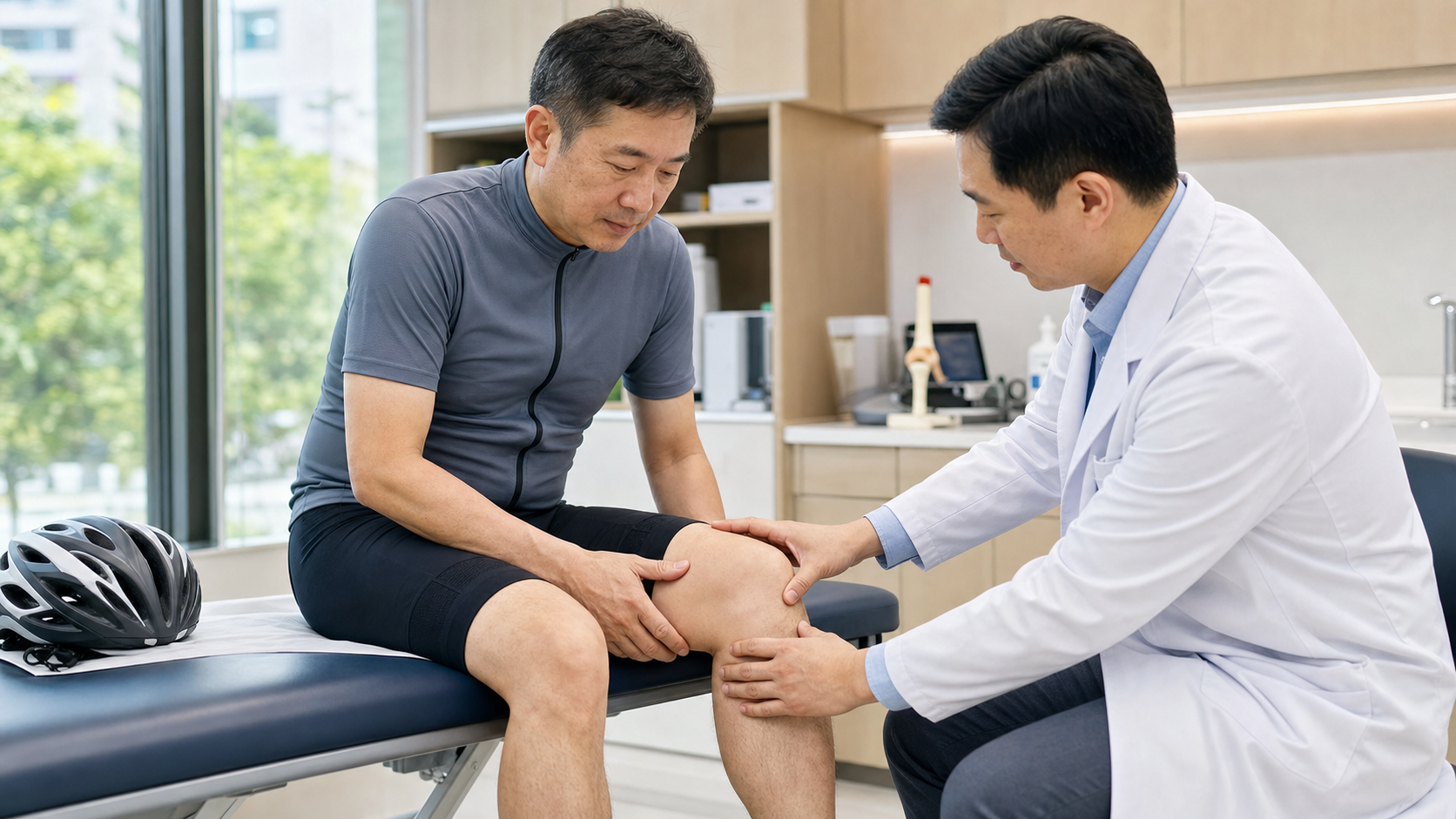
Opening: The Rider Who Kept Saying “Just Push Through It”
I’ve been working with athletes and recreational exercisers for fifteen years now. If I had to pick one phrase I’d most like to delete from my trainees’ vocabulary, it would be: “Coach, I think if I just push through it a little longer, it’ll get better.”
I’ll never forget a cyclist in his forties—let’s call him A-Hong. He’d had pain on the outside of his knee for about three weeks. Every climb sent a sharp twinge through it, but because he’d signed up for the Wuling Challenge, he chose to “push through it.” He forced his training volume from 150 kilometers a week up to 220, popping painkillers like candy. Two weeks before the event, he couldn’t even walk his bike without pain. He never made it to Wuling, and ended up spending nearly four months in rehab. It was a classic case of iliotibial band syndrome—if he’d dealt with it in the first week, he’d probably have been back to training in two to three weeks.
The core question this article aims to solve is simple, yet it’s the one I get asked most often: “Coach, should I see a doctor for this injury or not? And which specialist should I see?” I’ll give you a self-assessment framework you can use on your own, so you don’t end up like A-Hong, letting a small injury snowball into a big one—and so you don’t rush to the ER for every little ache, see the wrong specialist, and waste your time.
First, the most important thing to say: This is an educational self-assessment map, not a guide to playing doctor on yourself. It helps you decide “whether to go, where to go, and how urgent it is.” Actual diagnosis and treatment should always be left to medical professionals.
Foundational Concepts: First, Distinguish Between the “Two Major Categories” of Sports Injuries
Before we talk about when to seek medical care, you need to establish a classification framework. The discomforts you experience in sports can be broadly divided into two categories, and the logic for handling them is completely different.
Category One: Musculoskeletal Injuries (Trauma, Overuse)
These are the most common, including sprains, strains, tendonitis, and pain from overuse—for example, anterior knee pain in cyclists, iliotibial band syndrome, lower back pain, ulnar nerve compression in the hand (commonly called handlebar palsy); plantar fasciitis, medial tibial stress syndrome, and Achilles tendinopathy in runners.
The hallmark of these problems: They’re usually related to specific movements or loads. Rest eases them, specific movements trigger them, and most are not immediately life-threatening. The medical-care logic here is “assess severity and whether imaging/rehab intervention is needed.”
Category Two: Systemic/Medical Red Flags (Cardiovascular, Metabolic, Heat Stroke, etc.)
This category is rarer, but it’s life-threatening, and you absolutely cannot approach it with a “just push through it” mindset. This includes chest tightness or pain during or after exercise, unexplained fainting, palpitations that don’t resolve with rest, severe shortness of breath, confusion, heat exhaustion, and heat stroke.
According to observations in sports medicine, there’s a critical difference in “collapse” during exercise: Exercise-related fainting (syncope) usually involves gradually going limp, with warning signs; cardiac arrest, on the other hand, is a sudden, unguarded collapse with no self-protective movements. (Reference: UT Southwestern Medical Center, URL at the end of this article.) This distinction matters enormously, because the latter requires immediate CPR and an AED, not “helping them to the side to rest for a bit.”
The golden rule of this article: If your symptoms fall into Category Two, do not self-assess, do not observe—stop exercising immediately and seek medical care or call an ambulance. Category One is what we’ll discuss in depth later as the subject of “self-assessment.”
Red Flag Warnings: If These Appear, Don’t Assess—Act Directly
Let me address the most dangerous situations first, because this is the only part where “you don’t need to think.” The table below is what I require every trainee to memorize.
Table 1: Red Flag Warning Signs During/After Exercise
| Warning Symptom | Possible Meaning | Immediate Action |
|---|---|---|
| Chest tightness, pressure, constriction, or pain radiating to the jaw, neck, shoulder, or left arm | Possible cardiac ischemia | Stop exercising immediately, call 119, have someone stay with you |
| Unexplained fainting, collapsing after blacking out | Arrhythmia or cardiovascular problem | Stop exercising, lie flat, seek medical evaluation |
| Palpitations, extremely fast or irregular heartbeat, not resolving after minutes of rest | Arrhythmia | Stop exercising and seek medical care |
| Severe shortness of breath disproportionate to exercise intensity | Cardiopulmonary problem | Stop exercising and seek medical care |
| Confusion, slurred speech, unilateral weakness, facial drooping | Suspected stroke | Call 119 immediately |
| Spiking body temperature, hot red skin or conversely stopped sweating, nausea, dizziness, unsteady gait | Heat exhaustion / heat stroke | Cool down immediately, hydrate, seek medical care |
| Worsening headache, vomiting, drowsiness, double vision after a head impact | Concussion / intracranial hemorrhage | Seek medical care immediately, do not continue exercising |
| Limb deformity, inability to bear weight, sudden severe swelling | Fracture / severe ligament tear | Immobilize, ice, seek medical care |
Multiple sports medicine and cardiology education sources consistently state: If you experience chest pain, chest pressure, discomfort radiating to the arm or jaw, severe breathlessness, dizziness, or fainting during exercise, stop immediately and seek medical care. Especially if you’re over forty, have a family history of cardiovascular disease, high blood pressure, diabetes, or obesity, your risk is higher (reference: UT Southwestern and multiple cardiology education sources, URLs at the end of this article).
I often tell my trainees something that sounds harsh but is true: “You can train again after a muscle strain. There’s no ‘next time’ when your heart fails.” For these warning signs, it’s better to make a wasted trip to the ER than to gamble.
Practical Method: The Three-Layer Self-Assessment for Musculoskeletal Injuries
Okay, the dangerous stuff is covered. The vast majority of remaining sports discomfort falls into Category One—musculoskeletal issues. Here, I’ll teach you the “three-layer assessment” I actually use with my trainees, to help you decide between self-management, scheduling an outpatient appointment, or seeking prompt medical care.
Layer One: The “Nature” of the Pain
First, ask yourself what kind of pain it is:
- Sharp, sudden, accompanied by a “pop” sound: Common in acute strains or ligament injuries; lean toward medical evaluation.
- Dull, achy, sore, more noticeable the day after training: Often delayed onset muscle soreness (DOMS) or mild overuse; usually can be self-monitored.
- Pins and needles, electric shock, numbness: May involve nerves (e.g., sciatic or ulnar nerve); if persistent, recommend medical evaluation.
- A catching or locking sensation deep in the joint: Could be intra-articular structures (meniscus, cartilage); recommend an outpatient evaluation.
Layer Two: The “Behavior” of the Pain
Observe how the pain changes with activity:
- Eases after warm-up, doesn’t worsen after training: Usually a manageable minor issue; you can continue cautiously but reduce volume.
- Hurts more the more you move, to the point of changing your movement patterns (compensation): Red light—compensation creates a second injury. Time to stop.
- Pain at rest or at night: Atypical for mechanical pain; recommend medical evaluation to rule out inflammatory or other causes.
Layer Three: The “Time and Function” of the Pain
This is the key determinant for “should I schedule an outpatient appointment”:
- Affects daily function (walking, stairs, gripping, sleeping) → seek medical care.
- Pain persists more than two to three weeks without improvement, or recurs every time you train → seek medical care.
- Significant swelling, bruising, or joint instability (giving way, slipping) → seek medical care.
Table 2: Three-Layer Assessment Decision Guide
| Scenario | Nature | Behavior | Time/Function | Recommendation |
|---|---|---|---|---|
| Thigh soreness the day after training | Dull ache | Eases with movement | Resolves in 2-3 days | Self-manage, reduce volume |
| Regular sharp pain on outer knee when climbing | Dull-to-sharp | Hurts more the more you ride | Already lasting 2 weeks | Schedule rehab/orthopedics |
| Ankle “pops” and swells after landing | Sharp, sudden | Unable to bear weight | Immediate swelling | Seek prompt medical care |
| Long-term numbness in the palm | Numbness, electric sensation | Worsens with longer rides | Recurring for weeks | Seek medical care (nerve evaluation) |
| Lower back pain radiating to the calf | Pins and needles, radiating | Worsens with forward bending | Persistent with nighttime pain | Seek medical care to rule out nerve root involvement |
Acute Phase Management: From RICE to PEACE & LOVE
Many trainees are stuck with the RICE protocol (Rest, Ice, Compression, Elevation) they learned as kids. That concept has actually been updated. In 2019, sports medicine introduced the more comprehensive PEACE & LOVE framework, covering the entire process from the acute phase through recovery (reference: Physiopedia and related literature reviews, URLs at the end of this article). Here’s my trainee-friendly version:
Acute Phase (1-3 days after injury): PEACE
- P (Protect): Limit activity for 1-3 days to avoid re-injury, but don’t become completely immobile.
- E (Elevate): Elevate the injured area above heart level to reduce swelling.
- A (Avoid anti-inflammatories/over-icing): This overturns a lot of conventional thinking—over-reliance on anti-inflammatory drugs and heavy icing may interfere with the body’s natural inflammatory repair process. The modern view leans toward letting appropriate inflammation do its job.
- C (Compress): Apply moderate compression to reduce swelling.
- E (Educate): Understand your injury, and avoid unnecessary excessive testing and passive treatments.
Sub-acute to Recovery Phase (after 48-72 hours): LOVE
- L (Load): Gradually and progressively restore weight-bearing and movement to rebuild strength.
- O (Optimism): Your mental state genuinely affects recovery. This isn’t just motivational fluff; it’s a factor repeatedly cited in the literature.
- V (Vascularization): Pain-free aerobic exercise helps blood flow and repair.
- E (Exercise): Customized rehab exercises to restore range of motion and strength.
I want to give a special warning to Taiwanese readers about a local trap: painkillers are not a training permit. I’ve seen far too many people push through training on painkillers, switching off the body’s pain alarm, and turning a minor injury into one requiring surgery. The role of painkillers is to let you sleep and get through daily life—not to let you keep hammering the injured area.
Taiwan Medical Care in Practice: Which Department Should You Actually See?
This is the most practical pain point for Taiwanese readers. National Health Insurance is convenient, but choosing the wrong department wastes a lot of time. Let me map out the scenarios my trainees ask about most.
Table 3: Department Guide for Common Sports Injuries
| Your Condition | Recommended Department | Notes |
|---|---|---|
| Sprains, strains, suspected fracture, swollen painful joints | Orthopedics | First choice when X-rays/imaging are needed |
| Chronic overuse pain, wanting movement correction and rehab | Rehabilitation Medicine (Physiatry) | Assesses movement, prescribes physical therapy |
| Chest tightness, palpitations, fainting during exercise | Cardiology (ER first for acute cases) | Life-threatening, don’t delay |
| Numb hands/feet, radiating pain, suspected nerve compression | Neurology or Rehabilitation Medicine | Referral as needed |
| Sunburn, infected abrasions, ulcerated blisters | Dermatology or General Surgery | |
| Heat stroke, heat exhaustion, dehydration | Emergency Room | Don’t observe at home |
| Want a systematic sports performance/injury assessment | Sports Medicine Clinic / Rehabilitation Medicine | Available at some medical centers |
A few practical Taiwan-specific reminders:
- If you can’t decide between orthopedics and rehab medicine: If the injury is recent and you suspect structural damage (fracture, ligament tear) requiring imaging, see orthopedics first; if it’s chronic, recurring, and you want to improve movement patterns and do rehab, see rehab medicine. The two departments refer to each other frequently, so don’t overthink choosing “wrong.”
- Make use of sports medicine clinics: Many medical centers and large hospitals in Taiwan have dedicated sports medicine clinics. For athletes or serious recreational exercisers, these are a better fit than general clinics.
- For acute and dangerous conditions, go straight to the ER: Chest pain, fainting, heat stroke, obviously deformed fractures—don’t wait until the next day’s clinic just to “save on the registration fee.”
- Physical therapy clinics (self-pay): Taiwan now has many licensed physical therapy clinics that are excellent for movement correction, manual therapy, and exercise prescription for chronic overuse injuries. They can be a great supplement to outpatient care.
Taiwan-Specific Scenarios: Risks from Climate, Eating Out, and Training Environments
Sports injuries don’t happen in a vacuum. Taiwan’s environment has a few particular points to watch.
Humid Heat and Heat Stroke
Taiwan’s summers are hot and humid. High humidity makes it harder for sweat to evaporate, significantly reducing your body’s cooling efficiency. When I train trainees outdoors in summer, I emphasize:
- If you experience dizziness, nausea, hot skin but stopped sweating, or unsteady gait, those are warning signs of heat injury. Stop immediately, get to shade, cool down and hydrate; if severe, go to the ER.
- Hydration isn’t just plain water. With prolonged sweating, you need to supplement electrolytes to avoid hyponatremia.
- Train in the early morning or evening, avoiding the peak heat of midday.
Eating-Out Culture and Nutrition
Taiwan’s eating-out culture is convenient, but it’s easy to fall into nutritional traps. Post-training recovery requires adequate protein and carbohydrates. Long-term nutritional deficiency makes minor injuries hard to heal and increases the risk of stress fractures. If you have specific dietary restrictions, chronic conditions, or want systematic nutrition planning, that’s the domain of a registered dietitian—don’t just self-supplement based on internet advice.
Common Injury Patterns by Training Environment
- Riverside bike paths: Lots of intersections, pedestrians, and pets. Crashes and abrasions from braking and swerving are common.
- Mountain climbing routes: Long-duration, high-intensity efforts place heavy loads on the knees and cardiovascular system. Those with cardiovascular risk factors should especially watch for the red flag signs mentioned earlier.
- Track/road running: Repeated impact on hard surfaces leads to many overuse injuries of the plantar fascia, tibia, and Achilles tendon.
Common Mistakes and Corrections
After years of coaching, here are the most common mistaken mindsets I’ve seen, paired with corrections.
Mistake 1: “Pain means I’m getting a workout. Just grit through it.”
Correction: Muscle soreness (DOMS) is completely different from joint, tendon, or nerve pain. The former is a normal adaptation; the latter is an alarm. Learning to distinguish “good soreness” from “bad pain” is a fundamental skill for anyone serious about exercise.
Mistake 2: “I’ll just look it up online and buy my own meds and patches.”
Correction: Self-assessment is for deciding “whether to see a doctor,” not for replacing a diagnosis. If it hasn’t improved after two to three weeks, affects function, or involves red flags, let the professionals handle it. Online information helps you ask better questions; it can’t diagnose you.
Mistake 3: “I’ll see the doctor after this race is over.”
Correction: That was A-Hong’s mistake. Competing while injured creates compensation, and compensation creates new injuries. In most cases, dealing with it two weeks earlier saves you two months later. Ask yourself: is this race worth trading an entire season of training for?
Mistake 4: “The doctor said nothing’s wrong, so I can immediately return to full training volume.”
Correction: “Structurally fine” doesn’t equal “functionally recovered.” Returning to training should be gradual. I typically have trainees rebuild from 50-60% of their original load, observing for pain before increasing.
Mistake 5: “Chest tightness is probably just fatigue or acid reflux. Rest and it’ll be fine.”
Correction: This is the most dangerous rationalization. For chest tightness, radiating pain, or fainting during exercise, err on the side of treating it as a cardiac issue until ruled out. If it turns out to be minor, great. If you gamble wrong, there’s no second chance.
Actionable Advice for Readers at Different Levels
Beginners (exercising 1-3 times per week, just starting)
- Get assessed before you start: If you’re over forty, have chronic conditions or a family history of cardiovascular disease, or have been sedentary and want to start high-intensity exercise, get a health check-up or consult a physician first.
- Keep a pain diary: Record where it hurts, what movements trigger it, and how long it lasts. This is extremely helpful when you see a doctor.
- Don’t fight training volume head-on: The most common beginner injury comes from “progressing too fast.” Keep weekly training volume increases to about 10% or less.
Advanced Athletes (regular training, competition goals)
- Treat body signals as data: Abnormally elevated resting heart rate, declining sleep quality, unexplained fatigue—these can be precursors to overtraining or latent injury.
- Build your medical team: Find an orthopedist/rehab physician and physical therapist you trust, before you’re injured and scrambling.
- Build recovery into your season plan: Treat taper weeks and rest days as part of training, not as laziness.
Those with Chronic Conditions (hypertension, diabetes, heart disease, etc.)
I’m writing this section in the most conservative tone possible, because it’s the most important.
- Discuss an individualized exercise prescription with your primary physician before exercising, including intensity limits and drug-exercise interactions.
- Diabetics: Monitor blood glucose before and after exercise to avoid hypoglycemia; those with foot issues should be vigilant about foot wounds.
- Hypertension/heart disease patients: Avoid breath-holding and straining (Valsalva maneuver), and maintain a lower threshold for seeking medical care regarding the cardiovascular red flags mentioned earlier.
- Absolutely do not adjust your medication or exercise plan on your own because of this article. Everyone’s situation is different; only your physician can individualize your plan.
A Self-Check Flowchart You Can Stick on Your Wall
Finally, let me condense the entire logic into a flowchart you can run through every time you feel discomfort:
- First ask: Are there any red flag warnings? (chest pain, fainting, unrelenting palpitations, severe breathlessness, altered consciousness, heat stroke, obvious deformity) → If yes, stop immediately and seek medical care/call an ambulance.
- No red flags → Classify: Is it a musculoskeletal problem? If yes, proceed to the three-layer assessment.
- Three-layer assessment: Nature (sharp/radiating/numb), Behavior (worse with movement/night pain), Time & Function (over 2-3 weeks/affects daily life/swelling or instability). If any one lights up red → seek medical care.
- All clear → Use PEACE for the acute phase, then LOVE for gradual recovery, and reduce training volume while observing.
- Ongoing monitoring: If no improvement in two to three weeks, seek medical care, period.
Remember, the purpose of this flowchart isn’t to scare you—it’s to help you be at ease when you should be, and be decisive when you should see a doctor. Exercise is a lifelong pursuit. Protect your body intelligently, and you’ll ride longer and run farther.
Quantify Your Pain with a “Pain Scale” for More Precise Medical Visits
Many trainees describe pain only as “kinda sore” or “pretty painful,” which isn’t very helpful to a physician. I teach trainees to use a 0 to 10 pain scale (0 is no pain at all, 10 is the worst pain you can imagine), combined with a functional description of “how this pain affects me.” Communication at medical visits becomes much more precise.
More importantly, the pain score can also serve as a reference for deciding “whether you can keep going.” I often use a simplified “pain traffic light” principle with trainees: if pain stays between 0 and 3 during exercise and within 24 hours after, and doesn’t progressively worsen over time, it’s usually a safe green zone; 4 to 5 means be cautious, reduce volume, and monitor closely; anything at 6 or above, or pain that keeps rising after exercise, is a red zone where you should stop and consider seeking medical care.
Table 4: Pain Score and Action Guide (for self-reference, not diagnosis)
| Pain Score | Sensation Description | Effect on Movement | Recommended Action |
|---|---|---|---|
| 0-1 | Barely noticeable | None | Train normally |
| 2-3 | Mild discomfort, ignorable | No change in movement | Can continue, watch for changes |
| 4-5 | Clearly painful, distracting | Starting to think about changing posture/compensating | Reduce volume, shorten duration, observe |
| 6-7 | Quite painful, affects movement | Obvious compensation | Stop the current session |
| 8-10 | Severe pain, unbearable | Unable to complete movements | Stop and seek medical care |
Special reminder: This table is for musculoskeletal pain without red flag warnings. If any red flag from Table 1 appears, regardless of pain score, seek medical care immediately—the green light logic does not apply.
Physician, Physical Therapist, Coach—How the Three Roles Divide the Work
Many trainees are confused about who to see after an injury. Let me use a simple analogy to explain the division of labor among these three roles, so you’ll know who’s most efficient at each stage.
- Physician (orthopedics/rehab/cardiology, etc.): Responsible for “diagnosis” and “prescribing treatment.” They can order imaging (X-ray, ultrasound, MRI), determine whether there’s a structural problem, prescribe medication, and arrange surgery or referrals when necessary. Only a physician can give you an official diagnosis.
- Physical Therapist: Responsible for “functional recovery” and “movement rebuilding.” After a physician’s diagnosis, physical therapists use manual therapy, modalities, and exercise prescription to help you control pain and rebuild range of motion and strength. Taiwan now has many licensed physical therapy clinics, which are especially well-suited for in-depth treatment of chronic overuse injuries.
- Coach (like me): Responsible for “training planning” and “return-to-sport pathway.” Once you’ve recovered to a certain point, the coach designs a progressive return-to-training program, adjusts technique and equipment setup, and helps prevent the same injury from recurring.
Table 5: Who to See at Different Stages After Injury
| Stage | Primary Goal | Lead Role |
|---|---|---|
| Just injured, unsure of severity | Rule out severe damage, obtain diagnosis | Physician |
| Acute phase after diagnosis | Control pain and swelling, protect | Physician + Physical Therapist |
| Recovery phase | Rebuild range of motion, strength | Physical Therapist |
| Before returning to sport | Progressive loading, technique correction | Coach + Physical Therapist |
| After returning | Prevent recurrence, long-term planning | Coach |
Here’s a common trap Taiwanese readers fall into: Many people stop at “saw the doctor, got meds, pain is gone,” skipping the physical therapy and progressive return phases—and the same injury keeps recurring. Full recovery isn’t “no pain”; it’s “function and strength are back, and it won’t immediately break down again.”
Return-to-Training Criteria: No Pain Doesn’t Mean Healed
This is the point I want to emphasize most, and the one where the most people go wrong. I’ve seen too many trainees try to return to full volume the day after “the pain is gone,” only to be re-injured within a week. When I guide trainees back to training, I use several concrete criteria:
- Pain-free full range of motion: The injured area can move through its complete range without pain—not just “doesn’t hurt when still.”
- Bilateral strength symmetry: The injured side’s strength has recovered to near the healthy side (generally aiming for about 90% or more of the healthy side), to avoid returning with a significant weak side.
- Can complete sport-specific movement tests: Runners can jog pain-free; cyclists can pedal pain-free at a certain duration and power. Test progressively, not all at once.
- Psychological readiness: No more fear or overprotective compensation around the injured area. This is often overlooked but critical.
If any of the above isn’t passed, I won’t let a trainee return to full volume. The principle of return is always progressive, reversible, and observed: start at 50-60% of the original load, increase by about 10% each time, and drop back a step if pain returns. This is far faster than charging back at full volume, getting re-injured, and starting over.
Three Adapted Real-World Case Studies: Learning “How to Judge”
Principles alone are too abstract. Let me use three scenarios adapted from my actual coaching experience to demonstrate how this assessment logic runs. The case scenarios are fictional for teaching purposes, but the judgment logic is real.
Case 1: Runner Xiao-Mei, Heel Pain on Every Step After Training
Xiao-Mei runs three to four times a week. Recently, she’s had severe heel pain on the first step out of bed each morning. It eases after a few steps, but returns in the later stages of her runs.
How to judge: The nature is a classic “worst at first step, eases with activity” pattern; the behavior is “persistent, worsens in the later part of runs”; in terms of time, it’s been recurring for over two weeks and is starting to affect her morning walking. In the three-layer assessment, the “lasting more than two to three weeks and affecting daily function” criterion lights up red.
My advice: This is a very typical plantar fascia-related presentation. She should schedule a rehab medicine evaluation and stop accumulating more mileage for now. Xiao-Mei’s mistake was rationalizing it for two weeks with “it loosens up once I run,” which was just a temporary pain-relief illusion.
Case 2: Cyclist A-De, Numbness in Pinky and Ring Finger After Long Rides
After a long ride of over 80 kilometers, A-De’s right pinky and ring finger go numb. Resting overnight helps, but it comes back on the next ride.
How to judge: The nature is “numbness, electric sensation,” involving nerves; the behavior is “more pronounced the longer the ride”; although rest relieves it, it’s been recurring for weeks. Once numbness recurs, you shouldn’t just dismiss it as “normal from pressure.”
My advice: This likely involves ulnar nerve compression in the hand. Beyond medical evaluation, the cyclist should also review his bike fit and handlebar grip position. This is a good example of how some sports injuries require not just medical treatment but also addressing the root cause in equipment and posture—otherwise it heals and then comes right back.
Case 3: 50-Year-Old Lao-Wang, Chest Tightness on a Climb
Lao-Wang is 50 with a history of hypertension. Midway up a climb, he felt chest tightness and was more breathless than usual. It eased after he stopped to rest, and he thought, “Probably just out of shape.”
How to judge: Stop. This doesn’t even enter the three-layer assessment. Chest tightness, related to exercise, plus age and hypertension risk factors—this is an unequivocal red flag.
My advice: Even if it eased with rest, he must seek medical evaluation for his heart. You can’t brush this off as “out of shape.” Exercise-induced chest tightness that resolves with rest is exactly the classic scenario that requires ruling out cardiac ischemia. Lao-Wang later saw a cardiologist and had further testing—regardless of the results, the decision to “get it checked out” was itself the right call.
FAQ
Over years of coaching, there are some questions I get asked almost every month. Here they are, all in one place.
Q1: Should I ice or heat after an injury?
The general principle: in the acute phase (first day or two after injury, with swelling), focus on protection, compression, and elevation. Ice can be used briefly for pain relief, but don’t over-rely on it. Once past the acute phase and into recovery, warmth and circulation-promoting activity are more helpful. But every injury is different in detail—which is why we recommend seeing a professional to determine which stage you’re in.
Q2: Can I take painkillers or anti-inflammatories on my own to get through a race?
I strongly advise against using medication as a “permit to keep training.” Painkillers switch off the body’s alarm, allowing you to pile more damage onto an injured area. If you have a genuine short-term need, consult a physician or pharmacist rather than self-dosing long-term.
Q3: How long does rehab take?
There’s no standard answer. It depends on the type and severity of the injury, how compliant you are, your age, and overall health. Full recovery from soft tissue injuries can range from weeks to months. The key is not to stop midway just because “it doesn’t hurt anymore.” Returning to full training before function is fully restored is a recipe for re-injury.
Q4: My health check-up results are all normal. Can I safely train at high intensity?
A general health check-up is not the same as an exercise risk assessment. If you’re starting high-intensity training, are older, or have chronic conditions, discuss with your physician whether more targeted assessments (such as an exercise ECG) are needed. Let the physician decide, rather than judging from your check-up report’s red marks yourself.
Q5: Do children or adolescents handle sports injuries the same way?
Not exactly. Growing children have different bones and growth plates than adults. Some seemingly minor injuries carry different significance in adolescents. It’s recommended to have injuries evaluated by a physician rather than directly applying adult self-management logic.
Q6: I don’t have an obvious injury, but I feel generally exhausted and can’t train well. Do I need to see a doctor?
If you recover after a few days of rest and adjusted training volume, it’s likely accumulated fatigue. But if it’s accompanied by persistently elevated resting heart rate, unexplained weight loss, chronic poor sleep, low mood, or fatigue that doesn’t improve no matter how much you rest, it’s worth seeing a doctor to rule out overtraining syndrome or other underlying health issues.
Q7: Can I still train other body parts after an injury?
In most cases, yes—and this is one difference between smart exercisers and the average person. A sprained ankle doesn’t mean you can’t train your upper body or do core work within a pain-free range. Maintaining overall fitness and avoiding deconditioning from complete rest is very helpful for returning. The prerequisite is “don’t involve or aggravate the injured area,” and ideally within a range confirmed by your physician or physical therapist.
Q8: Can I trust advice from the internet and AI?
All educational content, including this article, can only help you “build a framework and learn to ask the right questions”—it cannot replace an in-person diagnosis. Online information can’t see your actual condition, touch your injury, or perform examinations. Treat it as a map that walks you into the clinic, not as the clinic itself.
Q9: What if I saw a doctor but felt I wasn’t properly evaluated?
You have the right to seek a second opinion. Especially for chronic, recurring injuries that affect your athletic career, finding a physician or therapist with sports medicine or sports injury experience often yields a more tailored evaluation. Clearly describing your sport, training volume, and the circumstances of your symptoms will make the evaluation more precise.
Conclusion
Let’s return to A-Hong from the opening. He eventually recovered and completed the Wuling Challenge. But he once told me something I’ve never forgotten: “If I’d just gone to the doctor properly during those three weeks, I wouldn’t have wasted four extra months.”
Seeking sports medicine care is never “showing weakness”—it’s professional management of your own body. The truly impressive athlete isn’t the one who pushes through injury; it’s the one who knows when to stop, when to see a doctor, and when to hand their body to the right professionals.
I hope this article becomes a map you keep at hand. Memorize the red flags, practice the three-layer assessment, save the department guide. Leave the rest to the medical team you trust.
This article is educational content and cannot replace individual diagnosis and treatment advice from a physician, physical therapist, or dietitian. If you have any symptoms suggestive of cardiovascular, metabolic, or severe traumatic issues, seek medical care immediately or call 119.
References
- UT Southwestern Medical Center — What to do if someone collapses during exercise: https://utswmed.org/medblog/syncope-cardiac-arrest-exercise/
- Physiopedia — Peace and Love Principle: https://www.physio-pedia.com/Peace_and_Love_Principle
- PMC — Review of PEACE and LOVE the new era of RICE in acute soft tissue injury management? A narrative review: https://pmc.ncbi.nlm.nih.gov/articles/PMC12489226/
Related Reading
- Physical Therapy for Running Injuries: When to Seek Medical Care, When to Self-Manage
- Pain Perception in Exercise: Can Pain Tolerance Be Trained? A Complete Breakdown from Science to Practice
- Pain in Endurance Sports: How to Distinguish Discomfort You Should Push Through from Warning Signs You Should Stop Immediately
- The Complete Guide to Sports Massage and Soft Tissue Therapy: Benefits, Timing, Professional Care, and Self-Care
FTL 與 SYB 車隊專訪 西進武嶺 實用攻略分享! 2小時 如何練?!你不知道的眉角!新手準備武嶺必看 EP1 | 實力派女車友 | 精華版 | 公路車 | CTYeh
4 年前
一日北高/長距離團騎 常見問題補充篇 / 組團或跟團的眉角 / 壯車友容易被瘦車友慢性拉爆 / 原來屁股痛可能是這個原因...? / 風場配速法 / 公路車 / CT Yeh
2 年前
Never Stop 西進武嶺 前後雙機 完整全程錄影 訓練台 實境
8 年前
CT 喇低賽) 武嶺牽車 才是王道 西進牽車四小時內秘訣 攝手位置 如何判斷 防抽筋小秘訣
7 年前
西進武嶺 自製新版AI配速表產生器 x 賽前攻略 抱佛腳! 沒有功率計也可以產生配速表嗎?有什麼其他眉角賽前要注意的呢? | 西進武嶺 / 東進武嶺 KOM 攻略 | 公路車 | CT Yeh
4 年前
西進武嶺 免費訓練分析服務 Intervals | 練不夠還是練過頭?你哪一種類型選手?AI模型告訴你! | 備戰神器 | 公路車 訓練 | CT Yeh
4 年前
單車AI教練!全新 ChatGPT4o 幫你分析訓練成果!排武嶺課表,分析騎車姿勢! 太神了! / 公路車 / CT Yeh / feat. 緯緯
2 年前
2026 輪霸西濱200K 挑戰VLOG / 第一集團 / 首次參加..經驗不足、膀胱不足 /死守6H內 / AI戰鬥力顯示系統 / 公路車 / CT Yeh
4 個月前