Xiding Climb Full Analysis: How to Ride the 3.16km, 10% Average Grade Mini Beast on Alishan Highway
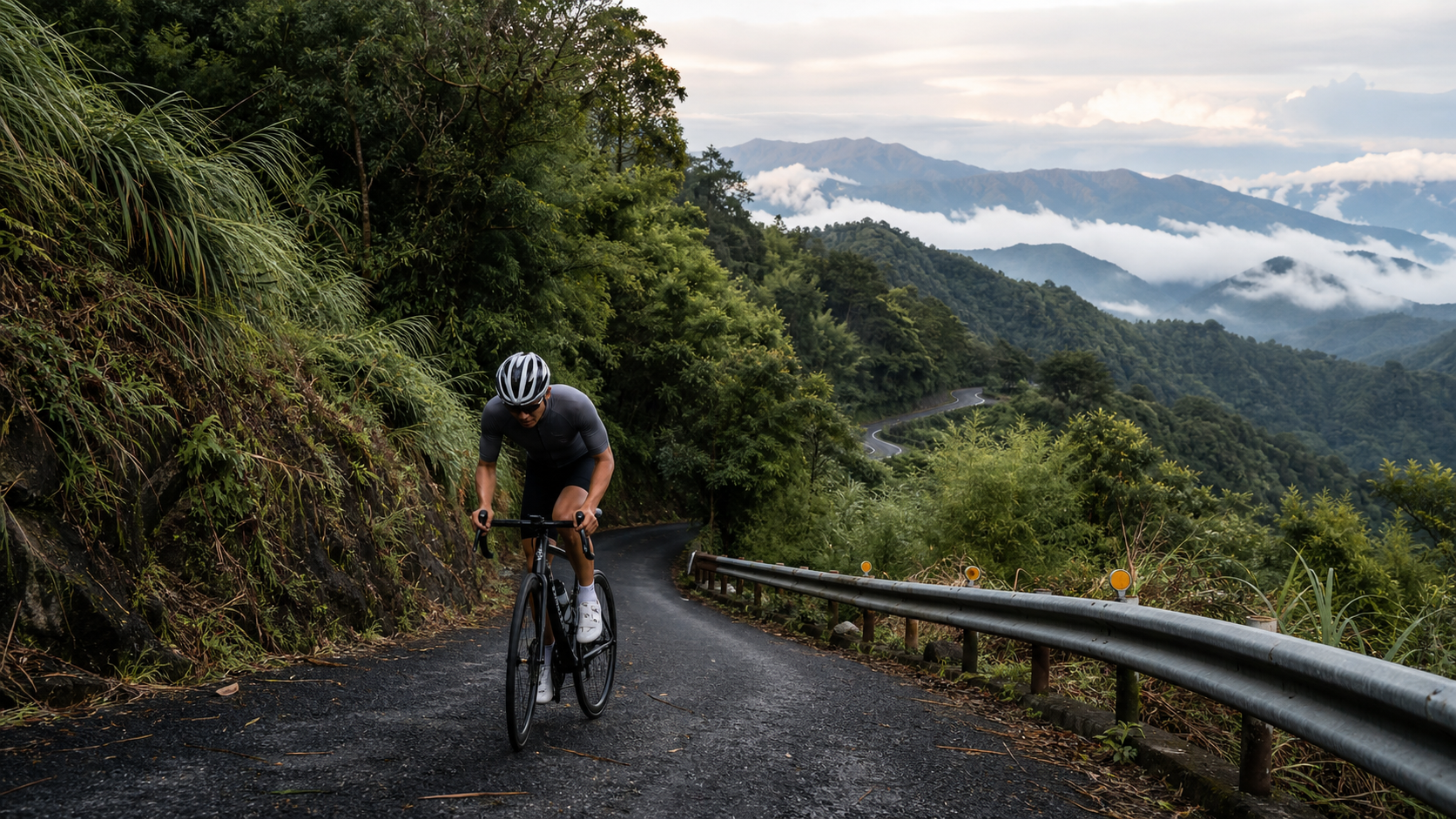
The Xiding section around the 53K mark of Alishan Highway (Provincial Highway 18) is an open secret among local Chiayi cyclists as the “little demon” — less than 3.2 km long, yet climbing over 360 meters in a short span, with an average grade pushing 10% to 11%. It’s short, but anything but friendly.
Route Overview and Real Data Analysis
Xiding, located in Fanlu Township, Chiayi County, is a highly representative climbing section along Alishan Highway (Provincial Highway 18). Geographically situated around the 53K mark, the area around Xiding’s endpoint sits at roughly 1,250 meters above sea level, serving as the gateway to the renowned landmark “Eryanping,” famous for sea-of-clouds and sunset views. In the cycling community’s database, this route is marked as a Strava segment, ID 8712958, and is a regular staple for many Chiayi and Nantou cyclists training their climbing intervals.
Based on the segment data used in this article:
| Item | Data |
|---|---|
| Total Distance | 3.16 km |
| Total Elevation Gain | 362.5 m |
| Average Grade | Approximately 10–11% |
| Category | Category 2 (per platform classification system) |
| Elevation Difference | Approaching 360 m |
Worth noting: if you simply calculate average grade by dividing elevation gain by distance, it lands around 11.4% — slightly more punishing than the 10.1% some databases list. This kind of discrepancy is common on short climbing segments, as GPS point-capture errors at the start/finish and localized steep pitches skewing the average can easily affect the numbers. In practice, cyclists who have ridden Xiding commonly report that several mid-section pitches spike to 15% or higher, which is exactly why “10% average” sounds unremarkable on paper yet feels anything but when you’re on the bike. This article takes a conservative but honest approach to the data: whether it’s 10.1% or 11.4%, Xiding is an unambiguously hard, short climb that demands serious respect. Readers should rely on their own on-site feel and computer readings during actual rides rather than fixating on single-digit statistical discrepancies.
To put it in terms most people can relate to: a 10% grade means climbing 10 meters vertically for every 100 meters forward — more than double what most urban bridge approaches (typically 5–6%) demand. And Xiding offers almost no breather sections to recover, making it a “be ready the moment you roll on” kind of route. Unlike longer climbs that follow a three-phase structure of warm-up, main effort, and taper, Xiding negotiates with your lungs and quadriceps from start to finish.
Within the broader Alishan Highway climbing system, Xiding is just one small segment of a massive ascent spanning over 70 km with more than 2,500 meters of total elevation gain. But precisely because it condenses short distance and high grade into one punchy package, it has become an excellent benchmark segment for cyclists who don’t want to spend all day on long climbs but need a quick test of their current weekly form.
Start to Finish: Section-by-Section Strategy
Though short, Xiding’s gradient distribution isn’t a uniform straight-line climb. In practice, it can be conceptually split into three sections to prepare your fitness and pacing:
Section 1 (Approx. 0–1 km): The Deceptive Easy Start
Most challengers will feel a “this isn’t so bad” illusion in the first few hundred meters, with grades possibly sitting around 6–8%. This is the classic trap section veterans call “the devil hides in the back half.” The recommendation here is to maintain a steady output below your lactate threshold, keeping power between 85–95% of FTP, and absolutely avoid sprinting for position at the start — Xiding may be short, but short climbs are the easiest place to misjudge how much gas you have left. Many riders burn through the energy they’d need later within this first kilometer.
Another key focus in this section is establishing your breathing rhythm. A fixed breathing cadence like “two breaths in, two breaths out” or “three in, three out” is recommended, so you build a regular pattern before entering a severely oxygen-deprived state. This pays off significantly when you need to survive the steep pitches ahead.
Section 2 (Approx. 1–2.3 km): The Core Steep Zone
Once you hit the middle of the segment, the grade ramps up noticeably, with some stretches reaching 12–15% or even higher. This is the decisive zone that determines whether you finish without putting a foot down. Recommendations for this section:
- Proactively shift to the small chainring paired with a large rear cog, keeping cadence in the 70–85 RPM range to avoid excessive knee strain from grinding too slow
- Keep your upper body relaxed and avoid death-gripping the handlebars, allowing your airway to stay open — excessive shoulder and neck tension only wastes energy
- If your heart rate stays above the anaerobic zone for too long, alternate between standing and seated pedaling to spread fatigue across your quads and glutes; stand for about 10–15 seconds before sitting back down, letting muscle groups take turns resting
- Keep your eyes on the road 3–5 meters ahead rather than staring down at your front wheel, so you can anticipate gradient changes early and adjust your weight distribution
This is where Xiding truly “drops” people. Based on heart-rate data feedback from many challengers, it’s easy to spike above 92% of max heart rate in this stretch. If you lack a foundation of high-intensity interval training, be sure to slow your pace — better to ride slower than to push so hard you cramp up here.
Section 3 (Approx. 2.3–3.16 km): The Finish and Mental Barrier
The final few hundred meters typically ease off slightly in grade, but because the preceding sections have heavily depleted your glycogen and phosphocreatine stores, this is ironically where many riders “blow up” — the so-called “false flat trap.” The gradient number looks lower, but your body no longer has the reserves to feel that difference.
It’s recommended to set visual finish markers in advance (such as a specific curve, utility pole, or building along the roadside), breaking the long-distance psychological burden into short sprints and conquering them one by one. Many experienced riders start “counting utility poles” or “counting curves” here, replacing abstract “how much farther” anxiety with concrete, countable mini-goals. This is a common chunking strategy in sports psychology, and it works especially well on short, brutal routes like Xiding.
Gear Ratio and Equipment Recommendations
Though Xiding is short, the grade numbers tell us one thing: a compact crank (or even sub-compact) is a necessity, not a luxury.
Recommended setup:
- Front derailleur/crankset: 50/34T standard compact, or the more conservative 48/32T sub-compact; riders with weaker fitness can even consider lower ratios adapted from mountain bike drivetrains
- Rear derailleur/cassette: At minimum pair with an 11-32T; riders with weaker fitness or a preference for conservative riding should step up to 11-34T or even GRX’s 11-36T
- Tire pressure: The grade is steep but road surface quality is acceptable; standard road bikes can stay within the manufacturer’s recommended pressure range without needing to drop pressure specifically for this climb. However, if you’re concerned about cramping or rough pavement, dropping 5–10 psi can add comfort
- Bike weight: If you’re running a long-distance touring setup with saddlebags or frame bags, Xiding’s perceived difficulty rises significantly. It’s advisable to strip unnecessary weight before tackling this segment
If your lowest gear is only a traditional 34x28T combo, you’ll likely be forced into standing pedaling through Xiding’s core steep zone, significantly increasing strain on your cardiovascular system and muscles while raising cramp risk. In recent years, many amateur cyclists have opted for electronic shifting paired with wider-range cassettes, and more people are choosing e-bikes for Alishan Highway challenges. These are all reasonable choices made through honest self-assessment of your fitness — there’s no need to stubbornly insist on an unsuitable gear ratio just to look “hardcore.”
Nutrition and Hydration Strategy
Since the segment itself is short in ride time (10–25 minutes depending on ability), a solo Xiding effort doesn’t require a complicated fueling plan. In practice, though, Xiding is usually part of a longer Alishan Highway challenge (such as riding from downtown Chiayi straight up to Shizhuo, Fenqihu, or even Alishan itself), so your fueling strategy should be planned around “the entire trip” as a unit:
- Before reaching the Xiding section, make sure you’ve completed a full carbohydrate feed (gel or sports drink), and finish your last solid food intake 15–20 minutes before entering the steep section
- During the Xiding segment itself, eating solid food while climbing is not recommended — it risks choking or disrupting your breathing. If you need fuel, opt for liquid or gel-based fast carbs
- After passing Xiding, taking a brief rest at the nearby observation deck is a good time to replenish fluids and electrolytes. Mountain climates have large day-night temperature swings, and even in cooler conditions, prolonged effort causes significant fluid loss
- Carry at least 750ml of water capacity on the bike; if your itinerary covers the entire Alishan Highway, refilling at roadside shops or rest stops along the way is a smart move
Weather and Seasonal Considerations
Due to the terrain uplift effect along the Alishan Highway, clouds and fog—or even brief showers—are common in the afternoon, especially around Xiding where you enter the edge of the mist forest belt and visibility can change rapidly. Recommendations:
- Depart in the morning: Avoid the probability of systematic fog and afternoon thunderstorms, and also avoid peak traffic on certain sections
- Autumn and winter: Large diurnal temperature swings, with cold morning temperatures in the mountains; for long-distance challenges, bring a lightweight windproof layer, as downhill sections are especially prone to wind chill
- Sea-of-clouds season: The autumn-to-winter transition often brings spectacular sea-of-clouds views, but it also means humidity and dew will make the road surface slippery—take a more conservative approach to cornering and braking
- Summer afternoon thunderstorms: Strong afternoon convection in the mountains of south-central Taiwan is the norm in summer; plan to complete the Xiding section before noon and keep an eye on real-time weather updates
Common Mistakes and DNF Risks
Based on the practical experience of many challengers, the most common failure modes on the Xiding section include:
- Pushing through with insufficient gearing: Forcing a standing grind on steep sections with too heavy a gear, causing heart rate to spike past maximum in a short time, leading to an early abandon—or even knee discomfort
- Losing pace control in the early section: Fooled by the “doesn’t look steep” opening stretch, riders sprint with power output above threshold, then run out of steam entirely in the later steep section and are forced to walk the remaining distance
- Neglecting nutrition timing: Treating the Xiding section as a mid-point of a long ride without properly storing carbohydrates beforehand, resulting in “hitting the wall” on the steep slopes, with hypoglycemia-like dizziness and weakness
- Losing the mental battle to the gradient: Short, steep climbs tempt riders into thinking “just power through it in one go,” but excessive output actually lengthens recovery time, making total ride time longer rather than shorter
- Relying on last-minute equipment preparation: Many riders only “happen to” encounter Xiding during a longer Alishan Highway challenge; without confirming beforehand that their gearing can handle double-digit gradients, they often suffer greatly on this section
Reference Target Times for Riders of Different Levels
The following times are for reference on power/fitness level; actual times will vary due to wind conditions, road wetness, total bike weight, and other variables:
| Rider Level | Estimated Completion Time | Recommended Strategy |
|---|---|---|
| Advanced/Race level (FTP 4W/kg and above) | 8-12 minutes | Can handle full standing high-power sprint throughout |
| Intermediate rider (FTP 3-3.5W/kg) | 13-18 minutes | Seated primarily, intermittent standing on steep sections |
| General recreational rider | 18-25 minutes | Steady low cadence throughout, allow brief stops to catch breath |
| Beginner/First-time challenger | 25 minutes or more, including walking sections | Recommended to use the lowest gear on a compact crankset; walking when heart rate is too high is nothing to be ashamed of |
Although Xiding is short in distance, it is an excellent “quick screening” section for assessing your climbing ability—if you can ride the entire section smoothly within a reasonable heart-rate zone without dismounting, it means you already possess the foundational muscular strength and cardiovascular capacity to tackle the longer climbs on the Alishan Highway (such as Fenchihu and Shizhuo). Conversely, if Xiding gives you a hard time, it is advisable to first train muscular endurance on gentler gradient sections before returning to take on this mini beast.
Training Value and Long-Term Planning Recommendations
For riders serious about building climbing strength, Xiding is actually an ideal “interval training ground.” Because a single ascent takes little time, many local riders use a “repeated climb” training method—complete one ascent, coast back down, recover briefly, then climb again, repeating three to five times—thereby accumulating total elevation gain and intensity stimulus equivalent to a long climb in a single ride. This training approach is a highly efficient high-intensity simulation for riders preparing for ultra-long climbs such as Wuling or Hehuanshan, because Xiding’s gradient range (10-15%) closely matches the feel of the hardest sections on many classic long climbs, allowing the body to adapt in advance to the discomfort of sustained high output.
Riders planning a training cycle are advised to schedule repeated Xiding climbs on their weekly high-intensity training day, paired with low-intensity recovery rides on the preceding and following days, to avoid the risk of overtraining from consecutive high-intensity climbing sessions.
Difficulty Comparison with Other Sections of the Alishan Highway
Zooming out to the entire Alishan Highway, Xiding is just one segment among many famous climbing sub-sections. In terms of gradient density, Xiding’s 10-11% average gradient ranks among the steepest intervals in the entire highway system. Compared to the relatively long and gentle section between Shizhuo and Fenchihu, Xiding is more like a “vertical insertion” test. Many riders who regularly ride the Alishan Highway describe different route combinations as “sweet first, bitter later” or “bitter first, sweet later”—if departing from Chiayi City and challenging all the way to Shizhuo or even Alishan, Xiding usually falls in the early-to-middle portion of the journey, when energy is still relatively abundant. But precisely because of this, many people tend to underestimate its difficulty, attacking it with overly high power output, only to find the subsequent sections becoming a struggle.
Conversely, if you simply want to do a targeted gradient workout on a weekend afternoon without tackling the entire Alishan Highway, combining Xiding with other nearby short climbs into a “Xiding Series” is a common weekend group-ride menu for local Chiayi teams. This modular route-planning approach makes Xiding not just a node in a long-distance challenge, but also a complete standalone training session.
Equipment Maintenance and Pre-Ride Inspection Reminders
When facing sustained gradients above 10%, beyond riding technique and physical preparation, the mechanical condition of the bike itself is equally critical. Before challenging Xiding, pay special attention to the following maintenance points:
- Brake system: Whether climbing or descending, brakes play a vital role—especially since the descent is equally steep; prolonged light braking can cause brake pads to overheat or even fail. Before departure, confirm brake pad thickness and that brake fluid/cables are functioning properly
- Drivetrain: Frequent shifting on steep slopes demands high precision from both front and rear derailleurs. Before departure, check whether shift cables have slack, to avoid the misery of chain skip or jamming mid-climb
- Chain maintenance: High-load pedaling causes greater wear on the chain and cassette; regularly lubricate and clean the drivetrain to reduce unnecessary energy loss during power transfer
- Wheels and tires: Check for significant tread wear or embedded debris on tires; mountain roads occasionally have falling rocks or gravel, and poor tire condition increases the risk of flats on steep sections
These seemingly trivial inspection items are often the hidden key to whether a Xiding challenge goes smoothly. After all, a mechanical failure halfway up a steep climb is far more difficult to deal with than on flat roads.
Practical Interpretation of Heart Rate and Power Data
For riders accustomed to training with heart rate straps or power meters, the Xiding section is a valuable data sample worth recording and analyzing. Since there is almost no recovery section with gentler gradient throughout, the heart rate curve typically shows a rapid climb and then a plateau pattern after entering the second core steep section—quite different from the “sawtooth heart rate” commonly seen on long climbs.
In terms of power data, it is recommended to set a reasonable target power zone before the challenge, avoiding output far above functional threshold power (FTP) in the opening section. Experienced riders typically adopt a variation of the “negative split” strategy: deliberately holding power 5-10% lower in the early section to ensure there is still reserve to maintain steady output on the later steep section, rather than going out too hard and being forced to slow dramatically or even dismount later.
For riders without a power meter, self-monitoring can also be done using the Rating of Perceived Exertion (RPE, 1-10 scale): aim for RPE 6-7 on the first section, allow it to rise to RPE 8-9 on the second core steep section, and fine-tune the final section based on current condition. If you have already reached RPE 10 (at the edge of exhaustion), it is better to slow down than to force the pace, to avoid cramping or injury.
FAQ Quick Answers
Q: Is Xiding suitable as a first challenge climb for cycling beginners?
A: The short distance makes Xiding relatively beginner-friendly, but double-digit gradients are still hardcore for newcomers without climbing experience. Beginners are advised to first build foundational strength and riding experience on longer sections with 5–7% grades before taking on Xiding for a more rewarding and safer experience.
Q: Can e-bikes take on Xiding?
A: Yes. In recent years, tackling the Alishan Highway system with e-bikes has become quite common. The steep slopes of Xiding are relatively less demanding for e-bikes, but it is still recommended to plan battery range carefully. If your route includes longer climbs beyond Xiding, battery management requires even more cautious assessment.
Q: What time of day has less traffic, suitable for a focused challenge?
A: Early mornings on weekdays are usually the least busy. On weekends and holidays, afternoons tend to see more tour buses and self-driving tourists. If you are aiming for a personal best, it is advisable to avoid peak weekend hours.
Q: How is the traffic volume and riding safety on the Xiding section?
A: The Alishan Highway (Provincial Highway 18) is a major arterial road. Besides passenger cars and tour buses, there are also many heavy motorcycles and freight vehicles. Combined with limited visibility on mountain curves, it is recommended to wear high-visibility cycling jerseys at all times, install front and rear lights, and maintain the habit of riding safely on the right side. Stay especially alert during low-visibility foggy periods.
Safety Reminders for the Descent
Many people focus on studying the climb but overlook that the descent on Xiding demands equal caution. A gradient above 10% translates into considerable gravitational acceleration on the way down as well. Whether you are returning the same way or riding it as part of a longer route’s descent, please keep the following points in mind:
- Brake distribution: Avoid prolonged use of the front brake alone. Alternate between front and rear brakes with intermittent application to reduce the risk of overheating or locking up a single wheel.
- Slow down before corners: Complete your braking before entering a turn, and avoid emergency braking mid-corner, which can cause loss of control.
- Maintain distance: If riding in a group, keep a safe gap on descents to avoid chain-reaction collisions from sudden braking by the rider ahead.
- Look ahead: With many mountain curves, observe road markings and oncoming traffic well in advance. In particular, slow down further in foggy sections with poor visibility.
Although descending does not require physical effort, it demands no less skill and concentration than the climb. Safety should always be the top priority when riding Xiding—and the entire Alishan Highway.
Summary: Put Xiding on Your Training Map
Considering all the data analysis, segment breakdowns, and gear recommendations above, the reason Xiding deserves a place on the map of every cyclist who takes climbing training seriously is simple: it delivers the most honest gradient feedback in the most compact distance. Whether your goal is preparing for ultra-long climbs like Wuling or Hehuan Mountain, or simply finding a stretch of road to test your current fitness, Xiding will give you an unambiguous answer in just ten to twenty minutes.
The next time you plan a cycling trip in Chiayi, consider adding Xiding to your route list—bring the right gearing, ample supplies, and a willingness to honestly face your limits, and go meet this condensed little demon of the Alishan Highway.
Related Reading
- Between Clouds and Tea Aroma: Xiding, the Mini Paradise Road Chiayi Cyclists Love and Hate
- Alishan Highway Challenge Plan: 11% Average Grade Training from Chiayi to Alishan
- Alishan Highway (Provincial Highway 18) Riding Guide: The Pilgrimage Road from Chiayi to Alishan
- Complete Alishan Highway Guide: The 53.57 km, 2,000+ Meter Climb Pilgrimage of Southern Taiwan
台北闊瀨陡坡 騎旅 / 日本單車雜誌編輯車友臨時加入!/ 髮香才是最強的 / feat. 北迴歸線小隊 / 公路車 CT Yeh
6 個月前
一定要騎一次!阿里山最深處:里佳部落!單車旅行 | 2800m爬升 | 深度部落體驗:嗨翻晚會、螢火蟲、銀河 | feat. JJSC & 廢物伙伴 | 公路車 CT Yeh
9 個月前
阿里山塔塔加 兩倍特濃版!全新隧道開通! 進喔!公路車 | CT Yeh
3 年前
大武山20%魔王陡坡【JJSC南台灣遊騎Day2】!屁股真的要裂開了...凡士林抹滿也沒用?神秘金教堂還有超便宜夜市
3 個月前
半日 小台灣 極限單車路線挑戰實錄
7 年前
爬坡ITT實境)台中 魔王 松鼠坡 首航 6:12 大肚山 大三元 科福路
8 年前
梅山36彎 奮起湖 #公路車 之旅 2400m
6 年前
梅山36彎 奮起湖 單車挑戰 下集 #公路車
6 年前