The Business Model of Professional Cycling Events: Sponsors, Broadcasting, and Revenue Structure
文章導覽
The Business Model of Professional Cycling Events: Sponsors, Broadcasting, and Revenue Structure
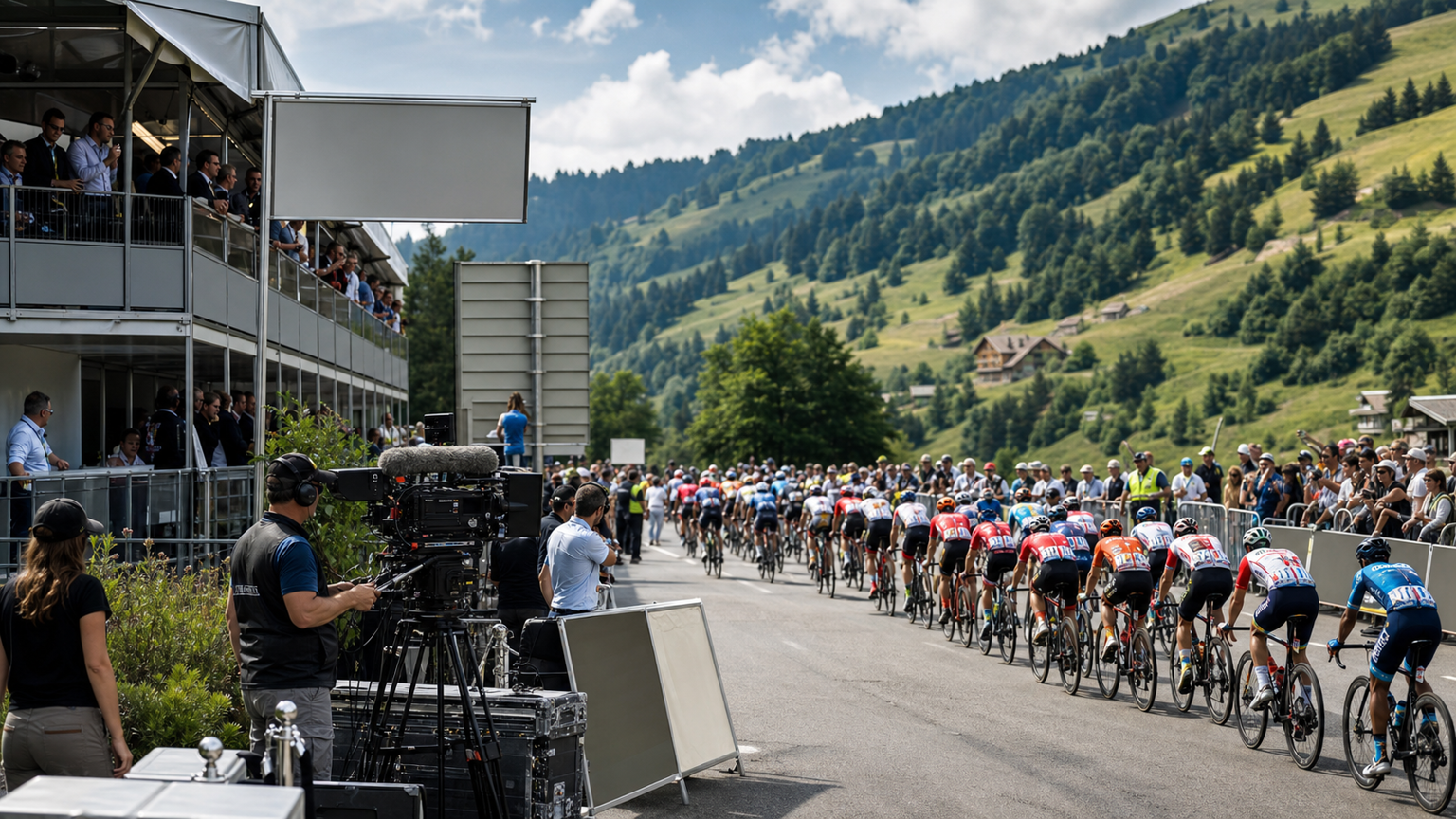
Every July, when the helicopter cameras of the Tour de France sweep across the French countryside, transmitting that majestic scenery to hundreds of millions of viewers worldwide, what operates behind the scenes is not just the power of sport, but a meticulously designed commercial machine. Professional cycling may seem romantic, but it is in fact a complex economic ecosystem built on sponsorship, media rights, licensing fees, and tourism promotion. Understanding this business model not only helps us see the motivations behind race news, but also gives us a clearer picture of the long-term sustainability challenges and opportunities facing professional cycling.
The Revenue Structure of Race Organizers
Taking the Tour de France organizer ASO (Amaury Sport Organisation) as an example, its revenue sources can be broadly divided into the following categories:
1. Television Rights
Broadcasting rights are the most important revenue source for modern major sporting events, and the Tour de France is no exception. According to industry estimates, the Tour’s annual television rights revenue ranges between €100 million and €150 million (ASO has never disclosed exact figures), with broadcast licenses purchased by television networks from more than 170 countries and regions worldwide.
The European market is the core: France (France Télévisions), Belgium (RTBF/VRT), the Netherlands (NOS), Germany (ARD/ZDF), and the UK (ITV/Eurosport) pay the highest rights fees. The North American market has grown rapidly in recent years thanks to NBC/Peacock’s aggressive expansion. The rise of streaming platforms (such as Discovery+/Eurosport’s streaming services) is reshaping the structure of rights deals, and the share of live streaming is expected to gradually surpass traditional television in the future.
2. Host City Fees
The stage routes of the Tour de France are not determined purely by sporting considerations; the financial capacity of local governments also plays a key role. Cities wishing to serve as a stage start or finish must pay ASO “hosting fees” ranging from hundreds of thousands to millions of euros. Taking the Grand Départ in foreign countries as an example, for past overseas starts in the Netherlands (2010) and Belgium (2019), local governments are estimated to have paid fees exceeding €15 million.
In exchange, these fees buy media exposure, tourist visits, and city brand enhancement. From the perspective of a local government’s ROI calculation, this typically delivers considerable value.
3. Title Sponsor
Naming rights sponsorship for the event itself is a significant revenue stream: “Crédit Lyonnais” for the yellow jersey, “Leclerc” for the points jersey—banks, insurance companies, and retailers take turns appearing in the naming rights of each jersey. These sponsorship fees are not disclosed, but industry estimates put the annual naming rights fee for each jersey at between €500,000 and €2 million.
4. Sponsor Advertising and On-Site Advertising
The support vehicles along the race route, race numbers, start/finish arches, and on-site barriers—every visible surface is a potential advertising space. Banks, telecom operators, dairy brands, and automobile manufacturers are the most common categories.
5. Merchandising
The market for Tour de France-branded merchandise is enormous, from replica yellow jerseys and commemorative pins to high-end licensed bicycles, generating tens of millions of euros in retail revenue each year. Licensing management is one of the key responsibilities of ASO’s intellectual property department.
The Business Model of Teams
The commercial logic of teams is fundamentally different from that of race organizers; the core lies in converting victories into brand exposure, and then using that brand exposure to attract sustained sponsor investment.
Calculating Sponsor Exposure Value
Modern sports marketing can now precisely calculate the number of seconds a brand logo appears on broadcast footage and convert it into an equivalent advertising cost (Advertising Equivalent Value, AEV). For example, if a team’s rider wears a jersey bearing a sponsor’s logo throughout the Tour de France television coverage, accumulating dozens of hours of global live exposure, the equivalent cost of mainstream television advertising could amount to 5–10 times the sponsorship fee.
This high ROI makes cycling sponsorship highly popular among European companies, particularly appealing to B2B brands (such as industrial equipment manufacturers and energy companies) seeking to raise awareness in specific markets, especially Europe.
Diversifying Team Revenue
Beyond the title sponsor, mature teams are also actively developing:
- Equipment Sponsorship: Bicycle manufacturers (Trek, Specialized, Canyon, etc.) provide equipment along with cash subsidies
- Appearance Fees: In invitational races or commercial exhibition events, appearance fees for star riders are paid by the event organizers to the team
- Merchandise Sales: The maturation of fan culture has enabled some teams (such as Ineos) to build direct-to-consumer brands of considerable scale
The Income Structure of Riders
The annual income of top WorldTour riders consists of several components:
Base Salary: The UCI sets a minimum wage (approximately €40,000/year in 2024), but top riders’ actual salaries far exceed this, ranging from hundreds of thousands to millions of euros.
Prize Money: The Tour de France winner’s prize is approximately €500,000 (per UCI regulations), but it is typically shared among the entire team, meaning the individual take-home amount is significantly reduced.
Personal Sponsorships and Endorsements: Riders with sufficient fame can independently sign personal endorsement deals for equipment, apparel, and nutritional products, generating additional income.
Post-Race Appearance Fees: Champions or well-known riders are invited to attend commercial events, autograph sessions, and lecture tours for appearance fees.
Challenges and the Future of the Business Model
Although the commercial ecosystem of professional cycling is vast in scale, it also faces several structural challenges:
Sponsorship Dependency: More than 80% of team revenue depends on a single or a few sponsors. If the main sponsor withdraws, an entire team may face dissolution overnight (there are multiple historical examples).
Fragmentation of the Broadcasting Market: The arrival of the streaming era has reduced traditional broadcasters’ willingness to pay, with rights dispersed across multiple platforms, potentially decreasing viewing convenience for audiences.
Aging Audience: The core audience of professional cycling is predominantly middle-aged and older white men, with relatively weak appeal to younger generations. How to reach digital natives has become a long-term challenge.
eSports and Digital Transformation: The rise of virtual training platforms such as Zwift is giving birth to new forms of “digital cycling events,” which may represent a new opportunity to attract younger generations.
Conclusion
Professional cycling is a complex amalgam of sport, art, and commerce. Behind every rainbow jersey champion lies the cyclical operation of a multi-hundred-million-euro commercial ecosystem. Understanding this commercial logic not only makes us smarter spectators, but also deepens our appreciation for Taiwanese riders who continue to chase their dreams in environments lacking commercial support—their perseverance is, in itself, an invaluable spiritual wealth.
Related Reading
- The Business Model of the Tour de France: Sponsorship Structure and Media Rights Analysis of a €1 Billion Event Brand
- The Financial Model of Professional Cycling Teams: Sponsors, Salaries, and Team Operations Explained
- The Culture of Cycling Commentary: European Television Broadcasting and the Professional Ecosystem of Eurosport Commentators
- The Sponsorship Economics of Cycling: The Business Model of Jersey Sponsors, Frameset Sponsors, and Equipment Suppliers