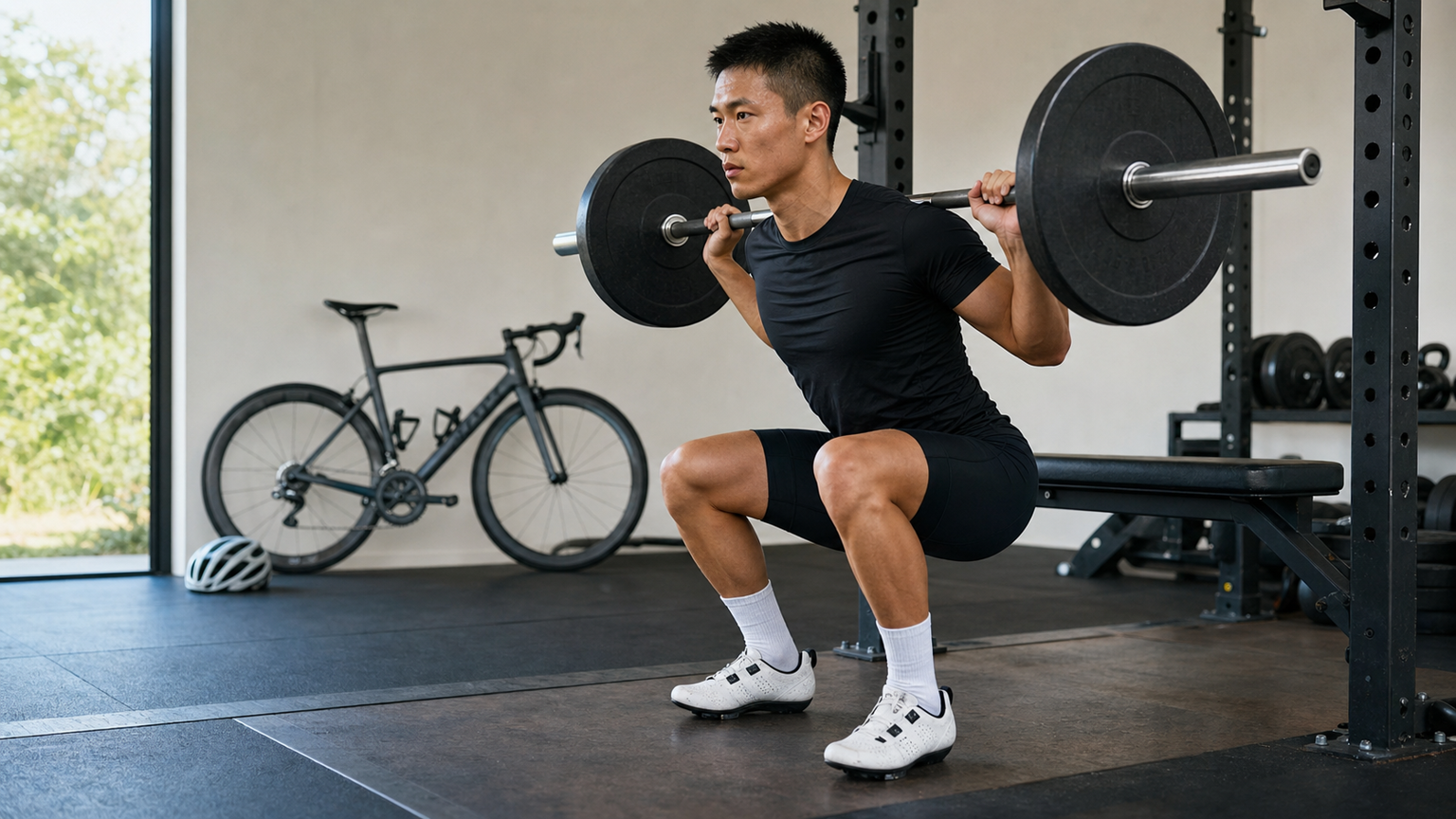
A Cyclist’s Strength Training Plan: Building Strength for Greater Power Output
Many cyclists are wary of strength training, worried that added muscle mass will slow them down, or believing that strength training conflicts with endurance sport. However, a growing body of sports science research confirms that structured strength training not only doesn’t hinder riding performance, but can substantially increase power output, improve climbing efficiency, and effectively reduce injury risk.
Why Do Cyclists Need Strength Training?
Cycling is essentially a repetitive, unilateral movement that primarily engages the quadriceps, glutes, and calf muscles. Long-term riding without strength training can lead to muscular imbalances, excessive knee loading, and reduced pedaling efficiency when fatigued. The main benefits of strength training include:
- Improved neuromuscular efficiency: Training the brain to recruit more muscle fibers simultaneously, generating greater force in a short time.
- Stronger tendons and ligaments: Protecting the joints and reducing the risk of sports injury.
- Improved muscular endurance: High-repetition, low-intensity training delays lactate accumulation and improves long-distance riding performance.
- Balanced muscle development: Strengthening the posterior chain muscles (glutes, hamstrings, lower back) that are relatively underused while riding.
Periodization Plan
It’s recommended to incorporate strength training into your annual periodization plan, divided into three phases:
Phase One: Base Phase (Off-Season, 8–12 Weeks)
The goal is to build foundational muscular strength, using moderate loads (60–70% of 1RM) and high repetitions (12–15 reps).
Train 2–3 times per week, with the following exercises:
- Back Squat: 3 sets × 12 reps, training the quadriceps and glutes, simulating pedaling force production.
- Romanian Deadlift: 3 sets × 12 reps, strengthening the hamstrings and glutes, improving posterior chain strength.
- Split Squat / Bulgarian Split Squat: 3 sets × 10 reps per leg, correcting left-right leg strength imbalances.
- Leg Press: 3 sets × 15 reps, supplementing squat training, suitable for beginners building confidence.
- Calf Raise: 3 sets × 20 reps, strengthening ankle push-off power.
Phase Two: Strength Phase (Pre-Season Preparation, 6–8 Weeks)
Increase the load to 75–85% of 1RM and reduce repetitions to 4–8, focusing on developing maximal strength.
Advanced exercises:
- Front Squat: A more upright torso angle closer to riding position, providing more direct training benefit.
- Kettlebell Swing: Power training that strengthens the glutes’ rapid contraction ability.
- Single-Leg Deadlift: Adds proprioception training, simulating unilateral pedaling movement.
- Farmer’s Walk: A full-body exercise that strengthens core stability and grip strength.
Phase Three: Maintenance Phase (In-Season, Once Per Week)
Maintain training volume during the racing season using high-intensity, low-volume (3–5 sets × 3–5 reps) neural activation training, preventing fitness decline without causing excessive fatigue.
Training Considerations
- Movement quality first: Poor movement form is more likely to cause injury than low load — it’s recommended to seek professional coaching guidance in the early stages.
- Fatigue management: Muscles need 48 hours to recover after strength training; avoid scheduling leg workouts the day after a high-intensity ride.
- Nutrition support: Consume protein (20–30 grams) within 30 minutes after training to promote muscle repair and growth.
- Progressive overload: Increase load by no more than 5% per week to avoid injury from progressing too quickly.
Debunking Common Myths
“Won’t strength training make me bulky and slow down my riding?”
Muscle hypertrophy requires a specific high-calorie diet combined with a particular training program. With the typical training volume and dietary habits of cyclists, strength training usually only increases muscle density (neural adaptation) rather than muscle volume. Research shows that elite Pro Tour riders typically have excellent lower-body strength metrics.
“I ride a lot, so shouldn’t my strength naturally be sufficient?”
Riding primarily trains muscular endurance, not maximal strength. While the two are related, they require different training stimuli. Effectively raising your FTP (Functional Threshold Power) requires attention to both aerobic endurance and strength.
Conclusion
Strength training is an indispensable part of modern cycling training. Incorporating systematic strength training into your annual plan lets you generate greater power during critical climbing efforts, and helps you maintain better pedaling efficiency in the latter half of long-distance rides. Start investing in strength training this off-season, and you’ll see clear improvement next racing season.
Related Reading
- A Cyclist’s Guide to Muscle Building: Developing Functional Muscle Within Endurance Training
- Periodized Strength Training for Cyclists: A Complete Plan from Base Phase to Race Phase
- A Periodized Strength Program for Road Cyclists: A 5-Phase Plan from Off-Season to Race Season
- The Importance of Strength Training for Cyclists: A Guide to Squats, Deadlifts, and Core Training
靠單車減肥35公斤 心得分享與整理
7 年前
2016/4/20 - 中社路 夜騎 半年甩肉14KG 後測
10 年前
ThinkRider 智騎 XXPRO 訓練台,高階機種功能 只要 1/3價格!? 實測功率對比、噪音實測 / 公路車 / CT Yeh
1 年前
一個測試有沒有認真練車的方法😂 #公路車
10 個月前
#公路車 #Fitting 靠人工智慧APP 幫你調整單車
6 年前
[教學] Dashware 教學 如何製作有 速度 功率 心律的 騎車影片 Guages Video
8 年前
一日北高/長距離團騎 常見問題補充篇 / 組團或跟團的眉角 / 壯車友容易被瘦車友慢性拉爆 / 原來屁股痛可能是這個原因...? / 風場配速法 / 公路車 / CT Yeh
2 年前
西進武嶺 免費訓練分析服務 Intervals | 練不夠還是練過頭?你哪一種類型選手?AI模型告訴你! | 備戰神器 | 公路車 訓練 | CT Yeh
4 年前