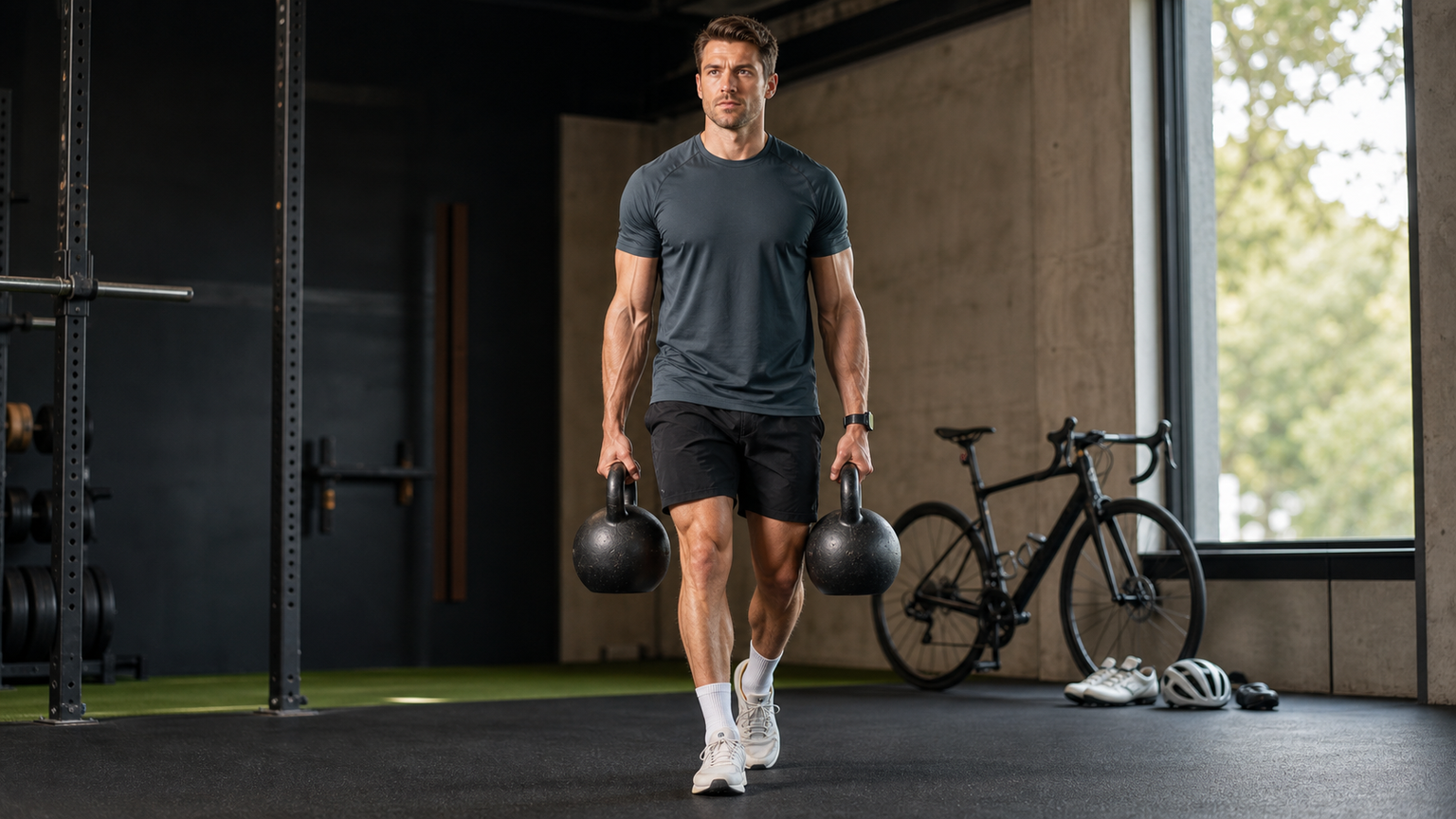
Off-Season Cross-Training: Maintaining Fitness While Letting Your Body Rest
For many cyclists, the end of the season brings both the satisfaction of achieving goals and the physical and mental exhaustion accumulated from a full year of fatigue. At this point, the choice between “complete rest” and “maintaining training” is often confusing. Modern sports science provides a clear answer: the best strategy is to do both—through diversified cross-training, let your body recover from the single stress of riding while maintaining sufficient baseline fitness, avoiding having to rebuild from scratch next season.
Why Is the Off-Season So Important?
Physical Recovery Needs
A full cycling season places cumulative stress on the body that often exceeds what riders are consciously aware of:
- Micro-damage to connective tissue: Tendons, ligaments, and cartilage constantly endure repetitive stress during the season and require a low-intensity period to fully repair
- Nervous system fatigue: The toll that high-intensity training and racing takes on the nervous system is subtle, and full recovery often requires 4–8 weeks
- Hormonal system imbalance: Long-term high training volume can lead to a decreased testosterone/cortisol ratio, affecting body composition and recovery capacity
- Immune system suppression: Immune function declines after overtraining, and the post-season period is a peak time for colds and other minor illnesses
Psychological Recharging Needs
The passion for riding needs regular renewal. Researchers in sports psychology have found that athletes who allow themselves to truly “let go” of training for a period often demonstrate stronger motivation and higher training quality in the following season. Forcing yourself to maintain high-intensity training year-round ultimately only leads to decreased motivation and training burnout.
The Three Phases of the Off-Season
Phase 1: Complete Transition Period (2–4 Weeks)
Timing: Begins immediately after the season ends
Goal: Free the body and mind from seasonal stress, allowing deep recovery
Recommended activities:
- Completely stop structured training: No plans, no power targets, no forcing
- Easy recreational rides (1–2 times per week, entirely dictated by mood)
- Any physical activity that brings you joy: Hiking, swimming, ball sports—as long as it’s fun
- Prioritize sleep: Allow for longer sleep durations to let the body recover deeply
Notes: A slight weight gain (1–2 kg) during this phase is completely normal. There’s no need to overly restrict your diet—your body needs energy for repair.
Phase 2: Cross-Training Foundation Period (4–8 Weeks)
Timing: After the complete transition period
Goal: Maintain baseline fitness through diversified training while continuing to let the cycling-related neuromuscular system rest
Recommended activity combinations:
Aerobic base (3–4 times per week):
- Swimming (most recommended): Full-body, low-impact aerobic exercise
- Mountain hiking: Lower-body aerobic work with psychological recharging
- Easy riding (once per week): Maintain bike feel without chasing intensity
Strength training (2 times per week):
- Weight training (foundation phase): Squats, deadlifts, lunges
- Core training: Dead bugs, bird dogs, planks
- This is the best time of the year for systematic strength training
Flexibility and recovery (2–3 times per week):
- Yoga or Pilates: Address flexibility issues accumulated during the season
- Foam rolling for myofascial release
Sample weekly plan:
| Day | Activity | Intensity | Duration |
|---|---|---|---|
| Monday | Weight training (lower body) | Moderate | 60 minutes |
| Tuesday | Swimming | Low–moderate | 45 minutes |
| Wednesday | Easy ride or hike | Low | 60–90 minutes |
| Thursday | Weight training (upper body/core) | Moderate | 45 minutes |
| Friday | Rest or yoga | Very low | 30 minutes |
| Saturday | Long hike | Low–moderate | 2–3 hours |
| Sunday | Complete rest | - | - |
Phase 3: Riding Reintroduction Period (4–6 Weeks)
Timing: 8–10 weeks before the start of the next season
Goal: Gradually shift the training focus back to cycling and begin building the aerobic foundation for the new season
Characteristics:
- Increase riding frequency to 3–4 times per week
- Begin incorporating Zone 2 steady-state training
- Maintain weight training once per week (transitioning from foundation phase to strength phase)
- Reduce cross-training volume, but don’t stop it entirely (keep one swimming or hiking session per week)
The Science of Fitness Maintenance: How Much Will You Lose?
Many cyclists worry about “losing” the fitness they worked hard to build during the off-season. Scientific research provides the actual numbers:
- VO2max: Declines 2–4% after 2–4 weeks of complete inactivity, but the “training memory” built through long-term aerobic training makes recovery far faster than initial development
- Muscle memory: Regarding the efficiency ratio of muscle loss versus rebuilding, research shows that one month of loss requires no more than 2–3 weeks to regain
- Neuromuscular efficiency: This is the capacity that declines fastest, but it is also the fastest to recover
Conclusion: The fitness decline caused by appropriate off-season rest (4–6 weeks of cross-training) can be fully recovered before the season begins, and it comes with better overall physical condition.
How to Assess Your Recovery Status?
The following indicators can help determine whether you have fully recovered:
- Morning resting heart rate: Returns to normal pre-season levels
- Sleep quality: Feeling that sleep is deep and waking up refreshed
- Riding motivation: Starting to crave riding rather than resist it
- Physical sensations: Chronic pain (knees, neck/shoulders, lower back) has disappeared or significantly decreased
- Energy levels: Feeling energetic in daily life, no longer experiencing chronic fatigue
Psychological Strategies for the Off-Season
- Establish non-cycling interests: Reading, music, travel—don’t let sport become your sole identity
- Reflect on the season’s takeaways: Record this year’s lessons and achievements, and set specific goals for next year
- Maintain social connections: Keep casual contact with riding buddies, but don’t let competitive pressure carry over into the off-season
- Accept natural weight fluctuations: A slight weight gain during the off-season is a normal physiological response; forcing yourself to maintain racing weight will interfere with recovery
Conclusion
The off-season is not an interruption of training but the starting point of next season’s success. Through scientifically planned cross-training, you can achieve two seemingly contradictory goals simultaneously: letting your body truly recover from seasonal stress, and maintaining sufficient baseline fitness to make the next season’s foundation phase more efficient. The best cyclists know that wise off-season rest is one of the most important investments in the entire annual training plan.
Related Reading
- End-of-Season Tapering for Cyclists: Recommendations on the Length and Content of the Off-Season Rest Period
- Cross-Season Training for Cyclists: How to Maintain Baseline Fitness in Winter
- The Complete Rest Week at Season’s End: The Importance of the Annual Adjustment Period and Rest Design
- The Complete Off-Season Planning Guide: Rest, Rebuild, and Strengthen Weaknesses to Take Your Next Season Up a Notch
西進武嶺 免費訓練分析服務 Intervals | 練不夠還是練過頭?你哪一種類型選手?AI模型告訴你! | 備戰神器 | 公路車 訓練 | CT Yeh
4 年前
靠單車減肥35公斤 心得分享與整理
7 年前
單車賞雪 裝備準備及注意事項分享 | 公路車
5 年前
碟煞公路車 銑面器 !? 原來銑完差這麼多! 降低蹭碟機率! | TIME 公路車 保養小記錄 | CT Yeh
3 年前
單車AI教練!全新 ChatGPT4o 幫你分析訓練成果!排武嶺課表,分析騎車姿勢! 太神了! / 公路車 / CT Yeh / feat. 緯緯
2 年前
2026台北自行車展 一日隨意逛小紀錄 / 風櫃嘴16分國手的交流 / 踩台居然刷到季軍🥉 USD150 GET! / ! / CT Yeh
4 個月前
一日北高/長距離團騎 常見問題補充篇 / 組團或跟團的眉角 / 壯車友容易被瘦車友慢性拉爆 / 原來屁股痛可能是這個原因...? / 風場配速法 / 公路車 / CT Yeh
2 年前
Zwift 元宇宙單車世界 如何與全世界同步騎車運動
6 年前