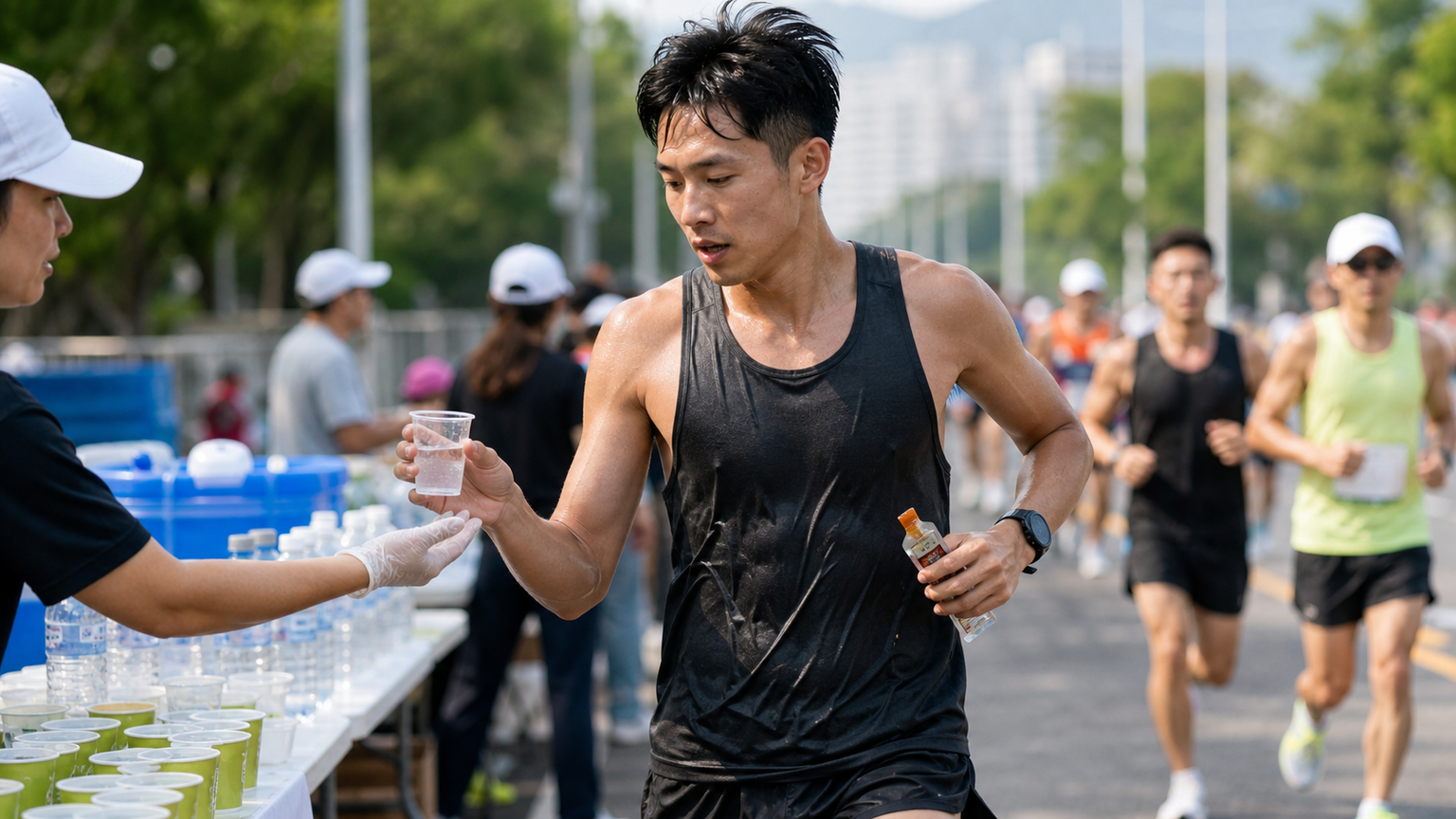
Marathon Fueling Strategy: Hydration and Energy Intake During the Race
Many runners pour countless hours into training, only to fall short on race day because of fueling mistakes. The right fueling strategy can delay fatigue, help you hold your pace, and may even let you speed up in the second half.
1. Why Fueling Matters So Much
The Effects of Dehydration
| Dehydration Level | Body Weight Loss | Effects |
|---|---|---|
| Mild | 1-2% | Elevated heart rate, mild fatigue |
| Moderate | 2-4% | Performance drops 3-8%, impaired judgment |
| Severe | Over 4% | Risk of heat exhaustion, may require withdrawal |
The Risk of Energy Depletion
The human body stores roughly 1,800-2,000 kcal of glycogen. At marathon pace, you burn approximately 65-80 kcal per kilometer (for a 70kg runner). A full marathon burns roughly 2,800-3,500 kcal in total — more than your glycogen reserves — so you must refuel along the way.
2. Hydration Strategy
Pre-Race Hydration
| Timing | Recommended Amount |
|---|---|
| 2 hours before the start | 500ml of water or sports drink |
| 30 minutes before the start | 200ml of water |
Do not over-hydrate before the race — it can lead to (dilutional) hyponatremia.
Hydration Rhythm During the Race
Golden rule: Don’t wait until you’re thirsty to drink — by the time you feel thirsty, you’re already mildly dehydrated.
Aim to take in 150-200ml of fluid every 15-20 minutes. Practical tips:
- Stop briefly at every aid station to drink (drinking while running increases the risk of choking)
- Drink water before sports drinks
- Increase your fluid intake in hot weather
Aid Station Spacing in Taiwan Marathons
Major Taiwan races typically place aid stations every 2.5 to 5 kilometers. Some stations offer:
- Water
- Sports drinks (usually Supau or Pocari Sweat)
- Bananas
- Energy supplements (at some races)
3. Energy Fueling Strategy
When to Start Taking In Energy
Recommendation: Start fueling after 45-60 minutes of running — don’t wait until you feel hungry.
Comparing Energy Fueling Options
| Fuel Source | Calories | Absorption Speed | Pros | Cons |
|---|---|---|---|---|
| Energy gel | 100 kcal | Fast (15 min) | Easy to carry, easy to digest | Overly sweet, needs water |
| Energy bar | 200 kcal | Moderate | Provides fullness | Time-consuming to chew, harder to digest |
| Banana | 90 kcal | Moderate | Natural, contains potassium | Inconvenient to carry |
| Dates | 70 kcal | Fast | Natural sugar | Sticky, less common |
| Sports drink | 50 kcal/250ml | Fast | Replenishes fluid and electrolytes at once | Insufficient sugar content to use alone |
Energy Gel Timing Schedule (Example: 4-Hour Finish)
| Time | Distance | Action |
|---|---|---|
| 15 minutes before the start | 0km | 1 gel (optional) |
| 60 minutes | ~10km | 1 gel + water |
| 105 minutes | ~18km | 1 gel + water |
| 150 minutes | ~25km | 1 gel + water |
| 195 minutes | ~33km | 1 gel + water |
4. Electrolyte Management
Sweating during a long run causes you to lose not just water but also significant amounts of sodium, potassium, and magnesium.
Symptoms of Electrolyte Deficiency
- Muscle cramps (especially in the calves)
- Dizziness, nausea
- Weakness in the limbs
Recommendations
- Salt tablets: Take one every 60-90 minutes (containing 300-500mg of sodium)
- Sports drinks: Choose sports drinks that contain sodium rather than plain water
- Natural salt: Japanese runners often carry small salt packets, which work just as well
5. Pre-Race Nutrition Plan
The Day Before the Race
- Focus on carbohydrates: rice, noodles, bread
- Avoid high-fiber, high-fat foods
- Reduce vegetable intake (to lower digestive load)
Race-Day Breakfast (2-3 hours before the start)
Recommended combinations:
- A bowl of rice + scrambled eggs
- Or: oatmeal + banana
- Or: 2 slices of white toast + peanut butter + sports drink
Avoid: fried foods, high-fiber vegetables, dairy products (which may cause gastrointestinal discomfort)
6. Handling GI Distress During the Race
Approximately 30-50% of marathon runners experience gastrointestinal issues (side stitches, nausea, diarrhea):
- Slow down: Temporarily reduce intensity to let your stomach recover
- Pause fueling: Skip 1-2 aid stations
- Diaphragmatic breathing: Helps ease side stitches
- Practice in advance: Train with the exact fuel you plan to use on race day
7. Building a Personalized Fueling Plan
It’s recommended that 6-8 weeks before the race, you fully simulate your race-day fueling plan during long training runs to find what works best for you. Everyone reacts differently to different brands and flavors of energy gel, so you must test them before race day.
Conclusion
There’s no one-size-fits-all formula for marathon fueling, but “fuel early, and often, in small amounts” is the common principle behind every strategy. Start practicing your fueling plan on your next long run — on race day, you’ll thank yourself for the preparation.
Related Reading
西進武嶺 免費訓練分析服務 Intervals | 練不夠還是練過頭?你哪一種類型選手?AI模型告訴你! | 備戰神器 | 公路車 訓練 | CT Yeh
4 年前
CT暗黑廚房) 車友必備 宇宙無敵鮮蚵湯 幫助訓練恢復 天然食補 好市多 超肥鮮蚵 破PR
7 年前
Live) 備戰2019彰化經典百K 賽前攻略 (已完賽請看新影片
7 年前
靠單車減肥35公斤 心得分享與整理
7 年前
西進武嶺 自製新版AI配速表產生器 x 賽前攻略 抱佛腳! 沒有功率計也可以產生配速表嗎?有什麼其他眉角賽前要注意的呢? | 西進武嶺 / 東進武嶺 KOM 攻略 | 公路車 | CT Yeh
4 年前
CT 喇低賽) 武嶺牽車 才是王道 西進牽車四小時內秘訣 攝手位置 如何判斷 防抽筋小秘訣
7 年前
#公路車 #西進武嶺 配速配瓦實驗 坡度分析 四小時內攻略 建大盃 NeverStop #西進武嶺攻略
6 年前
#公路車 #Fitting 靠人工智慧APP 幫你調整單車
6 年前