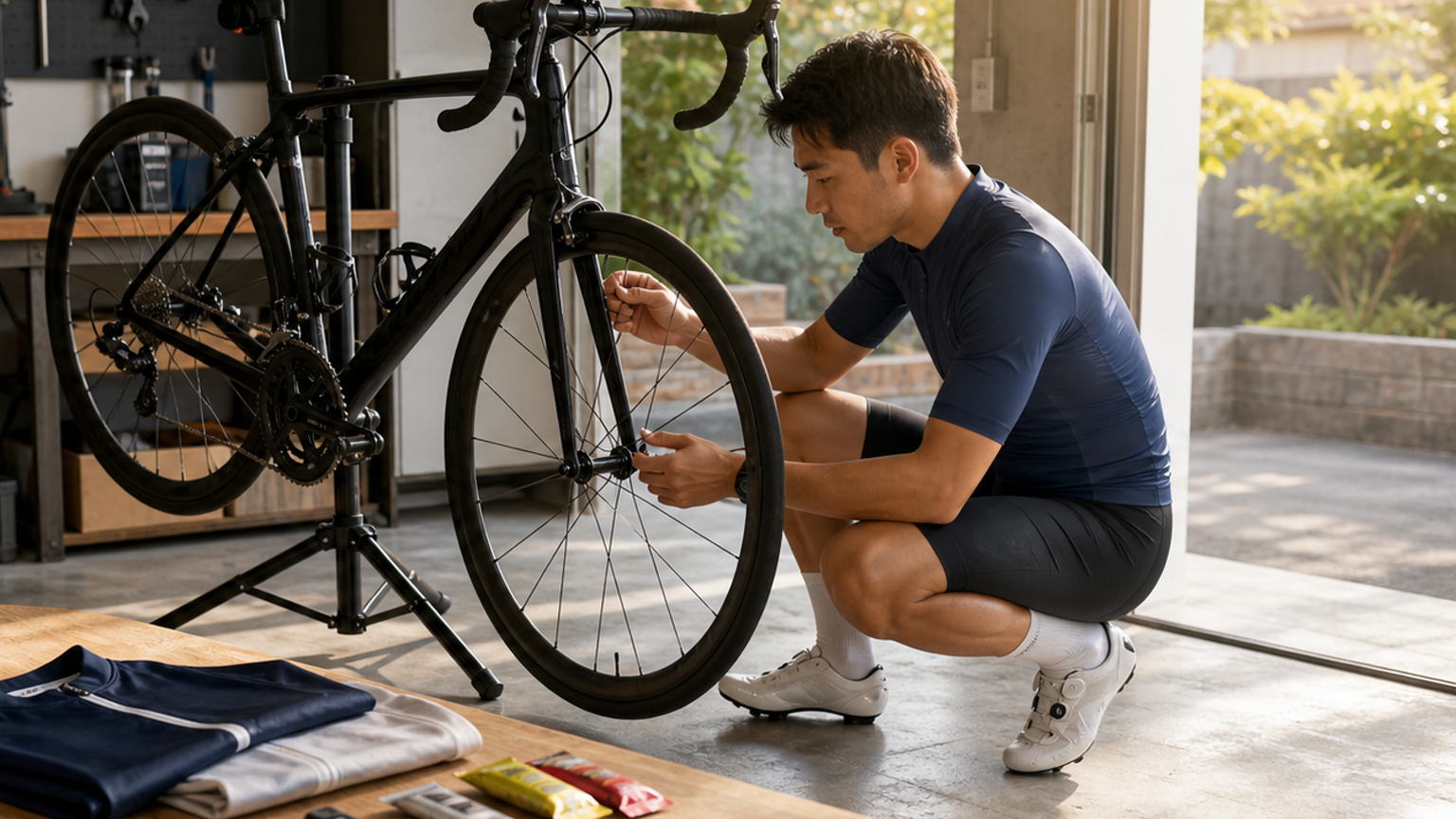
One-Week Pre-Race Preparation Strategy: Tapering, Nutrition, and Gear Check
Many riders make poor decisions in the week before a race—some keep training hard because they “don’t want to lose form,” some try new diets, and others discover equipment problems the day before the race. Proper preparation in the final week can improve your race performance by 5–10%.
The 7-Day Pre-Race Plan
Day 7 (D-7): Last Long Ride
- Complete the season’s final long ride (2–3 hours, Zone 2)
- Include 2–3 five-minute tempo efforts (Zone 3–4) to keep muscle feel
- Begin formal tapering afterward
- Stick to your training plan; do not try anything new
Day 6 (D-6): Active Recovery
- Easy ride of 45–60 minutes (Zone 1)
- Stretch thoroughly after the ride
- Start increasing carbohydrate intake (begin light carb loading)
- Ensure adequate sleep (7–9 hours)
Day 5 (D-5): Maintain Rhythm
- Ride 60–75 minutes (Zone 2), with 2 x 3-minute Zone 4 efforts
- Review the race course map and aid station locations
- Start adjusting your daily schedule to avoid needing to wake up too early on race day (risk of insomnia)
Day 4 (D-4): Light Training
- Ride 45–60 minutes (Zone 2), with 4 x 30-second sprints
- Do not do any prolonged training above threshold
- Complete the first round of gear checklist verification
Day 3 (D-3): Key Recovery Day
- Rest or do a very easy ride (30 minutes Zone 1)
- Begin full carb loading (increase rice portions)
- Go to bed early to ensure good sleep
Day 2 (D-2): Final Adjustments
- Easy 45-minute ride with 3 x 20-second sprints (to let your legs feel high speed)
- Complete full gear check and pack spare items
- Avoid any prolonged walking or standing (save your legs)
- Go to bed early—this night’s sleep is the most important
The Day Before (D-1): Final Preparation
- Easy 20–30-minute ride to confirm bike condition
- Confirm race-day transportation and timing arrangements
- Do not experiment with any heavy eating
- Dinner: your usual high-carb meal (pasta, rice—avoid overeating)
- Prepare tomorrow’s gear and food, and place them somewhere visible
- Set multiple alarms
Tapering Strategy Explained
Why Taper?
Tapering lowers ATL (Acute Training Load/fatigue) while preserving CTL (Chronic Training Load/fitness).
After proper tapering:
- Muscle glycogen stores are fully replenished
- Micro-damage repair is complete
- The neuromuscular system is recharged
- TSB (Training Stress Balance) enters positive territory
Common Mistakes During Tapering
- Continuing high-intensity training before the race: The most serious mistake—it cannot improve fitness in one week and only adds fatigue
- Stopping cycling completely: Leads to heavy legs and a longer warm-up needed at race start
- Trying new training movements: The week before a race is not the time to try new things
- Anxiety-driven extra training: Adding training volume because you “feel you haven’t trained enough”
Pre-Race Nutrition Plan
D-7 to D-4: Normal Diet
- Maintain your usual eating habits
- Ensure adequate protein intake (body weight × 1.6–2.0 g/kg)
- Do not try new foods or new supplements
D-3 to D-1: Carb Loading
Goal: Fill muscle glycogen stores from 60–70% to 90–100%
How to execute:
- Carbohydrates should make up 65–70% of total calories
- Increase intake of rice, bread, pasta, and sweet potatoes
- Reduce high-fiber foods (to lessen digestive system burden)
- Moderately reduce fat intake (replace with carbs)
Note: Carb loading may make you feel “heavier” (each gram of glycogen binds 3 grams of water); a weight gain of 1–2 kg is normal.
Race-Day Breakfast (2–3 hours before the start)
Recommended options:
- White rice or white toast (easy to digest)
- Banana (quick carbs + potassium)
- Fruit juice or honey
- Avoid: high-fiber foods, high-fat foods, legumes, dairy (for those with lactose intolerance)
30 minutes before the race: you may take one energy gel or a banana.
Gear Checklist
Bike
- [ ] Check tire pressure (road bike: 90–110 psi; lower appropriately for gravel)
- [ ] Tires free of cracks and embedded debris
- [ ] Brake system check (caliper adjustment, disc rotor alignment)
- [ ] Drivetrain check (smooth shifting, no noise)
- [ ] Chain cleaned and lubricated
- [ ] Helmet buckle check
- [ ] Saddle height check (has anyone adjusted it?)
- [ ] Spare inner tubes ×2, tire repair tools
- [ ] Pump
Personal Gear
- [ ] Cycling jersey and shorts (including spares)
- [ ] Cycling shoes, cleat check
- [ ] Gloves
- [ ] Sunglasses
- [ ] Knee warmers (if needed)
- [ ] Race number (if obtained in advance)
- [ ] Nutrition: energy gels, bananas, energy bars
- [ ] Water bottles ×2 (electrolyte drink, plain water)
- [ ] Phone, cash, emergency contact card
Electronic Devices
- [ ] Bike computer fully charged
- [ ] Heart rate strap
- [ ] Power meter battery check
- [ ] Spare batteries
Mental Preparation for Race Day
- Don’t compare your gear to others’: Focus on your own pace
- Set realistic goals: Time goal + tactical goal
- Don’t sprint in the early stages: Power for the first 10% of the course should be slightly below target
- Accept imperfection: Form fluctuates; race day may not be your best day
Conclusion
The week before a race is time to “enjoy the fruits of your training,” not time to make up for lost work. Relax, sleep well, eat well, let your body be fully ready, and then line up at the start with full confidence.
Related Reading
- Standard-Distance Triathlon Race-Week 7-Day Plan: How to Train in the Final Week
- The Week Before a Running Race: Tapering, Carb Loading, and Sleep Adjustment
- Triathlon Race-Day Strategy: Complete Planning from the Week Before to the Finish Line
- The Week Before a Running Race: Sleep, Nutrition, and Mental Adjustment During Tapering
一日北高前的高裝檢 | 北高 360 | 挑戰11小時的裝備 | 一日雙塔 | 補給
6 年前
靠單車減肥35公斤 心得分享與整理
7 年前
FTL 與 SYB 車隊專訪 西進武嶺 實用攻略分享! 2小時 如何練?!你不知道的眉角!新手準備武嶺必看 EP1 | 實力派女車友 | 精華版 | 公路車 | CTYeh
4 年前
單車 一日北高 ( 雙城 ) 肥宅雙人瘋狂行 紀錄片 REACTO
10 年前
單車賞雪 裝備準備及注意事項分享 | 公路車
5 年前
Live) 備戰2019彰化經典百K 賽前攻略 (已完賽請看新影片
7 年前
#公路車 #Fitting 靠人工智慧APP 幫你調整單車
6 年前
西進武嶺 自製新版AI配速表產生器 x 賽前攻略 抱佛腳! 沒有功率計也可以產生配速表嗎?有什麼其他眉角賽前要注意的呢? | 西進武嶺 / 東進武嶺 KOM 攻略 | 公路車 | CT Yeh
4 年前