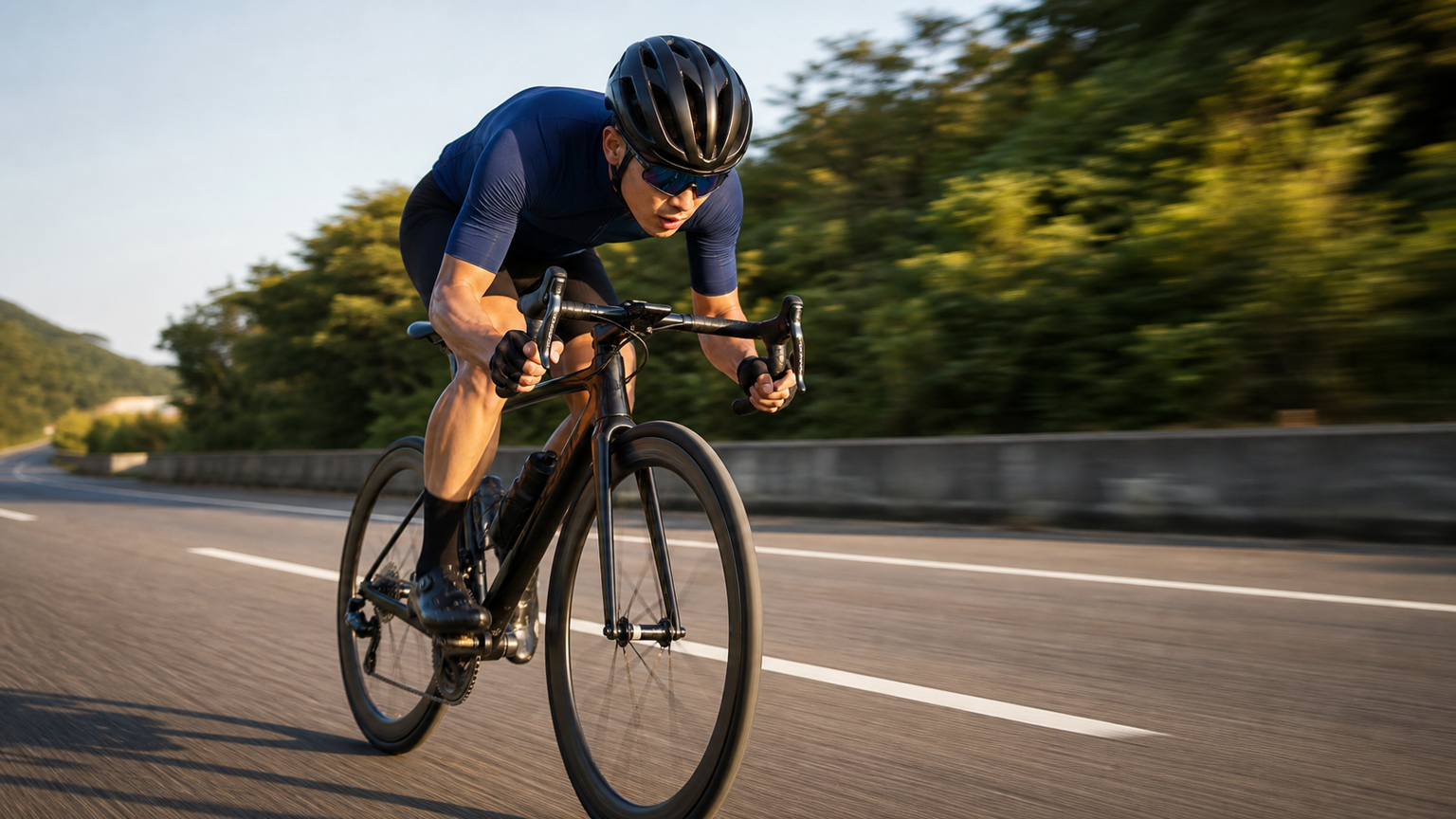
How to Build High-Power Output: Sprint Power and Anaerobic Capacity
In the final 500 meters of a cycling race, whoever has the more explosive legs and the more durable anaerobic endurance usually decides the final standings. High-power output training (Zone 6-7) is one of the most overlooked parts of many riders’ training plans, yet it is often the single most decisive ability in a race.
The Physiological Basis of High-Power Output
The Role of Different Energy Systems
During high-intensity sprints, the body draws on three energy systems:
| System | Fuel | Duration | Characteristics |
|---|---|---|---|
| Phosphocreatine (ATP-PCr) | Phosphocreatine | 0-10 seconds | Extremely fast, limited store |
| Glycolysis (anaerobic) | Muscle glycogen | 10-120 seconds | Fast, produces lactate |
| Oxidative system (aerobic) | Glycogen + fat | >120 seconds | Sustained, efficient |
Explosive efforts under 10 seconds rely on phosphocreatine; efforts of 30 seconds to 2 minutes rely on anaerobic glycolysis; beyond 2 minutes, the aerobic system dominates.
Training Fast-Twitch Muscle Fibers (Type II)
Sprint ability is largely determined by fast-twitch muscle fibers:
- Type IIa: Fast oxidative fibers, whose lactate tolerance can be improved through training
- Type IIx: Fast glycolytic fibers, responsible for maximum explosive power, harder to improve through training (strongly influenced by genetics)
Peak Power Training
What Is Peak Power?
Peak power is the highest power output you can produce within 5-10 seconds. This number represents the ceiling of your explosive capability, and it primarily depends on:
- The proportion of fast-twitch muscle fibers (genetic)
- The efficiency of neural recruitment (trainable)
- Muscular strength (trainable)
Typical peak power reference values:
| Level | Men (W/kg) | Women (W/kg) |
|---|---|---|
| Beginner | 8-11 W/kg | 6-9 W/kg |
| Trained rider | 11-14 W/kg | 9-12 W/kg |
| Elite amateur | 14-18 W/kg | 12-15 W/kg |
| Professional sprinter | 18-25 W/kg | 15-20 W/kg |
Peak Power Training Sessions
10-second maximal sprints (neuromuscular training):
- Session: 8-10 x 10-second maximal sprints
- Recovery: 3-5 minutes, full recovery
- Frequency: 1-2 times per week (non-high-intensity weeks)
- Requirement: every sprint must be a genuine maximal effort, and recovery must be complete
Execution tips:
- Practice both a big-gear start (light push into high cadence) and a small-gear start (high-resistance power sprint) — both need practice
- Sprint out of the saddle and let the bike rock fully
- Never do maximal sprints while fatigued (quality matters more than quantity)
Anaerobic Capacity Training
High-Intensity Training from 30 Seconds to 2 Minutes
This duration range targets the anaerobic glycolytic system — the core ability behind “the final sprint out of the group” and “attacking on a climb.”
Wingate-style training:
- 30 seconds all-out (roughly 150-200% FTP) x 4-6 reps
- 4-5 minutes recovery
- Effect: increases anaerobic capacity and lactate tolerance
2-minute high-intensity intervals:
- 2 minutes @ 130-150% FTP x 4-5 reps
- 3 minutes recovery
- Effect: stimulates both VO2max and the anaerobic system simultaneously
Lactate Tolerance Training
One important dimension of anaerobic capacity is “the ability to tolerate lactate accumulation.” Methods include:
- High-intensity tempo work: 3-4 minutes @ 120% FTP, 2 minutes recovery, repeat 5-8 times
- Supra-threshold intervals: 8-10 minutes @ 105-115% FTP, 5 minutes recovery, repeat 3-4 times
Structuring the Training Periodization
High-power training should be placed at the appropriate phase of the training cycle:
| Training Phase | Proportion of High-Power Work | Focus |
|---|---|---|
| Base phase (12-16 weeks) | Very little | Building an aerobic foundation |
| Build phase (8-12 weeks) | Low-moderate | Begin adding threshold and moderate-intensity intervals |
| Peak phase (6-8 weeks) | Moderate-high | Add VO2max and anaerobic work |
| Race season | High | Race simulation and maintaining sprint ability |
How Off-Bike Strength Training Helps Your Sprint
Research shows that off-bike strength training can meaningfully improve a rider’s peak power and neuromuscular efficiency.
Key Strength Exercises
Squat variations:
- Back squat: 5 sets x 3 reps (near-maximal load), building the foundation of maximum strength
- Jump squat: 3 sets x 5 reps (60% 1RM), developing explosive power
Single-leg movements:
- Bulgarian split squat: 4 sets x 6 reps, correcting left-right leg strength asymmetry
- Single-leg leg press: 3 sets x 8 reps
Sprint-specific movements:
- Kettlebell swing: builds hip extension power (similar to the pedaling mechanism)
- Box jump: trains explosive neuromuscular recruitment
Periodizing Strength Training
| Phase | Training Focus | Sets x Reps |
|---|---|---|
| Muscular adaptation (4 weeks) | Technique and basic stability | 3x12-15 |
| Maximum strength (6 weeks) | Heavy load, low reps | 5x3-5 |
| Power phase (4 weeks) | Converting strength to power | 4x3-6 (speed) |
| Maintenance (race season) | Preventing detraining | Once per week |
When to stop strength training: Stop heavy-load training 4-6 weeks before the season so muscle soreness resolves and explosive power peaks.
The Science of Sprint Technique
Standing-Start Sprint vs. Flying Sprint
| Type | Characteristics | Training Focus |
|---|---|---|
| Standing-start sprint (slow to fast) | Requires greater acceleration force | Big-gear, low-cadence starts |
| Flying sprint (sprinting at high speed) | Requires sustaining high power | Sustaining high cadence |
Ideal Sprint Cadence
Research shows that most riders reach peak power output at 100-110 rpm, though there is significant individual variation:
- Strength-type riders: optimal around 90-100 rpm
- Cadence-type riders: optimal around 105-115 rpm
It’s worth testing your maximal sprint power at different cadences in training to find your own “sweet spot.”
Applying Sprint Ability in Taiwan Races
Climbing races and circuit races in Taiwan each demand different sprint qualities:
Sprinting in climbing races:
- The final 300-500m is usually where the average gradient eases or there’s a brief downhill section
- You need explosive power even while already heavily fatigued (this is where lactate tolerance matters)
- Prepare in advance: start upping the pace in the final 1km of the climb
Sprinting in circuit races / standard road races:
- Group tactics are more complex (positioning, jockeying for position)
- The all-out sprint in the final 200m is the core skill
- Requires a high level of group-riding technique combined with sprint ability
Balancing Recovery with High-Intensity Training
High-intensity training places enormous stress on the body. Adding another high-intensity session before you’ve recovered enough easily leads to overtraining.
Recovery guidelines:
- 10-second maximal sprints: easy ride the next day, can train again after 48 hours
- 30-second high-intensity intervals: 48-72 hours to recover
- Long VO2max intervals: 72-96 hours for full recovery
Frequently Asked Questions
Q: How much does genetics affect sprint ability?
A: Quite a lot. The proportion of fast-twitch muscle fibers is largely determined by genetics, but training can improve neural efficiency and lactate tolerance, helping you make the most of the ability you have.
Q: Does aerobic fitness affect sprint ability?
A: Yes. A strong aerobic base means you burn less glycogen before the sprint, leaving more resources available when you actually need to sprint.
Conclusion
Improving sprint and anaerobic ability requires systematic training, not just “going all-out every time.” Place high-power training at the right point in your periodization, combine it with off-bike strength training and adequate recovery, and your sprint ability will improve more than you expect.
Related Reading
- Sprint Power Development Training: A Complete Program from Neuromuscular to Anaerobic Explosive Power
- Designing Sprint Training: Methods for Improving Maximal Anaerobic Power (MAP)
- Power Sprint Training for Cyclists: Session Design for 5-Second to 30-Second Maximal Power
- Neuromuscular Power Intervals: Building Explosive Power with 10-Second Maximal Sprints
#公路車 #Vo2Max #最大攝氧量 測驗 體驗 | 心肺測試
6 年前
如果Pogačar騎西進武嶺可以多快?會破2嗎?各種情況深度推估探討 / 公路車 / CT Yeh
2 年前
西進武嶺 自製新版AI配速表產生器 x 賽前攻略 抱佛腳! 沒有功率計也可以產生配速表嗎?有什麼其他眉角賽前要注意的呢? | 西進武嶺 / 東進武嶺 KOM 攻略 | 公路車 | CT Yeh
4 年前
西進武嶺 8000名單車友數據分析 PART1 | 從新手到高手數量/瓦數/推力比/FTP推力比/功率計使用率 大解析 | 公路車 | CTYeh
5 年前
西進武嶺 免費訓練分析服務 Intervals | 練不夠還是練過頭?你哪一種類型選手?AI模型告訴你! | 備戰神器 | 公路車 訓練 | CT Yeh
4 年前
#公路車 #西進武嶺 配速配瓦實驗 坡度分析 四小時內攻略 建大盃 NeverStop #西進武嶺攻略
6 年前
一日北高/長距離團騎 常見問題補充篇 / 組團或跟團的眉角 / 壯車友容易被瘦車友慢性拉爆 / 原來屁股痛可能是這個原因...? / 風場配速法 / 公路車 / CT Yeh
2 年前
CT 喇低賽) 武嶺牽車 才是王道 西進牽車四小時內秘訣 攝手位置 如何判斷 防抽筋小秘訣
7 年前