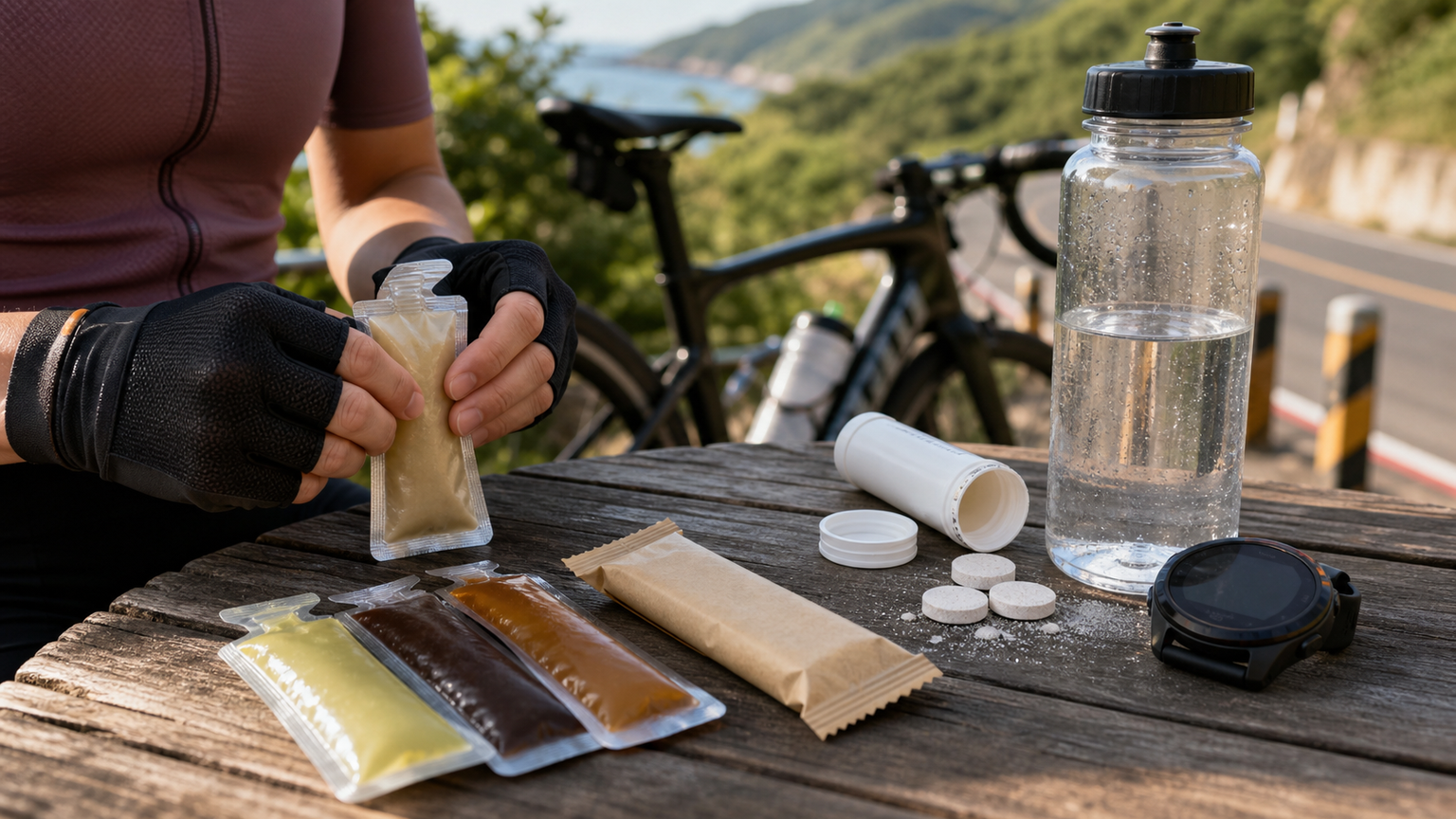
Sports Nutrition Buying Guide: Differences Between Energy Gels, Energy Bars, and Electrolytes
Sports nutrition products are the “fuel” for endurance sports. For rides or runs lasting over 90 minutes, your fueling strategy directly impacts performance and your ability to finish. But with so many products on the market, how do you choose the most suitable one? This article breaks down the ingredients, effects, and usage scenarios of various nutrition products.
Energy Expenditure During Exercise
The Glycogen System
The body’s primary quick energy source is glycogen, stored in muscles and the liver, totaling approximately 1,500-2,500 calories. A typical cyclist riding at moderate intensity burns about 500-800 calories per hour.
Key Concept: When glycogen runs out, you “hit the wall”—suddenly feeling weak in the limbs and a sharp drop in speed. The “hitting the wall” phenomenon marathon runners experience at 30-32km is a classic symptom of glycogen depletion.
Fueling Principles
- Consume 60-90g of carbohydrates per hour (well-trained athletes can reach 120g)
- A glucose + fructose combination is absorbed 30% more efficiently than a single sugar source
- Fuel early in the race—don’t wait until you’re hungry
Energy Gels
Energy gels are the most common form of race fueling. Each packet weighs about 20-25g (including water weight) and typically contains 25-30g of carbohydrates.
Key Ingredient Analysis
| Ingredient | Function | Common Source |
|---|---|---|
| Maltodextrin | Fast carbohydrate, low sweetness | Corn starch |
| Fructose | Pairs with glucose to improve absorption rate | Fruit sugar |
| Caffeine | Enhances focus, delays fatigue | Caffeine (optional) |
| Electrolytes | Replaces salt lost through sweat | Sodium, potassium, magnesium |
| BCAA | Slows muscle breakdown | Branched-chain amino acids (some brands) |
Popular Brand Comparison
GU Energy (USA): Market leader with a wide variety of flavors and caffeine options. Approximately NT$80-100 per packet, available at major sports retailers across Taiwan.
Maurten (Sweden): Premium brand using Hydrogel technology that mimics the gut environment to improve absorption and reduce gastrointestinal discomfort. Approximately NT$150-180 per packet, suitable for runners with sensitive stomachs.
Juice Fox (Taiwan): A local brand priced around NT$50-70 per packet, offering great value for money with organic ingredients. Ideal for beginners looking to try sports nutrition.
SiS (UK): Features a transparent gel design that can be taken with water. One of the best-selling energy gel brands in the UK.
Caffeine Energy Gel Precautions
- Typical dose: 25-100mg caffeine per packet
- Recommended timing: The latter half of a race (after 30km in a marathon) for a boost
- Using before bed may affect sleep
- Effects may be weaker for those accustomed to drinking coffee
Energy Bars
Energy bars have higher calorie content (about 200-300 calories per bar) and digest more slowly, making them suitable for solid fueling during long-distance rides.
Usage Scenarios
- Fueling on the bike (easy to eat with one hand while holding the handlebars; less convenient while running)
- Energy reserve 1-2 hours before a race
- Long mountain rides (rides over 200km require solid food)
Popular Brands
- Clif Bar (USA): Organic ingredients, firm texture. Available at PX Mart in Taiwan, approximately NT$80-100 per bar
- PowerBar (USA): High-carbohydrate formula designed for race use
- OSM One Square Meal (New Zealand): Natural ingredients, suitable for prolonged endurance events
- Dr.Milk (Taiwan): Locally manufactured, available at sports retailers
Electrolyte Replacement
After prolonged sweating, you lose not only water but also essential electrolytes.
Key Electrolytes and Their Functions
| Electrolyte | Function | Deficiency Symptoms |
|---|---|---|
| Sodium | Maintains fluid balance | Muscle cramps, dizziness |
| Potassium | Muscle contraction | Muscle weakness, arrhythmia |
| Magnesium | Neuromuscular function | Muscle spasms, fatigue |
| Calcium | Muscle contraction | Cramping |
Forms of Supplementation
Electrolyte tablets (e.g., Nuun, SaltStick): Dissolve in a water bottle; easy to carry. Priced around NT$300-500 per tube (10-15 tablets) in Taiwan.
Salt capsules: Pure sodium supplementation, used during heavy sweating in high heat. Commonly used by ultramarathon runners.
Electrolyte powder (e.g., Hydralyte, Otsuka Pocari Sweat powder): Concentration can be adjusted; suitable for long training sessions.
Fueling Strategy Recommendations for Taiwanese Cyclists
Within 60-90 Minutes
Normal eating before the ride is sufficient. Carry a water bottle for hydration. No special nutrition products needed.
90 Minutes to 3 Hours
One energy gel every 45-60 minutes, plus an electrolyte drink.
Over 3 Hours (e.g., 100K Rides)
One energy gel per hour + 1/3 of an energy bar, paired with electrolyte tablets.
Full Marathon Running
One energy gel every 8-10km, add caffeinated gels in the later stages as needed, and supplement with electrolyte drinks throughout.
Conclusion
The best fueling strategy requires continuous testing during training to find the brand and timing that work for your gastrointestinal system. Taiwan’s hot, humid summers make electrolyte supplementation especially important. Practice your fueling during training—don’t wait until race day to try new products.
Related Reading
- Road Running Energy Supplements: When to Use Gels, Bars, and Chews
- Complete Guide to Running Fuel: How to Use Energy Gels, Caffeine, and Sports Drinks
- Energy Supplementation During Exercise: Comparing Gels, Energy Bars, and Real Food
- 2026 Practical Buying Guide for Energy Gels, Electrolytes, and Energy Bars: Fueling Strategies That Won’t Wreck Your Stomach
CT暗黑廚房) 車友必備 宇宙無敵鮮蚵湯 幫助訓練恢復 天然食補 好市多 超肥鮮蚵 破PR
7 年前
一日北高前的高裝檢 | 北高 360 | 挑戰11小時的裝備 | 一日雙塔 | 補給
6 年前
詳測) 小米 電動打氣筒 公路車胎要充多久? 值得買嗎? 米家充氣寶 小心燙手!
7 年前
靠單車減肥35公斤 心得分享與整理
7 年前
#公路車 #Fitting 靠人工智慧APP 幫你調整單車
6 年前
西進武嶺 免費訓練分析服務 Intervals | 練不夠還是練過頭?你哪一種類型選手?AI模型告訴你! | 備戰神器 | 公路車 訓練 | CT Yeh
4 年前
單車 一日北高 ( 雙城 ) 肥宅雙人瘋狂行 紀錄片 REACTO
10 年前
大家都在開箱的...單車用藍芽對講耳機真的有幫助嗎? SENA BiKom 20 長距離旅遊 & 海鷗繞圈賽 實際體驗心得 / 公路車 / CT Yeh
9 個月前