Shiding and Pinglin Tea Country Ride: A Mountain Road Experience of Northern Taiwan's Tea Culture
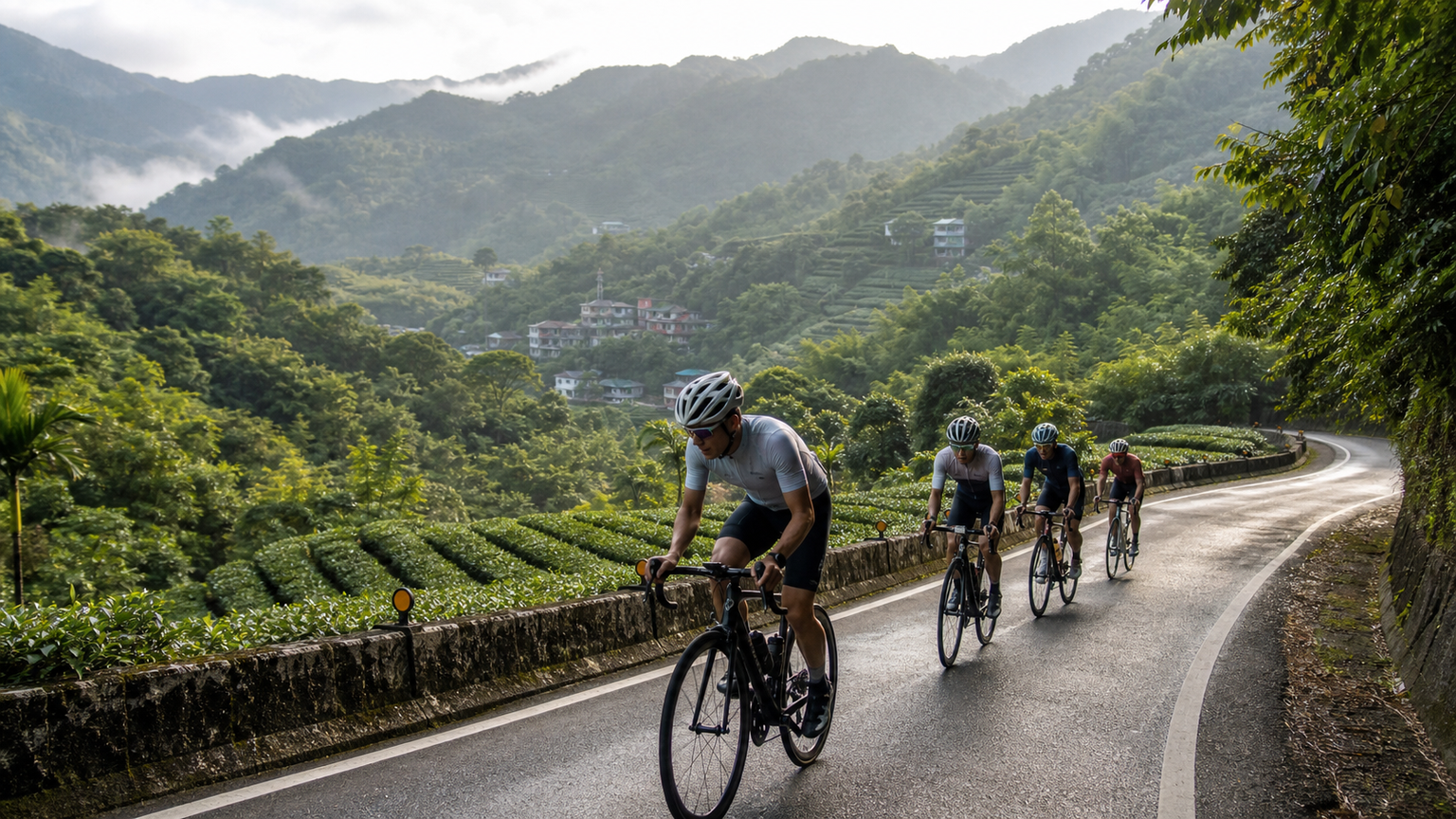
Shiding and Pinglin Tea Country Ride: A Mountain Road Experience of Northern Taiwan’s Tea Culture
Pinglin, the most important tea-producing region in northern Taiwan, is located in the deep mountain area of New Taipei City and is connected to Yilan via the Beiyi Highway (Provincial Highway 9). Riding from Taipei City to Pinglin covers approximately 38–42 kilometers with about 760 meters of cumulative climbing, making it a rare long-distance climbing experience near Taipei. Along the way, the Shiding Old Street and the Pinglin Tea Museum add rich cultural layers to this route.
Route Basic Information
| Item | Data |
|---|---|
| Starting Point | Muzha, Taipei City (or Jingmei) |
| End Point | Pinglin Town Center |
| Distance | Approximately 38–42km (depending on starting point) |
| Cumulative Climb | Approximately 760 meters |
| End Point Elevation | Approximately 300 meters |
| Route | Provincial Highway 9 (Beiyi Highway) |
| Difficulty | Moderate to Advanced |
Characteristics of the Beiyi Highway (Provincial Highway 9)
The Beiyi Highway is the oldest land route connecting Taipei and Yilan. Before the Beiyi Expressway (Hsuehshan Tunnel) opened in 2006, this was the only highway between Taipei and Yilan. After the Hsuehshan Tunnel opened, car traffic on the Beiyi Highway decreased significantly, but motorcycle and bicycle traffic increased instead, making it an important recreational cycling route.
Route Characteristics:
- No tunnels along the entire route (completely different from the later Hsuehshan Tunnel)
- Even gradients with no extremely steep sections (average 4–5%)
- Mostly secondary forests and tea plantations along the roadside, providing good shade
- Road surface quality is good before Pinglin; the section from Pinglin to Yilan has some older pavement
Stop 1: Shiding Old Street (Approximately 20km)
Shiding’s Features
Shiding is a traditional settlement built along the Jingmei River. The old street is built on the mountainside, with houses half-suspended over the stream, creating an extremely unique mountain town landscape. Shiding Old Street’s features:
- Stilted Houses: Houses are elevated above the stream on wooden pillars, a rare traditional architectural form in Taiwan
- Tofu Culture: Shiding is famous for its traditional tofu workshops; stinky tofu and fermented tofu are must-tries
- Jingmei River Valley: The clear stream is perfect for playing in the water and is very cool in summer
Shiding Specialty Foods:
- Stinky tofu (Shiding style, stir-fried with sauce)
- Shiding Oriental Beauty Tea (a famous Taiwanese tea)
- Tofu ice cream
Stop 2: Pinglin (Approximately 38km)
Pinglin Tea Culture
Pinglin is the most famous production area of “Baozhong Tea” in Taiwan. Baozhong tea is a type of oolong tea with a lower degree of fermentation, clear liquor, and fresh floral aroma, earning it the nickname “Champagne of Teas.”
Pinglin Tea Museum:
- Exhibits the history of Taiwanese tea, cultivation techniques, and tea-making craftsmanship
- Features a tea tasting area where various tea varieties can be sampled for free or at low cost
- Educational sessions on identifying the aroma and flavor of Baozhong tea
- Next to the museum is the Beishi River Valley trail, perfect for a stroll after cycling
Pinglin Beishi River Ecological Protection Area:
Located within the catchment area of Feitsui Reservoir, strict ecological protection has made this a rare ecological reserve in northern Taiwan. The stream is clear, and fish (kuwa, Taiwan shovel-jaw carp) thrive in large numbers, attracting fishing enthusiasts.
In-Depth Introduction to “Taiwan Baozhong Tea”
| Variety | Fermentation Level | Aroma | Liquor Color |
|---|---|---|---|
| Wenshan Baozhong | 8–15% | Fresh floral | Pale yellow |
| Oriental Beauty | 60–75% | Honey and fruity | Deep amber |
| Alishan Oolong | 20–30% | Milky, floral | Golden yellow |
| Pinglin Baozhong | 10–20% | Jasmine floral | Pale greenish-yellow |
Detailed Climb Analysis
Muzha → Shiding (0–20km)
- First section (0–10km): Easy riding along the Jingmei River, almost flat
- Second section (10–20km): Entering the Shiding mountain area, gradient around 3–5%, with occasional short 7% sections
Shiding → Pinglin (20–38km)
- This is the main climbing section of the entire route, with an average gradient of about 5% and a steepest section of about 7%
- The road follows the mountainside of the river valley with many wide curves and beautiful scenery
- The final 5 kilometers descend into the Pinglin Basin, where the gradient eases slightly
Option to Continue Descending to Yilan
If you have enough energy, you can continue east from Pinglin along the Beiyi Highway into Yilan. The distance from Pinglin to Yilan is about 28km, mostly downhill, with spectacular views overlooking the Lanyang Plain.
If you don’t continue to Yilan, after enjoying an afternoon tea in Pinglin, you can return to Taipei the same way (an easy descent), or take public transportation (buses connect Muzha Station on the Muzha Line to Pinglin).
Tea Farmer Experience
Several tea gardens in the Pinglin area offer bookable “tea farmer experience” visits:
- Tea-picking experience (spring tea: April–May, winter tea: October–November)
- Tour of the simplified tea-making process (withering, tossing, firing, rolling)
- Purchase fresh tea leaves directly from farmers (cheaper and fresher than the market)
Conclusion
The route from Shiding to Pinglin offers a rare “culture + climbing” dual experience among rides near Taipei. Its gradient is moderately challenging for riders with a training base, while Shiding’s stilted houses and Pinglin’s tea fragrance make this route not just a workout, but an exploration of Taiwan’s mountain town culture.
Carrying the fatigue from this ride, sitting in a tea house in Pinglin and drinking a pot of freshly brewed Baozhong tea is the perfect ending to a ride around Taipei.
Related Reading
- Beiyi Highway Cycling Guide: Scenery and Supplies from Pinglin to Yilan
- Yilan Beiyi Highway Riding Guide: The Challenging Route from Taipei to Yilan Crossing the Snow Mountains
- Taipei to Yilan: Route Choice Between the Beiyi Highway and Provincial Highway 2
- Beiyi Highway (Provincial Highway 9) Riding Guide: Gradient Analysis of the 9 Bends and 18 Turns
#北橫 + #北進武嶺 最硬的員工旅遊 EP1 | #公路車 #拉拉山 | 明池 | 武嶺 | 武陵農場 | 雲海 | Taiwan Cycling Route Wulin
6 年前
北宜騎車⋯好刺激 差點被🐒尻 / 露營單車旅 / 公路車後背攜車架開箱!/ 百人大團露 / YAKIMA 設備開箱儀式感都來了 / 公路車 / CT Yeh
12 個月前
一定要騎一次!阿里山最深處:里佳部落!單車旅行 | 2800m爬升 | 深度部落體驗:嗨翻晚會、螢火蟲、銀河 | feat. JJSC & 廢物伙伴 | 公路車 CT Yeh
9 個月前
台北闊瀨陡坡 騎旅 / 日本單車雜誌編輯車友臨時加入!/ 髮香才是最強的 / feat. 北迴歸線小隊 / 公路車 CT Yeh
6 個月前
#北宜 #北進武嶺 單車員工旅遊 | 環山部落空拍大景!壯闊俯瞰視角! | 類97850|E01 | #公路車 | CT Yeh
4 年前
太平山單車員工旅遊 | 這樣玩CP值最高!| 公路車
5 年前
藤枝二集團 單車行 Day1 | 南部小武嶺 | 爬坡爬到罵罵叫 | JJSC | 公路車 | CT Yeh
3 年前
台北大雁西飛 約騎挑戰 feat. Doris | 公路車 | CT Yeh
3 年前