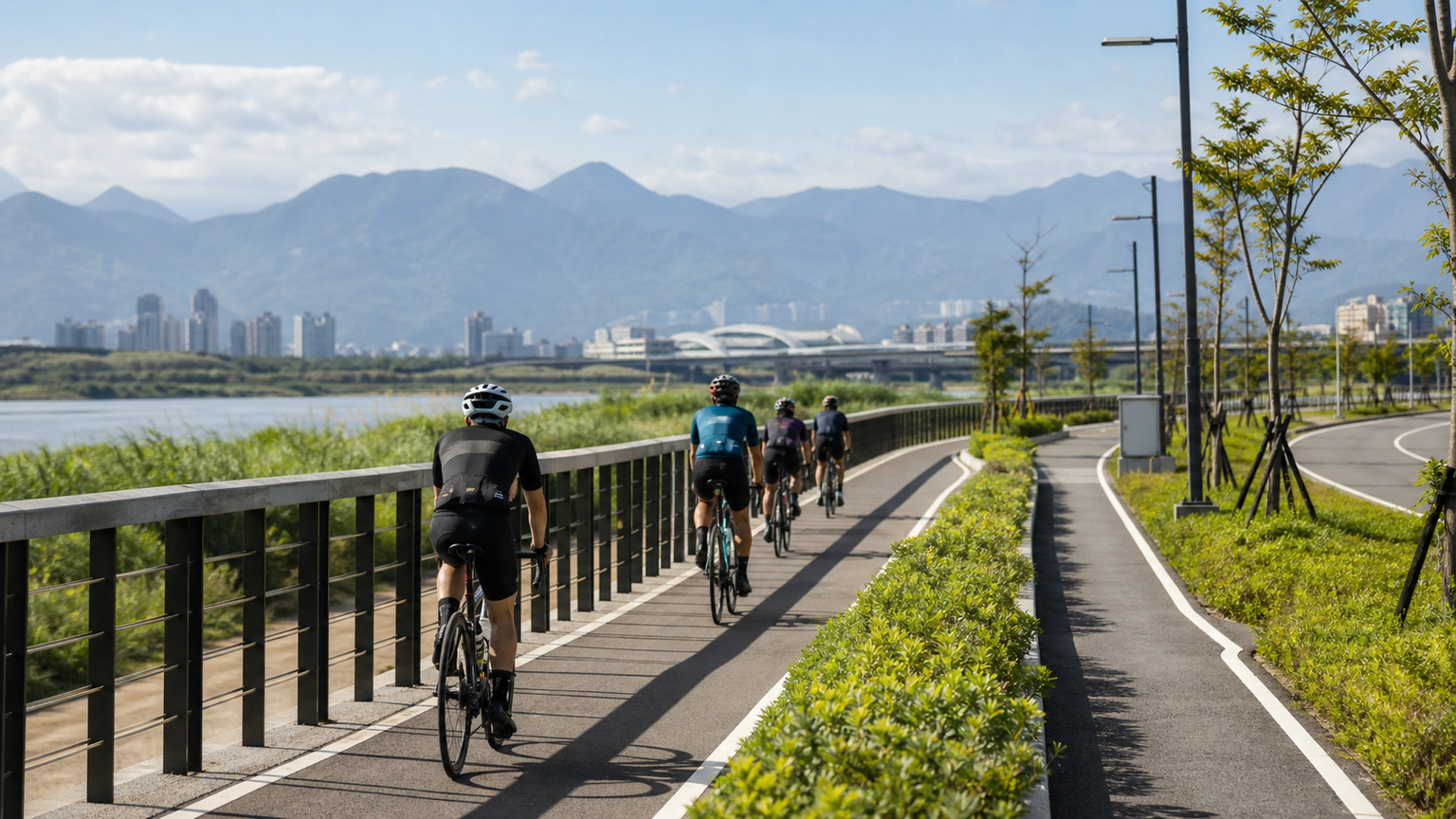
Taiwan Cycling Route Planning: Government Investment and Future Development Outlook
Taiwan’s cycling route development has made significant progress over the past two decades, evolving from scattered riverside paths in the early days to a cycling route network spanning the entire island today. Sustained government investment is transforming Taiwan into a major cycling tourism destination in Asia.
The Development History of Taiwan’s Cycling Routes
The 2000s: The Foundation of Riverside Routes
The first major phase of Taiwan’s cycling route construction centered on urban riverside bike paths:
- 2003: Taipei City launched its riverside cycling route network, connecting the Keelung River and Tamsui River waterfronts
- 2004: Kaohsiung’s Love River and Cianjhen River cycling routes were completed
- 2006: The “Bike Holiday” policy was promoted, with counties and cities across Taiwan beginning to plan tourism-oriented cycling routes
The 2010s: The Establishment of Tourism Routes
- Dongfeng Green Corridor: Converted from an abandoned railway, it became one of Taiwan’s most popular flat cycling routes
- Houfeng Bike Path: An internet-famous route featuring a tunnel experience
- Lanyang Cycling Route Network: Yilan County integrated resources such as the Dongshan River and Luodong Forestry Railway
The 2020s: The National Trail and Cycling Route Plan
After 2020, Taiwan’s cycling route policy entered a more systematic planning phase:
Shan-Shan-Zun Greenway: Promoted by the Tourism Administration of the Ministry of Transportation and Communications, it connects the Yanshui River on the west coast to the Jianan Mountain Range, serving as a combined trail/cycling route.
Existing Major Cycling Route Systems
Urban Routes
| City | Cycling Route Name | Length | Features |
|---|---|---|---|
| Taipei | Riverside Cycling Route | Over 110 km | Along the Tamsui and Keelung Rivers |
| Taipei | Muzha Route | Approximately 20 km | Mountain scenery |
| Taichung | Tanzih-Yashe-Shenkang Cycling Route | Approximately 30 km | Converted from an abandoned railway |
| Kaohsiung | Love River–Cijin Route | Approximately 40 km | Harbor views |
| Tainan | Yanshui River Route | Approximately 25 km | Wetland ecology |
Long-Distance Tourism Routes
| Route | Length | Features |
|---|---|---|
| Taiwan Cycling Route No.1 | 960 km | Round-the-island route |
| Wuling Climb Route (Provincial Highway 14A) | Approximately 100 km | Highest highway in Taiwan |
| North Coast Route | Approximately 80 km | Expansive ocean views |
| East Coast Provincial Highway 11 | Approximately 200 km | Pacific Ocean scenery |
Analysis of Government Investment Plans
Cycling Tourism Promotion Budget
The Tourism Administration of the Ministry of Transportation and Communications allocates relevant budgets annually:
- Cycling tourism promotion programs
- International promotion of the “CyclingTaiwan” brand
- Cycling-friendly accommodation certification system
Key Infrastructure Investment Priorities
In recent years, the government’s investment direction in cycling infrastructure:
- Quality improvement of existing routes: Road resurfacing, signage system updates, and lighting improvements
- Route connectivity: Bridging existing gaps to form a complete network
- Service facilities: Installation of supply stations, repair stations, and shower facilities
- Digital navigation: QR code information points and app integration
Comparison with International Standards
Taiwan still lags behind advanced cycling nations internationally:
| Indicator | Taiwan | Netherlands | Denmark |
|---|---|---|---|
| Cycling route mileage (km) | ~4,000 | ~35,000 | ~12,000 |
| Share of daily cycling population | ~3–5% | ~27% | ~18% |
| Degree of cycling route separation | Mostly mixed-use | High proportion of physical separation | High proportion of physical separation |
Problems and Challenges Facing Taiwan’s Cycling Routes
Insufficient Continuity
Many of Taiwan’s cycling routes are “fragmented,” failing to connect into complete networks. Cyclists are forced to switch to regular roads at gaps, affecting the riding experience and safety.
Inconsistent Pavement Quality
Some older road surfaces have fallen into disrepair, and combined with the impact of Taiwan’s earthquakes and typhoons, pavement quality varies greatly.
Insufficient Parking and Supply Facilities
Many cycling routes lack basic bike racks, restrooms, and bike repair tool stations along the way, affecting convenience.
Mixed Use with Scooters and Pedestrians
In some cities, cycling routes are shared with scooter lanes or used by pedestrians, reducing safety and smooth traffic flow.
Future Development Outlook
Short-Term Goals (2025–2027)
- Complete full-route renovation of Taiwan Cycling Route No.1 around the island
- Expand the number of cycling-friendly accommodation certifications
- Establish a unified Taiwan-wide cycling route app and digital navigation
Medium- and Long-Term Plans
- Urban cycling priority lanes: Following the example of European cities, establish physically separated dedicated bike lanes on major urban roads
- Completion of long-distance routes such as the Shan-Shan-Zun Greenway: Create long-distance tourism routes with international appeal
- E-bike charging facilities: Responding to the growing popularity of electric-assist bicycles
Although Taiwan’s cycling route construction still lags behind advanced European nations, the direction of progress is clear. Every newly built or renovated cycling route is a step toward creating a more cyclist-friendly environment for the next generation. As riders, we have a responsibility to make good use of these facilities and an obligation to advocate for a better riding environment.
Related Reading
- Taiwan Cycling Route Construction: The Round-the-Island Cycling Network Built by Government Investment
- A Complete Analysis of Taiwan’s Cycling Policy: A Rider’s Rights Guide from Route Construction to Legal Protection
- The History of Taiwan’s Cycling Infrastructure Development: The Long Road from Riverside Paths to Commuter Networks
- An Introduction to Taiwan’s Cycling Route System: The Features and Connections of Cycling Routes Across Counties and Cities
高雄綠園道鐵路自行車道 / 外地人能輕鬆駕馭 還是整路崩潰? / 2025 全線開通 春節實地探索一次!(附GPS連結)/ 公路車 / CT Yeh
1 年前
2023自行車展!與環台賽選手一同表演賽 / 全自動AI Fitting?/ TIME新車發表/神秘充電桌等 精華分享 VLOG | CT Yeh | 公路車
3 年前
太平山單車員工旅遊 | 這樣玩CP值最高!| 公路車
5 年前
虎豹潭!日本老師來台一日約騎 台灣車友熱情招待私房路線 / CT Yeh
20 天前
日本公路最高登山賽,台灣首位YT挑戰實錄,乘鞍登山賽40週年,賽前篇完整版,請到我的YT收看 #公路車 #cycling
10 個月前
台中大雪山 膏王領騎 震到都沒畫面了 公路車
5 年前
半日 小台灣 極限單車路線挑戰實錄
7 年前
山道猴出沒!? JJSC屏東單車行 Day1 一直催 / 皮卡丘來了!/ 墾丁 旭海 恆春 社頂 / 公路車 / CT Yeh
2 年前