Cycling Environment-Friendly Initiatives: Environmental Awareness Among Taiwan's Cycling Community
Cycling Environmental Initiative: Environmental Awareness Among Taiwan’s Cycling Community
The bicycle itself is one of the most environmentally friendly modes of transportation, but a truly eco-conscious cycling culture requires broader thinking—from zero-waste ride fueling, to protecting route environments, to the sustainable supply chain of the cycling industry. Taiwan’s cycling community is gradually developing a more complete environmental awareness.
The Environmental Ledger of Cycling
Carbon Emissions: Bicycles vs. Motor Vehicles
First, let’s confirm the environmental foundation of cycling:
| Mode of Transport | CO₂ Emissions per Person per km |
|---|---|
| Car (single occupant) | Approx. 150–200g |
| Motorcycle | Approx. 80–100g |
| Bus | Approx. 40–60g |
| MRT/Train | Approx. 20–40g |
| Electric bicycle | Approx. 5–15g (including charging emissions) |
| Human-powered bicycle | Approx. 0–5g (food production emissions) |
Based on a daily commute of 10 km each way (20 km round trip), switching from a motorcycle to a bicycle can reduce CO₂ emissions by approximately 500–700 kg per year—equivalent to the carbon absorption of planting about 20–25 trees.
The Environmental Cost of Bicycle Manufacturing
Of course, manufacturing a bicycle also requires resources and energy. The carbon footprint of an aluminum bicycle is approximately 200–500 kg of CO₂, while carbon fiber bikes, due to their more energy-intensive manufacturing process, have a carbon footprint of approximately 800–1,500 kg.
However, compared to a car’s manufacturing carbon footprint of approximately 6,000–35,000 kg, the environmental cost of a bicycle is still far lower. Moreover, a well-maintained bicycle can last 10–20 years, spreading the annual carbon footprint very thin.
Zero-Waste Practices for Ride Fueling
The Problem: Waste from Ride Fueling
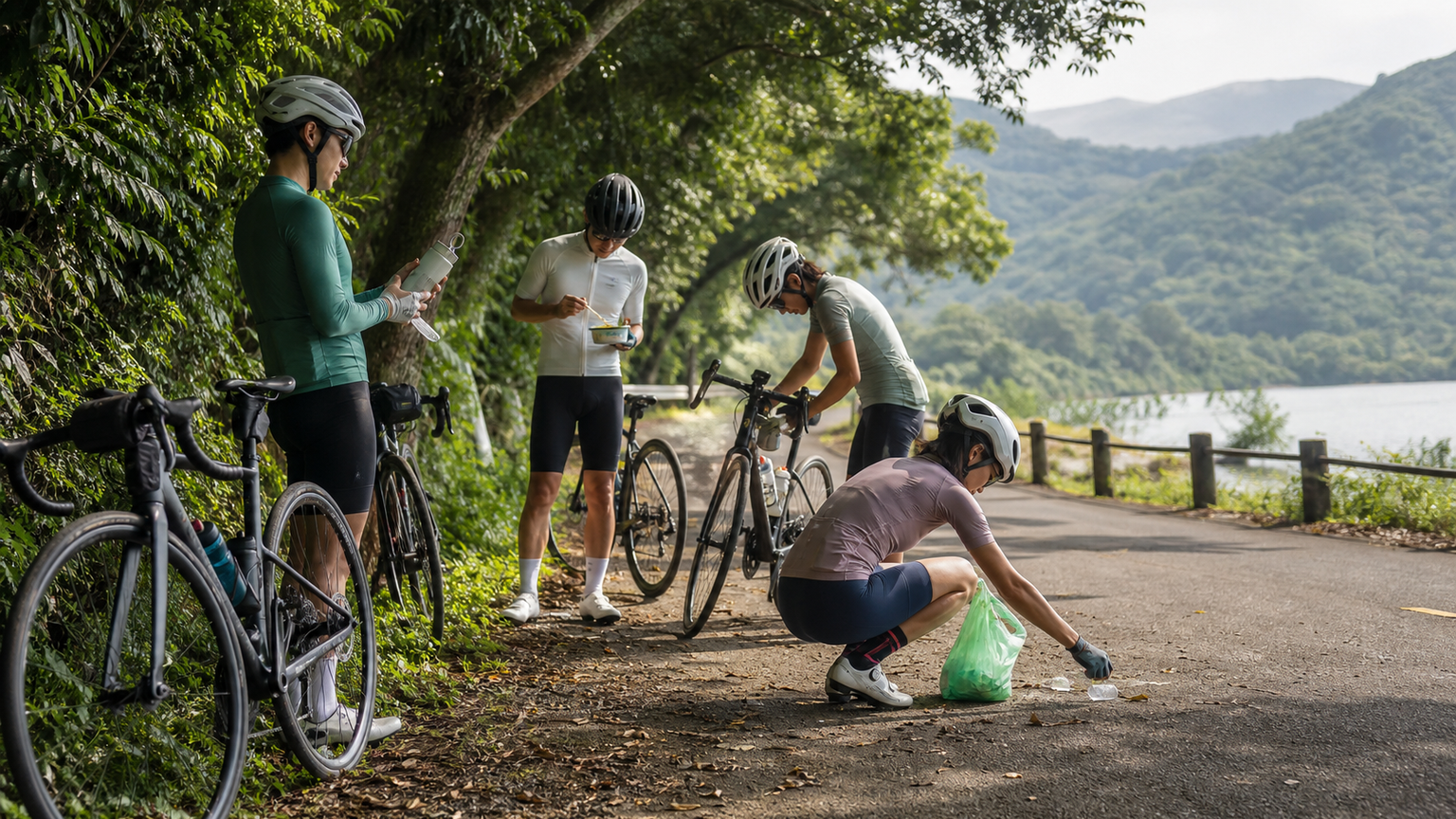
On Taiwan’s long-distance cycling routes, energy gel wrappers, plastic water bottles, and beverage packaging are common roadside litter. This problem is especially severe on mountain and off-road routes, where proper waste disposal facilities are lacking.
Solutions
Eco-friendly hydration:
- Use refillable water bottles to avoid purchasing PET bottles
- Convenience stores in Taiwan generally have water dispensers offering free refills
- Choose larger-capacity bottles (750ml–1L) to reduce the number of stops
Alternative energy options:
| Traditional Choice | Eco-friendly Alternative | Notes |
|---|---|---|
| Energy gels (foil packaging) | Homemade energy balls | Rice cakes, date paste balls, etc. |
| Packaged cookies | Bulk nuts (bring your own container) | Zero packaging |
| Bottled drinks | Homemade electrolyte drink (powder) | Reduces containers |
Self-managing your waste:
- Carry a small trash bag and bring all packaging back to the city for disposal
- If you see roadside litter, pick it up (even if you didn’t create it)
- Join trail clean-up or beach clean-up events along cycling routes
Environmental Advocacy Cases from Taiwan’s Cycling Community
Route Clean-up Activities
Several Taiwanese cycling clubs regularly organize rides that double as litter clean-ups, for example:
- Beiyi Highway Trail Clean-up: Every spring, combining flower-viewing rides with route clean-up
- East Coast Environmental Action: Coastal litter clean-up along Provincial Highway 11
- Wuling High Mountain Eco Ride: Waste removal along routes around Hehuan Mountain
Environmental Education on Bike Paths
Some bike path management agencies have begun installing environmental education facilities at key points:
- Ecological interpretation signs
- Explanations of important species habitats
- Leave No Trace signage
The Cycling Industry’s Green Transition
Giant and Merida’s Sustainability Commitments
Taiwan’s two major bicycle brands have taken concrete action on environmental issues:
Giant Group:
- Set a 2050 carbon neutrality target
- Gradually increasing the share of renewable energy used at factory sites
- Old bike recycling and refurbishment program (Renew program)
Merida:
- Water conservation program in production processes
- Research on recycling carbon fiber waste
Aluminum vs. Carbon Fiber: An Environmental Choice
From a purely environmental perspective:
| Material | Environmental Strengths | Issues |
|---|---|---|
| Aluminum | 100% recyclable | Energy-intensive manufacturing process |
| Steel | High durability, fully recyclable | Heavier weight |
| Carbon fiber | Lightweight (transport efficiency) | Currently nearly non-recyclable; can only be incinerated or landfilled after disposal |
| Titanium | Extremely durable (can last decades) | High manufacturing carbon footprint |
If you choose a bike with a “lifetime ownership” mindset, titanium or high-quality steel frame bikes are the most environmentally friendly options, because their durability spreads a bike’s manufacturing carbon footprint extremely thin.
How to Become a More Eco-conscious Cyclist
Actions at the Individual Level
- Repair instead of replace: Learn basic maintenance to extend the life of your bike and components
- Buy used: Purchase second-hand bicycles so good bikes keep circulating rather than being discarded
- Zero-waste fueling: Reduce ride-related waste as described above
- Choose local brands: Reduce carbon emissions from product transportation
- Promote utility cycling: Encourage those around you to choose cycling for commuting
Advocacy at the Community Level
- Participate in or organize route environment maintenance activities
- Share eco-friendly cycling practices on social media
- Advocate to the government for more bike lane construction (reducing the need for cars and motorcycles)
- Support bicycle brands with sustainability commitments
Riding a bicycle is an everyday environmental choice, but a truly conscious cycling community can amplify that impact—from personal habits to community action, from route maintenance to industry advocacy. Taiwan’s cycling community is gradually building this more complete environmental culture.
Related Reading
- Environmental Sustainability and Cycling: How Riding Becomes Action Against Climate Change
- Cycling and Sustainable Living: The Philosophy of Reducing Your Carbon Footprint on Two Wheels
- Cycling Environmental Awareness: Calculating the Carbon Footprint of Two-Wheeled Commuting
- Cycling and the Environment: Calculating the Carbon Emission Benefits of Choosing a Commuter Bike Over Cars and Motorcycles
高雄綠園道鐵路自行車道 / 外地人能輕鬆駕馭 還是整路崩潰? / 2025 全線開通 春節實地探索一次!(附GPS連結)/ 公路車 / CT Yeh
1 年前
靠單車減肥35公斤 心得分享與整理
7 年前
2023自行車展!與環台賽選手一同表演賽 / 全自動AI Fitting?/ TIME新車發表/神秘充電桌等 精華分享 VLOG | CT Yeh | 公路車
3 年前
2025 自行車錶排行榜 兩萬車友大數據 / Garmin Bryton 排名會大洗牌嗎? / 全新的碼表前身分析 /公路車 / CT Yeh
1 年前
太平山單車員工旅遊 | 這樣玩CP值最高!| 公路車
5 年前
單車 一日北高 ( 雙城 ) 肥宅雙人瘋狂行 紀錄片 REACTO
10 年前
半日 小台灣 極限單車路線挑戰實錄
7 年前
公路車 | 塔塔加驚險員工旅遊 | 還好手腳快沒被抓交替!
5 年前