Dehydration and Electrolyte Imbalance During Exercise: When Do You Need to Replenish Electrolytes
How Dehydration Affects Performance
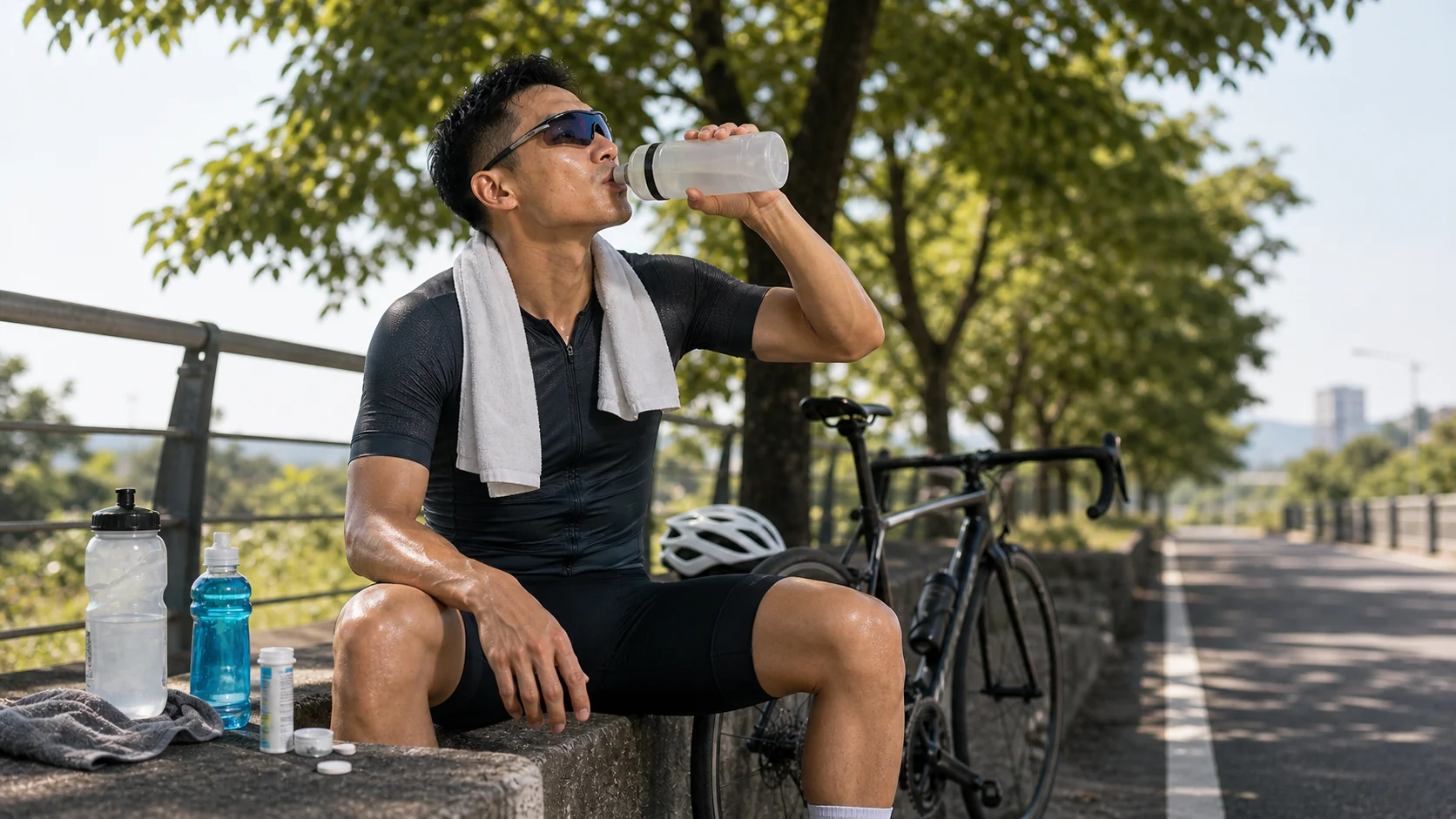
Water is the most important nutrient in the human body, making up 55-65% of body weight. Even mild dehydration can noticeably affect athletic performance:
| Dehydration Level (% Body Weight Lost) | Physiological Effect | Performance Decline |
|---|---|---|
| 1% | Mild thirst, slight rise in core temperature | Possible minor impact |
| 2% | Noticeable thirst, elevated heart rate | Aerobic performance drops 5-8% |
| 3% | Significantly elevated heart rate, reduced coordination | Performance drops 10-15% |
| 4% | Increased risk of muscle cramps | Performance drops 20-30% |
| 5%+ | Dizziness, nausea, dangerous state | Unable to continue exercising |
Note: In hot environments, the effects of dehydration are significantly more pronounced.
What Electrolytes Do
Electrolytes are electrically charged minerals dissolved in water. The main ones are:
| Electrolyte | Primary Function | Main Route of Loss |
|---|---|---|
| Sodium (Na+) | Extracellular fluid osmotic pressure, nerve conduction | Sweat (largest loss) |
| Potassium (K+) | Intracellular fluid osmotic pressure, heart muscle function | Sweat (small amount), urine |
| Chloride (Cl-) | Acid-base balance, works with sodium | Sweat |
| Magnesium (Mg2+) | Muscle contraction, cofactor for 300+ enzymes | Sweat (small amount) |
| Calcium (Ca2+) | Muscle contraction, bone | Sweat (small amount) |
Sodium is the most important electrolyte to replenish, since it’s lost in the largest amount through sweat and is key to maintaining plasma osmotic pressure.
Analyzing Sweat Composition
Sweat composition varies considerably from person to person:
- Sweat rate: 0.5-2.5 L/hour (depending on intensity, temperature, and individual differences)
- Sodium concentration in sweat: 20-90 mmol/L (average around 40-50 mmol/L)
- Per liter of sweat: approximately 920-2070 mg sodium, 195 mg potassium, 24 mg magnesium
“Salty sweaters” (people with higher sodium concentration in their sweat) need to be more proactive about replenishing electrolytes during long-distance races.
When Do You Need Electrolytes? When Is Plain Water Enough?
Water Alone Is Sufficient
- Exercise duration < 60-75 minutes
- Moderate intensity (heart rate < 75% of max HR)
- Cool environment (below 25°C)
- Non-race training sessions
When You Need Electrolyte Replenishment
- Exercise duration > 60-75 minutes
- High intensity (heart rate > 75% of max HR)
- Hot and humid environment (above 30°C)
- Heavy sweating, clothes visibly soaked through
- You already know you’re a “salty sweater” (white salt residue on clothing)
- Long-distance races (half marathon/triathlon distance or longer)
Hyponatremia: A Threat More Dangerous Than Dehydration
Ironically, drinking too much water can also be dangerous during a race. Hyponatremia is abnormally low blood sodium concentration (< 135 mmol/L), and it mainly occurs when:
- Excessive plain water intake dilutes blood sodium
- During long-duration races (4+ hours)
- Heavy sweating combined with insufficient sodium intake
Symptoms: Headache, nausea, confusion, seizures; severe cases can be fatal.
Prevention: Don’t force yourself to drink on a rigid schedule (drinking to thirst is safer); choose electrolyte drinks rather than plain water for long-distance races.
Hydration Strategy: Science-Based Recommendations
Before Exercise
- Drink 500 mL of water 2 hours before exercise
- Check that urine is pale yellow (a sign of good hydration)
During Exercise
- Drink to thirst rather than a fixed schedule: recent research supports drinking according to thirst cues as safer than a rigid timetable
- If you can’t rely on thirst cues (e.g., wearing a heart rate strap, fast race pace), drink 150-250 mL every 15-20 minutes
- For sessions over 60 minutes: choose an electrolyte drink (400-700 mg sodium per liter)
After Exercise
- Calculate your body weight difference: for every 1 kg lost during exercise, replenish 1.5 L of fluid (with electrolytes)
- Pair with sodium-containing foods (in a regular meal) to speed up rehydration
- Don’t chug a large volume all at once — spread your intake out
DIY Electrolyte Drink Recipe
Commercial sports drinks can sometimes be too high in sugar or too expensive. Here’s a simple homemade recipe:
Basic recipe (per liter):
- 1000 mL water
- 0.5-1 g salt (sodium chloride) (200-400 mg sodium)
- 30-60 g honey or sugar (provides carbohydrates)
- Lemon juice to taste (flavor + a small amount of electrolytes)
Enhanced version (for long-distance races):
- Add 100 mL of unsalted tomato juice to the basic recipe (provides potassium)
- Or add a small amount of magnesium chloride to supplement magnesium
Guide to Choosing Electrolyte Supplements
| Product Type | Characteristics | Best For |
|---|---|---|
| Sports drinks (e.g., Gatorade) | Contains sugar + electrolytes, convenient | 1-3 hour aerobic training |
| Electrolyte tablets (e.g., Nuun) | Low sugar, portable | Needs to be paired with additional carb fueling |
| Electrolyte capsules (e.g., SaltStick) | High sodium, flexible | Long-distance races, used alongside plain water |
| Coconut water | High potassium, low sodium, natural | Low-intensity recovery drink |
| Homemade electrolyte drink | Customizable concentration, cost-effective | Everyday training use |
Conclusion
Hydration and electrolyte replenishment don’t need to be complicated. The core principle is: short-duration, low-intensity = plain water is enough; long-duration, high-intensity/hot conditions = you need electrolytes. Drinking to thirst is generally a safe and effective strategy that avoids the risk of hyponatremia from overhydration. Finding a fueling plan suited to your own sweat rate and electrolyte needs before race day is one of the keys to success in long-distance events.
Related Reading
- Hydration for Swimmers: A Replenishment Plan for Losses You Can’t Feel During Training
- Electrolyte Guide: Ratios and Timing for Sodium, Potassium, and Magnesium
- Hydration Strategy in Swimming: The Hidden Dehydration Risk of Water-Based Exercise
- Electrolytes and Athletic Performance: The Science of Fluid Balance in Endurance Sports
CT暗黑廚房) 車友必備 宇宙無敵鮮蚵湯 幫助訓練恢復 天然食補 好市多 超肥鮮蚵 破PR
7 年前
靠單車減肥35公斤 心得分享與整理
7 年前
西進武嶺 免費訓練分析服務 Intervals | 練不夠還是練過頭?你哪一種類型選手?AI模型告訴你! | 備戰神器 | 公路車 訓練 | CT Yeh
4 年前
洗單車神器 吹水機! 實際洗車用用看 暴力洗鍊條大法 | 公路車 | CT Yeh
4 年前
#公路車 #Fitting 靠人工智慧APP 幫你調整單車
6 年前
詳測) 小米 電動打氣筒 公路車胎要充多久? 值得買嗎? 米家充氣寶 小心燙手!
7 年前
用了AirTag 單車就不怕被偷?盲點大測試 結果… |公路車|CT Yeh
5 年前
DJI OSMO Action 3 新韌體超強! 2.5H續航!運動攝影新神器!超強快充!今年不換GoPro了🤣| 公路車 | CT Yeh
3 年前