Knee Joint Protection After the Wuling Climb: Soft Tissue Recovery Timeline Following the 26K Descent
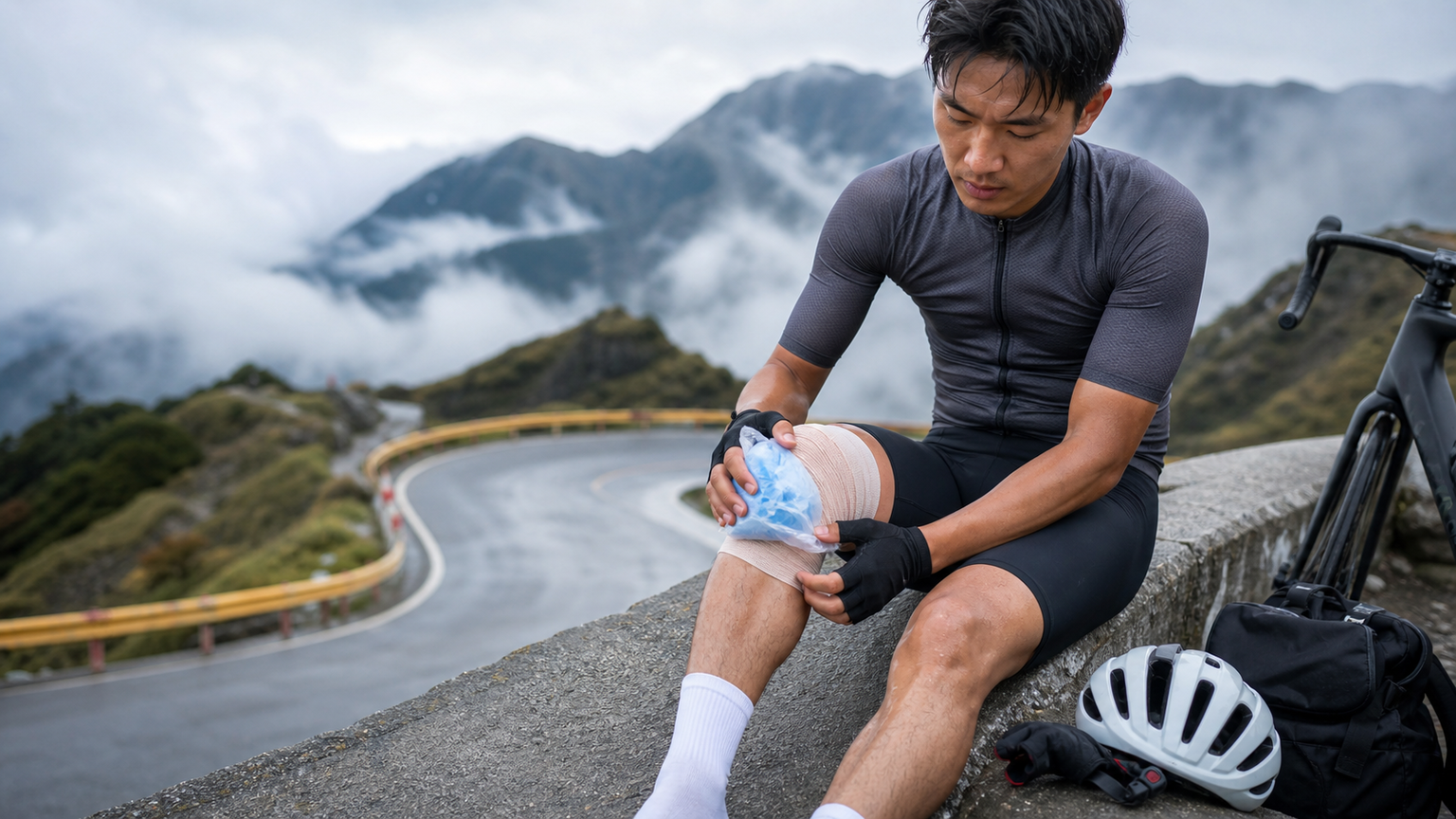
Knee Joint Protection After Wuling Race: Soft Tissue Repair Timeline After the 26K Descent
The 26K descent of the Wuling race (from Wuling to Wushe) is an invisible test for the knee joints. Many riders assume the climb is the real challenge, but the eccentric contractions, braking reaction forces, and cold-induced stiffness endured by the knee joints during the descent are often the true source of post-race discomfort.
Analysis of Knee Load During the Descent
From Wuling (3,275m) down to Wushe (1,148m), the elevation drop is 2,127m over an average distance of 26K. During the descent:
- Eccentric contraction of the quadriceps: When controlling pedal speed, the quadriceps perform deceleration work, increasing micro-tears in muscle fibers by 30-50%
- Patellofemoral joint pressure: When braking through corners, the knee flexes 25-35°, increasing patellar load to 2-3 times body weight
- Iliotibial band friction: Prolonged one-sided loading or poor saddle position causes repeated friction of the iliotibial band against the lateral femoral epicondyle
- Increased synovial fluid viscosity in cold: When temperatures drop below 12°C, synovial fluid mobility decreases, leading to insufficient cartilage lubrication
0-6 Hours Post-Race: Acute Phase
Warmth and mild swelling in the knee joints immediately after finishing are normal inflammatory responses, but the following warning signs require caution:
- Severe pain when bending the knee beyond 90°
- A “catching” sensation in the knee when descending stairs
- Noticeable swelling around the patella
Management principles follow PEACE (replacing the traditional RICE):
- Protection: Avoid further weight-bearing; hitch a ride instead of cycling or driving back
- Elevation: Elevate the legs above heart level for 20 minutes
- Avoid anti-inflammatories: Avoid taking NSAIDs immediately after the race (they delay muscle repair)
- Compression: Compression socks at 20-30 mmHg
- Education: Be patient and allow natural recovery
6-24 Hours Post-Race: Peak Inflammation
IL-6 and CK levels peak during this period:
- Apply 15-minute cold packs (with a towel between the ice pack and skin) every 2 hours, up to 6 times
- Consume 0.3g/kg body weight of protein + 1g/kg body weight of carbohydrates
- The protein window actually lasts up to 24 hours; no need to obsess over the 30-minute post-race window
- Magnesium intake of 400mg: helps relax muscles
- Get 8-10 hours of quality sleep: growth hormone secretion primarily occurs during deep sleep
24-72 Hours Post-Race: Repair Phase
Entering the main recovery phase:
- Day 2: Light activity, 20-30 minutes of flat riding, heart rate < 120 bpm, to promote blood circulation
- Day 3: Begin light stretching, focusing on the quadriceps, iliotibial band, and hip flexors
- Quadriceps stretch: Stand against a wall, grab the top of one foot with one hand and pull it backward, hold for 30 seconds × 3 sets
- Iliotibial band foam rolling: Lie on your side on a foam roller, roll from the hip down to the outside of the knee, 60 seconds per side
Days 4-7: Strengthening Phase
If there is no persistent pain, gradually resume training:
- Days 4-5: Zone 2 riding for 60-90 minutes
- Days 6-7: Try short Sweet Spot efforts, but avoid hard out-of-the-saddle efforts with big gears
- Add single-leg bridges: Lying on your back with knees bent at 60°, lift the hips, 15 reps per side × 3 sets (strengthens the gluteus medius to reduce iliotibial band compensation)
Warning Signs Requiring Medical Attention
- Pain increases rather than decreases 5 days after the race
- Persistent knee swelling lasting more than a week
- A persistent “locking” sensation when climbing or descending stairs
- Noticeable clicking or popping in the knee accompanied by pain
These may indicate meniscus injury or cartilage detachment, requiring MRI confirmation.
Prevention Strategies: Pre-Race Training Adjustments
Before the next Wuling race, consider adding:
- Eccentric training: Once per week, perform descending-step squats (4-second eccentric, 1-second concentric), 10 reps × 3 sets
- Proprioception training: Single-leg standing with eyes closed for 30 seconds, 5 sets per side
- Descent practice: Include 2 long descent sessions in the 4 weeks before the race (e.g., Qingjing to Puli), to familiarize yourself with braking rhythm
The knee joint is a rider’s core asset. The 7 days of patience after the Wuling race are the ticket to the next mountain. Listening to your body matters more than a PR.
Related Reading
- Recovery Week After a Wuling PB: 7-Day Body Repair Timeline
- Training Recovery Rhythm 2 Weeks After Wuling: Bridging from Low-Intensity Rolling to Your Next Goal Race
- Frostbite Risk Assessment on the Wuling Descent: Core Temperature Management from 3,275m to Wushe Over 26K
- Complete Guide to Wuling West Approach Descent Technique and Safety: Rough Roads, Corners, and Brake Management
FTL 與 SYB 車隊專訪 西進武嶺 實用攻略分享! 2小時 如何練?!你不知道的眉角!新手準備武嶺必看 EP1 | 實力派女車友 | 精華版 | 公路車 | CTYeh
4 年前
大禹嶺 到 武嶺牌樓 全程前後實況錄影 | 北進武嶺 | 東進武嶺 | KOM | 訓練台 | 坡度分析 | Taiwan KOM Last 10 km HARD | 公路車
6 年前
2019 夏季KOM 5小 完賽心得 準備攻略 東進武嶺 夏季登山王之路 Taiwan KOM Challenge
7 年前
富士山KOM 賽事篇 VLOG!/ 小野田出沒!/ 完整路段分析 / 武嶺要騎多快才能拿環?/ 台灣選手 第20回Mt.富士ヒルクライム 参加!/ 公路車 / CT Yeh
2 年前
CT趣訪 西進武嶺 2小時組 EP2 全村的希望 蔣緯緯! 訓練菜單&技巧公開 |公路車 |CT Yeh
4 年前
#公路車 #西進武嶺 配速配瓦實驗 坡度分析 四小時內攻略 建大盃 NeverStop #西進武嶺攻略
6 年前
雨戰! 西進武嶺員工旅遊 加料 各路段大數據分析 | 同事端出5公斤的公路車來挑戰!? EP1
4 年前
CT 喇低賽) 武嶺牽車 才是王道 西進牽車四小時內秘訣 攝手位置 如何判斷 防抽筋小秘訣
7 年前