Beyond Caffeine: "Brain Boosting" — How Music, Crowds, and Rewards Rewrite the Perception of Effort
The Common Point of Action: Perception of Effort
What makes caffeine, carbohydrate mouth rinsing, and self-talk effective is that they all act on the brain’s perception of effort and the upper limit of what it is willing to endure, rather than changing muscle or cardiorespiratory function (see the articles on central fatigue, caffeine, mouth rinsing, and self-talk). Within the same framework, there is another set of “environmental/social” central performance-enhancing tools—music, crowds, competition, and rewards—which allow you to run longer or harder with almost no physiological change. Understanding them is like gaining an additional set of legal, zero-cost tools.
Evidence and Mechanisms for Each Tool
| Tool | Mechanism | Beneficial Context | Limitations |
|---|---|---|---|
| Music (synchronous/motivational) | Reduces perceived exertion, modulates arousal and emotion, rhythm drives pacing, diverts attention | Submaximal/moderate intensity, training, monotonous stretches | May lose pacing control at high intensity; some events ban earphones |
| Crowd encouragement/cheering | Boosts motivation, lowers perceived exertion, shifts threat→challenge appraisal | Critical race segments, before the finish line | Dependent on external factors, uncontrollable |
| Competition/having a rival | Raises the upper limit of willing effort, social facilitation | Races, group sessions | Overly competitive individuals may overreach and risk injury (see the social support article) |
| Rewards/motivational framing | Increases willingness to exert effort, alters cost-benefit trade-off | Short-term motivation | Purely extrinsic rewards may erode intrinsic motivation long-term (see the motivation article) |
| Virtual reality/distraction stimuli | Diverts attention, reduces pain perception | Indoor trainer/treadmill monotonous training | Must still monitor the body at high intensity |
Music: Use the Right Intensity and Tempo
The endurance benefits of music are most consistent at submaximal/moderate intensity (lowering RPE, improving mood and endurance, with rhythm able to drive cadence); at near-maximal high intensity, physiological signals are too strong, the “analgesic” benefit of music diminishes, and excessive distraction may cause you to lose pacing control and blow up (consistent with the attention strategy article). In practice: use motivational/synchronous music during monotonous low-to-moderate intensity long rides to improve adherence and endurance; during high-intensity intervals or critical race-pace segments, switch back to associative focus.
Crowds and Competition: Releasing the External Governor
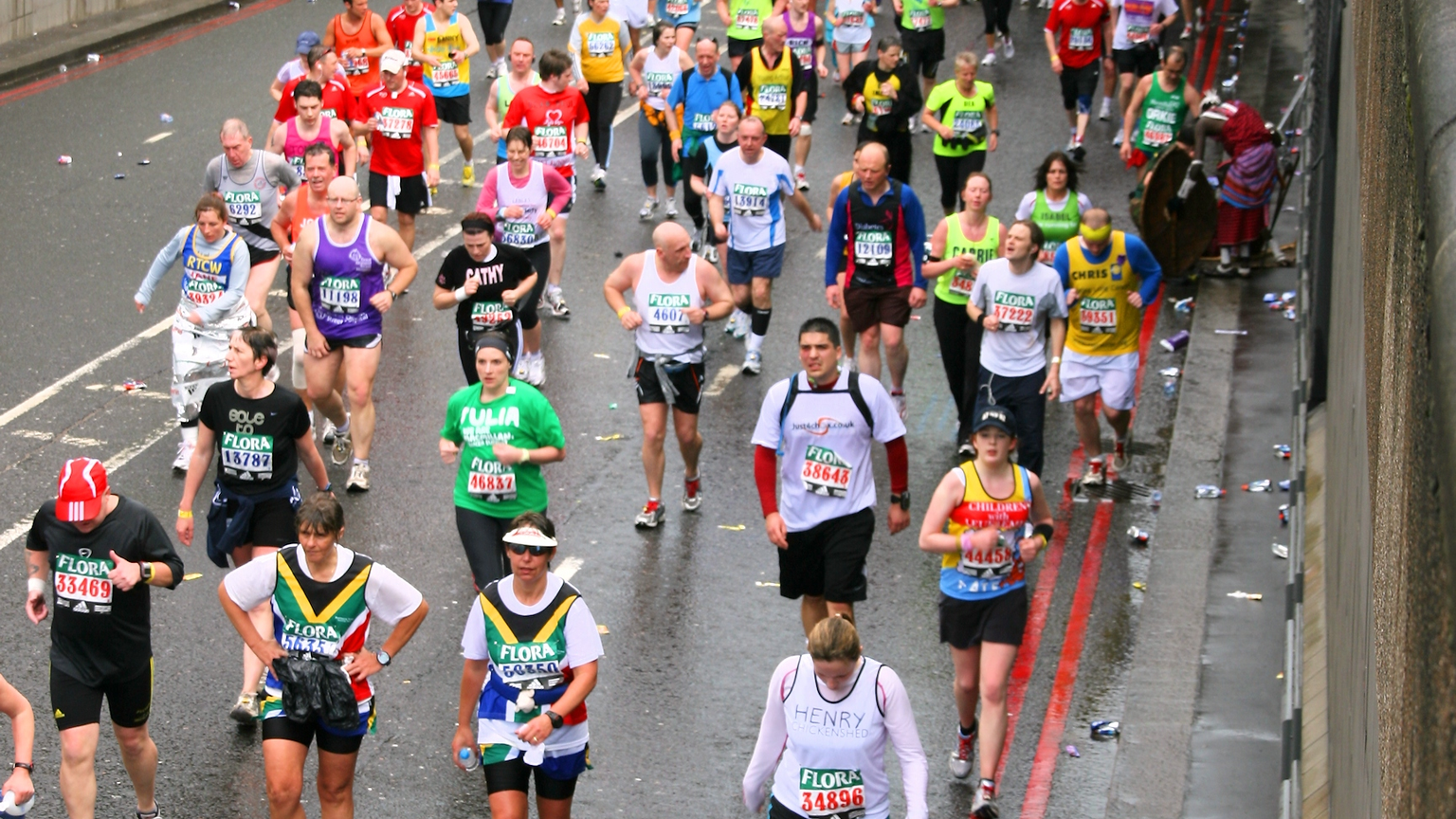
Crowd cheering and the presence of an opponent have repeatedly been shown to improve performance without changing physiology—this is consistent with the central governor model: these signals alter the brain’s assessment of “is it worth it, is it safe to give a little more,” releasing the recruitment brake (see the central fatigue article). This is also why “sudden power” often appears at home venues, along the finishing straight with crowds on both sides, or when riding shoulder-to-shoulder with a rival. In race strategy, you can deliberately schedule your mental resources and “release” for crowd-dense sections and the finish (consistent with the pacing strategy article).
Turning Them into Designable Tools
- Training adherence: Use music/virtual environments to lower the psychological cost of monotonous sessions, improving long-term consistency (adherence often determines outcomes more than plan details, see the social support article).
- Race planning: Anticipate crowd sections and plan to release there; leverage the social facilitation and psychological load-sharing of pacers/pelotons.
- Rewards should serve intrinsic motivation: Use short-term extrinsic incentives to drive execution, but connect them to intrinsic value to avoid long-term erosion of intrinsic motivation and burnout (see the motivation article).
- Integrate with pharmacological/nutritional aids: These central tools complement the mechanisms of caffeine and mouth rinsing (both target the perception of effort) and can be stacked on top of physiological preparation, but none replace the training foundation.
A Shared Sober Understanding
These tools do not make your engine bigger—they release the brain’s protective brake. Their value lies in “squeezing out more fully the ability you already have,” and most are zero-cost, legal, and designable. But at high intensity, don’t let dissociative tools take away your pacing control, and don’t let extrinsic rewards backfire on intrinsic motivation.
What gets you through those extra few minutes is often not more muscle, but the brain being persuaded that ‘you can give a little more.’ Music, crowds, rivals, rewards—these zero-cost central tools follow the same path as caffeine: they don’t enlarge the engine, they only release the brake. Smart athletes deploy them as strategy, not as something they happen to encounter.
Related Reading
- The Benefits of Caffeine for Endurance Performance: Latest Meta-Analysis of 3-6 mg/kg Dosing and Individual Differences
- Caffeine Periodization Strategies: Maximizing Ergogenic Gains on Race Day
- The Science of Caffeine: Optimal Dosing and Timing for Endurance Sports
- Caffeine and Athletic Performance: Mechanisms of Action, Individual Differences, and Side Effects to Watch
#公路車 #Vo2Max #最大攝氧量 測驗 體驗 | 心肺測試
6 年前
單車 重低音 藍芽喇叭 音質實測 SoundBot SB525 Real Sound Test
8 年前
西進武嶺 免費訓練分析服務 Intervals | 練不夠還是練過頭?你哪一種類型選手?AI模型告訴你! | 備戰神器 | 公路車 訓練 | CT Yeh
4 年前
西進武嶺 自製新版AI配速表產生器 x 賽前攻略 抱佛腳! 沒有功率計也可以產生配速表嗎?有什麼其他眉角賽前要注意的呢? | 西進武嶺 / 東進武嶺 KOM 攻略 | 公路車 | CT Yeh
4 年前
海鷗戰歌「十人同心」完整版 #公路車 #cycling
8 個月前
2023 台灣KOM自行車登山王挑戰 (AI修復版) / Taiwan KOM Challenge / Live 實況直播 / 班傑明刷破大會成績全記錄
2 年前
3C開箱) SoundBot 老車升級智慧音響 SB360 藍芽 免持 接收器 Aux in 手機 汽車音響 美國聲霸
7 年前
2025 一日北高 護送女總一 全紀錄 / feat. 卡卡歡樂補給團隊! / 公路車 / CT Yeh
1 年前