2026 Core Training and Strength Assistive Equipment: The Three Must-Buys for Runners and Cyclists
What Endurance Athletes Most Often Lack Is Strength
Runners and cyclists tend to pour all their time into “aerobic” work and neglect strength training. But strength is the foundation of endurance: it determines movement economy, late-race stability, and injury resistance. The question isn’t whether to train it—it’s “what home equipment offers the best value.”
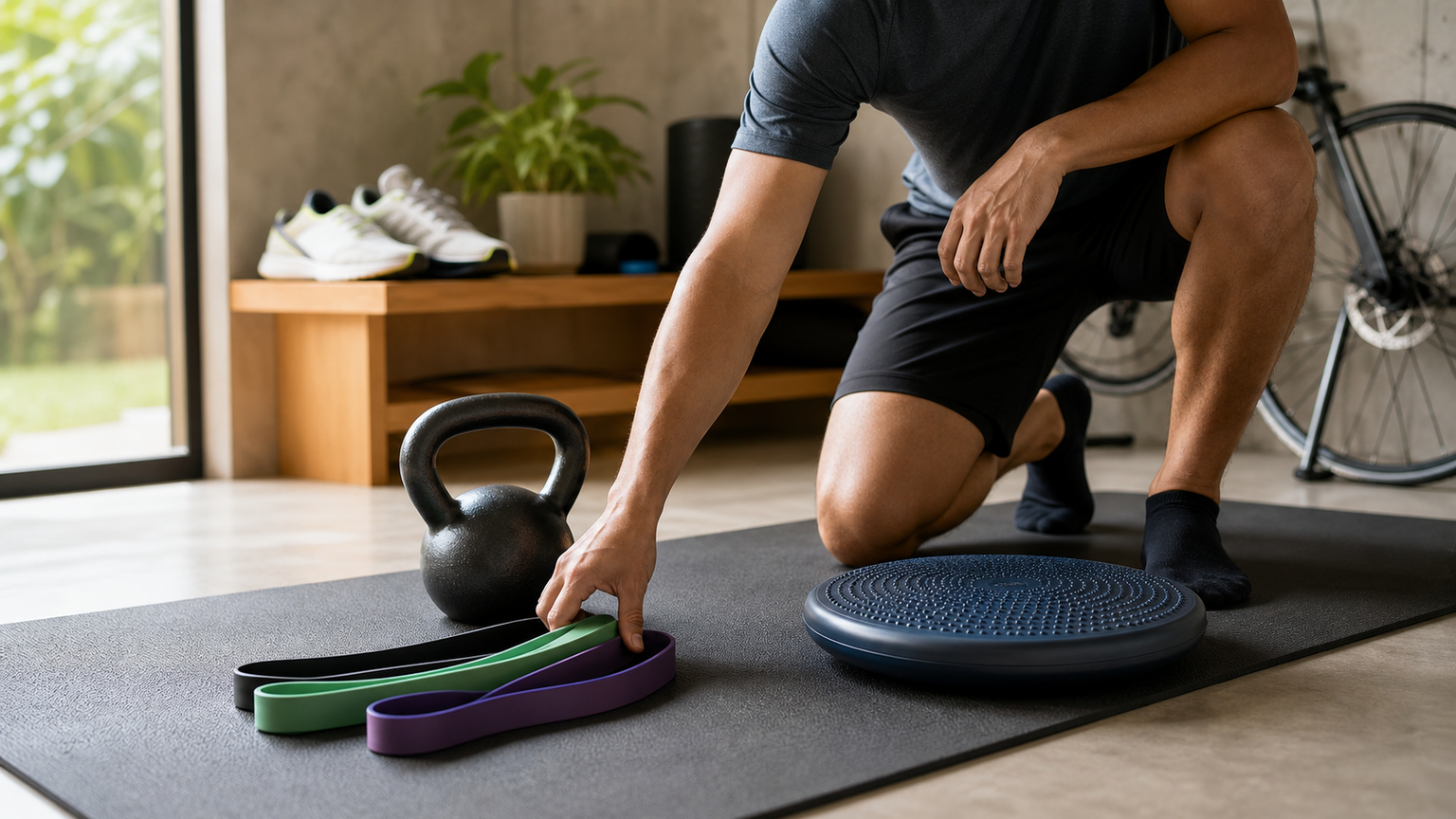
The Three Most Worth Buying
| Equipment | Primary Benefit | Why It Comes First |
|---|---|---|
| Resistance bands / mini loops | Gluteus medius, hip stability, warm-up activation | Cheap, highest injury-prevention value |
| Kettlebell (single) | Hip-dominant power, posterior chain, full-body integration | One bell trains the whole body, saves space |
| Balance pad / wobble board | Proprioception, ankle-knee stability, sprain prevention | Directly reduces running and cycling injury rates |
Resistance Bands: The Underrated King of Injury Prevention
Common injuries among runners and cyclists (runner’s knee, IT band, lower back) often stem from “weak glute and hip stabilizer muscles.” Banded lateral walks, clamshells, and hip abductions precisely activate these often-neglected small muscle groups. They’re cheap, light, and travel-friendly—the highest return on investment for injury prevention, bar none.
Kettlebell: One Bell, Full-Body Training
The kettlebell swing (a hip hinge movement) strengthens the glutes, legs, and posterior chain—exactly the core strength source behind running propulsion and cycling power output; movements like the Turkish get-up integrate full-body stability. A single kettlebell at the right weight can cover nearly all of an endurance athlete’s strength needs while taking up minimal space. The technical learning curve is higher, so learn proper form before adding weight, or you risk your lower back.
Balance Pad: Directly Lowering Sprain Rates
The most common acute injuries in trail running and mountain riding are ankle and knee sprains and strains. Doing single-leg stands and single-leg squats on an unstable surface trains proprioception and the reaction speed of ankle-knee stabilizers—the most direct tool for “sprain prevention,” especially beneficial for aging athletes or those returning from injury.
How to Schedule It (No Need for Much Time)
- Before running or riding: use resistance bands for “activation” warm-ups (wake up the glutes before heading out)
- 2 to 3 times per week: 15 to 20 minutes each of kettlebell plus balance training
- Principle: strength is a “supplement” to endurance; volume doesn’t need to be large—consistency and correct form matter most
What Not to Buy
Fancy multi-function machines and bulky large equipment offer marginal benefits to endurance athletes. What endurance athletes need is “stabilizer muscles, hip strength, and proprioception”—these three inexpensive tools solve it all. Don’t let marketing talk you into big machines that gather dust after two uses.
Safety Reminder
Most strength-training injuries come from “adding load while form is still wrong.” Rather go light, rather go slow, and learn the movement correctly first; kettlebell and single-leg movements especially need to progress gradually.
The most common blind spot for endurance athletes is thinking that more aerobic training makes them stronger—until they twist an ankle on a descent or their form collapses in the second half of a race and they finally understand: strength isn’t for lifting heavy; it’s the invisible foundation that lets you run longer and get injured less.
Related Reading
- Resistance Band Strength Training: The Endurance Athlete’s Portable Gym
- Triathlon Strength Training — Core, Single-Leg, and Posterior Chain Prescriptions for Triathletes
- Why Endurance Athletes Need Strength Training: The Dual Key of Economy and Injury Prevention
- How Weight Training Makes You Run Faster and Ride Stronger: Three Paths Through Nerves, Tendons, and Economy
摔車後補裝備: 好市多新款單車安全帽& Specialized Romin 北高整路屁股都不痛的坐墊 | 一千元居然有MIPS | CT Yeh | 公路車
4 年前
ThinkRider 智騎 XXPRO 訓練台,高階機種功能 只要 1/3價格!? 實測功率對比、噪音實測 / 公路車 / CT Yeh
1 年前
2022台北國際自行車展 訓練台 試騎心得大全 差點腿軟走出! 元宇宙武嶺!| Garmin Tacx Oreka Xpedo Wahoo | 公路車 | CT Yeh
4 年前
新玩具!Feiyu Pocket 3 無線三軸 運動攝影機 開箱!/ GoPro拍不出來的震撼視角? / 完全沒殘影的神夜拍效果 (內有專屬優惠!) / 公路車 / CT Yeh
2 年前
用了AirTag 單車就不怕被偷?盲點大測試 結果… |公路車|CT Yeh
5 年前
把帶被我推爛,換新的防推爛款💪 #cycling #公路車 #曜越單車
2 年前
2026 車錶排行榜!誰是最多車友正在使用?練家子最愛哪款?🏆 (2萬名車友數據) / 公路車 / CT Yeh
5 個月前
元宇宙單車運動!智騎 X7 Pro 智能訓練台 ThinkRider 居家線上練功
5 年前