文章導覽
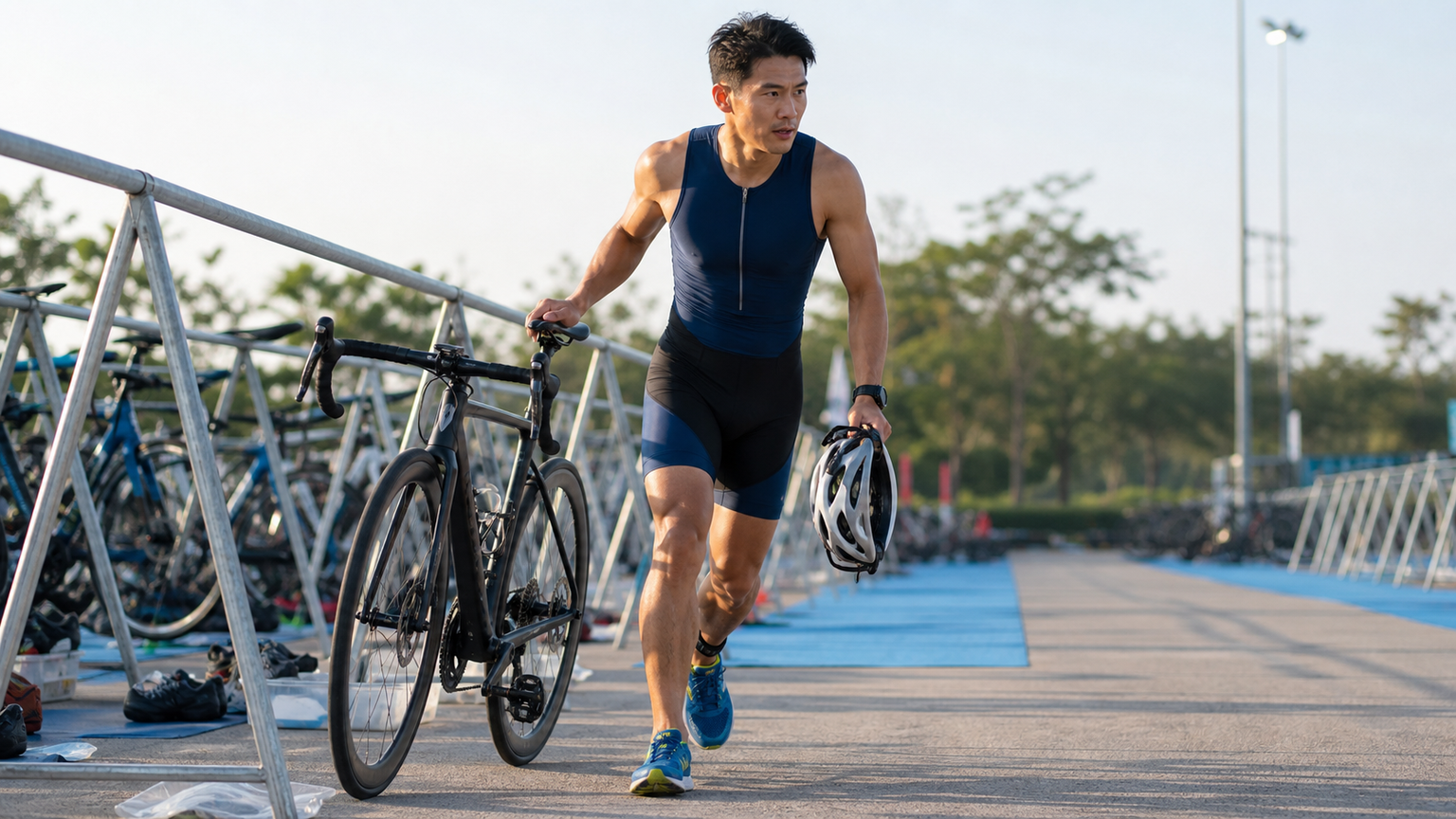
T2’s Two Time-Loss Points
T2 may seem like just “dismount, change shoes, and run out,” but two areas most often cost time: not slowing down and adjusting before dismounting, and fumbling with shoes during the change. Pros take about 30–50 seconds in T2, while age-groupers often spend 1:30–2:30.
T2 Six-Step Process
| Step | Action | Key Point |
|---|---|---|
| 1 | Pull feet out of shoes 400m before the dismount line | Leave shoes on pedals |
| 2 | Dismount barefoot at the line | Dominant foot in back |
| 3 | Run with bike into the transition area | Grab the saddle, not the handlebars |
| 4 | Rack bike and remove helmet | Place helmet properly, don’t toss it |
| 5 | Slip feet into elastic-lace shoes | No tying needed |
| 6 | Grab nutrition and run out | Rotate race number to the front |
Leg Activation Before Dismounting
In the final 3–5km, drop power to target IF −0.05 and do 3 rounds of 10-second high-cadence surges (100+ rpm). This switches the quads from low-cadence mode back to running-specific neural recruitment.
Elastic Laces and Anti-Slip
Non-tie elastic laces can save 15–25 seconds; sprinkle a little talcum powder inside the shoes and sew a pull tab onto the tongue, so you can slip them on barefoot in 3 seconds.
First 200m After the Start
For the first 200m, use “short, quick steps with high cadence”—push cadence to 92–96 and deliberately shorten stride length to let the ankle joints recover from the pedaling angle. An artificially elevated heart rate is normal; don’t let it scare you into slowing down or skipping nutrition.
The “Leg Handoff” Timeline 5km Before Dismounting
Half of your T2 performance is decided before you even get off the bike. Follow this timeline: at 5km remaining, drop IF from 0.80 to 0.75; at 3km remaining, take your last sip of sugary drink and rotate your race number to the front; at 1.5km remaining, pull your heels out of the shoes so only the balls of your feet rest on the shoe uppers; at 400m remaining, do 2 rounds of 10-second 100+ rpm surges. This routine ensures your heart rate has already dropped 5–8 bpm by the time you enter T2, and your quads have been “notified” that a mode switch is coming—cutting the rate of form collapse in the first 1km by roughly half.
T2 Pace and Feel Reference for the First 2km
| Distance | Target Cadence | Pace vs Marathon Goal | Feel |
|---|---|---|---|
| 0–400m | 92–96 | 20–25"/km slower | Legs feel wooden, HR artificially high—don’t panic |
| 400m–1km | 90–92 | 10–15"/km slower | Starting to feel springy |
| 1–2km | Target cadence | Settle back to goal | Finding rhythm |
The biggest mistake is letting adrenaline carry you 15 seconds faster than goal pace in the first 1km—you’ll pay that debt back with interest at km 5–8.
T2 is the segment where “over-excitement” most easily ruins your race. The moment you dismount, blood sugar and adrenaline are both peaking, and your hands may even shake. Train until muscle memory takes over, and you won’t give away your placing here.
Related Reading
- T2 Transition Optimization: Muscle Gear-Shifting Technique from Dismount to Run
- T2 Transition Tactics: Flexible Strategy from Dismount to Run—Tying Laces While Running
- Triathlon Transition (T1/T2) Speed-Up Tips and Course Planning: How to Finish Pain-Free (Series 126)
- Sprint-Distance T1/T2 Advanced Transition Skills: Save 1–2 Minutes Per Race