Too Short to Require Heavy Eating
Glycogen stores are sufficient to support about 90 minutes of high-intensity exercise. In theory, a Sprint (roughly 60–80 minutes) does not require heavy carbohydrate loading; overeating can instead cause discomfort because gastric emptying slows under high intensity.
Sprint Fueling Timeline
| Timing | Content | Purpose |
|---|---|---|
| 2–3h before race | Normal breakfast, 1–2g carbs/kg | Top off glycogen |
| 15 min before race | One sip of sports drink or half a gel | Stabilize blood sugar |
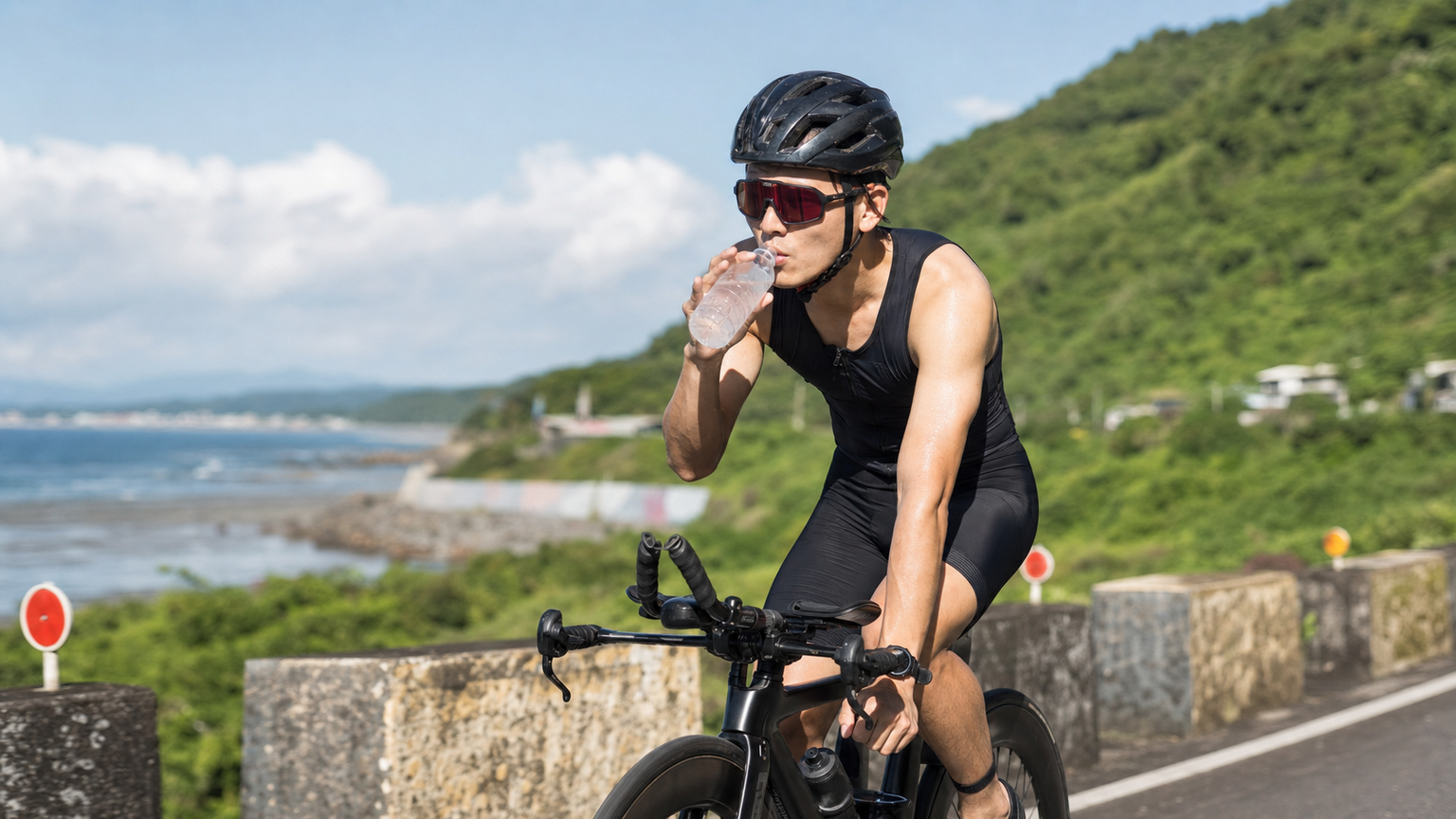
| Bike leg | 100–200ml sports drink | Main fueling window |
| Run leg | Usually no need to eat | Too short to absorb in time |
Why the Bike Leg Is the Only Window
You can’t eat while swimming, and during the run leg, the stomach nearly shuts down under high impact. The 20km bike leg takes about 30–35 minutes and is the only time during a Sprint when you can safely take in fuel—but even then, only a small amount of liquid carbs is needed.
Caffeine Timing
Taking 3mg/kg of caffeine 45–60 minutes before the race delivers the greatest benefit for an all-out effort like a Sprint, reducing perceived fatigue and improving anaerobic tolerance.
Common Mistakes
- Binge eating before the race for fear of running out of energy: stomach cramps under high intensity
- Forcing a gel during the run leg: it won’t be absorbed in time and only causes nausea
- Drinking nothing at all: in hot weather, dehydration can still impair your run
The Mouth Rinse Effect: Another Path When You Can’t Eat
Sprint intensity is so high that you often can’t swallow any solids or gels at all. Sports science has a trick that works especially well for short, high-intensity efforts: carbohydrate mouth rinse. Hold a sip of 6%–8% sports drink in your mouth for 5–10 seconds without swallowing, then spit it out. The carbohydrate receptors in the mouth send a direct “fuel is coming” signal to the brain, which can improve performance by about 2%–3% in 30–60 minutes of high-intensity exercise, with zero gastrointestinal burden. During the Sprint run leg, rather than forcing a gel and risking nausea, it’s better to hold a sip of sports drink at each aid station and rinse.
Dose Gradient for Carbohydrate Loading 3 Hours Before the Race
| Time Before Race | Recommended Intake | Example | Note |
|---|---|---|---|
| 3h before | 1–2g/kg carbs, low fiber, low fat | White toast with honey, white rice | Avoid high fiber to prevent GI distress |
| 60–90 min before | 0.3–0.5g/kg, easily digestible | Half a banana, a piece of bread | Test tolerance individually |
| 15 min before | One sip of sports drink or half a gel | ~10g fast-acting sugar | Stabilize blood sugar at the start |
The highest level of Sprint fueling is “almost no fueling needed.” I’ve seen too many people transplant the long-distance playbook into a Sprint, only to end up clutching their stomachs on the run leg. Short races are about intensity tolerance, not how much you eat.
Related Reading
- Sprint Fueling Strategy: Why Short Distances Don’t Require Binge Eating
- Trail 100K Fueling Strategy: Energy, Hydration, and Stomach Acid Management for Races Over 12 Hours
- Ultramarathon Fueling Strategy: The Rhythm of Energy and Electrolytes from 50K to 100K
- 100-Mile Cycling Race Nutrition Timeline: A Complete Fueling Strategy from Start to Finish
Live) 備戰2019彰化經典百K 賽前攻略 (已完賽請看新影片
7 年前
#公路車 #西進武嶺 配速配瓦實驗 坡度分析 四小時內攻略 建大盃 NeverStop #西進武嶺攻略
6 年前
西進武嶺 免費訓練分析服務 Intervals | 練不夠還是練過頭?你哪一種類型選手?AI模型告訴你! | 備戰神器 | 公路車 訓練 | CT Yeh
4 年前
FTL 與 SYB 車隊專訪 西進武嶺 實用攻略分享! 2小時 如何練?!你不知道的眉角!新手準備武嶺必看 EP1 | 實力派女車友 | 精華版 | 公路車 | CTYeh
4 年前
靠單車減肥35公斤 心得分享與整理
7 年前
CT暗黑廚房) 車友必備 宇宙無敵鮮蚵湯 幫助訓練恢復 天然食補 好市多 超肥鮮蚵 破PR
7 年前
滑雪新手們慘摔學習全紀錄(請開字幕),滑雪好好玩 | Snowboard + Ski | 岩原 スキー場 | 滑雪APP使用 | GoPro Max
6 年前
CT 喇低賽) 武嶺牽車 才是王道 西進牽車四小時內秘訣 攝手位置 如何判斷 防抽筋小秘訣
7 年前