UCI Cycling World Cup: The Pinnacle Stage of Professional Road Racing
For many cycling enthusiasts, watching professional road racing is even more captivating than riding itself. Do you know why Paris-Roubaix is called the “Hell of the North”? Why the Spring Classics are considered so different from the Grand Tours? This article gives a complete introduction to the structure of professional road racing and its most spectacular events.
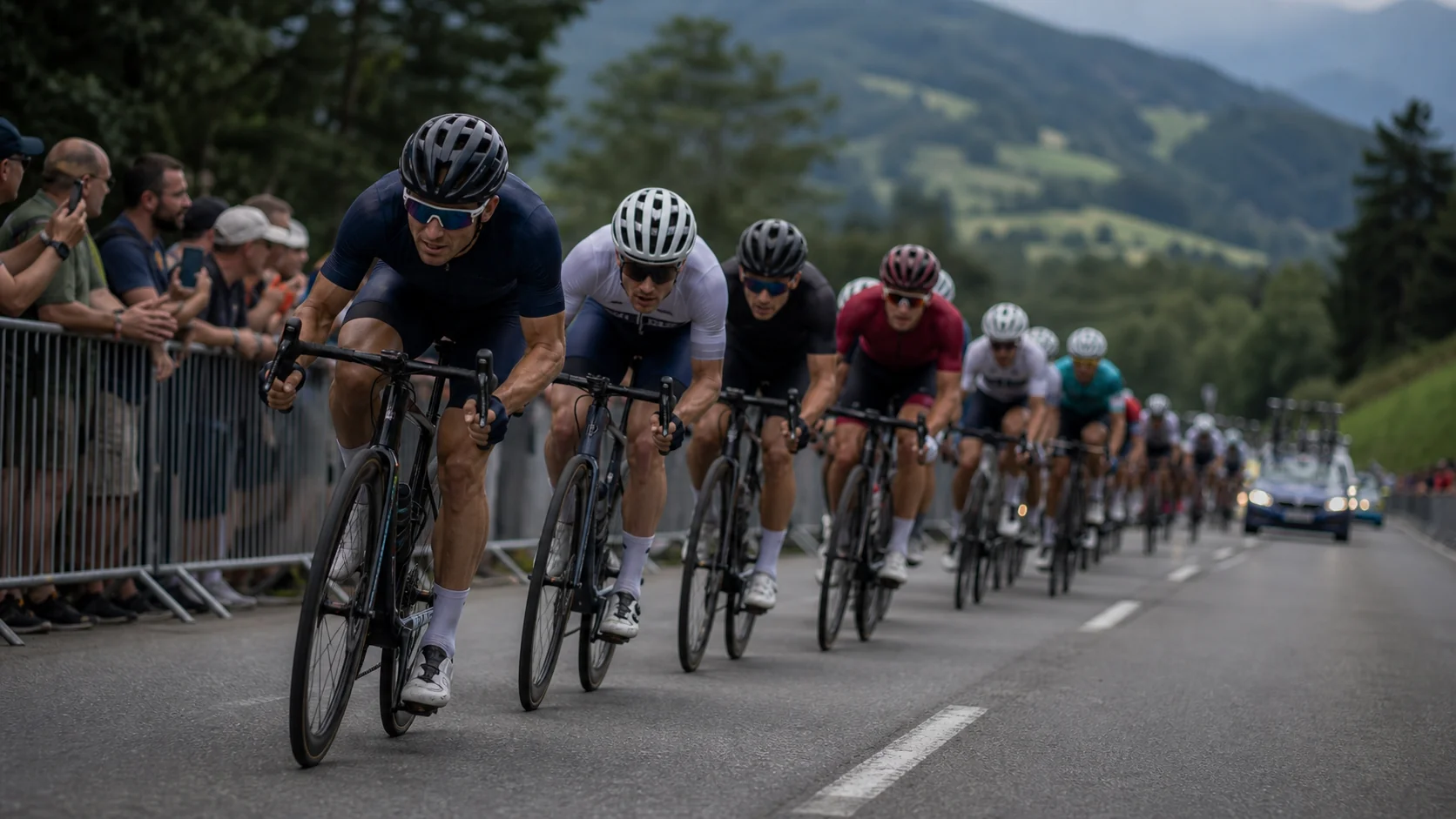
The Organizational Structure of Professional Road Racing
UCI WorldTour: The Top-Tier Race Series
The UCI (Union Cycliste Internationale) WorldTour is the highest-level race series in professional road racing:
- Around 35-40 races per year
- Only UCI WorldTeams can participate in the full calendar
- A points system: each race awards points according to its importance
- Final individual rider rankings and team rankings
Race Types
| Type | Format | Representative Races |
|---|---|---|
| Grand Tours | 3 weeks, roughly 21 stages | Tour de France, Giro d’Italia, Vuelta a España |
| Monument Classics | 1 day | The 5 Monuments |
| Stage Races | 4-10 days | Tour de Suisse, Volta a Catalunya |
| One-Day Races | 1 day | World Championships, Olympic road race |
The Three Grand Tours
Tour de France
- Dates: Every July, three weeks with 21 stages
- Grand Départ: The starting location changes each year, often opening outside France
- Key stages: The Alps, the Pyrenees, and the final time trial
- Champs-Élysées finish: Traditionally, riders celebrate together on the final stage, and attacks are held off unless the yellow jersey is genuinely at risk
Giro d’Italia
- Dates: Every May
- Character: Typically steeper and more difficult than the Tour de France
- Iconic climbs: The Stelvio Pass, the Gavia Pass, and others
- Rising attention: Interest has grown in recent years as young riders like Pogačar have taken part
Vuelta a España
- Dates: Every August-September
- Character: The last of the three Grand Tours on the calendar, when riders are usually already fatigued
- Terrain: Spain’s distinctive short, steep climbs
- Recent trend: Gradually rising to parity with the Tour de France, drawing top riders
The Triple Crown of the Grand Tours
Winning all three Grand Tours in the same year is one of the greatest achievements in cycling history:
- Eddy Merckx (1973): The first-ever Triple Crown
- Since then, only a handful of riders have come close, and no one has fully repeated it
The Five Monuments
The Monuments are the highest honor among one-day races — the oldest and most prestigious of all:
1. Milan-Sanremo
- Distance: Around 295 km (the longest one-day race)
- Character: Mostly flat, with the final climb of the Poggio deciding the outcome
- Winner profile: All-rounders who combine endurance with sprinting power
- History: First held in 1907, marking the opening of the Italian spring cycling season
2. Tour of Flanders (Ronde van Vlaanderen)
- Distance: Around 260 km
- Character: Belgian cobblestones and numerous short, steep climbs (Koppenberg, Oude Kwaremont)
- Winner profile: Powerhouses who can hold high power output over the cobbles
- Cultural significance: A source of national pride for the Flemish people of Belgium
3. Paris-Roubaix
- Nickname: The “Hell of the North”
- Character: 50-55 km of cobblestone sectors (pavé) over old farm roads
- Danger: Crashes and punctures are a common occurrence
- Trophy: Unlike other races, the winner receives a cobblestone as their trophy
- Imagery: Riders arrive at the finish caked in mud and utterly exhausted, yet radiating a sense of epic achievement
4. Liège-Bastogne-Liège
- Nickname: “La Doyenne” (The Old Lady) — the oldest professional cycling race (1892)
- Character: Numerous climbs through the Belgian Ardennes hills, culminating in La Redoute and Roche aux Faucons
- Winner profile: Climbing all-rounders
- Taiwan connection: Taiwanese riders have registered for this race in the past, though without ultimately taking part
5. Il Lombardia
- Nickname: The “Race of the Falling Leaves”
- Dates: October, the final major race of the professional season
- Character: The beautiful autumn scenery of Italy’s lake district, with numerous climbs
- Mood: A wistful, almost poetic atmosphere as riders bid farewell to the season
Spring Classics
Beyond the Monuments, spring brings many other important one-day races:
| Race | Dates | Character |
|---|---|---|
| Strade Bianche | March | Tuscany’s white gravel roads |
| Tirreno-Adriatico | March | Italian stage race |
| Volta a Catalunya | March | Spanish stage race |
| Amstel Gold Race | April | The hills of the Netherlands |
| La Flèche Wallonne | April | The climb up Belgium’s “Wall” (Mur de Huy) |
A Year in the Life of a Professional Rider
A professional rider’s annual schedule roughly looks like this:
| Month | Activity |
|---|---|
| Jan-Feb | Training camps, season openers (Australia or the Middle East) |
| Mar-Apr | Spring Classics |
| May | Giro d’Italia or other stage races |
| June | Preparing for the Tour de France or Classics |
| July | Tour de France |
| Aug-Sep | Vuelta a España or other tours |
| October | Il Lombardia, World Championships |
| Nov-Dec | Off-season, recovery |
Taiwanese Riders on the International Stage
Current Status
Taiwan currently has no UCI WorldTeam-level squad, but riders remain active at lower-tier races:
- Tour de Taiwan: An important Asian stage race, though its recent editions have been affected by the pandemic and other factors
- Taiwanese riders: Riders of Taiwanese descent occasionally race in Europe
The Path Forward
For Taiwanese riders to break into top-level professional racing, several things are needed:
- Building a competitive professional team (a major funding challenge)
- Developing young riders to compete in European U23 races
- Establishing development pipelines with European teams
How to Appreciate Professional Road Racing on a Deeper Level
Beginner Viewing Tips
- Understand the basic roles: Sprinter, Climber, GC Rider, and Domestique
- Watch how the breakaway forms: Which riders are allowed into the day’s breakaway in the first 50 km often shapes the entire race
- Focus on the final 30 km: This is usually where the decisive tactics unfold
Advanced Viewing Perspectives
- Watch for attacks on key climbs: At what point on a key climb does the attack come?
- Car numbers: The team car numbers seen throughout the race (even numbers on the right, odd numbers on the left)
- Time gaps: How the time gaps between rivals accumulate stage by stage
Viewing Resources in Taiwan
- Eurosport (paid): The most complete broadcast coverage
- Discovery+: The streaming version of Eurosport
- Official YouTube channels: Each Grand Tour has an official highlights channel
- Velonation, CyclingNews: English-language live reporting
- PTT Cycling Board: Chinese-language discussion among Taiwanese fans
Conclusion
Professional road cycling is a complex and deeply layered sport — the more you understand its history, culture, and tactics, the richer your enjoyment becomes. From the legacy of the Tour de France’s yellow jersey to the muddy epic of Paris-Roubaix, every race carries its own story and soul.
The next time you get on your bike, think about the footsteps of the professional riders who have traveled these same roads before you — what you share with them isn’t just the wheels beneath you, but an inexpressible love for the sport of cycling itself.
Related Reading
2024 春季KOM 賽事精華版 / 太魯閣 / 貓捉老鼠精彩追擊 / 錄影剪輯版 / 東進武嶺 / 公路車 (請開啟字幕)
2 年前
城市繞圈賽 直擊! 日本 前橋市 Maemashi Criterium 2017
8 年前
2024春季kom精華 #公路車 #kom #cycling
2 年前
微雨戰! 2022桃園市長盃錦標賽 無敵交管 沒來玩太可惜了! 羅馬公路太可怕 差點成佛! 公路車 | CT Yeh
4 年前
超激烈!2025 南庄仙山KOM 賽事精華 / 男菁英A x 女菁英A / 公路車 / CT Yeh
9 個月前
2025 乘鞍 KOM 登山賽挑戰實錄 / 日本公路最高 ! 賽前探路篇 / 比富士山厲害,無敵絕景!/ 40週年 / 中文YT首發 / 公路車 / CT Yeh #乘鞍ヒルクライム
10 個月前
單車實況) 車測中心高速賽道 96 彰化讚 挑戰組一圈實錄 | ARTC
6 年前
如何 搶 #中央山脈 報名 #公路車 #報名 #搶票
7 年前