文章導覽
Summer Survival Guide for Taiwanese Cyclists: Riding Strategies for Extreme Heat
Summer in Taiwan (June through September) is the toughest challenge cyclists face all year: lowland temperatures routinely hit 35-38°C, and combined with high humidity, the “feels-like” temperature can top 45°C. Many riders cut back drastically on cycling during summer, but with the right strategy, you can still train safely and effectively through Taiwan’s summer.
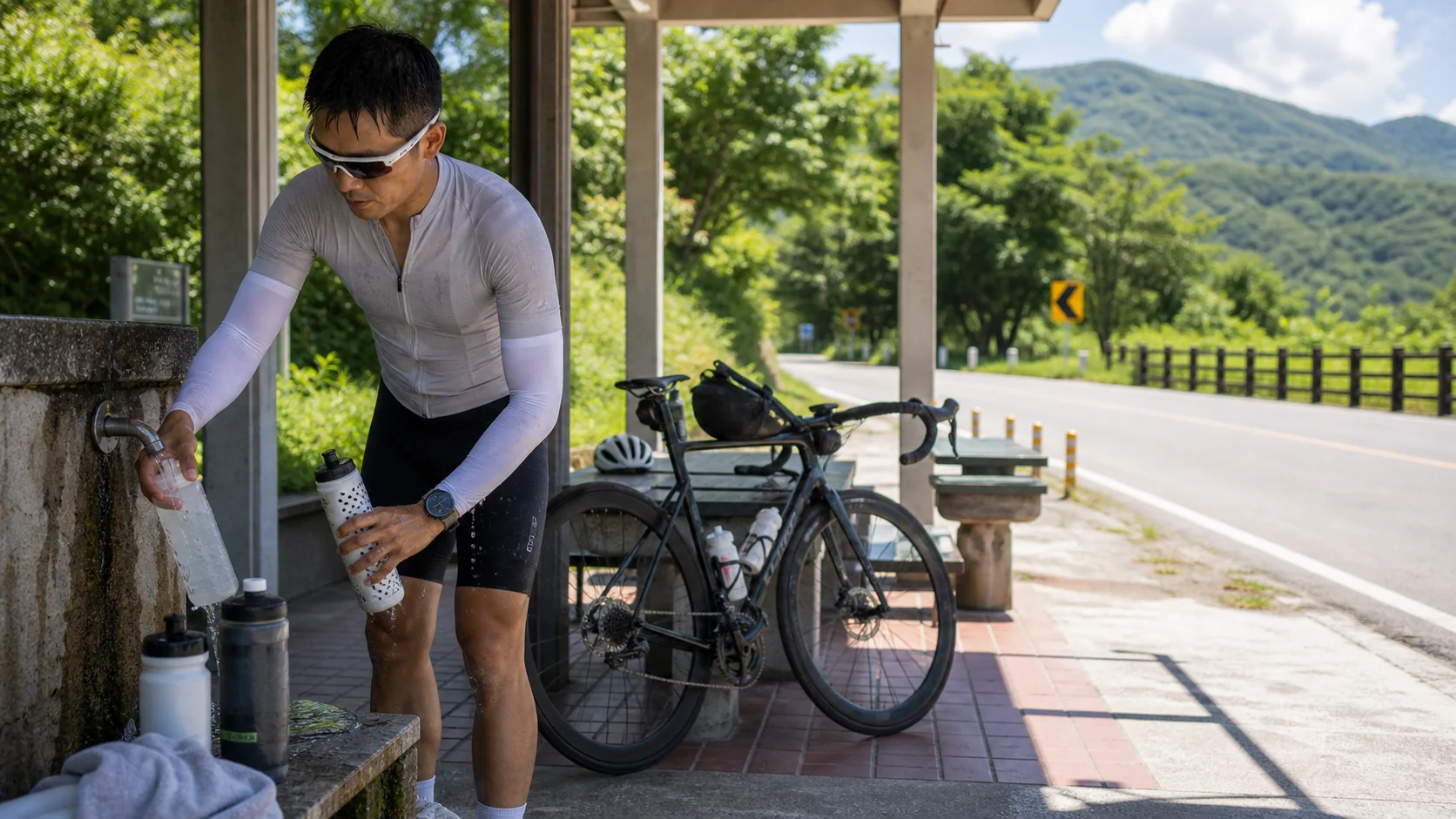
Taiwan’s Unique Summer Environment
The Compound Effect of Heat and Humidity
Taiwan’s summer heat is so brutal because high humidity reduces how efficiently sweat can evaporate:
| Temperature | Humidity | Heat Index (Feels-Like) |
|---|---|---|
| 33°C | 60% | About 38°C |
| 35°C | 75% | About 46°C |
| 37°C | 80% | Over 50°C (dangerous) |
Once relative humidity exceeds 75%, even the most breathable jersey can’t help sweat evaporate fast enough, and body temperature climbs quickly.
The Urban Heat Island Effect
Taiwan’s major cities run 3-5°C hotter than the surrounding countryside due to the urban heat island effect:
- The Taipei Basin (ringed by mountains) shows this effect especially strongly
- Downtown Taichung often hits 38-40°C in summer
- Kaohsiung is more open, but sun exposure is intense
The Golden Rules of Summer Ride Timing
The Best Riding Windows
First choice: early morning (4:30-8:00 AM)
- Lowest temperatures of the day (typically 28-30°C)
- Low sun angle means less radiant heat
- Mentally sharpest right after sleep
- Traffic is lighter on some routes
Second choice: evening (6:00-8:30 PM)
- Temperatures drop quickly after sunset
- But the ground still radiates stored heat (you need to wait for it to cool)
- It may get dark toward the end of your ride, so bring lights
Absolutely avoid: 10:00 AM-4:00 PM
- The hottest hours of the day
- Solar radiation is at its peak
- No strategy can fully counteract heat stress during this window
Making Early Morning Rides Actually Happen
Prep the night before:
- Get your bike and gear ready
- Pre-chill your water bottles
- Set your alarm (4:00-4:30 AM)
- Prepare a light snack (banana, energy bar)
Before you head out (early morning):
- Drink 500ml of water
- Eat something light (never ride on an empty stomach)
- Check your lights (front and rear lights are still needed at dawn)
Heat Acclimatization Training
Why Heat Acclimatization Matters
An unacclimatized rider working out in 35°C conditions may produce 20-30% less power than they would at 20°C. But through systematic heat acclimatization, the body can adapt:
| Adaptation | Timeline | Effect |
|---|---|---|
| Increased sweat rate | Days 3-5 | Sweating starts earlier, evaporation is more efficient |
| Increased plasma volume | Days 7-10 | More blood available to supply muscles and skin |
| Lower heart rate | Days 7-14 | Lower heart rate at the same intensity |
| Lower core temperature | Days 10-14 | Core temperature rises less for the same effort |
Full heat acclimatization cycle: 14 days
Heat Acclimatization Methods
Method 1: Natural acclimatization
Do moderate-intensity training during warm (not the absolute hottest) hours:
- 60-90 minutes daily at Zone 2 intensity
- 10-14 consecutive days without a break
Method 2: Heat-loading with extra clothing
Ride in normal weather while wearing extra layers (like a rain jacket):
- Artificially creates a hot environment
- Useful for maintaining heat acclimatization when the weather suddenly cools
Important: Heat acclimatization does NOT mean you can ignore heatstroke risk in genuinely dangerous heat!
A Complete Hydration Strategy
Fluid Loss in Summer
Sweat rates while cycling in Taiwan’s summer are extremely high:
| Condition | Estimated Sweat Rate (L/hour) |
|---|---|
| Light effort, 30°C | 0.8-1.2L |
| Moderate effort, 33°C | 1.2-1.8L |
| High intensity, 35°C | 1.5-2.5L |
Timing and Method of Hydration
Before riding:
- Start drinking 2 hours before departure (500-750ml)
- 30 minutes before departure: 400-600ml (to ensure adequate hydration)
- Urine color: pale yellow indicates adequate hydration
During the ride:
- Drink actively every 15-20 minutes (don’t wait until you’re thirsty)
- At least 700-1000ml per hour (more in extreme heat)
- Rides over 60-90 minutes: you need electrolytes, not just water
Why electrolytes matter:
Heavy sweating doesn’t just cost you water — it also depletes sodium, potassium, magnesium, and other electrolytes:
| Electrolyte | Function | Deficiency Symptoms |
|---|---|---|
| Sodium | Maintains blood volume | Hyponatremia (can occur from drinking too much plain water) |
| Potassium | Muscle contraction | Cramping |
| Magnesium | Nerve conduction | Cramping, muscle weakness |
Recommendation: for rides over 60 minutes, add electrolytes (sports drink or electrolyte tablets)
Pre-Cooling Techniques
Actively lowering your body temperature before a hot ride can extend how long you can ride safely:
| Method | Effectiveness | Practicality |
|---|---|---|
| Ice vest | Excellent (lasts 20-30 minutes) | High (but needs pre-freezing) |
| Cold water immersion (10-15 min) | Good | High (simplest option) |
| Drinking a large volume of ice-cold beverage | Moderate | High |
| Full-body ice bath | Best | Low (requires equipment) |
Choosing Summer Gear
Choosing a Jersey
Priorities for a summer jersey:
| Feature | Importance |
|---|---|
| Breathability (mesh fabric) | Highest |
| Quick-dry | High |
| Light color (reflects sunlight) | Medium-high |
| UV-protective coating | Medium |
White vs. black:
- White jerseys: reflect sunlight, keep you cooler
- Black jerseys: absorb heat, not recommended for riding in summer heat
The Importance of Sun Protection
Taiwan’s summer UV index is extremely high (often 10-12+):
- Exposed skin can burn in as little as 15 minutes under Taiwan’s intense summer UV without protection
- You must use a waterproof SPF 50+ sunscreen
- Reapply every 2 hours (especially if sweating heavily)
- In some situations, long sleeves are more practical than sunscreen
Helmet Ventilation
Summer calls for the most ventilated helmet you own:
- More vents is generally better
- Avoid aero helmets (fewer vents)
- Consider a thin, sweat-wicking skull cap under your helmet
Recognizing and Responding to Heat Injuries
Grading Heat-Related Illness
| Condition | Symptoms | Urgency |
|---|---|---|
| Heat cramps | Muscle cramps (usually in the legs) | Mild — stop, rest, replace salt |
| Heat exhaustion | Heavy sweating, dizziness, nausea, weakness | Moderate — rest in shade and rehydrate immediately |
| Heatstroke | Dry, flushed skin (sweating stops), confusion | Emergency! Seek medical care immediately |
The key sign of heatstroke: skin suddenly stops sweating and mental confusion sets in — this is a medical emergency!
Emergency Response if a Riding Partner Shows Signs of Heatstroke
- Stop riding immediately
- Move to shade
- Pour any cold water available (bottled water, convenience store ice water) over their body
- Call 119
- Don’t wait to “see how it goes” — heatstroke is a medical emergency
Adjusting Your Training Strategy for Summer
The Wisdom of Reducing Training Volume
Trying to maintain the same training volume and intensity as spring or autumn in Taiwan’s summer heat simply isn’t realistic.
Recommended summer adjustments:
- Reduce training volume by 15-25% (lower TSS)
- Focus mainly on Zone 2 (move high-intensity work indoors)
- Don’t chase your usual power/speed numbers (they will inevitably drop in the heat)
- Focus on “finishing” rather than “performing”
The Role of Indoor Trainers in Summer
In Taiwan’s summer, an indoor trainer paired with a large fan becomes a refuge for high-intensity training:
- Zone 4-5 high-intensity sessions are safer done indoors
- With a controlled environment (air conditioning), you can maintain normal training effectiveness
- Interactive platforms like Zwift help keep motivation up
Conclusion
Cycling through a Taiwanese summer is a craft — you’re not just fighting distance and gradient, you’re fighting one of nature’s most fundamental forces: heat.
Core principles for summer riding:
- Choose the right time (early morning)
- Drink enough (with electrolytes)
- Accept that your speed will drop (this is normal)
- Listen to your body (stop immediately at any sign of trouble)
Remember: summer isn’t a season for conquering — it’s a season for surviving wisely. Getting through summer safely, while waiting for autumn’s excellent riding conditions, is the smartest strategy for any cyclist in Taiwan.
Related Reading
- Heat Acclimatization Training for Cyclists: Boosting Performance in Taiwan’s Summer Heat
- Cycling Heat Acclimatization Training: Coping Strategies for Taiwan’s Summer Heat
- Bike Maintenance in Hot Weather: A Special Edition for Taiwan Summers
- Heat Acclimatization Training: Performance Strategies for Taiwan’s Hot Summer Environment